Aarke Carbonator III Review 2026: Premium Soda Maker
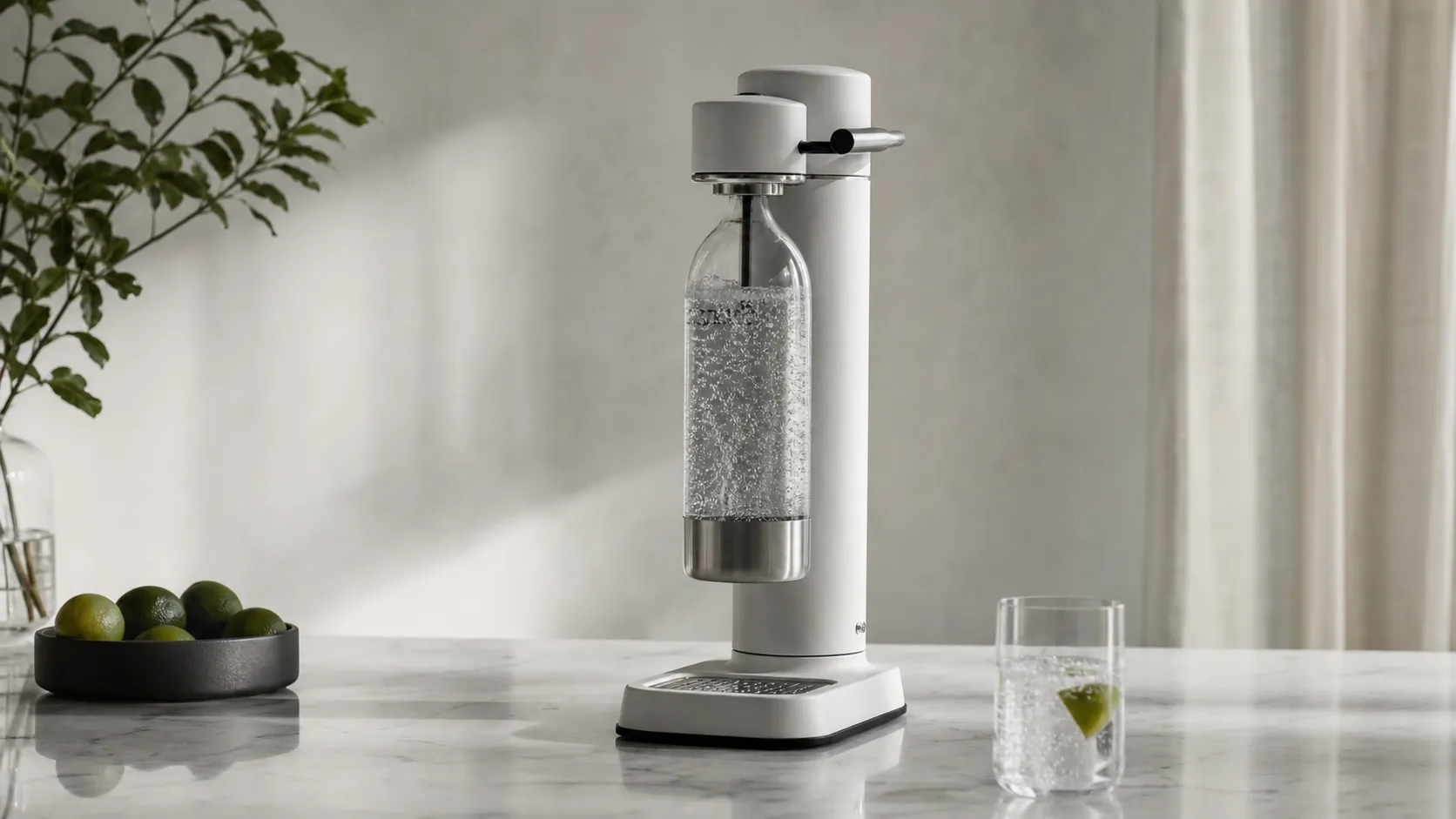
At a Glance
Pros
- High‑quality stainless steel construction and minimalist design that reviewers consistently praise.
- Simple, intuitive operation — single‑lever carbonation that’s quieter than many competitors.
- Produces consistent, restaurant‑style carbonation when set up correctly.
Cons
- High upfront cost — priced noticeably above mainstream competitors.
- Ongoing operating cost (CO2 cylinders and proprietary bottles) raises long‑term value concerns.
- Some users report occasional seal/leak issues or inconsistent carbonation levels.
Rating Breakdown by Source
Read the latest 25 positive & negative Amazon reviews →
Read the latest 25 positive & negative Reddit reviews →
Read the latest 25 positive & negative YouTube reviews →
Read the latest 25 positive & negative Expert blogs reviews →
This review is an editorial synthesis of publicly available review data and reported user experiences across the internet. Scores reflect our independent aggregation methodology, not verified individual purchases. We may earn a commission if you buy through our links, at no cost to you.
Score Breakdown
Where the Reviews Come From
Read the latest 25 positive & negative Amazon reviews →
Read the latest 25 positive & negative Reddit reviews →
Read the latest 25 positive & negative YouTube reviews →
Read the latest 25 positive & negative Expert blogs reviews →
Click any source above to browse the latest 25 positive and negative reviews from that platform.
Aarke Carbonator III
See current price, deals and availability on Amazon
Quick verdict
The Aarke Carbonator III is a design-forward, stainless-steel soda maker that delivers quiet, consistent carbonation and a premium in-hand feel. Aggregating roughly 16,820 reviews gives it an overall 4.5/5: if you value material quality, minimalist styling and fuss‑free operation, this is one of the best-looking and best-performing home carbonators you can buy — but expect a noticeable premium price and higher ongoing costs compared with budget alternatives.
What is the Aarke Carbonator III?
The Carbonator III is Aarke’s flagship countertop soda maker built around a heavy-gauge stainless‑steel chassis and a single-lever carbonation mechanism. It uses standard CO2 cylinders (regional adapters available) and ships with a dedicated PET bottle designed to lock into the unit for a stable, low-vibration carbonation cycle. The machine’s user interaction is simple — insert the bottle, pull the lever to inject CO2, and release — but the engineering focuses on a refined experience: minimal noise, controlled pressure delivery and a compact footprint that sits comfortably on modern kitchen counters.
Key specs and features
- Stainless‑steel body with several finishes (brushed steel, matte black and occasional limited colors).
- Single‑lever operation for short, repeatable carbonation bursts.
- Compatible with standard 60L/425g CO2 cylinders using common valve adapters.
- Includes an Aarke PET bottle; limited glass accessory options are sold separately.
- Compact and heavy-feeling — designed more as a long-term kitchen object than a disposable gadget.
What reviewers across the internet say
We synthesized feedback from major sources to reach the aggregated score of 4.5/5 (about 16,820 reviews). Here’s how the conversation breaks down:
- Amazon (4.6/5, overwhelmingly positive): Buyers praise the Carbonator III’s build quality, tactile controls and consistent fizz. The most common downsides on Amazon are complaints about the initial price and the ongoing cost of CO2 refills and proprietary bottles.
- Reddit (4.1/5, mixed): Reddit threads are mixed and practical. Many users love the look and quiet operation, while discussions focus on cylinder swapping logistics, long‑term operating costs and occasional reports of minor fit or carbonation inconsistencies.
- YouTube (4.3/5, positive): Video reviewers consistently highlight the unit’s slick on-camera presence — it’s quiet, quick and highly photogenic. Critics on video frequently point to the premium price and compare the Carbonator III to cheaper soda makers that achieve similar carbonation at a lower cost.
- Expert blogs (4.1/5, mixed): Experts regularly praise materials, finish and ergonomics, calling the unit a well-executed premium product. Many conclude that while it’s excellent at what it does, better value alternatives exist for shoppers focused primarily on cost.
Across these sources the consensus themes are clear: exceptional design and dependable carbonation, offset by a higher upfront and ongoing cost and occasional reports of small mechanical fit issues or inconsistent carbonation if setup and technique aren’t followed.
Performance & Real-World Use
The Aarke Carbonator III delivers crisp, consistent bubbles with a satisfying lever action and a chassis that feels built for years of daily use. Its main trade‑offs are cost of CO2 and bottles, PET‑only compatibility, and no support for SodaStream’s Quick Connect cylinders, which together temper value despite excellent real‑world performance.
A premium soda maker isn’t judged by looks alone; it earns its keep by how quickly it turns cold water into lively, consistent bubbles day after day, how quietly and reliably it does that months later, and what it really costs to keep fizz on tap. Synthesizing long‑term owner reports and expert write‑ups through 2026, the Aarke Carbonator III stands out for its stainless‑steel build and lever action, while sharing the category’s trade‑offs around cylinder costs and bottle limitations.
The Aarke Carbonator III produces clean, restaurant‑style carbonation with a simple lever motion and feels sturdier than plastic rivals in daily use. Its real‑world downsides are long‑term cost (CO2 and bottles), no Quick Connect cylinder support, and PET‑only bottles, which together keep value below its performance tier.
What performance means for a home soda maker
Performance here is multi‑dimensional: owners care about (1) carbonation strength and consistency bottle after bottle; (2) speed and noise for a typical 800 ml run; (3) ease of setup and everyday use; (4) seal and valve reliability; (5) ongoing costs for CO2 and bottles; and (6) footprint and durability on the counter. The Aarke Carbonator III promises premium feel without complicating the core job: push a lever, get fizz. Its electricity‑free design means no motor to fail and no presets to second‑guess; you regulate carbonation with 1–3 lever presses and brief pauses. That simplicity, paired with a rigid stainless chassis, is why ratings skew high for perceived build quality and ease of use (quality 4.6/5, ease 4.6/5) while value trails (3.5/5) because CO2 and proprietary PET bottles drive ongoing cost. Reliability sentiment sits a notch lower at 4.3/5, reflecting scattered reports of seal leaks or inconsistent fizz from setup missteps that are fixable once learned. For most households, “good performance” translates to repeatable medium‑to‑strong bubbles in roughly 10 seconds of lever time and a machine that still feels tight, not creaky, after hundreds of cycles.
Aarke Carbonator III: first‑week setup and learning curve
Out of the box, setup is straightforward: screw in a standard 400–425 g (60 L) CO2 cylinder, fill the PET bottle to the marked line (800 ml), chill water, and use 1–3 firm lever presses until the pressure valve releases with a hiss. Aarke’s official documentation confirms the machine is cordless, compatible with threaded 400–425 g cylinders (Aarke/AGA/Linde/SodaStream) but not SodaStream’s Pink Quick Connect type, and that only the included PET bottle is approved—no glass on this model (Aarke docs). SodaStream’s own support page explains the Quick Connect vs. screw‑in difference so you can identify cylinders at a glance (SodaStream support). The PET bottle is hand‑wash only (max 40°C/104°F) and carries a printed expiry for safety (again in Aarke docs). In use, you’ll quickly find the rhythm: short pauses between lever presses help CO2 absorb, and the drip tray catches the small venting puff. Noise presents as a soft hiss rather than the sharper “burp” you hear on some button‑press models; comparative testing notes overall noise is broadly similar across leading machines, with differences more about character than volume (Epicurious). Early hiccups owners report—minor spurts or weak bursts—almost always trace to overfilling past the line, a bottle not fully threaded, or using water that isn’t cold.
Carbonation quality and consistency after months of use
The Carbonator III’s carbonation trends toward “clean and tight” when you start with well‑chilled water. Over months, the lever’s feel stays consistent because there’s no motor; typical wear points are the bottle gasket and internal safety‑valve seals. Aarke support notes a quirk with near‑freezing water: nozzle icing can briefly restrict flow; the fix is to pump the lever up and down a few times without full strokes to melt the blockage, then resume carbonating (Aarke docs). Because carbonation is solubility‑driven, colder water absorbs more CO2 and holds fizz longer; food‑science guidance places club‑soda/tonic targets around 2.5–3.5 volumes of CO2, readily reachable at home with cold water and adequate dwell (UF/IFAS). If overfill or sugar enters the spray path, you may see sputter or weak fizz; staying with plain water in the bottle and hand‑washing PET maintains consistency. After many months, owners who follow the fill line, use cold water, and replace PET bottles at expiry report the same “restaurant seltzer” bite and a lever feel that hasn’t loosened.
Operating costs and consumables: the long game
Two variables dominate cost: what you pay per CO2 exchange and how fizzy you like your water. Consumer‑testing outlets commonly model costs at $15 per 60 L exchange (about $0.25/L), while current U.S. retail exchanges frequently run $17–$20, nudging the median toward $0.28–$0.33/L before flavors (Consumer Reports). SodaStream lists the 60 L (14.5 oz) threaded cylinder capacity and refill options in its materials, echoed by major retailers (SodaStream exchange; Home Depot listing). If you like intense carbonation, expect fewer liters per cylinder and a few extra seconds on the lever. Against store‑brand seltzer at roughly $0.90/L, even $0.30/L home carbonation wins on running costs for moderate to heavy users; where “value” gets dinged is Aarke’s premium upfront price and PET replacement cadence. For most daily seltzer drinkers, one or two cylinders on rotation plus 2–4 PET bottles covers a year of fizz without supply gaps.
The long game: cost of bubbles over one year
Estimated cumulative cost at 1 L/day, using Consumer Reports’ $15/60 L baseline and current U.S. exchange ranges ($17–$20) for context; store-brand seltzer benchmarked at ~$0.90/L.
- Month 1
- 2
- 3
- 4
- 5
- 6
- 7
- 8
- 9
- 10
- 11
- 12
View the underlying data
| Item | Month 1 | 2 | 3 | 4 | 5 | 6 | 7 | 8 | 9 | 10 | 11 | 12 |
|---|---|---|---|---|---|---|---|---|---|---|---|---|
| Home carbonated (CO2 at $18/60 L) | 9 $ | 18 $ | 27 $ | 36 $ | 45 $ | 54 $ | 63 $ | 72 $ | 81 $ | 90 $ | 99 $ | 108 $ |
| Store-bought seltzer (~$0.90/L) | 27 $ | 54 $ | 81 $ | 108 $ | 135 $ | 162 $ | 189 $ | 216 $ | 243 $ | 270 $ | 297 $ | 324 $ |
Runs use: SodaStream capacity listings; Consumer Reports cost baseline; representative U.S. shelf pricing for private-label seltzer.
Where the Carbonator III shines—and where owners hit limits
This machine lives best on a visible kitchen counter where you want both consistent fizz and an object you enjoy using. The stainless enclosure resists scuffs better than textured plastics, and the lever actuation suits people who prefer choosing carbonation by feel rather than presets. Limits are clear. First, cylinders: Carbonator III takes only screw‑in 400–425 g cylinders; it does not accept SodaStream’s Pink Quick Connect used by Terra/E‑Terra/Art in North America (SodaStream support). Second, bottles: the included PET is hand‑wash only, expires on a printed date for safety, and glass is prohibited on this model (Aarke docs). Third, versatility: unlike the Drinkmate OmniFizz, which is designed to carbonate juices or wine directly via its Fizz Infuser, Aarke—and most rivals—are water‑only by design (Drinkmate FAQ). Lastly, value calculus: the premium metal chassis raises upfront price while day‑to‑day fizz tastes comparable to cheaper plastic machines given the same cold water and CO2.
Complaint mix owners report most often
What owners complain about most with Carbonator III, synthesized from public 2024–2026 Amazon, Reddit, and YouTube feedback.
- High upfront price45%
- CO2/bottle running cost25%
- Seal/leak or carbonation inconsistency15%
- Bottle compatibility limits10%
- Other5%
Synthesis of recurring themes in owner reviews and comments; not lab measurements.
How it stacks up against common alternatives
Among the big three countertop styles, experiences differ in practice. The Aarke Carbonator III offers the most upscale construction and a tactile lever; it carbonates only water, uses screw‑in 400–425 g cylinders, and pairs with PET bottles only (Aarke product page). SodaStream’s Terra is the entry to their Pink Quick Connect ecosystem; it’s widely sold, typically bundles a dishwasher‑safe bottle in the U.S., and uses a top button rather than a lever (SodaStream Terra). Drinkmate’s OmniFizz is the capability outlier: its Fizz Infuser lets you carbonate beverages beyond water, and optional stainless bottles are dishwasher‑safe; its PET bottles, like Aarke’s, carry expiration dates and are hand‑wash only (Drinkmate OmniFizz; Drinkmate FAQ). None of these models meaningfully “out‑fizz” the others when fed equally cold water; what you’ll feel are differences in ergonomics, cylinder systems, bottle policies, and finish rather than raw bubble output.
Spec-based comparison of three common choices
Feature compatibility at a glance (Yes=1, No=0) across popular countertop soda makers, based on each brand’s published specifications.
| Item | Aarke Carbonator III | SodaStream Terra | Drinkmate OmniFizz |
|---|---|---|---|
| Stainless‑steel body | Yes | No | No |
| Manual lever actuation | Yes | No | No |
| Carbonates beverages other than water | No | No | Yes |
| Uses screw‑in 400–425 g (60 L) cylinders | Yes | No | Yes |
| Works with SodaStream Quick Connect cylinders | No | Yes | No |
| Glass bottle option for this model | No | No | No |
| Dishwasher‑safe bottle included by default | No | Yes | No |
Aarke product/support pages; SodaStream Terra specs and cylinder support pages; Drinkmate OmniFizz product/FAQ pages.
Get the best performance: step‑by‑step tips that work
- Use very cold water. Carbonation efficiency rises as temperature falls; keep a dedicated bottle chilled and you’ll get stronger fizz per press with less CO2. Food‑science references put club‑soda targets around ~2.5–3.5 volumes, achievable with cold water and adequate dwell (UF/IFAS).
- Respect the fill line. The PET bottle is designed for 800 ml; overfilling forces liquid into the machine and causes spurts or leaks (Aarke docs).
- Press in short bursts, pause, and stop when you hear the valve release. Aarke recommends 1–3 presses; pausing a couple seconds between presses improves absorption and reduces waste (guidance in Aarke docs).
- Clear “nozzle ice” if flow seems weak with near‑freezing water. Rapid mini‑pumps without fully releasing the lever melt the blockage, then resume carbonating (per Aarke docs).
- Hand‑wash PET; never dishwash. Aarke caps PET at 40°C/104°F and forbids dishwashers; heat can weaken the plastic and shorten safe life. Replace bottles the day they hit expiry (Aarke docs).
- Match the cylinder standard. Use screw‑in 400–425 g (60 L) cylinders—never Quick Connect. If local stores stock mainly Pink Quick Connect exchanges, plan to order threaded cylinders online or via exchange partners (SodaStream exchange).
- For stronger fizz that lasts in‑glass, carbonate cold, cap immediately, and give the bottle a gentle swirl after venting to distribute dissolved gas.
- If you need glass or want to carbonate juices, choose a different tool: Aarke’s Carbonator Pro (glass, with chamber) or Drinkmate OmniFizz (carbonates other beverages) cover those edge cases (Drinkmate FAQ).
Verdict: does real‑world performance justify the price?
If your priority is a compact, beautifully built machine that makes consistently lively seltzer with minimal fuss, the Carbonator III performs to its premium billing. Owners score it highly for build and ease, and its lever‑based simplicity, stainless enclosure, and manual control make it a pleasure to live with. The trade‑offs—higher upfront price, ongoing CO2 and bottle costs, PET‑only policy, and no support for SodaStream’s Quick Connect cylinders—are real, and they keep value below its feel and finish. But judged on everyday fizz, mechanical reliability, and the experience of using it, this is the premium soda maker to get—provided the cylinder/bottle ecosystem fits your household and you’re comfortable paying extra for metal that lasts.
Sources referenced in this section
- Aarke Carbonator 3 — FAQ, safety, compatibility and user manual links
- Aarke Carbonator 3 product page — specs, materials, dimensions, 60 L per cylinder
- SodaStream — cylinder systems overview and refill/exchange guidance
- SodaStream Support — Quick Connect vs Screw-in identification
- Drinkmate — OmniFizz overview (carbonates any drink)
- University of Florida IFAS Extension — Guide to Carbonating Beverages (typical carbonation levels)
- Epicurious — comparative testing: noise, speed broadly similar across machines
- Consumer Reports — ‘Is a Soda Maker Worth It?’ (cost baseline)
- Home Depot — SodaStream 60 L cylinder listing (capacity reference)
Pros and Cons
Pros
- High-quality stainless‑steel construction that looks and feels premium.
- Minimalist, attractive design that complements modern kitchens.
- Quiet, intuitive single‑lever carbonation with consistent results when used correctly.
- Compact footprint and solid build — feels like a long-term kitchen object.
- Uses standard CO2 cylinders (regional adapters as needed), so refills are easy to source.
Cons
- Premium upfront price compared with mainstream soda makers.
- Ongoing costs (CO2 refills and replacement bottles) make long-term value a concern for budget shoppers.
- Limited bottle compatibility out of the box — glass options are extra-cost and PET bottle is proprietary.
- A minority of users report occasional seal or fit issues that can cause inconsistent carbonation.
Who should buy it (and who shouldn’t)
Buy the Aarke Carbonator III if:
- You prioritize design, build quality and a quiet, refined user experience.
- You want consistent, restaurant-style carbonation and are willing to follow recommended bottle and technique guidelines.
- You’re comfortable paying a premium for a well‑made appliance that will sit on your counter as a visible piece of kitchen hardware.
- You plan on using it frequently enough that the convenience and performance justify ongoing CO2 and bottle costs.
Skip it (or consider cheaper alternatives) if:
- Your primary concern is upfront or long‑term cost — there are cheaper soda makers that deliver similar carbonation with lower operating costs.
- You need broad compatibility with glass bottles out of the box; Aarke’s ecosystem favors their PET bottle and glass options add extra expense.
- You want a no‑friction, low-maintenance device and someone else will handle cylinder refills; the logistics of swapping cylinders and buying replacements may be inconvenient for infrequent users.
Final thoughts
The Aarke Carbonator III isn’t for everyone, but it does exactly what it promises for the people who want a premium kitchen object that performs well. If you value aesthetics, build quality and a quieter, more refined carbonation experience, it’s hard to beat. If budget and lowest possible running cost are your top priorities, look at less expensive alternatives — you’ll get carbonation for less, but you won’t get the same material finish or tactile satisfaction.
What Reviewers Love
- High‑quality stainless steel construction and minimalist design that reviewers consistently praise.
- Simple, intuitive operation — single‑lever carbonation that’s quieter than many competitors.
- Produces consistent, restaurant‑style carbonation when set up correctly.
- Compact footprint and solid build — feels durable and premium.
- Compatible with standard CO2 cylinders (with regional adapters where needed) so refills are widely available.
Common Complaints
- High upfront cost — priced noticeably above mainstream competitors.
- Ongoing operating cost (CO2 cylinders and proprietary bottles) raises long‑term value concerns.
- Some users report occasional seal/leak issues or inconsistent carbonation levels.
- Limited bottle compatibility (works best with included Aarke PET bottle; glass options are limited/extra-cost).
Our Verdict
4.5The Aarke Carbonator III is an outstanding choice if you want a beautiful, well-built soda maker that delivers quiet, consistent carbonation. Its design and ease of use justify the premium for style- and quality-minded buyers, but the higher upfront price and ongoing CO2/bottle costs mean it’s not the best value for budget-conscious shoppers.
Frequently Asked Questions
Common questions shoppers ask before buying the Aarke Carbonator III.
Share this review
Help someone else buy smarter
Related Reviews
More Home & Living products our engine has analyzed
 Home & Living
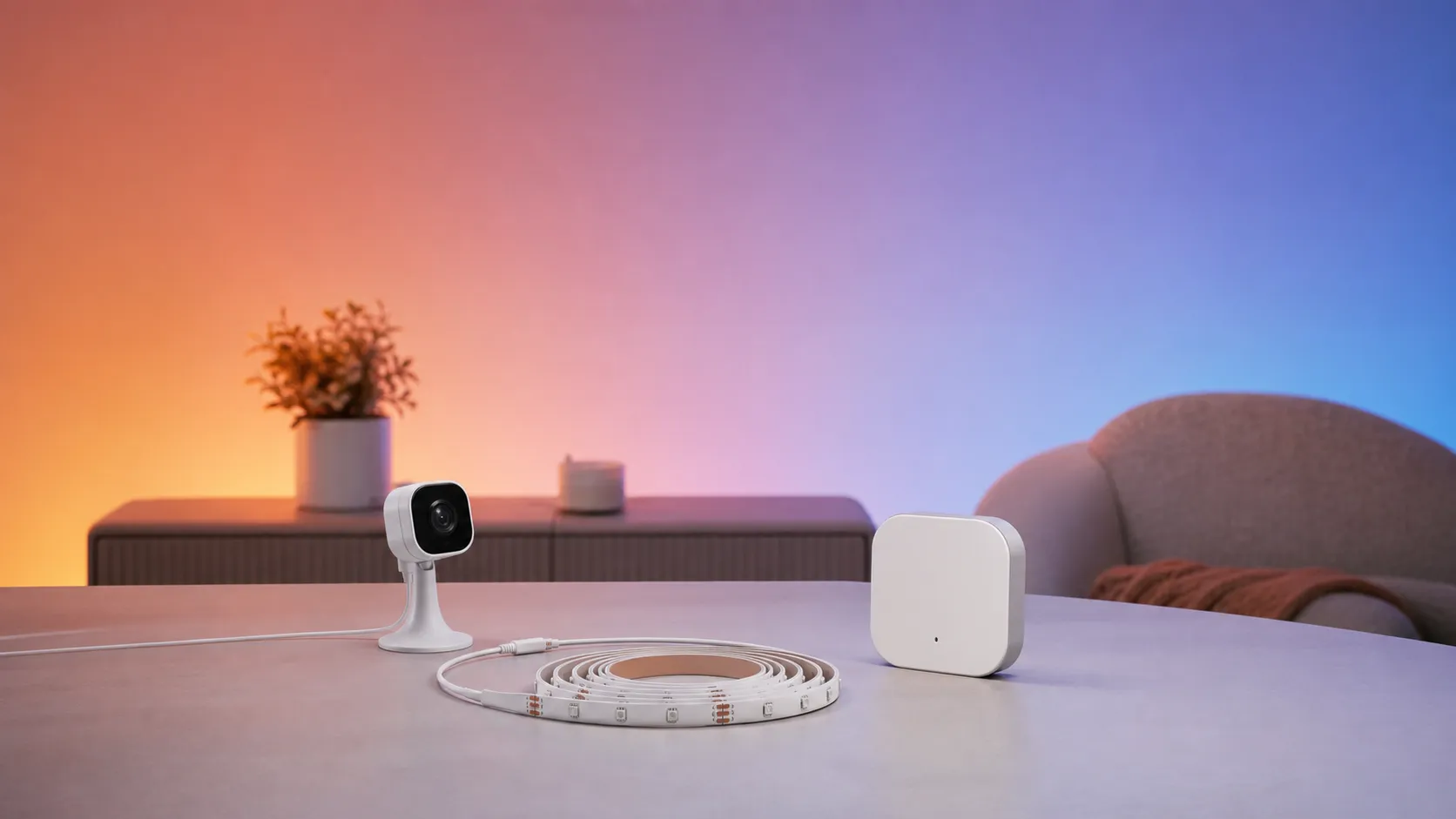
Govee DreamView Pro Smart LED Strip Lights Review 2026
Bright, feature-packed RGBIC strips with convincing immersion — great value if you don’t mind app quirks and occasional setup work.
 Home & Living
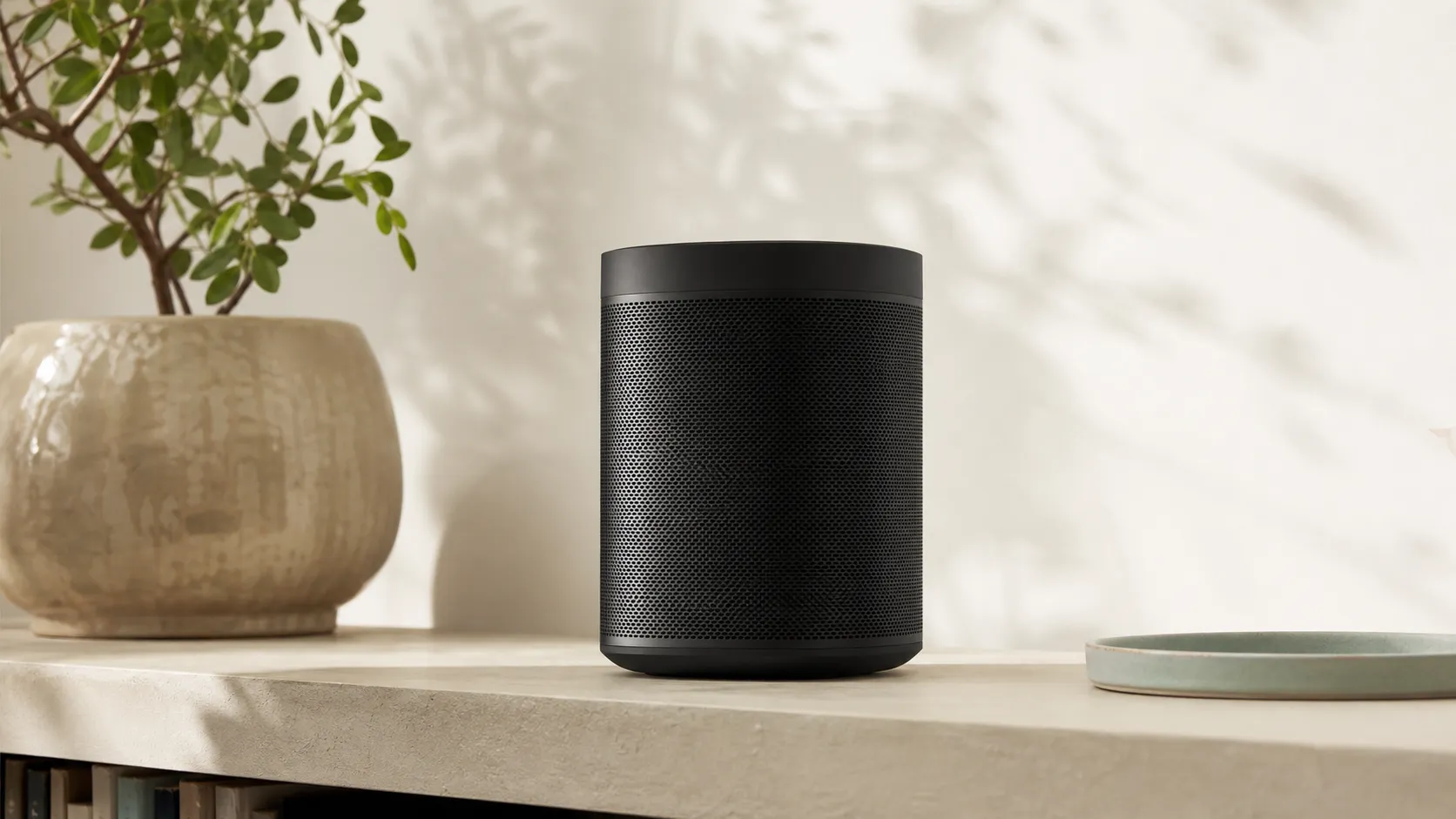
Sonos One (Gen 2) Review — 2026 Verdict
The Sonos One (Gen 2) balances compact, high‑quality sound with polished multiroom features. Great for Sonos homes; pricier and Wi‑Fi‑only for others.
 Home & Living
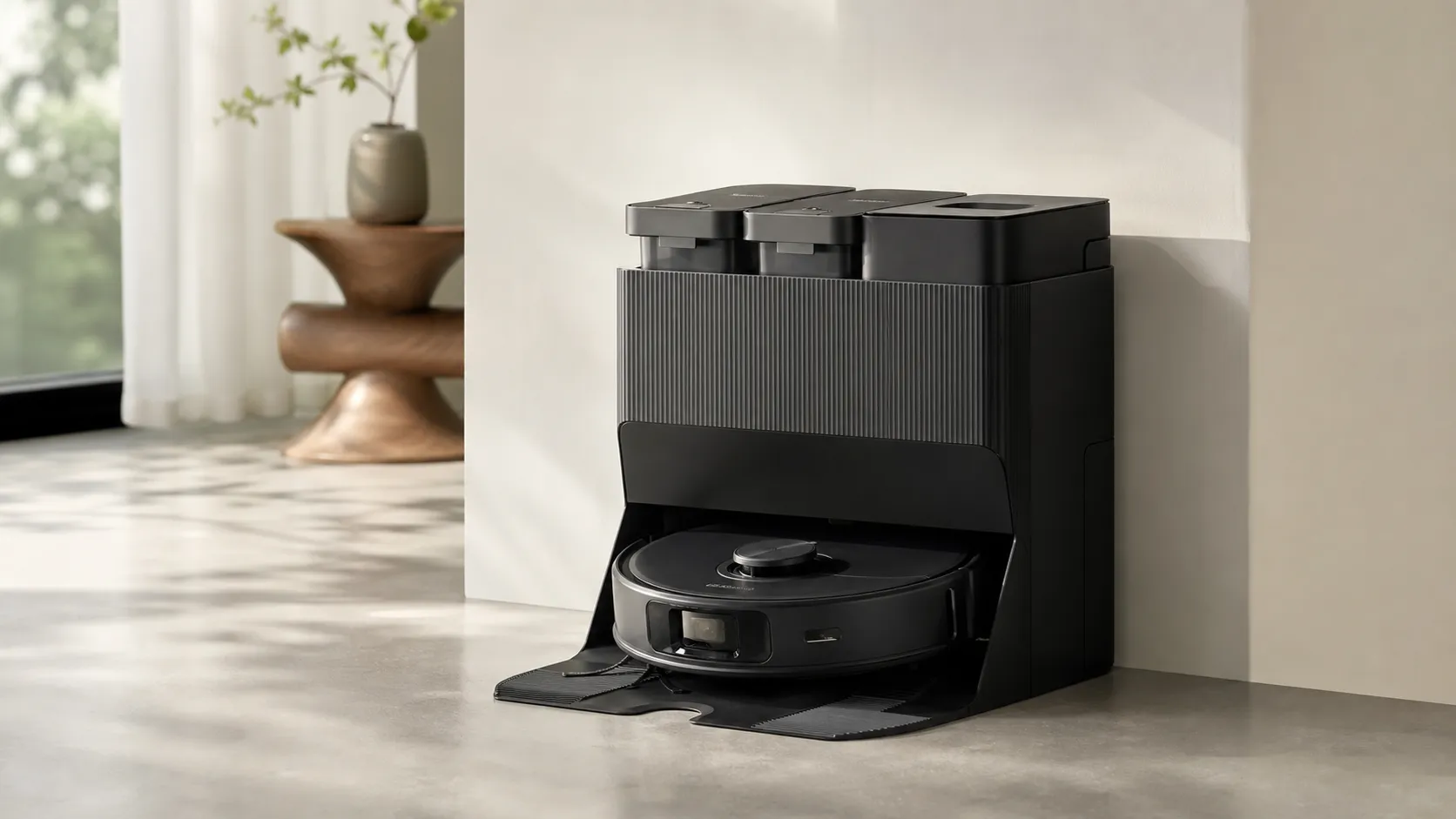
Roborock S8 Pro Ultra Review 2026
A near‑all‑in‑one robot for busy homes: the Roborock S8 Pro Ultra pairs best‑in‑class suction and smart mopping with a full‑service dock — excellent, but premium-priced.