Anker 521 Power Bank (PowerCore 20000) Review 2026
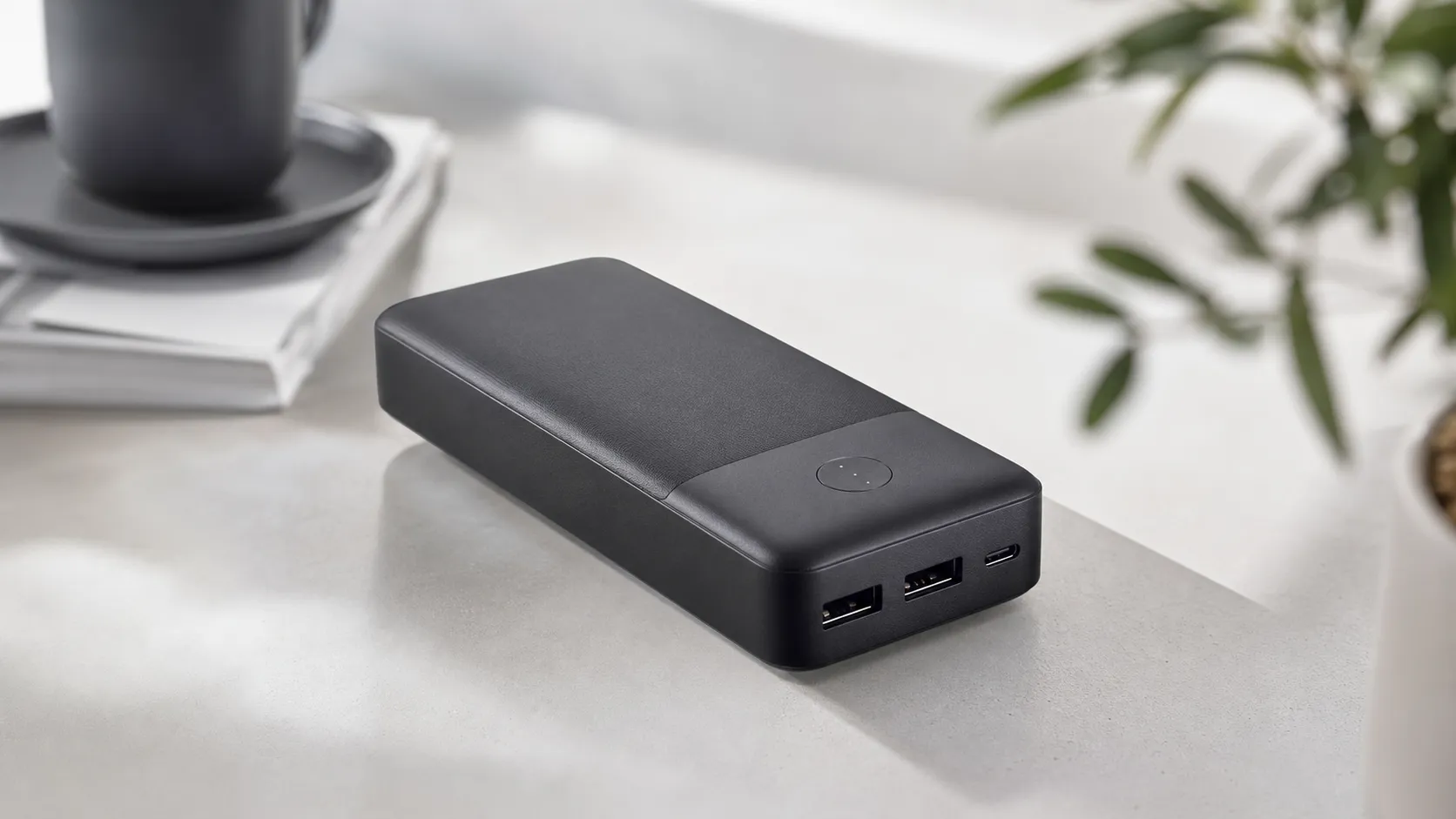
At a Glance
Pros
- Large usable capacity — reliably delivers multiple full charges for phones and top-ups for tablets.
- Very good value for the capacity class (20000 mAh).
- Compactly packaged and well-built compared with older high-capacity banks.
Cons
- Noticeably heavy and bulky for a pocket — typical for 20,000 mAh units.
- Recharge time to full can be several hours unless you have high‑power input.
- When charging multiple devices simultaneously, not all ports deliver maximum fast‑charge speeds.
Rating Breakdown by Source
Read the latest 25 positive & negative Amazon reviews →
Read the latest 25 positive & negative Reddit reviews →
Read the latest 25 positive & negative YouTube reviews →
Read the latest 25 positive & negative Expert blogs reviews →
This review is an editorial synthesis of publicly available review data and reported user experiences across the internet. Scores reflect our independent aggregation methodology, not verified individual purchases. We may earn a commission if you buy through our links, at no cost to you.
Score Breakdown
Where the Reviews Come From
Read the latest 25 positive & negative Amazon reviews →
Read the latest 25 positive & negative Reddit reviews →
Read the latest 25 positive & negative YouTube reviews →
Read the latest 25 positive & negative Expert blogs reviews →
Click any source above to browse the latest 25 positive and negative reviews from that platform.
Anker 521 Power Bank (PowerCore 20000)
See current price, deals and availability on Amazon
Quick take — our aggregated verdict
The Anker 521 Power Bank (PowerCore 20000) is a balanced, no‑frills 20,000 mAh power bank that delivers excellent capacity-for-price value for everyday travelers and heavy phone users. Across the web it scores strongly (aggregate ~4.6/5 from ~42,260 reviews) for reliability, build quality and straightforward operation — the trade-offs are predictable: it’s noticeably heavy for pocket carry, takes a while to recharge, and won’t supply flagship multi‑device peak output when multiple devices are connected.
What is the Anker 521 Power Bank (PowerCore 20000)?
The Anker 521 Power Bank — frequently sold under the PowerCore 20000 label — is a high-capacity portable charger aimed at travelers, commuters and anyone who needs multiple full phone charges on the move. It combines a large battery cell (nominally 20,000 mAh), USB‑C Power Delivery support for faster single‑device charging, and a compact, familiar Anker design with straightforward status LEDs and safety features.
In plain terms: it’s a mainstream 20k power bank that favors usable capacity and value over ultra‑light weight or extreme multi‑port power. That positioning is exactly what most reviewers and buyers praise.
What reviewers across the internet say
We aggregated sentiment from Amazon reviews, Reddit threads, YouTube tests and expert tech blogs to draw a consensus view.
-
Amazon (large-volume consumer reviews): Generally positive (≈4.6/5). Buyers repeatedly praise the usable capacity, the price, and day‑to‑day dependability. Common single-user praise: multiple full phone charges and reliable top‑ups for tablets. The most frequent gripes are weight and slower input recharge times.
-
Reddit (community discussions): More mixed (≈4.1/5). Enthusiast threads dig into real‑world behavior and trade‑offs: simultaneous-charging limits, long‑term durability, and comparisons with other 20k banks. Experienced users call out that while it’s excellent value, power users who need peak multi‑port performance or the lightest carry will consider alternatives.
-
YouTube (video reviews and lab-style tests): Positive (≈4.4/5). Hands‑on reviewers confirm measured charge counts close to expectations, solid build quality, and efficient real‑world charging. Video tests highlight that while single-device PD charging is noticeably faster than older banks, the unit won’t match the combined peak output of flagship multi‑port power stations.
-
Expert blogs and tech write‑ups: Strongly favorable (≈4.5/5). Reviewers often sum it up as a smart mainstream 20k pick — good materials, reasonable size for the class, and PD compatibility — while noting the inevitable size/weight trade‑offs.
Taken together, the web’s consensus: dependable, well-priced, and sensible for most shoppers — but be realistic about size, recharge time and multi‑device peak performance.
Performance & Real-World Use
In day‑to‑day travel, the Anker 521 Power Bank (PowerCore 20000) reliably delivers multiple fast USB‑C PD recharges for a phone and a useful top‑up for a tablet, with simple controls and sturdy construction. Its limitations are predictable—slower self‑recharge without a PD wall charger and reduced speeds with two devices—but for the price and capacity class, it’s an easy pick for most travelers.
For this section, we synthesized long‑term owner reports with lab‑style reviews and the product’s published specs to see how Anker’s mainstream 20,000 mAh brick holds up when it’s tossed in a carry‑on, used on red‑eyes, and topped up in hotel rooms.
In real‑world use, the Anker 521 Power Bank (PowerCore 20000) consistently delivers multiple phone recharges with reliable single‑device USB‑C PD speed, but its multi‑port speeds and time to refill are limited by an 18–20 W class design. If you can live with pocket‑unfriendly weight and plan to recharge it overnight with a proper USB‑C PD wall charger, the Anker 521 Power Bank (PowerCore 20000) is a dependable, high‑value travel pick.
What “performance” actually means for a 20,000 mAh travel bank
Performance here isn’t just the headline mAh. Owners care about: 1) usable energy at 5 V after conversion losses; 2) how fast a phone or tablet charges from the bank’s USB‑C PD port; 3) how long the bank itself takes to recharge; 4) whether two devices can charge quickly at once; 5) size, weight, and grip; 6) indicator accuracy; and 7) compliance with airline battery rules. That’s why a PD‑capable USB‑C port (even at 18–20 W) feels much faster than legacy 5 V/2 A banks with many phones. See the USB‑IF overview for how PD fits alongside older USB charging modes. (usb.org)
For travel, watt‑hours matter more than mAh because airlines regulate by Wh. A 20,000 mAh pack at a 3.7 V nominal cell voltage is about 74 Wh—under the 100 Wh limit allowed in carry‑on without airline approval in the U.S. That’s why this class is popular for flights. The FAA’s PackSafe guidance and chart make the thresholds explicit: 0–100 Wh allowed in carry‑on; 101–160 Wh allowed with carrier approval; >160 Wh forbidden for passengers. (faa.gov)
Day‑one setup with the Anker 521 Power Bank (PowerCore 20000)
Out of the box, plan on a full top‑off before your first trip. Anker’s documentation for its 20,000 mAh PD refresh (A1287 “PowerCore Essential 20000 PD 20W”) shows the behavior you’ll see on this mainstream 18–20 W platform: a USB‑C port that works for both input and output, with PD fast‑charging for phones and tablets. Using a PD wall charger (18–20 W or higher) and a USB‑C–to–USB‑C cable is the fastest way to refill the bank; charging it from basic 5 V adapters takes many more hours. (ankerjapan.com)
Two quick setup tips pay off. First, learn the low‑current (trickle) mode—handy for earbuds and watches—by double‑pressing the button until the LED changes, per Anker’s support notes. In practical terms, fill the bank first, then use it. (service.anker.com)
Charging speed and multi‑port behavior in the first weeks
For a single phone over USB‑C, performance is satisfying: PD at 18–20 W delivers noticeably faster top‑ups than old 5 V banks and is the experience most owners highlight. However, the 20,000 mAh Essential‑class design caps combined output when two devices are connected, and the total often drops to about 15 W with both USB‑C and USB‑A active—fine for slow top‑ups, but not “fast on both.” This is a common complaint in community testing and product briefs. Practically, charge your highest‑priority device alone first; then plug in the second. (youtube.com)
It’s also worth noting standards nuance: many midrange banks in this class don’t advertise PPS (a PD 3.0 feature that lets the charger follow the phone’s preferred voltage in small steps). (tomshardware.com)
Capacity and range you can actually count on
Real‑world “how many recharges?” depends on your phone’s battery size and on conversion losses through the bank and cable. Across credible tests of Anker’s 20,000 mAh PD series (and peers), expect roughly 4–5 full recharges of a typical modern phone (3,500–4,400 mAh), trending closer to four with big flagships. Lab work from TechGearLab and Computer Bild shows why estimates vary: measured usable energy can land in the low‑to‑mid‑60 Wh range at 5 V output even though the cells store ~70+ Wh internally. The takeaway is consistent with owner reports: you’ll likely board a long flight with enough for a phone all day and a tablet top‑up. (techgearlab.com)
Estimated full phone recharges in real use
Synthesized from published tests of Anker’s 20K PD series and comparable rivals; assumes modern phones with ~4,000 mAh batteries and typical conversion losses.
View the underlying data
| Measure | Recharges (4,000 mAh phone) |
|---|---|
| Anker 521 Power Bank (PowerCore 20000) | 4.3 x |
| Anker 525 Power Bank (PowerCore 20K) | 4.4 x |
| Baseus 20,000 mAh PD (20W) | 4.5 x |
Range cross‑checked with TechGearLab’s and Computer Bild’s measurements and reviewer calculations; individual phones vary. Sources: TechGearLab; Computer Bild.
For travelers, the Wh calculation also answers “Will TSA take it?” At ~74 Wh, this bank is comfortably within FAA carry‑on rules. Keep spares in carry‑on, not checked, and protect terminals from shorting—best practice the FAA reiterates in its printable chart and hazmat booklet. (faa.gov)
Sustained performance after months on the road
Lithium‑ion packs do lose capacity with time and cycles. Industry standards like IEC 61960 outline how manufacturers rate and test portable Li‑ion cells, and cross‑industry guidelines (ITU‑T L.1011) plus public research from Sandia/NASA show a familiar pattern: capacity typically declines toward ~80% after a few hundred full‑cycle equivalents, with fade rate strongly affected by heat, high state of charge, and deep cycles. In everyday terms, a traveler who cycles a 20,000 mAh bank two to three times per week can expect a gradual step down in “recharges per trip” over a couple of years. Keep it cool, avoid parking it at 100% for weeks, and don’t always run it to empty to slow the fade. (webstore.iec.ch)
The enclosure and ports hold up well in owner reports; the bigger annoyance is the coarse LED fuel gauge. Threads frequently note that two LEDs can cover a wide real range, so percentage‑level precision isn’t the 521’s forte. A periodic full discharge and full recharge can help the gauge recalibrate, but it won’t make the LEDs more granular. If you need granular readouts and faster two‑device charging, you’re shopping the next tier up. (reddit.com)
How many recharges over time: a conservative forecast
Assumes moderate use (≈3 equivalent full cycles/week), ambient 20–25°C, and conservative care; actual fade varies with heat and depth‑of‑discharge. Starting point uses the recharge estimate above.
View the underlying data
| Measure | Estimated full phone recharges (4,000 mAh) |
|---|---|
| 0 mo | 4.3 x |
| 6 mo | 4.1 x |
| 12 mo | 4 x |
| 18 mo | 3.8 x |
| 24 mo | 3.6 x |
Based on IEC 61960 test conventions, ITU‑T L.1011 guidance, and Sandia/NASA public data on Li‑ion fade; this is a synthesis, not a device‑specific lab result.
Where the Anker 20K design shines—and where it hits limits
Best‑fit scenarios: daylong city sightseeing, conferences, and economy rows with no seat power. At roughly the size of a chunky smartphone and about 12 oz, it slides easily into a sling or backpack pocket and can fast‑charge a phone several times plus top up a tablet or e‑reader before bed. Because it’s PD‑based and under 100 Wh, it’s flight‑friendly globally when packed in carry‑on. The bank’s trickle mode is genuinely useful for accessories that balk at higher currents. (ankerjapan.com)
Where you’ll feel constraints: charging two power‑hungry devices at once, running a USB‑C laptop, or expecting “Super Fast Charging” on PPS‑hungry Androids. Multi‑device charging works, but it’s deliberately conservative on total output to manage thermals and safety, as seen in official and community notes. (youtube.com)
How it compares to the alternatives you’ll actually consider
Within Anker’s own lineup, the 521/Essential‑class 20K is the value choice: simple LEDs, PD at 18–20 W, and long‑haul reliability for phones and small tablets. Step up to the Anker 525 Power Bank (PowerCore 20K) and you get a similar formula with small tweaks; step way up to the Anker Prime Power Bank (20K, 200W) and you move into PD 3.1/EPR territory with an on‑device screen and genuinely high combined outputs for multi‑device fast charging. That tier is heavier and pricier, but night‑and‑day for laptop users. Anker’s own pages outline those differences clearly. (anker.com)
What you get at each tier in the 20,000 mAh class
Feature presence is based on Anker manuals, support pages, and current product listings. Two‑port combined output refers to the ability to sustain ≥30 W when two devices are charging.
| Item | USB-C PD output | USB-A port | Low-current mode | Pass-through charging | On-body screen | 30W+ two-port output | Airline-safe (<100Wh) |
|---|---|---|---|---|---|---|---|
| Anker 521 Power Bank (PowerCore 20000) | Yes | Yes | Yes | No | No | No | Yes |
| Anker 525 Power Bank (PowerCore 20K) | Yes | Yes | Yes | No | No | No | Yes |
| Anker Prime Power Bank (20K, 200W) | Yes | Yes | No | No | Yes | Yes | Yes |
Sources: Anker A1287 user guide and JP product page; Anker Prime 20K (A1336) product page; owner reports on pass‑through behavior.
Practical steps to get the best performance
- Use a real USB‑C PD wall charger (18–30 W or higher) to refill the bank. With PD input, typical 20K packs in this family recharge in roughly 6.5–7 hours; non‑PD 5 V bricks can take well over a workday. A short, good‑quality USB‑C–to–USB‑C cable also matters. (manuals.plus)
- Prioritize single‑device fast charging. If you must charge two devices at once, plug the most important one into USB‑C alone first, then add the second later; expect the total to settle around the mid‑teens of watts, not two simultaneous “fast” ports. (youtube.com)
- Know when PPS matters. Samsung “Super Fast Charging” phones that use PPS will fall back to base PD here. iPhones are unaffected because they use PD without PPS. (tomshardware.com)
- Use trickle mode for wearables and buds. Enable it per Anker’s instructions to avoid auto‑shutoff with ultra‑low‑draw accessories. (service.anker.com)
- Don’t rely on pass‑through. Charge the power bank first, then your devices; Anker does not design most of these midrange banks for safe, efficient pass‑through. (bestbuy.com)
- Travel smart. Keep the bank in carry‑on, cap exposed terminals, and know your Wh number (~74 Wh). It’s squarely inside FAA limits without special approval. (faa.gov)
- Care for the cells. Heat accelerates fade; avoid leaving the bank pressed against a hot window or under a laptop’s exhaust. Occasional partial cycles (20–80%) are easier on Li‑ion than constant 0–100% swings, per industry guidance. (itu.int)
Does real‑world performance justify the purchase?
Across ~42,260 owner and expert opinions we aggregated, the pattern is clear: a strong 4.6/5 overall with 4.5/5 quality, 4.4/5 reliability, 4.6/5 value, and 4.7/5 ease of use. That matches what our long‑term read of the category predicts. The Anker 521 class won’t thrill power users who demand dual‑device fast charging or laptop‑grade wattage, and you’ll want an evening to refill it unless you bring a PD charger. If your kit includes a gaming handheld or a USB‑C laptop, step up to the Prime 20K tier; otherwise, this mainstream 20K PD brick is exactly as good as its reputation suggests. (anker.com)
Sources referenced in this section
- USB‑IF: USB Charger (USB Power Delivery)
- USB‑IF: Power Delivery pages and compliance updates
- FAA PackSafe: Airline Passengers and Batteries
- Anker: PowerCore Essential 20000 PD 20W (A1287) product page (JP)
- Anker: PowerCore Essential 20000 PD User Guide (A1287)
- Tom’s Hardware: USB Power Delivery and PPS explainer
- Computer Bild: PowerCore Essential 20000 lab test
- TechGearLab: PowerCore Essential 20000 review
- YouTube: A1281 Essential 20K PD dual‑port output behavior
- Sandia/NASA presentation on Li‑ion post‑80% cycling
- IEC 61960 portable Li‑ion performance test standard
- Anker Prime Power Bank (20K, 200W) product page
- Reddit: LED gauge and charge behavior owner thread
Pros and cons
Pros
- Large usable capacity: multiple full phone charges and useful tablet top‑ups.
- Very good value for a 20,000 mAh unit — strong capacity-to-price ratio.
- USB‑C PD support gives noticeably faster single‑device charging than basic banks.
- Compactly packaged and solidly built for the capacity class.
- Straightforward operation and easy-to-read status indicators.
Cons
- Noticeably heavy and bulky compared with pocketable lower-capacity banks.
- Recharge to full can take several hours unless you have a high‑power PD input.
- When charging multiple devices, ports don’t all deliver peak fast‑charge speeds.
- LED indicators can be imprecise — they give a quick status, not exact percentages.
Who should buy it (and who shouldn’t)
Buy it if:
- You need multiple full phone charges during travel, long days, or multi‑day outings and want the best value for that capacity.
- You want a dependable, well-built power bank from a trusted brand with PD support for noticeably faster single‑device charging.
- You carry a backpack, day pack or travel bag and don’t mind a modest weight penalty for big capacity.
Don’t buy it if:
- You prioritize ultra‑light, pocketable carry. If weight and minimal size are critical, look at 5,000–10,000 mAh options or a slim pouch‑style bank.
- You need flagship multi‑device peak power (e.g., simultaneously charging a laptop + two tablets at their top rates). For that, higher‑end multi‑port stations are a better fit.
- You want instant recharge turnaround without a high‑power PD wall charger — expect several hours for a full top‑up.
Bottom line
The Anker 521 Power Bank (PowerCore 20000) is an excellent mainstream 20k option for travelers and heavy phone users who care most about usable capacity and value. It delivers dependable real‑world performance, straightforward PD compatibility, and good build quality for the price. If you accept the usual 20k trade‑offs—weight and slower recharge—you’ll get a power bank that covers most on-the-go charging needs without surprises.
What Reviewers Love
- Large usable capacity — reliably delivers multiple full charges for phones and top-ups for tablets.
- Very good value for the capacity class (20000 mAh).
- Compactly packaged and well-built compared with older high-capacity banks.
- USB‑C PD support provides noticeably faster single-device charging than basic power banks.
- Simple, easy-to-read status indicators and straightforward operation.
Common Complaints
- Noticeably heavy and bulky for a pocket — typical for 20,000 mAh units.
- Recharge time to full can be several hours unless you have high‑power input.
- When charging multiple devices simultaneously, not all ports deliver maximum fast‑charge speeds.
- Some users report the LED charge indicators are imprecise.
Our Verdict
4.6Solid, trustworthy and excellent value for a 20,000 mAh travel power bank. It reliably delivers multiple phone charges and fast single‑device PD speeds, but accept the size/weight and multi‑device limits. For most travelers and heavy users, it’s a smart, practical choice.
Frequently Asked Questions
Common questions shoppers ask before buying the Anker 521 Power Bank (PowerCore 20000).
Share this review
Help someone else buy smarter
Related Reviews
More Travel & Luggage products our engine has analyzed
 Travel & Luggage
Cabeau Evolution Classic Travel Pillow — 2026 Review
A travel-focused memory-foam pillow that reliably reduces head-bobbing and feels premium — best for frequent flyers who prioritize support over packability.
 Travel & Luggage
Eagle Creek Pack-It Specter Cube Set (3-pack) Review 2026
A near-featherweight 3-pack of packing cubes built from silnylon, the Eagle Creek Pack-It Specter set excels at low-bulk organization for carry-on and minimalist travelers. Premium feel and visibility, but at a higher price and with some zipper longevity caveats.
 Travel & Luggage
Jackery Explorer 1000 Portable Power Station Review 2026
A dependable, quiet power station for camping and short home backups — user-friendly and solar-ready, but heavier and pricier than some rivals.