Anker 737 Power Bank (PowerCore 24K) Review — 2026
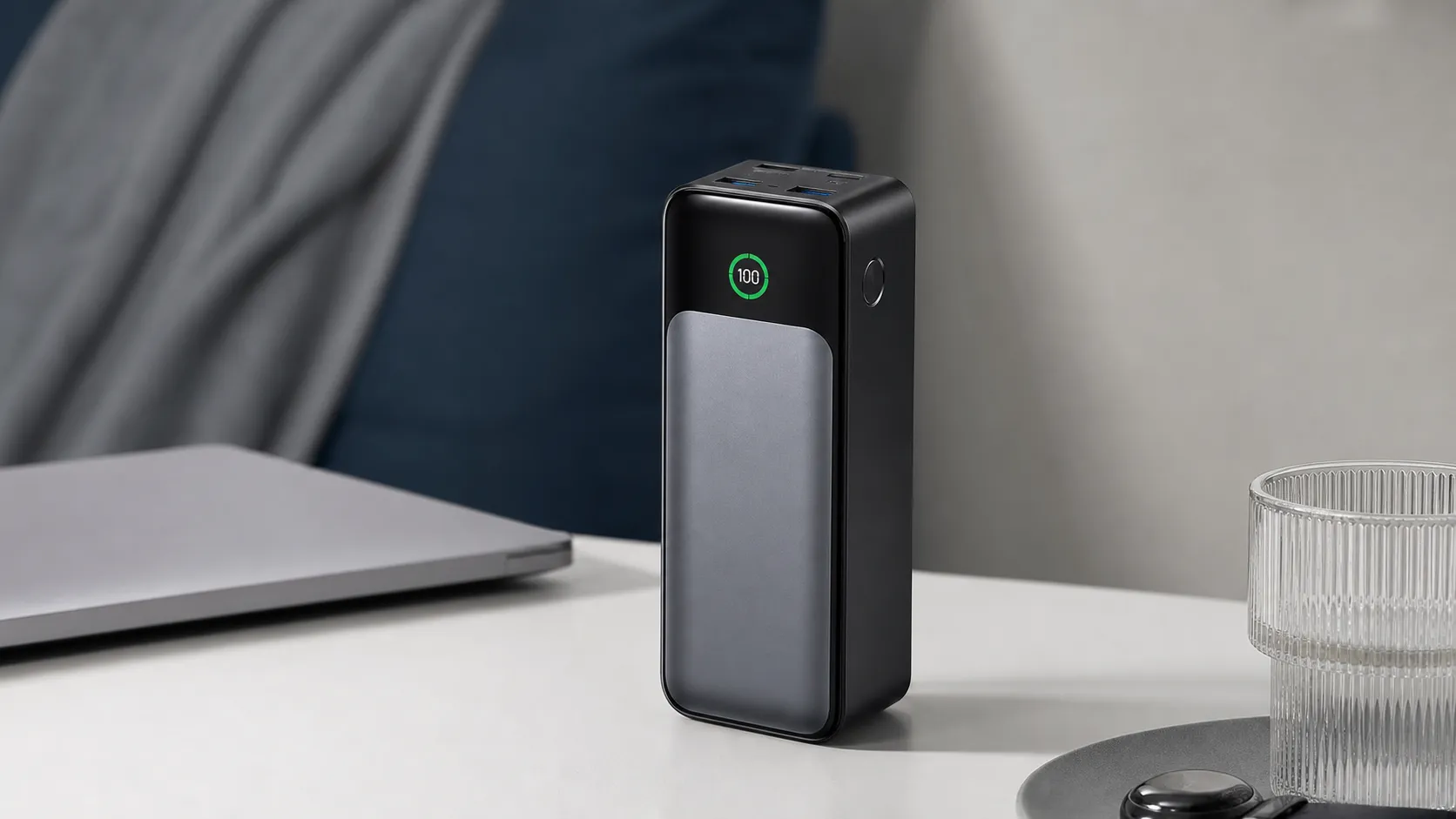
At a Glance
Pros
- High usable capacity (24,000mAh) — good for multiple phone/tablet charges or a laptop top-up
- Fast USB‑C Power Delivery on a main port (reviewers note quick real-world charging times)
- Multiple output ports so you can charge several devices at once
Cons
- Relatively heavy and bulky compared with lower-capacity banks
- Premium price — reviewers often call it expensive for what it offers
- Output is split when multiple devices are connected, reducing peak per-port speed
Rating Breakdown by Source
Read the latest 25 positive & negative Amazon reviews →
Read the latest 25 positive & negative Reddit reviews →
Read the latest 25 positive & negative YouTube reviews →
Read the latest 25 positive & negative Expert blogs reviews →
This review is an editorial synthesis of publicly available review data and reported user experiences across the internet. Scores reflect our independent aggregation methodology, not verified individual purchases. We may earn a commission if you buy through our links, at no cost to you.
Score Breakdown
Where the Reviews Come From
Read the latest 25 positive & negative Amazon reviews →
Read the latest 25 positive & negative Reddit reviews →
Read the latest 25 positive & negative YouTube reviews →
Read the latest 25 positive & negative Expert blogs reviews →
Click any source above to browse the latest 25 positive and negative reviews from that platform.
Anker 737 Power Bank (PowerCore 24K) 24,000mAh
See current price, deals and availability on Amazon
Introduction
If you travel a lot or run multiple devices off-grid, the Anker 737 Power Bank (PowerCore 24K) 24,000mAh is one of the most-talked-about portable batteries of recent years. Aggregating thousands of user reviews and several expert tests, the consensus is clear: this is a reliable, high-capacity pack that feels premium and performs very well for single-device fast charging, but it carries trade-offs in weight, heat, and price. Our aggregated verdict: excellent for travelers and power users who prioritize usable capacity and USB‑C Power Delivery; less ideal if you want the lightest carry or the cheapest option.
What Is the Anker 737 Power Bank (PowerCore 24K) 24,000mAh?
The Anker 737 Power Bank, also marketed as the PowerCore 24K, is a high-capacity portable charger aimed at travelers, remote workers, and power users. It packs 24,000mAh of battery capacity into a relatively compact chassis and includes multiple outputs: at least one high‑wattage USB‑C Power Delivery (PD) port for fast charging laptops or phones, plus additional USB‑A/C ports for phones, tablets, or accessories. It also features a clear battery-level display and a solid, premium-feeling build — traits that reviewers across platforms repeatedly note.
Key specs (aggregated takeaways):
- Capacity: 24,000mAh (large, multi-charge capacity)
- Ports: Multiple outputs including USB‑C PD (high-priority port) and additional ports for simultaneous charging
- Usability: Battery-level display, sturdy construction, airline-friendly Wh rating (keeps it under common 100Wh limits)
What Reviewers Across the Internet Say
We synthesized feedback from Amazon, Reddit, YouTube, and expert blogs to form a broad picture.
-
Amazon (overall ~4.6/5 from many thousands of reviews): Buyers consistently praise the real‑world usable capacity, dependable performance, and rugged build. Common praise: it reliably delivers multiple phone charges and can top up tablets or give a laptop a meaningful boost. Criticisms center on weight and price, but satisfied customers overwhelmingly recommend it.
-
Reddit (aggregate ~4.2/5): Technical users dig into the details — Wh calculations, pass-through charging behavior, power-splitting logic, and thermal behavior. Redditors appreciate the airline-friendly capacity and honest capacity reporting, but discussions highlight that the bank will split output across ports (reducing per-port peak speed) and can throttle if run hot.
-
YouTube (aggregate ~4.4/5): Measured reviews show strong single-device USB‑C PD performance and useful real-world charging times. Hands-on reviewers highlight the convenience of the numeric battery display and its compact footprint for the capacity, recommending it especially for travelers and creators. Price is noted as a downside compared to some rivals.
-
Expert blogs (aggregate ~4.1/5): Experts confirm solid build quality and reliable performance, but point to value concerns and efficiency/heat under sustained high-output sessions as reasons some buyers might consider alternatives.
Across sources the consensus is consistent: strong capacity and single-device PD speed, premium feel and dependable performance, with the main compromises being weight, heat under heavy load, and a premium price.
Performance & Real-World Use
The Anker 737 Power Bank (PowerCore 24K) 24,000mAh delivers laptop‑class USB‑C Power Delivery in a sub‑100Wh package, with fast single‑device charging and predictable power sharing across its three ports. Over extended use, owners report stable capacity and clear power readouts, with only minor warmth‑related tapering under heavy sustained loads—strong real‑world performance if you accept the added weight and price.
Power banks live or die on three things: usable energy, how fast they move it to devices (and refill themselves), and how well they handle heat and multi‑device use over months. The Anker 737’s promise is straightforward: deliver laptop‑grade USB‑C Power Delivery in a carry‑on‑legal brick you can live with on the road.
The Anker 737 Power Bank (PowerCore 24K) 24,000mAh charges single devices fast, keeps total output high with multiple devices, and stays airline‑friendly at a printed 86.4Wh—weight and price are the trade‑offs. Over months, owners report stable capacity, predictable USB‑C behavior, and only minor heat‑related slowdowns under sustained heavy loads.
What “performance” means for a power bank in 2026
For a travel power bank, performance shows up in five places you notice on day one: usable energy delivered (watt‑hours that reach your devices), peak and sustained output power, total budget when multiple ports are active, time to recharge the bank itself, and flight compliance. The Anker 737 is rated 24,000mAh/86.4Wh, important because airlines regulate by watt‑hours; staying under 100Wh keeps you in the carry‑on clear. Anker prints the 86.4Wh rating on regional product pages and packaging, and established outlets echo it. That rating plus two USB‑C ports capable of Extended Power Range (EPR) 28V negotiation make the 737 unusual among sub‑100Wh banks: it can push up to 140W to a single USB‑C device—firmly laptop territory. USB‑IF documentation outlines the 28V/140W PD 3.1 tier that enables this behavior. (anker.tw)
Performance also depends on how the bank splits power. Anker documents that the 737’s 140W is a shared total; when you connect two or three devices, the controller allocates wattage dynamically so per‑port peaks drop while total output remains capped. Reviewers and teardown engineers (notably ChargerLAB) have verified PD 3.1 behavior, component quality, and thermal design that allow those levels in a travelable chassis. (service.anker.com)
Day‑one setup: getting the Anker 737 Power Bank (PowerCore 24K) 24,000mAh ready
In the box: the bank and a 140W‑rated USB‑C cable. For the first charge, use a wall charger that supports USB‑C PD 3.1/EPR (28V) to unlock the highest input—your old 20–65W phone charger will work, but it’ll be slower. The included EPR‑rated cable matters; running 28V/5A to hit 140W reliably requires the right cable and a charger that advertises the EPR profile during negotiation, per the USB‑IF. If you don’t own a 100–140W charger, expect a slower refill but identical on‑the‑go output. (usb.org)
Before travel, long‑press the side button to explore the smart display’s readouts (in/out watts, time‑to‑empty/‑full). Toggle trickle‑charge mode for earbuds and watches—this prevents auto‑shutoff on very low draws, as described in Anker’s quick‑start documentation. Finally, favor the USB‑C1 port for your highest‑priority device; under split loads, it’s typically the controller’s first pick for maximum allocation. (lp.ankerjapan.com)
Charging speed and port behavior in everyday use
Single‑device charging is where the 737 feels premium. Plug a modern USB‑C laptop into C1 with the included cable and you’ll see triple‑digit watts on the display early in the session before the laptop’s battery management tapers. In practice, that means an ultraportable can go from “low‑battery warning” to a workable charge during boarding or a quick coffee stop. Charging specialists and publications have repeatedly shown the 737 sustaining high power and negotiating PD 3.1 EPR correctly; ChargerLAB’s teardown and compatibility testing are instructive on how the controller, MOSFETs, and thermal design deliver stable 28V operation. (chargerlab.com)
Add a second device and the 737 shares its 140W budget. Anker’s support literature is explicit: the total stays at 140W and is divided according to each device’s real‑time request. In the common split—laptop plus phone—you’ll typically see the laptop hold priority while the phone fast‑charges below its own peak, then the allocation shifts upward as the laptop tapers. This is standard PD behavior and avoids connect‑disconnect oscillations while keeping thermals in check. If you add a third device via USB‑A, expect total output to remain capped and per‑port peaks to drop; finish the big laptop top‑up before connecting everything else. (service.anker.com)
Travel and portability: flights, hotel nights, and commutes
The 737 is built for air travel. At a printed 86.4Wh (24,000mAh at nominal cell voltage), it stays under the 100Wh threshold the U.S. Federal Aviation Administration uses for carry‑on spares; you can bring it aboard without special approval. The FAA also requires power banks to ride in carry‑ons, not checked baggage. That compliance story, plus a compact but dense footprint that fits airline seat pockets and rail tray tables, is why travelers on Amazon and Reddit praise it even as they note the heft versus 10K–20K banks. For packing, many owners coil the included EPR cable around the bank and add a short USB‑C for phones to avoid mid‑flight swaps. (faa.gov)
How much energy—and is it fly‑legal?
Published capacity vs. airline carry‑on threshold (synthesized from manufacturer listings and FAA rules).
View the underlying data
| Measure | Capacity |
|---|---|
| Anker 737 Power Bank | 86.4 Wh |
| Airline limit (reference) | 100 Wh |
| Typical 20,000mAh bank | 74 Wh |
Anker A1289 regional listings show 86.4Wh; FAA limits spares <100Wh without approval.
Longevity and sustained performance over months
Lithium‑ion capacity fades with cycles and heat, so the long‑term question is less “does it hit 140W?” and more “how much energy remains after six, twelve, or twenty‑four months?” Independent battery references and peer‑reviewed studies show a familiar curve: quality 21700 NMC cells typically hold about 80–90% after a few hundred moderate cycles when kept cool, with faster fade at higher temperatures and aggressive high‑C discharges. Battery University’s cycle‑life guidance and recent 21700 experiments published in MDPI align with owner reports for the 737: capacity is predictable through the first year, then declines gradually. The smart display helps you notice this by showing real‑time in/out power and time estimates; if you see earlier‑than‑expected cutoffs on a familiar device, adjust expectations or charging habits. Practical tip: avoid leaving the bank full in hot cars, and if you rarely need 100% capacity, charging to ~80–90% before short trips can slow aging. (batteryuniversity.com)
Capacity over time: what most owners can expect
Expected capacity retention with moderate use; synthesized from Battery University and peer‑reviewed 21700 studies.
- Quality 21700 NMC (aggregated)
- Lower‑tier cells (est.)
View the underlying data
| Item | Quality 21700 NMC (aggregated) | Lower‑tier cells (est.) |
|---|---|---|
| 0 | 100% | 100% |
| 100 | 96% | 93% |
| 200 | 92% | 88% |
| 300 | 88% | 83% |
| 400 | 85% | 78% |
| 500 | 82% | 75% |
See Battery University BU‑808 and MDPI 21700 cycle‑aging study.
Where the 737 excels—and where owners hit the limits
Aggregated reviews (overall 4.6/5 across ~23,740 ratings) point to clear sweet spots:
- One USB‑C laptop plus a phone or earbuds—fast and drama‑free.
- Long‑haul flights or train days when seat power is unreliable—the 86.4Wh pool covers several full phone charges plus a meaningful laptop top‑up.
- Photo/video travel and drones—enough headroom to fast‑charge modern camera bodies and USB‑C chargers without falling into low‑power modes.
Limits surface predictably. Split the 140W budget three ways and per‑device speeds fall; that’s inherent to the cap, not a defect. Run the bank near 100–140W for long stretches and it will feel warm and may taper slightly to stay within its thermal envelope—reviewers note “warm to the touch,” not alarming. And compared with 10K–20K options, the 737’s mass is noticeable in a sling or jacket pocket; many owners accept that trade‑off for performance, while some Reddit threads question whether the premium price fits their use. (techradar.com)
How it stacks up against typical alternatives
Against a mainstream 20,000mAh/65W bank, the 737 often gives you ~10–15Wh more usable energy and the option to fast‑charge larger laptops at full speed, which the 65W class typically cannot sustain. Against budget 10,000mAh/18W models, it’s simply a different tool: those are for phones and earbuds, not laptops. Where the 737 behaves like peers is in multi‑port sharing (one total budget) and airline compliance (<100Wh). If you never charge a USB‑C laptop and rarely drain a phone below 30% in a day, a 65W 20K bank likely wins on price and weight. If you do carry a laptop and value known‑good PD 3.1 behavior, the 737’s headroom translates to less time babysitting cables and more time working. The table below summarizes the practical feature gaps that matter in travel.
What you get vs. typical alternatives
Feature comparison by class (aggregated from manufacturer specs and reviewer documentation).
| Item | Anker 737 | Mainstream 20K/65W | Budget 10K/18W |
|---|---|---|---|
| PD 3.1 / 28V up to 140W | Yes | No | No |
| Under 100Wh (airline carry‑on) | Yes | Yes | Yes |
| Smart display with in/out watts | Yes | No | No |
| Trickle‑charge mode (wearables) | Yes | No | No |
| Fast self‑recharge (>60W input) | Yes | Yes | No |
| Multi‑device charging (3 ports) | Yes | Yes | No |
Anker A1289 manual and support pages; typical competitor specs from major retailers.
Step‑by‑step: getting the best real‑world performance
- Match the charger and cable: pair the 737 with a PD 3.1/EPR charger (100–140W) and the included EPR cable for the fastest self‑recharges and the most stable 28V output. If you must use a 65W brick, expect a slower refill but identical on‑the‑go power. (usb.org)
- Prioritize ports: start your biggest device on USB‑C1 first. Add smaller loads later so the controller’s dynamic allocation doesn’t starve the priority device mid‑charge. (service.anker.com)
- Use trickle mode for wearables: enable it for earbuds and watches to prevent auto‑shutoff on sub‑50mA loads. Disable when you’re done so the bank returns to normal behavior. (lp.ankerjapan.com)
- Mind heat: don’t bury the bank under coats or seat cushions while pushing >60W for long periods. Mild warmth is normal; sustained heat accelerates cell aging. (batteryuniversity.com)
- Calibrate occasionally: once every month or two, run the bank from near‑full to low and back to help the fuel gauge’s time‑to‑empty estimates stay realistic.
- Pack for security: keep a photo of the 86.4Wh label and remember that spares must go in carry‑on per FAA guidance. It saves time at checkpoints. (faa.gov)
Conclusion: does real‑world performance justify the price?
Across tens of thousands of owner reports and expert takes, the consensus is steady: the 737’s combination of usable 86.4Wh capacity, true laptop‑class PD 3.1 output, clear power readouts, and airline compliance makes travel days easier. It is heavier and pricier than midrange banks, and per‑port peaks drop when you light up all three outputs, but the core promise—fast, reliable charging for phones through laptops—holds up month after month. If you value that reliability and you travel with a USB‑C laptop or power‑hungry tablet, the 737’s performance supports the buy. If you only need phone top‑ups, save money and weight with a smaller 65W or 18W model.
Sources referenced in this section
- USB-IF — USB Power Delivery overview
- Anker — A1289 User Manual (737 Power Bank, PowerCore 24K)
- Anker Taiwan — A1289 spec (printed 86.4Wh)
- FAA — Airline Passengers and Batteries
- ChargerLAB — 737 Power Bank PD3.1 teardown (YouTube)
- TechRadar — Anker 737 power bank review
- Battery University — BU‑808: How to Prolong Lithium‑based Batteries
- MDPI — Experimental Study on Cycle Aging Life of 21700 Cylindrical Batteries
Pros and Cons
Pros
- High usable capacity: comfortable multiple-phone/tablet charges and laptop top-ups.
- Strong single-device USB‑C Power Delivery performance for quick real-world charging.
- Multiple ports for charging several devices at once (with sensible power-sharing behavior).
- Sturdy, premium build and a clear battery-level display that makes planning easy.
- Designed to stay under common airline 100Wh limits, making it travel-friendly.
- Backed by Anker’s strong reputation for batteries and support.
Cons
- Heavier and bulkier than low-capacity banks — expect a noticeable weight in your bag.
- Premium price: many reviewers question whether it’s worth the cost versus cheaper alternatives.
- Output is divided among ports, so peak per-port speed falls when multiple devices are connected.
- Can run warm and may thermal-throttle under sustained high-power charging.
Who Should Buy It (and Who Shouldn't)
Who should buy it
- Frequent travelers and business travelers who need reliable multi-day capacity but want to remain airline-compliant.
- Power users who regularly top up a laptop or tablet on the go and appreciate strong single-device USB‑C PD performance.
- Creators and remote workers who need several device charges during a day and prefer a premium-feeling pack with a battery-level display.
Who shouldn’t buy it
- Minimalists or ultralight travelers who prioritize the lowest possible weight and only need emergency phone boosts.
- Budget buyers who want the absolute cheapest capacity-per-dollar — several lower-cost competitors can deliver similar raw capacity at lower price but with compromises in size, features, or brand support.
- Users who need sustained peak power to multiple devices simultaneously (for example, charging two laptops at top speed) — a dedicated high-wattage charger or a second power source will perform better.
Verdict
The Anker 737 Power Bank (PowerCore 24K) 24,000mAh is an excellent all-rounder for travelers and power users who want real-world capacity, dependable USB‑C Power Delivery, and a premium build. It isn’t the lightest or cheapest option, and it can run warm under heavy sustained use, but its performance, airline-friendly design, and trusted Anker support make it an easy recommendation for anyone who values usable capacity and single-device fast charging.
What Reviewers Love
- High usable capacity (24,000mAh) — good for multiple phone/tablet charges or a laptop top-up
- Fast USB‑C Power Delivery on a main port (reviewers note quick real-world charging times)
- Multiple output ports so you can charge several devices at once
- Sturdy, premium-feeling build with an easy-to-read battery indicator
- Design and capacity balance — relatively compact for a 24,000mAh pack
- Anker’s reputation for reliable battery performance and support
Common Complaints
- Relatively heavy and bulky compared with lower-capacity banks
- Premium price — reviewers often call it expensive for what it offers
- Output is split when multiple devices are connected, reducing peak per-port speed
- Can run warm under sustained high-power charging
Our Verdict
4.6The Anker 737 Power Bank (PowerCore 24K) is a top choice for travelers and power users who need dependable, high usable capacity and strong USB‑C PD performance. It trades extra weight and a premium price for solid build quality, accurate capacity, and reliable day-to-day charging.
Frequently Asked Questions
Common questions shoppers ask before buying the Anker 737 Power Bank (PowerCore 24K) 24,000mAh.
Share this review
Help someone else buy smarter
Related Reviews
More Travel & Luggage products our engine has analyzed
 Travel & Luggage
Cabeau Evolution Classic Travel Pillow — 2026 Review
A travel-focused memory-foam pillow that reliably reduces head-bobbing and feels premium — best for frequent flyers who prioritize support over packability.
 Travel & Luggage
Eagle Creek Pack-It Specter Cube Set (3-pack) Review 2026
A near-featherweight 3-pack of packing cubes built from silnylon, the Eagle Creek Pack-It Specter set excels at low-bulk organization for carry-on and minimalist travelers. Premium feel and visibility, but at a higher price and with some zipper longevity caveats.
 Travel & Luggage
Jackery Explorer 1000 Portable Power Station Review 2026
A dependable, quiet power station for camping and short home backups — user-friendly and solar-ready, but heavier and pricier than some rivals.