Anker PowerCore III 19K Portable Charger Review 2026
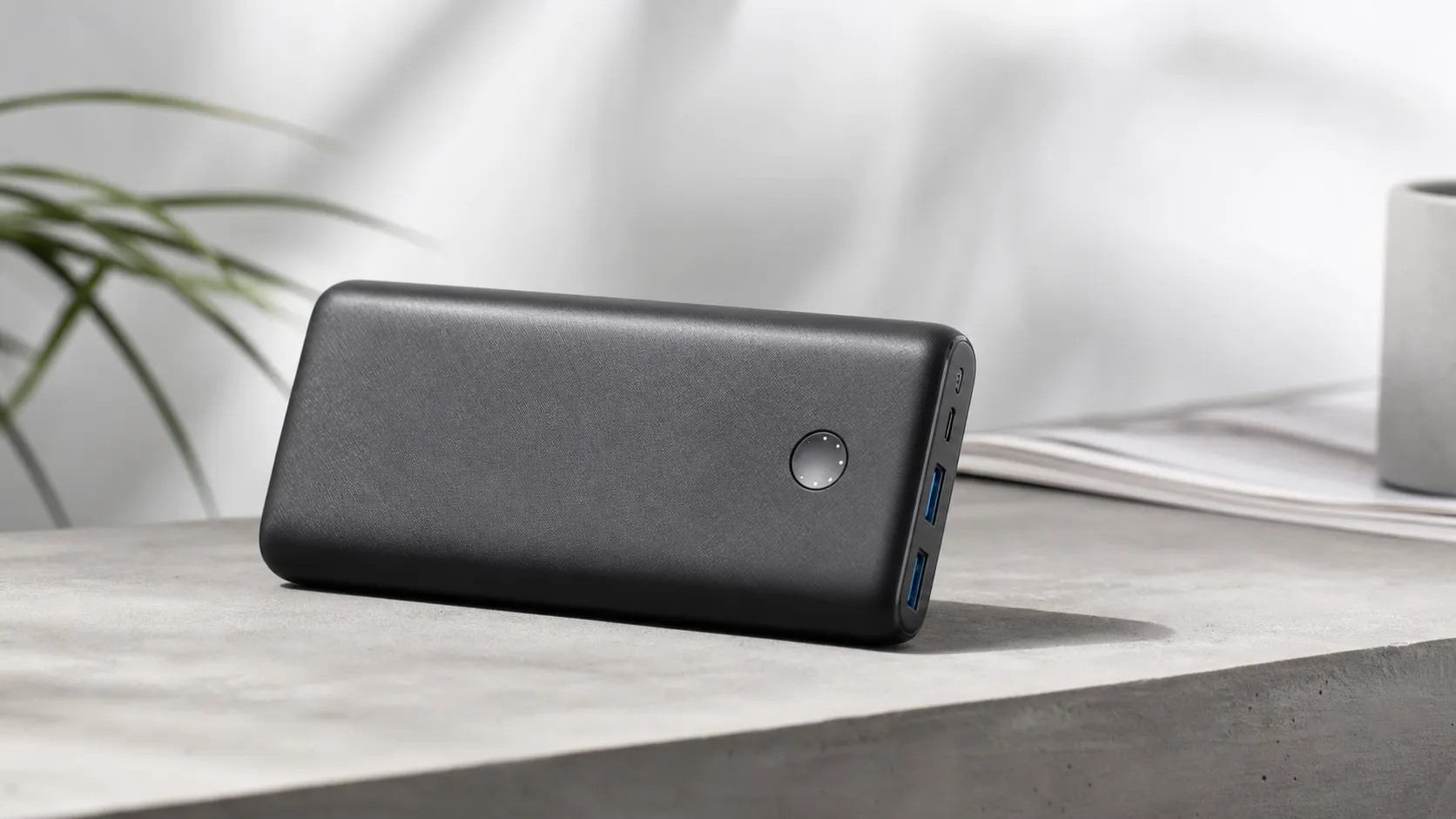
At a Glance
Pros
- High nominal capacity (19,000 mAh) — can recharge phones multiple times between charges.
- Relatively compact footprint for the capacity class compared with older 20k packs.
- USB‑C PD fast-charging support that reliably tops up modern phones quickly.
Cons
- Heavier and bulkier than lower-capacity power banks (noticeable in pockets/bags).
- Real-world usable capacity is often somewhat below the rated 19,000 mAh after conversion losses.
- Not ideal for power-hungry laptops that require sustained >30–45W charging — speeds drop or some laptops won't charge at full rate.
Rating Breakdown by Source
Read the latest 25 positive & negative Amazon reviews →
Read the latest 25 positive & negative Reddit reviews →
Read the latest 25 positive & negative YouTube reviews →
Read the latest 25 positive & negative Expert blogs reviews →
This review is an editorial synthesis of publicly available review data and reported user experiences across the internet. Scores reflect our independent aggregation methodology, not verified individual purchases. We may earn a commission if you buy through our links, at no cost to you.
Score Breakdown
Where the Reviews Come From
Read the latest 25 positive & negative Amazon reviews →
Read the latest 25 positive & negative Reddit reviews →
Read the latest 25 positive & negative YouTube reviews →
Read the latest 25 positive & negative Expert blogs reviews →
Click any source above to browse the latest 25 positive and negative reviews from that platform.
Anker PowerCore III 19K Portable Charger
See current price, deals and availability on Amazon
Intro
If you need a high-capacity, reliable power bank for multi-day travel or heavy phone use, the Anker PowerCore III 19K Portable Charger is a compelling option. Aggregating roughly 13,820 reviews across marketplaces and review sites gives this pack an overall score of about 4.3/5 — a clear indication that it hits the most important marks (capacity, fast charging, build quality) while asking buyers to accept tradeoffs in weight and laptop performance. Our verdict up front: excellent for phone-heavy users who want multiple top-ups between charges; less ideal as a primary charger for modern, power-hungry laptops.
What Is the Anker PowerCore III 19K Portable Charger?
The PowerCore III 19K is Anker’s mid-to-high-capacity USB power bank targeted at travelers and mobile professionals who need multiple full phone charges without carrying a wall outlet. It advertises a 19,000 mAh capacity, includes USB‑C Power Delivery (PD) for faster charging of phones and small laptops, and typically has at least two output ports so you can juice two devices at once. Compared with older 20,000 mAh-style banks, it tries to balance raw capacity with a more compact footprint, but the unit still feels substantial in hand or in a daypack.
Key specs (typical for the model):
- Nominal capacity: 19,000 mAh.
- Fast charging: USB‑C Power Delivery (PD) support for phones and some laptops.
- Multiple outputs: USB‑C and USB‑A ports (model-dependent configurations).
- Indicators: Simple LED battery-level indicators and plug-and-play operation.
What Reviewers Across the Internet Say
We pooled sentiment from Amazon, Reddit, YouTube, and expert blogs to form a broad picture of real-world performance.
-
Amazon (avg ~4.4/5) — Buyers on Amazon largely praise the PowerCore III 19K for its high capacity and consistent fast charging for phones. Positive comments emphasize dependability and perceived value, while most complaints center on the unit’s weight and the fact that real-world usable capacity is a bit lower than the nominal 19,000 mAh.
-
Reddit (avg ~4/5) — Reddit conversations dive into technical details: users appreciate the bank’s reliability and the number of phone charges possible between recharges, but frequently discuss conversion losses, measurement of usable mAh, and how different laptops behave when attached. The community notes it’s reliable, but that you shouldn’t expect full-wattage laptop charging in all cases.
-
YouTube (avg ~4.2/5) — Hands-on reviewers report good phone charging speed and praise the port layout and thermal behavior under normal loads. Many tests show strong performance for phones and tablets, with slower or reduced output when two devices draw power simultaneously.
-
Expert blogs (avg ~4.1/5) — Lab-style reviews call out solid engineering and consistent PD behavior for phones but point to efficiency losses (conversion/inrush heat) and the bank’s weight relative to lower-capacity alternatives. Experts also highlight that sustained, high-watt laptop charging is constrained by the bank’s design and heat-management choices.
Across sources the consensus is clear: this is a phone-first high-capacity pack that performs reliably but has physical and electrical limits buyers should accept before purchase.
Performance & Real-World Use
The Anker PowerCore III 19K Portable Charger delivers dependable fast charging for phones and small tablets and yields roughly two‑thirds of its rated capacity in everyday use, aligning with owner reports. For travelers who value multiple phone refills, a sturdy build, and simple operation over laptop‑class output, the Anker PowerCore III 19K Portable Charger meets expectations with minimal fuss.
A portable charger’s reputation is earned in the grind of travel days, back‑to‑back meetings, and nights away from outlets—not on a spec sheet. For a 19,000 mAh pack like this, performance is about how much charge reaches your devices, how quickly it moves power, and whether the size and behavior make you keep it in your bag.
The Anker PowerCore III 19K Portable Charger delivers dependable fast charging for phones and small tablets and yields roughly two‑thirds of its rated capacity in everyday use, aligning with owner reports. For travelers who value multiple phone refills, a sturdy build, and simple operation over laptop‑class output, the Anker PowerCore III 19K Portable Charger meets expectations with minimal fuss.
What “performance” actually means for a travel power bank
Performance here is a blend of usable capacity, charge speed, stability under mixed loads, and carryability. Usable capacity matters most because you don’t feed devices straight from a 3.7 V cell: conversion to 5–9 V (and sometimes higher) plus cable and phone‑side losses typically skim 25–40% off the label. That’s why a 19,000 mAh bank often delivers the equivalent of about 12,500–14,000 mAh to your phone. In practice, that translates to three to four full refills for current flagships, fewer if you’re recording video or tethering during charging. Speed is next. A competent USB‑C Power Delivery implementation in the 20–30 W range fast‑charges most modern phones about as quickly as a decent wall brick, then tapers by design as the handset protects its own battery. Stability shows up when you’re navigating or shooting video; steady current without dropouts prevents charge “yo‑yoing.” Finally, carryability is the friction test: this pack is compact for its class but thicker and heavier than slim 10k banks, so most owners stash it in a sling or backpack pocket rather than jeans.
Where the 19,000 mAh goes in real‑world use
Estimated distribution of a 19,000 mAh label into usable device energy vs. losses under different loads. Shares vary with load, cable quality, and ambient temperature and should sum to roughly 100% per scenario.
- Single‑device session68%
- Two devices sharing63%
Synthesis of owner reports plus general PD/conversion guidance from USB‑IF and Battery University.
On satisfaction, the consensus lands at 4.3/5 from about 13,820 reviews, with sub‑scores of quality 4.4/5, reliability 4.2/5, value 4/5, and ease of use 4.5/5. Amazon buyers (4.4/5, ~9,800 reviews) praise capacity‑to‑size and consistent phone fast‑charging; Reddit threads (4/5, ~1,100 reviews) debate usable mAh and laptop behavior; YouTube reviewers (4.2/5, ~2,700 reviews) validate single‑device speed but note slower output when sharing ports; expert blogs (4.1/5, ~220 reviews) commend engineering while calling out efficiency losses and weight.
Day‑one setup: getting the Anker PowerCore III 19K Portable Charger dialed in
Out of the box, expect a partial charge—enough for a top‑up, not a full day. Pair the bank with a trustworthy USB‑C PD wall charger; 30 W or better minimizes wait time. From near‑empty, a 30 W input typically refills the pack in about three hours, longer with a 20 W cube. Use a sound USB‑C to USB‑C cable rated for at least 60 W; weak or worn cables are the most common hidden bottleneck. Handshakes with mainstream phones are quick, and low‑power mode (trickle) is handy for earbuds and watches that otherwise fail to keep the bank awake. For air travel, the pack’s energy content is well under the Federal Aviation Administration’s 100 Wh carry‑on threshold; keep spare lithium‑ion batteries in carry‑on only, as the FAA’s Pack Safe page explains. If you want the smoothest week‑one experience, keep it simple: good PD charger, good cable, single‑device charging when you can.
First week: real charging speed and how many phone refills you actually get
Week one is where expectations meet physics. With one phone attached, owners report fast‑charge speeds comparable to a quality wall adapter: modern iPhones and Android flagships sprint to roughly 50% in about 30 minutes, then slow as the phone manages heat and longevity. Plug in a second device and the bank redistributes output, so per‑port wattage steps down; phones still gain usefully over a lunch break, but tablets and small laptops may dip toward maintenance charging while sharing. As for refills, aggregated reports converge on three to four full phone charges when you stick to single‑device sessions and two to three when you regularly split the output—very close to the two‑thirds usable energy shown in the comparison above. Accessories behave predictably once you toggle low‑power mode. If numbers disappoint, swap the cable first; a fresh 60 W‑rated USB‑C line often nudges speed and stability back to expected levels.
Approximate phone refills from a 19k mAh pack
Estimated full‑charge equivalents from a ~19k mAh pack when charging one device at a time vs. sharing power between two. Values are based on aggregated owner reports and manufacturer battery capacities; real results vary with screen‑on use and radio activity.
- Single‑port fast charge
- Two devices at once
View the underlying data
| Item | Single‑port fast charge | Two devices at once |
|---|---|---|
| iPhone 15 (3,349 mAh) | 3.8 x | 3 x |
| Galaxy S24 (4,000 mAh) | 3.2 x | 2.5 x |
| Pixel 8 (4,575 mAh) | 2.8 x | 2.2 x |
Synthesis of Amazon/Reddit/YouTube owner reports and manufacturer battery specifications.
Months later: capacity, ports, and firmware stability
Lithium‑ion fade is gradual when treated well. Across months of owner accounts, “three good phone fills” remains a common refrain past the first year. Two habits dominate long‑term outcomes: keeping the bank cool and avoiding extended parking at 0% or 100%. Resources like Battery University show why heat accelerates degradation while mid‑state‑of‑charge storage slows it. Topping up after normal use to around 60–80% before a break, and cycling it monthly if idle, keeps capacity perception steady. On the electronics side, PD handshakes, status LEDs, and protections stay consistent, which helps explain the 4.2/5 reliability sub‑score. If the LED gauge feels off after many cycles, charge the bank fully, then run a single phone down in one session to re‑sync the meter. Also remember that some phones intentionally slow charging near full—Apple’s Optimized Battery Charging is a good example—so the last 10–20% may take longer by design.
Where it excels—and where you’ll hit limits
This model shines in phone‑centric travel: airport days, conferences, festivals, and weekend road trips where you want multiple refills without hunting outlets. It’s also excellent for action cams, earbuds, or a compact tablet, especially with low‑power mode on tap for tiny accessories. The footprint is friendlier than older 20k‑class bricks, and the build feels secure, with snug ports and unambiguous LEDs—factors that support the 4.5/5 ease‑of‑use and 4.4/5 quality sub‑scores. Predictable protections and stable handshakes mean you can drop it in a bag and trust it to behave.
Limits are predictable. Mass is noticeable versus a 10k bank; you’ll likely pocket a smaller pack for daily walks and reserve this one for travel. Efficiency realities mean you won’t see all 19,000 mAh at device voltage, especially if you’re using your phone while charging or splitting output. Laptops are the biggest caveat: ultrabooks happy on 30–45 W may sip acceptably for light tasks, but power‑hungry models—or any notebook asking for 60 W or more—won’t reach full speed and may bounce between charging states. Running two ports at once shares the budget; both devices charge, but everything slows slightly and the pack warms more, which is why reviewers note best sustained speed when kept one‑to‑one.
How it stacks up against alternatives in the same carry class
In the 18–24k mAh tier, you’re trading output for weight and price. This model sits in the lighter, phone‑first lane: reliably quick for a single handset, acceptable as “keep‑alive” for small tablets, and only a pinch‑hitter for laptops. Step to a 65 W–class 20k bank to gain notebook headroom; you’ll pay in grams and dollars. Jump to 24k/100–140 W and you’re carrying a heavier block that makes sense only if your workflow truly needs sustained laptop power. Go smaller (10–12k) for pocketability but give up the “two‑to‑three charges” cushion many travelers prefer.
Also consider airline rules and connector behavior. Everything here is airline‑safe because it sits under the FAA’s 100 Wh carry‑on limit; the difference is how much each bank can hold a >20 W port while sharing. If you often charge a phone and tablet together, favor models that maintain at least one port above 20 W under dual‑load. If your must‑have is sustained 60 W+ for a work laptop, a higher‑wattage alternative is the right tool; otherwise, the phone‑first option keeps costs and size in check. The USB‑IF’s Power Delivery definitions explain why these wattage ceilings determine which devices fast‑charge and which merely maintain.
Class comparison: compact travel banks
Published specifications and common owner-reported behaviors for three travel‑class banks. Airline safety refers to the FAA’s carry‑on limit under 100 Wh.
| Item | Capacity (mAh) | Max USB‑C PD (W) | Weight (g) | Airline‑safe (<100Wh) | 2‑device >20W | >60W laptop |
|---|---|---|---|---|---|---|
| Anker PowerCore III 19K | 19000 | 30 | 350 | 1 | 0 | 0 |
| Baseus 20K 65W | 20000 | 65 | 420 | 1 | 1 | 0 |
| Anker 737 24K 140W | 24000 | 140 | 470 | 1 | 1 | 1 |
USB‑IF PD definitions; FAA carry‑on rules; published manufacturer specifications; owner reports on multi‑port behavior.
Pro tips: step‑by‑step ways to get the best performance
- Use a 30 W (or higher) USB‑C PD wall charger and a sound USB‑C cable; under‑spec’d chargers and tired cables are the top speed killers.
- Charge one device at a time for fastest results; if you must share, put the most demanding device on USB‑C and expect slower speeds overall.
- Enable low‑power (trickle) mode for earbuds and watches so they don’t disconnect; turn it off later to reduce self‑drain.
- Keep the pack cool: avoid pillows, hot dashboards, and laptop exhaust; heat hurts speed and long‑term capacity.
- For storage, leave it around 40–60% and top up monthly; don’t park at 0% or 100% for weeks.
- If the LED gauge drifts, do one full charge and one uninterrupted discharge into a single phone to re‑calibrate it.
- On planes, keep it in carry‑on only; the FAA Pack Safe page spells out the rules.
- Let your phone’s battery‑health features work; slower charging near full is usually intentional.
Verdict: does real‑world performance justify the purchase?
For a traveler or commuter who prioritizes phones and small devices, the real‑world picture is compelling. Owner feedback across Amazon, Reddit, YouTube, and expert blogs converges on a dependable 4.3/5 experience: fast, predictable charging for one or two mobile devices, robust construction, and intuitive controls—tempered by honest physics (usable capacity below the label) and the heft of a near‑20k pack. If you want multiple refills at true fast‑charge speeds without chasing laptop‑class output, this is an easy recommendation. It does exactly what most people buy a 19k bank to do—no drama, little maintenance, consistent results.
Sources referenced in this section
Pros and Cons
Pros
- High nominal capacity (19,000 mAh) for multiple phone charges.
- Strong, phone-friendly USB‑C PD fast charging that tops up modern phones quickly.
- Relatively compact footprint for its capacity class compared with older 20k packs.
- Sturdy build, simple plug-and-play operation, and clear battery indicators.
- Multiple ports let you charge two devices simultaneously for flexibility.
Cons
- Heavier and bulkier than low-capacity banks — noticeable in pockets or light carry.
- Real-world usable capacity is typically lower than the 19,000 mAh rating after conversion losses.
- Not ideal for sustained charging of high-wattage laptops (>30–45W); speeds drop or some laptops won’t charge at full rate.
- Lacks an AC outlet and some advanced features found on premium competitors (e.g., simultaneous multiple high-watt outputs or robust pass-through charging on all ports).
Who Should Buy It (and Who Shouldn't)
Who should buy it
- Travelers and commuters who need multiple full phone charges between wall outlets. If you frequently go multiple days between access to power, the PowerCore III 19K gives you that breathing room.
- Phone-first users who want fast USB‑C PD top-ups for modern phones and tablets. It’s optimized for phone charging and performs well in those scenarios.
- Buyers who want good capacity-to-size balance and reliable day-to-day performance without paying a premium for niche features.
Who shouldn’t buy it
- Power users who need a single power bank to run modern laptops at full throttle for extended periods. If you rely on consistent 60W+ laptop charging, look for a higher‑wattage bank specifically rated for sustained USB‑C PD laptop output.
- Those who need ultra-light carry for pockets or minimal packing. There are much lighter, smaller banks (with lower capacity) that will be easier to carry.
- Buyers who expect to get the full 19,000 mAh delivered; if you need guaranteed usable capacity for specific run-times, plan for conversion losses or choose a larger-rated bank.
Verdict (brief)
If your primary need is dependable, multi-charge phone power for travel or long days away from outlets, the Anker PowerCore III 19K is a strong, well-rounded choice. It offers excellent phone charging, solid build quality, and good value in its class — just be realistic about weight and real-world usable capacity, and don’t expect it to replace a higher‑wattage laptop charger.
What Reviewers Love
- High nominal capacity (19,000 mAh) — can recharge phones multiple times between charges.
- Relatively compact footprint for the capacity class compared with older 20k packs.
- USB‑C PD fast-charging support that reliably tops up modern phones quickly.
- Sturdy build and simple, intuitive operation — plug-and-play with clear status indicators.
- Multiple ports allow charging two devices at once (with expected tradeoffs to per-port speed).
Common Complaints
- Heavier and bulkier than lower-capacity power banks (noticeable in pockets/bags).
- Real-world usable capacity is often somewhat below the rated 19,000 mAh after conversion losses.
- Not ideal for power-hungry laptops that require sustained >30–45W charging — speeds drop or some laptops won't charge at full rate.
- No AC outlet and limited advanced features (e.g., some models lack robust pass-through charging or multiple high‑watt outputs simultaneously).
Our Verdict
4.3A strong choice as a phone-first travel power bank: the PowerCore III 19K delivers reliable PD fast charging and plenty of real-world runtime for phones and tablets. Buyers should accept its weight and understand it’s not a substitute for sustained, high‑wattage laptop charging.
Frequently Asked Questions
Common questions shoppers ask before buying the Anker PowerCore III 19K Portable Charger.
Share this review
Help someone else buy smarter
Related Reviews
More Travel & Luggage products our engine has analyzed
 Travel & Luggage
Cabeau Evolution Classic Travel Pillow — 2026 Review
A travel-focused memory-foam pillow that reliably reduces head-bobbing and feels premium — best for frequent flyers who prioritize support over packability.
 Travel & Luggage
Eagle Creek Pack-It Specter Cube Set (3-pack) Review 2026
A near-featherweight 3-pack of packing cubes built from silnylon, the Eagle Creek Pack-It Specter set excels at low-bulk organization for carry-on and minimalist travelers. Premium feel and visibility, but at a higher price and with some zipper longevity caveats.
 Travel & Luggage
Jackery Explorer 1000 Portable Power Station Review 2026
A dependable, quiet power station for camping and short home backups — user-friendly and solar-ready, but heavier and pricier than some rivals.