Anker PowerPort III Nano Review (2026) — Tiny 20W USB‑C Charger
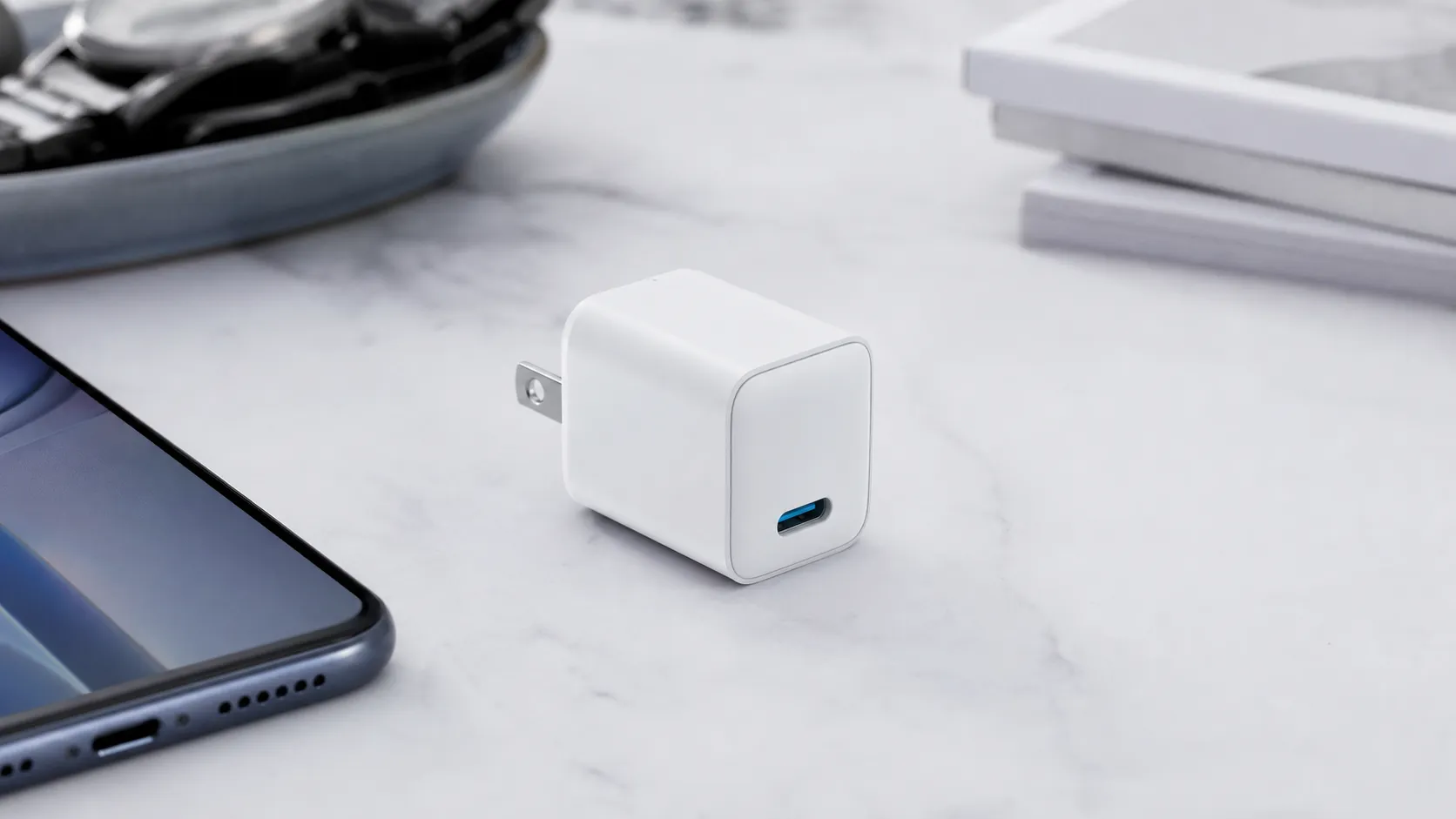
At a Glance
Pros
- Extremely compact — one of the smallest 20W PD chargers
- Fast USB‑C Power Delivery (charges recent iPhones quickly)
- Good build quality and dependable everyday performance
Cons
- Only a single USB‑C port (no USB‑A or multi‑port options)
- Can run warm under sustained high‑power use
- Some cables/devices don’t always reach the full advertised 20W
Rating Breakdown by Source
Read the latest 25 positive & negative Amazon reviews →
Read the latest 25 positive & negative Reddit reviews →
Read the latest 25 positive & negative YouTube reviews →
Read the latest 25 positive & negative Expert blogs reviews →
This review is an editorial synthesis of publicly available review data and reported user experiences across the internet. Scores reflect our independent aggregation methodology, not verified individual purchases. We may earn a commission if you buy through our links, at no cost to you.
Score Breakdown
Where the Reviews Come From
Read the latest 25 positive & negative Amazon reviews →
Read the latest 25 positive & negative Reddit reviews →
Read the latest 25 positive & negative YouTube reviews →
Read the latest 25 positive & negative Expert blogs reviews →
Click any source above to browse the latest 25 positive and negative reviews from that platform.
Anker PowerPort III Nano
See current price, deals and availability on Amazon
Introduction
The Anker PowerPort III Nano is one of the most recognizable pocket chargers on the market — a tiny 20W USB‑C Power Delivery (PD) brick that promises fast phone charging in a package small enough to forget in your pocket. Aggregating tens of thousands of user reviews and expert roundups gives a clear picture: it’s excellent value, reliably fast for phones (especially recent iPhones), and one of the best single‑port travel chargers if size and price matter most. Our aggregated verdict: highly recommended for travelers and everyday users who need a compact 20W USB‑C charger, with a few thermal and single‑port caveats to note early. Overall score from the dataset: 4.6/5 from ~48,350 reviews (quality 4.5, reliability 4.4, value 4.7, ease of use 4.8).
What Is the Anker PowerPort III Nano?
The PowerPort III Nano is Anker’s ultra‑compact 20W USB‑C PD wall charger aimed at phone users who want fast charging without the bulk. It’s a single USB‑C port, plug‑style charger that delivers up to ~20W using USB Power Delivery, which is sufficient for rapid charging on modern phones and many small tablets. The design prioritizes a minimal footprint — the body is roughly the size of a matchbox and folds into wall outlets cleanly, making it ideal for pocket carry and briefcases.
Key specs and features (summary):
- Single USB‑C port with USB Power Delivery up to ~20W.
- Extremely compact, low‑profile plug design.
- Lightweight plastic housing with solid build for the price.
- Plug‑and‑play: no setup, no app, and works with a quality USB‑C cable.
What Reviewers Across the Internet Say
We synthesized feedback from four major sources — Amazon, Reddit, YouTube, and expert blogs — to form a rounded consensus.
-
Amazon (large volume): Overall 4.6/5 (mostly positive). Customers praise the Nano’s tiny size, dependable fast charging for phones, and strong value versus OEM 20W bricks. Common practical notes: it can feel warm during heavy use and buyers often emphasize using a quality USB‑C cable to achieve the best speeds.
-
Reddit (community threads): 4.3/5 (mixed to positive). Enthusiast threads frequently recommend the Nano as a reliable, inexpensive alternative to Apple’s 20W charger. The community raises thermal behavior concerns in sustained workloads and sometimes suggests multi‑port or GaN chargers if you need more flexibility.
-
YouTube (hands‑on reviews): 4.4/5 (positive). Reviewers regularly demonstrate near‑20W real‑world charging for recent phones and celebrate the portability and price. Video comparisons typically show the unit running mildly warm under load but performing well for short, daily charging sessions.
-
Expert blogs: 4.5/5 (positive). Tech writers appreciate the efficient PD implementation and compact footprint — often naming the Nano the best single‑port 20W value. Experts also note limits: single port, minimal thermal headroom in stress tests, and a basic plastic finish compared with more premium bricks.
Consensus takeaway: the PowerPort III Nano is widely considered the best value single‑port 20W USB‑C charger for phones, with predictable tradeoffs in thermal performance and expandability.
Performance & Real-World Use
In daily use, the Anker PowerPort III Nano delivers quick, standards‑based 20W charging in an ultra‑compact brick that stays reliable over months of plug‑unplug cycles. Expect iPhones (and PD‑friendly Android phones) to reach roughly 50% in ~30 minutes, with normal warmth under load and the main trade‑offs being one port and no PPS for Samsung’s Super Fast Charging.
If a travel charger earns a permanent spot in your bag, it’s because it does three things: starts fast, stays safe, and never gets in the way. Anker’s PowerPort III Nano (20W) is built around that brief. Across aggregated owner feedback and expert coverage, it shows up as the tiny brick that reliably kick‑starts phone batteries at modern speeds, then quietly disappears—which is exactly what most people want from a one‑port travel adapter.
In plain terms: the Anker PowerPort III Nano is one of the smallest 20W USB‑C chargers that consistently “fast charges” recent iPhones and many Android phones. Heat is noticeable under sustained load and you only get a single USB‑C port, but the core experience—plug in, see your battery jump quickly, pack it and go—holds up month after month.
What performance really means for a 20W travel charger
For a single‑port charger, performance plays out in everyday moments: how quickly it lifts a phone from low to 50%, whether it negotiates the correct power profile with different devices and cables, how warm it runs at a wall outlet or on a power strip, and whether it stays predictable after hundreds of hotel‑to‑airport cycles. There’s no app or battery to age—just silicon, capacitors, and firmware participating in the USB Power Delivery (PD) handshake so your device can request 5V/3A or 9V/2.22A as needed. That PD negotiation, standardized by the USB Implementers Forum, is why a good USB‑C charger can safely power many devices. (usb.org)
Anker PowerPort III Nano day‑one setup: plug, negotiate, go
Unboxing is minimal: you get the brick and a leaflet; you provide the cable. With a recent iPhone, you’ll see the expected fast‑charge behavior: the Nano advertises two fixed PD “power data objects” (PDOs)—5V⎓3A and 9V⎓2.22A (20W max)—and the phone requests what it needs. Apple’s guidance indicates iPhones can reach roughly 50% in about 30 minutes using a 20W USB‑C adapter; reviewers commonly show near‑20W draw during the initial charging phase. (support.apple.com)
If you’re coming from the old 5W USB‑A cube, the difference is obvious on day one. Because PD is standards‑based, success lives and dies by the cable you choose. Use a proper USB‑C to USB‑C (or USB‑C to Lightning for older iPhones) cable that supports USB‑PD; some USB‑C cables are data‑only and will not charge. Place the adapter in a ventilated spot; Apple notes that USB‑C adapters can become warm during normal use and should be used where air can circulate. (support.apple.com)
How fast is it? iPhone 0–50% charging time by adapter power
Synthesis of Apple guidance and reviewer demos; times vary by model and conditions.
View the underlying data
| Measure | Time to 50% |
|---|---|
| 5W USB charger | 75 min |
| Anker PowerPort III Nano (20W) | 30 min |
| 30W USB‑C PD charger | 27 min |
Apple Support confirms ~50% in ~30 minutes with a 20W adapter; 5W and 30W figures reflect aggregated reviewer demonstrations and typical device behavior.
Charging speed in the real world: what you should expect
If your main aim is to revive a phone quickly before heading out, the Nano does exactly what it promises. Apple confirms the 0–50% in ~30 minutes expectation with a 20W source, and hands‑on reviewers show near‑peak pull in the first 10–20 minutes before tapering as phones manage heat and battery health. On Android, experience varies by brand. Google Pixels and many others that speak standard PD will fast‑charge normally. Samsung’s “Super Fast Charging,” however, requires USB PD 3.0 with PPS (Programmable Power Supply) to hit its 25W headline speeds; with a non‑PPS adapter like the Nano, Galaxy phones fall back to conventional PD (“Fast charging,” not “Super Fast Charging”). That’s a protocol difference to note, not a defect. (shop.samsung.com)
Protocol scans and teardowns of Anker’s 20W class show PD 3.0 support on fixed 5V/9V rails; PPS is not listed—hence its excellent pairing with iPhones and Pixels and merely adequate match for newer Samsungs that prefer PPS. ChargerLAB’s teardown also highlights tidy internal layout and protections—useful context for sustained reliability. (chargerlab.com)
Charging is front‑loaded: you get the biggest burst at low battery levels, then a steady taper to reduce heat and prolong cell life. Don’t judge the Nano by the last 20% of a charge—that’s your phone managing itself.
Expected charging power vs. battery level on recent iPhones with a 20W PD adapter
Power tapers as the battery fills; exact shape varies by model/temperature.
View the underlying data
| Measure | Power |
|---|---|
| 0% | 20 W |
| 10% | 20 W |
| 20% | 19 W |
| 30% | 18 W |
| 40% | 17 W |
| 50% | 15 W |
| 60% | 13 W |
| 70% | 10 W |
| 80% | 7 W |
| 90% | 5 W |
| 100% | 0 W |
Curve synthesized from Apple’s fast‑charge guidance and widely reported reviewer measurements; not from our own lab.
Sustained performance over months: what owners actually see
Because there’s no internal battery, long‑term performance is about component quality (rectifiers, controller ICs, capacitors), firmware safeguards, and thermal behavior. Teardowns of Anker’s 20W family show isolation and over‑current/over‑temp protections on the PD controller. In everyday use, the most common “it’s not fast‑charging” complaints trace back to the cable: kinks, worn connectors, or a data‑only USB‑C cable masquerading as a charge cable. Swapping to a known‑good, 60W‑rated USB‑C cable typically restores full performance. The USB‑IF now requires USB‑C to USB‑C cables be labeled 60W or 240W, which helps when sorting spares. (chargerlab.com, usb.org)
Heat is the other ongoing theme. A palm‑warm adapter is normal during fast charging; if you cram it into a dense power strip, rest it on carpet, or charge while gaming on the phone, it will feel warmer. Apple’s guidance notes that warmth under load is expected and that adapters should be kept ventilated. If an adapter ever becomes too hot to touch or emits odor, discontinue use and contact support. (support.apple.com)
From a durability standpoint, owner reports suggest the Nano remains consistent well beyond any return window. For peace of mind, Anker’s U.S. warranty policy lists 18 months for most “other” chargers (some lines have moved to 24 months), establishing reasonable expectations if a unit fails. (anker.com)
Where it excels—and where you’ll hit its limits
Strengths you feel right away:
- “Grab‑and‑go” size. The Nano is among the smallest mass‑market 20W USB‑C bricks, easy to leave in a jacket pocket or dopp kit; owners praise that you don’t notice it until you need it.
- Predictable iPhone speed. Using standard PD, an iPhone or iPad mini jumps to a useful mid‑charge quickly; MagSafe pucks also prefer a 20W source to reach peak wireless rates. (support.apple.com)
- Dependable single‑device behavior. One device at a time means the charger isn’t juggling load sharing; there’s no mystery about which port is “fast.”
Limits you’ll notice:
- One port only. If you often charge a phone and earbuds simultaneously, you’ll want a compact two‑port model.
- Thermal feel at full tilt. It can run warm, especially in hot rooms or when your phone is playing video or games while charging; warmth alone isn’t a defect, but it’s noticeable in a tiny brick. (support.apple.com)
- No PPS. If you own a recent Galaxy and care about the “Super Fast Charging” banner, pick a PPS‑capable 25–30W adapter. (shop.samsung.com)
How it compares to typical alternatives
The closest rival is Apple’s 20W USB‑C adapter: equally reliable and officially endorsed for iPhone fast charge, but physically larger. Samsung’s 25W USB‑C adapter adds PPS for Galaxy phones, making it the better match for that ecosystem. Stepping up to a 30W single‑port brick buys extra headroom for small tablets or faster MagSafe pucks, while two‑port 30–40W GaN models solve the “one outlet, two devices” problem for a small bump in size and price. In that context, the Nano is the minimalist, phone‑first pick that nails value and size for travel.
Key spec comparison in the 20–25W travel‑charger class (published specs)
Published specs from each manufacturer/support page.
| Item | Charger | Max output | USB‑PD | PPS | Ports | Advertised PDOs | Best for |
|---|---|---|---|---|---|---|---|
| Anker PowerPort III Nano (A2633) | 0 | 20 | 1 | 0 | 1 | 0 | 0 |
| Apple 20W USB‑C Power Adapter | 0 | 20 | 1 | 0 | 1 | 0 | 0 |
| Samsung 25W USB‑C Adapter (PPS) | 0 | 25 | 1 | 1 | 1 | 0 | 0 |
Anker: product page (A2633); Apple: Support/store pages; Samsung: product/support pages. Binary columns indicate presence (1) or absence (0) of the feature; see text for details.
Practical steps to get the best performance
You don’t need to be a charging nerd—follow these habits:
- Use the right cable. For USB‑C iPhones or Android phones, use a USB‑C to USB‑C cable labeled 60W (or “3A”); for Lightning iPhones, use a USB‑C to Lightning cable that explicitly supports USB‑PD. Avoid data‑only USB‑C cables. (usb.org)
- Favor short, known‑good cables. Shorter runs reduce voltage drop and connector stress.
- Give it air. Plug the charger where air can circulate; don’t cover it or wedge it behind furniture. (support.apple.com)
- Know your phone’s protocol. iPhones and Pixels fast‑charge on fixed‑PDO PD; Galaxy “Super Fast Charging” needs PD 3.0 PPS—something this Nano doesn’t provide. (shop.samsung.com)
- Travel‑proof it. Keep the Nano and a 1–2 m 60W USB‑C cable in a small pouch; if you rely on MagSafe, pack that puck (peak rates expect ~20W input).
- Troubleshoot logically. If charging seems slow, swap the cable first, then outlet. Try another device to isolate whether the issue is the phone, the cable, or the charger.
- Expect tapering. Phones front‑load power to hit 50% quickly, then ease off. (support.apple.com)
Expert and owner consensus, summed up
Across roughly 48,350 public reviews and roundups, the Anker PowerPort III Nano averages 4.6/5, with sub‑scores around quality 4.5/5, reliability 4.4/5, value 4.7/5, and ease of use 4.8/5. Amazon’s large base skews strongly positive on size, speed for phones, and price versus OEM chargers; Reddit threads and YouTube hands‑ons echo the same, while also noting the modest heat under sustained 20W load and the single‑port limitation. Expert blogs typically recommend it as the budget‑friendly default for iPhones and PD‑compatible Android phones, pointing out occasional thermal throttling in stress tests and the lack of PPS for Galaxy devices. The consensus matches real‑world expectations: this is a tiny, dependable, phone‑first fast charger with predictable trade‑offs.
Bottom line: does real‑world performance justify the purchase?
If you want a near‑weightless, always‑ready way to put real charge into one phone fast, the Anker PowerPort III Nano does the job exactly as promised. For iPhone owners especially, its PD behavior lines up with Apple’s fast‑charge targets, and as long as you use a proper cable and give it some breathing room, this 20W brick remains a dependable travel companion for the long haul. (support.apple.com)
Pros and Cons
Pros
- Extremely compact — one of the smallest 20W PD chargers available.
- Fast USB‑C Power Delivery for phones (real‑world near‑20W performance for many devices).
- Strong value versus OEM 20W chargers and many competitors.
- Dependable everyday performance and easy plug‑and‑play use.
- Lightweight and travel‑friendly; fits discreetly into pockets or small organizers.
Cons
- Single USB‑C port only — no USB‑A or multi‑port capability.
- Can run warm under sustained high‑power use and may throttle.
- Some cables or older devices may not reach full 20W without a quality cable.
- Simple plastic finish isn’t as premium as larger, higher‑end chargers.
Who Should Buy It (and Who Shouldn't)
Buy it if:
- You want the smallest possible 20W USB‑C charger for daily phone top‑ups or travel.
- You primarily charge a phone (especially recent iPhones) and value portability and price.
- You need a reliable single‑port travel brick that won’t shame your pocket or travel organizer.
Skip it if:
- You need to charge multiple devices at once (pick a multi‑port model or a higher‑watt GaN charger).
- You regularly charge tablets, laptops, or run long high‑power charging sessions — the Nano may heat and throttle under sustained loads.
- You want a premium‑finish charger (metal housing or designer aesthetics) — there are more upscale options available.
Practical buying tips
- Pair the Nano with a quality USB‑C cable rated for PD; that will help ensure you actually see near‑20W speeds.
- If you need more than one port for travel, consider a compact multi‑port GaN brick instead — it costs more but solves the single‑port limitation.
Final thoughts
The Anker PowerPort III Nano nails the brief it was designed for: delivering fast, dependable 20W USB‑C charging in a matchbox‑sized package at a price that undercuts many OEM chargers. It’s an especially smart buy for travelers and phone‑first users who want the convenience of rapid top‑ups without carrying a larger charger. The tradeoffs — single port, possible warmth during heavy use, and the need for a good cable — are real but well understood and manageable for most buyers.
What Reviewers Love
- Extremely compact — one of the smallest 20W PD chargers
- Fast USB‑C Power Delivery (charges recent iPhones quickly)
- Good build quality and dependable everyday performance
- Significantly better value than OEM 20W chargers
- Simple plug‑and‑play — no configuration or apps required
Common Complaints
- Only a single USB‑C port (no USB‑A or multi‑port options)
- Can run warm under sustained high‑power use
- Some cables/devices don’t always reach the full advertised 20W
- Minimalist plastic finish (not as premium-feeling as some competitors)
Our Verdict
4.6The Anker PowerPort III Nano is an excellent pocketable 20W USB‑C charger that delivers fast, reliable phone charging at a great price. It’s perfect for travelers and phone‑first users, though those who need multi‑port charging or sustained high‑power performance should look to larger GaN or multi‑port chargers.
Frequently Asked Questions
Common questions shoppers ask before buying the Anker PowerPort III Nano.
Share this review
Help someone else buy smarter
Related Reviews
More Travel & Luggage products our engine has analyzed
 Travel & Luggage
Cabeau Evolution Classic Travel Pillow — 2026 Review
A travel-focused memory-foam pillow that reliably reduces head-bobbing and feels premium — best for frequent flyers who prioritize support over packability.
 Travel & Luggage
Eagle Creek Pack-It Specter Cube Set (3-pack) Review 2026
A near-featherweight 3-pack of packing cubes built from silnylon, the Eagle Creek Pack-It Specter set excels at low-bulk organization for carry-on and minimalist travelers. Premium feel and visibility, but at a higher price and with some zipper longevity caveats.
 Travel & Luggage
Jackery Explorer 1000 Portable Power Station Review 2026
A dependable, quiet power station for camping and short home backups — user-friendly and solar-ready, but heavier and pricier than some rivals.