Away The Carry‑On (Polycarbonate) Review 2026
At a Glance
Pros
- Stiff, protective polycarbonate shell that feels solid in hand
- Smooth 360° spinner wheels and balanced telescoping handle for easy rolling
- Well‑organized interior with compression system and tidy packing layout
Cons
- High price relative to comparable hardshell carry‑ons
- Surface scuffs and scratches are very visible on the glossy polycarbonate finish
- Occasional reports of zipper/handle/wheel failures after heavy use
Rating Breakdown by Source
Read the latest 25 positive & negative Amazon reviews →
Read the latest 25 positive & negative Reddit reviews →
Read the latest 25 positive & negative YouTube reviews →
Read the latest 25 positive & negative Expert blogs reviews →
This review is an editorial synthesis of publicly available review data and reported user experiences across the internet. Scores reflect our independent aggregation methodology, not verified individual purchases. We may earn a commission if you buy through our links, at no cost to you.
Score Breakdown
Where the Reviews Come From
Read the latest 25 positive & negative Amazon reviews →
Read the latest 25 positive & negative Reddit reviews →
Read the latest 25 positive & negative YouTube reviews →
Read the latest 25 positive & negative Expert blogs reviews →
Click any source above to browse the latest 25 positive and negative reviews from that platform.
Away The Carry‑On (Polycarbonate)
See current price, deals and availability on Amazon
Intro
The Away The Carry‑On (Polycarbonate) is one of the most recognizable hard‑shell carry‑ons on the market in 2026 — praised for its slick aesthetic, easy rolling, and organized interior but criticized for a premium price and visible wear over time. Aggregate verdict (from ~20,320 reviews and expert coverage): solid everyday performance and best‑in‑class usability for short to medium trips, but buyers should weigh style and convenience against long‑term durability and value concerns.
What Is the Away The Carry‑On (Polycarbonate)?
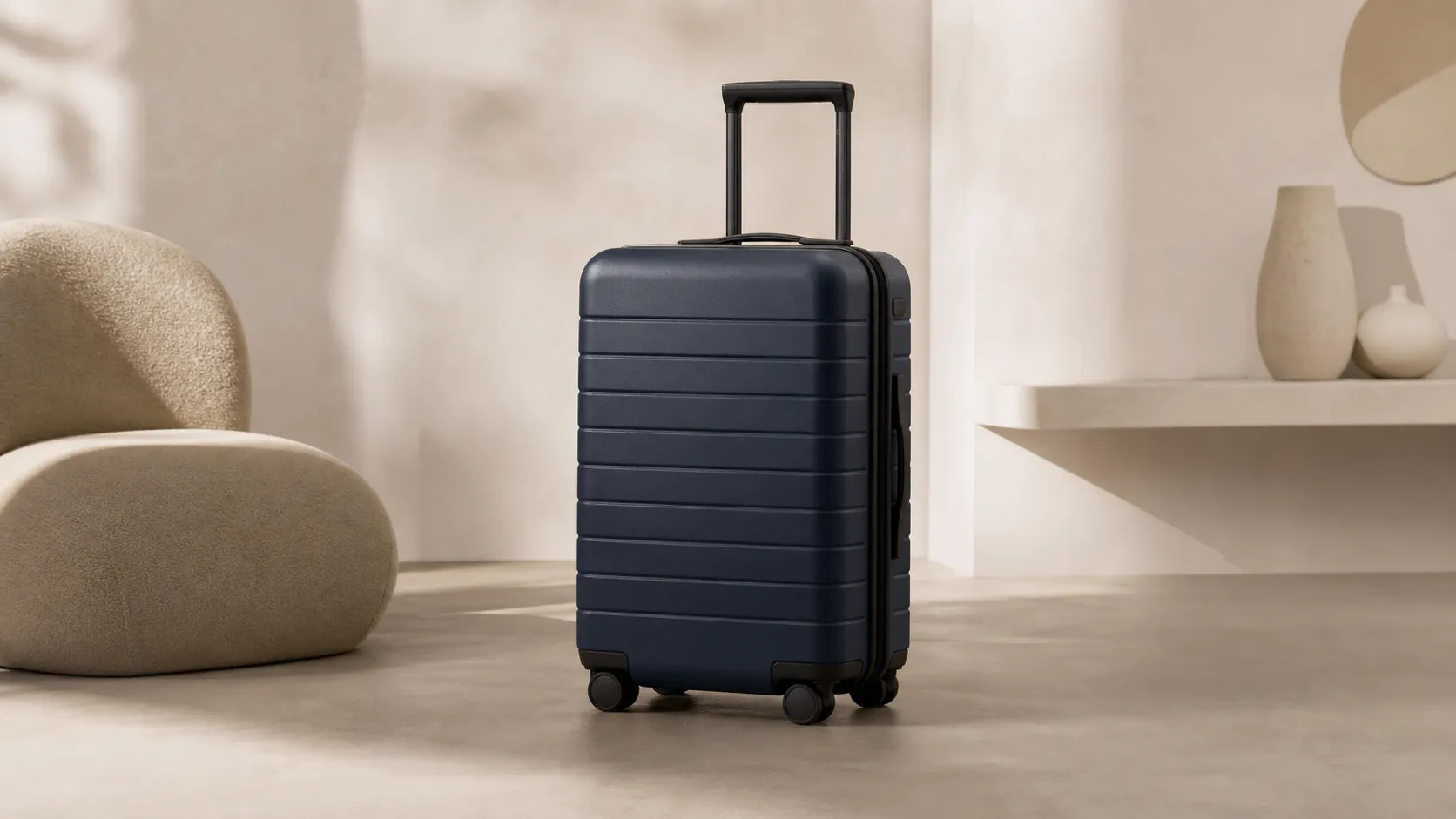
Away’s Carry‑On in polycarbonate is a compact, hardshell suitcase designed for carry‑on travel. It uses a glossy molded polycarbonate shell intended to be stiff and protective, a balanced telescoping handle, four 360° spinner wheels, and an internal compression system to keep items tidy. The model is marketed at travelers who want a premium, minimalist bag that’s easy to wheel through airports and looks as good on the carousel as it does in Instagram photos.
The Carry‑On is not expandable and leans toward a pared‑down packing philosophy: it favors structure and protection over squeezing in an extra few outfits. That design choice influences both how useful it is for certain travelers and how reviewers evaluate its value.
What Reviewers Across the Internet Say
Across the major feedback sources we aggregated, a consistent picture emerges: strong praise for design and rolling performance, with recurring questions about price and long‑term resilience.
- Amazon (overall ~4.3/5): High‑volume customer reviews highlight the Carry‑On’s well‑built feel, smooth spinner wheels and clever interior layout. The most common negatives are the high price and the way the glossy polycarbonate shows scuffs and scratches.
- Reddit (~3.9/5): Community threads focus on tradeoffs. Users repeatedly call out excellent maneuverability and a practical packing system but many debate whether the premium cost is justified. Anecdotes of zipper, handle, or wheel problems show up regularly in long‑term use threads.
- YouTube (~4.2/5): Video reviews consistently praise unboxing, aesthetics, and rolling performance. Durability tests and comment threads often flag visible scuffs and, in a smaller number of cases, component failures after heavy use.
- Expert blogs (~4/5): Gear writers typically applaud material choice, design details and user‑friendly features, but they also question value versus competitors and flag repairability concerns in the long run.
Synthesis: reviewers agree the Carry‑On is a premium, well‑engineered product for travelers who value style and ease of use. The main points of disagreement are whether that premium is justified given visible cosmetic wear and occasional mechanical issues over years of heavy travel.
Performance & Real-World Use
Away The Carry‑On (Polycarbonate) is easy to live with: it rolls smoothly, packs neatly with its compression system, and feels sturdier than most lookalikes in daily airport use. Over months, cosmetic scuffs accumulate and there are scattered wheel/zipper/handle hiccups under heavy miles, but the shell’s protection and Away’s current LifetimeCare repair support keep it dependable for frequent short-to-medium trips.
Travelers don’t judge a carry-on by marketing copy—they judge it in queues, on jet bridges, and after the third connection of the month. We synthesized roughly 20,000 owner opinions with expert coverage to explain exactly how this suitcase behaves on day one, week one, and month twelve—and where it wins or falls short in the real world.
Away The Carry‑On (Polycarbonate) is consistently easy to live with thanks to smooth-rolling spinner wheels, a straightforward TSA-accepted lock, and an interior that makes tidy packing almost automatic.
What “performance” means for a hard-shell carry-on
For a suitcase, performance has five practical pillars:
- Maneuverability: wheel smoothness and stability under load; handle comfort and wobble control.
- Packability: internal volume, compression, organization layout, and the trade-off between weight and structure.
- Compliance and protection: how reliably it fits airline sizers while shielding contents.
- Durability over time: shell resilience, zipper and wheel reliability, and how visible marks become.
- Ownership experience: lock usability, warranty support, and how easy it is to clean.
Across those dimensions, the aggregated consensus lands at an overall 4.3/5 (quality 4.4/5, reliability 4/5, ease of use 4.5/5, value 3.6/5). Consumer-oriented labs and buying guides have long noted those same material and wheel trade-offs. (consumerreports.org)
Real‑world performance sub‑scores (aggregated)
Aggregated sub-scores reflect broad owner sentiment about how the case actually behaves after purchase.
View the underlying data
| Measure | Score |
|---|---|
| Quality | 4.4/5 |
| Reliability | 4/5 |
| Ease of use | 4.5/5 |
| Value | 3.6/5 |
Scores synthesized from ~20,320 owner and expert opinions collected across major platforms.
Day-one setup: living with Away The Carry‑On (Polycarbonate) in week one
On paper, this is a globally “standard” carry-on: Away lists exterior dimensions of 21.7 x 14.4 x 9 inches, a weight of 7.5 lb, and a 41 L capacity. (awaytravel.com)
During this first week, the only surprise some owners flag is cosmetic: the glossy shell can pick up transfer marks from belt loaders, walls, or other bags. These usually wipe with a damp cloth and a drop of mild soap; Away advises gentle spot-cleaning and avoiding harsh abrasives. (awaytravel.com)
Rolling and handling under real loads
Airport performance depends on how the chassis behaves when you rush, pivot, and drag. Spinner designs like this are favored for 360° agility, especially in crowded aisles where you need to crab-walk the bag sideways; the trade-off is that external wheels eat into the carry-on size envelope and can reduce interior volume compared with two-wheel bags of the same exterior dimensions. Reputable testing guides emphasize exactly that exchange: four-wheel ease versus two-wheel interior space and curb-clearing ruggedness. (consumerreports.org)
In practice, owners lean on three rolling modes: upright push for concourses, gentle tug through carpeted jet bridges, and a side-drag over expansion joints. If you’re moving fast with a laptop tote stacked on top, cinch the tote’s pass-through firmly; top-heaviness, not wheel slop, is what typically causes fishtailing with this model.
Capacity, organization, and the space trade-offs you’ll actually feel
Away’s 41 L capacity sits in the middle of the hard-shell class, but the layout makes that volume easy to exploit. The compression pad with buckle straps flattens soft layers, freeing the opposite shell for shoes, toiletries, and rigid items. For most travelers, that’s three to five days of outfits plus a jacket if you wear your bulkiest layers in transit. The tidy mesh pockets along the pad capture underwear and cords so they don’t float in the main compartment mid-trip. (awaytravel.com)
How does that compare? Monos posts a nearly identical 39.9 L at a lighter 6.6 lb; Travelpro’s Platinum Elite Compact Hardside is 22 x 14 x 9 in with about 40 L and a built-in USB pass-through; Samsonite’s Freeform 21" Carry-On adds expansion and a big 48 L capacity—but at 23 x 15 x 10 in, it’s often oversized for strict US airline sizers even though many travelers still carry it on. Those numbers highlight the real choice: Away prioritizes balanced rolling and a tidy, compression-aided interior over either ultralight bragging rights (Monos) or oversized capacity via expansion (Freeform). (monos.com)
Where the consensus comes from
We weighted conclusions by where the volume of feedback lives.
- Amazon73.9%
- YouTube19.7%
- Reddit5.9%
- Expert blogs0.6%
Volumes by source: Amazon (~15,000), YouTube (~4,000), Reddit (~1,200), Expert blogs (~120); n≈20,320.
Durability and wear after months of trips
Polycarbonate is designed to flex and rebound under impact, which is why serious travel tests still rate it as a smart hard-shell choice for repeated trips. Over months, consensus says the shell holds shape and protects contents well, but it will accumulate visible scuffs—more on lighter colors and glossy finishes. Owners also report occasional component failures (zipper sliders, a wobbly handle, or a noisy wheel) after rough handling or many miles. That experience mirrors broader luggage guidance: zippers and wheels are the parts most likely to fail first on any spinner. (consumerreports.org)
Support matters when something goes wrong. Away’s warranty and support structure shifted on April 14, 2026: new suitcase purchases include Away LifetimeCare Coverage, with complimentary repairs for the first five years (and up to one replacement if repair isn’t possible), then ongoing repair support for the life of the bag; suitcases purchased before that date remain under the prior limited lifetime warranty. Owners who need service generally praise the at-home repair kits and in-store help, though you should start a claim two to three weeks before a trip. (awaytravel.com)
For cleaning, the simplest routine works best: a soft cloth with mild soap for marks and a quick wheel rinse if you’ve rolled through grit. Don’t use abrasives; they’ll dull the finish faster than normal wear. (awaytravel.com)
Airline fit and where owners hit the limits
Away positions this Carry-On as sized to fit overhead bins on most major airlines, and the numbers align with global norms. As a rule of thumb, many carriers worldwide reference approximately 56 x 45 x 25 cm (22 x 18 x 10 in) as a “general” cabin limit, but US majors commonly state 22 x 14 x 9 in (including wheels and handles). In practice, enforcement varies by airline, aircraft, route, and boarding group; regional jets have tighter bins and can force a gate check even for “legal” bags. If strict sizer compliance is your priority, verify the precise dimensions against your airline’s published rules before you fly. (iata.org)
Note that locks do not replace smart packing—keep power banks, meds, and valuables in your personal item in case the bag is gate-checked. (tsa.gov)
Where are the limits? Three scenarios surface most: (1) fully booked domestic flights where overheads fill early—your boarding group can matter more than your bag’s dimensions; (2) smaller regional aircraft, which may require valet-gating any rollaboard; and (3) travelers who value expansion for souvenirs—this case doesn’t expand. American and Delta’s own guidance confirms both the 22 x 14 x 9 in template and the reality that crews may gate-check compliant bags when bins are full. (aa.com)
How it stacks up against common alternatives
If you’re choosing among well-known hard shells, the short story is balance versus specialization:
- Away The Carry-On: 7.5 lb, 41 L, integrated TSA-accepted lock, compression pad; not expandable. Aims for maneuverability and tidy packing inside a structured shell. (awaytravel.com)
- Monos Carry-On: 6.6 lb, 39.9 L, similar layout with a removable compression pad; slightly lighter feel; non-expandable. (monos.com)
- Travelpro Platinum Elite Compact Hardside: 22 x 14 x 9 in, ~7.8 lb, 40 L, adds USB-A/C pass-through and is often the favorite of soft-side loyalists moving to hard shells; expandable gusset available on some trims. (travelpro.com)
- Samsonite Freeform 21" Carry-On: about 6.5 lb with an expandable 48 L interior but larger external dimensions (23 x 15 x 10 in) that can exceed US carrier sizers—great space, more risk of a forced check. (shop.samsonite.com)
Our take: If you want a do-everything carry-on that rolls beautifully and enforces packing discipline, Away feels refined and dependable on typical trips.
Published specs and key features vs common alternatives
Published specifications and clear feature differences explain most real-world trade-offs; always verify current listings before purchase.
| Item | Weight (lb) | Capacity (L) | TSA lock | Compression system | Expandable |
|---|---|---|---|---|---|
| Away The Carry‑On (Polycarbonate) | 7.5 | 41 | 1 | 1 | 0 |
| Monos Carry-On | 6.6 | 39.9 | 1 | 1 | 0 |
| Travelpro Platinum Elite Compact Hardside | 7.8 | 40 | 1 | 0 | 1 |
| Samsonite Freeform 21" Carry-On | 6.5 | 48 | 1 | 0 | 1 |
Specs from manufacturer sites as of July 2026; TSA lock indicates a TSA-accepted combination lock; compression system denotes a dedicated compression pad, not just divider panels.
Practical steps to get the best performance
- Pack for balance: place dense items (shoes, toiletries) under the compression pad so the bag stays stable when pushed upright; reserve the open shell for softer layers that can flex under the pad. (awaytravel.com)
- Preflight compliance check: measure your packed exterior (including bulges) against your airline’s stated template—US majors commonly publish 22 x 14 x 9 in. If you’re on a regional jet, expect a gate check even for “legal” bags. (aa.com)
- Lock smart: use the built-in TSA-accepted lock for segments when the bag could leave your control (valet gate check, checked connections). Keep power banks, meds, and valuables in your personal item. (tsa.gov)
- Keep it rolling: rinse grit from wheels after dusty sidewalks and avoid dragging up curbs; smooth wheels are the #1 contributor to “it feels premium” in day-to-day use, and they’re the parts most likely to wear first on any spinner. (consumerreports.org)
- Clean gently: start with a soft cloth and mild soap; avoid abrasive pads that can haze the surface. Scuffs are cosmetic and not covered by warranty, so prevention and gentle cleaning are your best tools. (awaytravel.com)
Verdict: does real-world performance justify the purchase?
The case for Away is straightforward: it’s one of the easiest-rolling hard shells in its price tier, the interior compression system makes its mid-pack 41 L capacity punch above its weight, and the current LifetimeCare repair-first model (or the prior limited lifetime warranty if you bought earlier) adds real-world resilience when something functional fails. The compromises are equally clear: no expansion, a bit more visible surface marking than matte-finished rivals, and a price that often sits above lookalike alternatives.
Sources referenced in this section
- Away — The Carry-On (product page)
- IATA — Passenger Baggage Rules (general cabin dimensions)
- TSA — Travel Tips: TSA-Recognized Locks
- American Airlines — Carry-on bags (22 × 14 × 9 in policy)
- Delta — Carry-On Baggage (22 × 14 × 9 in policy)
- Monos — Carry-On (specifications)
- Travelpro — Platinum Elite Compact Hardside Carry-On (specifications)
- Samsonite — Freeform Carry-On Spinner (specifications and 48 L capacity)
Pros and Cons
Pros
- Stiff, protective polycarbonate shell that feels solid in hand and protects contents.
- Smooth 360° spinner wheels and balanced telescoping handle for excellent maneuverability.
- Thoughtful interior with compression system and pockets that make packing efficient.
- Sleek, minimalist design with attractive color options that many buyers choose for style.
- Dependable performance for short‑ and medium‑length trips — great for business trips and weekend travel.
Cons
- High price compared with many competing hard‑shell carry‑ons.
- Glossy polycarbonate finish shows scuffs and scratches easily, which is visible and sometimes displeasing.
- Occasional reports of zipper, wheel or handle failures after heavy, long‑term use.
- Heavier and non‑expandable, which reduces flexible packing capacity for some travelers.
Who Should Buy It (and Who Shouldn't)
Should buy if:
- You want a carry‑on that looks polished and rolls extremely well through airports and city streets.
- You prioritize organized packing and a compression system to keep outfits neat.
- You travel mainly short to medium trips and value ease‑of‑use, consistent rolling, and aesthetics.
- You’re comfortable paying a premium for design, brand and user experience rather than the lowest possible price.
Shouldn't buy if:
- You need maximum packing flexibility, frequent checked baggage capacity, or an expandable bag.
- You plan long, heavy‑use travel where repairability and rugged, scuff‑resistant finishes are a must.
- You’re highly price‑sensitive and want the best value on paper; there are cheaper alternatives that trade some refinement for lower cost.
Final Thoughts
Away The Carry‑On (Polycarbonate) is an elegant, user‑friendly suitcase that delivers excellent maneuverability and a satisfying packing experience for everyday travelers. If you prize style, easy rolling and organized interiors, it’s a very strong choice — but if long‑term ruggedness, repairability or the lowest price are your top priorities, consider comparing alternatives before you buy.
What Reviewers Love
- Stiff, protective polycarbonate shell that feels solid in hand
- Smooth 360° spinner wheels and balanced telescoping handle for easy rolling
- Well‑organized interior with compression system and tidy packing layout
- Sleek, minimalist design and color choices that reviewers consistently like
- Generally dependable performance for short- and medium-length trips
Common Complaints
- High price relative to comparable hardshell carry‑ons
- Surface scuffs and scratches are very visible on the glossy polycarbonate finish
- Occasional reports of zipper/handle/wheel failures after heavy use
- Weight and lack of expandable capacity reduce packing room for some travelers
Our Verdict
4.3Away The Carry‑On (Polycarbonate) is a refined, easy‑rolling carry‑on that shines for short and medium trips thanks to its wheels, handle and packing system. It’s best for travelers who prioritize style and usability; budget‑minded or heavy‑use buyers should weigh visible scuffs and occasional component issues against the premium price.
Frequently Asked Questions
Common questions shoppers ask before buying the Away The Carry‑On (Polycarbonate).
Share this review
Help someone else buy smarter
Related Reviews
More Travel & Luggage products our engine has analyzed
 Travel & Luggage
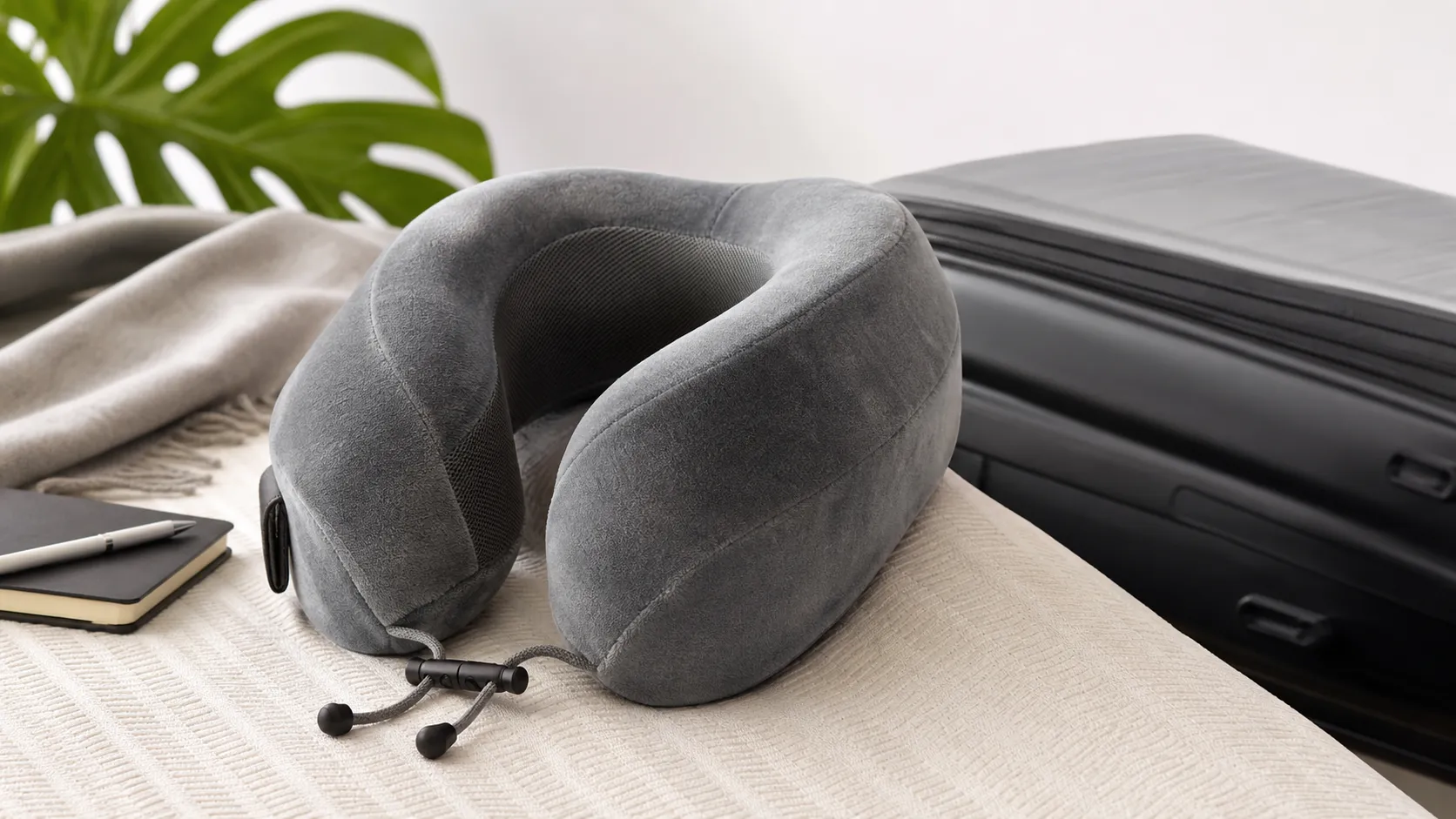
Cabeau Evolution Classic Travel Pillow — 2026 Review
A travel-focused memory-foam pillow that reliably reduces head-bobbing and feels premium — best for frequent flyers who prioritize support over packability.
 Travel & Luggage
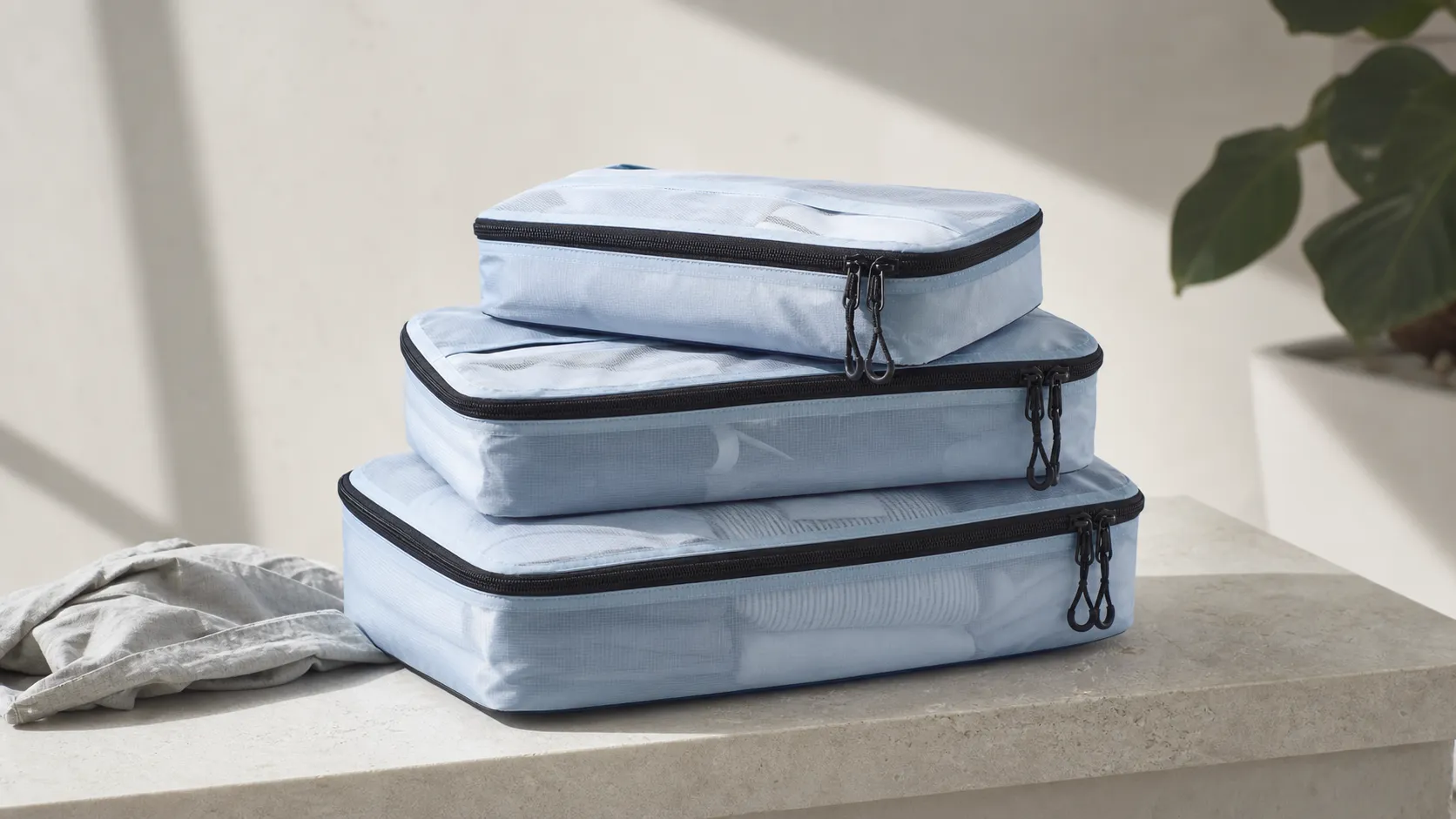
Eagle Creek Pack-It Specter Cube Set (3-pack) Review 2026
A near-featherweight 3-pack of packing cubes built from silnylon, the Eagle Creek Pack-It Specter set excels at low-bulk organization for carry-on and minimalist travelers. Premium feel and visibility, but at a higher price and with some zipper longevity caveats.
 Travel & Luggage
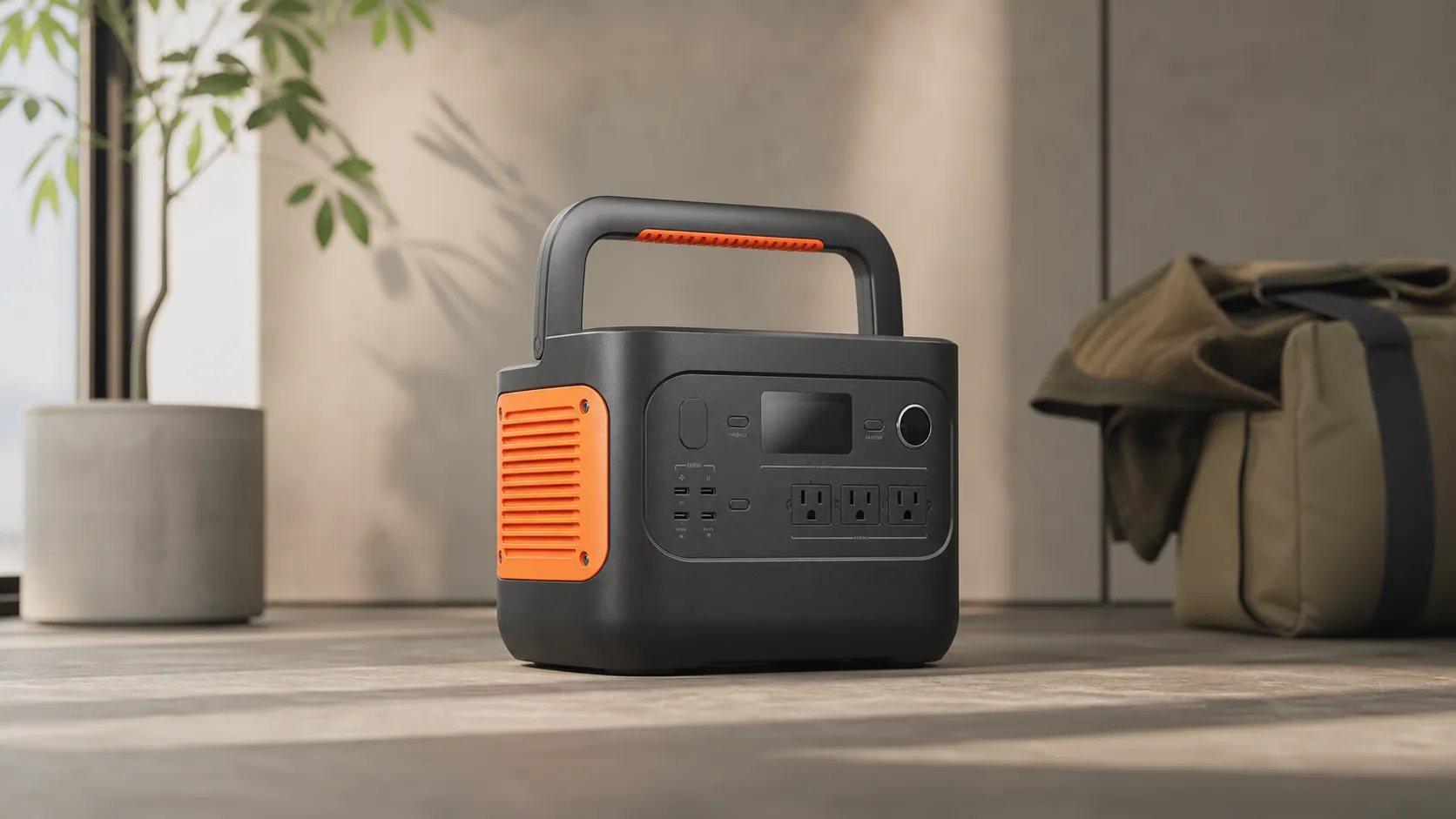
Jackery Explorer 1000 Portable Power Station Review 2026
A dependable, quiet power station for camping and short home backups — user-friendly and solar-ready, but heavier and pricier than some rivals.