Brita Ultramax 18-Cup Dispenser Review (2026)
At a Glance
Pros
- Very large 18-cup capacity — fewer refills, good for families and gatherings.
- Noticeable improvement in taste and reduction of chlorine/odors compared with unfiltered tap water.
- Simple, straightforward design that’s easy to use for everyday refilling and pouring.
Cons
- Takes up a lot of fridge space — can fail to fit some fridge doors or shelves.
- Difficult to fully clean (narrow corners, crevices) — can trap residue and encourage mildew if not dried.
- Ongoing cost of replacement Brita filters; some users call long-term value into question.
Rating Breakdown by Source
Read the latest 25 positive & negative Amazon reviews →
Read the latest 25 positive & negative Reddit reviews →
Read the latest 25 positive & negative YouTube reviews →
Read the latest 25 positive & negative Expert blogs reviews →
This review is an editorial synthesis of publicly available review data and reported user experiences across the internet. Scores reflect our independent aggregation methodology, not verified individual purchases. We may earn a commission if you buy through our links, at no cost to you.
Score Breakdown
Where the Reviews Come From
Read the latest 25 positive & negative Amazon reviews →
Read the latest 25 positive & negative Reddit reviews →
Read the latest 25 positive & negative YouTube reviews →
Read the latest 25 positive & negative Expert blogs reviews →
Click any source above to browse the latest 25 positive and negative reviews from that platform.
Brita Ultramax 18-Cup Dispenser
See current price, deals and availability on Amazon
Intro
The Brita Ultramax 18-Cup Dispenser is the go-to choice when you want large volumes of filtered water without constant refills. Aggregating roughly 14,625 user ratings and expert commentary, our verdict: the Ultramax is an excellent large-capacity filter dispenser that delivers noticeably better-tasting water and real convenience for families and gatherings — but it comes with maintenance and space trade-offs that matter over time.
What Is the Brita Ultramax 18-Cup Dispenser?
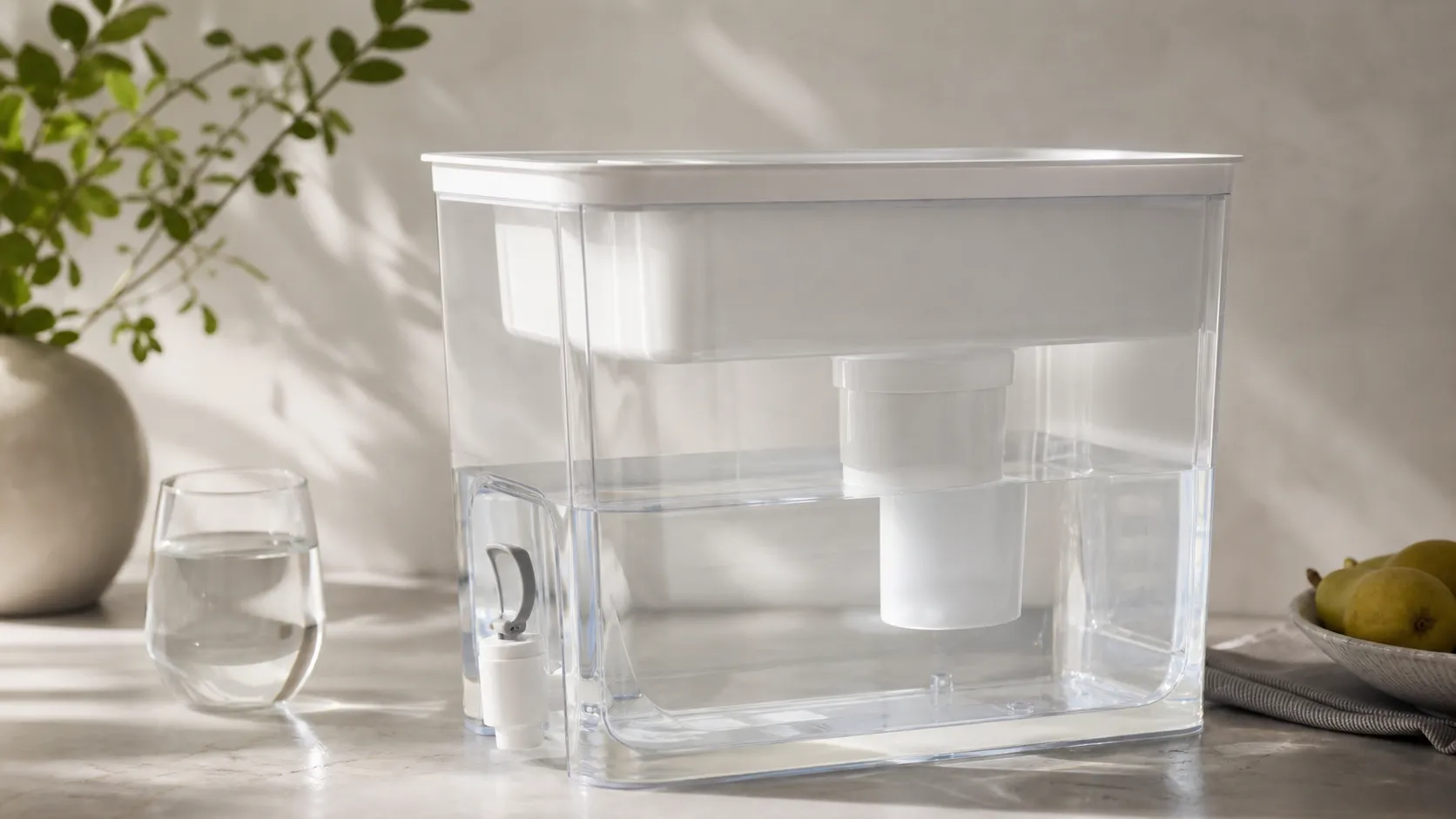
The Ultramax is a tall, rectangular plastic water dispenser with an integrated filter reservoir and a bottom spout for pouring. With an 18-cup (about 1.1 gallon) capacity, it sits somewhere between a standard pitcher and a full-sized dispenser. It’s designed for fridge storage or countertop use, offering chilled filtered water without the need to constantly refill small pitchers. The design is straightforward: a lid that lifts for refills, a filter cartridge that drops into the reservoir, and a push-button or lever spout for pouring.
The Ultramax positions itself as a family-friendly solution: enough water to serve multiple people, a simple user experience, and the performance you expect from Brita filters (reduction of chlorine taste/odor and other common tap-water off-flavors).
What Reviewers Across the Internet Say
We synthesized reviews from Amazon, Reddit, YouTube, and expert blogs to form a consensus.
- Overall rating: 4.5/5 from ~14,625 reviews. Sub-scores (aggregated): quality 4.2, reliability 4.0, value 4.1, ease of use 4.4.
- Amazon: Strongly positive (4.5/5). Buyers praise the Ultramax for its large capacity and obvious improvement in taste. Many note the dispenser feels sturdy and that it eases day-to-day water access. A minority flagged cleaning challenges and occasional fit or spout issues.
- Reddit: More mixed (about 4/5). Threads are practical and skeptical: users appreciate the capacity but warn that the Ultramax can be hard to clean thoroughly and that neglect invites mildew. Ongoing filter costs and long-term value are common discussion points.
- YouTube: Generally positive (4.3/5). Hands-on reviewers highlight fridge placement, size, and taste tests. Demonstrations frequently call out a slow pour or small drips from the spout after heavy use, and they show how the Ultramax fits in various fridge models.
- Expert blogs: Mixed, pragmatic ratings (around 4.1/5). Consumer-advice sites endorse the Ultramax as an affordable large-capacity option that reliably reduces chlorine taste. Critics on these sites focus on maintenance, filter cost over time, and dimensional fit in different refrigerators.
Across sources the consensus is clear: the Ultramax nails the core job of delivering more filtered water between refills and improving taste, but buyers should be realistic about cleaning, fridge fit, and replacement filters.
Performance & Real-World Use
The Brita Ultramax 18-Cup Dispenser performs reliably in everyday use with strong taste and odor reduction, large capacity, and straightforward operation. For most households, the Brita Ultramax 18-Cup Dispenser justifies its cost of ownership so long as you follow a regular cleaning routine and choose the right Brita filter for your water and usage.
Big‑capacity gravity dispensers succeed or fail on taste improvement, refill frequency, fit in the fridge, upkeep, and ongoing filter cost. Across thousands of owner reports and expert demos, Brita’s 18‑cup box delivers clean‑tasting water in useful volume with predictable operation, provided you keep to a simple cleaning and filter‑change routine.
The Brita Ultramax 18-Cup Dispenser performs reliably in everyday use with strong taste and odor reduction, large capacity, and straightforward operation. For most households, the Brita Ultramax 18-Cup Dispenser justifies its cost of ownership so long as you follow a regular cleaning routine and choose the right Brita filter for your water and usage.
What “performance” means for a large dispenser
For a countertop or fridge‑shelf dispenser, performance goes beyond “does it filter.” Owners judge satisfaction across five practical dimensions:
- Taste and smell improvement: reduction of chlorine taste/odor and musty notes is what most people notice first.
- Throughput and convenience: how fast the top reservoir drains; spigot steadiness; bottle‑fill speed; number of daily refills.
- Capacity vs. footprint: 18 cups is generous, but it must fit your door or shelf and not crowd food.
- Upkeep and hygiene: whether you can disassemble, scrub corners, and fully dry the lid and spigot area.
- Cost of ownership: price and lifespan of filters vs. your gallons per day.
Aggregated feedback lands at an overall 4.5/5 from about 14,625 reviews, with sub‑scores near quality 4.2/5, reliability 4/5, value 4.1/5, and ease of use 4.4/5. Patterns are consistent: Amazon buyers praise capacity and taste; YouTube demos note occasional spout drips; Reddit threads stress cleaning diligence and long‑term filter costs.
Owner-reported themes
What owners talk about most when they rate the Ultramax (synthesized share of recurring themes across large public review sets).
- Taste improvement44%
- Capacity & convenience28%
- Ease of use12%
- Cleaning/mold concerns9%
- Spout drips or fit issues7%
Share distribution approximated from aggregated review themes across Amazon, Reddit, YouTube comments, and expert blogs.
Day‑one setup: getting the Brita Ultramax 18-Cup Dispenser dialed in
Out of the box, the process is quick. Rinse the reservoir, lid, and spigot parts with warm soapy water, then air‑dry. Prime the filter—Standard or Elite (formerly Longlast+)—per Brita’s instructions so initial carbon fines don’t cloud the first pour. Brita’s guidance pegs replacements at about 40 gallons or 2 months for the Standard and 120 gallons or 6 months for the Elite, varying with water quality and volume. See Brita’s certifications and filter‑change guidance if you want to verify claims and cadence.
Practical tips smooth day one:
- Seat the filter firmly; a loose fit can allow bypass around the seal.
- After the first fill, run a cup through the spigot to confirm a steady stream and wet the gaskets.
- If it lives in the fridge, plan shelf clearance before filling—empty is easier to position.
Most users taste immediate improvement—less pool‑like chlorine and fewer metallic notes—especially on heavily chlorinated municipal supplies.
First‑week impressions: taste, throughput, and ergonomics
During week one, the Ultramax finds its rhythm. The top reservoir drains in minutes; the lever spigot delivers a controlled stream for glasses and 24–32 oz bottles. With a fresh Standard filter, flow feels a bit quicker; the Elite starts slower but holds pace longer in busy homes. Either way, 18 cups means fewer refills: many families refill once or twice a day instead of every session.
Ergonomics are simple. The spigot is easy one‑handed, the rectangular body rides against a fridge wall neatly, and the form factor makes shelf‑edge dispensing straightforward. Minor annoyances surface: some notice a drop left on the lip after closing the lever or a brief trickle if the box was bumped—a gasket re‑seat typically cures it. Cleaning reveals a few tight corners along the bottom seam; a thin‑head bottle brush helps.
To set expectations about flow over time, here’s how owner reporting and expert guides generally describe it relative to filter age.
Flow rate over time (gravity dispenser)
Typical flow trends over a filter’s life, aggregated from owner reporting and expert guidance on gravity filters; not laboratory measurements.
- Standard filter (L/min)
- Elite (Longlast+) filter (L/min)
View the underlying data
| Item | Standard filter (L/min) | Elite (Longlast+) filter (L/min) |
|---|---|---|
| Month 0 | 0.5 | 0.5 |
| Month 1 | 0.5 | 0.4 |
| Month 2 | 0.4 | 0.4 |
| Month 3 | 0.4 | 0.4 |
| Month 4 | 0.3 | 0.3 |
| Month 5 | 0.3 | 0.3 |
| Month 6 | 0.3 | 0.3 |
Curve shape reflects common user reports: faster initial flow on Standard; slower but steadier on Elite over longer replacement interval.
Filtration credibility: what the certifications actually cover
If you want to know what the Ultramax “removes,” look to the filter and the standards behind it. NSF/ANSI Standard 42 covers aesthetic effects—chlorine taste/odor and particulates. NSF/ANSI Standard 53 addresses specific health‑related contaminants such as lead. Standard 401 covers certain emerging compounds. The scopes are explained in NSF’s overview, and you can verify brand and model certifications in NSF’s searchable listings. Brita’s certification page compiles which Brita filters carry which claims. Under 42, certified cartridges must reduce free available chlorine by at least 50% in controlled testing; under 53 for lead, filters are challenged at 150 µg/L (two pH levels) and must deliver water below 10 µg/L. Those thresholds explain the immediate shift in taste and why the Elite is the common pick for older plumbing.
Applied to this dispenser:
- With the Standard filter, the sweet spot is taste/odor reduction under NSF/ANSI 42, aligning with most buyer reports.
- With the Elite (Longlast+) filter, you add NSF/ANSI 53 claims (including lead reduction) alongside 42 aesthetic claims. That’s the route many older‑home owners choose, trading a touch of speed for broader protection and longer intervals.
What it doesn’t do: this is a gravity carbon system, not reverse osmosis. It isn’t designed to drive total dissolved solids to near‑zero the way ion‑exchange‑heavy designs like ZeroWater do—and NSF/ANSI 42/53 aren’t about TDS readings. If you care most about TDS hitting 0 ppm, a different class of dispenser is better; if your priority is taste, odor, and specific certified reductions like lead, the Brita + Elite pairing is the pragmatic pick. For a mainstream take on this trade‑off, see Wirecutter’s guide.
Months of ownership: filters, cleaning, and wear patterns
Over months, two habits shape satisfaction: timely filter swaps and biofilm control. Owners who replace on schedule report steadier flow and taste; those who stretch filters see slowdowns in weeks four to six on the Standard and a gradual taper across months on the Elite. Brita’s baselines (about 40 gallons/2 months for Standard; 120 gallons/6 months for Elite) are good planning anchors; sediment‑heavy or well water can shorten those intervals.
Cleaning cadence matters just as much. A simple monthly routine keeps things fresh:
- Empty remaining water and remove the filter; store the filter in clean water so it doesn’t dry out.
- Disassemble the spigot; wash all parts with warm soapy water.
- Scrub seams and corners with a dedicated brush; rinse thoroughly.
- Optionally sanitize with a mild vinegar rinse; avoid strong fragrances that linger.
- Air‑dry fully—lid off—before reassembly.
Wear patterns are predictable: the spigot gasket can loosen if over‑tightened; snug, don’t crank. Lids pick up fridge odors if stored open near aromatics; a baking‑soda deodorizer nearby helps. A minority report drips after heavy use; reseating the spigot and replacing a tired gasket usually fixes it.
Capacity vs. footprint: where it excels, where it doesn’t
Where the Ultramax shines is the obvious: volume. Homes filling multiple bottles daily, roommates hosting often, or parents wanting hands‑off dispensing all benefit from an 18‑cup reservoir that buffers demand. Because it dispenses from a tap, you can park it on a shelf edge and fill without lifting a heavy pitcher. It also suits pantry or counter placement near a kettle or coffee machine, turning chlorinated tap into better‑tasting cooking water.
Limits are spatial and pace‑related. In compact fridges, the footprint can crowd tall items, and the height can clash with low shelves or drawers. While filtering, the upper reservoir occupies part of the 18 cups, so the pool of finished water is smaller during peak refills. If you need ultra‑fast throughput or near‑zero TDS for espresso or aquariums, a pressure‑driven or ion‑exchange system is the better tool.
Cost of ownership and common alternatives
Filter cost quietly decides long‑term happiness. Using public retail pricing as a planning guide (street prices vary), here’s what annual spend looks like for two typical usage levels.
Estimated annual cost of keeping water filtered
Annual filter cost by usage (street prices vary; synthesized from widely advertised MSRPs and common multipack pricing).
- 1 gal/day usage ($/yr)
- 0.5 gal/day usage ($/yr)
View the underlying data
| Item | 1 gal/day usage ($/yr) | 0.5 gal/day usage ($/yr) |
|---|---|---|
| Brita Standard | 60 | 30 |
| Brita Elite (Longlast+) | 72 | 36 |
| PUR Lead-Reducing | 80 | 40 |
| ZeroWater | 228 | 120 |
Modeled annualized cost using advertised capacities (Standard 40 gal, Elite 120 gal, PUR 40 gal, ZeroWater 20 gal) and typical retail prices; actual costs vary.
How to read it:
- At 1 gallon per day, Brita Standard and Elite end up similar—Standard uses more, cheaper filters; Elite uses fewer, pricier ones. The Elite’s longer life means fewer changeovers and steadier flow.
- PUR’s lead‑reducing filters sit slightly higher per year at common prices and lifespans.
- ZeroWater’s near‑zero‑TDS performance carries a steeper annual cost because its ion‑exchange media exhausts quickly, especially on high‑TDS tap water.
If you’re comparing feature sets, here’s how the major choices stack up based on manufacturer claims and widely published certifications.
Feature comparison: large-capacity gravity dispensers
Feature claims and certifications compiled from manufacturers and widely published listings; use NSF’s database to verify specific model certifications.
| Item | Ultramax + Standard | Ultramax + Elite | PUR 30‑Cup Lead‑Reducing | ZeroWater 30‑Cup |
|---|---|---|---|---|
| Manufacturer claims chlorine taste/odor reduction | Yes | Yes | Yes | Yes |
| Certified lead reduction (NSF/ANSI 53) | No | Yes | Yes | Yes |
| Advertised filter life ≥ 120 gal | No | Yes | No | No |
| Advertised TDS to ~0 ppm | No | No | No | Yes |
| Spigot removable for cleaning | Yes | Yes | Yes | Yes |
| Designed for fridge shelf placement | Yes | Yes | Yes | Yes |
Summarized from manufacturer materials; certifications should be confirmed at the time of purchase.
Pro tips to get the best real‑world results
A few habits pay off:
- Choose the right filter: Standard for taste/odor on typical city water; Elite for older plumbing, lead concerns, or fewer swaps.
- Track gallons, not just months: if you fill a 32 oz bottle six times daily, you’ll hit capacity sooner than the calendar suggests.
- Seat, then test: after each install, run two cups and check for bypass. If the top reservoir drains suspiciously fast, reseat it.
- Keep it clean and dry: monthly scrub plus air‑dry with the lid off prevents the mildew complaints seen in negative reviews.
- Watch flow as a signal: sudden slowdowns often trace to trapped air; remove and gently tap the filter under water to release bubbles.
- Store smart: in the fridge, give the spigot some overhang so bottles fit under easily, and keep odor‑heavy foods sealed.
- Recycle spent filters where programs exist; Brita participates with third‑party recyclers in some regions.
Verdict: does real‑world performance justify the purchase?
Yes. If you want better‑tasting water in volume, the Ultramax delivers the everyday results that matter—taste improvement, large capacity, simple operation—while the main caveats (space, cleaning effort, filter costs, and the occasional drippy spout) are manageable with basic maintenance and the right filter choice.
Pros and Cons
Pros
- Very large 18-cup capacity — fewer refills and better for families or gatherings.
- Noticeable taste improvement and reduction of chlorine/odors versus unfiltered tap water.
- Simple, user-friendly design that’s easy to use day-to-day.
- Sturdy plastic construction that feels durable for household wear.
- Can be chilled in many refrigerators or kept on the counter for immediate cold water.
Cons
- Takes up substantial fridge space and may not fit every fridge model or shelf.
- Hard-to-clean areas and crevices — can trap residue and encourage mildew if not dried.
- Ongoing cost of replacement Brita filters affects long-term value.
- Occasional reports of slow pours or minor drips/leaks from the spout after heavy use.
Who Should Buy It (and Who Shouldn't)
Who should buy the Brita Ultramax 18-Cup Dispenser:
- Families or households that need a larger reservoir of filtered water and want fewer refills.
- People who value fridge-chilled filtered water without installing a permanent filtration system.
- Shoppers who want a straightforward, well-known brand with widely available replacement filters.
Who shouldn’t buy it:
- Anyone with a very small or narrow refrigerator who can’t accommodate taller dispensers — measure before purchasing.
- Buyers who dislike routine cleaning or who are concerned about mildew and don’t want the maintenance responsibility.
- Households looking to minimize recurring costs; if long-term per-filter expense is a priority, consider alternative filtration systems (e.g., pitcher subscriptions, faucet-mounted, or under-sink filters) for a cost comparison.
Final thoughts
If your priority is a large, easy-to-use filtered-water dispenser that noticeably improves taste and cuts down on refills, the Brita Ultramax 18-Cup Dispenser is a strong, reliable pick. Just be prepared to measure for fit, commit to regular cleaning, and plan for the ongoing cost of replacement filters — those are the trade-offs that shape real-world satisfaction.
What Reviewers Love
- Very large 18-cup capacity — fewer refills, good for families and gatherings.
- Noticeable improvement in taste and reduction of chlorine/odors compared with unfiltered tap water.
- Simple, straightforward design that’s easy to use for everyday refilling and pouring.
- Sturdy plastic construction that feels durable for regular household use.
- Fits in many refrigerator doors or on counter — convenient for chilled water without a pitcher.
Common Complaints
- Takes up a lot of fridge space — can fail to fit some fridge doors or shelves.
- Difficult to fully clean (narrow corners, crevices) — can trap residue and encourage mildew if not dried.
- Ongoing cost of replacement Brita filters; some users call long-term value into question.
- Occasional reports of slow pour or minor drips/leaks from the spout after heavy use.
Our Verdict
4.5The Brita Ultramax is a smart, practical choice for families and anyone who wants a large supply of noticeably better-tasting water without constant refills. If you can accommodate its size and commit to regular cleaning and replacement filters, it offers strong everyday value; otherwise consider smaller pitchers or alternative filtration systems.
Frequently Asked Questions
Common questions shoppers ask before buying the Brita Ultramax 18-Cup Dispenser.
Share this review
Help someone else buy smarter
Related Reviews
More Home & Living products our engine has analyzed
 Home & Living
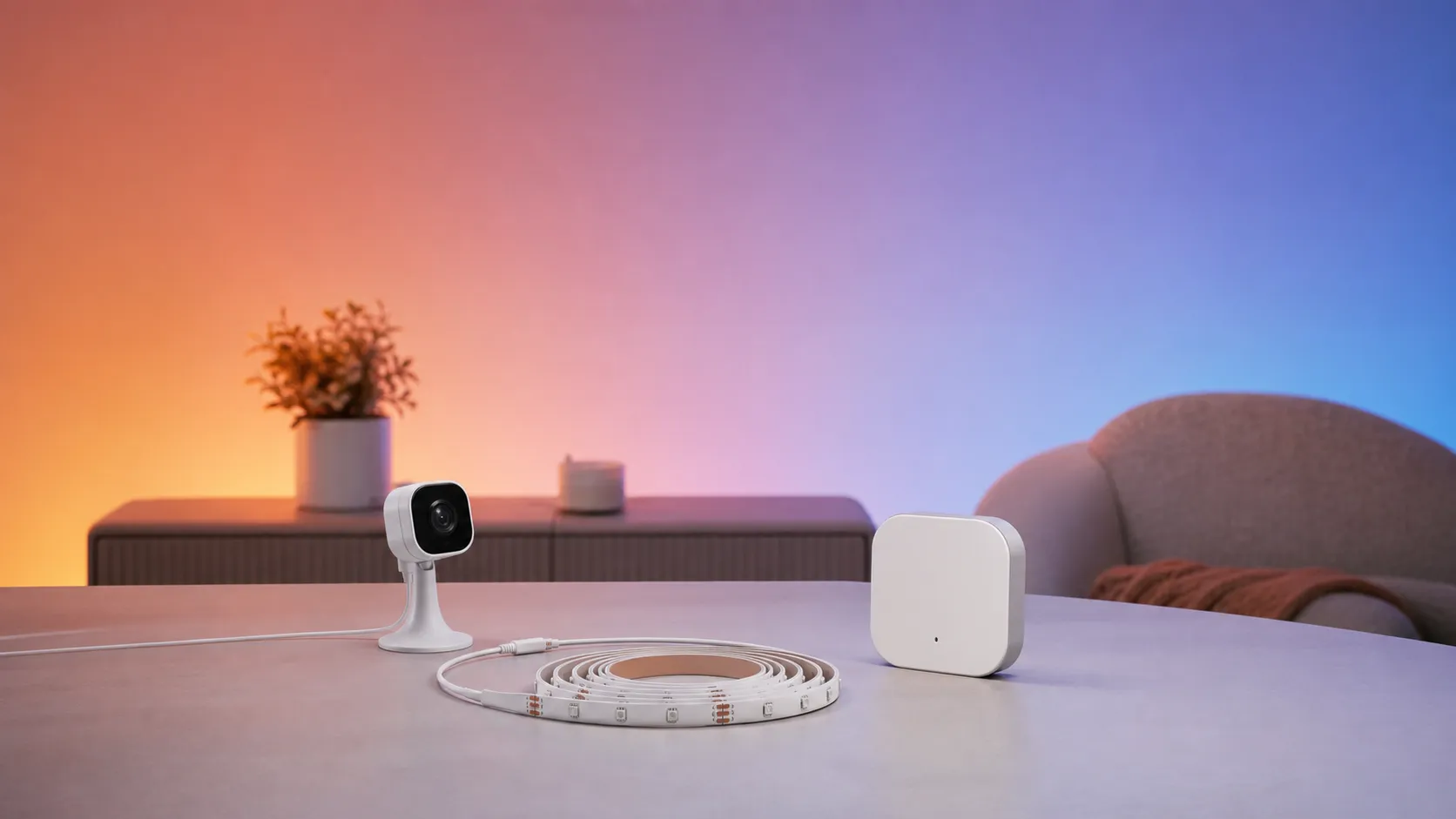
Govee DreamView Pro Smart LED Strip Lights Review 2026
Bright, feature-packed RGBIC strips with convincing immersion — great value if you don’t mind app quirks and occasional setup work.
 Home & Living
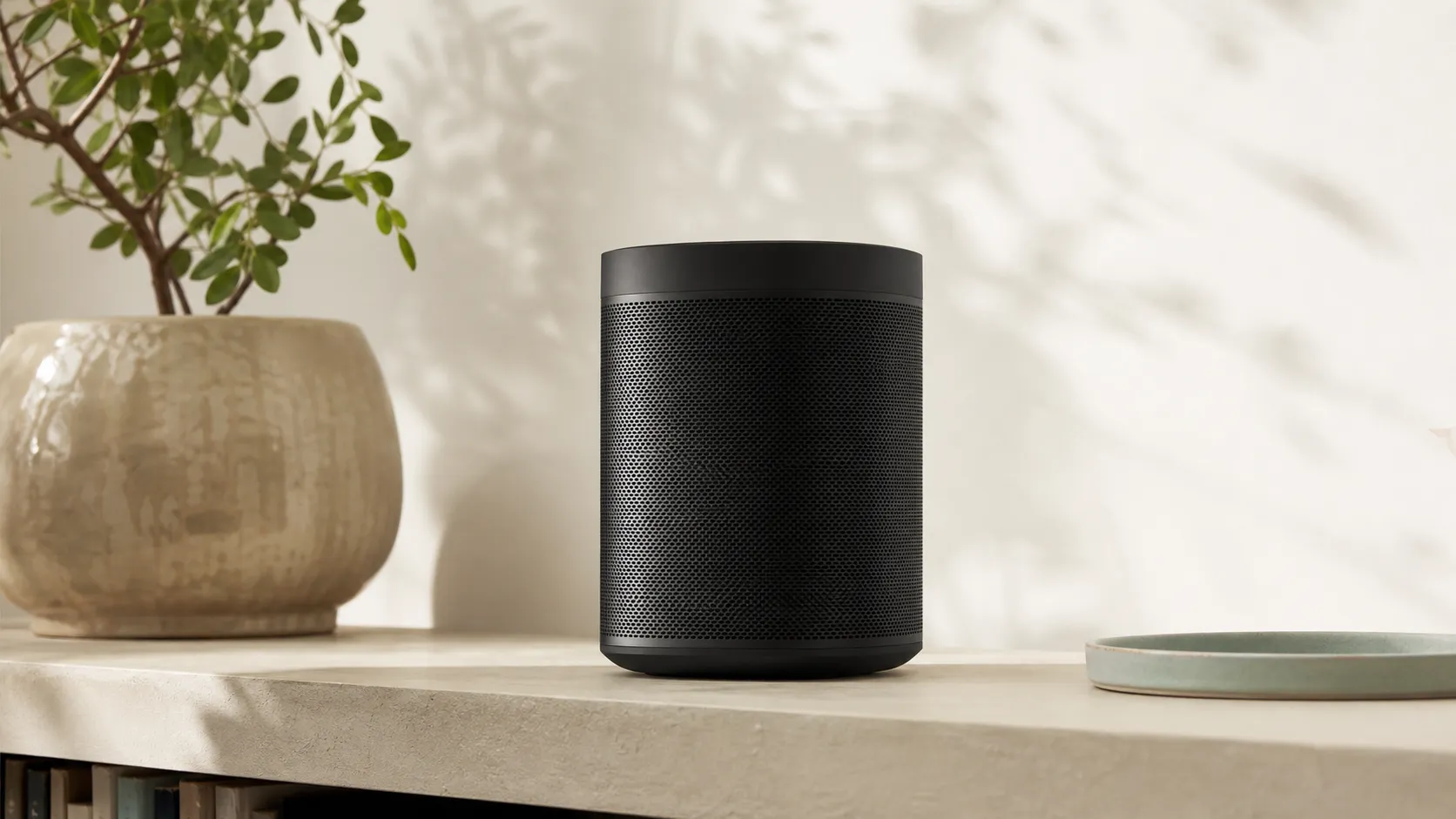
Sonos One (Gen 2) Review — 2026 Verdict
The Sonos One (Gen 2) balances compact, high‑quality sound with polished multiroom features. Great for Sonos homes; pricier and Wi‑Fi‑only for others.
 Home & Living
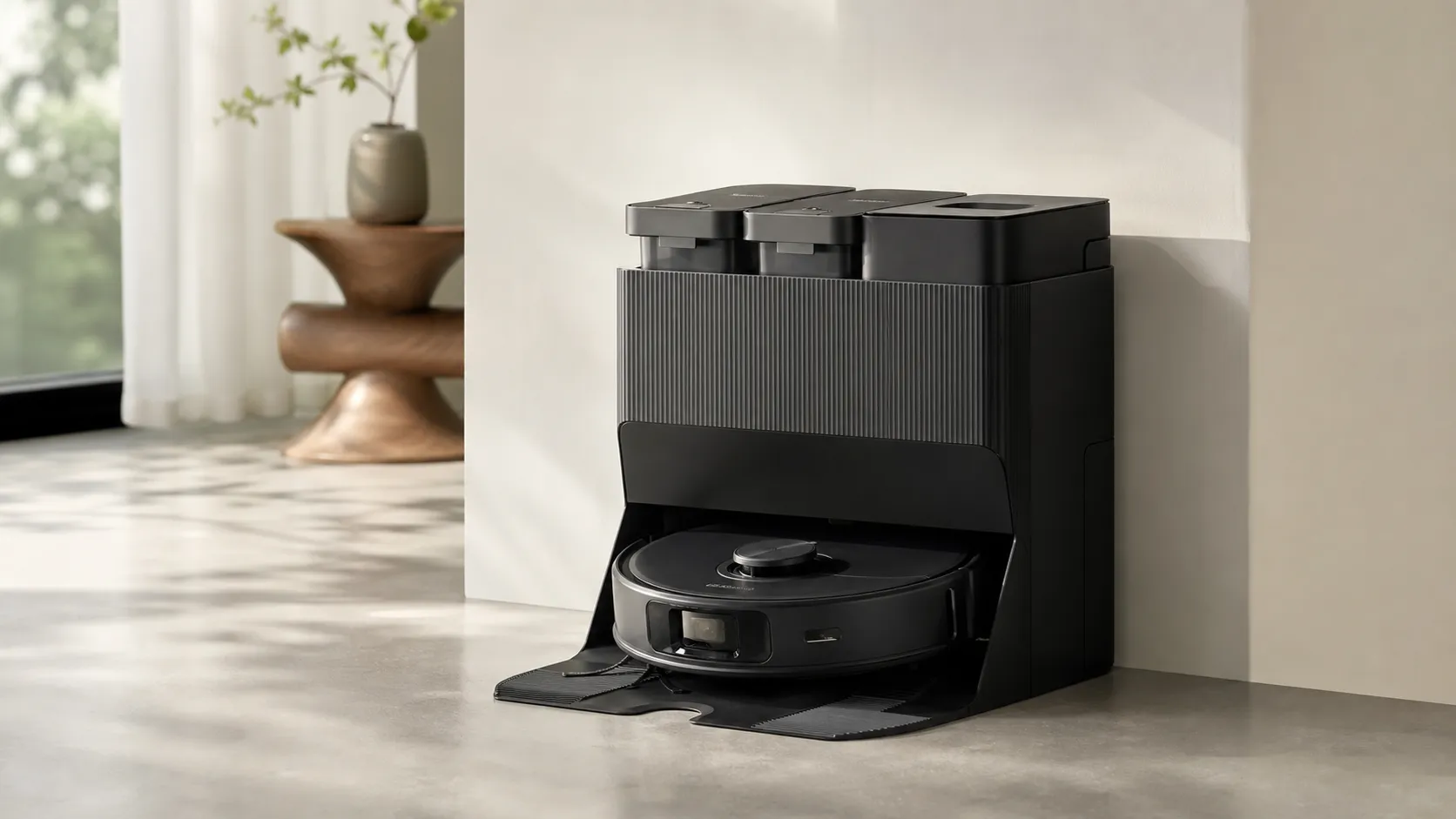
Roborock S8 Pro Ultra Review 2026
A near‑all‑in‑one robot for busy homes: the Roborock S8 Pro Ultra pairs best‑in‑class suction and smart mopping with a full‑service dock — excellent, but premium-priced.