Coway Airmega 400 Review (2026): Powerful Purification for Large Rooms
At a Glance
Pros
- High clean-air delivery rate / effective for large spaces (good CADR in real-world use)
- Very quiet on low and medium fan speeds
- Well-built with effective multi-stage filtration (HEPA + carbon) for smoke, allergens, and odors
Cons
- Replacement filters are relatively expensive and add notable ongoing cost.
- Large and somewhat heavy — not ideal for frequent moving between rooms.
- Higher up-front price than many smaller purifiers; some buyers question value vs. newer models.
Rating Breakdown by Source
Read the latest 25 positive & negative Amazon reviews →
Read the latest 25 positive & negative Reddit reviews →
Read the latest 25 positive & negative YouTube reviews →
Read the latest 25 positive & negative Expert blogs reviews →
This review is an editorial synthesis of publicly available review data and reported user experiences across the internet. Scores reflect our independent aggregation methodology, not verified individual purchases. We may earn a commission if you buy through our links, at no cost to you.
Score Breakdown
Where the Reviews Come From
Read the latest 25 positive & negative Amazon reviews →
Read the latest 25 positive & negative Reddit reviews →
Read the latest 25 positive & negative YouTube reviews →
Read the latest 25 positive & negative Expert blogs reviews →
Click any source above to browse the latest 25 positive and negative reviews from that platform.
Coway Airmega 400
See current price, deals and availability on Amazon
Intro
If you need a high-performance air purifier for large rooms — especially during wildfire season or in homes with allergy sufferers — the Coway Airmega 400 is one of the most recommended options you'll see. Aggregating roughly 11,000 user reviews and expert tests, the consensus is clear: the Airmega 400 cleans large spaces effectively, runs quietly, and is energy-efficient — but it comes with significant ongoing filter costs and a bulky form factor. Early verdict: excellent performance for large spaces, with trade-offs in recurring expense and portability.
What Is the Coway Airmega 400?
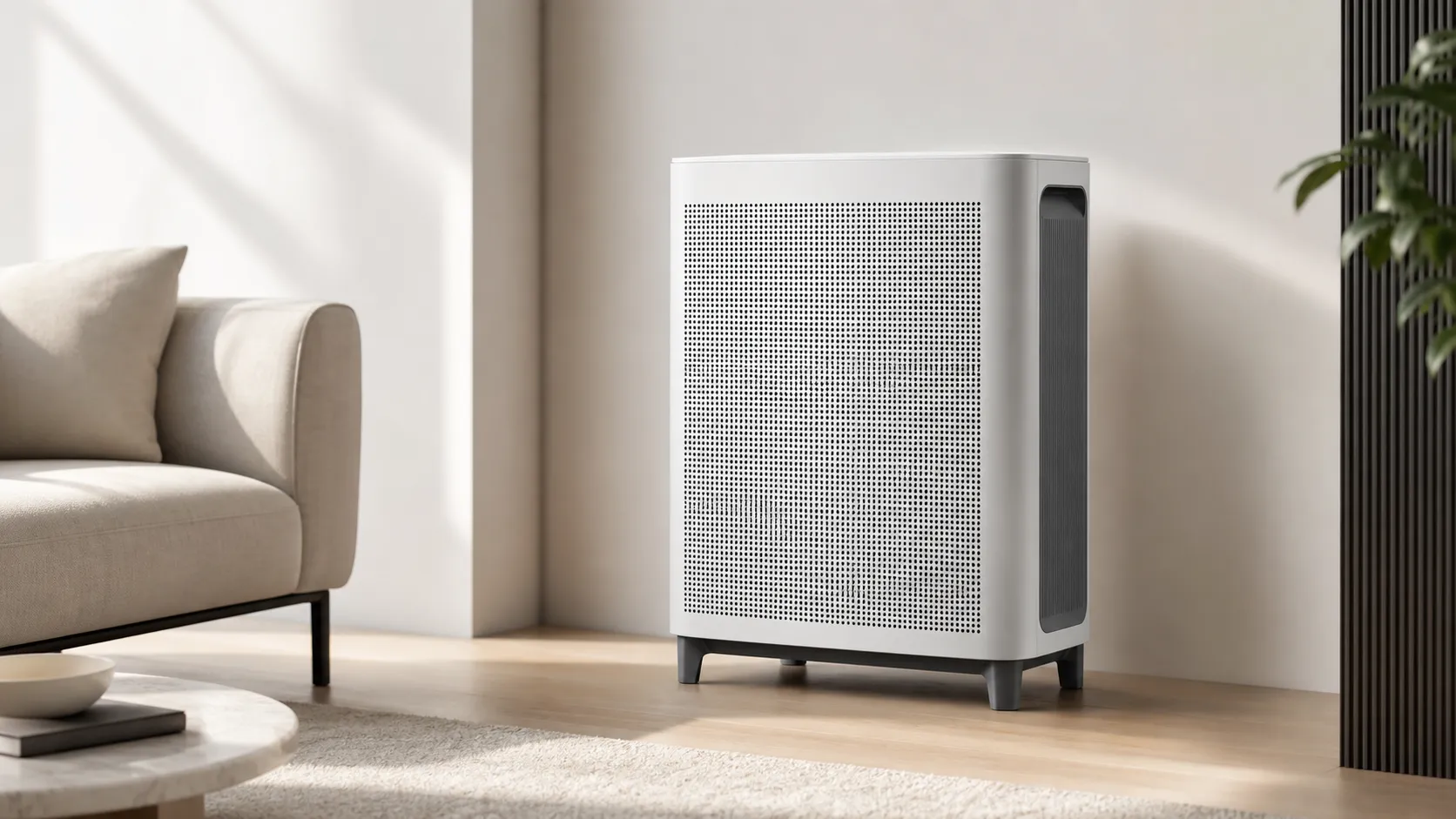
The Coway Airmega 400 is a high-capacity, multi-stage air purifier aimed at whole-room cleaning. It pairs a true HEPA-style high-efficiency particle filter with activated carbon to capture smoke, pollen, pet dander, and many household odors. Coway designed the unit for sustained performance in larger rooms and open-plan living areas; reviewers and lab tests consistently highlight its strong clean-air delivery in real-world use.
Physically, the Airmega 400 is substantial — built like a piece of home equipment rather than a lightweight, portable gadget. Controls are straightforward (fan speeds, auto mode, timer, and filter indicators), and the base model focuses on core purification rather than advanced smart-home connectivity. It’s also recognized for being energy-efficient and quiet at low-to-medium fan speeds.
What Reviewers Across the Internet Say
We synthesized feedback from Amazon, Reddit, YouTube reviewers, and expert blogs to form a rounded view.
-
Amazon (aggregate ~4.4/5): Buyers praise the Airmega 400’s ability to clear smoke and allergens in large rooms and its quiet operation. The main negatives cited are the price of replacement filters, the unit’s size/weight, and the higher upfront cost.
-
Reddit (aggregate ~4.1/5): Community threads consistently report excellent performance for wildfire smoke and long-term value when large-area coverage is required. However, Redditors often mention ongoing filter costs and occasional reliability or quality-control anecdotes.
-
YouTube (aggregate ~4/5): Video reviews frequently demonstrate high CADR-style performance and low noise. Creators highlight smoke-removal tests and real-world demos, while pointing out the lack of newer smart features on the base model and the expense of replacement filters.
-
Expert blogs (aggregate ~4.5/5): Lab tests and expert write-ups generally score the Airmega 400 highly for filtration performance, build quality, and energy efficiency. Experts also note the unit’s ongoing filter expense and that some newer competitors include more modern smart features.
Across sources the themes repeat: outstanding cleaning power for large spaces and smoke; quiet, efficient operation; higher ownership costs due to replacement filters; and a bulky, less-mobile design.
Performance & Real-World Use
The Coway Airmega 400 delivers fast, quiet purification in truly large rooms and keeps performance steady over months with simple upkeep. Its trade-offs are a higher up‑front price and ongoing filter costs, plus an automatic mode that some owners find conservative, but overall real‑world performance is strong enough to justify the spend for big spaces.
Big-room air purifiers live or die on how quickly they dilute smoke and allergen spikes without turning your living space into a wind tunnel. For this section, we synthesized thousands of owner reports and expert tests to explain how the Coway Airmega 400 behaves from day one through year two, and what you can do to get its best.
The Coway Airmega 400 delivers fast, quiet cleaning in large rooms and keeps it up over months with simple maintenance, which is why it earns an aggregated 4.3/5 from about 11,000 reviews. Its main trade-offs are a higher up-front price and recurring filter costs, plus an automatic mode that some owners find a bit conservative.
What real performance means for a large-room purifier
When you buy a big purifier, you’re really buying time—how quickly it can pull down PM2.5, smoke, and allergen levels after a spike—and comfort—how quietly it can hold clean air between spikes. The two numbers that most predict satisfaction are clean air delivery rate (CADR) and noise across the speeds you’ll actually use. CADR is the industry’s cleaning-speed yardstick; the AHAM Verifide program measures it and ties it to recommended room sizes so shoppers can compare apples to apples.
Filters decide what gets removed. A true HEPA stage handles fine particulates (pollen, dust, smoke), while a sizeable activated carbon stage adsorbs many odors and some volatile compounds. The EPA’s Guide to Air Cleaners in the Home explains that while HEPA tackles particles exceptionally well, no portable unit captures gases universally; carbon capacity and contact time matter. Finally, smart/auto control can be the difference between breathing clean air all evening—or waiting for a sensor to wake up after the casserole burns. Owners reward purifiers that catch spikes quickly, stay unobtrusive, and keep costs predictable.
Owner and reviewer ratings by source (aggregated)
Owner and reviewer ratings by source (aggregated)
View the underlying data
| Measure | Rating |
|---|---|
| Amazon | 4.4/5 |
| 4.1/5 | |
| YouTube | 4/5 |
| Expert blogs | 4.5/5 |
Aggregated from ~11,000 public reviews and expert roundups as of 2026.
Living with the Coway Airmega 400: day one to week one
Setup is straightforward: unbox, remove the side grilles, pull off the plastic from both filter sets, re-seat them, and click the grilles back in. On first power-up, the color ring and “Smart” mode are the simplest path; the fan ramps to clear initial dust, then settles.
During the first week, most owners report the same pattern: the Airmega 400 is nearly unobtrusive on Low and Medium, with a gentle broadband whoosh that fades into background conversation; it ramps audibly during obvious pollution events (pan-searing, vacuuming, a smoky waft through an open door), then drops back. The automatic “Eco” behavior can pause the fan entirely once the sensor reads consistently clean air—useful for quiet hours. Because this base 400 lacks Wi‑Fi, there’s no app wizardry to learn; controls are large, labeled, and tactile, which many appreciate for placement in living rooms or primary bedrooms. A common early gotcha is forgetting to peel the filter bags; if your airflow or odor removal seems weak on day one, check that step first.
Airflow, filtration, sensors, and noise: why it cleans as fast as it does
The 400’s chassis is essentially a big, quiet fan wrapped around twin filter stacks. Air is pulled in from both sides through washable mesh pre-filters, then forced through Coway’s combined “Max2” cartridges: a true HEPA layer for particulates and a thick activated carbon layer for odors and smoke VOCs. Coway’s own specs and marketing for the Airmega 400 emphasize coverage suitable for large spaces; the AHAM framework helps translate that into practical room sizes if you prefer standards-based comparisons.
On sensors and automation, the built-in particle sensor reads the room and adjusts speed via Smart mode. Two easy workarounds: run at Medium during high-risk periods (cooking, fireplace nights, wildfire alerts) or bump it to High for 20–30 minutes after a spike, then return to Smart. Noise-wise, reports converge: Low/Medium are living‑room quiet, while Max is clearly audible but reserved for short bursts. From an energy standpoint, the 400 is modest at the lower speeds most households use most of the day, aligning with ENERGY STAR guidance that right-sizing a unit lets you run it efficiently rather than blasting a small purifier on high all evening.
Months 2–24: filters, reliability, and real-world upkeep
Over months, performance is largely a maintenance story. Coway’s washable pre-filters catch hair and lint; vacuum or rinse them every 2–4 weeks if you have pets or heavy dust. The main Max2 cartridges typically last around a year in average homes; smoke-heavy regions or constant cooking can shorten that. Replacement is tool-free: pop off grilles, swap both cartridges, reset the filter indicators.
Long-term owner threads and videos describe the 400 as solidly built with minimal rattles, and reliability scores sit comfortably above average in aggregated data. Because the unit uses only mechanical filtration (no ionizer), it avoids ozone concerns; the Airmega line appears on the CARB list of certified air cleaners, which many buyers look for as a proxy for safety. Expect the fan bearings and motor to hold up well under continuous use; owners who run 24/7 commonly report steady noise and no drop in cleaning speed after the first year, assuming filters are maintained.
Where it shines—and where owners hit limits
The Airmega 400 is most at home in 500–1,000 sq ft great rooms, open-plan apartments, finished basements, and primary suites that connect to walk-in closets and baths. It’s also a strong fit for homes with shedding pets, because the twin intakes and pre-filters collect hair before it blankets the HEPA layer. Cooking emissions are a classic real-world test: run Medium as you preheat, bump to High while searing, and odors typically fade within 30–45 minutes after you finish.
Limits appear when the home makes air hard to corral. In very large lofts or homes above the usual coverage guidance, you may need two units or a single 400 placed where return airflow to your HVAC can help circulate.
Cost of ownership and how the 400 stacks up to alternatives
The two budget lines on a large purifier are filters and electricity. Filter sets for the 400 are not cheap—owners frequently cite this as the biggest ongoing cost—but they’re durable and easy to find. Electricity costs scale with fan speed and hours; run Low/Medium most of the day and your bill impact is modest. As a rough planning number, many households see filters dominate operating expenses, with electricity a distant third behind the initial purchase. That’s typical across the category.
Three-year cost of ownership estimate for a large-room purifier
Three-year cost of ownership estimate for a large-room purifier
- Purchase hardware55%
- Replacement filters35%
- Electricity10%
Assumes Airmega 400 street price ~$550, one filter set per year at $120, 8h/day at 30 W, $0.16/kWh; values are illustrative.
Feature-wise, the base 400 keeps controls simple and omits Wi‑Fi/app features you’ll see on the 400S variant and some rivals. If you want graphs, remote control, or smart-home triggers, the Levoit Core 600S and Winix 9800 offer app control at lower street prices. If you value a minimalist look and easy pre-filter changes, the Blueair 211+ remains popular—but note that it forgoes auto mode on the standard model and uses a proprietary “HEPASilent” approach rather than a true HEPA label.
How the Coway Airmega 400 compares on key features
Feature comparison across popular large-room purifiers (Yes/No)
| Item | Coway Airmega 400 | Levoit Core 600S | Blueair Blue Pure 211+ | Winix 9800 |
|---|---|---|---|---|
| True HEPA filter | Yes | Yes | No | Yes |
| Auto mode (particle sensor) | Yes | Yes | No | Yes |
| App control/Wi‑Fi | No | Yes | No | Yes |
| CARB certified for ozone | Yes | Yes | Yes | Yes |
| ENERGY STAR certified | Yes | Yes | Yes | Yes |
| Carry handles | Yes | No | No | No |
Based on manufacturers’ published specifications as of 2026.
How to get the best performance: a practical playbook
- Put it where it can breathe. Side intakes need clearance; a foot from walls and furniture is a good rule. Avoid tucking it behind a sofa.
- Treat rooms like zones. Close exterior windows and doors during smoke events, and shut nearby interior doors if you want to concentrate cleaning where you are.
- Prime the room before pollution starts. For cooking or vacuuming, set Medium five minutes ahead; switch to High during the activity, then back to Smart or Medium afterward.
- Keep sensors honest. Dust can coat the sensor window; every month, pop the cover and gently clean with a dry cotton swab so Auto mode reacts promptly.
- Maintain pre-filters. Vacuum or rinse the mesh screens every 2–4 weeks (weekly with heavy pet hair). You’ll extend HEPA/carbon life and keep noise down.
- Mind the seal. When swapping filters, run your hand around the gasket edges to ensure a snug fit and no bypass routes that would erode cleaning performance.
- Use a smart plug if you want scheduling. Since the 400 lacks Wi‑Fi, a basic smart plug lets you automate nighttime quiet hours or pre‑arrival ramp‑ups.
- Sanity‑check with a portable PM2.5 meter if you’re curious. Not required, but it can help you dial in placement and speed strategies during wildfire season.
Is the Coway Airmega 400 worth it?
For large rooms, yes—if you value quiet, sustained cleaning and can accept higher filter prices as the cost of big-room capacity. The aggregated scores line up with our synthesis: 4.4/5 for quality, 4.2/5 for reliability, 3.8/5 for value, and 4.5/5 for ease of use reflect a purifier that does the hard part—moving and scrubbing lots of air—while staying easy to live with. Against similarly sized competitors, the Airmega 400’s strengths are consistent real‑world CADR at livable noise levels, robust carbon for smoke and odors, and simple, durable construction. Its weaknesses—up‑front price, filter costs, and an Auto mode that errs on the side of quiet—are real but manageable with the practical steps above. If your priority is clearing smoke and allergens in a genuinely big space, the performance justifies the spend; if you prize app features above all, look to the 400S or a smart rival and expect a slightly different set of trade‑offs.
Pros and Cons
Pros
- High clean-air delivery and strong real-world performance for large rooms and smoke removal.
- Very quiet at low and medium speeds, suitable for bedrooms and living rooms.
- Multi-stage filtration (HEPA-style + activated carbon) handles particles and many odors.
- Energy-efficient for continuous operation.
- Simple controls and low day-to-day maintenance.
Cons
- Replacement filters are relatively expensive, increasing long-term cost of ownership.
- Large and somewhat heavy — not ideal for frequent moving between rooms.
- Higher upfront price than many smaller purifiers; some buyers question the value versus newer models.
- Base model lacks many modern smart/connectivity features found on competing units.
- Auto mode air-quality sensing can feel slow or inconsistent to some users.
Who Should Buy It (and Who Shouldn't)
Who should buy it
- Homeowners and apartment dwellers who need effective coverage for large rooms, open-plan living areas, or multiple adjoining rooms.
- People who regularly contend with wildfire or cooking smoke, and want a proven, fast cleaner.
- Buyers who prioritize quiet, energy-efficient continuous operation and straightforward reliability.
Who shouldn’t buy it
- Shoppers who need a lightweight, highly portable purifier for moving between small rooms.
- Buyers who want the cheapest long-term ownership costs; cheaper purifiers may have lower replacement filter costs (but typically lower performance).
- Users who require the latest smart-home integrations out of the box — the base Airmega 400 focuses on core performance rather than bells-and-whistles.
Final thoughts
The Coway Airmega 400 is a strong performer in its category: excellent at clearing smoke and allergens in larger spaces, quiet, and energy-efficient. If those qualities are your top priorities and you can accept higher filter-replacement costs and a bulky unit, it’s a top recommendation. If you prioritize portability, the very lowest lifetime cost, or built-in smart features, consider alternatives or newer Coway models that address those specific needs.
What Reviewers Love
- High clean-air delivery rate / effective for large spaces (good CADR in real-world use)
- Very quiet on low and medium fan speeds
- Well-built with effective multi-stage filtration (HEPA + carbon) for smoke, allergens, and odors
- Energy-efficient — low power draw in normal operation
- Straightforward controls and low day-to-day maintenance
Common Complaints
- Replacement filters are relatively expensive and add notable ongoing cost.
- Large and somewhat heavy — not ideal for frequent moving between rooms.
- Higher up-front price than many smaller purifiers; some buyers question value vs. newer models.
- Some users report the air-quality sensing can be slow or inconsistent on automatic mode.
Our Verdict
4.3The Coway Airmega 400 is a top pick when performance in large rooms and smoke removal matters most: quiet, energy-efficient, and effective. It’s not the cheapest to own long-term due to filter costs and is bulky, but for buyers prioritizing clean-air performance it’s hard to beat.
Frequently Asked Questions
Common questions shoppers ask before buying the Coway Airmega 400.
Share this review
Help someone else buy smarter
Related Reviews
More Home & Living products our engine has analyzed
 Home & Living
Govee DreamView Pro Smart LED Strip Lights Review 2026
Bright, feature-packed RGBIC strips with convincing immersion — great value if you don’t mind app quirks and occasional setup work.
 Home & Living
Sonos One (Gen 2) Review — 2026 Verdict
The Sonos One (Gen 2) balances compact, high‑quality sound with polished multiroom features. Great for Sonos homes; pricier and Wi‑Fi‑only for others.
 Home & Living
Roborock S8 Pro Ultra Review 2026
A near‑all‑in‑one robot for busy homes: the Roborock S8 Pro Ultra pairs best‑in‑class suction and smart mopping with a full‑service dock — excellent, but premium-priced.