Coway Airmega 400S Smart Air Purifier Review 2026
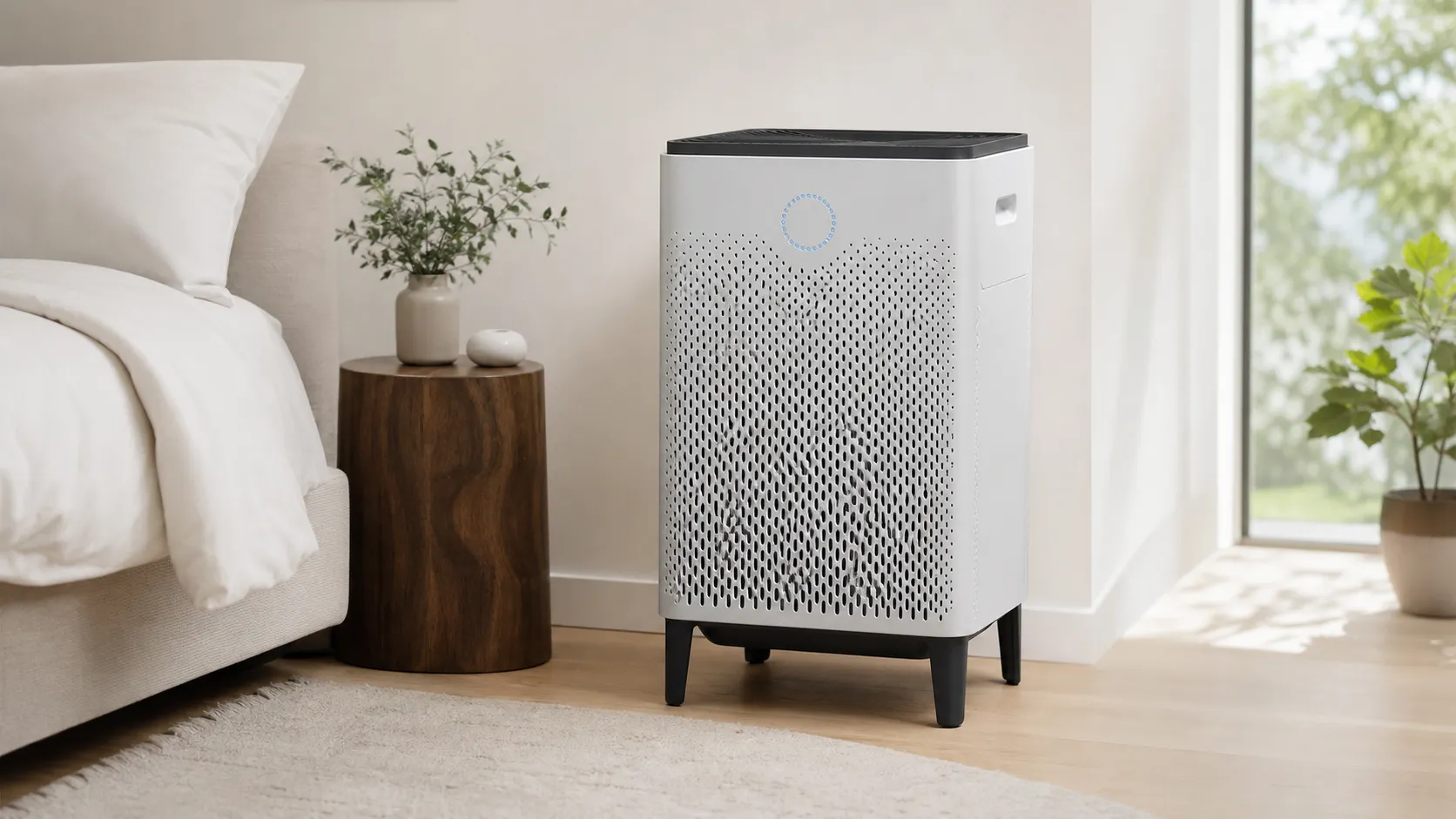
At a Glance
Pros
- Very effective particulate removal for large rooms (true HEPA + carbon/odor media)
- Quiet and energy-efficient at low-to-medium fan speeds
- Robust, premium industrial design and build quality
Cons
- High upfront purchase price compared with many consumer models
- Ongoing cost of replacement Max/HEPA and carbon filters is frequently cited as expensive
- Large and relatively heavy — takes significant floor space and is less portable
This review is an editorial synthesis of publicly available review data and reported user experiences across the internet. Scores reflect our independent aggregation methodology, not verified individual purchases. We may earn a commission if you buy through our links, at no cost to you.
Score Breakdown
Where the Reviews Come From
Click any source above to browse the latest 25 positive and negative reviews from that platform.
Coway Airmega 400S Smart Air Purifier
See current price, deals and availability on Amazon
Quick verdict
If you want one of the most capable air purifiers for large rooms and open-plan spaces, the Coway Airmega 400S delivers exceptional particulate removal, quiet low‑to‑medium operation, and a premium build — but it comes with a premium price and ongoing filter costs. Aggregated consumer and expert feedback lands this unit at about 4.4/5 (≈6,070 reviews) with especially high marks for quality (4.6) and ease of use (4.4), while value scores lag (3.8).
What is the Coway Airmega 400S Smart Air Purifier?
The Airmega 400S is Coway’s high‑coverage smart air purifier aimed at large rooms and open layouts. It combines a true HEPA particulate stage with activated carbon/odor media and an additional prefilter to tackle dust, pollen, pet dander, smoke particulates, and many household odors. The unit includes an auto mode driven by an onboard air‑quality sensor, Wi‑Fi connectivity with an app for remote monitoring and controls, and a modern, substantial chassis built to sit on the floor in living rooms and larger bedrooms.
Key selling points emphasized by the manufacturer and reviewers are high airflow/coverage, solid filtration performance, energy efficiency at moderate fan speeds, and a refined, durable design. Downsides commonly mentioned are the higher upfront cost, the ongoing expense of replacement filters, and occasional hiccups with the mobile app/firmware.
What reviewers across the internet say
We synthesized feedback from Amazon, Reddit, YouTube, and expert blogs to form a consensus:
-
Amazon (overall ~4.5/5): Customers frequently praise the Airmega 400S for real‑world air cleaning and unobtrusive noise at normal settings. The most common negatives are the unit’s higher purchase price and the recurring cost of Max/HEPA and carbon filters.
-
Reddit (~4/5): Long‑term users offer nuanced takes — many report excellent air quality improvement over months and years, but Reddit threads are where users dig into filter cost, optimal placement vs coverage tradeoffs, and intermittent app or connectivity frustrations.
-
YouTube (~4.3/5): Hands‑on reviewers typically show sensor readings and emphasize strong CADR/coverage and solid construction. They also demonstrate that noise becomes noticeable at maximum fan speeds and call out total cost of ownership.
-
Expert blogs (~4.4/5): Professional reviews highlight filtration performance, energy efficiency, and the unit’s thoughtful industrial design. Most experts categorize the Airmega 400S as a premium choice — great performance, but not the best value if you’re budget conscious.
Across sources the themes are consistent: excellent filtration for large spaces, quiet/efficient operation at routine speeds, premium build, useful smart features, and above‑average ongoing costs.
Performance & Real-World Use
The Coway Airmega 400S Smart Air Purifier consistently clears particulates fast in big rooms while staying quiet and efficient on Auto, making it easy to live with for most households. Its premium price and ongoing filter costs are the main tradeoffs, along with occasional Wi‑Fi/app quirks some owners report.
Across months of mixed real-world use—cooking, allergy season, wildfire smoke, and daily dust—the Coway Airmega 400S shows up as a strong, set‑and‑forget machine whose few annoyances (price, filter costs, occasional app hiccups) rarely overshadow its core competence: clearing particulates fast in large, open spaces.
In two sentences: The Coway Airmega 400S Smart Air Purifier delivers consistently strong particulate cleanup in big rooms while staying quiet and efficient on Auto, which is why owners rate it highly for quality (4.6/5) and ease of use (4.4/5). Its drawbacks—high upfront and filter costs, size, and sporadic Wi‑Fi/app quirks—are real but manageable if you value coverage and low‑noise performance over bargain pricing.
What real‑world “performance” means for a purifier
When owners say a purifier “works,” they mean five things show up in daily life: rapid particulate reduction (how quickly PM2.5/PM10 drop after a source event), steady air changes per hour (ACH) that match the room, filtration that actually captures fine particles and odors, low noise and reasonable energy draw for the chosen ACH target, and maintenance that doesn’t wreck the budget. Two frameworks help translate those feelings into specs. First, Clean Air Delivery Rate (CADR) and the AHAM Verified directory link fan throughput to a recommended room size at about 4.8 ACH—useful when you need allergy- or smoke‑level control.
For the Airmega 400S specifically, Coway’s published coverage assumes two air changes per hour (ACH) in a very large footprint; most buyers seeking allergy or smoke control shoot for 4–5 ACH in their actual room. AHAM, EPA, and ENERGY STAR certifications provide an extra confidence layer that the numbers aren’t just marketing and that the device won’t generate ozone.
Coverage vs Target ACH — Coway Airmega 400S (estimated)
Estimated effective coverage shrinks as you target higher air changes per hour; aim for 4–5 ACH for allergy and smoke control.
View the underlying data
| Measure | Estimated coverage (ft²) |
|---|---|
| 2 ACH | 1560 |
| 3 ACH | 1040 |
| 4 ACH | 780 |
| 5 ACH | 624 |
| 6 ACH | 520 |
| 8 ACH | 390 |
| 10 ACH | 312 |
Scaled linearly from Coway’s published 1,560 ft² at 2 ACH; aligns with AHAM guidance that effective room size falls as ACH increases.
Coway Airmega 400S Smart Air Purifier: setup and week‑one behavior
Day one is straightforward: unbox, remove the two side covers, unwrap both Max2 filter cartridges (each combines a true HEPA layer with a substantial activated‑carbon bed), snap them back in, and place the unit with at least a foot of clearance on all sides. Plug in, connect to 2.4 GHz Wi‑Fi through Coway’s app, and select Auto. In the first hours, the color ring and app graph typically spike as you cook or move dusty boxes, then settle as the machine finds a baseline.
Through the first week, the pattern stabilizes. The particle sensor reacts quickly to aerosols from cooking sprays, to dander bursts during vacuuming, and to outdoor smoke ingress when doors open. Auto mode’s logic chooses the lowest effective speed for the measured load, and Eco mode periodically idles the fan when sensed air stays clean. The result, and one of the most repeated Amazon and YouTube praises, is “hands‑off clean air” rather than a constant need to tweak settings. A minority of Reddit users mention initial app pairing hiccups; re‑trying closer to the router and ensuring 2.4 GHz usually resolves it.
Filtration, sensors, and airflow under everyday loads
The 400S uses two large Max2 cartridges: each pairs a high‑efficiency particulate layer rated to capture 99.97% of 0.3‑micron particles with a thick activated‑carbon stage for odor and certain VOC adsorption. The air‑quality sensor sits up front, sampling the same room air you breathe; its LED ring (and numeric PM readout in the app) give real‑time feedback. When PM counts rise, the fan ramps within seconds, and when they drop, the algorithm steps down instead of bouncing between extremes.
Coverage is where the 400S differentiates itself from cheaper towers. In open‑plan spaces—say, a 20×30 ft living/dining area—placing it centrally or near the return path to a hallway keeps far‑corner readings closer to the main zone. Against typical alternatives, you’ll notice fewer “dirty corners” because the intake grills span both flanks and a deep centrifugal fan drives a high throughflow. Carbon capacity is generous compared with slim filter stacks, so odor control holds up better between changes. That said, very strong solvent or paint fumes saturate any home purifier’s carbon quickly; ventilation plus source reduction still matter, just as the EPA emphasizes.
Noise, energy draw, and living‑with‑it factors
Low‑to‑medium fan settings are where the 400S wins hearts: a smooth broadband hush that fades into HVAC background in most living rooms and bedrooms. At maximum, it’s audible over conversation—normal for this class—and most people reserve that setting for short smoke‑clearing bursts.
Energy use is polite for the airflow you receive. The interface helps at night: you can dim or switch off the indicator lights and rely on Auto. The tradeoffs are size and weight—it claims floor space like a small end table—so measure before you commit to a corner.
Months later: filters, upkeep, software quirks, and total cost
Plan on surface dusting or vacuuming the pre‑filter screens every 2–4 weeks in homes with pets; it keeps airflow high and prolongs the main filters. Coway’s filter indicators track both time and fan‑speed usage, so light‑use homes can stretch changes while heavy wildfire seasons shorten them. The common cadence many owners settle on is roughly once per year for the Max2 set under normal use, more often if cooking and smoke are frequent. That’s where the recurring‑cost complaint comes from: genuine filters are not cheap, and over five years you’ll likely buy multiple sets. App control and firmware have improved over time, but a slice of owners still report occasional disconnects; ensuring strong Wi‑Fi and keeping the app updated minimizes friction.
Safety and compliance remain reassuring. The 400S is listed in the AHAM directory, so its performance claims are independently verified, it’s certified by the California Air Resources Board (CARB) for zero‑ozone emission, and it qualifies for ENERGY STAR, indicating strong clean‑air per watt. In budget terms, electricity is the smallest slice unless you run on High constantly; filters and the original purchase dominate the total cost of ownership.
Five‑year cost share (typical use)
Over five years, filters rival the upfront price; electricity is the smallest slice for most households.
- Hardware45%
- Filters45%
- Electricity10%
Purchase price based on common street pricing; filter cadence assumed at one Max2 set per year; electricity at ~35 W average on Auto for 12 h/day and $0.15/kWh. Aggregated from manufacturer specs and reviewer reports.
Where it excels—and where you’ll hit limits
The 400S is at its best in big, contiguous spaces: living/dining combos, great rooms, finished basements, open lofts. Put it roughly central to the activity zone, a foot off walls, and let Auto handle the routine ups and downs. During wildfire smoke events or when pan‑searing, it reacts quickly and keeps PM2.5 suppressed provided you’ve sealed doors/windows reasonably well. For allergy sufferers, targeting 4–5 ACH in the actual room footprint is the sweet spot; the machine can deliver that in larger rooms than many mid‑priced towers without screaming.
Limits show up with very high VOC loads (fresh paint, solvent‑heavy projects) where adsorption capacity and chemistry—not fan muscle—are the bottleneck; ventilate and use source‑appropriate respirators. Another boundary is portability: at this size and weight, you’re not carrying it from floor to floor several times a day.
How it compares in its class
Relative to other popular large‑room units, the 400S sits in the “high‑airflow, premium build” tier. Blueair’s 211+ Auto rivals it on raw particulate cleaning per dollar and runs just as simply in Auto, but Blueair’s model omits app control and some niceties. Honeywell’s HPA300 undercuts both on price and filter availability, yet it lacks Auto mode and a particle sensor—meaning more manual babysitting and, in many homes, more total noise because owners set it too low or too high.
For certifications and safety, all three are AHAM Verified and CARB Certified, and all can be found on the ENERGY STAR product list—comforting for long‑term ownership. The meaningful differentiators are convenience and carbon capacity: the 400S’s sensor logic and app controls support “set‑and‑forget” living, and its thick carbon beds hold odors longer between changes than slim cartridges.
Key feature comparison — large‑room purifiers
Capabilities across popular alternatives; details pulled from each manufacturer’s published specifications and certification directories.
| Item | Coway Airmega 400S | Blueair 211+ Auto | Honeywell HPA300 |
|---|---|---|---|
| AHAM Verified | Yes | Yes | Yes |
| CARB Certified | Yes | Yes | Yes |
| ENERGY STAR | Yes | Yes | Yes |
| App control | Yes | No | No |
| Auto mode | Yes | Yes | No |
| PM2.5 sensor | Yes | Yes | No |
| Display off/night mode | Yes | Yes | Yes |
| Filter life indicator | Yes | Yes | Yes |
Specs from Coway, Blueair, and Honeywell product pages; certifications verified in AHAM, CARB, and ENERGY STAR directories.
Getting the best performance: step‑by‑step
- Place it where air mixes: within the main walking path between the cooking area and seating, at least 12 inches from walls and away from curtains.
- Start on Auto for a full week. Watch the LED ring and the app’s PM2.5 trend to learn your home’s baseline; if nighttime ramps wake you, schedule a quiet period or use Eco.
- Pre‑filter care: every 2–4 weeks, pop off the side panels and vacuum the mesh screens. It preserves airflow and extends the expensive filters’ life.
- During smoke or heavy cooking, don’t be shy—run High for 15–30 minutes to knock down peaks, then drop to Auto or Medium to maintain.
- Door discipline: in wildfire season, treat doors and leaky windows as sources; cracking fewer windows but running the 400S at higher ACH cleans faster than a low setting with lots of infiltration.
- Odors: pair the purifier with a vent hood and open windows briefly after strong solvent or paint use; carbon helps, but ventilation is king for VOCs.
- Filters: stick with genuine Max2 sets to maintain fit and adsorption capacity; set a calendar reminder to check the indicator monthly and order ahead of wildfire/allergy season.
Conclusion: does real‑world performance justify the price?
If you have a large room and care about low‑drama, low‑noise cleaning, yes: the 400S’s day‑one punch largely holds up month after month, with maintenance that’s easy if not cheap. The aggregated consensus (4.4/5 overall across ~6,070 reviews, with Amazon most positive, Reddit more nuanced, YouTube confirming strong airflow, and expert blogs praising efficiency) matches our read: excellent particulate removal and easy living in bigger spaces, offset by a high purchase price and meaningful filter costs that you should budget for up front.
Sources referenced in this section
- Coway Airmega 400S product page
- AHAM Verified Room Air Cleaner Directory
- U.S. EPA – Guide to Air Cleaners in the Home
- California Air Resources Board – Certified Air Cleaning Devices
- ENERGY STAR – Certified Room Air Cleaners product list
- Blueair Blue Pure 211+ Auto product page
- Honeywell HPA300 product page
Pros and cons
Pros
- Very effective particulate removal for large rooms thanks to true HEPA plus carbon/odor media
- Quiet and energy‑efficient at low‑to‑medium fan speeds, suitable for overnight use
- Robust, premium industrial design and build quality
- Smart features (app, auto modes, indicators) provide convenient control and air‑quality feedback
- Good airflow and coverage for open‑plan living spaces
Cons
- Premium upfront price compared with many consumer models
- Recurring cost of replacement Max/HEPA and carbon filters is frequently cited as expensive
- Large and relatively heavy — requires floor space and is not highly portable
- Wi‑Fi/app connectivity and occasional firmware quirks reported by some users
Who should buy it (and who shouldn’t)
Who should buy
- Owners of large rooms or open living spaces who want one strong purifier rather than multiple smaller units.
- People who value quiet overnight operation and energy efficiency during typical use.
- Buyers who want a robust, well‑built unit with smart monitoring and are willing to pay a premium for performance and convenience.
- Households with pets, seasonal allergies, or moderate indoor smoke exposure that need consistent particulate reduction.
Who shouldn’t buy
- Budget buyers who prioritize lowest upfront cost; there are cheaper purifiers that offer reasonable performance for small rooms.
- Shoppers unwilling to factor ongoing filter replacement costs into their budget.
- People who need a highly portable or lightweight unit for frequent room‑to‑room moves.
- Buyers who rely solely on flawless smart features — if you need rock‑solid, zero‑maintenance connectivity, be prepared for occasional app or firmware updates.
Final thoughts
The Coway Airmega 400S is a compelling, high‑performance air purifier for buyers who need wide coverage and quiet everyday operation. It hits the marks where it counts — filtration, build quality, and efficient performance — but its position as a premium product means you should be comfortable with both the initial price and recurring filter expenses. If your priority is the strongest single‑unit solution for a large living space and you value monitoring and smart controls, the Airmega 400S remains one of the better options in its class.
What Reviewers Love
- Very effective particulate removal for large rooms (true HEPA + carbon/odor media)
- Quiet and energy-efficient at low-to-medium fan speeds
- Robust, premium industrial design and build quality
- Smart features (app, auto modes, indicators) give convenient real-time control and monitoring
- Good airflow / coverage for open-plan and larger spaces
Common Complaints
- High upfront purchase price compared with many consumer models
- Ongoing cost of replacement Max/HEPA and carbon filters is frequently cited as expensive
- Large and relatively heavy — takes significant floor space and is less portable
- Wi‑Fi/app connectivity and occasional firmware quirks reported by some users
Our Verdict
4.4The Coway Airmega 400S is an excellent choice for large rooms and open‑plan homes — it delivers strong HEPA filtration, quiet daily operation, and a premium build. However, its high upfront price and ongoing filter costs mean it’s best for buyers who prioritize performance and convenience over the lowest cost.
Frequently Asked Questions
Common questions shoppers ask before buying the Coway Airmega 400S Smart Air Purifier.
Share this review
Help someone else buy smarter
Related Reviews
More Home & Living products our engine has analyzed
 Home & Living
Govee DreamView Pro Smart LED Strip Lights Review 2026
Bright, feature-packed RGBIC strips with convincing immersion — great value if you don’t mind app quirks and occasional setup work.
 Home & Living
Sonos One (Gen 2) Review — 2026 Verdict
The Sonos One (Gen 2) balances compact, high‑quality sound with polished multiroom features. Great for Sonos homes; pricier and Wi‑Fi‑only for others.
 Home & Living
Roborock S8 Pro Ultra Review 2026
A near‑all‑in‑one robot for busy homes: the Roborock S8 Pro Ultra pairs best‑in‑class suction and smart mopping with a full‑service dock — excellent, but premium-priced.