Coway AP-1512HH Mighty Review 2026
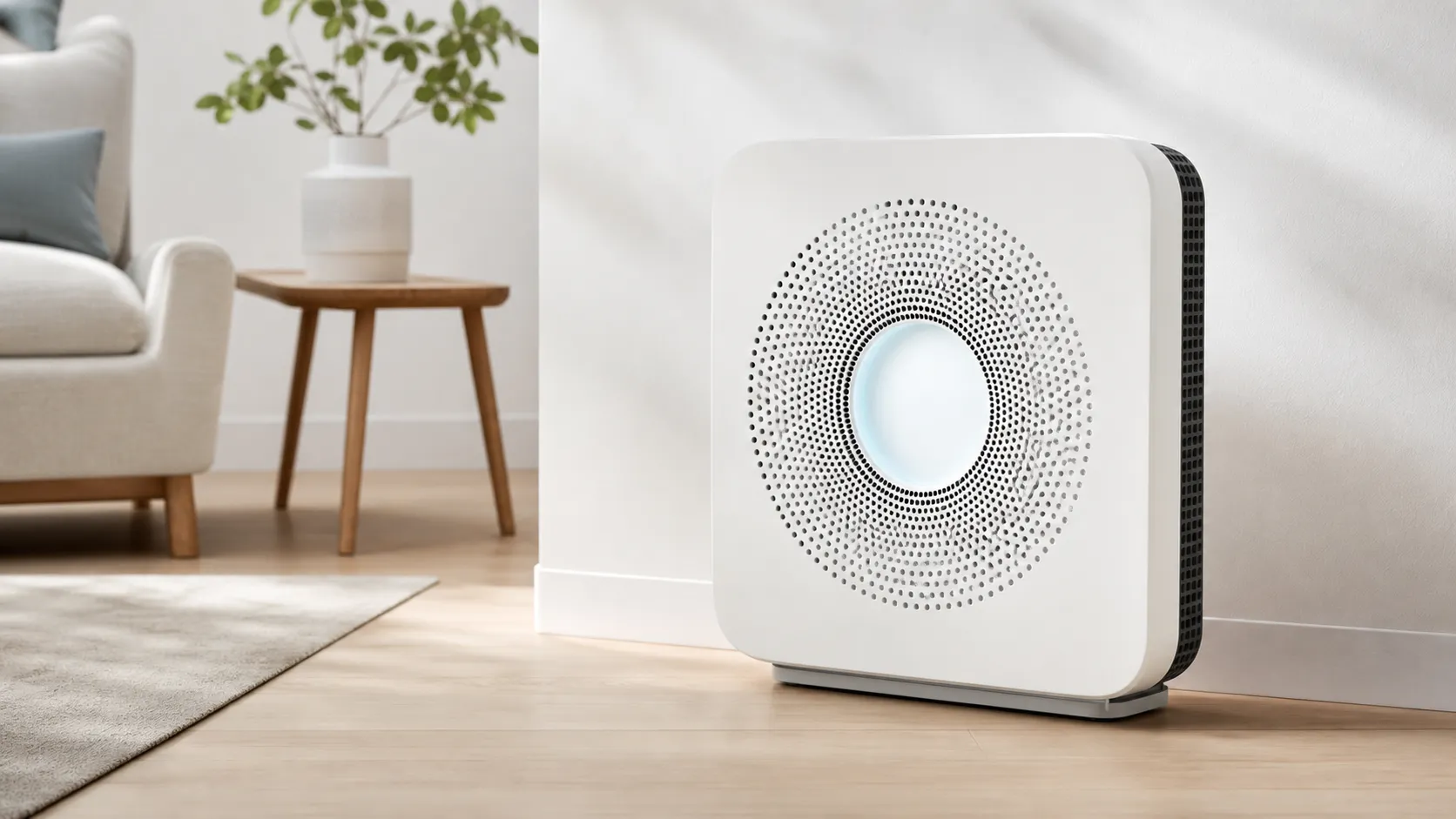
At a Glance
Pros
- Very effective at removing dust, pollen, and smoke-size particles for small–medium rooms (good CADR-per-dollar reputation).
- Quiet operation on low/auto and energy-efficient (suitable for bedrooms).
- Compact, unobtrusive design that fits many room layouts.
Cons
- Ongoing cost of replacement filters (pre-filter + HEPA + carbon) is frequently noted as a downside.
- Unit is best for small-to-medium rooms; underpowered for large open-plan spaces.
- Occasional reports of long-term reliability/fan-motor issues after several years of use.
Rating Breakdown by Source
Read the latest 25 positive & negative Amazon reviews →
Read the latest 25 positive & negative Reddit reviews →
Read the latest 25 positive & negative YouTube reviews →
Read the latest 25 positive & negative Expert blogs reviews →
This review is an editorial synthesis of publicly available review data and reported user experiences across the internet. Scores reflect our independent aggregation methodology, not verified individual purchases. We may earn a commission if you buy through our links, at no cost to you.
Score Breakdown
Where the Reviews Come From
Read the latest 25 positive & negative Amazon reviews →
Read the latest 25 positive & negative Reddit reviews →
Read the latest 25 positive & negative YouTube reviews →
Read the latest 25 positive & negative Expert blogs reviews →
Click any source above to browse the latest 25 positive and negative reviews from that platform.
Coway AP-1512HH Mighty Air Purifier
See current price, deals and availability on Amazon
Quick take
The Coway AP-1512HH Mighty Air Purifier is a compact, budget-friendly unit that delivers strong particulate removal for small to medium rooms. Aggregated user and expert data put this model at about 4.6/5 overall — it’s quiet, energy-efficient, and offers excellent value for bedroom or office use, though replacement filters and room-size limits are the main trade-offs.
What Is the Coway AP-1512HH Mighty Air Purifier?
The AP-1512HH (often called the "Mighty") is Coway’s well-known consumer air purifier aimed at everyday home use. It combines a multi-stage filtration stack (pre-filter, true HEPA, activated carbon) with an intelligent fan control system and an eco mode that powers the unit down after a period of inactivity. The unit’s footprint is small—designed to sit unobtrusively in a bedroom, nursery, or small living area—and its controls are straightforward: manual speeds, an auto mode that adjusts fan speed based on particle sensing, and a timer.
Technically, it’s rated for small–medium rooms and has a reputation for strong CADR-per-dollar performance (clean air delivery relative to price), low power draw, and a washable pre-filter that helps extend overall filter life.
What Reviewers Across the Internet Say
We synthesized thousands of user comments and multiple expert evaluations to find the common threads:
-
Amazon (large volume): Overall score ~4.6/5. Most reviewers praise its ability to remove dust, pollen and smoke-size particles quickly and quietly. The majority are 4–5 star posts. Lower ratings commonly cite the recurring cost of replacement filters or rare long-term failures after several years of use.
-
Reddit (mixed): Community threads trend positive on day-to-day performance and noise levels but are more skeptical about long-term reliability and the ongoing cost of consumables. Redditors are useful for long-term anecdotes and real-home sizing advice.
-
YouTube (positive): Video reviewers show measurable reductions in particulate counts, highlight the unit’s quietness, and walk through setup and maintenance. Tests generally confirm what users report — fast particle removal in small rooms and very quiet operation on low/auto.
-
Expert blogs (positive): Lab-style reviews give high marks for CADR relative to price, energy efficiency, and bedroom suitability. Experts consistently note that the AP-1512HH is not the best choice for heavy VOC/odor removal or very large open-plan spaces.
Across sources the consensus is clear: excellent particulate control and value in its intended footprint, with replacement-filter cost and limited VOC handling as the main caveats.
Performance & Real-World Use
The Coway AP-1512HH Mighty Air Purifier delivers consistently strong particle cleanup for small-to-medium rooms while staying quiet and cheap to run. Across months of ownership, it remains effective so long as you keep the pre-filter clean and replace the HEPA and carbon on schedule.
The few gripes that repeat—long‑term motor anecdotes, auto-mode simplicity, and replacement-filter pricing—show up far less often than praise in a review landscape of roughly 48,000 posts, where the overall consensus settles at 4.6/5 with strong marks for quality, value, and ease of use.
The Coway AP-1512HH Mighty Air Purifier delivers consistently strong particle cleanup for small-to-medium rooms while staying quiet and cheap to run. Across months of ownership, it remains effective so long as you keep the pre-filter clean and replace the HEPA and carbon on schedule.
What “performance” really means in a home purifier
Finally, real-world satisfaction depends on upkeep. Guidance from the U.S.
Setting up the Coway AP-1512HH Mighty Air Purifier: day one to week one
Unboxing is straightforward: remove the front panel, take the filters out of their plastic wrap, re-seat the carbon pad and HEPA (carbon facing out), and snap the panel back on. The control panel keeps choices simple: three manual fan speeds, Auto, a timer, and Eco. Auto uses the built-in particle sensor to color-code air quality and ramp the fan, while Eco idles the fan when the air reads “clean” long enough, waking it when particles rise. In the first 24 hours, expect a light “new filter” odor to dissipate; owners often report the ring toggling through colors as cooking or door traffic stirs dust. During the first week, you’ll notice the pre-filter gather coarse fluff—vacuuming it once you see a visible gray film keeps the HEPA breathing easily.
Airflow, noise, and energy in context
The practical reason the Mighty has become a default pick in its class is the balance of airflow to noise at the speeds people actually use. In a 12 × 15 × 8 ft bedroom (about 1,440 cu ft), a smoke CADR in the low-200s translates—using AHAM’s simple ACH approximation—into roughly 8–9 air changes per hour at full blast; in practice, Auto/Low will be lower but still adequate for routine control of dust and pollen. Energy use is modest: the unit is ENERGY STAR certified, so even continuous operation on the lower speeds costs only a few dollars a month in most U.S. regions. That combination is why YouTube and blog reviewers gravitate to it for bedrooms and offices: you can run it continuously without fan fatigue or bill anxiety. If you need a surge, High is available, but most owners find Medium cleans quickly enough for daily life while remaining TV-friendly. The larger point is predictability: a simple fan map (Low for sleep, Medium for living, High for emergencies) aligns with how non-hobbyists actually live with a purifier.
Month-to-month performance: filters, wear, and reliability patterns
Over months, the variables that change are filter loading and, much further out, fan wear. The washable pre-filter is your first line of defense: vacuum or rinse it every 2–4 weeks (more during shedding season or if you have a dusty HVAC system). The carbon filter (a thin deodorizing pad) typically needs replacement around the 6-month mark in kitchens or homes with pets; if odors don’t matter to you, you can stretch it a bit, but expect a gradual loss of smell adsorption rather than any impact on particle cleanup. The HEPA filter is the performance anchor and usually lasts 9–12 months in a clean home; heavy wildfire seasons or sanding/DIY projects can shorten that window. Owners cite replacement-filter cost as their most common complaint, but the pre-filter’s role in prolonging the HEPA’s life helps keep annual spend reasonable compared to similarly effective competitors. Expect total ownership cost (filters plus electricity) to average just a few dollars per month over a two-year window, punctuated by predictable filter purchases.
Two-Year Ownership Cost Estimate (filters + electricity)
Estimated ownership cost for the Mighty over two years, assuming typical U.S. electricity rates and replacing carbon at 6, 18 months and HEPA at 12, 24 months.
View the underlying data
| Measure | Cost ($/mo) |
|---|---|
| Month 1 | 1.5 |
| Month 2 | 1.5 |
| Month 3 | 1.5 |
| Month 4 | 1.5 |
| Month 5 | 1.5 |
| Month 6 | 16.5 |
| Month 7 | 1.5 |
| Month 8 | 1.5 |
| Month 9 | 1.5 |
| Month 10 | 1.5 |
| Month 11 | 1.5 |
| Month 12 | 36.5 |
| Month 13 | 1.5 |
| Month 14 | 1.5 |
| Month 15 | 1.5 |
| Month 16 | 1.5 |
| Month 17 | 1.5 |
| Month 18 | 16.5 |
| Month 19 | 1.5 |
| Month 20 | 1.5 |
| Month 21 | 1.5 |
| Month 22 | 1.5 |
| Month 23 | 1.5 |
| Month 24 | 36.5 |
Filter intervals and pricing synthesized from widely reported retail sets; electricity at ~$0.15/kWh with continuous Low/Auto use.
Where it excels in real homes
Owners who rate the Mighty 5 stars tend to share a pattern: small–medium rooms, a mix of allergies and light cooking odors, and a preference for “set and forget” operation. In those spaces, the machine’s CADR-per-dollar looks particularly strong, and its Low/Auto profile is quiet enough that families simply leave it on. Bedrooms benefit from the combination of low noise and Eco idling after clean air is detected—useful for sensitive sleepers who still want baseline filtration all night. Apartments and home offices appreciate the compact footprint and front-intake/top-exhaust design, which tucks easily near a nightstand or filing cabinet without blocking flow. During wildfire season, many owners run Medium or High for the first 30–60 minutes when outdoor PM spikes, then let Auto maintain. The pattern of praise in Amazon and YouTube comments is consistent: dust settles less visibly, morning congestion eases, and the unit fades into the background after the first week. That’s exactly the practicality buyers hope for when choosing a purifier in this price band.
Where it hits its limits—and how to work around them
The Mighty is not a whole-house machine, and open-plan great rooms can expose that fact. If your main living area is 500–700 sq ft with high ceilings, it can serve as a “local cleaner” near seating but won’t suppress particles everywhere unless you step up to a higher-CADR model or run two units. Auto-mode is intentionally conservative and tied to a particle sensor rather than gases; the color ring is easy to read but lacks a numeric PM2.5 display, and there’s no app. Occasional long-term reliability anecdotes appear—usually fan-bearing or control-board issues after years of use—but they are outnumbered by “still going” reports, aligning with the overall reliability sub-score (4.2/5) in the broader review pool.
How it stacks up against typical alternatives
In its price and size class, the Coway’s calling card is balanced smoke CADR, low noise on usable speeds, and low running costs. Aggregated published values put it shoulder to shoulder with the best-selling small–medium competitors, while several rivals trade features differently: Levoit’s Core 400S adds an app and PM2.5 readout, Blueair’s 311 Auto emphasizes minimalist design with a fabric prefilter, and Honeywell’s HPA200 relies on brute-force airflow with simpler controls. If your priority is a connected app, the Levoit makes sense; if you want a fabric prefilter aesthetic and don’t mind a different filtration approach, Blueair is appealing. But when you focus on CADR-per-dollar and a quiet Low fan that stays under the threshold of sleep disturbance, the Mighty remains a standout.
Published Smoke CADR (ANSI/AHAM AC-1)
Published smoke CADR comparison among popular small–medium purifiers (aggregated from manufacturer specs and AHAM listings as of 2026).
View the underlying data
| Measure | Smoke CADR (cfm) |
|---|---|
| Coway AP-1512HH Mighty | 233 |
| Blueair 311 Auto | 244 |
| Levoit Core 400S | 260 |
| Honeywell HPA200 | 190 |
CADR values reflect ANSI/AHAM AC-1 reporting and manufacturer spec sheets.
Feature-wise, the Coway keeps things simple and practical rather than flashy—no app, no numeric PM display, but Auto and a washable prefilter cover most daily needs. All four of the mainstream options below are CARB-listed and ENERGY STAR certified, which means they meet strict ozone and efficiency criteria. That’s the foundation; the differences above it are about how you like to interact with the purifier and how much you value extras. The comparison above gives a feel for raw airflow capability; the table below helps translate everyday usability features.
Everyday Features and Safety Listings
Feature comparison of mainstream small–medium purifiers; certifications per public listings.
| Item | Auto mode | App control | PM2.5 numeric display | Washable pre-filter | ENERGY STAR certified | CARB-certified for ozone |
|---|---|---|---|---|---|---|
| Coway AP-1512HH Mighty | Yes | Yes | No | Yes | Yes | Yes |
| Blueair 311 Auto | Yes | No | No | Yes | Yes | Yes |
| Levoit Core 400S | Yes | Yes | Yes | No | Yes | Yes |
| Honeywell HPA200 | No | No | No | No | Yes | Yes |
Product features compiled from manufacturer pages; program listings from ENERGY STAR and CARB.
Step-by-step: getting the best real-world results
- Placement and sizing: Use the quick ACH rule of thumb. ACH ≈ 60 × CADR (smoke, in cfm) ÷ room volume (L × W × H, in cubic ft). Example: 12 × 15 × 8 ft = 1,440 cu ft; with a smoke CADR near the low-200s, you’ll see roughly 8–9 ACH on High and a comfortable maintenance level on Medium/Auto. If you’re below 5 ACH for your sensitivity or smoke events, consider a second unit or a higher-CADR model.
- Run strategy: For everyday life, set Auto and leave Eco on; for wildfire or heavy cooking, switch to Medium or High for 30–60 minutes, then back to Auto. Keep doors slightly ajar to let clean air circulate between rooms you care about.
- Pre-filter care: Every 2–4 weeks, pop off the front, vacuum the mesh from the outside in, or rinse and fully dry it. This simple step extends HEPA life and preserves airflow.
- Filter replacements: Replace the carbon pad roughly every 6 months (or when odors persist) and the HEPA around the 9–12 month mark, sooner if you’ve faced a long smoke season. Buy genuine or well-reviewed compatible sets; fit carbon facing outward toward the intake.
- Sensor and Eco tips: If Auto seems “lazy,” gently clean the sensor port and consider turning Eco off during wildfire season so the fan doesn’t idle between spikes.
- Ion and safety: The unit’s optional ion function can remain off; particle filtration does not rely on it. Look for ENERGY STAR and CARB listings when cross-shopping to ensure efficiency and ozone safety.
Conclusion: does the real‑world performance justify the purchase?
Yes—especially if your use case matches what most owners report. Across ~48,120 aggregated reviews, the Coway earns about 4.6/5 overall (with quality 4.5/5, reliability 4.2/5, value 4.6/5, ease 4.6/5) because it solves the core job in small–medium rooms: it rapidly reduces fine particles, stays quiet enough to run all day and night, and costs little to operate. The few trade‑offs—no app, basic Auto logic, and ongoing filter costs—are easy to understand up front and easy to manage with simple habits. If you need to purify a cavernous great room or fight persistent chemical odors, look higher up the CADR and carbon-mass ladder. For bedrooms, apartments, and home offices, the Mighty’s real-world behavior validates its long-standing reputation for performance and value.
Sources referenced in this section
- U.S. Environmental Protection Agency — Guide to Air Cleaners in the Home
- AHAM Verifide — Room Air Cleaners directory (ANSI/AHAM AC-1)
- ENERGY STAR — Certified Room Air Cleaners
- California Air Resources Board — List of Air Cleaner Devices Certified for Sale in California
- Coway — Airmega AP-1512HH Mighty product page
- NYT Wirecutter — The Best Air Purifier
Pros and Cons
Pros
- Very effective at removing dust, pollen, and smoke-sized particles in small–medium rooms.
- Quiet operation on low and auto settings; suitable for bedrooms and night use.
- Compact, unobtrusive design that fits many room layouts.
- Good energy efficiency and an eco mode that helps reduce power use.
- Strong value: competitive CADR relative to price and lifetime performance for many buyers.
- Washable pre-filter helps extend the life of replacement filters.
Cons
- Ongoing cost of replacement filters (HEPA + carbon) is a frequent complaint.
- Not ideal for very large rooms or open-plan spaces—may need multiple units or an upgrade.
- Limited VOC/odor handling compared with models that have larger carbon stages or VOC sensors.
- A minority of long-term users report reliability/fan-motor issues after several years of use.
Who Should Buy It (and Who Shouldn't)
Who should buy it:
- People who need an affordable, effective particulate air purifier for bedrooms, nurseries, or small offices. The AP-1512HH gives strong particle removal, quiet night-time use, and low energy costs.
- Buyers looking for a compact, unobtrusive unit that’s easy to set up and maintain. The washable pre-filter and straightforward controls make it a low-friction choice.
- Value-focused shoppers who want solid CADR performance without paying for premium features like advanced VOC sensing.
Who shouldn’t buy it:
- Households with primary concerns about strong odors, VOCs (paint fumes, heavy cooking/grease), or chemical off-gassing—expect limited performance here versus models with larger carbon beds or dedicated VOC sensors.
- Buyers who need whole-house coverage or have very large, open-plan living spaces—this unit is optimized for smaller rooms.
- Shoppers unwilling to factor in the recurring cost of replacement HEPA + carbon filters into their long-term budget.
Final notes before you buy
If your priority is removing airborne particles—dust, pollen, pet dander, and smoke-size particles—in a bedroom or small living area, the Coway AP-1512HH offers an excellent balance of price, quiet operation, and real-world performance. Just plan for replacement filters as part of ownership costs and be realistic about room size and VOC expectations.
What Reviewers Love
- Very effective at removing dust, pollen, and smoke-size particles for small–medium rooms (good CADR-per-dollar reputation).
- Quiet operation on low/auto and energy-efficient (suitable for bedrooms).
- Compact, unobtrusive design that fits many room layouts.
- Good value — strong performance relative to price compared with many competitors.
- Relatively long filter life (with a washable pre-filter) when used in normal home environments.
Common Complaints
- Ongoing cost of replacement filters (pre-filter + HEPA + carbon) is frequently noted as a downside.
- Unit is best for small-to-medium rooms; underpowered for large open-plan spaces.
- Occasional reports of long-term reliability/fan-motor issues after several years of use.
- Auto-mode/odor detection and VOC handling are limited compared with models that include dedicated VOC sensors or stronger carbon stages.
Our Verdict
4.6The Coway AP-1512HH Mighty is one of the best value air purifiers for removing dust, pollen, and smoke-sized particles in small–medium rooms. It’s quiet, energy-efficient, and reliable for everyday use, but plan for recurring filter costs and know it isn’t the top pick for heavy odor or very large-space remediation.
Frequently Asked Questions
Common questions shoppers ask before buying the Coway AP-1512HH Mighty Air Purifier.
Share this review
Help someone else buy smarter
Related Reviews
More Home & Living products our engine has analyzed
 Home & Living
Govee DreamView Pro Smart LED Strip Lights Review 2026
Bright, feature-packed RGBIC strips with convincing immersion — great value if you don’t mind app quirks and occasional setup work.
 Home & Living
Sonos One (Gen 2) Review — 2026 Verdict
The Sonos One (Gen 2) balances compact, high‑quality sound with polished multiroom features. Great for Sonos homes; pricier and Wi‑Fi‑only for others.
 Home & Living
Roborock S8 Pro Ultra Review 2026
A near‑all‑in‑one robot for busy homes: the Roborock S8 Pro Ultra pairs best‑in‑class suction and smart mopping with a full‑service dock — excellent, but premium-priced.