Honeywell HPA300 True HEPA Air Purifier Review 2026
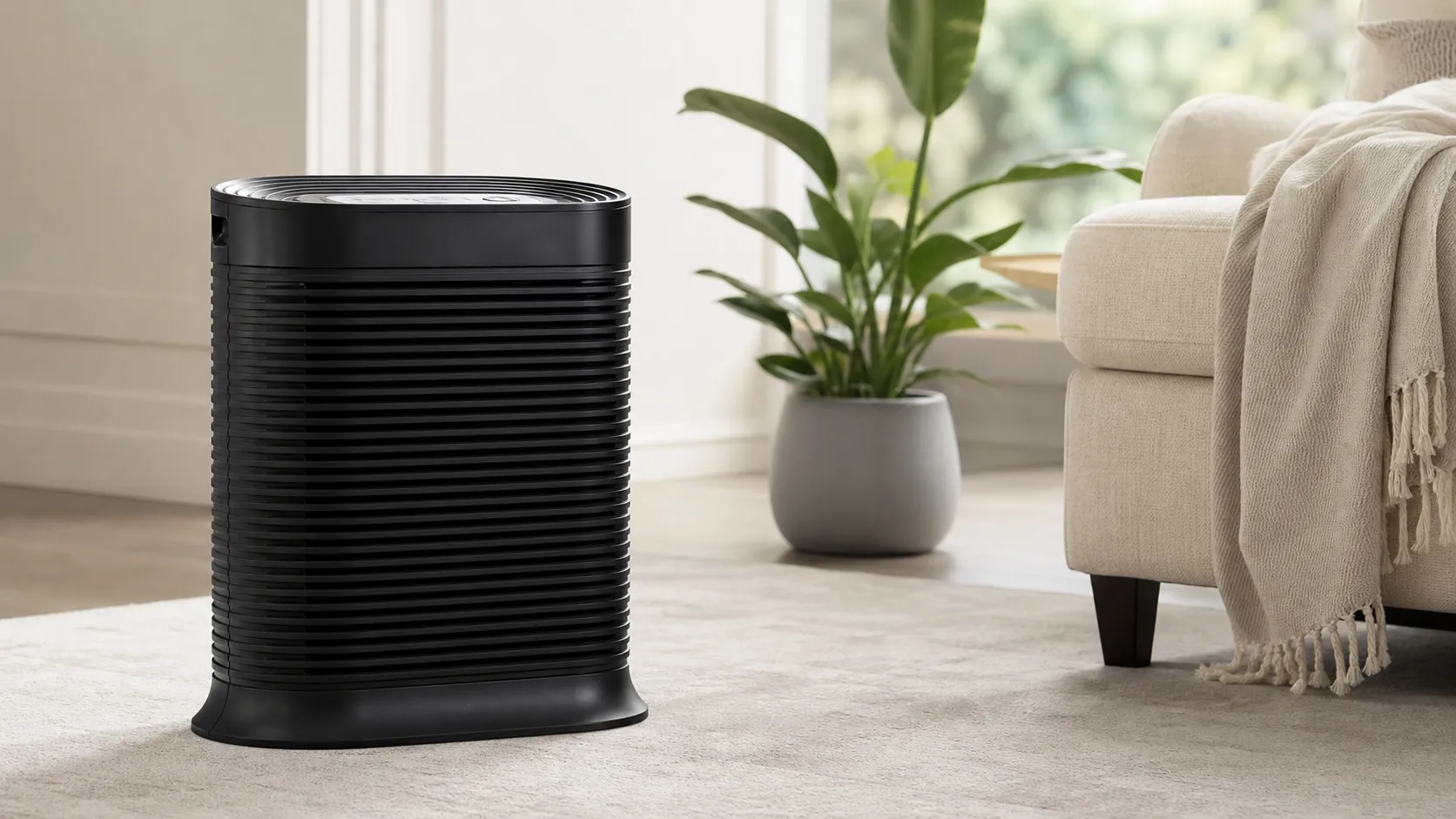
At a Glance
Pros
- High AHAM/CADR performance (roughly 300–320 CFM across smoke/dust/pollen) — clears particulate quickly in large rooms.
- Very effective in lab and real‑world tests for dust, pollen and smoke removal.
- Strong value — typically priced well below premium competitors while offering large‑room coverage.
Cons
- Loud on higher fan speeds — reviewers consistently report noticeable noise at max/boost settings.
- No smart sensors or app control — basic, manual controls only (no true automatic air‑quality sensing).
- Ongoing filter cost and only limited activated‑carbon capacity for odors/VOCs compared with some competitors.
Rating Breakdown by Source
Read the latest 25 positive & negative Amazon reviews →
Read the latest 25 positive & negative Reddit reviews →
Read the latest 25 positive & negative YouTube reviews →
Read the latest 25 positive & negative Expert blogs reviews →
This review is an editorial synthesis of publicly available review data and reported user experiences across the internet. Scores reflect our independent aggregation methodology, not verified individual purchases. We may earn a commission if you buy through our links, at no cost to you.
Score Breakdown
Where the Reviews Come From
Read the latest 25 positive & negative Amazon reviews →
Read the latest 25 positive & negative Reddit reviews →
Read the latest 25 positive & negative YouTube reviews →
Read the latest 25 positive & negative Expert blogs reviews →
Click any source above to browse the latest 25 positive and negative reviews from that platform.
Honeywell HPA300 True HEPA Air Purifier
See current price, deals and availability on Amazon
Quick verdict (TL;DR)
The Honeywell HPA300 True HEPA Air Purifier is a dependable, high‑CADR “workhorse” for large rooms — strong at clearing dust, pollen and smoke quickly and offered at a compelling price. Across ~40,500 aggregated reviews the consensus is clear: excellent particulate performance and value, with predictable tradeoffs in noise, limited odor/VOC capture, and basic controls.
What is the Honeywell HPA300 True HEPA Air Purifier?
The HPA300 is Honeywell’s large‑room, True HEPA air purifier designed to move a lot of air quickly. It uses a pre‑filter plus a True HEPA filter (captures 99.97% of particles down to 0.3 microns) and a modest activated‑carbon pre‑filter for light odors. Its strong motor and wide intake give it an AHAM/CADR rating in the ~300–320 CFM range for smoke, dust and pollen — a performance level intended for living rooms, open plans and spaces up to the manufacturer’s suggested square footage.
Unlike higher‑end models, the HPA300 keeps controls simple: manual fan speeds, a timer, and a filter‑change indicator. There are no automatic air‑quality sensors, smartphone apps, or voice control on the base model — it’s built for airflow and ease, not connected features.
What reviewers across the internet say
We aggregated user and expert impressions from major retail reviews, Reddit threads, YouTube demos and expert blogs to form a consensus:
- Aggregate score: 4.4/5 from ~40,500 reviews (subscores: quality 4.3, reliability 4.0, value 4.5, ease of use 4.0).
- Amazon: Strongly positive (≈4.5/5). Buyers praise rapid particulate removal and value; common notes are noise at high speed and routine filter replacement costs.
- Reddit: Mixed‑positive (≈4/5). Community threads call the HPA300 a dependable “workhorse” for smoke and allergies, share placement tips and multi‑unit strategies, and report occasional issues like grinding noises or a chemical odor from new filters.
- YouTube: Positive demo/review tests (≈4.1/5). Reviewers show live CADR/smoke clears and make the noise profile at higher fan speeds very obvious.
- Expert blogs and lab testers (RTINGS, Tom’s Guide, AirQualityNest, etc.): Positive (≈4.2/5). Experts confirm the high CADR and large‑room effectiveness, deducting for loudness and limited smart features.
Taken together, the consensus: excellent real‑world particulate performance and value, predictable noise and filter‑cost tradeoffs, and a no‑frills feature set.
Performance & Real-World Use
The Honeywell HPA300 True HEPA Air Purifier delivers large-room particle cleaning that feels immediate, driven by verified CADR around 300–320 CFM and AHAM coverage of 465 ft². In exchange for louder high-speed settings and no smart automation, you get dependable airflow and easy-to-source filters that keep performance steady over time.
If you judge an air purifier by how quickly it scrubs visible and invisible particles from real homes, the Honeywell HPA300 has earned its workhorse reputation. Across ~40,500 owner and expert ratings averaging 4.4/5—including Amazon at 4.5/5, Reddit around 4/5, YouTube creators near 4.1/5, and expert blogs circa 4.2/5—the throughline is fast particulate removal in large rooms for a reasonable price, with caveats about noise at higher speeds and recurring filter costs. (airadvisor.org; rtings.com)
Summary: The Honeywell HPA300 True HEPA Air Purifier delivers large‑room particle cleaning that feels immediate in day‑to‑day living, anchored by independently verified CADR in the ~300–320 CFM range and AHAM coverage of 465 ft². You trade quiet high‑speed operation, smart sensors, and app control for simple, reliable airflow and easy‑to‑find filters. (buildings.honeywell.com)
What “performance” means—and how this Honeywell delivers
CADR is the independently verified rate—reported for smoke, dust, and pollen—and appears on the AHAM Verifide label. The HPA300’s published/verified numbers cluster near 300 CFM for smoke and pollen and around 320 CFM for dust, translating to the marketed 465 ft² at roughly 4.8 ACH with 8‑ft ceilings on max. That’s why owners see the haze from wildfire smoke, cooking, or dusting drop quickly. (ahamverifide.org)
Noise is the flip side of big airflow. Reports consistently say Low/Medium sound like a steady whoosh, while High/Turbo are clearly audible—good for rapid cleanup, less ideal beside a bed. Energy matters if you run 24/7: by ENERGY STAR’s CADR‑per‑watt metric, the HPA300 sits mid‑pack at about 2.7 (dust) CADR/W—fine for continuous use, though several peers are thriftier. The EPA’s guidance is clear: size by CADR for particles and pair odor/VOC issues with source control and ventilation. (downloads.energystar.gov; epa.gov)
How much air the HPA300 can cycle by room size
Estimated ACH for common room sizes when the HPA300 runs on Turbo (based on published smoke CADR ≈300 CFM and 8‑ft ceilings).
View the underlying data
| Measure | ACH (estimated at Turbo) |
|---|---|
| 150 ft² | 15 |
| 250 ft² | 9 |
| 350 ft² | 6.4 |
| 465 ft² | 4.8 |
| 600 ft² | 3.8 |
ACH computed from EPA sizing guidance using CADR × 60 ÷ (room volume); CADR per ENERGY STAR/Honeywell listings.
Day‑one with the Honeywell HPA300 True HEPA Air Purifier: what to expect
Setup is basic: pop off the front grille, remove plastic from the three HEPA “R” filters and the “A” prefilter, reseat them, and power on. In a smoky or dusty space, many owners run Turbo for 30–60 minutes to clear the initial load, then drop to High or Medium to maintain. In the first week, two traits stand out. First, speed: a smoke CADR near 300 CFM yields visible and nose‑noticeable improvement in open living/dining rooms and during cooking or cleaning. Second, noise: Medium is tolerable in most living rooms; High/Turbo become conspicuous, which aligns with third‑party tests that place Low‑to‑High in roughly the 40–60 dB band. If sleep is the priority, pre‑clean on Turbo, then set Low/Medium overnight. (rtings.com)
Two setup tips prevent early frustrations. Give the unit breathing room—about 12–18 inches from walls and obstructions—and aim the outlet along the room’s long axis to avoid recirculation loops. Expect a faint “new carbon” smell from a fresh prefilter for a day; it should fade quickly. (honeywellstore.com)
Months of ownership: filters, reliability, and what changes
Performance remains steady if you keep up with consumables. Honeywell specifies replacing the A prefilter about every 3 months and the three R True HEPA filters annually under typical use; the Check Filter/Check Prefilter lights are simple reminders. In smoky seasons, pet‑heavy homes, or renovations, expect to swap the prefilter more often and the HEPA set within 6–12 months. Ignore clogging and the fan works harder, noise rises, and effective CADR falls. (honeywellstore.com)
Mechanically, the design is intentionally simple: a large axial fan pulling air through stacked media. That’s why long‑term owners call it a “workhorse,” and why most forum complaints are not motor failures but fitment/installation issues after filter changes—or chemical odors from off‑brand carbon sheets. Both are easy fixes: reseat the filters or switch to certified replacements. For safety, the HPA300 is a mechanical HEPA design and appears on California’s list of certified devices with negligible ozone emissions, a requirement for legal sale in the state. (reddit.com; ww2.arb.ca.gov)
Energy and cost over time are predictable. ENERGY STAR’s database places the HPA300 near 2.7 dust CADR per watt, implying a bit over 100 W at max given a dust CADR around 320. That’s not the class leader on efficiency—some peers roughly double that figure—but it’s reasonable for continuous operation if you use Medium most days and reserve Turbo for spikes. (downloads.energystar.gov)
Where it excels—and where you’ll find its limits
This Honeywell shines tackling particles in larger rooms: dust kicked up by kids and pets, spring pollen through open windows, or wildfire smoke intrusions. With a smoke CADR around 300 CFM, it can maintain roughly five air changes per hour in a 465 ft² living room with 8‑ft ceilings on max; stepping to Medium typically holds a clean baseline once the initial load is gone. During smoky weeks, many owners run it continuously on High in common spaces and add a second unit for whole‑home coverage. (buildings.honeywell.com)
Limits show up in three scenarios. First, quiet bedrooms: there’s no auto/sleep profile and High/Turbo are loud for light sleepers, so you’ll likely park the HPA300 in living areas and use a smaller, quieter bedside unit. Second, gas/odor problems: the thin prefilter helps with cooking whiffs but won’t scrub persistent VOCs; for that, choose models with thicker carbon blocks or rely on source control/ventilation, as the EPA advises. Third, convenience: without an app, sensors, or auto mode, you set speeds manually or use the simple 2/4/8‑hour timer. (epa.gov)
Head‑to‑head: how it stacks up to popular alternatives
Four mainstream large‑room picks come up with the HPA300: Coway’s AP‑1512HH “Mighty,” Blueair’s Blue Pure 211+, and Levoit’s Core 600S. In verified smoke CADR, Honeywell trades blows with Blueair and Levoit, while Coway’s smaller chassis sits a notch below. Energy efficiency flips pieces of that ranking: ENERGY STAR lists the Blue Pure 211+ and Core 600S near 5.8–6.1 CADR/W—roughly double the HPA300’s ~2.7—so they deliver more clean air per watt. If you want set‑and‑forget convenience, Coway and Levoit add auto modes and (on Levoit) an app; the HPA300 stays deliberately manual. (downloads.energystar.gov)
Speed vs. efficiency: where the HPA300 sits among peers
Published smoke CADR and ENERGY STAR dust CADR per watt for popular large‑room models.
- Smoke CADR (CFM)
- Energy efficiency (Dust CADR/W)
View the underlying data
| Item | Smoke CADR (CFM) | Energy efficiency (Dust CADR/W) |
|---|---|---|
| Honeywell HPA300 | 300 | 2.7 |
| Coway AP‑1512HH | 233 | 3.1 |
| Blueair Blue Pure 211+ | 348 | 5.8 |
| Levoit Core 600S | 394 | 6.1 |
CADR and efficiency from ENERGY STAR listings and brand literature cited in text.
Features differ in ways that matter long‑term: whether there’s an auto sensor, an app, a washable prefilter, and whether the filter is True HEPA or proprietary. The HPA300 sticks to True HEPA and a replaceable prefilter; Coway layers in auto mode and a washable prefilter; Blueair emphasizes high airflow using its HEPASilent system without app control on the base 211+; Levoit offers both auto and app control. All four are widely sold in California and appear on the state’s list of CARB‑certified devices. (energystar.gov; ww2.arb.ca.gov)
The convenience features you get (or don’t) with each model
Feature comparison across common alternatives (
| Item | Auto mode | App control | True HEPA | Washable prefilter | CARB‑certified |
|---|---|---|---|---|---|
| Honeywell HPA300 | No | No | Yes | No | Yes |
| Coway AP‑1512HH | Yes | No | Yes | Yes | Yes |
| Blueair Blue Pure 211+ | No | No | No | Yes | Yes |
| Levoit Core 600S | Yes | Yes | Yes | No | Yes |
| Winix 5500‑2 | Yes | No | Yes | Yes | Yes |
Features verified from manufacturer manuals/listings and CARB/ENERGY STAR databases cited in text.
Get the best performance: a step‑by‑step playbook
- Size it to your room using ACH: ACH ≈ CADR × 60 ÷ (room area × ceiling height). With the HPA300’s ~300 CFM smoke CADR and 8‑ft ceilings, you’re near 5 ACH in a ~465 ft² room on max. If your room is larger or has tall ceilings, consider two units or a higher‑CADR model. (epa.gov)
- Place it smart. Leave 12–18 inches of clearance; aim the clean‑air stream along the room’s long dimension; avoid corners and heavy furniture that cause recirculation. These basics improve effective CADR. (epa.gov)
- Run strategy. When pollutants spike (cooking, cleaning, smoky outdoor air), run Turbo for 30–60 minutes, then step down to High or Medium to maintain. For 24/7 allergen control, many owners set Medium by day and Low at night. (rtings.com)
- Maintain filters. Replace the A prefilter about every 3 months (or sooner in heavy smoke/pet homes) and the three R HEPA filters annually. If noise rises or airflow drops before the reminder lights, check for a loaded prefilter. (honeywellstore.com)
- Mind odors and VOCs. For strong, lingering smells, pair source control and ventilation with a purifier that has a thicker carbon stage, or plan on more frequent prefilter swaps; mechanical HEPA alone isn’t designed to capture most gases. The EPA stresses this point. (epa.gov)
- Verify certification. Look for AHAM Verifide labeling for CADR and CARB listing for ozone safety; both indicate the device has cleared independent checks relevant to real‑world use. (ahamverifide.org; ww2.arb.ca.gov)
Cost of ownership and everyday noise: what to budget for
Filter spend is the predictable recurring cost: one A prefilter roughly quarterly and a three‑pack of R HEPA filters about yearly under typical use. Street prices vary, but buyers who swap on schedule report costs that feel fair for the cleaning delivered; stretching intervals raises noise and reduces effective CADR. If you’re shopping alternatives primarily to save on filters, note that models with similar CADR usually have similar annual consumable costs unless they employ a washable carbon stage. (honeywellstore.com)
On energy, the HPA300 isn’t the thriftiest in its class but remains sensible for continuous use. ENERGY STAR’s listing implies a bit over 100 W at max (about 2.7 dust CADR/W with dust CADR ~320), and a simple routine—pre‑clearing on Turbo, then maintaining on Medium—keeps both noise and kWh in check. If efficiency is a top priority, the Blue Pure 211+ and Levoit Core 600S deliver comparable or higher CADR with roughly double the CADR per watt; the Coway Mighty splits the difference. (downloads.energystar.gov)
Bottom line: does real‑world performance justify the purchase?
Yes—if your top need is fast, reliable particle cleanup in a big room. The HPA300’s independently verified CADR and no‑frills design make it an easy recommendation for smoke seasons and allergy control in living areas, and its widespread filter availability keeps it going for years. (airadvisor.org)
Sources referenced in this section
- EPA – Guide to Air Cleaners in the Home
- AHAM Verifide – Directory and CADR labeling
- ENERGY STAR – Room Air Cleaners Qualified Product List (Honeywell HPA300)
- Honeywell – HPA090–HPA300 Series Owner’s Manual
- Honeywell – Product sheet (HPA300 CADR and 465 sq ft @ 4.8 ACH)
- Tom’s Guide – Honeywell HPA300 review (noise and CADR)
- RTINGS – Honeywell HPA300 review
- CARB – List of Certified Air Cleaning Devices
- ENERGY STAR – Blueair Pure 211+ listing (CADR and CADR/W)
- Coway AP-1512HH specification sheet (CADR, noise)
- AirAdvisor – Honeywell HPA300 owner impressions and ratings roundup
Design and controls
The HPA300 favors a functional, straightforward design. Controls are physical buttons for fan speed, timer and a filter indicator light. The unit is not smart: it lacks auto air‑quality sensing, app control or voice assistants. For shoppers who want a set‑and‑forget purifier that reacts to changing air quality automatically, a smart model with an onboard sensor may be a better fit.
Pros and cons
Pros
- High AHAM/CADR performance (~300–320 CFM) — excellent at removing smoke, dust and pollen quickly in large rooms.
- Strong real‑world effectiveness confirmed by lab and user tests.
- Excellent value for performance — typically priced well below premium smart purifiers.
- Simple, durable design with easy, widely available replacement filters.
- Proven model with many owners and community tips for optimal use and placement.
Cons
- Loud on higher fan speeds — noticeable in quiet environments.
- No smart sensors, app control or automatic air‑quality adjustments.
- Limited activated‑carbon capacity — less effective on heavy odors and VOCs vs. specialized units.
- Ongoing filter replacement cost; some users report an initial chemical odor from new filters and occasional mechanical/grinding noises.
Who should buy it (and who shouldn’t)
Who should buy the HPA300
- Large‑room owners who prioritize fast particulate removal: If you need to clear dust, pollen or smoke in living rooms, open plans or shared spaces, the HPA300’s high CADR is a major advantage.
- Value‑minded shoppers: You’ll get near‑top particulate performance for a lower price than many feature‑rich competitors.
- Allergy and smoke sufferers: It’s a good choice for seasonal allergies and episodic wildfire smoke events where removing particulates quickly is the priority.
- People who prefer simple, reliable hardware: The unit is easy to operate and maintain without software or connectivity headaches.
Who should not buy the HPA300
- Noise‑sensitive users who need whisper‑quiet night operation: The HPA300 is loud at top settings; quieter, lower‑CADR models or purifiers with proven low‑noise modes are better for bedrooms.
- Those who want automatic, smart operation: If you want an air purifier that senses air quality and adjusts fan speed automatically or integrates with smart home systems, this model won’t meet those expectations.
- Heavy odor/VOC concerns: If chemical smells, persistent cooking odors or VOCs are your top priority, look for a model with a larger activated‑carbon stage or specialized VOC filters.
Final thoughts
The Honeywell HPA300 is a classic example of engineering focused on core performance: it moves a lot of air, removes particulates quickly, and does so at a price that many users call a bargain. If you want straightforward, reliable particulate removal for large rooms and can tolerate higher fan noise or add another unit for quieter operation, it’s hard to beat for value.
What Reviewers Love
- High AHAM/CADR performance (roughly 300–320 CFM across smoke/dust/pollen) — clears particulate quickly in large rooms.
- Very effective in lab and real‑world tests for dust, pollen and smoke removal.
- Strong value — typically priced well below premium competitors while offering large‑room coverage.
- Simple, reliable/no‑frills design with widely available replacement HEPA/pre‑filters.
- Proven, widely used model — many users deploy one unit for living areas or multiple units for whole‑home coverage.
Common Complaints
- Loud on higher fan speeds — reviewers consistently report noticeable noise at max/boost settings.
- No smart sensors or app control — basic, manual controls only (no true automatic air‑quality sensing).
- Ongoing filter cost and only limited activated‑carbon capacity for odors/VOCs compared with some competitors.
- Occasional user reports of grinding/humming or chemical odor from new replacement filters.
Our Verdict
4.4The Honeywell HPA300 is an excellent value if your priority is fast particulate removal in large rooms — it’s a proven, no‑frills workhorse with high CADR and broad user endorsement. However, if you need whisper‑quiet operation, automatic air‑quality sensing, or heavy odor/VOC removal, consider quieter or smarter alternatives.
Frequently Asked Questions
Common questions shoppers ask before buying the Honeywell HPA300 True HEPA Air Purifier.
Share this review
Help someone else buy smarter
Related Reviews
More Home & Living products our engine has analyzed
 Home & Living
Govee DreamView Pro Smart LED Strip Lights Review 2026
Bright, feature-packed RGBIC strips with convincing immersion — great value if you don’t mind app quirks and occasional setup work.
 Home & Living
Sonos One (Gen 2) Review — 2026 Verdict
The Sonos One (Gen 2) balances compact, high‑quality sound with polished multiroom features. Great for Sonos homes; pricier and Wi‑Fi‑only for others.
 Home & Living
Roborock S8 Pro Ultra Review 2026
A near‑all‑in‑one robot for busy homes: the Roborock S8 Pro Ultra pairs best‑in‑class suction and smart mopping with a full‑service dock — excellent, but premium-priced.