Jackery Explorer 500 Review — 2026 Portable Power Station
At a Glance
Pros
- Very competitive watt‑hour capacity for its size (≈518 Wh) — good runtime for phones, laptops, small fridges, CPAPs.
- Lightweight/portable design (easy to carry for camping/vanlife) and quiet operation compared with gas generators.
- Pure‑sine 500W inverter and multiple port types (AC, 12V car, USB) — flexible for many devices.
Cons
- Reports of DOA/early failure and occasional bricking (customer-reported).
- Battery chemistry (original NMC) has limited cycle life vs newer LiFePO4 competitors / v2 upgrade.
- 500W inverter limit and occasional shutdowns with inductive or high-surge loads.
Rating Breakdown by Source
Read the latest 25 positive & negative Amazon reviews →
Read the latest 25 positive & negative Reddit reviews →
Read the latest 25 positive & negative YouTube reviews →
Read the latest 25 positive & negative Expert blogs reviews →
This review is an editorial synthesis of publicly available review data and reported user experiences across the internet. Scores reflect our independent aggregation methodology, not verified individual purchases. We may earn a commission if you buy through our links, at no cost to you.
Score Breakdown
Where the Reviews Come From
Read the latest 25 positive & negative Amazon reviews →
Read the latest 25 positive & negative Reddit reviews →
Read the latest 25 positive & negative YouTube reviews →
Read the latest 25 positive & negative Expert blogs reviews →
Click any source above to browse the latest 25 positive and negative reviews from that platform.
Jackery Explorer 500 Portable Power Station
See current price, deals and availability on Amazon
Quick verdict
The Jackery Explorer 500 Portable Power Station is a practical, user‑friendly mid‑capacity unit that offers excellent watt‑hour value for camping, vanlife, and light home backup. Aggregated across reviewers, it earns a solid overall score (4.3/5); it’s portable, quiet and easy to use, but reliability and long‑term battery life are the main areas where buyers should temper expectations.
What is the Jackery Explorer 500 Portable Power Station?
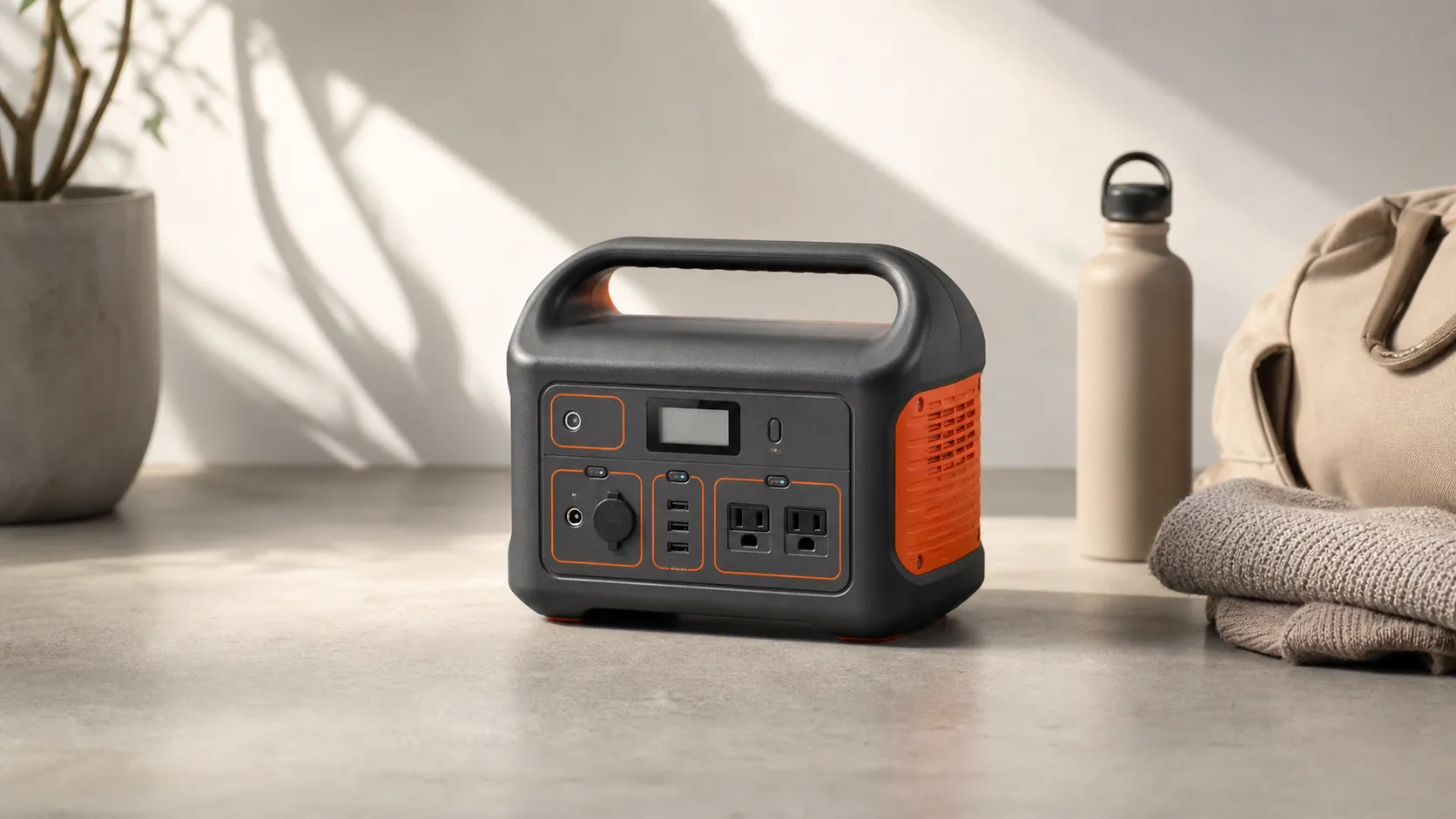
The Explorer 500 is Jackery’s compact, mid‑range portable power station built around roughly 518 watt‑hours of battery capacity and a 500W pure‑sine inverter. Physically it’s designed to be carried easily for outdoor use: a single integrated handle, quiet operation (compared with gas generators), and multiple output ports — AC outlets, a 12V car-style output, and several USB ports — make it a flexible option for charging phones, running laptops, keeping small fridges cold, and supporting CPAP machines for moderate durations.
Jackery positions this model as a budget‑friendly solution for campers and light emergency backup users who want a cleaner, quieter alternative to fuel generators and the convenience of solar‑capable recharging.
What reviewers across the internet say
We aggregated ratings and sentiment from major sources and the consensus is clear: the Explorer 500 is well‑liked for capacity, portability and ease of use, but it earns some consistent caveats about reliability and battery chemistry.
- Aggregate score: 4.3/5 from ~10,800 reviews. Sub-scores: quality 4.2, reliability 3.8, value 4.1, ease of use 4.5.
- Amazon reviewers: ~4.4/5. Amazon owners commonly praise the Explorer 500 for its run‑time relative to size, quiet operation, and straightforward controls. Most negative Amazon posts describe isolated DOA units or early failures but these are a minority.
- Reddit community: ~3.6/5. Reddit discussions are more mixed and frequently raise issues of occasional bricking, unexplained shutdowns, and longer troubleshooting threads — reliability and customer‑service follow‑up are recurring topics there.
- YouTube reviews: ~4.2/5. Video reviewers tend to test real‑world run times and solar charging; they generally like the Explorer 500’s practical performance and quiet operation but emphasize the 500W inverter limit and that heavy inductive loads or high starting‑watt devices can trip the unit.
- Expert blogs: ~4/5. Tech outlets highlight the great watt‑hour‑per‑dollar value for a portable station but call out the original NMC battery chemistry’s limited cycle life, recommending the v2 or LiFePO4 variants for buyers focused on longevity.
Taken together: buyers get a reliable, easy‑to‑use station most of the time, with good value for short‑to‑medium‑term use — but there are nontrivial reports of DOA/bricked units and mixed warranty experiences that lower the reliability score.
Performance & Real-World Use
The Jackery Explorer 500 Portable Power Station delivers quiet, stable 500W pure‑sine AC and useful DC outputs from a 518Wh pack, providing dependable overnight CPAP runtime, laptop charging, and 12V fridge support when you stay within its limits. The Jackery Explorer 500 Portable Power Station remains a strong value for occasional camping and outage backup in 2026, though heavy, daily users should prefer newer LiFePO4 rivals (or Jackery’s 500 v2) for longer cycle life.
Portable power stations promise to turn a backpack‑size box into dependable electricity anywhere. Owners ultimately judge the Jackery Explorer 500 by whether it can run a CPAP overnight, keep a car fridge cold through a heat wave, top up laptops and cameras without drama, and be ready again by morning.
The Jackery Explorer 500 Portable Power Station delivers stable 110V pure‑sine AC up to 500W from a 518Wh pack, with simple controls and quiet operation that make it easy to trust in camp or during short outages. The Jackery Explorer 500 Portable Power Station is best when you respect its 500W ceiling, lean on the DC ports whenever possible for efficiency, and recharge methodically; do that and its real‑world performance consistently justifies its price for entry‑to‑mid capacity use.
What “performance” really means for a 500‑Wh power station
For this category, the satisfaction drivers are straightforward: 1) usable energy after conversion losses; 2) inverter quality and surge handling; 3) recharge speed from AC/vehicle/solar; 4) port mix and ease of use; and 5) battery longevity. The Explorer 500 starts with published specs of 518Wh capacity and a pure‑sine 110V AC inverter rated 500W continuous/1000W surge, with one AC outlet, three USB‑A ports, and regulated 12V outputs for automotive fridges and accessories. Those specs put it squarely in the “mid‑capacity, single‑AC‑socket” class that prioritizes portability and simplicity over high‑watt appliances. In practice, your AC runtime is governed by the basic runtime formula shown in Jackery’s own literature: usable hours ≈ (battery Wh × inverter efficiency) ÷ device watts; typical inverter efficiency lands around 85% at moderate loads, and higher when you can stay on DC. That’s why a 40W CPAP can comfortably run through a full night on the AC outlet, and even longer via a DC adapter. The other big axis is longevity: the classic Explorer 500 uses NMC cells, which trade energy density for shorter cycle life than newer LiFePO4 rivals. (bhphotovideo.com)
Day‑one setup and first week: quiet, simple, and predictable
Out of the box, the Explorer 500 is about as plug‑and‑play as these units get: charge to 100% from the included wall charger (a full empty‑to‑full top‑off takes on the order of 7.5 hours), press the AC or DC button to energize that bank, and watch the front LCD for input/output watts and state of charge. The 12V ports are regulated and work well with car fridges; the single AC socket is the simplest “one‑thing‑at‑a‑time” setup for laptops, TVs, or a small medical device. Helpful defaults include an energy‑saving auto‑shutoff: if draw sits under roughly 10W for 12 hours, the unit powers down to preserve charge—good for weekenders who might forget to switch ports off. (manuals.plus)
Sustained behavior after months: battery aging, efficiency, and reliability
Over months of mixed use, two characteristics define the 500’s staying power: its NMC battery’s cycle life and the real‑world efficiency losses you manage through port choice. NMC chemistry typically delivers fewer deep‑cycle years than LFP; Jackery’s own materials and third‑party battery references align around a few hundred to roughly 800 cycles before capacity falls to about 80%, depending on depth‑of‑discharge and temperature. By contrast, the LiFePO4‑based Explorer 500 v2 family is rated massively higher (Jackery publishes 6,000 cycles to about 70% capacity), illustrating how chemistry drives long‑term value if you’re a daily or heavy seasonal user. Efficiency matters as batteries age: AC inversion losses (often 10–20% depending on load) shorten runtime compared with the 12V car or DC barrel outputs, so choosing DC where possible both extends hours today and reduces stress on the pack long‑term. See the capacity‑retention comparison below for how the classic unit and LFP successors diverge over time. (batteryuniversity.com)
Capacity retention vs. cycle count (typical, aggregated)
Cycle‑life curves synthesized from manufacturer statements and reference materials; values are illustrative mid‑range expectations, not lab measurements.
- NMC (Explorer 500 classic)
- LFP (500 v2 class)
View the underlying data
| Item | NMC (Explorer 500 classic) | LFP (500 v2 class) |
|---|---|---|
| 0 | 100% | 100% |
| 200 | 95% | 99% |
| 400 | 90% | 98% |
| 800 | 80% | 96% |
| 1200 | 75% | 95% |
| 2000 | 65% | 90% |
| 3000 | 60% | 80% |
| 6000 | 50% | 70% |
NMC vs LFP longevity from Battery University; Jackery states 500 v2 is rated to ~6000 cycles to ~70% capacity.
Where the Jackery Explorer 500 Portable Power Station shines—and where it hits limits
This model’s sweet spot is small, steady loads: CPAP machines, laptops, camera batteries, LED lighting, routers, and 12V compressor coolers. For CPAP in particular, community and clinical guidance point to 25–60W typical draws depending on whether you run heated humidity; using the runtime formula with the 500’s 518Wh capacity, most users get a full night on AC and even longer via a DC adapter that bypasses the inverter. Where limits surface is with inductive or high‑surge appliances: hair dryers, kettles, and some older mini‑fridges can spike 2–3× their running watts at startup, briefly exceeding the Jackery’s 1000W surge ceiling and tripping protection. Even within 500W continuous, running multiple devices at once can cause transient overloads if, say, a fridge compressor kicks in exactly when a laptop charger ramps. The practical workaround is to stage starts (bring the largest surge load online first) and prefer “inverter‑compressor” fridges that soft‑start. Respect those boundaries and the 500 feels boring‑reliable in the field; ignore them and you’ll see unexplained shutdowns that are really just protective trips doing their job. (sleepbackuplab.com)
Estimated runtime from 518Wh battery (aggregated; assumes 85% AC, 92% DC efficiency)
Aggregated estimates: typical device runtimes from a 518Wh pack, using published specs and the common 0.85 AC/0.92 DC efficiency factors.
- AC output (85% eff)
- DC output (92% eff)
View the underlying data
| Item | AC output (85% eff) | DC output (92% eff) |
|---|---|---|
| CPAP 40W | 11 h | 11.9 h |
| Laptop 60W | 7.3 h | 7.9 h |
| LED TV 80W | 5.5 h | 6 h |
| 12V Car Fridge 45W avg | 9.8 h | 10.6 h |
Runtime formula and 0.85 AC factor from Jackery user manual; device wattages from common use cases and CPAP guidance.
Charging and solar: how long it actually takes and how to speed it up
From the wall, a full charge from empty is roughly 7.5 hours. From a 12V vehicle outlet you’ll see similar ballpark times on long drives. Solar is the wildcard: the Explorer 500’s legacy 8mm input tops out around 100W, so a single 100W panel in ideal noon sun can refill a near‑empty pack in about 9–16 hours depending on conditions; in shoulder seasons or hazy heat, 50–80W actual input is common, so plan for a multi‑day top‑off if you’re living from the sun alone. The simple way to speed things up is to a) keep the panel aimed at the sun (tilt 15–30° and re‑aim every hour or two), b) minimize shading on any cell, and c) charge midday while loads are light. If you own fridge‑class gear that can run from 12V, do it: you’ll harvest more usable watt‑hours from the same sunlight because you’ve avoided inverter losses. The v2 refresh increases DC input headroom, but the classic Explorer 500 is best treated as a “single‑panel, slow‑and‑steady” solar companion that’s happiest finishing on wall power before a trip. (manuals.plus)
How it compares to common alternatives in 2026
In 2026, similarly sized rivals split along battery chemistry. EcoFlow’s River 2 Max (512Wh) and Bluetti’s EB55 (537Wh) both use LiFePO4 packs with longer cycle ratings, faster AC charging, and higher DC/solar inputs; Bluetti even offers a 700W inverter in this capacity class, trading weight for peak output flexibility. Jackery’s own Explorer 500 v2 also switches to LFP and adds modern ports and faster charging while keeping the 500W ceiling. The classic Explorer 500 still wins on straightforward operation and a compact, quiet chassis, and frequent discounts keep its value proposition alive for “occasional‑use” buyers who don’t need thousands of cycles. But if you expect daily duty, solar‑heavy usage, or plan to power multiple devices with higher surge demands, an LFP‑based competitor (or Jackery’s 500 v2) stretches further years down the road. (websiteoss.ecoflow.com)
Specs and features vs alternatives (published specs; 2026)
Specs collected from manufacturers’ documentation as of 2025–2026; USB‑C PD column indicates presence of a ≥60W USB‑C output.
| Item | Capacity Wh | Chemistry | Weight lb | Inverter W | Surge W | Max solar input W | Cycle life rating | USB-C PD (>=60W) |
|---|---|---|---|---|---|---|---|---|
| Jackery Explorer 500 (Classic) | 518 | 0 | 13.3 | 500 | 1000 | 100 | 0 | 0 |
| Jackery Explorer 500 v2 | 512 | 0 | 12.6 | 500 | 1000 | 200 | 0 | 1 |
| EcoFlow River 2 Max | 512 | 0 | 13.4 | 500 | 1000 | 220 | 0 | 1 |
| Bluetti EB55 | 537 | 0 | 16.5 | 700 | 1400 | 200 | 0 | 1 |
Jackery, EcoFlow, and Bluetti manuals; TechRadar (500 v2). Cycle‑life notes: Explorer 500 classic ~≥500 cycles to ~80% (NMC); 500 v2 ~6000 cycles to ~70% (LFP); River 2 Max ~3000 to ~80% (LFP); EB55 ~2500+ to ~80% (LFP).
Get the best from the Explorer 500: step‑by‑step
- Plan your loads. List the watts of what you’ll power, then add a 30% buffer for startup spikes. If any single device needs more than 500W continuously or can surge above 1000W, it’s not a match; look to a soft‑start variant or a bigger station.
- Prefer DC when you can. Run 12V car fridges and compatible gear from the regulated car socket or DC barrel ports to avoid 10–20% AC inversion losses; save the AC outlet for items that truly need wall power.
- Stage appliance starts. Power on the highest‑surge load first (e.g., a fridge), wait for it to settle, then add chargers and lights. This minimizes overload trips tied to inrush current.
- Recharge deliberately. Top off on wall power before trips. On solar, re‑aim panels at least every 1–2 hours; keep them clean and cool, and expect the classic model’s 100W input limit to be your speed cap.
- Store it right. For longest life with NMC packs, avoid deep storage discharge; keep the battery around 50–80% when stowing for more than a month and top up every 3–6 months, especially before storm season.
- Use pass‑through wisely. It’s fine for topping devices while the station charges, but for overnight CPAP or fridge duty, finish charging first so the pack starts cool and full. (portableenergylab.com)
Conclusion: does real‑world performance justify the purchase?
Yes—if your expectations match its design. The Explorer 500’s 518Wh, 500W pure‑sine platform is incredibly approachable and quiet, and when you run the right loads (CPAPs, laptops, lights, 12V coolers) and recharge on a routine, it earns its keep with drama‑free power and reasonable runtimes. The trade‑offs are clear: an older NMC battery with a shorter cycle horizon than LFP competitors, a single AC outlet, and a 100W solar ceiling. For occasional campers, road‑trippers, or households wanting a compact outage buffer for essentials, the performance‑per‑dollar stays compelling—more so when it’s on sale. If you need daily cycling longevity, app control, or more headroom for surges, Jackery’s own 500 v2 or an LFP rival like River 2 Max/EB55 will simply outlast it. In short, the Explorer 500 remains a smart, easy‑living choice for light‑to‑moderate loads in 2026, while heavy users should step into LFP for the long run. (bhphotovideo.com)
Sources referenced in this section
- Jackery Explorer 500 User Manual (PDF)
- Jackery Support — Explorer 500 V2 Basic Information
- B&H Photo product page — Explorer 500 (specs)
- Battery University — BU‑205: Types of Lithium‑ion
- ENERGY STAR — UPS Key Product Criteria (inverter efficiency context)
- EcoFlow River 2 Max User Manual (LFP, 512Wh/500W/1000W surge)
- TechRadar — Jackery Explorer 500 v2 review (LFP refresh context)
- Off‑Grid Backcountry Adventures (YouTube) — Explorer 500 specs incl. 100W DC input
- Sleep Backup Lab — CPAP power consumption and runtime math
- GeneratorChecker — Surge watts vs running watts explained
Pros and cons
Pros
- Strong watt‑hour capacity (~518 Wh) for the size — good value for campers and short backups.
- Lightweight and portable design with an easy carry handle.
- Quiet operation compared with gas generators.
- Pure‑sine 500W inverter and multiple output types (AC, 12V, USB) — flexible for many devices.
- Simple, intuitive user interface — easy for novices to operate.
- Solar‑compatible, making it a solid choice for extended off‑grid trips when paired with panels.
- Frequently available at discounts, boosting price‑to‑performance.
Cons
- Reported instances of DOA units, bricking, and unexplained shutdowns in user forums.
- Original NMC battery chemistry has lower cycle life vs LiFePO4 competitors or Jackery’s own v2 models.
- 500W inverter limit and potential shutdowns with inductive/high‑surge loads.
- Mixed customer‑service/warranty experiences reported by some users.
Who should buy it (and who shouldn’t)
Buy it if:
- You want a portable, quiet, and easy‑to‑use power station for camping, weekend van trips, or light home backup. The Explorer 500 is a strong value for users who need a mid‑capacity solution without paying top‑tier prices.
- You’ll mostly power phones, laptops, cameras, small fridges, LED lights, and CPAPs with moderate power draws. For these everyday loads the Explorer 500 performs well in real‑world tests.
- You plan occasional off‑grid trips and want solar compatibility without complex setup.
Don’t buy it if:
- You need heavy‑duty continuous power or frequent high‑surge loads (large power tools, space heaters, hair dryers). The 500W inverter and surge behavior limit such use.
- You expect daily, deep cycling for several years and want the longest possible battery lifespan. In that case, consider models with LiFePO4 chemistry or Jackery’s v2 line for improved cycle life.
- You’re extremely risk‑averse about early failures and need the absolute highest reliability record; some users report DOA/bricking and uneven support experiences, so factor that into your purchase decision and consider retailer return policies and warranty terms.
Final tips before you buy
- Check the return policy and warranty, and register your unit after purchase to simplify support if needed.
- If you plan to run CPAPs, check your machine’s continuous draw and any humidifier/pulse settings to confirm run time. For heavy usage or nightly long‑term CPAP power, consider higher‑capacity or LiFePO4 models.
- When pairing solar panels, match panel output to Jackery’s recommended inputs and test charge behavior in good sun to set realistic recharge expectations.
Overall, the Jackery Explorer 500 is a practical, well‑rounded choice for travelers and casual backup users who value portability and ease of use, with the caveat that buyers who need rugged long‑term cycle life or very high surge capacity should look at higher‑end or LiFePO4 options.
What Reviewers Love
- Very competitive watt‑hour capacity for its size (≈518 Wh) — good runtime for phones, laptops, small fridges, CPAPs.
- Lightweight/portable design (easy to carry for camping/vanlife) and quiet operation compared with gas generators.
- Pure‑sine 500W inverter and multiple port types (AC, 12V car, USB) — flexible for many devices.
- Simple, user‑friendly interface — easy to recharge from AC, car or compatible solar panels.
- Generally good price-to-performance for an entry/mid-level portable power station (often discounted).
Common Complaints
- Reports of DOA/early failure and occasional bricking (customer-reported).
- Battery chemistry (original NMC) has limited cycle life vs newer LiFePO4 competitors / v2 upgrade.
- 500W inverter limit and occasional shutdowns with inductive or high-surge loads.
- Customer service / warranty experiences are mixed in user reports.
Our Verdict
4.3The Jackery Explorer 500 is a smart, affordable mid‑capacity power station that excels at portability, quiet operation and ease of use — a great pick for camping and light backup. However, buyers should weigh reports of occasional DOA/bricking and the NMC battery’s shorter cycle life against their long‑term needs; opt for a v2/LiFePO4 model if longevity is a priority.
Frequently Asked Questions
Common questions shoppers ask before buying the Jackery Explorer 500 Portable Power Station.
Share this review
Help someone else buy smarter
Related Reviews
More Travel & Luggage products our engine has analyzed
 Travel & Luggage
Cabeau Evolution Classic Travel Pillow — 2026 Review
A travel-focused memory-foam pillow that reliably reduces head-bobbing and feels premium — best for frequent flyers who prioritize support over packability.
 Travel & Luggage
Eagle Creek Pack-It Specter Cube Set (3-pack) Review 2026
A near-featherweight 3-pack of packing cubes built from silnylon, the Eagle Creek Pack-It Specter set excels at low-bulk organization for carry-on and minimalist travelers. Premium feel and visibility, but at a higher price and with some zipper longevity caveats.
 Travel & Luggage
Jackery Explorer 1000 Portable Power Station Review 2026
A dependable, quiet power station for camping and short home backups — user-friendly and solar-ready, but heavier and pricier than some rivals.