Levoit Core 300 True HEPA Air Purifier Review 2026
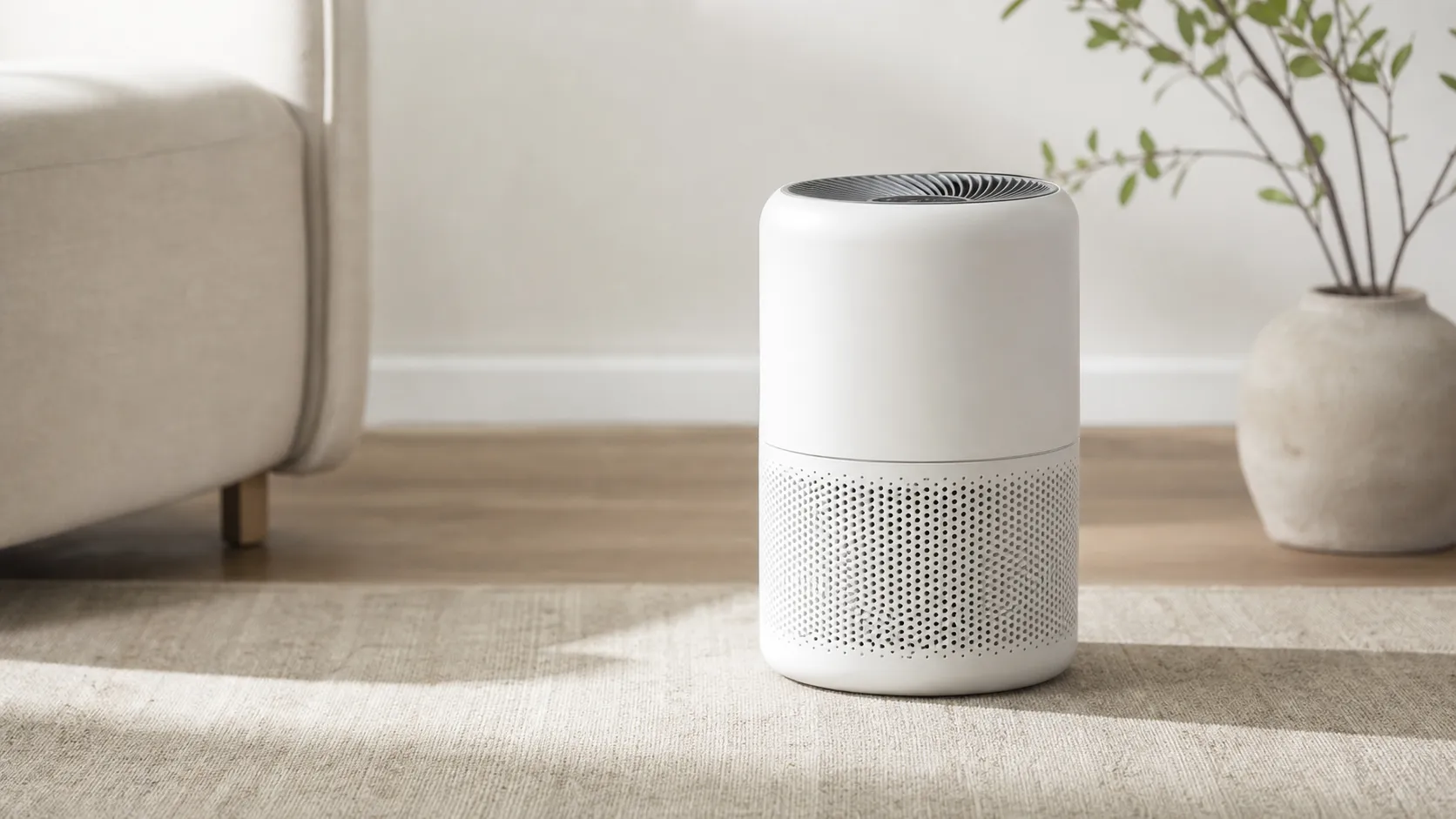
At a Glance
Pros
- Strong particulate removal (True HEPA) for small-to-medium rooms — effective for dust, pollen and pet dander.
- Very competitive price point compared with similarly rated HEPA purifiers.
- Quiet operation on low speeds — suitable for bedrooms and night use.
Cons
- No built-in air-quality sensor or true auto mode on the base Core 300 (smart variant sells separately).
- Coverage is limited to small-to-medium rooms—not suited for large open-plan spaces.
- Replacement filters add ongoing cost and some users call out inconsistent filter-lifetime expectations.
Rating Breakdown by Source
Read the latest 25 positive & negative Amazon reviews →
This review is an editorial synthesis of publicly available review data and reported user experiences across the internet. Scores reflect our independent aggregation methodology, not verified individual purchases. We may earn a commission if you buy through our links, at no cost to you.
Score Breakdown
Where the Reviews Come From
Read the latest 25 positive & negative Amazon reviews →
Click any source above to browse the latest 25 positive and negative reviews from that platform.
Levoit Core 300 True HEPA Air Purifier
See current price, deals and availability on Amazon
Quick verdict
The Levoit Core 300 True HEPA Air Purifier is an excellent budget-friendly HEPA unit for small-to-medium rooms — it delivers strong particulate removal, runs whisper-quiet on low, and offers an outstanding value proposition for bedroom or apartment use. Aggregating tens of thousands of user reviews and expert commentary, our verdict: buy it if you need dependable particulate filtration in a room under ~250 sq ft and want a simple, fuss-free unit; skip it if you need smart sensors, automatic control, or whole-home coverage.
What is the Levoit Core 300 True HEPA Air Purifier?
The Core 300 is Levoit’s compact, consumer-focused air purifier built around a True HEPA filtration cartridge. At its core (no pun intended) it uses multi-stage filtration — a washable pre-filter plus a True HEPA layer designed to capture fine particles like dust, pollen, and pet dander, with an odor-absorbing layer in the replaceable filter to help with light smells. The unit is lightweight, intentionally simple to operate (physical buttons and a few speed settings), and aimed squarely at users who want effective particulate cleanup without a steep price or smart-home complexity.
Levoit positions the Core 300 as an entry-to-mid-level HEPA purifier for bedrooms, offices, and small living rooms. The base model does not include built-in air-quality sensors or smartphone control — those features appear on higher-tier Levoit models or special “smart” variants.
What reviewers across the internet say
We aggregated consensus from Amazon, Reddit, YouTube, and expert blogs to synthesize a clear picture:
- Overall rating: 4.6/5 from about 60,240 aggregated reviews. Sub-scores: quality 4.3, reliability 4.2, value 4.6, ease of use 4.5.
- Amazon (4.6/5 — largely positive): Buyers frequently praise the Core 300’s price-to-performance ratio, quiet low-speed operation, and effectiveness for allergy symptoms. Many 5-star reviews call it a go-to budget HEPA unit. Minor negatives noted are filter replacement cost and louder noise on high.
- Reddit (4.1/5 — mixed): Community threads commonly recommend the Core 300 for small bedrooms and apartments but include more nuanced critiques: limited coverage, the absence of sensors/auto modes on the base model, and occasional long-term reliability or odor-removal complaints versus higher-end purifiers.
- YouTube (4.3/5 — positive): Hands-on reviewers run smoke/dust demonstrations and often highlight real-world filtration relative to price. The Core 300 is regularly described as an “excellent entry-level purifier” and praised for quiet night use; reviewers push higher-tier models for larger rooms or smart features.
- Expert blogs (4.4/5 — positive): Consumer-tech sites and experts generally rate the Core 300 highly for cost-effectiveness and HEPA performance within its intended coverage area, while noting the lack of advanced sensors, app integration, and limited room coverage.
Across sources the dominant themes match: very good particulate performance for the price, quiet at low speeds, portable and easy to use — balanced against limited coverage, no built-in air-quality sensing on the base unit, and ongoing filter costs.
Performance & Real-World Use
The Levoit Core 300 True HEPA Air Purifier delivers fast, quiet particulate removal in bedrooms and small living spaces, with low friction and modest running costs. It lacks an air‑quality sensor or auto mode and runs out of steam in large rooms, so sizing and placement decide your outcome.
For a compact purifier to park in a bedroom, the Levoit Core 300 has become a default pick: in modest rooms it moves enough clean air, stays quiet on low, and doesn’t punish you with upkeep. Satisfaction hinges on three things—how fast it cuts dust/allergy triggers, how tolerable it sounds at night, and what you’ll spend—plus a fourth you’ll notice during wildfire: whether its clean‑air output fits your room.
The Levoit Core 300 True HEPA Air Purifier delivers fast, quiet particulate removal in bedrooms and small living spaces, with low friction and modest running costs. It lacks an air‑quality sensor or auto mode and runs out of steam in large rooms, so sizing and placement decide your outcome.
What real performance means for an air purifier
For particle problems, performance boils down to two numbers: Clean Air Delivery Rate (CADR) and the Air Changes per Hour (ACH) you’ll get in your space. CADR standardizes how quickly a purifier reduces smoke, dust, and pollen in a 1,008 ft³ room; a higher value means faster particle reduction. The U.S. EPA’s homeowner guide calls CADR the most useful comparison for particle filtration and notes HEPA‑style purifiers modestly reduce gases or odors unless they include substantial activated carbon. (See the EPA’s overview and technical summary at epa.gov and epa.gov.)
Sizing translates lab numbers to living rooms. AHAM’s rule: pick a tobacco‑smoke CADR at least two‑thirds of your room’s square footage (8‑ft ceilings assumed). Manufacturer specs for the Core 300 list Smoke CADR at 141 CFM and Dust at 140 CFM, while the ENERGY STAR v3.0 dataset lists 113 CFM Smoke and 129 CFM Dust for the model, reflecting test‑program updates and configurations rather than a new definition. Either way, this output sits in “small room to small living area.” (ahamverifide.org; energystar.gov; device.report)
Core 300 published CADR (manufacturer vs ENERGY STAR)
Published CADR for Core 300 from Levoit’s manual (2019) and the ENERGY STAR v3.0 dataset (2023). Values shown are the third‑party/lab‑tested smoke and dust CADR figures used by AHAM/DOE methods; differences reflect configuration and program updates, not a change in what “CADR” means.
- Smoke CADR (CFM)
- Dust CADR (CFM)
View the underlying data
| Item | Smoke CADR (CFM) | Dust CADR (CFM) |
|---|---|---|
| Levoit manual (2019) | 141 | 140 |
| ENERGY STAR v3.0 (2023) | 113 | 129 |
Sources: Levoit Core 300 manual (CADR 141/140 CFM) and ENERGY STAR Room Air Cleaners v3.0 Data & Analysis (Core 300 listed 113/129 CFM).
Day‑one setup and the first week
Setup is quick: twist off the base, remove the filter’s plastic bag, re‑seat the cartridge, and power on. Controls are a flat top panel with three speeds, Sleep, a timer, display‑off, and a filter‑check light; there’s no air‑quality sensor or auto mode on the base Core 300 (that’s in the Core 300S). Noise runs as low as 24 dB in Sleep and about 50 dB at full blast, which users translate as “barely there” on low and a noticeable whoosh on high. (device.report)
First‑week routines settle fast. Many people leave Sleep or speed 1 on 24/7 in bedrooms, nudge to speed 2 for a 150–200 ft² living area, and reserve speed 3 for quick resets after cooking, vacuuming, or smoky outdoor air. Tom’s Guide’s test notes modest power draw on medium—about 0.7 kWh over 24 hours in a typical home—and confirms max speed is intrusive for sleeping. (tomsguide.com)
Filtration speed and coverage you can count on
To predict fit, convert CADR to ACH. For allergy relief and general cleanliness, target 4–5 ACH; during wildfire spikes, more if you can tolerate the noise. With 8‑ft ceilings, a quick estimator is area ≈ CADR × 1.5. Using the ENERGY STAR smoke value (113 CFM) yields roughly 170 ft² at 5 ACH; using the manufacturer’s 141 CFM yields ~212 ft². Those numbers square with Levoit’s own effective range claim (~219 ft²) and why owners recommend it for bedrooms, nurseries, studios, and home offices. (energystar.gov; device.report)
For bigger spaces, the Core 300 still helps locally—place it near your sofa, bed, or desk—but whole‑room improvement slows because the fan can’t cycle the volume fast enough. AHAM’s 2/3 rule is a solid cross‑check: a 200 ft² room wants ~133 CFM tobacco‑smoke CADR, which the Core 300 meets only if you go by its higher published spec. If your room runs that large or you’re smoke‑sensitive, use higher speeds, two units placed far apart, or step up to a higher‑CADR purifier. (ahamverifide.org)
Estimated 5 ACH coverage for Core 300
Coverage estimate at 5 ACH with 8‑ft ceilings, calculated from published CADR values. Use as sizing guidance; actual results vary with leakage, layout, and fan speed.
View the underlying data
| Measure | 5 ACH coverage (ft²) |
|---|---|
| CADR 113 CFM (ENERGY STAR) | 170 |
| CADR 141 CFM (Levoit manual) | 212 |
Formula: area ≈ CADR × 1.5 for 8‑ft ceilings; references: EPA guide to air cleaners (on CADR/ACH) and AHAM 2/3 sizing rule.
Noise, sleep usability, and energy
Low‑speed noise is the Core 300’s daily advantage. Sleep mode is whisper‑quiet at the spec’d 24 dB, and many people park it near the bed after a short adjustment period; speed 2 adds a steady, soft rush that doubles as white noise. Top speed, by contrast, sounds like a small desk fan on high—great for rapid cleanup, poor for overnight. Independent reviewers who measured max loudness report the mid‑50s dB, which is audible but not harsh. (device.report)
Power is rated at 45 W but varies by speed. Using Tom’s Guide’s daily figure (~0.7 kWh on medium), the monthly energy is ~21 kWh—about $3.15 at a $0.15/kWh U.S. average. ENERGY STAR certifies the Core 300 family and evaluates efficiency with Integrated Energy Factor (CADR per watt over a defined cycle). Practical tip: leave it on low most of the time; it’s quieter and costs less per amount of air cleaned. (tomsguide.com; energystar.gov)
Months later: filters, costs, and reliability patterns
Sustained performance lives or dies by filter airflow. The Core 300 uses a single 3‑in‑1 cylinder (outer pre‑filter mesh, main particulate media, and a modest activated‑carbon layer), and Levoit’s documentation plus independent reviewers point to a 6–8 month replacement cadence depending on dust and usage. A quick monthly vacuum of the pre‑filter mesh keeps lint and fur from clogging the cartridge early. (device.report)
Replacement filters usually run in the mid‑$20s (less in two‑packs), which keeps annual consumables lower than many bigger machines. The trade‑off is carbon mass: the Core 300’s thin carbon section helps with everyday odors but won’t scrub persistent VOCs like units with thick, pelletized carbon beds. The EPA’s technical summary explains this clearly—mechanical filters excel on particles; serious gas removal needs substantial sorbent—so if odor control is your priority, shop for heavy‑carbon models. (epa.gov)
Where the Levoit Core 300 True HEPA Air Purifier shines—and where it doesn’t
Across long‑term owner feedback (averaging 4.6/5 from roughly 60k reviews across major platforms), the Core 300 wins for what it promises: quick particle cleanup in modest rooms, a compact, neutral design that disappears in a corner, and one‑button simplicity. Low‑speed hush makes it easy in bedrooms and nurseries, and the light, 360‑degree intake lets you place it on a nightstand or floor without fuss.
You do trade features for price. There’s no onboard sensor or auto mode on the base unit—so it won’t react to a smoky evening unless you tap the panel—and its clean‑air output falls short in large, open‑plan spaces. During wildfire smoke intrusions it helps, but the physics don’t bend: the more volume you need to cycle, the more CADR you want. For stubborn odors or VOCs, remember that HEPA filters target particles; meaningful gas removal requires much more carbon, as EPA guidance notes. (epa.gov)
How it compares to typical alternatives
Against low‑to‑mid‑priced competitors, the Core 300’s advantages are value and quiet low speeds; its weaknesses are feature set and headroom. The otherwise similar Core 300S adds an air‑quality sensor, auto mode, and app control while keeping the same compact footprint—useful if you want set‑and‑forget behavior. Coway’s long‑time favorite AP‑1512HH (Airmega 200M) costs more but delivers higher whole‑room output plus sensor‑based auto and an “Eco” idle that stops the fan when air is already clean. Independent testing roundups often frame the 300S as an evolution—smarter control with similar air‑moving ability—while recommending larger models (e.g., Levoit Core 400S) or two smaller purifiers for big rooms. (rtings.com)
Key feature differences in this class
Feature comparison among models commonly cross‑shopped with the Core 300. Binary features only; performance and CADR differ by model and configuration.
| Item | AQ sensor | App control | Auto mode | Timer | Filter indicator |
|---|---|---|---|---|---|
| Levoit Core 300 | No | No | No | Yes | Yes |
| Levoit Core 300S | Yes | Yes | Yes | Yes | Yes |
| Coway AP‑1512HH (Airmega 200M) | Yes | No | Yes | Yes | Yes |
Sources: Levoit Core 300 and 300S manuals/specs; RTINGS Core 300/300S reviews; Coway AP‑1512HH manual/specs.
Getting the best real‑world performance (step‑by‑step)
- Size it right. Use AHAM’s 2/3 rule (smoke CADR ≥ two‑thirds of your room’s ft²) and aim for at least 4–5 ACH for allergies; more during wildfire surges. For ~170 ft², the Core 300 is an easy match; at ~200+ ft², plan on higher speeds or a bigger unit. (ahamverifide.org)
- Place it smartly. Keep top outlet and side intakes clear; don’t bury it behind furniture or curtains. Follow the manual’s spacing guidance to preserve airflow and noise behavior. (device.report)
- Run it continuously on low. The EPA notes the longer an air cleaner runs, the more air it filters; let Sleep or speed 1 maintain baseline cleaning and use speed 3 for quick drops after doors open or chores. (19january2021snapshot.epa.gov)
- Maintain monthly, replace every 6–8 months. Gently vacuum the outer mesh to lift lint and pet hair; when the light comes on or airflow wanes, swap a genuine cartridge and reset. (device.report)
- For wildfire days, seal and boost. Close windows, run speed 3 for 30–60 minutes to pull levels down, then hold speed 2; in larger rooms, two Core 300s on speed 2 are quieter than one on max while delivering comparable combined CADR. EPA and ENERGY STAR guidance on CADR, ACH, and efficiency supports the “longer on lower” approach. (epa.gov; energystar.gov)
Conclusion: does real‑world performance justify the purchase?
If your goal is to make a small bedroom, nursery, home office, or studio meaningfully cleaner day and night, the Core 300 delivers: it filters fast for its size, stays unobtrusive on low, and keeps ongoing costs in check—exactly the profile reflected in its aggregated 4.6/5 owner rating with strong value and ease‑of‑use sub‑scores. For larger rooms, heavier odor control, or hands‑off automation, move to the Core 300S for smarts or step up to a higher‑CADR model; room volume and physics set the limits, not the brand name.
In short, when matched to the space it was built for and maintained on schedule, the Core 300 provides the day‑one relief—calmer sinuses, less visible dust—and keeps doing so months later with little more than a monthly vacuum and two filter swaps a year.
Sources referenced in this section
- U.S. EPA – Guide to Air Cleaners in the Home (2018, PDF)
- AHAM Verifide – Consumer guidance and 2/3 CADR rule
- ENERGY STAR – Room Air Cleaners, Version 3.0 Data & Analysis (Table 7)
- Levoit Core 300 User Manual (specs: CADR, noise, power, placement)
- RTINGS – Levoit Core 300 Review (replacement interval, features)
- Tom’s Guide – Levoit Core 300 review (measured noise/power use)
- CARB – List of Certified Air Cleaning Devices (program requirements)
Pros and cons
Pros:
- True HEPA filtration effectively removes dust, pollen, and pet dander.
- Excellent value — strong performance for the price compared with many competitors.
- Very quiet at low and medium fan speeds — good for bedrooms and offices.
- Compact, lightweight design makes placement and movement easy.
- Simple, plug-and-play controls; approachable for non-technical users.
Cons:
- No built-in air-quality sensor or true auto mode on the base Core 300 (smart variant sold separately).
- Limited coverage — not suitable as a single solution for large open-plan spaces.
- Replacement filter costs and inconsistent reported filter lifetimes are ongoing expenses.
- High fan speed can be noticeably loud and less suitable for sleeping.
Who should buy it (and who shouldn't)
Buy the Levoit Core 300 if:
- You need effective particulate filtration for a bedroom, small office, or apartment room and want the best value for your money.
- You prioritize quiet operation at night and a lightweight, compact unit that’s easy to move and set up.
- You want a straightforward purifier with few settings and no app or network setup.
Don’t buy it if:
- You need whole-home or large-room coverage — the Core 300 is optimized for smaller spaces.
- You want automatic air-quality sensing, a true auto mode, or integrated smart-home/app control on the base model.
- You need advanced odor or chemical vapor removal for heavy smoking, remodeling fumes, or persistent strong odors — consider a larger unit with a heavier activated-carbon stage.
Bottom line
For the price and footprint, the Levoit Core 300 True HEPA Air Purifier is one of the best value buys in the small-room HEPA category in 2026. It won’t replace higher-end models for whole-home coverage or advanced sensor-driven automation, but for most buyers seeking allergy relief, dust reduction, and a quiet bedroom purifier, it’s a reliable, no-frills winner.
What Reviewers Love
- Strong particulate removal (True HEPA) for small-to-medium rooms — effective for dust, pollen and pet dander.
- Very competitive price point compared with similarly rated HEPA purifiers.
- Quiet operation on low speeds — suitable for bedrooms and night use.
- Compact, lightweight design that’s easy to move and place in tight spaces.
- Simple controls make it plug-and-play for non-technical users.
Common Complaints
- No built-in air-quality sensor or true auto mode on the base Core 300 (smart variant sells separately).
- Coverage is limited to small-to-medium rooms—not suited for large open-plan spaces.
- Replacement filters add ongoing cost and some users call out inconsistent filter-lifetime expectations.
- Can be noticeably loud on the highest fan speed for overnight use.
Our Verdict
4.6The Levoit Core 300 is an outstanding budget HEPA purifier for small rooms: quiet, effective on particulates, and easy to use. It’s not for large spaces or buyers who need built-in sensors or smart controls, and you should budget for regular filter replacements.
Frequently Asked Questions
Common questions shoppers ask before buying the Levoit Core 300 True HEPA Air Purifier.
Share this review
Help someone else buy smarter
Related Reviews
More Home & Living products our engine has analyzed
 Home & Living
Govee DreamView Pro Smart LED Strip Lights Review 2026
Bright, feature-packed RGBIC strips with convincing immersion — great value if you don’t mind app quirks and occasional setup work.
 Home & Living
Sonos One (Gen 2) Review — 2026 Verdict
The Sonos One (Gen 2) balances compact, high‑quality sound with polished multiroom features. Great for Sonos homes; pricier and Wi‑Fi‑only for others.
 Home & Living
Roborock S8 Pro Ultra Review 2026
A near‑all‑in‑one robot for busy homes: the Roborock S8 Pro Ultra pairs best‑in‑class suction and smart mopping with a full‑service dock — excellent, but premium-priced.