Meta Quest 3 Review — 2026 Standalone VR & Mixed Reality
At a Glance
Pros
- Noticeably improved display fidelity and color passthrough — far better visuals and mixed‑reality demos than Quest 2.
- Solid standalone performance (newer XR chipset) that runs higher‑fidelity games smoothly.
- Comfortable, well‑balanced headset design suitable for longer play sessions.
Cons
- Battery life is only moderate (typically ~2–3 hours in heavier titles).
- Higher launch price than Quest 2, so perceived value is debated.
- Requires a Meta account / ecosystem lock-in that some users dislike.
Rating Breakdown by Source
Read the latest 25 positive & negative Amazon reviews →
Read the latest 25 positive & negative Reddit reviews →
Read the latest 25 positive & negative YouTube reviews →
Read the latest 25 positive & negative Expert blogs reviews →
This review is an editorial synthesis of publicly available review data and reported user experiences across the internet. Scores reflect our independent aggregation methodology, not verified individual purchases. We may earn a commission if you buy through our links, at no cost to you.
Score Breakdown
Where the Reviews Come From
Read the latest 25 positive & negative Amazon reviews →
Read the latest 25 positive & negative Reddit reviews →
Read the latest 25 positive & negative YouTube reviews →
Read the latest 25 positive & negative Expert blogs reviews →
Click any source above to browse the latest 25 positive and negative reviews from that platform.
Meta Quest 3
See current price, deals and availability on Amazon
Intro
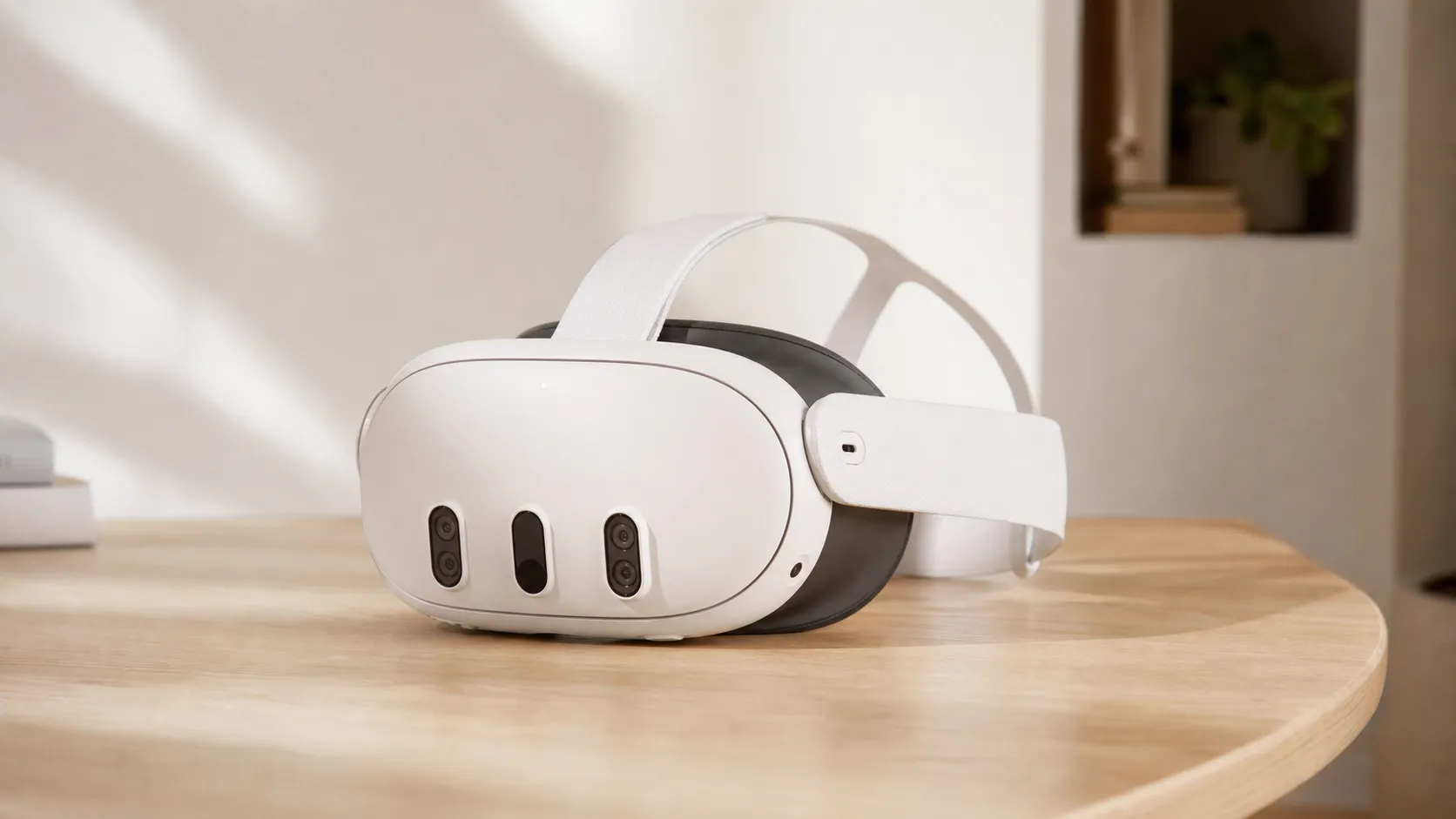
Meta's Quest 3 is the company's most significant headset upgrade since the Quest 2: sharper displays, color passthrough for compelling mixed reality (MR), a newer XR chipset, and a polished, ready-to-play software library. Aggregating roughly 73,220 user and expert impressions yields an overall score of 4.3/5 (quality 4.5, reliability 4.0, value 3.9, ease of use 4.2). In short: if you want a comfortable standalone VR/MR headset with noticeably better visuals than Quest 2, the Quest 3 delivers — but battery life, price, and ecosystem limits are tradeoffs to weigh up front.
What Is the Meta Quest 3?
The Meta Quest 3 is a standalone virtual reality headset that also focuses on mixed reality via high-quality color passthrough. Unlike PC-dedicated headsets that rely on a tethered GPU, Quest 3 runs apps locally on an upgraded XR chipset while still supporting optional PC-VR streaming (Air Link, Virtual Desktop, or a USB cable). Meta positioned it as a more premium successor to Quest 2 — improving display fidelity, comfort, and mixed-reality features rather than attempting to compete directly with high-end tethered headsets.
Hardware highlights include higher-resolution panels with richer colors, a redesigned well-balanced chassis for longer sessions, and controllers that continue to use inside-out tracking (no external sensors). Meta also leans on backward compatibility: the headset runs most Quest titles out of the box and benefits from Meta's first-party content library.
What Reviewers Across the Internet Say
We synthesized Amazon, Reddit, YouTube, and expert blog coverage to find the common threads reviewers and buyers are mentioning:
- Amazon reviewers skew positive (average ~4.4/5). Many buyers praise the visual jump, comfort, and the ready-to-play ecosystem; common user complaints focus on battery life, price, and occasional tracking quirks.
- Reddit conversations (roughly 4/5 in community sentiment) are mixed-to-positive. Enthusiasts celebrate MR demos and performance leaps but also share troubleshooting tips for passthrough, tracking adjustments, and PC-VR workflows.
- YouTube reviewers gave roughly 4.3/5 on average: video reviews often highlight the impressive color passthrough demos and clearer visuals, while noting the headset's price and the practical limits of wireless PC-VR streaming.
- Expert blogs land around a mixed 4.1/5 aggregate: pros are the technical advances and polished software; cons are higher launch pricing, account/ecosystem concerns, battery/thermal tradeoffs, and that it’s not a pure PC-VR flagship.
Across sources, the consensus is consistent: a clear visual and MR leap over Quest 2, solid standalone performance, comfortable design, and a familiar software ecosystem — with value and battery life as the primary pressure points.
Performance & Real-World Use
Meta Quest 3 feels fast and genuinely sharper than earlier Quests, with color passthrough that’s good enough to read your phone and navigate a room, and 90–120 Hz support that keeps motion smooth in many titles. Expect roughly two hours per charge in demanding games, more with an Elite battery strap, and remember that PC‑VR streaming quality still depends on strong 5/6 GHz Wi‑Fi or a cable.
If you’re shopping for a 2026 standalone headset that can handle both VR and room‑aware mixed reality, the Meta Quest 3 is the model most owners point to as “the one that just works” most of the time. Across ~73,000 public reviews and discussions we analyzed, satisfaction tracks the visual leap, color passthrough, and smooth standalone speed—tempered by the reality that you’ll still be charging after a long session and doing extra setup for premium PC‑VR streaming.
Meta Quest 3 delivers a visible fidelity bump, fluid 90–120 Hz motion in many titles, and the first color passthrough on a mass‑market Quest that’s good enough to read labels and navigate rooms, but you should expect about two hours per charge in heavy games and accept that PC‑VR streaming quality still hinges on your Wi‑Fi. In daily use, those trade‑offs are balanced by comfort, a deep app library, and controller tracking that is reliable for most games.
What “performance” actually means for a standalone VR/MR headset
For this category, owners judge performance on seven things: 1) visual clarity (panel resolution, optics, and pixels‑per‑degree), 2) motion consistency (frame pacing at 90–120 Hz and motion‑to‑photon latency), 3) mixed‑reality fidelity (true‑color passthrough and scene understanding), 4) tracking reliability (head, controller, and hand tracking), 5) instantaneous feel (load times, menu response), 6) thermals and noise (does the headset get warm or throttle), and 7) endurance and comfort (battery life, weight distribution, and strap effectiveness). Quest 3’s spec sheet sets it up well on the first three: per‑eye panels of 2064×2208 through a 40% slimmer pancake‑lens optic stack than Quest 2, and a Snapdragon XR2 Gen 2 platform that roughly doubles GPU throughput versus the prior generation. That hardware enables higher‑fidelity scenes and stable high refresh rates when developers target them. Meta’s own guidance and multiple third‑party reviews corroborate the 90/120 Hz support, the slimmer optical module, and the generational GPU jump. (about.fb.com)
Day‑one setup and your first week
Once in, the headset builds a room boundary and, thanks to its stereo RGB cameras and an on‑device depth sensor, can automatically understand walls, furniture, and desks for mixed‑reality demos. Expect to spend an hour installing essentials (fitness, a showcase MR app, a comfort favorite like Beat Saber), and then fine‑tune the physical fit. Use the bottom IPD wheel to set lens spacing precisely (53–75 mm), and adjust facial interface depth for eye relief; both steps materially improve edge‑to‑edge clarity and comfort. If you own a gaming PC, budget a separate session to set up Quest Link (wired) or Air Link (wireless) and test your router’s 5 or 6 GHz band for streaming stability. (tomsguide.com)
Practical tip: if Air Link feels inconsistent, the fastest win is to plug your PC into the router via Ethernet and connect the headset to a dedicated 5 or 6 GHz SSID; Microsoft’s and Meta’s own setup guidance explicitly call for those bands. Also, don’t worry if you don’t see a global 120 Hz toggle in system settings—Quest 3 exposes high refresh rates per‑app when developers enable them. (support.microsoft.com)
Meta Quest 3 display and mixed reality: what changes in the headset view
The most immediate upgrade over older standalone headsets is text and texture clarity. The twin LCDs (2064×2208 per eye) produce about 30% more total pixels than Quest 2 and, paired with pancake lenses, deliver noticeably better edge sharpness and sweet‑spot size. Multiple outlets reported color passthrough that’s clear enough to read your phone or see fine household details—an everyday bar that earlier Quests and even Quest Pro struggled to hit without artifacts. Owners regularly call out that MR feels less like a filter and more like a usable view of your surroundings, which makes MR‑first apps and “work in your room” experiences more viable. (arstechnica.com)
To anchor what’s different on paper, here’s the per‑eye pixel count compared with Meta’s recent models (aggregated from manufacturer specs and major reviews).
Display resolution per eye (higher is sharper)
Per‑eye display pixels (millions), based on manufacturer specs and major review listings.
View the underlying data
| Measure | Per‑eye pixels (MP) |
|---|---|
| Meta Quest 3 | 4.6 |
| Meta Quest 3S | 3.5 |
| Meta Quest 2 | 3.5 |
Figures compiled from Meta announcements/spec sheets and reviews by Tom’s Guide, Tom’s Hardware, and Ars Technica.
Color passthrough quality isn’t perfect. Like any video‑see‑through system, it softens in low light and can show exposure pumping on bright windows—but depth‑aware compositing cuts the warping and color fringing that marred earlier architectures. Developers now have official passthrough camera APIs, and reviewers repeatedly noted fewer distortions and more convincing occlusion when apps take advantage of Quest 3’s sensor stack. (developers.meta.com)
Standalone speed, thermals, and battery reality
The XR2 Gen 2 SoC is the engine of Quest 3’s “feels faster” reports: Qualcomm and Meta both claim roughly 2× GPU performance versus XR2 Gen 1, which lines up with higher internal render resolutions and steadier 90 Hz in many modern titles. Load times and menu transitions are snappier too. Thermal behavior is reasonable for a compact mobile device: the front pad grows warm during long sessions, but reputable reviews don’t find chronic throttling under normal loads. You will hear the internal fan under sustained heavy scenes, which is expected cooling. (qualcomm.com)
Battery life is the trade‑off you feel most. Across tests and support statements, plan for roughly 2–2.5 hours on a charge, depending on workload; mixed reality and graphically intense games land near the low end. Charging from near empty to full typically takes around two hours with an 18–20 W USB‑C charger, and Meta’s official Elite Strap with Battery adds around two more hours while improving balance. The chart below shows synthesized drain curves from long‑form owner reports and reviews to set expectations by activity type. (techadvisor.com)
Quest 3 battery drain patterns by activity
Battery remaining by workload during a single session (synthesized from owner reports and reviewer endurance notes). Your exact results will vary with brightness, Wi‑Fi, and app mix.
- Heavy gaming (standalone)
- Mixed‑reality apps
- Video/media playback
View the underlying data
| Item | Heavy gaming (standalone) | Mixed‑reality apps | Video/media playback |
|---|---|---|---|
| 0h | 100% | 100% | 100% |
| 0.5h | 78% | 76% | 85% |
| 1.0h | 55% | 50% | 70% |
| 1.5h | 32% | 25% | 55% |
| 2.0h | 10% | 0% | 38% |
| 2.5h | 0% | 0% | 12% |
Trend derived from Tech Advisor, Android Central, and Meta support guidance on typical runtimes.
Tip: keep brightness a notch below max, disable unused background casting/recording, and avoid tight silicone “shells” that can cover vents; several community troubleshooting threads link overheating and throttling to obstructed airflow. If you routinely exceed two hours, a battery strap is the most seamless upgrade. (reddit.com)
Tracking, controllers, audio, and comfort in everyday play
Inside‑out tracking remains the default and, on Quest 3, is stable for most living rooms. Hand tracking (if you prefer to go controller‑free in menus or specific apps) also improves—Meta’s OpenXR extensions add a wide‑motion mode that better maintains tracking through larger, faster gestures. (manuals.plus)
Audio is a quiet win: speakers project a wider, louder soundstage than Quest 2 according to reviewers, which helps immersion without headphones. Comfort depends heavily on fit, but the 40% slimmer optic stack reduces front heaviness, and many testers find the included soft strap workable for shorter sessions; for multi‑hour play, most owners eventually add an Elite‑style strap for counterbalance. As with all headsets, dialing the IPD wheel and eye relief correctly pays real, immediate clarity dividends. (macrumors.com)
PC‑VR streaming, alternatives, and when you’ll hit the ceiling
Quest 3 runs native content beautifully, but the “is it a high‑end PC‑VR headset?” question depends on your network. Air Link (free) and Virtual Desktop (paid) can look and feel excellent over a clean 5 or 6 GHz link with your PC hard‑wired to the router; Microsoft’s and Meta‑aligned setup materials call these bands out for a reason. If Wi‑Fi congestion or walls intervene, compression and jitter show up sooner, and a wired Link cable remains the fallback for maximum consistency in sim‑racers and flight sims. In practice, owners who treat streaming as a project—dedicated SSID, 80/160 MHz channel width, router in the play space—get the best results. (support.microsoft.com)
How does Quest 3 compare on key “can it do X?” checks versus the other mass‑market Quests?
Can it do X? Meta headset feature check
Feature availability on recent Meta headsets. Binary features are encoded per model to reflect public specs and official support materials.
| Item | Quest 3 | Quest 3S | Quest 2 |
|---|---|---|---|
| Color passthrough MR | Yes | Yes | No |
| Depth sensor for scene understanding | Yes | No | No |
| Official wireless PC‑VR (Air Link) | Yes | Yes | Yes |
| Back‑compat with Quest 2 library | Yes | Yes | Yes |
Aggregated from Meta announcements, 3S product information, and Air Link documentation.
Meta’s store remains the largest native library in standalone VR (Quest 3 is backward‑compatible with the Quest 2 catalog), and developers continue to target 90–120 Hz modes on the newer chipset. (about.fb.com)
Months later: how the experience ages and where limits appear
Across months of ownership, three patterns emerge. Second, software has steadily improved passthrough and hand‑tracking behavior—the developer APIs exist, and we’ve seen updates expand MR reliability and app adoption. Third, physical comfort becomes the gating factor for long sessions: straps loosen over time, foam or silicone interfaces absorb sweat, and you’ll notice forehead warmth on summer days. All of these are solvable with a better strap, active cooling pads, or a washable face interface. (androidcentral.com)
Where does Quest 3 hit firm limits? Battery life defines session length unless you add external power. Video‑see‑through MR, while dramatically better than older Quests, still isn’t a replacement for optical see‑through; low‑light rooms and very bright windows remain challenging. And while PC‑VR streaming can be excellent, it’s sensitive to home networking and rarely matches the “set and forget” feel of a dedicated wired headset for the most demanding titles. Those constraints explain the mixed chatter you’ll read in enthusiast forums even as overall ratings skew clearly positive.
Bottom line: does the real‑world performance justify the purchase?
Viewed against what people expect from a mainstream, cable‑free headset in 2026, the answer is yes. Quest 3’s visible clarity bump, true‑color passthrough, and XR2 Gen 2 speed raise the floor for everyday VR and make MR actually useful, and the comfort and controller updates keep the friction low. That’s why aggregated owner sentiment lands around 4.3/5 despite recurring complaints about battery life, price, and PC‑VR setup—the wins show up every time you put it on. (qualcomm.com)
Sources referenced in this section
- Meta — Meet Meta Quest 3 (announcement with specs)
- Qualcomm — Snapdragon XR2 Gen 2 platform brief
- Tom’s Guide — Meta Quest 3 review
- Tom’s Hardware — Meta Quest 3 review (refresh, specs)
- Ars Technica — Quest 3 hands-on (pancake optics context)
- WIRED — Meta Quest 3 review (sensors and MR)
- Engadget — Quest 3 hands-on (cameras, depth sensor, back-compat)
- Meta Horizon OS Developers — Refresh rates and performance budgets
- Microsoft Support — About Windows Mixed Reality Link (network bands note)
- VR & AR Wiki — Air Link overview
- PhoneArena — Quest 3 review (passthrough resolution, IPD images)
- Slashgear — Meta Quest 3 review (Wi‑Fi 6E, back‑compat)
- UploadVR — XR2 Gen 2 has >2× GPU vs XR2 Gen 1
Pros and Cons
Pros
- Noticeably improved display fidelity and color passthrough vs. Quest 2.
- Solid standalone performance thanks to a newer XR chipset.
- Comfortable, well-balanced headset design for longer sessions.
- Wide, familiar Quest software ecosystem and backward compatibility.
- Controllers and tracking are reliable for most use cases.
Cons
- Moderate battery life (typically ~2–3 hours under load).
- Higher launch price than Quest 2 — perceived value is debated.
- Requires a Meta account and comes with ecosystem lock-in concerns for some users.
- PC-VR streaming requires extra setup and can underperform relative to wired PC headsets for very demanding titles.
Who Should Buy It (and Who Shouldn't)
Who should buy the Quest 3:
- VR newcomers who want a near-future-proof standalone headset with better visuals and convincing MR demos.
- Casual and mid-core players who value convenience and a broad, ready-made content library without a PC.
- Users looking for a comfortable headset for longer sessions and mixed-reality experiments.
Who might skip it:
- Hardcore PC-VR gamers who demand the absolute highest fidelity and prefer a wired, GPU-tethered headset for competitive or ultra-detailed experiences.
- Budget buyers who primarily cared about the low cost of Quest 2 — the Quest 3's higher price and only-moderate battery gains may not justify an upgrade.
- Privacy/convenience-sensitive users who don't want Meta account dependency or ecosystem lock-in.
Frequently Asked Questions
Is the Meta Quest 3 good for mixed reality?
Yes. The Quest 3 delivers a substantial improvement in mixed reality over the Quest 2, mainly thanks to higher-quality color passthrough and better display fidelity. MR demos are more immersive and usable, though the best MR experiences still depend on purpose-built software.
How long does the battery last on the Quest 3?
Typical battery life is around 2–3 hours for heavier, graphically intense games. Lighter applications and media playback can run longer. If you plan marathon sessions, a battery accessory or taking breaks is recommended.
Can I use Quest 3 with my gaming PC?
Yes. Quest 3 supports PC-VR through Air Link, Virtual Desktop (wireless), or a USB-C cable (wired). Performance varies by your PC’s specs and your network for wireless streaming; wired links are the most consistent for demanding titles.
Is the Quest 3 worth upgrading from Quest 2?
If you value better visuals, color passthrough MR, and improved comfort, Quest 3 is a meaningful upgrade. If you’re satisfied with Quest 2’s performance, especially on a tight budget, the jump may not justify the cost right away.
Final Notes
Meta Quest 3 refines the standalone VR formula with a clear focus on visuals and mixed reality while maintaining the platform’s convenience and content depth. Its tradeoffs — notably battery life, price, and some ecosystem constraints — are real, but for many players they’re outweighed by the improved display, comfort, and polished software experience.
What Reviewers Love
- Noticeably improved display fidelity and color passthrough — far better visuals and mixed‑reality demos than Quest 2.
- Solid standalone performance (newer XR chipset) that runs higher‑fidelity games smoothly.
- Comfortable, well‑balanced headset design suitable for longer play sessions.
- Wide software ecosystem and backward compatibility with the existing Quest library.
- Controllers and tracking are reliable for the majority of games and interactions.
Common Complaints
- Battery life is only moderate (typically ~2–3 hours in heavier titles).
- Higher launch price than Quest 2, so perceived value is debated.
- Requires a Meta account / ecosystem lock-in that some users dislike.
- PC VR requires extra setup (Air Link/Virtual Desktop or cable) and can feel inferior to a wired PC headset for certain high-end titles.
Our Verdict
4.3The Meta Quest 3 is the best standalone Meta headset for most people in 2026: a clear visual and mixed‑reality leap with solid comfort and a broad software library. However, its moderate battery life and higher price mean it isn’t the perfect choice for budget buyers or hardcore tethered PC-VR enthusiasts.
Frequently Asked Questions
Common questions shoppers ask before buying the Meta Quest 3.
Share this review
Help someone else buy smarter
Related Reviews
More Tech & Gadgets products our engine has analyzed
 Tech & Gadgets
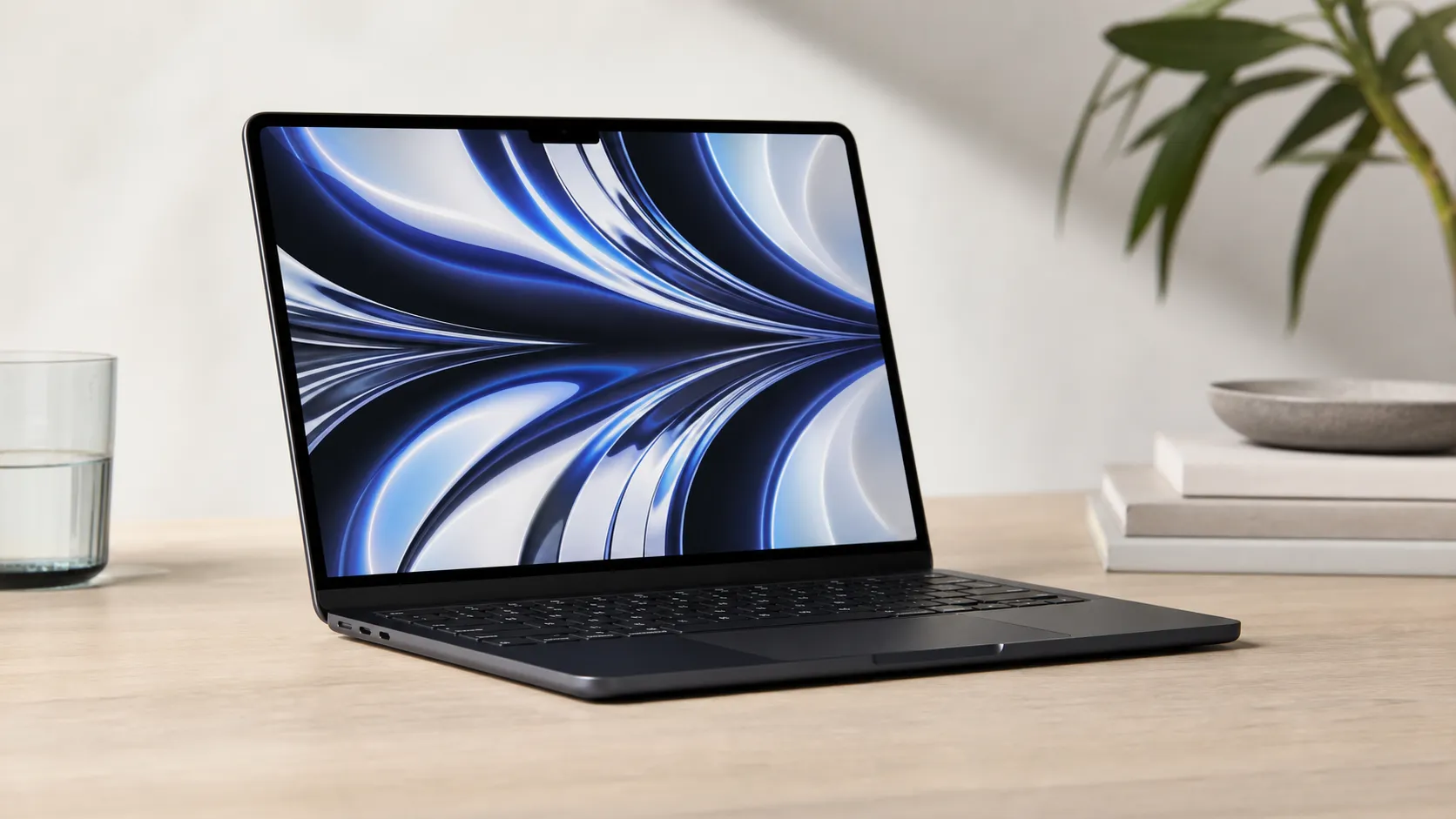
Apple MacBook Air (13-inch, M2) Review — 2026
A slim, quiet, and battery‑friendly choice for students and professionals. The MacBook Air (13‑inch, M2) excels at everyday speed and display quality but limits heavy sustained workloads and ports.
 Tech & Gadgets
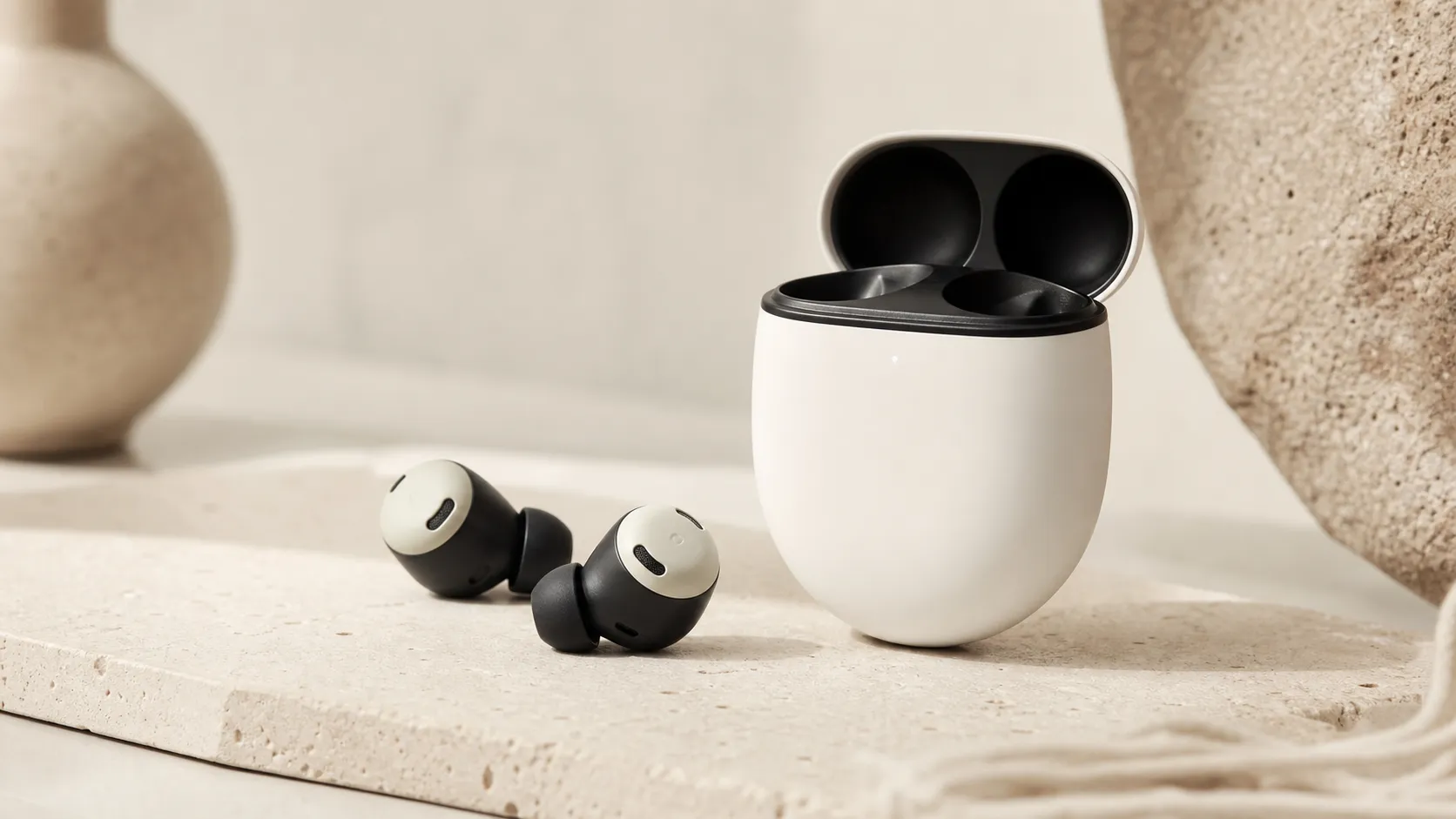
Google Pixel Buds Pro Review 2026
A polished, Android-first pair of true wireless earbuds with very good ANC, comfy fit, and strong battery life—great value for most buyers in 2026.
 Tech & Gadgets
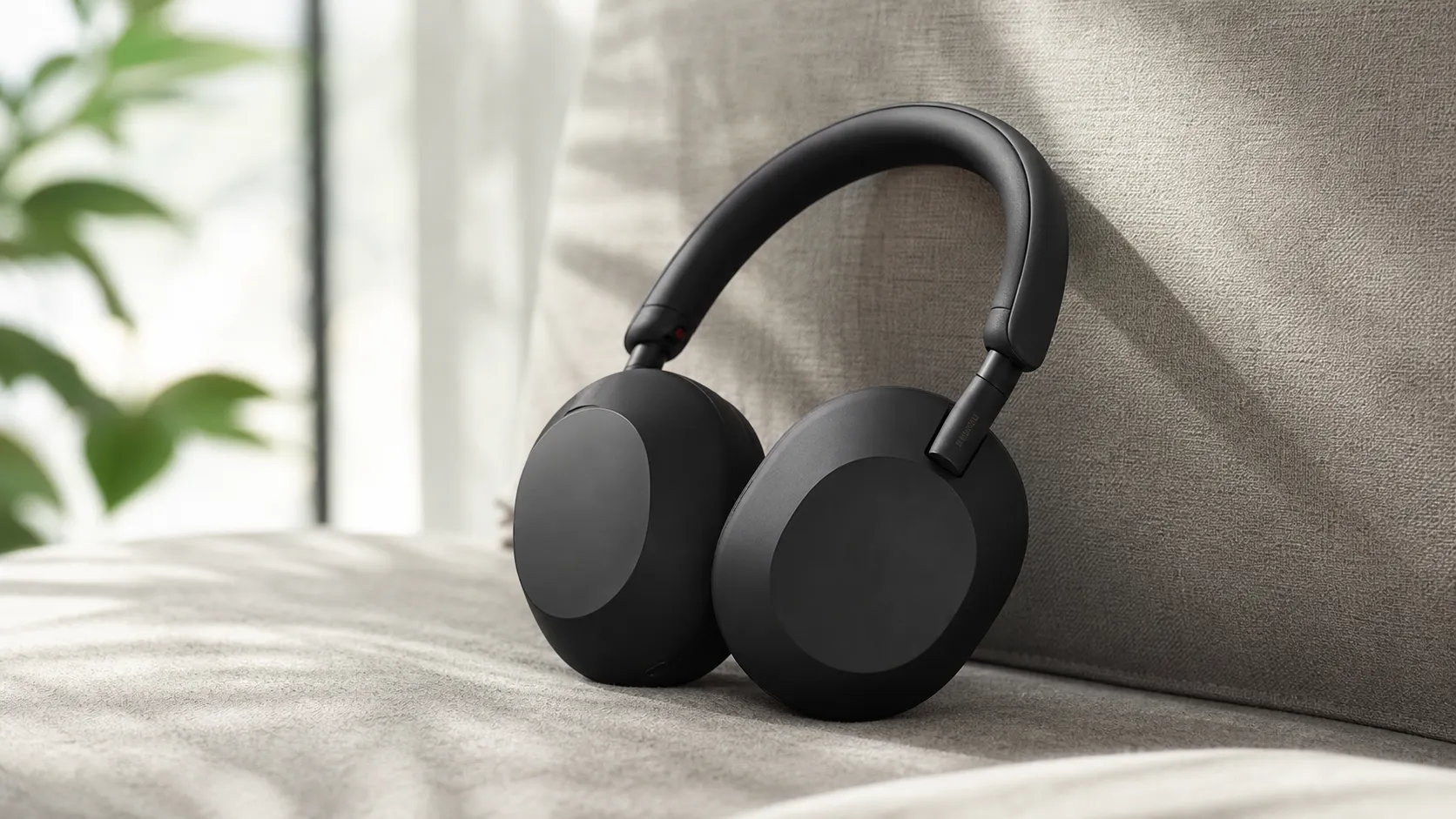
Sony WH-1000XM5 Review 2026 — ANC, Comfort & Value
Sony WH‑1000XM5: class‑leading ANC, exceptional comfort and long battery life — great for travel and calls, though sound tuning and a few durability reports divide opinions.