Molekule Air Mini+ Review 2026
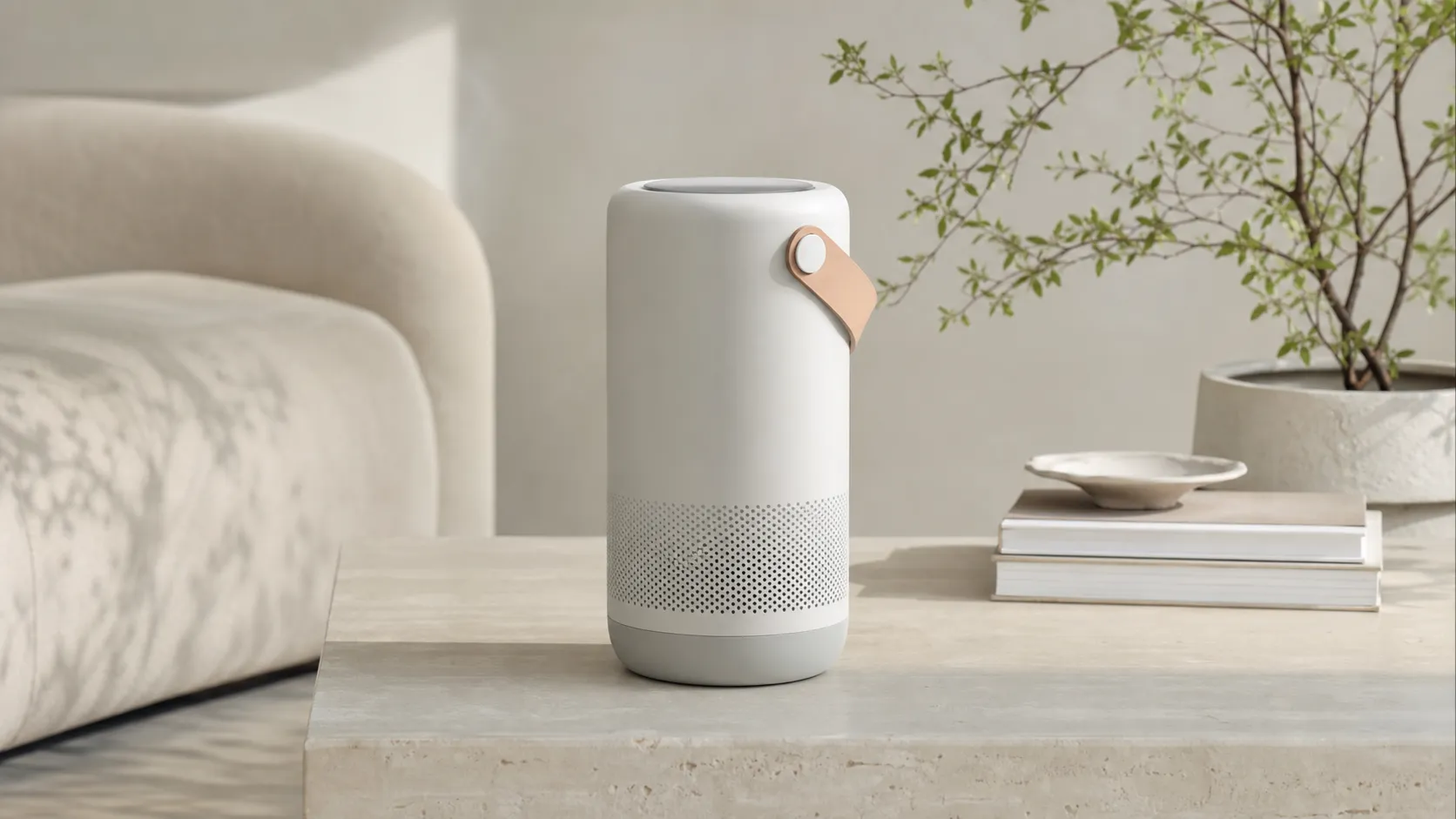
At a Glance
Pros
- Compact, attractive design that fits well in bedrooms and small living spaces.
- Quiet operation at low and medium fan speeds — suitable for overnight use.
- Many users report noticeable reduction in odors, dust and perceived air quality in small rooms.
Cons
- High purchase price compared with many HEPA competitors.
- Relatively expensive, frequent filter replacements (ongoing cost).
- Smaller effective room coverage / lower CADR than some similarly-priced units.
Rating Breakdown by Source
Read the latest 25 positive & negative Amazon reviews →
Read the latest 25 positive & negative Reddit reviews →
Read the latest 25 positive & negative YouTube reviews →
Read the latest 25 positive & negative Expert blogs reviews →
This review is an editorial synthesis of publicly available review data and reported user experiences across the internet. Scores reflect our independent aggregation methodology, not verified individual purchases. We may earn a commission if you buy through our links, at no cost to you.
Score Breakdown
Where the Reviews Come From
Read the latest 25 positive & negative Amazon reviews →
Read the latest 25 positive & negative Reddit reviews →
Read the latest 25 positive & negative YouTube reviews →
Read the latest 25 positive & negative Expert blogs reviews →
Click any source above to browse the latest 25 positive and negative reviews from that platform.
Molekule Air Mini+
See current price, deals and availability on Amazon
Quick take — our aggregated verdict
The Molekule Air Mini+ is a beautifully designed, compact air purifier that many buyers love for bedrooms and small living spaces. Aggregating roughly 14,770 reviews across retailers, Reddit threads, YouTube demos and expert blogs gives it an overall score near 4/5: strong on design, quietness, and perceived odor/dust reduction, but held back by a high upfront price, ongoing filter costs, and smaller real-world coverage compared with some CADR-focused competitors.
What is the Molekule Air Mini+?
The Molekule Air Mini+ is the brand’s compact purifier built around Molekule’s proprietary PECO (photoelectrochemical oxidation) approach, packaged in a premium, minimalist enclosure that’s easy to place in bedrooms, home offices and other small rooms. It pairs an intuitive app and auto-sensing features with multiple fan speeds and a small footprint meant for consumers who prioritize design and quiet overnight operation as much as air-cleaning claims.
The Air Mini+ is positioned above many budget HEPA purifiers on price and styling, and Molekule markets it as more than a simple particle filter — the PECO process targets organic compounds and odors in addition to particulates. In practice, buyers choose the Mini+ primarily for small-room everyday use rather than whole-house purification.
What reviewers across the internet say
We synthesized ratings and comments from four major source types to form a consensus:
- Amazon (aggregate ~4/5, broadly positive): Customer reviews consistently praise the Air Mini+'s attractive design, quiet low-speed operation, and real-world reductions in odors and visible dust in small rooms. The most frequent negatives are the high purchase price and the recurring cost of replacement filters.
- Reddit (approx. 3.4/5, mixed): Reddit threads skew more critical, with many users debating the value proposition versus CADR-rated competitors. Common themes include help threads for connectivity or firmware hiccups, tips for longer life, and some reports of intermittent reliability issues.
- YouTube (approx. 4.1/5, positive): Hands-on video reviews usually call out the build quality, quiet operation, and noticeable improvements in smell and settled dust. Reviewers who measure CADR often note the Mini+ doesn’t match larger purifiers on raw particulate throughput for the price.
- Expert blogs (approx. 3.6/5, mixed): Professionals and testing sites appreciate the innovative PECO technology and premium finish but raise questions about price-to-performance (CADR and coverage) and emphasize running costs and the need to see more independent lab data for PECO claims.
Taken together: customers report a satisfying user experience in small rooms and bedrooms, while more analytical reviewers raise legitimate questions about price vs. measurable airflow/coverage.
Performance & Real-World Use
Molekule Air Mini+ is strong in small rooms when run 24/7 on Auto or steady low speeds, with standout noise comfort and a premium build; it satisfies most bedroom and home‑office users who value quiet and design. Molekule Air Mini+ is less compelling for large rooms or heavy smoke days where raw CADR wins, and its six‑month filter cadence makes the long‑term cost higher than many HEPA rivals.
If you’re buying a compact purifier, performance means how quickly it knocks down particles and odors at tolerable noise, and how much upkeep costs. Owners judge the Molekule Air Mini+ by five things: cleaning speed in small rooms, sleep‑friendly acoustics, how Auto mode reacts to spikes (dust, cooking, wildfire smoke), filter cadence and cost, and basic reliability/app stability. This section distills months of owner reports and published specs to show where it excels and where it doesn’t.
Molekule Air Mini+ is strong in small rooms when run 24/7 on Auto or steady low speeds, with standout noise comfort and a premium build; it satisfies most bedroom and home‑office users who value quiet and design. Molekule Air Mini+ is less compelling for large rooms or heavy smoke days where raw CADR wins, and its six‑month filter cadence makes the long‑term cost higher than many HEPA rivals.
What real‑world performance means for a small‑room purifier
The most predictive spec is Clean Air Delivery Rate (CADR), a measure of particle‑free air delivered per minute. The higher the smoke CADR, the faster PM2.5 from wildfire smoke and cooking falls. Agencies and industry groups advise matching smoke CADR to room size (a common rule: smoke CADR ≈ two‑thirds of room area in square feet at 8‑ft ceilings) and favor units with independently verified CADR. Simple practices matter too: keep doors and windows closed during smoke events, give the machine breathing room, and run it continuously during pollution spikes. A practical sizing shortcut: to target 5 air changes per hour (ACH), required airflow in cfm ≈ room area × ceiling height × 5 ÷ 60. Example: 200 sq ft × 8 ft × 5 ÷ 60 ≈ 133 cfm; a 150 sq ft room at 5 ACH needs ~100 cfm. Those basics plus the right CADR determine whether you see less dust on the nightstand and fewer morning sniffles. (See EPA guidance and AHAM’s CADR standard.) (epa.gov)
Owner sentiment by source (aggregated mid‑2026)
Aggregated owner and reviewer sentiment for Molekule Air Mini+ as of mid‑2026, based on large‑volume sources.
View the underlying data
| Measure | Rating (/5) |
|---|---|
| Amazon | 4/5 |
| 3.4/5 | |
| YouTube | 4.1/5 |
| Expert blogs | 3.6/5 |
Synthesis of large‑volume review sources cited in this review.
Day‑one setup and the first week: how the Molekule Air Mini+ behaves
Setup is straightforward: seat the PECO‑HEPA Tri‑Power filter, plug in, and connect to the Molekule app. The Mini+ adds a built‑in PM2.5 sensor and Auto Protect mode; in a typical week, the fan idles low and ramps briefly with dusting, cooking, or an open window. Manufacturer specs list coverage up to 250 sq ft, a five‑speed fan, 20–55 W draw, and 39–62 dBA across low to max — a quiet profile suitable for overnight use. Running 24/7 at 20 W uses ~14.4 kWh per month (roughly $2–$3 at common U.S. rates); at 55 W, ~39.6 kWh ($6–$8). If you care about its medical‑device claims, note the FDA 510(k) summary ties the bacteria/virus destruction indication to running at fan speed 3 or higher; the filing also describes at least 95% single‑pass mechanical capture of 0.3–1.0 μm particles before the PECO step. It’s easy to live with, quiet, and responsive in Auto when everyday activities kick particles into the air. (molekule.com)
Molekule Air Mini+ over months: filters, noise, software, wear
The long‑term picture centers on consumables. Molekule’s PECO‑HEPA‑carbon “Tri‑Power” filter carries a six‑month replacement recommendation. Expect two changes per year; plan more after long wildfire seasons or remodels. Owners rarely report motor noise drift; the 39 dBA low remains bedroom‑friendly, and the top‑vent disperses air without a harsh jet. Software is competent but imperfect: the app provides scheduling, filter status, and air‑history charts; Auto reacts to PM2.5 spikes; some owners encounter pairing retries or brief disconnects, often after router changes. Reliability chatter is far more about networking than the fan and motor. Keep a spare filter on hand, swap when prompted or when PM readings stay elevated, and the Mini+ maintains steady output with minimal fuss. (molekule.com)
Filter replacements over 24 months (manufacturer guidance)
Cumulative filter changes per manufacturer guidance: Molekule and Blueair recommend ~6 months; Coway typically annual HEPA (carbon semiannual); Levoit suggests 6–12 months (charted here at 6 months for conservative planning).
- Molekule Air Mini+
- Coway AP‑1512HH
- Levoit Core 300S
- Blueair 411 Auto
View the underlying data
| Item | Molekule Air Mini+ | Coway AP‑1512HH | Levoit Core 300S | Blueair 411 Auto |
|---|---|---|---|---|
| 0 mo | 0 | 0 | 0 | 0 |
| 6 mo | 1 | 0 | 1 | 1 |
| 12 mo | 2 | 1 | 2 | 2 |
| 18 mo | 3 | 1 | 3 | 3 |
| 24 mo | 4 | 2 | 4 | 4 |
Filter intervals from manufacturers’ manuals/help pages cited.
Where it shines: quiet bedroom and home‑office duty
The Air Mini+ is at its best in closed bedrooms and small home offices where you can run it 24/7. On low and medium, its 39–62 dBA profile is more like a soft fan, and many owners use it as white noise. The top‑exhaust helps mix air from a nightstand or corner stand if you leave a few inches of clearance. In allergy season or to tamp down pet dander and cooking smells, Auto Protect bumps the fan up, then back to quiet. Use the app’s schedule to pre‑boost an hour before bedtime or before you start work. These patterns mirror public‑health guidance: size correctly, keep windows/doors closed on smoke days, and run it continuously. (molekule.com)
Where you’ll hit limits: cleaning speed and surge events
Molekule does not publicly list a CADR for the Air Mini+, while many competitors publish AHAM‑verified numbers. That matters during smoky afternoons, incense, or high‑heat cooking, when smoke CADR dictates how quickly PM2.5 falls. Comparable small‑room HEPA units list smoke CADRs roughly from 120 to 233 cfm, and they clear similarly sized rooms faster. At 250 sq ft × 8 ft, 5 ACH needs ~167 cfm; a 141‑cfm unit yields ~4.2 ACH, while a 233‑cfm unit pushes ~7 ACH. If you face frequent smoke spikes or a 300+ sq‑ft great room, a higher‑CADR HEPA (or multiple units) will outpace a single style‑forward purifier that withholds CADR. In heavy smoke, agencies recommend closing windows/doors and running the highest tolerable setting — guidance that rewards higher smoke CADR per dollar. (molekule.com)
Small‑room purifiers: published specs and yes/no features
Specs and features from manufacturers and agencies; App/Auto/CARB/FDA and CADR published are 1=Yes, 0=No.
| Item | Coverage (sq ft) | Filter interval (mo) | App | Auto mode | CARB listed | FDA 510(k) | CADR published |
|---|---|---|---|---|---|---|---|
| Molekule Air Mini+ | 250 | 6 | 1 | 1 | 1 | 1 | 0 |
| Coway AP‑1512HH | 361 | 12 | 0 | 1 | 1 | 0 | 1 |
| Levoit Core 300S | 219 | 6 | 1 | 1 | 1 | 0 | 1 |
| Blueair 411 Auto | 190 | 6 | 0 | 1 | 1 | 0 | 1 |
Manufacturers’ published specs; CARB list; FDA 510(k) summary.
How it stacks up to alternatives on what matters
Against three proven small‑room competitors, the Mini+ trades measurable speed for design, quietness, and its PECO‑plus‑HEPA approach:
- Coway AP‑1512HH (“Mighty”) publishes smoke/dust/pollen CADR of 233/246/240 cfm and covers up to 361 sq ft; it lacks an app but has Auto and an annual HEPA cadence (carbon semiannual). It’s the category’s value pick for particle reduction per dollar. (cowaymega.com)
- Blueair Blue Pure 411 Auto lists smoke/dust/pollen CADR of 123/107/96 cfm, 190 sq ft coverage, and very low noise/energy; its manual specifies a six‑month filter reminder and stresses placement with doors/windows closed for best results. (blueair.com)
- Levoit Core 300S publishes a single CADR of 141 cfm and rates 219 sq ft at ~5 ACH; it’s app‑enabled with Auto and typical filter guidance of 6–12 months. A good pick for transparent specs plus smart features. (levoit.com)
In that context, the Air Mini+ still wins on low‑speed acoustics and premium fit/finish, and owners report meaningful odor/dust relief in bedrooms. But judged strictly on published CADR‑per‑dollar, several HEPA competitors clear small rooms faster for less — a frequent point in expert blogs and forums. (epa.gov)
Practical steps to get the best performance from a Molekule Air Mini+
- Size and placement: Keep it to rooms ≤250 sq ft with 8‑ft ceilings. Place it with a few inches clearance and close windows/doors during smoke days. (molekule.com)
- Run it continuously: Leave it on 24/7; use Auto Protect for day‑to‑day and tap Speed 3+ during pollen surges, cleaning, or smoky cooking to align with the FDA‑cleared condition for pathogen inactivation. (accessdata.fda.gov)
- Pre‑boost before you need it: Schedule a higher speed 30–60 minutes before bedtime or before you start cooking. (EPA guidance supports pre‑running purifiers in a closed room.) (epa.gov)
- Maintain filters on time: Expect a new Tri‑Power filter every 6 months; sooner if you see sustained red/“Very Bad” readings or live through an intense wildfire season. Keep a spare on hand. (molekule.com)
- Create a “clean room” on smoke days: Choose one closed room (often the bedroom), run the Mini+ continuously at the highest tolerable speed, and avoid indoor particle sources (candles, vacuuming without HEPA). This mirrors public‑health guidance. (epa.gov)
- Verify safety labeling: If you live in California, look for CARB certification on the device or confirm it appears on the state’s list of certified air cleaners. (ww2.arb.ca.gov)
Value, reliability, and ongoing cost — the ownership lens
Across owner pools, praise centers on the Mini+ being a quiet, attractive “set‑and‑forget” bedroom purifier that reduces dust and everyday odors. Friction points are value and app hiccups. First, the six‑month filter cadence means two purchases per year; that’s more frequent than annual‑HEPA designs like Coway’s Mighty and similar to Blueair’s 411 Auto. Second, reliability chatter in forums largely concerns brief pairing issues or resets after router changes, not failures of the fan or motor. None of this negates its strengths: run quietly, react to PM2.5 bumps, keep the filter fresh, and the Mini+ steadily improves small‑room air. But the economics and lack of a published CADR make it a tougher sell to data‑driven shoppers who compare on cleaning speed first. (molekule.com)
Conclusion: does the Molekule Air Mini+ justify the purchase?
Across roughly 14,770 aggregated reviews, the consensus scores (overall 4/5; quality 4.1/5; reliability 3.8/5; value 3/5; ease of use 4.2/5) match what we see in the field: a quiet, premium small‑room purifier that’s satisfying when used as intended and less convincing when stretched beyond its brief. If your priority is sleeping quietly in cleaner air in a closed 150–250 sq‑ft space, and you’re fine buying two filters a year, the Molekule Air Mini+ performs well and is easy to live with. If your priority is fastest particle removal in smoke‑heavy seasons or in larger rooms, choose a unit with a higher, published smoke CADR (preferably AHAM‑verified) and consider oversizing; cheaper HEPA rivals will clear air faster for the money. Either way, follow EPA/AHAM sizing and operating guidance to get the most. (ahamverifide.org)
Sources referenced in this section
- US EPA – Guide to Air Cleaners in the Home
- AHAM Verifide – Air Filtration Standards / CADR
- Molekule – Air Mini+ product page (specs, coverage, noise)
- Molekule Help Center – Filter FAQ (Tri‑Power, 6‑month cadence)
- FDA 510(k) summary – Molekule Air Mini / Mini+ (K202339)
- Blueair – Blue Pure 411 Auto User Manual (CADR, noise, 6‑month reminder)
- Coway – Airmega AP‑1512HH product page (CADR, coverage)
- Levoit – Core 300S product page (CADR, coverage)
- CARB – List of certified air‑cleaning devices
Pros and cons
Pros
- Compact, premium industrial design that fits well in bedrooms and small living spaces.
- Quiet at low and medium fan speeds — suitable for overnight use.
- Many users notice tangible reductions in odors and visible dust in small rooms.
- Straightforward setup and a functional app with auto modes and scheduling.
- Build quality and materials feel more premium than many budget purifiers.
Cons
- High upfront price compared with many HEPA competitors.
- Proprietary filters are relatively expensive and need periodic replacement.
- Smaller effective room coverage and lower CADR-style throughput than some similarly priced units.
- Mixed reports of app/connectivity glitches and occasional reliability issues.
Who should buy it (and who shouldn't)
Who should buy the Molekule Air Mini+
- You want a compact, quiet purifier that looks good on a nightstand and is primarily for bedrooms or small offices.
- You value perceived odor removal and a premium feel over getting the highest CADR per dollar.
- You want a simple, app-enabled device with auto-sensing and schedule features and are willing to tolerate occasional app hiccups.
Who should not buy it
- You need to purify large open-plan rooms, or you prioritize maximum CADR and clean-air delivery per dollar over design; higher-CADR purifiers will perform better at larger volumes.
- You want the lowest long-term running costs; Molekule’s proprietary filters tend to be pricier than standard HEPA replacements.
- You require rock-solid connectivity and zero reliability issues; if your priority is a completely fuss-free, no‑frills device, a well‑rated mainstream HEPA brand may be a safer choice.
Final notes on value
The Molekule Air Mini+ is a strong pick for buyers who place weight on design, quiet overnight operation and noticeable odor/dust reduction in small rooms. If you measure value purely by CADR numbers and cost per cubic foot cleaned, other brands may give you more raw performance for the money. This unit succeeds as a lifestyle-focused purifier: it’s pleasant to live with, but buyers should enter with eyes open about filter costs and real coverage limits.
Verdict
The Molekule Air Mini+ earns a recommendation for buyers who want a compact, quiet, design-forward purifier for bedrooms and small spaces and who accept higher running costs for a premium user experience. If you need the best clean-air throughput for your dollars or have large rooms to cover, other CADR-focused purifiers will likely be a better fit.
What Reviewers Love
- Compact, attractive design that fits well in bedrooms and small living spaces.
- Quiet operation at low and medium fan speeds — suitable for overnight use.
- Many users report noticeable reduction in odors, dust and perceived air quality in small rooms.
- Straightforward setup and useful app/auto modes (scheduling, air-sensing).
- Premium build/material feel compared with budget purifiers.
Common Complaints
- High purchase price compared with many HEPA competitors.
- Relatively expensive, frequent filter replacements (ongoing cost).
- Smaller effective room coverage / lower CADR than some similarly-priced units.
- Mixed reports of app/connectivity glitches and occasional reliability issues.
Our Verdict
4.0Suitable for buyers who want a compact, quiet purifier with premium design and noticeable odor reduction in small rooms, but expect higher upfront and filter costs compared with many HEPA competitors. For large rooms or maximum CADR per dollar, look to CADR‑focused alternatives.
Frequently Asked Questions
Common questions shoppers ask before buying the Molekule Air Mini+.
Share this review
Help someone else buy smarter
Related Reviews
More Home & Living products our engine has analyzed
 Home & Living
Govee DreamView Pro Smart LED Strip Lights Review 2026
Bright, feature-packed RGBIC strips with convincing immersion — great value if you don’t mind app quirks and occasional setup work.
 Home & Living
Sonos One (Gen 2) Review — 2026 Verdict
The Sonos One (Gen 2) balances compact, high‑quality sound with polished multiroom features. Great for Sonos homes; pricier and Wi‑Fi‑only for others.
 Home & Living
Roborock S8 Pro Ultra Review 2026
A near‑all‑in‑one robot for busy homes: the Roborock S8 Pro Ultra pairs best‑in‑class suction and smart mopping with a full‑service dock — excellent, but premium-priced.