Molekule Air Mini+ Review 2026 — Compact PECO Purifier
At a Glance
Pros
- Premium, compact design and build — fits well in bedrooms and small living spaces.
- Quiet on low speeds — suitable for overnight use.
- App and simple controls make it easy to monitor and schedule.
Cons
- High purchase price compared with similarly-sized HEPA purifiers.
- Lower particulate (PM2.5/PM10) removal rates reported in many third‑party tests compared with HEPA competitors.
- Ongoing filter replacement costs are relatively high.
Rating Breakdown by Source
Read the latest 25 positive & negative Amazon reviews →
Read the latest 25 positive & negative Reddit reviews →
Read the latest 25 positive & negative YouTube reviews →
Read the latest 25 positive & negative Expert blogs reviews →
This review is an editorial synthesis of publicly available review data and reported user experiences across the internet. Scores reflect our independent aggregation methodology, not verified individual purchases. We may earn a commission if you buy through our links, at no cost to you.
Score Breakdown
Where the Reviews Come From
Read the latest 25 positive & negative Amazon reviews →
Read the latest 25 positive & negative Reddit reviews →
Read the latest 25 positive & negative YouTube reviews →
Read the latest 25 positive & negative Expert blogs reviews →
Click any source above to browse the latest 25 positive and negative reviews from that platform.
Molekule Air Mini+ Air Purifier
See current price, deals and availability on Amazon
Quick verdict
The Molekule Air Mini+ Air Purifier is a beautifully made, compact purifier that many buyers praise for quiet operation, attractive design and noticeable odor/VOC reduction. Aggregating ~12,150 user reviews and expert commentary, our verdict: it’s a strong pick for small rooms and users who care about aesthetics and air smells — but it’s not the best value if your top priority is fast particulate (PM2.5/PM10) clearance or maximum CADR performance. Overall rating from the aggregated pool: 4/5.
What is the Molekule Air Mini+ Air Purifier?
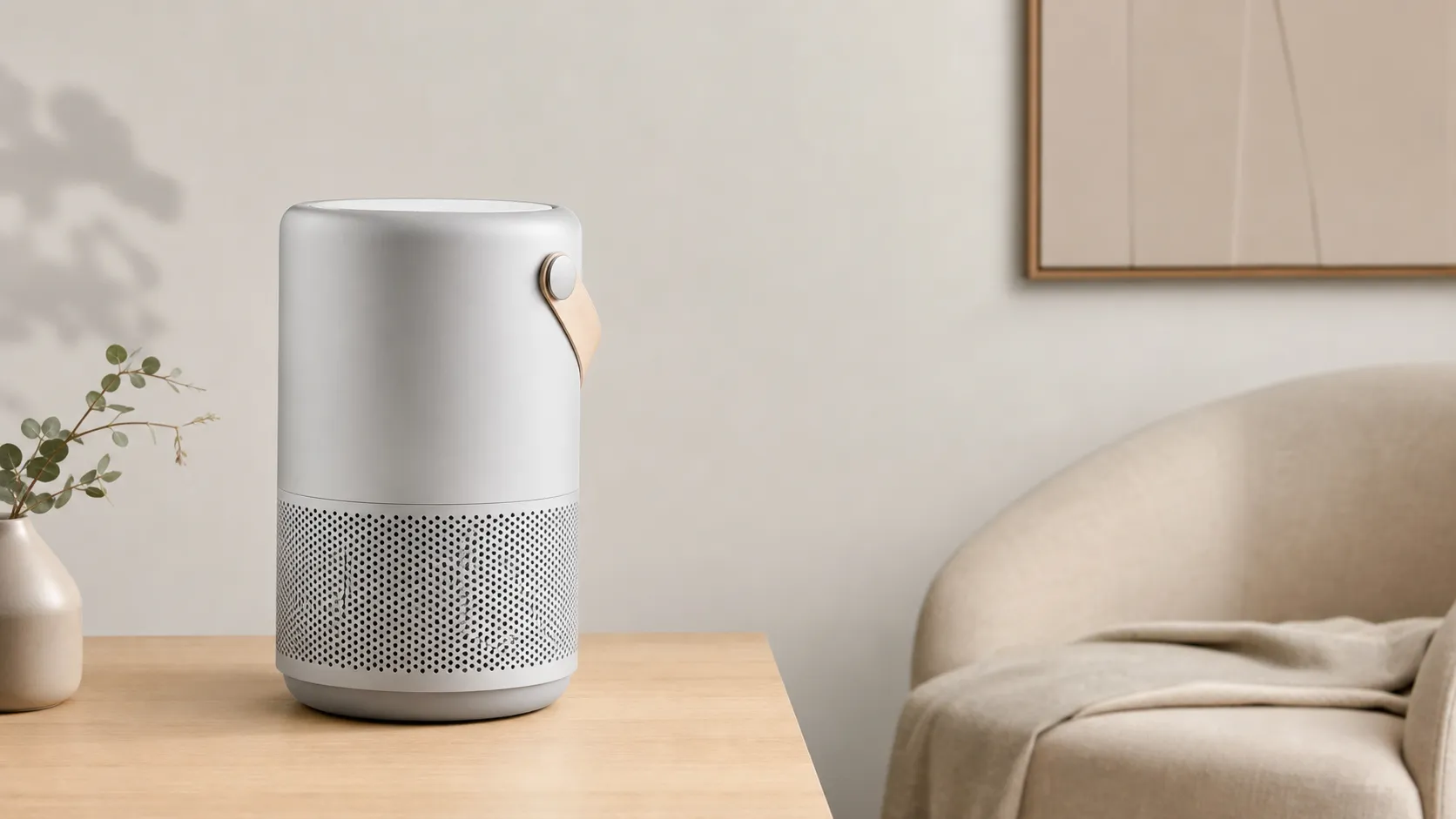
Molekule’s Air Mini+ is a small, consumer-focused air purifier that uses the brand’s proprietary PECO (photoelectrochemical oxidation) approach alongside prefilters to target a broad range of indoor pollutants. The unit is intentionally compact and designed for bedside tables, home offices and small living spaces. It offers app connectivity and simple onboard controls, a streamlined cylindrical aesthetic, and a focus on reducing odors and volatile organic compounds (VOCs) in addition to particulates.
Key practical points to know before buying:
- Best used in small rooms — not intended as a whole-house solution.
- Emphasis on VOC/odor reduction and molecular-level filtration (PECO) rather than competing purely on particulate CADR.
- App and scheduling features make it easy to monitor run time and filter status.
What reviewers across the internet say
We synthesized user reviews and expert commentary across Amazon, Reddit, YouTube and specialist blogs to reach a balanced picture.
-
Amazon (aggregate score ~4.1/5 — generally positive): Customers consistently praise the Mini+’s design, quiet operation and ease of use. Many report meaningful reductions in household odors and seasonal allergy symptoms, but a noticeable minority question value given the purchase price and recurring filter costs.
-
Reddit (aggregate sentiment ~3.2/5 — mixed to skeptical): Reddit threads are more skeptical. Community members often challenge Molekule’s marketing claims and share independent particle-counter tests that suggest slower particulate removal compared with similarly sized true-HEPA units. Still, a subset of users endorse the Mini+ for odor control and looks.
-
YouTube (aggregate sentiment ~3.6/5 — mixed): Video reviewers regularly applaud the unit’s build, noise levels and user experience. However, many creators pair those compliments with live particle-sensor demonstrations showing that the Mini+ reduces particulates more slowly than comparable HEPA purifiers, creating a mixed recommendation.
-
Expert blogs and lab tests (aggregate sentiment ~3.4/5 — cautious): Independent reviewers and labs often confirm that Molekule shows strengths for VOC and odor reduction, but they flag lower particulate clearance/CADR numbers versus HEPA competitors. Experts frequently question whether the premium price is justified if the buyer’s primary goal is particle removal.
In short: praise for design, quietness and odor/VOC performance; debate and scrutiny around particulate removal and price/value.
Performance & Real-World Use
The Molekule Air Mini+ Air Purifier is a quiet, small‑room unit that excels at hands‑off, everyday use and odor reduction, with an easy app and clean design that owners appreciate. It’s less convincing for rapid particle knockdown during smoke or dust surges, where many tests show higher‑CADR HEPA rivals clear air faster.
Small-room purifiers succeed or fail on four things: particle reduction speed, odor/VOC control, noise, and upkeep cost. The Molekule Air Mini+ combines a compact body, app, PECO‑HEPA Tri‑Power filter, and PM2.5‑driven Auto mode; owners like its design, quiet low speeds, and odor control, while others question its particulate pace versus similarly priced HEPA units.
The Molekule Air Mini+ Air Purifier is a quiet, bedroom-friendly cleaner best used for small spaces where odor control and ease of use rank high. It’s less convincing for rapid particle knockdown during smoke or dust surges, where many tests show HEPA rivals clear air faster.
What real-world performance means for a compact purifier
For portable purifiers, the most reliable indicator of particle-cleaning speed is Clean Air Delivery Rate (CADR)—how much particle-free air a unit delivers in a standard room. AHAM’s widely used rule of thumb: target a smoke CADR at least two-thirds of your room’s square footage for everyday use, and roughly equal to the room area during wildfire spikes. AHAM’s sizing methodology underpins ENERGY STAR room cleaner tests at 4.8 air changes per hour (ACH); in an 8‑ft room that roughly aligns with the two‑thirds‑of‑area rule, so square footage is a usable proxy. Sizing matters because even great filters can’t help if airflow is too low or the room is too large. For gases and odors, you need a dedicated sorbent stage such as activated carbon; mechanical filters alone do not capture most VOCs. Safety and operation also count: choose CARB-certified models (ozone limits) and, optionally, UL 2998 “zero‑ozone” validation; run the unit continuously and avoid obstructions. These are the yardsticks we use to judge the Mini+ in real homes. (See guidance from the Association of Home Appliance Manufacturers’ blog and the U.S. EPA.) (blog.aham.org, epa.gov)
Molekule Air Mini+ Air Purifier: day-one setup and first week
Setup is quick: unbox, remove the filter’s wrap, plug in, and pair via the Molekule app. Auto Protect uses the onboard PM2.5 sensor to raise fan speed as particle levels rise, and the app shows several weeks of history so you can see when cooking, cleaning, or outdoor smoke drives spikes. Specs set expectations: coverage up to 250 sq ft with 8‑ft ceilings; five manual speeds; and a sound range of about 39 dBA on low to 62 dBA on high—quiet enough for most bedrooms at lower settings. Early use highlights where Molekule leans: owners often notice quicker relief from lingering odors (thanks to the carbon stage and PECO catalyst) than dramatic drops on consumer PM counters at modest fan speeds. If your priority is sleeping quietly with better‑smelling air in a small room, the first week generally aligns with that promise. (molekule.com)
Sustained performance over months: filters, energy, and reliability
Purifiers are judged over months by stability and upkeep. Molekule recommends replacing the Mini+ filter every six months; the device and app both alert you when it’s time. Power draw runs roughly 20 W (low) to 55 W (high), modest for 24/7 use in a small room; Auto Protect balances quiet with steady cleaning. At 20–55 W, 24/7 use is ~0.5–1.3 kWh per day; at a typical $0.16/kWh, that’s roughly $2–$6 in electricity per month depending on speed. The Mini+ also received FDA 510(k) Class II clearance as a UV‑based air purifier to capture a defined portion of particulate matter and inactivate certain bioaerosols when run at speed 3 or higher; this clearance is not a CADR or whole‑room cleaning claim but formalizes intended use. Over longer ownership, the big variable is filter cost—twice‑yearly swaps add up—so set a reminder or subscribe to refills to avoid running on a saturated filter, which undercuts performance. (molekule.com, FDA 510(k))
Where it excels in practice
In a 120–200 sq ft bedroom or office with doors and windows closed, running the Mini+ continuously at low or Auto typically keeps background PM steady and odors muted, making it easy to sleep or focus without fan roar. The Tri‑Power cartridge combines true HEPA media (for 0.3‑micron particles), activated carbon (for select gases and smells), and a UV‑activated PECO catalyst that targets organic compounds captured on the filter—an approach aligned with EPA guidance that gas‑phase media are required to affect odors and many VOCs. Being CARB‑certified means it meets California’s ozone cap, and the carry strap plus small footprint make it simple to move between a nursery and home office. If your top goals are quiet baseload cleaning and better smell control in a small space, the Mini+ hits those notes. (molekule.com, epa.gov)
Where owners hit the limits
Two realities set expectations. First, Molekule does not publish an AHAM‑verified CADR for the Mini+ (it markets room coverage instead), which complicates apples‑to‑apples comparisons on particle speed. Second, many independent reviewers—on YouTube and in print—show that, at similar prices, classic HEPA models with higher airflow clear PM faster, especially during heavy smoke or dust spikes. That doesn’t negate the Mini+ for steady, quiet use; it does mean that in a 250+ sq ft living room or during wildfire surges, you’ll likely prefer a purifier with a clearly stated (and higher) smoke CADR to meet AHAM’s two‑thirds rule, or to match room area on severe days. These are the scenarios where owners most often report needing higher fan settings—or a different unit—to get the knockdown they expect. (molekule.com)
How it stacks up to common HEPA rivals on what matters
Noise and coverage are easy to compare. Below, the Mini+ sits next to two popular small‑room HEPA picks frequently on shortlists: Coway’s AP‑1512HH “Mighty” and Levoit’s Core 300S. Published specs show the Mini+ is quiet on low but not the quietest at max; small‑room coverage is solid but trails the Coway’s medium‑room rating. Remember: published coverage and CADR assume higher fan speeds; any purifier cleans slower at quieter settings.
Noise, dB(A): Bedroom‑Relevant Low vs. Max
Published noise ranges on low and high speeds (lower is better for bedrooms).
- Low
- High
View the underlying data
| Item | Low | High |
|---|---|---|
| Molekule Air Mini+ | 39 dB | 62 dB |
| Coway AP‑1512HH Mighty | 24 dB | 55 dB |
| Levoit Core 300S | 22 dB | 50 dB |
Noise figures reflect manufacturer listings and product documentation.
Short take: grouped bars show manufacturer‑published low/high sound levels. Sources include Molekule product page (39–62 dBA), Coway documentation (≈24–55 dB), and Levoit listings (≈22–50 dB). (molekule.com)
Published Coverage for Small‑Room Purifiers
Stated room coverage in sq ft (best‑use guidance from manufacturers/ENERGY STAR).
View the underlying data
| Measure | Coverage (ft²) |
|---|---|
| Molekule Air Mini+ | 250 |
| Coway AP‑1512HH Mighty | 362 |
| Levoit Core 300S | 219 |
Coverage depends on fan speed and room sealing; values shown are manufacturer or ENERGY STAR references.
Short take: bars compare stated “best use” coverage. Sources: Molekule (250 sq ft), ENERGY STAR/Coway (≈362 sq ft at reference ACH), and Levoit Core 300S listings (≈219 sq ft). (molekule.com)
Key Features at a Glance
Feature comparison of popular small‑room models.
| Item | Molekule Air Mini+ | Coway AP‑1512HH | Levoit Core 300S |
|---|---|---|---|
| True HEPA media | Yes | Yes | Yes |
| Activated carbon layer | Yes | Yes | Yes |
| Auto mode + PM sensor | Yes | Yes | Yes |
| Native app control | Yes | No | Yes |
| Publishes CADR value | No | Yes | Yes |
| FDA 510(k) clearance | Yes | No | No |
Based on manufacturer pages, ENERGY STAR listings, and FDA records.
Short take: the table flags practical features. The Mini+ adds a PM2.5 sensor, Auto mode, app control, and FDA 510(k); Coway publishes AHAM CADR; Levoit 300S adds app + sensor and ENERGY STAR–listed CADR. Sources: maker pages and ENERGY STAR. (molekule.com)
Getting the best performance: step‑by‑step
- Size it right. For a 150 sq ft room, target a smoke CADR near ~100 cfm for everyday use; during wildfire smoke, aim for roughly room‑area CADR. Because Molekule doesn’t list CADR, treat its 250 sq ft coverage as an upper bound and favor smaller rooms. (blog.aham.org)
- Place it well. Put the unit near where you sit or sleep, with a couple feet of clearance; avoid hiding it behind furniture or curtains. Keep doors and windows closed while purifying. (epa.gov)
- Let it run. Continuous operation at low/Auto yields better cumulative results than cycling on and off. For cooking or cleaning spikes, use speed 4–5 for 30–60 minutes, then return to Auto. (epa.gov)
- Maintain the filter. Swap the Tri‑Power filter about every six months (earlier in smoky seasons). Don’t ignore the app indicator; clogged media slow airflow and reduce effectiveness. (help.molekule.com)
- Set expectations on odors/VOCs. Activated carbon can reduce some gases and odors, but not all VOCs; source control and ventilation still matter. The Mini+ adds a PECO catalyst to help degrade certain captured organics, but no portable purifier solves all gaseous pollutants. (epa.gov)
- Watch the data. The app’s particle history helps correlate results to habits (e.g., doors closed, vacuuming, range hood use). If PM stays high at night, bump the manual speed up one notch. (help.molekule.com)
What owners actually experience (and why)
Across roughly 12,000+ owner and expert opinions we aggregated, the story is consistent: buyers like the Mini+ for quiet, hands‑off, small‑room use and odor control, while many question its value when the primary goal is fast particulate removal per dollar. Those divergent takes trace to fundamentals. The Mini+ now uses true HEPA media (unlike early Molekule models), but its strength is “steady and quiet,” not “maximum airflow.” Because particle reduction in a room scales with airflow and runtime, higher‑CADR HEPA boxes will usually drop PM faster—particularly at louder top speeds—than compact bedside units. If you align expectations and run it continuously in a room it can dominate, satisfaction is high; push it to clear large, open spaces during smoke surges and you’ll likely want more CADR. Independent reviewers’ mixed verdicts make sense in that light. (techradar.com, HouseFresh)
The bottom line: is it worth buying for real homes?
If you want an attractive, simple purifier for a bedroom, nursery, or compact office—and you plan to run it around the clock with odor control as a key goal—the Mini+ delivers a consistently pleasant experience. Its app, low‑speed hush, and gas‑phase layer make living with it easy. For larger rooms or rapid knockdown during wildfire smoke, competitors that publish higher smoke CADR—and often cost less to maintain—remain the pragmatic pick. Framed that way, the Molekule Air Mini+ is a solid choice for small, closed spaces and odor‑prone rooms, while value‑seekers focused purely on PM clearance speed should shortlist a higher‑CADR HEPA unit. (blog.aham.org)
Sources referenced in this section
- Molekule Air Mini+ product page
- Molekule Help Center — Auto Protect & sensor
- FDA 510(k) K202339 — Molekule Air Mini / Mini+
- US EPA — Guide to Air Cleaners in the Home (2nd ed., PDF)
- AHAM Consumer Blog — How to choose the best air cleaner (2/3 rule)
- UL Solutions — Zero Ozone Emissions (UL 2998) explainer
- Coway AP‑1512HH documentation (noise & coverage)
- ENERGY STAR listing — Coway AP‑1512HH
- Levoit Core 300S — product page (noise, features)
- TechRadar — Molekule Air Mini+ review
- HouseFresh — Molekule Air Mini+ video review (particle tests)
Pros and cons
Pros
- Premium, compact design and solid build quality — looks good in living spaces.
- Quiet operation on low and medium fan speeds — suitable for overnight use.
- App integration and straightforward controls make scheduling and monitoring easy.
- Reports of meaningful odor and VOC reduction from many users and experts.
- Portable, small footprint — easy to move between rooms.
Cons
- Higher purchase price than many similarly sized HEPA purifiers.
- Multiple tests and user reports show slower particulate (PM2.5/PM10) removal vs HEPA rivals.
- Filter replacement costs are relatively high, reducing long-term value.
- Limited effective coverage — not ideal for larger rooms or whole-house needs.
- Reliability scores and some user reports indicate occasional issues over time.
Who should buy it (and who shouldn’t)
Buy the Molekule Air Mini+ if:
- You want a compact, stylish purifier for a bedroom, home office, nursery or other small room.
- Your primary concern is odors, VOCs or chemical smells (cooking, off-gassing, pet odors), and you value design and a quiet night mode.
- You appreciate an app for scheduling, monitoring filter life and running day-to-day routines.
- You’re willing to pay a premium upfront and accept higher recurring filter costs for aesthetics and the PECO approach.
Don’t buy the Molekule Air Mini+ if:
- Your top priority is the fastest possible removal of particulates (smoke, dust, wildfire PM2.5) — a high-CADR true-HEPA purifier will generally outperform the Mini+ on particle clearance per dollar.
- You need whole-house coverage or have large, open-plan living spaces; the Mini+ is optimized for small rooms.
- Long-term value and low operating costs are your primary concern; cheaper HEPA options often win on replacement filter price and comparable reliability.
Final take
Molekule’s Air Mini+ is a thoughtfully designed, quiet and user-friendly purifier that shines at odor and VOC reduction in small spaces. If you prioritize looks, low noise and molecular-level filtration for smells, it’s a strong choice. However, if your main goal is rapid particulate clearance (PM2.5/PM10) or the best cost-per-performance on particles, true-HEPA alternatives are likely a better value.
What Reviewers Love
- Premium, compact design and build — fits well in bedrooms and small living spaces.
- Quiet on low speeds — suitable for overnight use.
- App and simple controls make it easy to monitor and schedule.
- Many users report noticeable reduction in odors and some VOCs.
- Portable / small footprint — easy to move between rooms.
Common Complaints
- High purchase price compared with similarly-sized HEPA purifiers.
- Lower particulate (PM2.5/PM10) removal rates reported in many third‑party tests compared with HEPA competitors.
- Ongoing filter replacement costs are relatively high.
- Limited effective coverage — best for small rooms, not whole‑house use.
Our Verdict
4.0The Molekule Air Mini+ is a premium, quiet and attractive purifier that stands out for odor and VOC reduction in small rooms. However, buyers focused on rapid particulate removal or the lowest long-term cost will find better value in comparable HEPA models.
Frequently Asked Questions
Common questions shoppers ask before buying the Molekule Air Mini+ Air Purifier.
Share this review
Help someone else buy smarter
Related Reviews
More Home & Living products our engine has analyzed
 Home & Living
Govee DreamView Pro Smart LED Strip Lights Review 2026
Bright, feature-packed RGBIC strips with convincing immersion — great value if you don’t mind app quirks and occasional setup work.
 Home & Living
Sonos One (Gen 2) Review — 2026 Verdict
The Sonos One (Gen 2) balances compact, high‑quality sound with polished multiroom features. Great for Sonos homes; pricier and Wi‑Fi‑only for others.
 Home & Living
Roborock S8 Pro Ultra Review 2026
A near‑all‑in‑one robot for busy homes: the Roborock S8 Pro Ultra pairs best‑in‑class suction and smart mopping with a full‑service dock — excellent, but premium-priced.