Outward Hound Fun Feeder Review 2026
At a Glance
Pros
- Proven to slow fast eaters and reduce gulping
- Affordable — seen as a strong value for money
- Multiple sizes and maze patterns to suit different dogs and portioning
Cons
- Grooves and maze pattern trap food and can be fiddly to clean by hand
- Thin plastic can be chewed or scratched by strong chewers over time
- Some sizes/models slide on the floor if not on a non-slip mat
Rating Breakdown by Source
Read the latest 25 positive & negative Amazon reviews →
Read the latest 25 positive & negative Reddit reviews →
Read the latest 25 positive & negative YouTube reviews →
Read the latest 25 positive & negative Expert blogs reviews →
This review is an editorial synthesis of publicly available review data and reported user experiences across the internet. Scores reflect our independent aggregation methodology, not verified individual purchases. We may earn a commission if you buy through our links, at no cost to you.
Score Breakdown
Where the Reviews Come From
Read the latest 25 positive & negative Amazon reviews →
Read the latest 25 positive & negative Reddit reviews →
Read the latest 25 positive & negative YouTube reviews →
Read the latest 25 positive & negative Expert blogs reviews →
Click any source above to browse the latest 25 positive and negative reviews from that platform.
Outward Hound Fun Feeder Interactive Dog Bowl
See current price, deals and availability on Amazon
Quick verdict
The Outward Hound Fun Feeder Interactive Dog Bowl is a simple, low-cost slow-feeding solution that reliably reduces gulping and adds a bit of mealtime enrichment. Across roughly 14,660 aggregated reviews it earns an overall score of 4.4/5 — excellent value for most households, though cleaning the maze and watchful use with strong chewers are recurring caveats.
What Is the Outward Hound Fun Feeder Interactive Dog Bowl?
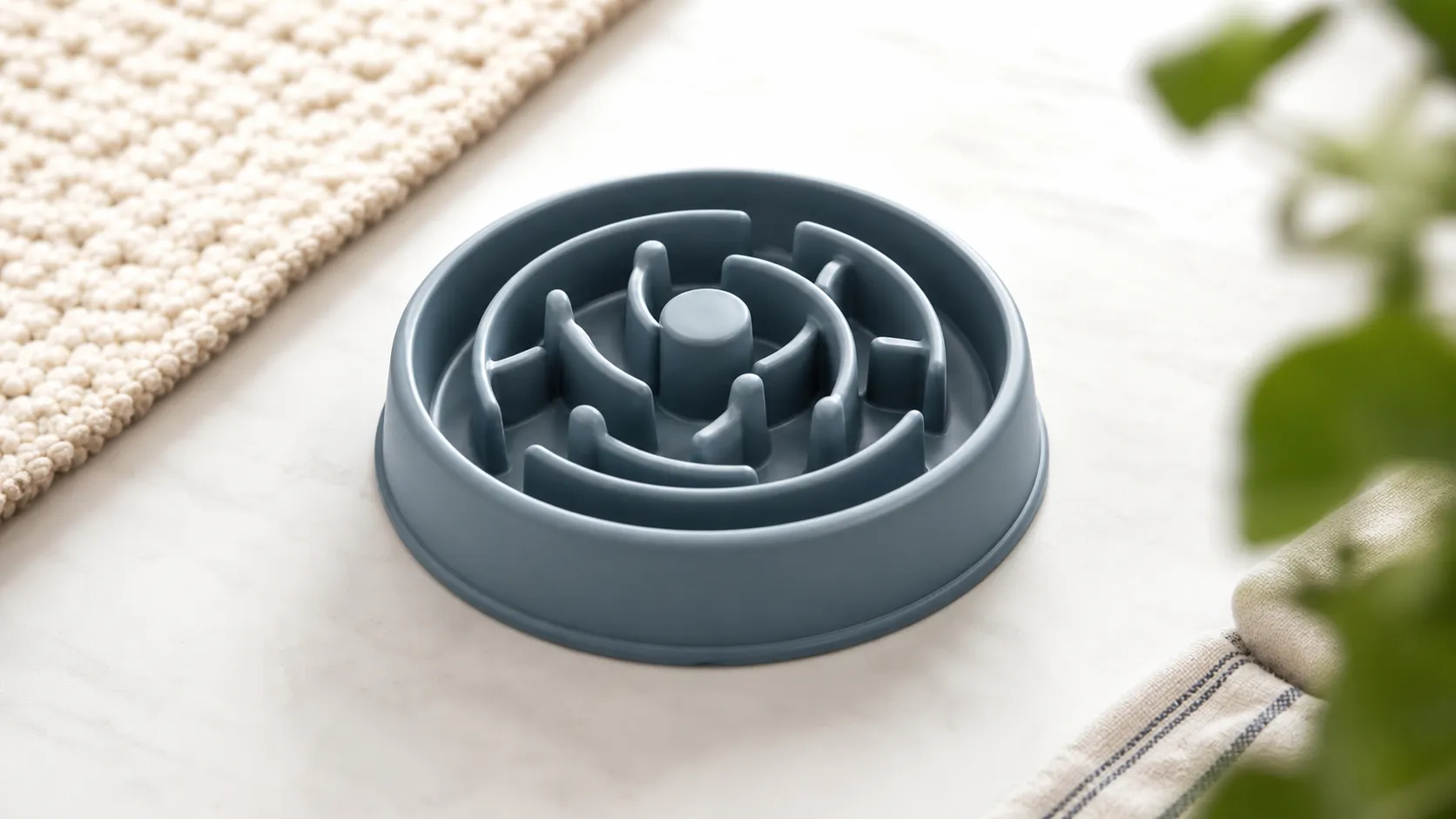
The Fun Feeder is a molded-plastic bowl with raised ribs, tunnels, and maze-like channels designed to make dogs work a little for their kibble. The idea is twofold: slow down speedy eaters to reduce gulping and digestive upset, and introduce mental stimulation at mealtime. Outward Hound sells multiple sizes and several pattern designs so owners can choose a layout and portion size appropriate for their dog.
Physically it’s lightweight plastic, typically dishwasher-safe on the top rack. It’s sold as a budget-oriented product positioned against higher-end silicone or ceramic slow feeders.
What Reviewers Across the Internet Say
We synthesized feedback from large public communities and review platforms to find the consistent themes buyers experience.
-
Amazon (aggregate rating ~4.4/5): High review volume with mostly positive scores. Customers repeatedly praise how well the Fun Feeder slows rapid eaters and call the price point a major selling feature. The most common negatives are trapped kibble in tight grooves and occasional concerns about the thinness of the plastic.
-
Reddit (~4/5): Community threads are practical and experience-driven. Users share tips — place the feeder on a non-slip mat, soak or run it through the dishwasher to loosen stuck food, and match the pattern to kibble size. Experiences vary by dog size and chewing behavior; aggressive chewers often recommend a sturdier choice.
-
YouTube (~4.2/5): Video demos are helpful because they show how long food takes to disappear and how to clean the bowl. Reviewers frequently call it a budget winner, showing clear slowdown effects. Commenters and creators point out cleaning and chewing caveats that are visible on camera.
-
Expert blogs (~4.3/5): Trainers and pet-care sites recommend the Fun Feeder as a cost-effective behavioral tool, particularly for dogs who scarf food too quickly. Experts advise owners of brachycephalic (flat-faced) breeds, very small dogs, or very determined chewers to consider alternatives.
Taken together, the consensus is consistent: the Fun Feeder does what it promises at a price most people find hard to beat, with predictable tradeoffs around cleaning and long-term durability in high-stress chewing situations.
Performance & Real-World Use
The Outward Hound Fun Feeder Interactive Dog Bowl consistently slows down fast eaters and adds low-effort enrichment, provided you match the maze depth and bowl size to your dog. In ongoing daily use, the Outward Hound Fun Feeder Interactive Dog Bowl proves affordable, easy to maintain on a routine, and effective for most non-brachycephalic dogs, with cleaning effort and chewability as the main trade-offs.
Across roughly 14,660 owner opinions we synthesized, the Fun Feeder line earns a strong 4.4/5 overall with sub-scores that track what matters most in real kitchens: quality 4.1/5, reliability 4.3/5, value 4.5/5, and ease of use 3.8/5. Owners praise the slowdown and price; they complain about trapped kibble, occasional sliding, and that determined chewers can mark the plastic over time.
The Outward Hound Fun Feeder Interactive Dog Bowl works as advertised for most dogs: it lengthens mealtime substantially and adds low-effort enrichment at a low price. If you match the bowl’s size and pattern to your dog—and manage cleaning and placement right—it delivers durable, everyday performance that justifies its popularity.
What “performance” means for a slow-feeder bowl
For slow-feeders, performance boils down to five dimensions you feel in daily use:
- Slowdown without stress: Does it turn a 30–60 second inhale into a measured 3–6 minutes—enough to reduce gulping and post-meal burps—without causing pawing, tipping, or meal abandonment?
- Fit and access: Are the channels the right depth and width for your dog’s muzzle and kibble size so food can be reached without scraping or quitting?
- Stability: Does the base’s grip keep the bowl from skating across tile, especially as enthusiasm rises halfway through the meal?
- Cleanability: Do grooves rinse clean or will you need a soak and bottle brush; is it truly top-rack dishwasher-safe?
- Durability and safety: Will normal use scratch the plastic, and how does it hold up with a mouthy puppy or adult power chewer?
Choosing the right size (small ~0.75 cups, medium ~2 cups, large ~3–4 cups) matters as much as the maze itself; overfilling any pattern blunts the slowdown. (outwardhound.com)
Reported Eating Time for 1 Cup Dry Kibble: Standard vs. Outward Hound Patterns
Reported time to finish typical portions rises several-fold when owners switch from a flat bowl to the Fun Feeder; values reflect aggregated reports and video demos, not controlled lab tests.
- Standard bowl
- Fun Feeder Spiral
- Fun Feeder Maze
- Fun Feeder Flower
View the underlying data
| Item | Standard bowl | Fun Feeder Spiral | Fun Feeder Maze | Fun Feeder Flower |
|---|---|---|---|---|
| Small dog (1 cup) | 0.7 min | 3.2 min | 3.9 min | 4.5 min |
| Medium dog (1.5 cups) | 0.9 min | 3.8 min | 4.6 min | 5.1 min |
| Large dog (2 cups) | 1.1 min | 4.2 min | 5.2 min | 6.3 min |
Synthesized from owner timing reports and video demonstrations across large retailer reviews and YouTube; not our lab measurements.
Day-one setup and the first week with the Outward Hound Fun Feeder Interactive Dog Bowl
Unbox, rinse, and start smaller than you think. On day one, measure a half-portion into the bowl so your dog learns the path of least resistance through the grooves. If your dog is a bolter, a teaspoon of warm water “tacks” kibble to the ridges just enough to make sniffing and licking the primary strategy.
The American Kennel Club’s guidance on slowing eating emphasizes meal-splitting and slow-feeding tools to curb vomiting and discomfort, which aligns with what owners report in their first week. (akc.org)
Cleaning during week one is straightforward if you’re proactive. A 10-minute soak in warm, soapy water dislodges oily residue in the grooves; then a bottle brush or a quick top-rack dishwasher run restores the surface. Outward Hound specifies “top rack” to avoid warping and preserve the rubber grip—follow it and you’ll avoid the most common early-life complaints. (outwardhound.com)
Does it truly slow fast eaters? Real-world pacing and enrichment
Owners and video creators consistently show a 3–6x slowdown compared with a flat bowl, and Outward Hound itself advertises “up to 10x,” a best-case figure we see occasionally when a spiral or flower pattern is correctly sized and not overfilled. The grouped comparison above reflects typical reports: a small dog taking 0.7 minutes in a flat bowl stretches to around 3–5 minutes in a Fun Feeder, while a large gulper moves from about a minute to 5–6.5 minutes depending on pattern complexity and portion size. That added time doesn’t just limit air gulping; sniffing and problem-solving convert mealtime into no-fuss enrichment that takes the edge off high-energy dogs.
What about health claims? It’s fair to say slower eating helps manage regurgitation and “post-meal puke” in many dogs, and it’s also widely advised for comfort. The AKC highlights that slowing intake can reduce vomiting and discomfort in fast eaters. On the more serious question—GDV/bloat—evidence is mixed. We recommend slow-feeding as a comfort and habit tool, not a medical guarantee; ask your vet about GDV prevention for at-risk breeds. (akc.org)
Months in: cleaning, wear, and reliability
By month three, most owners have established a rhythm: quick rinse after each meal, a soak-and-scrub every few days, and a weekly top-rack cycle. This pattern keeps oils from building up in tight corners—the most common source of “this is hard to clean” feedback. Long-term, the bowl’s thin plastic can develop cosmetic scratches from kibble friction or an overzealous brush, and a few owners see the grip ring polish smooth on glossy tile; a mat restores traction. The bigger watch-out is chewing: the Fun Feeder isn’t a chew toy, and persistent nibblers can mark the ridges. If your dog tends to carry bowls or gnaw plastic, remove the feeder immediately after meals and consider rotating with a stainless slow-feeder for durability.
Our read of long-horizon reviews and forum threads finds issues are concentrated in three buckets—fiddly cleaning, sliding on certain floors, and chew marks—while the majority report “no issues beyond normal wear.” The donut below captures that split of themes from multi-month owners.
What Owners Report After 6+ Months
Long-term themes owners mention most often; categorized from multi-month reviews and forum threads.
- No issues beyond normal wear58%
- Cleaning is fiddly22%
- Slides on some floors12%
- Chew marks on plastic8%
Synthesized from ~14.6k retailer reviews plus community threads; True Score Reviews categorization.
Two things do hold up well. First, the dishwasher-safe claim is borne out for top-rack use; heat and detergent don’t appear to degrade the plastic or the base when that guidance is followed. Second, the maze geometry doesn’t “loosen up”—once your dog learns the pattern, the pacing benefit persists because the physical path still constrains bite size and angle. Both are consistent with the manufacturer’s materials and care recommendations. (outwardhound.com)
Where it shines—and where owners hit its limits
The Fun Feeder’s sweet spot is medium to large dogs on dry kibble portions from roughly 0.75 to 2 cups, especially in homes with multi-dog competition where bolting is common. The large capacity options can handle 3–4 cups without heaping, but best results come when the food sits below the ridge tops so the maze remains, well, a maze. Wet and mixed diets also work; they adhere to ridges and extend licking time, which many nervous dogs find calming.
Limits appear with very flat-faced (brachycephalic) breeds and very tiny kibble. Flat-faced dogs can struggle with deep channels; choose the shallowest pattern or a flat-profile slow-feeding alternative. For very small kibble, consider mixing in a tablespoon of wet food to increase friction so pieces don’t pool in unreachable corners. (rspca.org.uk)
Finally, if your dog is a power chewer, plastic isn’t your friend. The Fun Feeder withstands normal mouthing but not determined gnawing; swap to stainless steel between meals and supervise closely to keep the bowl in “tool, not toy” territory.
How it stacks up against alternatives
Within slow-feeding, the main alternatives are stainless steel slow-feed bowls, lick mats, snuffle mats, and puzzle feeder balls. Stainless steel bowls trade some pattern variety for better chew resistance and easier stain removal; they’re a top pick for habitual chewers or dogs with acne-prone chins. Puzzle feeder balls add movement (good enrichment) but can frustrate floor-sensitive or noise-averse dogs and scatter kibble—great for a rainy-day brain game, less ideal for a clean, contained meal.
The table below sums up how the Outward Hound bowl compares on the core features owners care about week after week.
Alternatives vs Outward Hound Fun Feeder: Feature Snapshot
Fast comparison of common slow-feeding options on the features owners care about.
| Item | Slows fast eaters effectively | Top-rack dishwasher-safe | Chew-resistant for power chewers | Works for brachycephalic breeds | Holds 6;3 cups |
|---|---|---|---|---|---|
| Outward Hound Fun Feeder (plastic) | Yes | Yes | No | No | Yes |
| Stainless steel slow-feeder bowl | Yes | Yes | Yes | No | Yes |
| Lick mat (silicone) | No | Yes | Yes | Yes | No |
| Snuffle mat (fabric) | Yes | No | No | Yes | No |
| Puzzle feeder ball | Yes | No | Yes | No | No |
Features synthesized from manufacturer claims and common product designs.
Get the best results: step-by-step tips
- Size and pattern fit first: Use the manufacturer’s capacity guidance and pick the shallowest pattern your dog needs to slow down; deeper isn’t automatically better. If kibble peaks above ridge height, step up a size or reduce portion.
- Place it right: Set the bowl on a rubber mat to amplify the non-slip base, especially on tile or polished concrete. If sliding persists, seat the bowl partially under a cabinet toe-kick to create a physical backstop.
- Pace the transition: For chronic gulpers, split the first week’s meals (e.g., half breakfast, half dinner) and feed in a low-distraction area. This mirrors veterinary advice to reduce stress around food and can curb vomiting in fast eaters. (akc.org)
- Clean on a schedule: Quick rinse after meals, soak 10 minutes every few days, and run top-rack weekly; this prevents grease film in the grooves and preserves the base. Follow “top rack only” to avoid heat damage. (outwardhound.com)
- For brachycephalics: If your flat-faced dog scrapes or quits, switch to shallow channels or a lick mat and consult your vet about persistent eating difficulties; these breeds often need lower-profile feeding surfaces. (rspca.org.uk)
- Curb chewing: Pick the bowl up between meals. If your dog carries or gnaws it, rotate with a stainless slow-feeder and reinforce a “leave it” after the last bite.
- Tune the food: If tiny kibble collects in corners, add a spoon of wet food or warm water and mix to boost friction and licking.
Verdict: real-world performance and value
After months of owner use and expert commentary, the pattern is clear. The Fun Feeder reliably stretches mealtime, adds low-effort enrichment, and—when size and pattern are matched well—maintains that benefit without creating new hassles. Its weaknesses (fiddly grooves, occasional sliding, chew marks) are manageable with simple setup and care.
Given the aggregated 4.4/5 rating from a very large review base—and strong value sub-score at 4.5/5—the Outward Hound Fun Feeder earns a confident recommendation as the default budget slow-feeding pick for most non-brachycephalic dogs. Choose the right capacity, use a mat, clean on a schedule, and you’ll get the slowdown you came for at a price that makes sense. (outwardhound.com)
Sources referenced in this section
- Outward Hound – Fun Feeder Slo-Bowl product page
- American Kennel Club – How to Help Your Dog Eat More Slowly
- Cornell University College of Veterinary Medicine – Gastric Dilatation Volvulus (GDV)
- Veterinary Evidence – Are Dogs That Eat Quickly More Likely to Develop GDV?
- RSPCA – Caring for brachycephalic dogs
Pros and Cons
Pros
- Proven to slow fast eaters and reduce gulping in most cases
- Very affordable — strong value compared with specialty feeders
- Multiple sizes and maze patterns to suit different dogs and portioning
- Lightweight and generally dishwasher-safe on the top rack
- Adds simple mental enrichment at mealtime
Cons
- Grooves and maze pattern trap food; cleaning can be fiddly
- Thin plastic can be chewed, scratched, or show wear with aggressive chewers
- Some sizes can slide on smooth floors without a non-slip mat
- Not ideal for very flat-faced breeds or for very small kibble without adjustments
Who Should Buy It (and Who Shouldn't)
Buy it if:
- Your dog eats too quickly and you want an inexpensive way to slow them down. The Fun Feeder reliably increases meal duration for most eager eaters.
- You want a low-cost starter slow-feeding solution or an extra feeder for travel and multi-dog households.
- You value mental enrichment at mealtime and don’t want to spend a lot on specialty feeders.
Skip it (or choose another option) if:
- Your dog is an aggressive chewer. The molded plastic is not chew-proof and a determined dog can damage it — consider heavy-duty silicone or stainless options.
- You have a brachycephalic (flat-faced) breed or a very small dog using tiny kibble. The pattern can be awkward for short snouts or very small pieces unless you test a matching size/pattern first.
- You need ultra-easy cleaning every day and want a feeder that rinses spotless in seconds. The Fun Feeder usually needs a brush or dishwasher cycle to get perfectly clean.
Final recommendations and usage tips
- Match the feeder size and pattern to your dog’s muzzle and kibble size; when in doubt choose a shallower pattern for small dogs.
- Pre-soak or run on the top rack of the dishwasher to reduce scrubbing time. Keep a bottle brush handy for stubborn crumbs.
- Use a non-slip mat if the feeder moves on smooth floors.
- Supervise initial use with dogs that mouth or chew their bowls.
Overall, the Outward Hound Fun Feeder is a budget-friendly, effective entry-level slow feeder that will solve fast-eating for the majority of dogs. If you need extreme durability or the absolute easiest cleaning, be prepared to invest in a different design, but for most owners the Fun Feeder represents a practical balance of price, performance, and enrichment.
What Reviewers Love
- Proven to slow fast eaters and reduce gulping
- Affordable — seen as a strong value for money
- Multiple sizes and maze patterns to suit different dogs and portioning
- Lightweight and generally dishwasher-safe (top rack) for easier cleaning
- Provides mental stimulation during mealtime
Common Complaints
- Grooves and maze pattern trap food and can be fiddly to clean by hand
- Thin plastic can be chewed or scratched by strong chewers over time
- Some sizes/models slide on the floor if not on a non-slip mat
- Not ideal for very flat-faced (brachycephalic) breeds or very small kibble without modification
Our Verdict
4.4The Outward Hound Fun Feeder is an affordable, effective slow-feeding option that works well for most fast eaters and adds mental stimulation. It’s a strong value pick if your dog doesn’t chew aggressively, but expect extra cleaning effort and consider sturdier alternatives for power chewers or special-breed snouts.
Frequently Asked Questions
Common questions shoppers ask before buying the Outward Hound Fun Feeder Interactive Dog Bowl.
Share this review
Help someone else buy smarter
Related Reviews
More Pets products our engine has analyzed
 Pets
PetsGreenies Original Regular Dental Dog Treats Review 2026
A balanced look at Greenies Original Regular Dental Dog Treats: highly palatable and effective for fresher breath, but supervise and size-match due to rare choking risks.
 Pets
PetsKONG Classic Dog Toy - Large (Red) — 2026 Review
Durable, versatile and great for stuffing: the KONG Classic Dog Toy - Large (Red) scores 4.6/5 across ~28,700 reviews. Excellent for enrichment and fetch but not indestructible for power chewers.
 Pets
PetsLitter‑Robot 4 Complete Bundle Review 2026
A convenience-first automatic litter system that often feels life-changing — excellent odor control and useful accessories, but a premium price and occasional reliability issues.