Peak Design Travel Tripod (Carbon Fiber) — 2026 Review
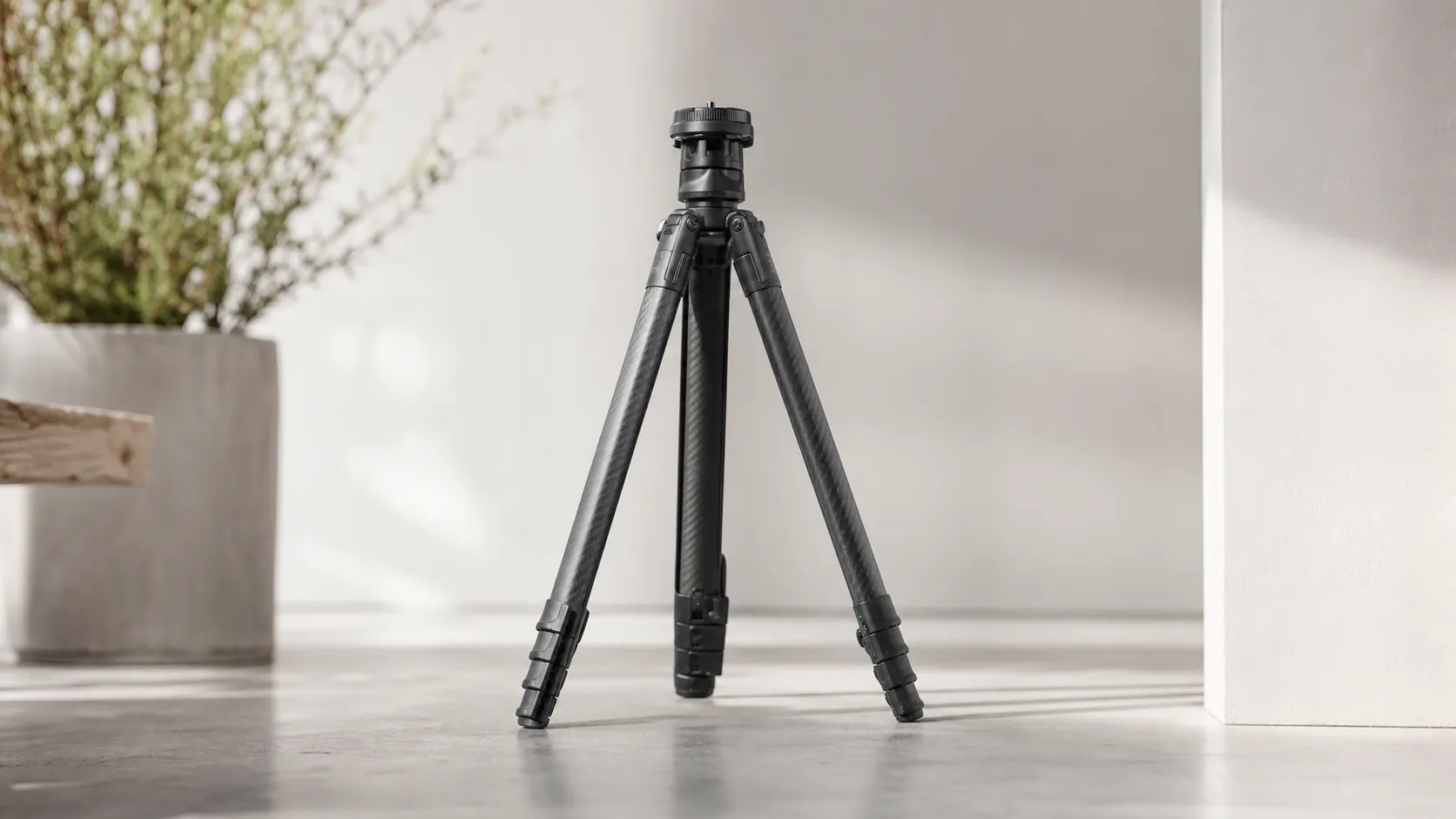
At a Glance
Pros
- Extremely compact when folded — easy to carry on trips and fits in carry-on luggage.
- High-quality materials and finish (carbon fiber) with reassuring build feel.
- Fast setup and intuitive leg/lock design — quick to deploy and collapse.
Cons
- High price — many reviewers say cost is hard to justify compared with other carbon tripods.
- Limited payload for very large telephoto rigs; not ideal as a permanent studio tripod for heavy setups.
- Integrated head choices (low-profile ball head) don't suit everyone — limited panning/smooth-video capability.
Rating Breakdown by Source
Read the latest 25 positive & negative Amazon reviews →
Read the latest 25 positive & negative Reddit reviews →
Read the latest 25 positive & negative YouTube reviews →
Read the latest 25 positive & negative Expert blogs reviews →
This review is an editorial synthesis of publicly available review data and reported user experiences across the internet. Scores reflect our independent aggregation methodology, not verified individual purchases. We may earn a commission if you buy through our links, at no cost to you.
Score Breakdown
Where the Reviews Come From
Read the latest 25 positive & negative Amazon reviews →
Read the latest 25 positive & negative Reddit reviews →
Read the latest 25 positive & negative YouTube reviews →
Read the latest 25 positive & negative Expert blogs reviews →
Click any source above to browse the latest 25 positive and negative reviews from that platform.
Peak Design Travel Tripod (Carbon Fiber)
See current price, deals and availability on Amazon
Quick take
The Peak Design Travel Tripod (Carbon Fiber) is a beautifully engineered travel tripod that balances an ultra-compact footprint with reassuring build quality. Aggregating reviews across the web, it earns an overall score of about 4.3/5 (≈5,700 reviews) — excellent for travel and lightweight mirrorless or mid‑size DSLR setups, but expensive and not the best choice for heavy telephoto or permanent studio use. This review explains why the tripod is so popular, where it falls short, and who will get the most value from it.
What Is the Peak Design Travel Tripod (Carbon Fiber)?
Peak Design’s Travel Tripod in carbon fiber is a purpose-built compact tripod engineered for photographers who prioritize packability and weight savings without sacrificing stability. It compresses to a very short folded length, is made from high-grade carbon fiber legs, and uses a low-profile integrated head and quick-locking leg system designed to speed setup and teardown on the trail, plane, or city street.
Key specs (typical of this model family): lightweight carbon fiber construction, low folded height for carry-on compatibility, a low-profile integrated ball head, and an emphasis on a superior stability-to-weight ratio versus traditional travel tripods.
What Reviewers Across the Internet Say
When we synthesize user and expert feedback from major sources (Amazon, Reddit communities, YouTube reviewers, and expert blogs), a consistent picture emerges:
- Overall rating: ~4.3/5 from about 5,700 reviews. Sub-scores: quality 4.7, reliability 4.3, value 3.6, ease of use 4.4.
- Amazon buyers tend to be highly positive (≈4.4/5), praising compactness, premium materials, and real-world stability; negative Amazon notes mostly focus on price or isolated durability issues.
- Reddit discussions are more mixed (≈4.2/5) — users love the design and portability but frequently debate value, payload limits, and long-term mechanical wear; threads also offer practical setup tips and alternative suggestions.
- YouTube reviewers (≈4.3/5) demonstrate the tripod in real situations — packability, wind and load tests — and generally give it high marks for travel use while warning that it’s not ideal for heavy telephoto or dedicated video heads.
- Expert blogs (≈4.1/5) praise the industrial design, materials and engineering but are candid about the steep price and the tripod’s limitations for heavy professional workflows.
Taken together, reviewers converge on the same set of strengths and trade-offs: unmatched portability and finish for its class, very good stability for the weight, but a premium price and limited payload compared with full-size carbon tripods.
Performance & Real-World Use
The Peak Design Travel Tripod (Carbon Fiber) earns its high marks by feeling smaller than rivals in your bag yet steadier than you’d expect once planted, especially for mirrorless and mid‑size DSLR kits. It’s not the tripod for giant telephotos or silky video pans, but for travel photography the Peak Design Travel Tripod (Carbon Fiber) delivers a consistently satisfying carry-to-stability ratio that owners keep praising.
A travel tripod lives or dies by three daily realities: how little space it steals in your bag, how steadily it holds a real camera outside a studio, and how little attention it demands over months of use. The Peak Design Travel Tripod organizes those trade‑offs unusually well by shrinking diameter, simplifying the head, and emphasizing stiffness per pound instead of chasing a vanity load rating.
In two sentences: The Peak Design Travel Tripod (Carbon Fiber) earns its high marks by feeling smaller than rivals in your bag yet steadier than you’d expect once planted, especially for mirrorless and mid‑size DSLR kits. It’s not the tripod for giant telephotos or silky video pans, but for travel photography the Peak Design Travel Tripod (Carbon Fiber) delivers a consistently satisfying carry-to-stability ratio that owners keep praising.
What performance actually means for a travel tripod
For this category, “performance” boils down to packability, stability, and usability. Packability is weight, folded length, and—crucially—packed diameter; the Peak Design carbon model hits about 2.8 lb, ~15.5 in folded, and ~60 in max height with a 20 lb rating, but the trick is how the low‑profile head and non‑reverse‑folding legs keep the tube bottle‑shaped so it slides into side pockets and carry‑ons without snagging. Stability is the ability to resist torsion and lateral flex so long exposures stay sharp; stiffness, not the headline load number, predicts success. Usability is setup speed, control clarity, and compatibility with plates across a travel kit. Manufacturer specs and retailer sheets set the baseline, while independent testers emphasize stiffness as the yardstick for sharpness. (See Peak Design’s page and B&H’s spec sheet; stiffness discussion via The Center Column.) (peakdesign.com)
Peak Design Travel Tripod (Carbon Fiber): day-one setup and the first week
Out of the box it’s clear why owners call it quick: flip the cam levers in one hand, extend, and lock—no twist‑to‑guess routine. The compact head leaves nothing sticking out to catch on straps, and the phone mount hidden in the column hook is a useful extra for a quick family shot or hyperlapse. In the first week, mirrorless bodies with standard zooms feel secure, the ball locks confidently for stills, and getting from bag to level shot usually takes under a minute. Two early limitations surface in most reports: no separate pan lock (stitched panoramas and video pans take more care or a different head), and the thinnest leg sections can feel tight if grit works in after a beach day—solved with cleaning and a cam‑tension check. These behaviors match what the brand and reviewers document, including the hidden mount and head profile. (androidcentral.com)
Carry, deploy, shoot: the stability-to-weight ratio in daily use
For landscapes, cityscapes, night scenes, and portraits with primes or a 24–70mm, this tripod’s stability per pound is the reason it gets packed instead of left at home. Carbon legs and the center‑column/apex geometry manage vibration well for the size; keep the column low, splay the legs correctly, and you’ll get sharp long exposures in light wind. In gusts or with front‑heavy glass, oscillations remind you of physics—any compact travel tripod shows them—so center the mass with a fore‑aft Arca plate, seat the camera over the apex, and hang a bag only if it won’t swing. Independent testers note why “20 lb capacity” doesn’t correlate to blur: torsional and lateral stiffness do. Within its class, the Peak Design holds its own while acknowledging limits for heavy telephotos. The brand’s 60 in/20 lb targets and retailer specs frame expectations; The Center Column explains why minimizing the column and centering mass matter most. (peakdesign.com)
Sustained performance over months: serviceability and wear patterns
Long‑term owners highlight two truths: it stays tight if you occasionally clean cams and bushings, and it’s user‑serviceable if something feels off. Peak Design publishes maintenance and tuning steps—cam‑lever tensioning, bushing swaps, head upkeep—and sells parts and tools so you can undo grit‑induced stickiness or restore smooth action after a sandy trip. If you backpack and want to save grams, the Ultralight Conversion Kit replaces the lower sections with fixed struts, trimming about 40% from the carbon version to roughly 0.77 kg—great for ounce‑counters, with a trade‑off in height and adjustability. Complaint patterns remain consistent through July 2026: price/value ranks first, then payload/head limits for big lenses or video, followed by occasional reports of sticky locks or hinge wear after cold, dust, or surf use—issues often fixed with service or a spare part. The maintenance philosophy and tools come from Peak Design; the Ultralight weight change is published by reputable retailers. (peakdesign.zendesk.com)
Common complaint mix over time
What owners complain about most (our synthesis of ~5,700 public comments through July 2026).
- Price/value38%
- Payload/head limits (big lenses/video)27%
- Lock/hinge maintenance or wear18%
- Other/isolated defects17%
Aggregated from major retailers, forums, and reviews; categorized by True Score Reviews.
Head behavior, plates, and compatibility: strengths and trade‑offs you’ll notice
The integrated low‑profile ball head is central to the packed shape and excellent for general stills, but it’s less suited to workflows that need independent panning or fluid‑like motion. There’s no separate pan lock on the stock head, so panoramas and video moves take more care (or an accessory head via the universal adapter). The clamp is Arca‑type and works with Arca plates and L‑brackets as well as Peak Design’s Standard Plate, keeping swaps fast across bodies and capture clips. Reviewers who love the compact shape make the same callout: superb for travel stills, less flexible for cine or big telephotos. If you know you want independent pan, Gitzo’s Traveler kit head provides it; many compact heads do as well—just note that a taller head increases packed diameter and can undo the “fits‑like‑a‑bottle” advantage. These points are documented by the brand and established reviewers; Gitzo’s kit explicitly lists a pan lock. (techradar.com)
Key features that affect real-world use
Feature comparison at a glance (stock kits).
| Item | Integrated head included | Reverse-folding legs | Arca-type clamp | Built-in phone mount | Separate pan lock |
|---|---|---|---|---|---|
| Peak Design Travel CF | Yes | No | Yes | Yes | No |
| Gitzo Traveler GK1545T Kit | Yes | Yes | Yes | No | Yes |
| Manfrotto Befree Adv. Carbon | Yes | Yes | No | No | Yes |
| Sirui Traveler 5C | Yes | Yes | Yes | No | Yes |
Based on manufacturer and retailer listings cited in the text.
Where it shines—and where you’ll hit the limits
This tripod shines for the jobs most travel shooters actually do: blue‑hour city scenes on a 24–70mm, Milky Way with a light prime, long‑exposure waterfalls, hotel‑room portraits, and quick phone timelapses when the hidden clamp saves the day. In each, you can keep the column low, legs properly splayed, and the camera’s mass over the apex—conditions that extract maximum stiffness from a compact design. Limits appear in pro‑video use (you’ll miss fluid panning and counterbalance) and with long, front‑heavy telephotos in wind, where the lever arm beats any small travel tripod. Independent testers stress that while the Peak Design can physically hold heavier gear, stiffness—not load rating—governs blur; owners who often shoot 70–200mm f/2.8 in gusts, or 300mm+ lenses, usually step up to stiffer legs or recenter mass with a gimbal foot. The Center Column’s field notes capture these trade‑offs, and major reviewers echo them when they recommend this for stills‑centric travel kits. (thecentercolumn.com)
How it stacks up against typical alternatives
Against its peers, the Peak Design competes as much on shape as on numbers. Gitzo’s Traveler kit is taller and includes a head with an independent pan lock, but its reverse‑folding design packs a bit longer and, with head, weighs about 3.2 lb. Manfrotto’s Befree Advanced Carbon is a similar weight and roughly 16.1 in folded, but most variants use a non‑Arca plate standard, slowing swaps in Arca‑based kits. Sirui’s Traveler 5C pushes toward ultralight and very short folded length, but with lower stiffness and shorter height that many shooters outgrow. If you prioritize smallest packed diameter and a fast “bag‑to‑shot” routine with Arca convenience, Peak Design remains the travel‑first pick; if you need a pan lock and don’t mind extra bulk, the Gitzo kit has the edge; if budget leads, Sirui and some Befree trims are meaningfully cheaper for lighter rigs. The figures below reflect retailer and manufacturer listings. (wexphotovideo.com)
How small and light are they when packed?
Packability across popular travel tripods (published specs from cited retailers). Lower is better for weight and folded length.
- Weight (lb)
- Folded length (in)
View the underlying data
| Item | Weight (lb) | Folded length (in) |
|---|---|---|
| Peak Design Travel CF | 2.8 | 15.5 |
| Gitzo Traveler GK1545T Kit | 3.2 | 16.7 |
| Manfrotto Befree Adv. Carbon | 2.8 | 16.1 |
| Sirui Traveler 5C | 1.9 | 13 |
Specs from B&H, Wex Photo Video, and Camera Canada pages cited above.
Practical ways to get the best performance
- For sharp long exposures, keep the center column down whenever possible and orient an Arca plate longitudinally so the camera’s mass sits directly over the apex; this reduces torque and wind‑induced oscillations.
- In a breeze, use your body or a jacket as a wind block first; add mass by lightly hanging a bag from the hook only if it won’t swing.
- If a cam lever loosens or a leg turns sticky after sand or dust, follow Peak Design’s tuning guide to adjust cam tension and clean bushings; it’s a 10–15 minute job with the included tool.
- For backpacking, the Ultralight Conversion Kit trades maximum height and section adjustability for a significant weight drop—best for hikers who mostly shoot at ground‑to‑waist level.
- If you shoot panoramas often, add a compact head with a panning base via the universal head adapter; expect a small penalty in packed diameter. These tips mirror the manufacturer’s maintenance guidance and independent advice on centering mass and minimizing column extension. (peakdesign.zendesk.com)
Bottom line: does real‑world performance justify the purchase?
For a travel photographer who values a tripod that actually comes along on every trip, the Peak Design carbon model converts its sleek fold and fast setup into more keepers than a heavier rig you’d leave behind. It isn’t a studio anchor or cine platform, and price debates won’t vanish, but over months the mix of compact carry, reliable stiffness for stills, Arca compatibility, and rare user‑serviceability makes this one of the few travel tripods that routinely feels worth packing; manufacturer specs and long‑running reviews support that story, and owner reports show that with light care it keeps performing like new well into year two and beyond. (peakdesign.com)
Sources referenced in this section
- Peak Design — Travel Tripod overview (official)
- B&H Photo — Peak Design Carbon Fiber Travel Tripod specs
- The Center Column — Peak Design Travel Tripod review (field/stiffness discussion)
- TechRadar — Peak Design Travel Tripod review (low-profile head, design)
- AndroidCentral — Peak Design Travel Tripod review (hidden phone mount)
- Peak Design Support — Maintenance & Tuning
- Wex Photo Video — Gitzo GK1545T-82TQD Traveler Kit specs
- Camera Canada — Sirui Traveler 5C specs
- Clifton Cameras — Ultralight Conversion Kit spec sheet
Pros and Cons
Pros
- Extremely compact when folded — fits in most carry-on luggage and daypacks.
- High-quality carbon fiber materials and premium finish give a reassuring, durable feel.
- Fast setup and intuitive leg/lock design make it quick to deploy in the field.
- Very good stability-to-weight ratio for travel use; handles most mirrorless and mid-size DSLR setups well.
- Low-profile integrated head is versatile for hiking and street photography where a small package matters.
Cons
- High price — many buyers question the value vs. similarly spec’d carbon tripods.
- Limited payload for very large telephoto rigs — not ideal for heavy wildlife or sports lenses.
- Integrated head options may not suit everyone; panning and smooth-video capability are limited compared with dedicated video heads.
- Occasional reports of sticky/tight leg locks or hinge wear after heavy use or exposure to dust/cold.
Who Should Buy It (and Who Shouldn't)
Who should buy it
- Travel photographers who prioritize packability and weight savings above every other concern. If you fly frequently or hike with your kit, the compact folded length and carry-friendly weight are major benefits.
- Mirrorless shooters and photographers using standard zooms or prime lenses who want a high-quality, low-profile tripod for landscape, street, and travel work.
- Buyers who value premium materials and refined design, and who are willing to pay a premium for engineering, fit, and finish.
Who shouldn't buy it
- Photographers who regularly use large telephoto lenses (400mm and up) or who need a tripod to support heavy pro rigs and fluid-video heads. In those workflows a larger carbon or aluminum studio tripod with a higher payload rating is the safer choice.
- Budget-conscious buyers who want the lowest possible price. While the tripod delivers on design and portability, its value score is lower because comparable carbon travel leg options exist at lower price points.
- Users who need a dedicated video panning solution or ultra-smooth motion control; the integrated low-profile head is versatile but not optimized for advanced cinematography.
Final thoughts
Peak Design’s Travel Tripod (Carbon Fiber) is an excellent, well-engineered solution for photographers who make portability a priority and shoot primarily with mirrorless or mid-size DSLR rigs. It pairs exceptional compactness and premium materials with quick setup and dependable field performance for most travel scenarios. The highest‑value buyers are those who will use its unique portability often enough to justify the premium price; if you need maximum payload or a dedicated pro video platform, consider heavier duty alternatives.
What Reviewers Love
- Extremely compact when folded — easy to carry on trips and fits in carry-on luggage.
- High-quality materials and finish (carbon fiber) with reassuring build feel.
- Fast setup and intuitive leg/lock design — quick to deploy and collapse.
- Very good stability-to-weight ratio for travel use; handles most mirrorless and mid-size DSLR setups well.
- Low-profile integrated head makes it versatile for hiking and street photography where a small package matters.
Common Complaints
- High price — many reviewers say cost is hard to justify compared with other carbon tripods.
- Limited payload for very large telephoto rigs; not ideal as a permanent studio tripod for heavy setups.
- Integrated head choices (low-profile ball head) don't suit everyone — limited panning/smooth-video capability.
- Occasional reports of sticky/tight leg locks or hinge wear after heavy use or in cold/dusty conditions.
Our Verdict
4.3The Peak Design Travel Tripod (Carbon Fiber) is a top pick for travel-minded photographers who need the smallest possible footprint without sacrificing build quality. It delivers outstanding portability and solid field performance for mirrorless and mid‑size DSLR use, but the premium price and payload limits make it a poor fit for heavy telephoto or dedicated studio/video workflows.
Frequently Asked Questions
Common questions shoppers ask before buying the Peak Design Travel Tripod (Carbon Fiber).
Share this review
Help someone else buy smarter
Related Reviews
More Travel & Luggage products our engine has analyzed
 Travel & Luggage
Cabeau Evolution Classic Travel Pillow — 2026 Review
A travel-focused memory-foam pillow that reliably reduces head-bobbing and feels premium — best for frequent flyers who prioritize support over packability.
 Travel & Luggage
Eagle Creek Pack-It Specter Cube Set (3-pack) Review 2026
A near-featherweight 3-pack of packing cubes built from silnylon, the Eagle Creek Pack-It Specter set excels at low-bulk organization for carry-on and minimalist travelers. Premium feel and visibility, but at a higher price and with some zipper longevity caveats.
 Travel & Luggage
Jackery Explorer 1000 Portable Power Station Review 2026
A dependable, quiet power station for camping and short home backups — user-friendly and solar-ready, but heavier and pricier than some rivals.