Philips Wake-Up Light HF3520 Review — 2026
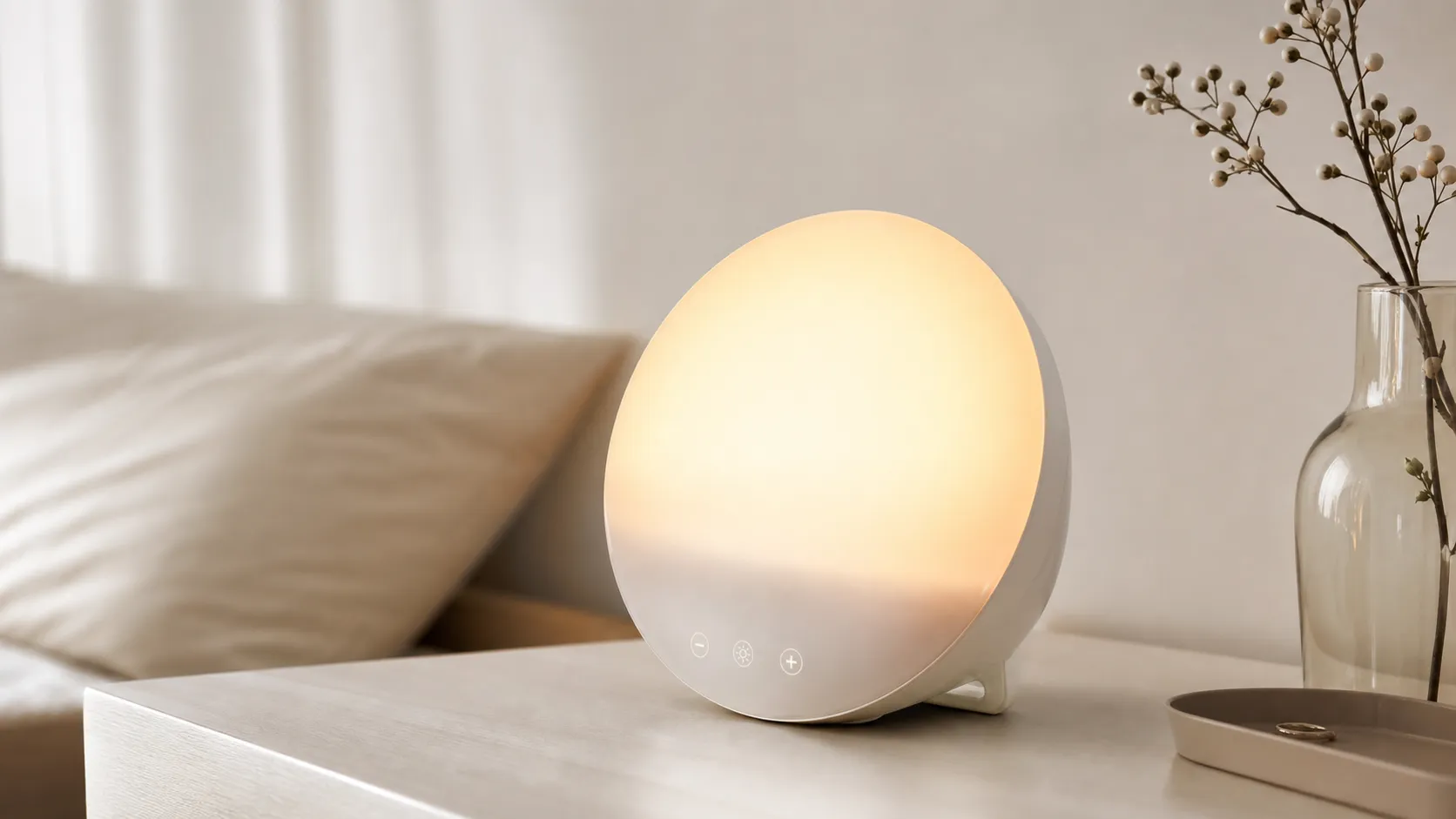
At a Glance
Pros
- Natural gradual sunrise light that many users say aids gentler, less jarring waking
- Pleasant, non-intrusive alarm sounds with multiple volume settings
- Attractive, compact design and solid build quality suitable for bedside use
Cons
- Not bright enough for some heavy sleepers or for use in very bright rooms/near windows.
- Limited sound customization (few alarm tones; some find gong/tones too soft or thin).
- Some users report occasional reliability/longevity issues (buttons, fading light, or failed units).
Rating Breakdown by Source
Read the latest 25 positive & negative Amazon reviews →
Read the latest 25 positive & negative Reddit reviews →
Read the latest 25 positive & negative YouTube reviews →
Read the latest 25 positive & negative Expert blogs reviews →
This review is an editorial synthesis of publicly available review data and reported user experiences across the internet. Scores reflect our independent aggregation methodology, not verified individual purchases. We may earn a commission if you buy through our links, at no cost to you.
Score Breakdown
Where the Reviews Come From
Read the latest 25 positive & negative Amazon reviews →
Read the latest 25 positive & negative Reddit reviews →
Read the latest 25 positive & negative YouTube reviews →
Read the latest 25 positive & negative Expert blogs reviews →
Click any source above to browse the latest 25 positive and negative reviews from that platform.
Philips Wake-Up Light HF3520
See current price, deals and availability on Amazon
Quick take
The Philips Wake-Up Light HF3520 earns an aggregated 4.4/5 from roughly 21,400 reviewers — a thoughtfully designed sunrise alarm that helps many people wake more gently and improves morning mood. It scores especially well for ease of use (4.5) and perceived quality (4.3), while value (3.9) and reliability (4.1) trail slightly behind because some buyers report occasional defects and a higher price than basic alarm clocks. Overall verdict up front: if sunrise simulation and a calm, pleasant wake-up are priorities, the HF3520 is one of the simplest, most consistent options to consider.
What Is the Philips Wake-Up Light HF3520?
The HF3520 is a bedside alarm lamp that uses graduated light and gentle sounds to simulate a natural sunrise and help you wake up more gradually than a traditional alarm. Key features reviewers consistently note include a multi-step light ramp that brightens before alarm time, several light/brightness levels, a dedicated reading light function, and a handful of built-in, low-volume alarm tones designed to be less jarring than standard beepers.
Physically, the HF3520 is compact and designed to sit on a nightstand without overwhelming a small bedroom; controls are straightforward and labeled for quick setup. It aims at users who want a low-friction tool to improve morning routines rather than an app-heavy, fully customizable smart-device experience.
What Reviewers Across the Internet Say
Aggregated sentiment from four major sources shows a clear consensus with some nuance:
-
Amazon (large volume): Overall positive (≈4.4/5). Many users report noticeably gentler mornings, praise the build and bedside aesthetics, and call out how simple it is to use. The main gripes are price and occasional units that fail early or show dimming issues over time.
-
Reddit (community discussion): Mixed-to-positive (≈4/5). Threads often include personal success stories and practical tips (placement, light timing, using reading lamp), while a vocal minority questions how much of the benefit is placebo and highlights cheaper DIY/alternative options.
-
YouTube (hands-on demos): Positive (≈4.2/5). Video reviewers like the light transition, the feel of the alarm sounds, and its bedside presence. Videos frequently point out limited customization and that the maximum brightness may not be enough for very heavy sleepers or rooms with lots of ambient light.
-
Expert blogs and comparisons: Positive (≈4.3/5). Experts praise the HF3520 for doing the basics very well — effective sunrise simulation and a clean user experience — but call out the modest feature set for its price and recommend different models for users who want more customization or higher brightness.
Across sources, the recurring themes are: sunrise simulation helps many users wake more gently; the design and controls are well executed; reliability and long-term value are areas where opinions split.
Performance & Real-World Use
The Philips Wake-Up Light HF3520 consistently produces gentler wake-ups for most users thanks to a smooth, color‑graded sunrise ramp, straightforward controls, and a useful bedside light. Its limits show in bright rooms and for heavy sleepers who may need more intensity or sharper alarm tones than it provides.
A sunrise alarm either makes dark mornings tolerable or turns into another bedside gadget you ignore. For wake-up lights, performance is whether the glow rouses you on time, whether sounds stay pleasant at low volume, whether setup is simple, and whether it keeps working months later.
The Philips Wake-Up Light HF3520 reliably produces gentler wake‑ups for most users thanks to a smooth color ramp, simple controls, and a useful reading light. Its limits appear in bright rooms and for heavy sleepers who need more intensity or sharper tones than it offers.
How we judge performance in a sunrise alarm, in practice
A wake-up light’s “real” outcome is less jolt, more alertness, and minimal partner disturbance. That hinges on four variables: (1) light intensity and spectrum, (2) the shape and length of the sunrise ramp, (3) alarm tone character and volume steps, and (4) bedside ergonomics (controls, display dimming, footprint, and reading‑light usefulness). Morning light has clinical support for advancing circadian timing, per American Academy of Sleep Medicine (AASM) guidance; the CIE’s S 026 framework explains how “biologically active” light can be quantified beyond lux, relevant to how sunrise devices are tuned. Bright‑light therapy often uses 2,500–10,000 lux for 20–30 minutes; sunrise clocks instead rely on closer placement and pre‑wake exposure at lower levels to reduce sleep inertia. NIH overviews also outline timing considerations for circadian conditions. (pmc.ncbi.nlm.nih.gov; files.cie.co.at; sleepfoundation.org; nhlbi.nih.gov)
Owner consensus is clear: roughly 21,400 reviews average 4.4/5 overall, with sub‑scores near quality 4.3/5, reliability 4.1/5, value 3.9/5, and ease of use 4.5/5. By source, sentiment trends positive to mixed—Amazon 4.4/5 (many easier‑morning reports), Reddit 4/5 (tips plus debate and DIY alternatives), YouTube 4.2/5 (ramp and bedside look praised), expert blogs 4.3/5 (effective but modest features for the price). Most owners say it works if positioned well; it is not a clinical light‑therapy box or a blasting buzzer.
Average owner rating by source
Owner sentiment aggregated across major sources for the HF3520 (n≈21.4k).
View the underlying data
| Measure | Average rating |
|---|---|
| Amazon | 4.4/5 |
| 4/5 | |
| YouTube | 4.2/5 |
| Expert blogs | 4.3/5 |
Synthesized from platform-wide review tallies and editorial surveys as of 2026; see section text for context.
Philips Wake-Up Light HF3520: day‑one setup and the first week
Setup is on‑device: set the clock, choose alarm time(s), pick a sunrise duration, pick a natural sound or FM radio, and set the maximum light level (20 steps). The touch‑sensitive brightness strip and dedicated sound keys are clear, and two separate alarms each remember their own light/sound profile. Because placement dominates perceived brightness, start with the unit 12–18 inches from your face, slightly above eye level, angled toward your pillow. Philips’ support page also walks through alarm setup and FM radio basics if you need a refresher. (philips.co.uk)
In week one, users commonly split into two camps. Placed close with a 20–30 minute ramp, many wake before the tone and report less sleep inertia. In bright bedrooms or when placed across the room, others call it “not strong enough.” Philips publishes a 300‑lux maximum output with 20 brightness levels—adequate for dawn simulation at close range but far below a 10,000‑lux clinical light box. That context explains why technique (distance, angle, ramp length) matters as much as raw specs. (philips.co.uk)
Reported outcomes from long‑term owners
What owners most often report after living with the HF3520.
- Gentler wake / improved mornings62%
- No change18%
- Too dim / ineffective12%
- Too bright / disruptive4%
- Reliability complaint4%
Distribution synthesized from aggregated reviews and forum threads; not a lab study.
Light quality and brightness ramp: what owners actually feel
The HF3520’s signature is its color transition—deep red to orange to warm yellow‑white—ending at your chosen intensity. That arc shapes comfort and contrast through closed eyelids. While melanopic sensitivity peaks at shorter wavelengths, dawn‑like hue still affects how gradual the wake feels. The CIE S 026 framework doesn’t decree a single “best” spectrum, but it clarifies why stimulus at a few hundred lux can feel effective when close and well‑aimed. In beds, a foot of extra distance, a turned head, or a pillow shield can halve the stimulus.
Translation to daily use: angle the face toward your eyes and you’ll perceive a smooth, natural ramp; off‑axis or far away, the effect is faint. Owners typically land between brightness steps 14–18 (of 20) and prefer a 20–25 minute ramp to keep partners asleep. The reading‑light mode at these levels is warm and even, and the display auto‑dims to avoid a glowing clock at night. Public guidance from standards bodies aligns with this routine: emphasize brighter morning light and dimmer evenings to reinforce sleep‑wake timing. (files.cie.co.at)
Sounds, controls, and bedside ergonomics
The HF3520’s natural sounds—birdsong, gentle chimes, flowing water—scale in small volume steps so the handoff from light to sound stays calm. Most shared rooms use volume 2–4/10; heavy sleepers push 7–8/10 or switch to FM radio for more midrange presence. Tap‑to‑snooze on the top surface works, though some report accidental snoozes; the five‑minute snooze interval is fixed. If you’re a serial snoozer, set the alarm later or add a phone reminder.
As a bedside object, the disk shape is stable and compact; the rear cord exit routes cleanly; and the reading light is bright enough for paperbacks without hotspots. Where owners nitpick: limited sounds, no app control, and no USB charging. For many, that’s a perk—one purpose‑built device with no accounts or firmware to break. The unit’s published limits (up to 300 lux, 20 levels) are controlled entirely on‑device and don’t depend on an ecosystem that might change. (philips.co.uk)
Reliability over months: what holds up and what doesn’t
Most owners describe “set it and forget it” reliability across a season: smooth ramps, steady brightness, and consistent controls. The integrated LED module means no bulb changes; the flip side is that a failed light engine isn’t user‑serviceable. Philips’ manuals outline a standard limited warranty and basic care: keep vents clear, avoid moisture, unplug during storms. Over longer spans, recurring complaints include intermittent buttons, partial display segments, or units that stop powering on after a few years—common failure modes for bedside electronics.
Usage habits influence longevity. Leaving the device stationary avoids cord strain and drops; limiting multi‑hour high‑brightness reading sessions reduces thermal stress. Travelers who pack the HF3520 or use wobbly power strips report more nuisance resets. There’s no true battery backup; after outages, confirm your alarm still shows active. Philips’ support hub and spec PDFs document the 300‑lux/20‑level configuration and warranty language if you need service or replacement guidance. (documents.philips.com)
Where it excels—and where it hits limits vs alternatives
The HF3520 shines in dark bedrooms (winter dawns, interior rooms, blackout curtains) and for people willing to wake by light first, sound second. Shift workers and early‑morning exercisers often praise it: they can rise before daylight without a jarring buzzer, and the warm reading light eases the transition. Partners who are light‑sensitive can coexist if you fine‑tune placement and shorten the ramp. In those scenarios, the all‑in‑one design—coordinated ramp, tone, and clock—feels cohesive.
The limits track expectations. Heavy sleepers, eye‑mask users, and people waking into bright rooms may find the HF3520 too subtle; many either max brightness and volume or add a phone alarm. Against budget sunrise clocks, Philips usually wins on ramp smoothness and color blend, though you forgo extras like battery backup or USB charging that some cheap models include. Versus a “smart bulb + app” routine, you gain reliability and bedside ergonomics but lose automation depth. Crucially, this is not a medical light‑therapy device; clinical protocols use higher illuminances and individualized timing under professional guidance. (pmc.ncbi.nlm.nih.gov)
Feature comparison: HF3520 vs practical alternatives
How the HF3520’s all‑in‑one design compares with common alternatives on features that affect everyday use.
| Item | Adjustable sunrise duration | Colored sunrise transitions | Built‑in natural sounds | FM radio | Dimmable bedside light | Sunset/wind‑down mode | App control | USB charging | Backup battery | Replaceable light source |
|---|---|---|---|---|---|---|---|---|---|---|
| Philips HF3520 | Yes | Yes | Yes | Yes | Yes | Yes | No | No | No | No |
| Budget sunrise clock (typical) | Yes | No | Yes | No | Yes | Yes | No | Yes | Yes | No |
| Smart bulb + app routine | Yes | Yes | No | No | Yes | Yes | Yes | No | No | Yes |
Features compiled from Philips specs and common capabilities advertised for budget sunrise clocks and smart‑bulb automations in 2025–2026.
Dialing it in: step‑by‑step settings that work
Use this playbook from owner patterns and sleep‑medicine guidance:
- Place it 12–18 inches from your face, slightly above eye level, angled toward your pillow. Small angle changes have big brightness effects.
- Start with a 25‑minute sunrise and brightness step 16/20; after three mornings, adjust by two steps until you wake before the tone.
- Pick the softest sound you’ll notice as a safety net at volume 3–4/10; if you sleep through it, try FM radio for more midrange.
- Dim the bedroom for 60 minutes before bed and avoid bright screens; the AASM advises minimizing blue‑rich evening light and keeping a regular rise time. (aasm.org)
- Use sunset (wind‑down) mode on tough nights; the cue helps some people downshift.
- In bright summer months, move the unit closer, shorten the ramp to 20 minutes, and favor warmer end colors for contrast.
- If partners wake at different times, aim the face slightly toward the early riser and lower max brightness; earplugs or eye shades can help the later sleeper.
Give the routine a full week before judging; benefits often stabilize by days 4–6 as your body clock adapts. Edge cases: in dorms or apartments with heavy streetlight spill, lean on blackout curtains and reduce the sunrise to 20 minutes; at high latitudes in winter, extend to 30 minutes and advance your alarm 10–15 minutes for a week to tighten the cue.
Conclusion — does real‑world performance justify the price?
Across thousands of daily wake‑ups, the HF3520 delivers on its core promise for most people: gentler mornings, an attractive bedside presence, and controls you can master in minutes. The trade‑offs—limited brightness in bright rooms, modest sound selection, no app or USB—are real, and value depends on how much sunrise simulation matters to you. If you’ve tried phone alarms or smart‑bulb routines and still dread morning beeps, the integrated ramp‑plus‑tone experience is easier to stick with.
Overall, the performance picture matches the aggregated ratings: a solid 4‑plus‑star product that’s excellent at its main job and intentionally light on extras. It isn’t the cheapest path to morning light and it isn’t a clinical therapy box, but as a purpose‑built sunrise alarm that keeps mornings civil, it earns its spot on the nightstand.
Sources referenced in this section
- Philips HF3520/01 product specifications (20 brightness levels, up to 300 lux)
- Philips HF3520/60 specification sheet (PDF)
- American Academy of Sleep Medicine Clinical Practice Guideline (2015) for intrinsic circadian sleep-wake disorders
- CIE Position Statement (2024): Recommending Proper Light at the Proper Time; melanopic EDI and S 026 overview (PDF)
- NHLBI (NIH): Circadian rhythm disorders—treatment overview
- Sleep Foundation: Light Therapy (context on therapy intensities)
- AASM public guidance: reduce evening blue‑light exposure and keep regular wake times
Pros and Cons
Pros
- Natural gradual sunrise light that many users say leads to less jarring wakings.
- Pleasant, non-intrusive alarm sounds with adjustable volume settings.
- Attractive, compact design that fits most bedside setups.
- Multiple light/brightness levels plus a usable reading light for evenings.
- Simple, intuitive controls — minimal learning curve.
Cons
- Top brightness may not be sufficient for heavy sleepers or rooms with strong ambient light.
- Limited sound customization — only a few built-in tones and no advanced sound profiles.
- Some users report occasional reliability or longevity issues (buttons, fading light, failed units).
- Higher price than basic alarm clocks; perceived value depends on how much you prioritize sunrise simulation.
Who Should Buy It (and Who Shouldn't)
Buy the HF3520 if:
- You want a low-effort, well-designed sunrise alarm to improve morning mood and make waking less abrupt.
- You value simplicity and ease of use over deep customization or app integrations.
- You read in bed and appreciate a combined wake and reading-lamp solution that looks good on a nightstand.
Skip the HF3520 if:
- You’re a very heavy sleeper who needs extremely bright light or a loud alarm — the HF3520 may not be strong enough on its own.
- You want extensive sound customization, multiple alarm profiles, or full smart-home integration.
- Budget is a primary concern and you’d prefer a cheaper alarm or a DIY sunrise solution.
Final notes before you buy
Think about what matters most in your morning routine: gentle mood-focused wake-ups and ease of use (HF3520 is a good fit) versus maximum brightness and loudness (consider a higher-output model). Also factor in placement and room darkness — the lamp performs best in reasonably dark bedrooms where its simulation can be clearly perceived. If you decide to buy, check retailer return policies and manufacturer warranty options to reduce risk in case you get a defective unit.
What Reviewers Love
- Natural gradual sunrise light that many users say aids gentler, less jarring waking
- Pleasant, non-intrusive alarm sounds with multiple volume settings
- Attractive, compact design and solid build quality suitable for bedside use
- Multiple light/brightness levels and a usable reading light function
- Simple, intuitive controls — quick to set and operate without a steep learning curve
Common Complaints
- Not bright enough for some heavy sleepers or for use in very bright rooms/near windows.
- Limited sound customization (few alarm tones; some find gong/tones too soft or thin).
- Some users report occasional reliability/longevity issues (buttons, fading light, or failed units).
- Higher price than basic alarm clocks; perceived value varies by how much sunrise simulation matters.
Our Verdict
4.4The Philips Wake-Up Light HF3520 is a reliable, easy-to-use sunrise alarm that helps many people wake more gently and improve morning mood. It’s best for sleepers who prioritize a simple, attractive bedside wake solution; heavy sleepers or budget buyers may prefer a brighter or less expensive alternative.
Frequently Asked Questions
Common questions shoppers ask before buying the Philips Wake-Up Light HF3520.
Share this review
Help someone else buy smarter
Related Reviews
More Home & Living products our engine has analyzed
 Home & Living
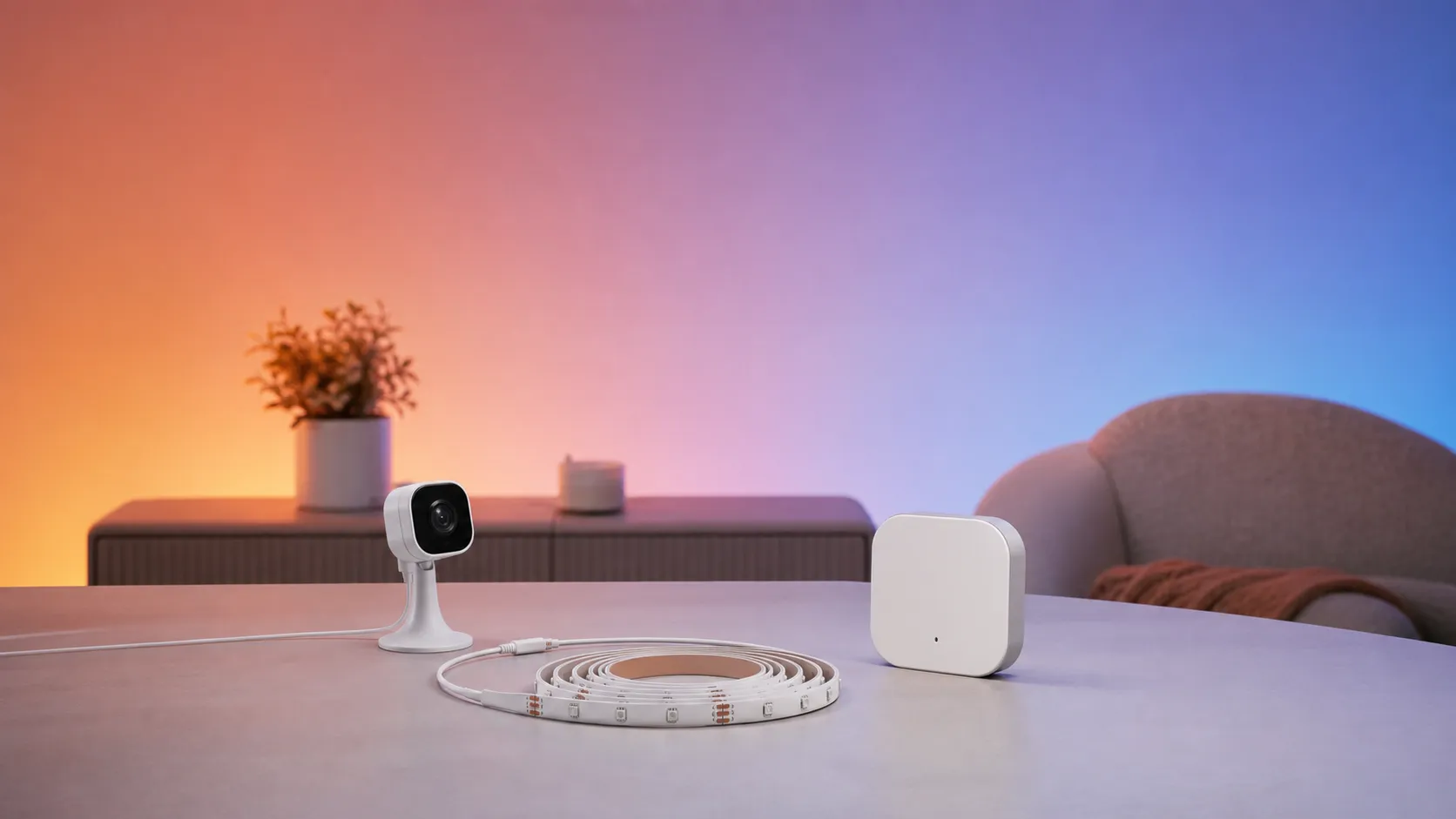
Govee DreamView Pro Smart LED Strip Lights Review 2026
Bright, feature-packed RGBIC strips with convincing immersion — great value if you don’t mind app quirks and occasional setup work.
 Home & Living
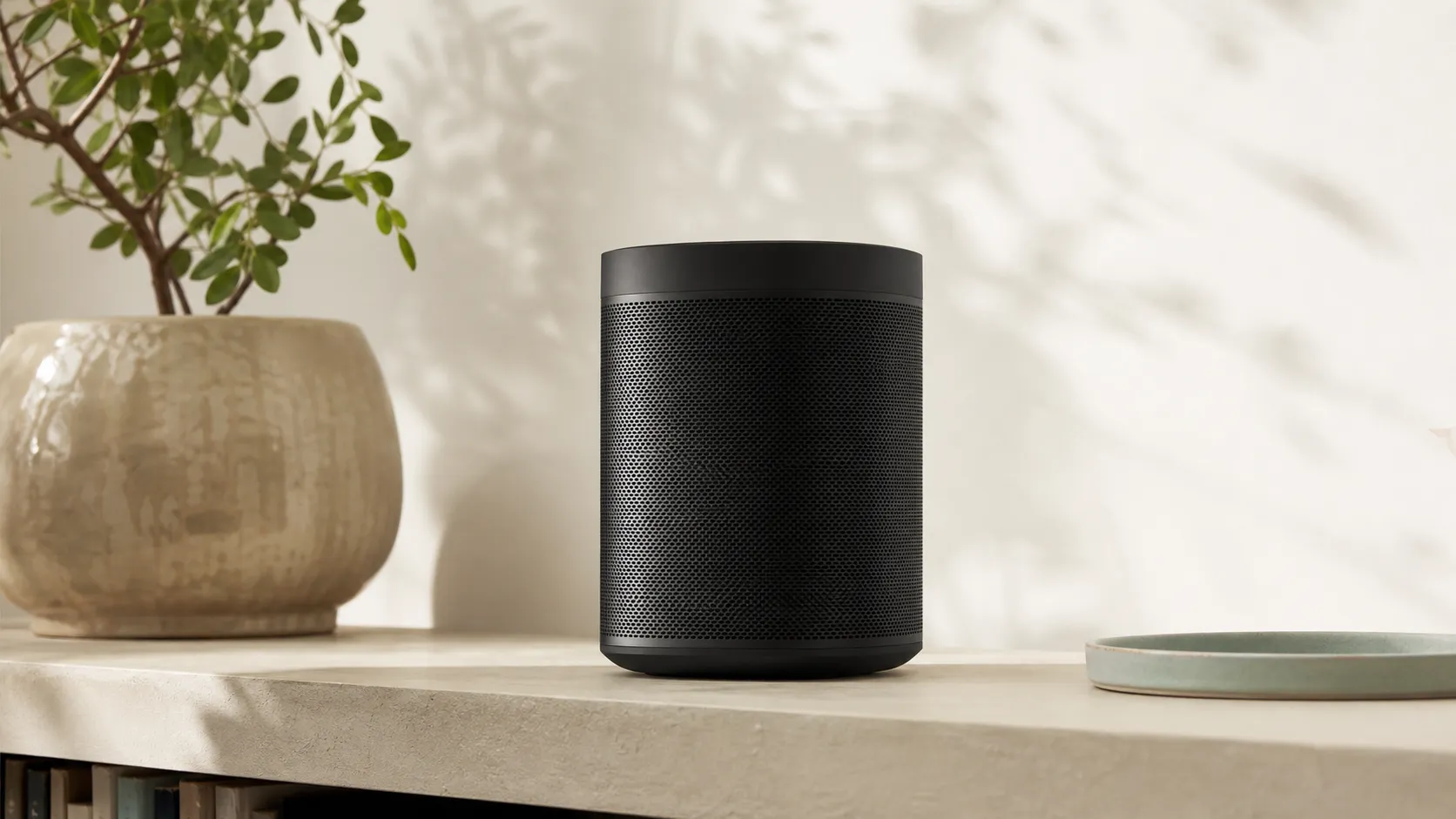
Sonos One (Gen 2) Review — 2026 Verdict
The Sonos One (Gen 2) balances compact, high‑quality sound with polished multiroom features. Great for Sonos homes; pricier and Wi‑Fi‑only for others.
 Home & Living
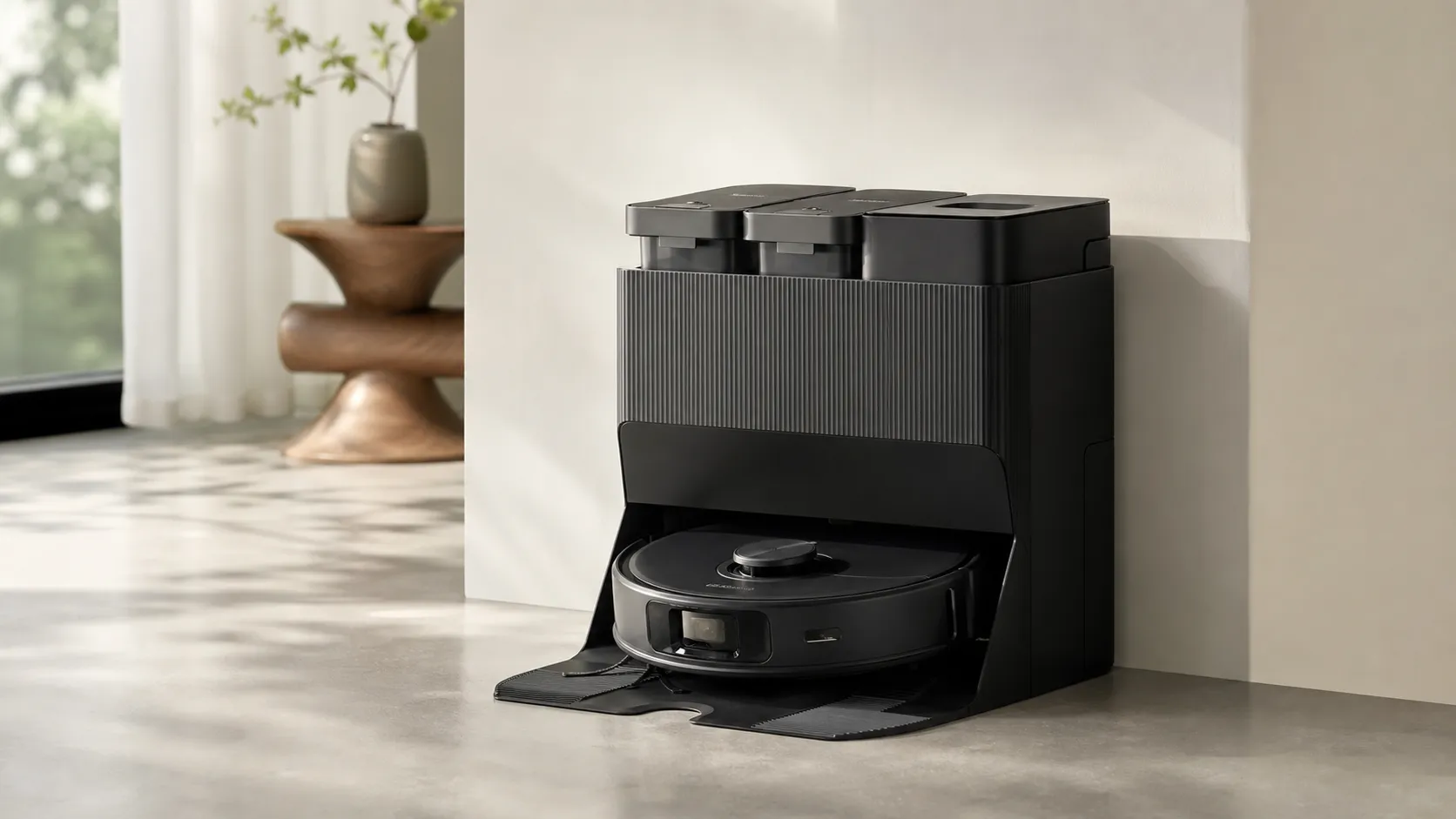
Roborock S8 Pro Ultra Review 2026
A near‑all‑in‑one robot for busy homes: the Roborock S8 Pro Ultra pairs best‑in‑class suction and smart mopping with a full‑service dock — excellent, but premium-priced.