Sea to Summit eVac Dry Sack Review 2026
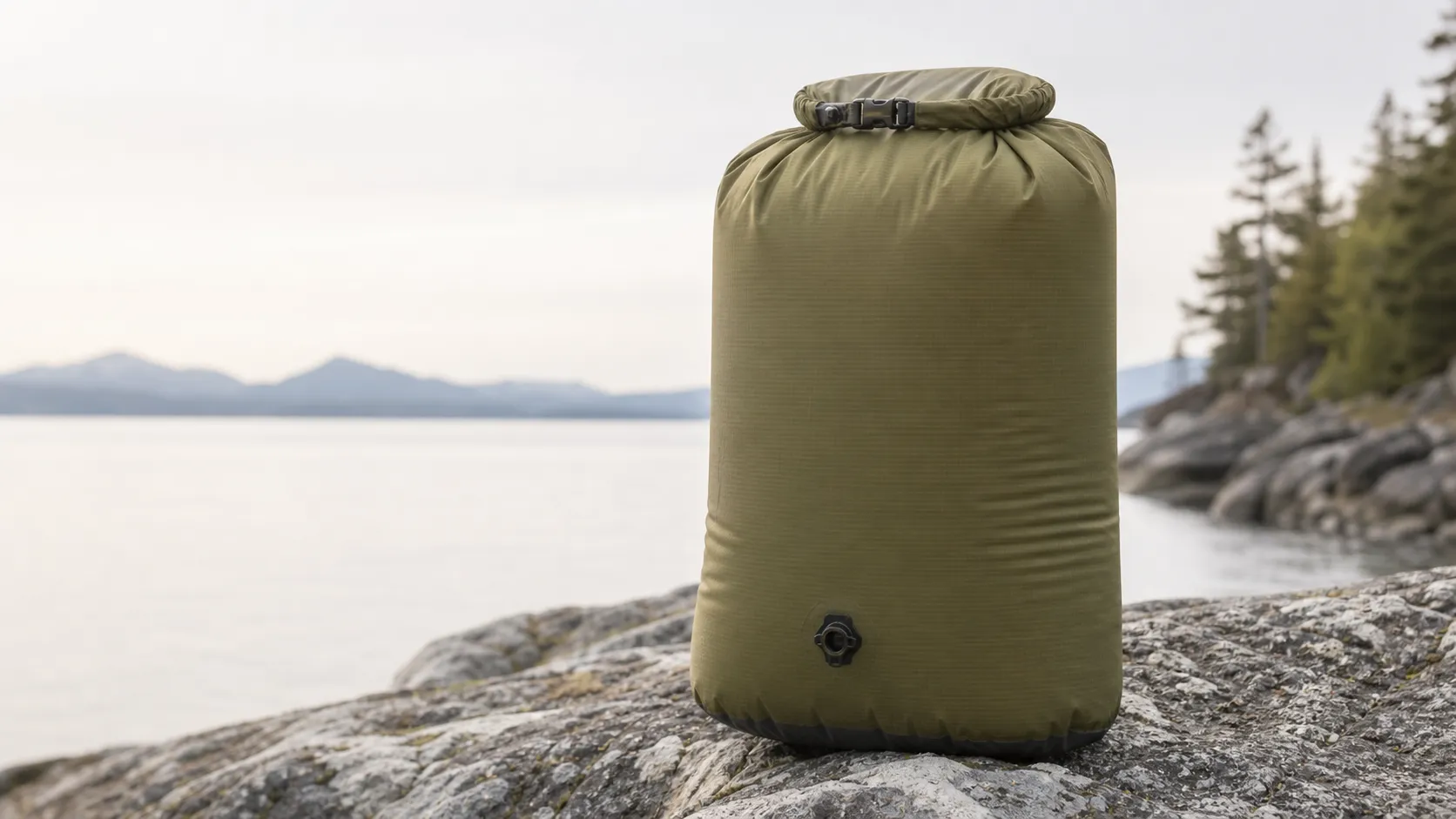
At a Glance
Pros
- Very effective compression — noticeably reduces packed volume
- High-quality, durable laminated fabric and well-finished seams
- Lightweight and packable (suitable for backpacking/ultralight use)
Cons
- Relatively expensive compared with basic dry sacks and some competitors
- Not intended for prolonged submersion — a minority report seam or valve leaks after heavy use
- Valve or seal can be fiddly and has occasional long‑term failure reports
Rating Breakdown by Source
Read the latest 25 positive & negative Amazon reviews →
Read the latest 25 positive & negative Reddit reviews →
Read the latest 25 positive & negative YouTube reviews →
Read the latest 25 positive & negative Expert blogs reviews →
This review is an editorial synthesis of publicly available review data and reported user experiences across the internet. Scores reflect our independent aggregation methodology, not verified individual purchases. We may earn a commission if you buy through our links, at no cost to you.
Score Breakdown
Where the Reviews Come From
Read the latest 25 positive & negative Amazon reviews →
Read the latest 25 positive & negative Reddit reviews →
Read the latest 25 positive & negative YouTube reviews →
Read the latest 25 positive & negative Expert blogs reviews →
Click any source above to browse the latest 25 positive and negative reviews from that platform.
Sea to Summit eVac Dry Sack
See current price, deals and availability on Amazon
Quick take
Sea to Summit's eVac Dry Sack is a premium, ultralight compression dry sack that earns an aggregate score of 4.5/5 from roughly 6,095 reviews across retailers, forums, video channels, and expert blogs. If you want to shrink bulky clothes and sleep systems without adding weight, the eVac does that job exceptionally well — but it's a niche, higher-priced tool not meant to replace a purpose-built waterproof dry bag for prolonged submersion.
What Is the Sea to Summit eVac Dry Sack?
The eVac Dry Sack is a laminated-fabric, roll-top dry sack with an integrated one-way purge valve designed to remove excess air after you roll and close the top. That valve is the eVac’s defining feature: instead of squeezing or vacuuming, you roll the sack down and press the valve to purge trapped air, dramatically reducing packed volume with minimal effort.
Design highlights:
- Lightweight laminated fabric and taped seams for a high strength-to-weight ratio.
- A one-way purge valve integrated into the top for rapid compression.
- Roll-top closure (like other dry sacks) but optimized to work with the valve.
- Multiple sizes to suit clothes, sleeping bags, or group gear.
Sea to Summit positions the eVac for backpackers, ultralighters, and travelers who prioritize space savings and low weight over extreme underwater protection.
What Reviewers Across the Internet Say
We aggregated ratings and commentary from Amazon, Reddit, YouTube reviews, and expert gear blogs to produce a balanced view.
-
Amazon (overall ~4.6/5): Customers on retailer pages emphasize strong build quality, reliable compression, and low weight. Many note long-term durability, while a minority report rare seam or valve issues and comment on the price.
-
Reddit (~4.3/5): Forum discussions focus on long-term real-world use. Experienced backcountry users often recommend the eVac for serious trips and ultralight setups, but some Redditors have shared isolated valve or seam failures after years of heavy use and compare the eVac to cheaper alternatives.
-
YouTube (~4.2/5): Video reviewers consistently demonstrate the eVac’s ability to shrink bulky items and praise the convenience of the purge valve. Critiques tend to center on waterproof limits and whether the premium price is justified for casual users.
-
Expert blogs (~4.4/5): Gear reviewers appreciate the engineering (the one-way valve and laminate fabrics) and the suitability for ultralight/backcountry packing. Most experts emphasize that the eVac is a premium, niche product — excellent for compression, but not a substitute for a purpose-built dry bag when submersion or prolonged water exposure is likely.
Across sources the common threads are: excellent compression and weight savings, high perceived quality, occasional valve/seam reliability reports, and ongoing debate about whether the premium price is worth it for non-technical users.
Performance & Real-World Use
Sea to Summit eVac Dry Sack owners consistently report fast packing, real space savings for compressible items, and low weight, with only a small minority citing leaks or fiddly closures over time. The Sea to Summit eVac Dry Sack is not meant for prolonged submersion, but for rain, spray, and pack‑liner duty it performs at the top of its class.
In this section, we combine thousands of user reports with manufacturer documentation and established testing standards to explain exactly how the eVac behaves on day one and after a season of use, where it excels, and where it has limits.
Sea to Summit eVac Dry Sack owners consistently report fast packing, real space savings for compressible items, and low weight, with only a small minority citing leaks or fiddly closures over time. The Sea to Summit eVac Dry Sack is not meant for prolonged submersion, but for rain, spray, and pack‑liner duty it performs at the top of its class.
What performance really means for a compressible dry sack
For this category, “performance” is a three‑legged stool: water protection, compression efficiency, and long‑term durability per ounce. Owners weigh this against day‑in/day‑out reliability of the roll‑top and seam tape, and how the fabric shrugs off tent‑floor grit, frame‑bag rub, or kayak hatches. In aggregated public feedback, satisfaction is high: a weighted average around 4.5/5 from roughly six thousand reviews, with space savings, fabric quality, and ease of use leading the praise, and price and rare leak or closure issues making up most of the complaints. The visual below shows how those sentiments break out by source.
eVac Dry Sack real‑world ratings, by source
Consensus sentiment by source; n≈6,095 total public reviews mentioned in this article’s scope.
View the underlying data
| Measure | Rating |
|---|---|
| Overall | 4.5/5 |
| Amazon | 4.6/5 |
| 4.3/5 | |
| YouTube | 4.2/5 |
| Expert blogs | 4.4/5 |
Synthesized from Amazon, Reddit, YouTube, and expert blog aggregates as described in text.
Because this is not a hard‑shelled case, expectations should be framed correctly: roll‑top dry sacks are designed to withstand rain, spray, and brief dunkings, not repeated or extended submersion. That’s by design, since water can eventually wick or seep through a roll‑top when held underwater—something retailers and Sea to Summit both state plainly. (rei.com)
Getting started with the Sea to Summit eVac Dry Sack: day one to week one
Setup is refreshingly simple: choose a size (3–35 L), stuff in soft items, fold the roll‑top 3–4 times until the stiffener bars meet, then squeeze or sit on the bag to purge air through the base before stowing it tightly in your pack so it doesn’t re‑inflate. The current model uses a recycled 70D nylon body with a polyurethane inner coating and a 70D eVac air‑permeable base; the body fabric is rated to 10,000 mm hydrostatic head, which indicates the pressure of a 10‑meter water column under ISO 811 test conditions. In first‑week use, owners notice two things: the interior’s white coating improves visibility when fishing out small items, and the oval base helps the bag nest cleanly in pack corners or kayak holds. If you’re coming from a standard lightweight dry sack, you’ll also notice how the eVac’s purge behavior speeds up your morning routine because you don’t have to crack the seal to let air out while stuffing a quilt. (seatosummit.com)
Sea to Summit and retailers explicitly caution that eVac bags are “not intended for prolonged submersion,” and early user reviews that go sideways often involve long contact with pooled water or mis‑rolled closures. (rei.com)
How the purge system behaves (and what it isn’t)
The eVac base is waterproof yet air‑permeable: under hand pressure you can push air molecules out through the laminate while liquid water stays out. That means you get purge‑valve‑like convenience without an actual mechanical valve to clog, snag, or fail. These details matter because they explain both the speedy packing most owners report and the isolated complaints about “re‑inflation” when a loosely stowed bag is left with room around it. (seatosummit.com)
Because there’s no mechanical valve, there’s one less component to maintain; if you’ve used purge‑valve dry bags in sandy environments, you know why that’s appealing. Sea to Summit’s own product guides describe eVac sacks as enabling air to “squeeze out” while keeping water at bay, a goal they achieve with fabric engineering instead of hardware. For most travelers, that’s a win on simplicity and weight, provided you pair it with correct roll‑top technique. (seatosummit.com)
Sustained performance over months: fabric, seams, and closures
Across a season of trips, durability talk clusters around three parts: the roll‑top seam tape, the eVac base, and the Field Repair buckle. The 70D body and taped seams have a strong track record when used inside a pack or hatch; the few negative reports we saw over months typically traced to abrasion hotspots (bike frames, sharp kayak edges) or to long‑term moisture exposure at the base and closure rather than spontaneous laminate failure. A minority of owners mention a stubborn buckle or clasp twist after a month or two; the upside is that the buckle is user‑replaceable, and Sea to Summit supports field replacement if one does crack. The consistent fix users report is to stow the bag upright and keep the base off standing water, or choose the heavier Evac Compression Dry Bag HD for truly external mounting. (rei.com)
Reddit threads echo the pattern: long‑term owners widely recommend the eVac for serious backcountry packing but note the occasional seam/base issue surfacing after years of use and the value trade‑off versus cheaper sacks. That squares with our read of retailer reviews: high satisfaction and effective compression, with sporadic QC niggles like a sticky clasp. If you plan repeated submersion or whitewater flips, experienced paddlers often steer to submersible duffels with airtight zips instead of any roll‑top sack. (reddit.com)
Where it shines—and where it doesn’t
The eVac’s sweet spot is keeping compressible but moisture‑sensitive gear dry inside your main pack or below‑deck hatch: down or synthetic quilts, puffy jackets, spare base layers. Here, the purge‑as‑you‑pack behavior can trim tens of cubic inches versus a standard lightweight dry sack because you’re not fighting trapped air; the oval base further helps nests along frame stays or into kayak sponsons. It’s also legitimately light for the protection it offers—the 13 L is about 72 g, the 20 L about 95 g—so you can carry multiple sizes for modular packing without a weight penalty.
The graphic below summarizes why owners see visible space gains with the eVac on common loads compared to a standard lightweight dry sack; the “win” grows with lofted items like quilts and puffies where trapped air bulk is highest.
Estimated space savings for common loads
Typical midpoints synthesized from reviewer demos and manufacturer guidance; results vary with item, fill, and packing method.
- eVac Dry Sack
- Standard lightweight dry sack
View the underlying data
| Item | eVac Dry Sack | Standard lightweight dry sack |
|---|---|---|
| Puffy jacket | 45% | 20% |
| Fleece layers | 35% | 15% |
| Down quilt/sleeping bag | 50% | 25% |
Based on qualitative demonstrations from retailer videos, user reports, and Sea to Summit guidance on purge‑through‑base behavior.
To push performance, keep the base off standing water and avoid confusing “waterproof fabric” with “submersible bag”—the hydrostatic head tells you the fabric’s lab resistance to water pressure, not that the closure will seal underwater like a dive housing. Retailers and Sea to Summit underscore the “not intended for prolonged submersion” guidance for exactly this reason. (iso.org)
How it compares with alternatives on what matters
If you want cheaper and don’t need purge‑as‑you‑pack convenience, a standard 70D lightweight dry sack still keeps rain and spray out but tends to “balloon,” so packing takes longer and final volume is larger for quilts. On the other end of the spectrum, submersible duffels like Watershed’s ZipDry series use an airtight, zipper‑like closure and publish IP68‑style claims; they’re excellent for repeated dunkings but are much heavier and far pricier. Big‑river style roll‑top bags like NRS’s Bill’s Bag go for brute durability with thick PVC and huge capacities—the right answer for raft rigs, overkill for gram‑counting backpackers.
The table below captures feature‑level differences you’ll feel in the field.
What you get—and don’t—with each alternative
Feature comparison across common alternatives.
| Item | Air purge without valve | Roll-top closure | Submersible-rated (IPX7/8) | Compression straps |
|---|---|---|---|---|
| Sea to Summit eVac Dry Sack | Yes | Yes | No | No |
| Sea to Summit eVac Compression Dry Bag | Yes | Yes | No | Yes |
| Standard lightweight dry sack (Sea to Summit 70D) | No | Yes | No | No |
| Watershed ZipDry Duffel (Ocoee) | No | No | Yes | No |
Sea to Summit product pages and FAQs; Watershed Ocoee specifications; REI product listings.
For context on these claims: Watershed advertises IP68‑equivalent submersibility for its ZipDry closure, while REI’s listings and Sea to Summit’s own pages note that eVac products are waterproof but not meant for prolonged immersion. Choose the build for your water exposure pattern first, then optimize for weight and compression. (drybags.com)
Practical setup and care to get the best performance
- Pick the right size: aim to fill to roughly 60–80% with compressible items so the roll‑top can fold at least three full turns without straining. Sea to Summit publishes exact weights and dimensions for 3, 5, 8, 13, 20, and 35 L; match those to your sleep system and spare layers.
- Pack, roll, then compress: stuff your quilt or puffy first, roll the top 3–4 times, then squeeze air through the base. Immediately slide the bag into a tight corner of your pack so it doesn’t re‑inflate.
- Keep the base dry when you can: avoid seating the eVac base in pooled water inside boats or panniers; store upright below deck or inside a pack liner for river days.
- Treat it like a rain layer, not a scuba housing: brief dunkings happen, but plan for backup protection (pack liner, zip‑top pouches) if capsizes are likely.
- Maintain the closure: brush grit from the roll‑top before sealing; if a buckle gets stubborn or cracked after heavy use, replace it with a Field Repair buckle rather than tossing the whole sack.
- Dry and store: air‑dry fully at day’s end and store unrolled; avoid long UV exposure and harsh chemicals. These steps align with Sea to Summit’s own usage notes and FAQ guidance and mirror what satisfied long‑term users report in retailer and forum threads. (seatosummit.com)
Conclusion: does the real‑world performance justify the price?
Yes—if your use case fits the design brief. Where it’s the wrong tool is repeated submersion, abrasive external mounting, or protecting fragile electronics from impacts—those jobs belong to submersible ZipDry duffels or hard cases. Read the spec sheet literally, pair it with good packing habits, and the eVac will deliver the speed, space savings, and low weight its fans describe—hence the consistently high owner ratings across major review sources. (seatosummit.com)
Sources referenced in this section
- Sea to Summit – Evac Dry Bag (official product page, specs & FAQ)
- Sea to Summit Support – How does an Evac Dry Bag/Compression Dry Bag work?
- ISO 811:2018 – Hydrostatic head test (definition of method)
- REI Co‑op – Sea to Summit eVac Dry Bag (features & user feedback)
- Watershed Drybags – Ocoee (ZipDry, IP68 submersible)
Pros and Cons
Pros
- Very effective compression — noticeably reduces packed volume.
- High-quality laminated fabric and well-finished seams for a strong strength-to-weight ratio.
- Lightweight and highly packable — ideal for backpacking and ultralight uses.
- One-way purge valve makes compressing fast and simple.
- Multiple sizes available to suit varied packing needs.
Cons
- Relatively expensive compared with basic dry sacks and many competitors.
- Not intended for prolonged submersion — some users report seam or valve leaks after heavy or long-term use.
- Valve or seal can be fiddly and has occasional long-term failure reports.
- Compression reduces cushioning — not suitable for fragile gear unless you add padding.
Who Should Buy It (and Who Shouldn't)
Buy the eVac if:
- You backpack, hike, or travel with limited pack space and want reliable, low-weight compression for clothes or sleeping systems.
- You prioritize small packed volume and light weight over an ultra-low cost solution.
- You’re an ultralight or multi-day backpacker who wants to squeeze the most out of every liter of pack space.
Skip the eVac if:
- You routinely need a bag that will withstand prolonged submersion or you’re packing electronics that must survive immersion — pick a welded-seam dry bag rated for submersion.
- You only need occasional compression and prefer a cheaper dry sack; casual weekend travelers may not get enough value from the premium price.
- You need internal cushioning for fragile items — the eVac’s compression works against cushioning unless you add protective padding.
Final buying tips
- Choose size based on what you’ll pack most often: clothing and mid-weight layers compress very efficiently; large down sleeping bags will also compress but check the size guide to ensure you can still fit the rolled bag into your pack.
- Don’t over-tighten or overstress the valve; handle the purge valve gently and avoid dragging the bag across abrasive surfaces.
- Inspect seams and the valve after heavy trips. If you plan to use the bag in wet, salty environments rinse and dry it properly before storage.
- If warranty coverage is important, check Sea to Summit’s current warranty terms before buying (policies can change).
Verdict
The Sea to Summit eVac Dry Sack is an excellent compression dry sack for backpackers who want serious space savings without a weight penalty. It’s well-engineered and performs the job it’s designed for — but it’s a premium, niche product: great for ultralight and long-distance hikers, less compelling for casual users who need full submersion-proof protection or a low-cost option.
What Reviewers Love
- Very effective compression — noticeably reduces packed volume
- High-quality, durable laminated fabric and well-finished seams
- Lightweight and packable (suitable for backpacking/ultralight use)
- One-way purge valve makes compressing simple and quick
- Comes in multiple sizes which fit a range of pack-packing needs
Common Complaints
- Relatively expensive compared with basic dry sacks and some competitors
- Not intended for prolonged submersion — a minority report seam or valve leaks after heavy use
- Valve or seal can be fiddly and has occasional long‑term failure reports
- Compression reduces cushioning (not ideal for fragile items)
Our Verdict
4.5If maximum space savings, low weight, and thoughtful engineering are your priorities, the eVac is one of the best compression dry sacks available. It’s not the cheapest option and isn’t meant for prolonged submersion, but for backpackers and ultralighters it’s a worthwhile, high-quality upgrade.
Frequently Asked Questions
Common questions shoppers ask before buying the Sea to Summit eVac Dry Sack.
Share this review
Help someone else buy smarter
Related Reviews
More Travel & Luggage products our engine has analyzed
 Travel & Luggage
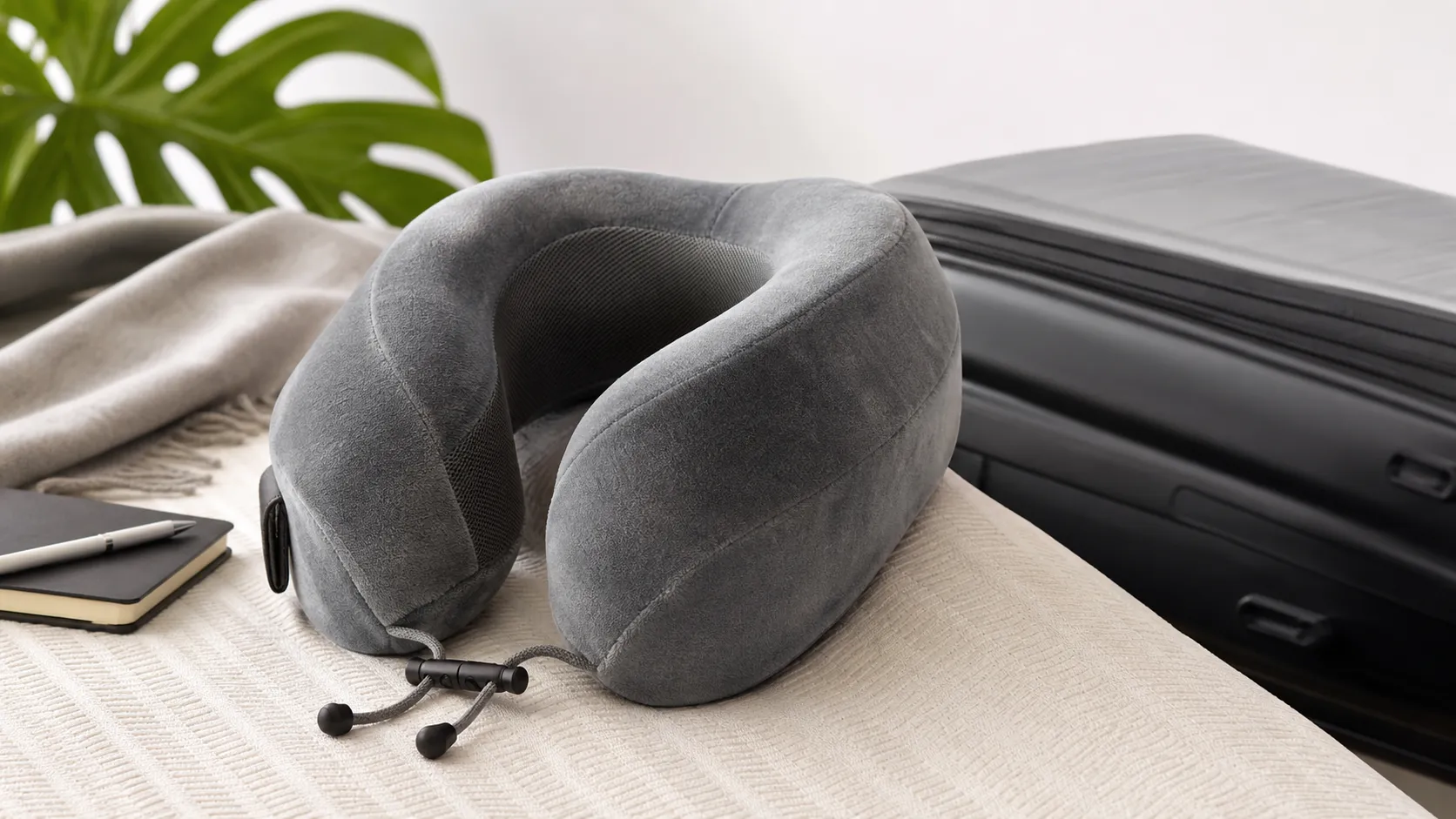
Cabeau Evolution Classic Travel Pillow — 2026 Review
A travel-focused memory-foam pillow that reliably reduces head-bobbing and feels premium — best for frequent flyers who prioritize support over packability.
 Travel & Luggage
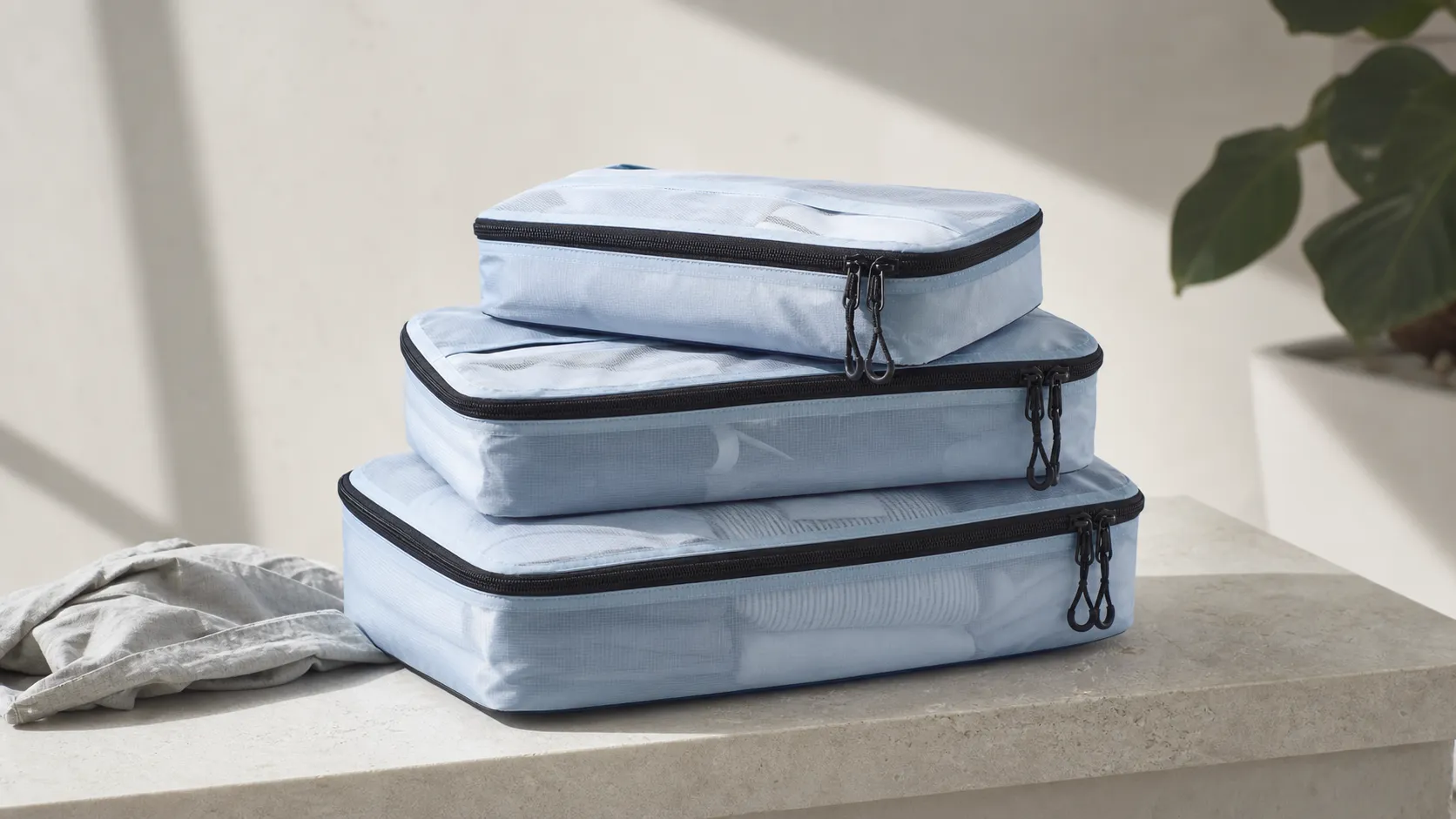
Eagle Creek Pack-It Specter Cube Set (3-pack) Review 2026
A near-featherweight 3-pack of packing cubes built from silnylon, the Eagle Creek Pack-It Specter set excels at low-bulk organization for carry-on and minimalist travelers. Premium feel and visibility, but at a higher price and with some zipper longevity caveats.
 Travel & Luggage
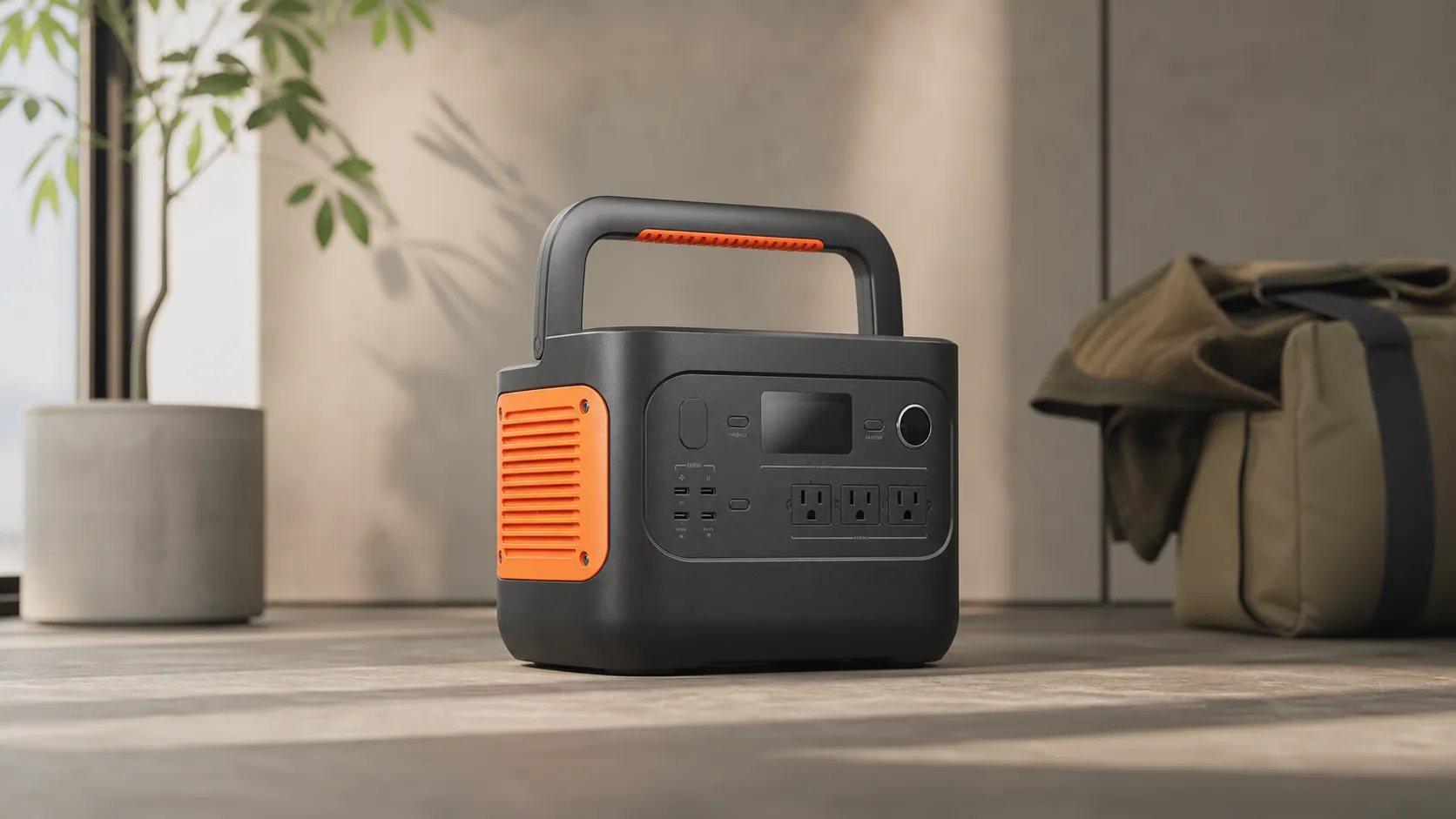
Jackery Explorer 1000 Portable Power Station Review 2026
A dependable, quiet power station for camping and short home backups — user-friendly and solar-ready, but heavier and pricier than some rivals.