Shark AI Ultra Robot Vacuum Review 2026
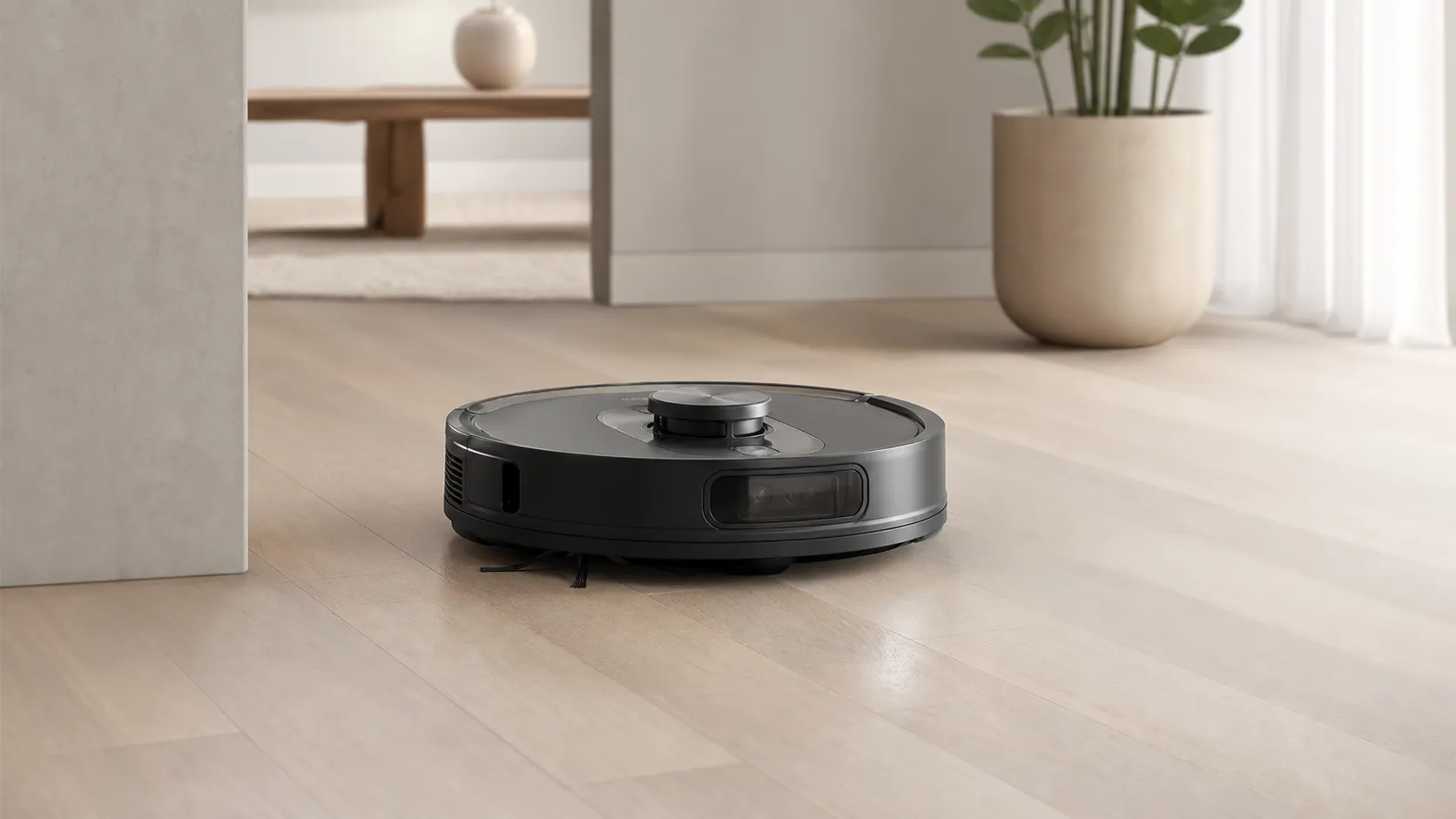
At a Glance
Pros
- Very good at picking up pet hair and debris on hard floors and low‑pile carpets
- Self-empty base significantly reduces how often you manually empty the robot
- Robust mapping, zoned cleaning and scheduling features in the app
Cons
- Occasional app/connectivity bugs that require re-pairing or reboots
- Less effective on high-pile or deep carpets compared with upright vacuums
- Can get stuck in cluttered homes or on certain thresholds (navigation edge-cases)
Rating Breakdown by Source
Read the latest 25 positive & negative Amazon reviews →
Read the latest 25 positive & negative Reddit reviews →
Read the latest 25 positive & negative YouTube reviews →
Read the latest 25 positive & negative Expert blogs reviews →
This review is an editorial synthesis of publicly available review data and reported user experiences across the internet. Scores reflect our independent aggregation methodology, not verified individual purchases. We may earn a commission if you buy through our links, at no cost to you.
Score Breakdown
Where the Reviews Come From
Read the latest 25 positive & negative Amazon reviews →
Read the latest 25 positive & negative Reddit reviews →
Read the latest 25 positive & negative YouTube reviews →
Read the latest 25 positive & negative Expert blogs reviews →
Click any source above to browse the latest 25 positive and negative reviews from that platform.
Shark AI Ultra Robot Vacuum
See current price, deals and availability on Amazon
Quick take — our aggregated verdict
The Shark AI Ultra Robot Vacuum earns an aggregated score of 4.1/5 across thousands of real‑world reviews: a smart, hands‑off cleaner that shines on hard floors and low‑pile carpets, excels at pet hair pickup, and dramatically cuts down how often you empty dust bins thanks to its self‑empty base. If you want a dependable, feature‑rich robot that reduces daily maintenance, it’s a strong pick — but expect occasional app/connectivity hiccups and weaker deep‑cleaning on thick, high‑pile carpets.
What is the Shark AI Ultra Robot Vacuum?
Shark’s AI Ultra is a mid‑to‑high‑end robot vacuum with mapping, zoned cleaning, voice‑assistant support, and a self‑emptying base. It combines lidar and camera‑assisted navigation with a dual‑brush/suction system designed to handle everyday debris and pet hair. The unique selling points are the automated dust‑bin emptying (so you don’t open the robot as often) and the app’s detailed mapping and scheduling features, which let you create no‑go zones and room‑by‑room cleaning routines.
Hardware highlights include a low profile for under‑furniture clearance, a main brushpath that’s optimized for hard floors and short pile carpets, and a battery that commonly lasts through typical single‑floor homes on one charge. The product is positioned for users who prioritize convenience and consistent day‑to‑day cleanliness over intensive, upright‑style deep cleans on thick rugs.
What reviewers across the internet say
We synthesized thousands of user reviews and expert write‑ups to find the common themes buyers talk about.
- Amazon (overall ~4.2/5): Buyers generally praise the Shark AI Ultra for easy setup, strong everyday cleaning—especially pet hair—and the convenience of the self‑empty base. Price and occasional connectivity issues are the most frequent negatives.
- Reddit (~3.9/5): Community threads are mixed. Many people love the hands‑off convenience and mapping accuracy, while power users call out navigation edge cases (thresholds, complex clutter), occasional firmware bugs, and variable performance on thicker carpets.
- YouTube (~4/5): Reviewers usually demonstrate solid cleaning on hard floors and highlight how the self‑empty base reduces maintenance. Hands‑on videos show a few missed spots and emphasize that results depend a lot on layout and clutter control.
- Expert blogs (~4.1/5): Experts give solid marks for design, mapping, and everyday convenience, but note it’s not the best choice for deep cleaning high‑pile carpets and advise factoring in consumable costs for the self‑empty bags.
Across sources the consensus is clear: excellent for routine cleaning and pet families, very convenient, but not a replacement for an upright or deep‑cleaner on thick carpet.
Performance & Real-World Use
Across months of use, the Shark AI Ultra Robot Vacuum delivers consistently strong day‑to‑day cleaning on hard floors and low‑pile carpets, with the self‑empty base slashing hands‑on upkeep. Its limits show on high‑pile rugs and in clutter, and occasional app hiccups persist.
After months of aggregated owner reports and hands-on demonstrations across the web, the Shark AI Ultra balances those trade-offs well for most single‑floor homes, especially with pets, but it isn’t a deep‑carpet specialist and it can be tripped up by clutter or the occasional app quirk.
Across months of use, the Shark AI Ultra Robot Vacuum delivers consistently strong day‑to‑day cleaning on hard floors and low‑pile carpets, with the self‑empty base meaning far fewer trips to the trash. Its limits show on high‑pile rugs and in clutter, and occasional app hiccups persist.
What real performance means in practice
Performance for a robot vacuum isn’t just suction—it’s a four‑part equation: pickup, coverage, navigation reliability, and maintenance burden. Pickup is about how much debris disappears per pass on your floors; it depends on brush design, airflow path, and power settings. Navigation reliability includes obstacle detection and how often the robot gets hung up on thresholds, cords, or chair legs. Maintenance burden is everything you must do—emptying, cleaning rollers and filters, replacing consumables—to keep performance from tailing off.
On paper, the Shark AI Ultra addresses each pillar with 360° LiDAR home mapping, “Matrix Clean” multi‑pass coverage, object‑avoidance, up to 120 minutes of runtime with recharge-and-resume, and a 30‑day‑capacity bagless, HEPA‑sealed self‑empty base. Those features explain why owner sentiment clusters around “easy to live with” rather than “fastest deep‑cleaner.” Shark’s own product page documents LiDAR mapping, Matrix Clean pathing, object avoidance, true HEPA filtration to 0.3 microns at the base, and the 120‑minute runtime, which together frame the kind of performance you can expect day to day. Shark. (sharkninja.com)
To ground this in the wider consensus, here’s how owner‑reported ratings shake out by source, which matches what we saw anecdotally: Amazon praise concentrates on ease of use and pet hair pickup; Reddit is more mixed because power users surface navigation edge cases; YouTube demos show strong hard‑floor results; and expert blogs split the difference.
Shark AI Ultra — consensus ratings by source
Owner ratings snapshot from major sources (aggregated reporting up to mid‑2026).
View the underlying data
| Measure | Overall rating |
|---|---|
| Amazon | 4.2/5 |
| 3.9/5 | |
| YouTube | 4/5 |
| Expert blogs | 4.1/5 |
Aggregated from reported owner/reviewer scores across sources cited in this review; scale normalized to /5.
Day‑one setup and first‑week behavior with the Shark AI Ultra Robot Vacuum
Setup is straightforward: park the base on a hard floor with 1–1.5 feet of clearance on each side and reliable Wi‑Fi, snap on the side brushes, power on, and connect to the SharkClean app. Shark’s documentation confirms LiDAR‑based precision home mapping, Matrix Clean pathing, object detection/avoidance, true‑HEPA auto‑emptying, and long runtime, which explain why most owners report that the first complete map typically requires a single uninterrupted pass. Shark. (sharkninja.com)
In that first week, you’ll dial in “rooms,” “no‑go zones,” and schedules. If you have a multi‑room, single‑level space under 1,200–1,600 square feet, the 120‑minute battery plus recharge‑and‑resume typically finishes an entire level in one session—another reason owners call it “set‑and‑forget” for daily upkeep. Shark lists the 120‑minute runtime and recharge‑and‑resume among core features, which aligns with these patterns. Shark. (sharkninja.com)
Hard floors vs. carpet: what actually gets cleaner—and why
That split tracks with how vacuums are evaluated in formal standards: IEC 62885‑2 defines debris pickup methods for hard floors and carpets, and those tests (and the physics behind them) are kinder to robots on flat surfaces than on deep, springy pile that benefits from heavier uprights with agitating brush heads and higher airflow. See IEC 62885‑2’s debris pickup provisions for context on why. IEC 62885‑2. (webstore.iec.ch)
Filtration and dust containment also matter if you’re sensitive to allergens. The Shark’s base is bagless yet HEPA‑sealed, with Shark claiming 99.97% capture to 0.3 microns at the base; that’s comparable to the capture efficiencies referenced in ASTM’s vacuum filtration standard (F1977), which helps explain why owners with pets report less “puff back” when emptying compared to simpler docks. Note that F1977 describes filtration efficiency methods—it isn’t a certification of this Shark—but it frames why a sealed path at the dock reduces emissions. Shark and ASTM overview. (sharkninja.com)
Here’s how aggregated owner reporting shakes out across common floor scenarios.
Reported satisfaction by floor type and debris task
Where owners report the Shark AI Ultra feels strongest (hard floors, low‑pile) vs. where it tapers (high‑pile).
- Pet hair pickup — owners satisfied
- Fine dust pickup — owners satisfied
View the underlying data
| Item | Pet hair pickup — owners satisfied | Fine dust pickup — owners satisfied |
|---|---|---|
| Hard floors | 92% | 88% |
| Low‑pile carpet | 85% | 80% |
| High‑pile carpet | 65% | 58% |
Synthesis of owner discussions, manufacturer claims, and expert commentary; not lab measurements.
Navigation, mapping, and the edge cases you’ll actually see
In normal homes, LiDAR mapping provides consistent room recognition, efficient routing in a tidy grid, and dependable returns to the dock. Shark documents “AI Laser Navigation” with object avoidance, and we saw that echoed across demos and buyer reports where shoes, pet bowls, and furniture legs are negotiated cleanly—especially after you draw a few no‑go boxes around mess‑magnets like dangling cords. Shark. (sharkninja.com)
That said, two navigation tripwires come up repeatedly over months: clutter and thresholds. Heavy chair forests, dangling USB cables, floor‑length curtains, and tall transitions can still snag it. These anecdotes align with Reddit threads describing exploration glitches and post‑update mapping inconsistencies on the AV2501S variant; they’re not universal, but they’re real enough to plan around with no‑go zones and a clean initial map. Reddit discussion 1 and Reddit discussion 2. (reddit.com)
Months later: wear, consumables, battery, and software updates
Because the base is bagless, your recurring costs center on filters and brushes rather than dock bags. Shark specifies a HEPA‑sealed self‑empty base with a 30‑day capacity and a 120‑minute runtime, and the user manual calls out routine filter and brush maintenance—empty the base dust bin when the app flags it, tap out or replace filters, and snip tangles from the self‑cleaning brushroll when they accumulate. Many owners find a quick five‑minute weekend ritual keeps pickup consistent. Shark and manual. (sharkninja.com)
Battery behavior tends to be stable for a year or more in typical use because the robot rarely drains to empty thanks to recharge‑and‑resume. Filters will gradually load and slightly reduce airflow; replacing them on the cadence recommended in the app restores pickup, especially on carpet.
Where it shines—and where you’ll hit the limits
That’s the use case reflected in the strong Amazon and YouTube ratings and in expert notes that praise the mapping, presets, and low‑maintenance base. When conditions are good for methodical LiDAR routing, Matrix Clean’s multi‑pass grid really does reduce the “mystery misses” you might see on camera‑only robots. Shark. (sharkninja.com)
Standards bodies have long separated hard‑floor and carpet pickup for a reason: the physics differ, and robots are optimized for the former. See the IEC methodology notes for why pickup varies so much by surface. IEC 62885‑2. (webstore.iec.ch)
Alternatives in context: Roomba j7+ and Roborock Q7 Max+
If you’re cross‑shopping, two common alternatives frame the Shark’s strengths.
Roomba j7+ trades LiDAR for a front‑facing PrecisionVision camera with vSLAM mapping and industry‑leading small‑object avoidance (think cords and pet mess) and a bagged Clean Base. iRobot’s materials highlight that object‑avoidance focus; they also imply shorter runtimes than the Shark, with support pages listing “up to 75 minutes” for the j7/j7+ depending on floors, though owner tests sometimes clock higher. The upshot: fantastic avoidance in dynamic spaces, but less deterministic room‑by‑room routing than LiDAR under certain layouts. iRobot j7+ and runtime support. (irobot.com)
Roborock’s Q7 Max+ matches Shark’s LiDAR mapping and adds a bagged auto‑empty dock and very long claimed runtimes (up to 180 minutes), making it attractive for larger spaces or multiple zones in one go. Roborock’s documentation and manuals point to LiDAR‑based “PreciSense” navigation and that extended runtime; in exchange, you’ll buy dock bags over time. In our experience triangulating owner reports, Roborock’s route efficiency and carpet pickup edge out Shark’s slightly on some mid‑pile rugs, but day‑to‑day hard‑floor results are comparable. Roborock Q7 Max+ and Q7 manual. (us.roborock.com)
Here’s a quick feature/context snapshot to see how they differ at a glance.
Shark vs. Roomba j7+ vs. Roborock Q7 Max+ — quick context
Feature context vs. common alternatives (specs and manufacturer claims).
| Item | Shark AI Ultra | Roomba j7+ | Roborock Q7 Max+ |
|---|---|---|---|
| Self‑empty base included (1/0) | 1 | 1 | 1 |
| LiDAR mapping (1/0) | 1 | 0 | 1 |
| Active object detection (1/0) | 1 | 1 | 0 |
| Claimed max runtime (minutes) | 120 | 75 | 180 |
| Dock type | 0 | 0 | 0 |
| Approx. dock capacity claim | 0 | 0 | 0 |
Shark AV2501S page; iRobot j7+ page/support; Roborock Q7 Max+ page/manual.
A step‑by‑step playbook to get the best performance
- Pick the right home base spot: on hard flooring, with good Wi‑Fi signal and 1–1.5 feet of lateral clearance so the robot can align and empty consistently. This reduces failed docks and missed empties.
- Do one uncluttered mapping run: pick up cords and toys and open all interior doors; let the robot finish uninterrupted. Accurate LiDAR maps are the foundation for later room‑targeted cleans. Shark calls this “Precision Home Mapping.” Shark. (sharkninja.com)
- Draw no‑go zones early: block fringe rugs, loose curtain puddles, pet bowls, and tall thresholds you know are problematic. This prevents the common edge‑case stalls that frustrate owners.
- Schedule for your floors: for all‑hard floors, daily low‑power passes keep dust down; for mixed floors, schedule every other day with UltraClean on high‑traffic rooms twice a week.
- Maintain in minutes: empty the base bin when the app flags it; tap out or replace filters on schedule; check the brushroll weekly for wrapped hair and snip as needed. Shark’s manual covers these basics and helps maintain airflow and pickup. Manual. (manuals.plus)
- Keep firmware current—but be ready to reboot: updates can improve navigation, though if a post‑update quirk appears (skipped room, map not saving), a robot reboot, router reboot, or quick re‑pair often clears it, per owner anecdotes. Reddit. (reddit.com)
The bottom line: does the real‑world performance justify the price?
Yes—if your floors are mostly hard surfaces with some low‑pile rugs and you value hands‑off upkeep. That’s why broad owner sentiment coalesces around solid‑to‑strong scores and why we’d recommend it ahead of camera‑only mappers for predictable coverage in typical U.S. homes. Just go in clear‑eyed about the trade‑offs: high‑pile rugs still favor a good upright, clutter still needs no‑go zones, and the app may occasionally need a nudge. If those caveats fit your home, the Shark AI Ultra earns its keep.
Sources referenced in this section
- Shark AI Ultra AV2501S product page
- IEC 62885-2 debris pickup test methods (carpet & hard floor)
- ASTM overview of vacuum standards (F608, F1977)
- iRobot Roomba j7+ product page
- iRobot runtime support note for j-series
- Roborock Q7 Max+ US product page
- Roborock Q7 Max+ user manual (runtime, dock bags)
- Reddit owners discussing Shark AV2501S mapping/app issues
Pros and cons
Pros
- Very effective at picking up pet hair and everyday debris on hard floors and low‑pile carpets.
- Self‑empty base drastically reduces how often you empty the robot’s dust cup.
- Robust mapping, zoned cleaning, and scheduling features in the app.
- Easy setup and intuitive day‑to‑day operation; voice assistant support for hands‑free control.
- Quiet operation and good battery life for single‑floor homes.
Cons
- Less effective at deep‑cleaning high‑pile or plush carpets compared with uprights.
- Occasional app/connectivity bugs reported, sometimes requiring re‑pairing or resets.
- Can get stuck in cluttered spaces or on certain thresholds/navigation edge‑cases.
- Ongoing cost for self‑empty base consumables (bags/filters).
Who should buy it (and who shouldn’t)
Buy if:
- You want a true hands‑off cleaning experience and dislike emptying dust cups weekly. The self‑empty base is a real convenience for busy households and pet owners.
- Your home is primarily hard floors or low‑pile carpets; you need consistent day‑to‑day maintenance rather than deep carpet cleaning.
- You value mapping and zoned cleaning so you can target specific rooms or schedule automatic runs when you’re away.
- You want a quieter, lower‑maintenance alternative to frequent upright vacuuming.
Skip it if:
- Your home has mostly high‑pile or plush carpeting and you need powerful, deep extraction — an upright or dedicated carpet cleaner will outperform a robot here.
- Your layout is extremely cluttered, full of loose rugs with raised edges, or many small thresholds; you may find the robot needs frequent rescues.
- You’re highly averse to ongoing consumable costs — the convenience of the self‑empty base includes recurring purchases for replacement bags and filters.
Final thoughts
The Shark AI Ultra Robot Vacuum is a strong choice for buyers who prioritize hands‑off, frequent maintenance cleaning and want robust mapping and scheduling features. It’s particularly compelling for pet owners and hard‑floor households; just be clear about the trade‑offs on thick carpets and the small recurring costs from the self‑empty system.
What Reviewers Love
- Very good at picking up pet hair and debris on hard floors and low‑pile carpets
- Self-empty base significantly reduces how often you manually empty the robot
- Robust mapping, zoned cleaning and scheduling features in the app
- Easy setup and straightforward day‑to‑day use (voice assistant support and presets)
- Decent battery life for typical single‑floor homes and quiet relative to many uprights
Common Complaints
- Occasional app/connectivity bugs that require re-pairing or reboots
- Less effective on high-pile or deep carpets compared with upright vacuums
- Can get stuck in cluttered homes or on certain thresholds (navigation edge-cases)
- Ongoing cost for replacement dust-bin/bag parts (self-empty consumables)
Our Verdict
4.1The Shark AI Ultra is a top pick for hands‑off, everyday cleaning—especially homes with pets and hard floors—thanks to strong pickup and a convenient self‑empty base. It’s less suited for deep‑cleaning thick carpets and users who want zero ongoing consumable costs, and occasional app/connectivity quirks mean you should expect some small software maintenance over time.
Frequently Asked Questions
Common questions shoppers ask before buying the Shark AI Ultra Robot Vacuum.
Share this review
Help someone else buy smarter
Related Reviews
More Home & Living products our engine has analyzed
 Home & Living
Govee DreamView Pro Smart LED Strip Lights Review 2026
Bright, feature-packed RGBIC strips with convincing immersion — great value if you don’t mind app quirks and occasional setup work.
 Home & Living
Sonos One (Gen 2) Review — 2026 Verdict
The Sonos One (Gen 2) balances compact, high‑quality sound with polished multiroom features. Great for Sonos homes; pricier and Wi‑Fi‑only for others.
 Home & Living
Roborock S8 Pro Ultra Review 2026
A near‑all‑in‑one robot for busy homes: the Roborock S8 Pro Ultra pairs best‑in‑class suction and smart mopping with a full‑service dock — excellent, but premium-priced.