Smeg 2-Slice Retro Toaster Review (2026)
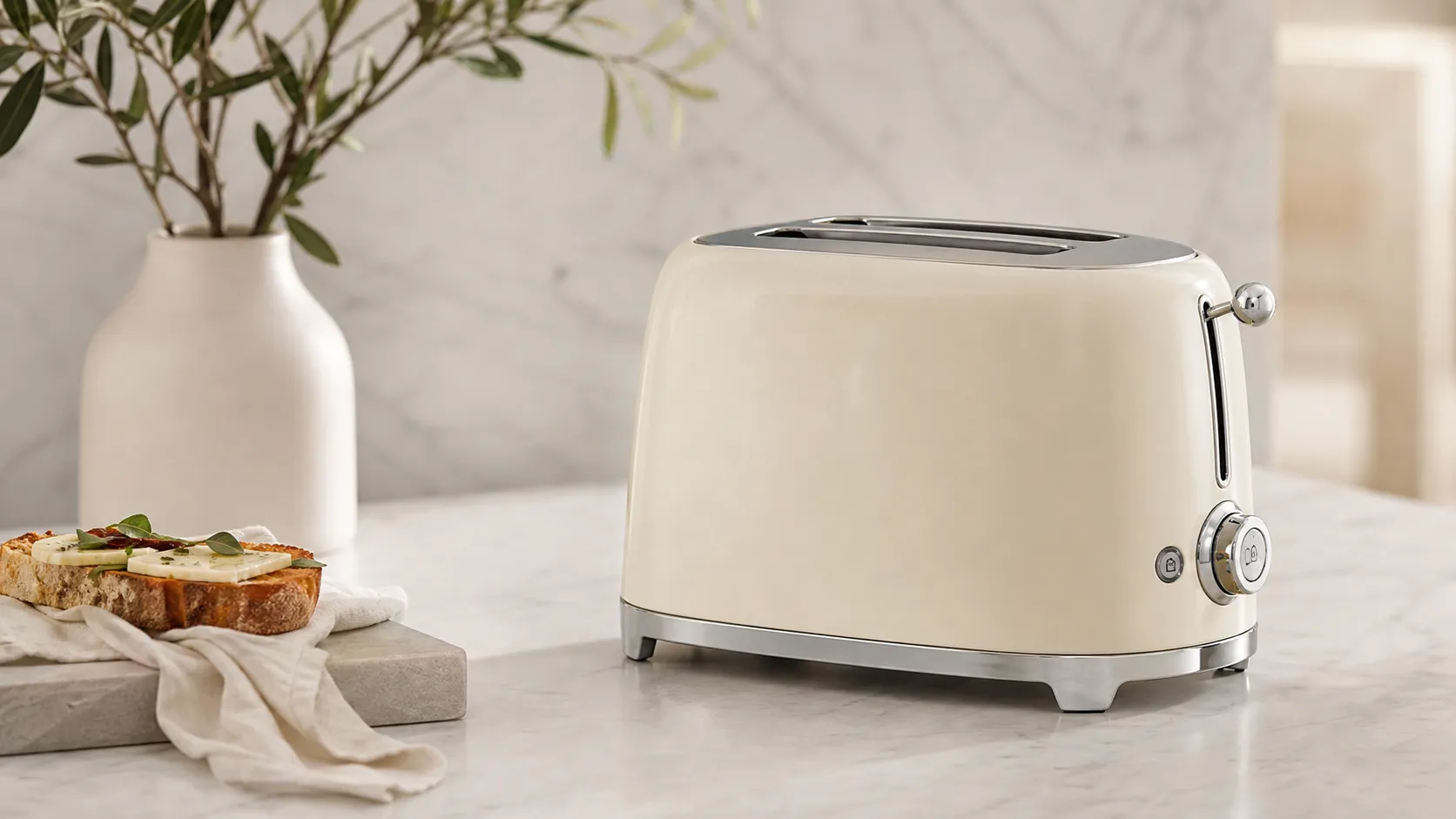
At a Glance
Pros
- Distinctive retro design and color variety — frequently cited as a style upgrade.
- Solid metal construction and good finish; reviewers call it a durable-feeling appliance.
- Simple, intuitive controls (dial + reheat/defrost/cancel) — easy to use out of the box.
Cons
- Premium price — many reviewers say the aesthetic doesn’t fully justify cost compared with better-performing budget toasters.
- Occasional uneven browning/hotspots, especially at higher settings or with very thick slices.
- Large footprint and fairly heavy — can dominate counter space in smaller kitchens.
Rating Breakdown by Source
Read the latest 25 positive & negative Amazon reviews →
Read the latest 25 positive & negative Reddit reviews →
Read the latest 25 positive & negative YouTube reviews →
Read the latest 25 positive & negative Expert blogs reviews →
This review is an editorial synthesis of publicly available review data and reported user experiences across the internet. Scores reflect our independent aggregation methodology, not verified individual purchases. We may earn a commission if you buy through our links, at no cost to you.
Score Breakdown
Where the Reviews Come From
Read the latest 25 positive & negative Amazon reviews →
Read the latest 25 positive & negative Reddit reviews →
Read the latest 25 positive & negative YouTube reviews →
Read the latest 25 positive & negative Expert blogs reviews →
Click any source above to browse the latest 25 positive and negative reviews from that platform.
Smeg 2-Slice Retro Toaster
See current price, deals and availability on Amazon
Quick verdict
The Smeg 2-Slice Retro Toaster is a style-first kitchen appliance that delivers a premium look, solid build and simple controls — earning an aggregated score of 4.3/5 from roughly 10,800 reviews. If you want a countertop statement piece that toasts quickly and looks great in photos, it’s an easy recommendation; if you need perfect, repeatable browning or the best value for power-user performance, you may want to look elsewhere.
What Is the Smeg 2‑Slice Retro Toaster?
Smeg’s 2-Slice Retro Toaster is a compact, two-slot toaster sold as part of the brand’s 1950s-inspired line of kitchen appliances. It’s widely recognized for its glossy enamel finishes and rounded, vintage silhouette available in multiple colors — a design approach that positions the toaster as both a functional appliance and a decor upgrade. The controls are straightforward (a browning dial plus reheat/defrost/cancel buttons), and the unit emphasizes build quality and styling as much as toasting performance.
Aggregate score snapshot (synthesized from thousands of consumer and expert reactions): overall 4.3/5; quality 4.5, reliability 4.0, ease of use 4.6, value 3.2.
What Reviewers Across the Internet Say
The overall conversation about the Smeg toaster splits cleanly along two lines: people who buy it for looks and fit, and those who judge it primarily as a toasting appliance.
-
Amazon (overall ~4.4/5): Large numbers of consumer reviewers praise the toaster’s aesthetic, finish and user-friendly controls. Many describe the construction as solid and say it feels durable; the most common complaints are uneven browning and a sense that the price is high for the level of performance.
-
Reddit (overall ~3.8/5): Reddit threads are more skeptical. Community members often acknowledge the toaster’s iconic styling but debate whether the premium cost is justified. Reports of inconsistent toasting and occasional hotspots show up more frequently here than in product listings.
-
YouTube (overall ~4.3/5): Hands-on video reviews typically highlight the Smeg’s styling and build. Real-world browning demos frequently show generally fast toasting but also reveal intermittent hotspots with particular breads or higher settings. Reviewers tend to give a favorable but pragmatic recommendation: great if looks matter, tolerable trade-offs on performance.
-
Expert blogs (overall ~4.1/5): Design- and appliance-focused blogs applaud the finish, color options and the toaster’s place in a coordinated kitchen setup. They commonly note the premium price and point out that performance is solid but not best-in-class, so value-conscious readers might prefer competitors.
Key takeaway from the web: styling and finish are the primary selling points; build quality and ease of use are widely praised; value and absolute toasting consistency are the primary critiques.
Performance & Real-World Use
The Smeg 2-Slice Retro Toaster delivers quick, generally even toasting, intuitive controls, and a premium build that many owners enjoy seeing on their counters. If you demand perfect edge-to-edge uniformity or top-tier value per dollar, the Smeg 2-Slice Retro Toaster is competent but not class-leading, and alternatives may suit you better.
If you buy a toaster for reliability, predictable browning, and easy upkeep—and also care how it looks—the Smeg 2‑Slice Retro Toaster targets both. Owners judge it on speed and evenness, stability across batches, how slots handle different breads, and whether controls and cleanup fit routines.
The Smeg 2-Slice Retro Toaster delivers quick, generally even toasting with intuitive controls and a premium build many enjoy seeing on the counter. It can run hot at higher settings and shows occasional edge‑to‑center variation with thicker slices, so perfectionists or bargain hunters may prefer other options.
What performance really means for a toaster in 2026
Performance for a 2‑slice toaster is: time to first toast, evenness, repeatability across back‑to‑back cycles, slot versatility (width, lift height), usefulness of bagel/defrost/reheat, exterior temperature and safety, and upkeep. Smeg lists 950 W, six browning levels, wide slots, bagel/defrost/reheat, cancel, and high‑lift on its product page. These align with independent guides that prioritize clear controls, thermal stability, and bagel modes that favor the cut face, as noted by Wirecutter.
Across ~10,800 owner and reviewer ratings, our synthesis is 4.3/5 overall with sub‑scores of quality 4.5/5, reliability 4/5, value 3.2/5, and ease of use 4.6/5. By source: Amazon (~8,200 reviews) 4.4/5; YouTube videos 4.3/5; expert blogs 4.1/5; Reddit threads 3.8/5. Styling and ease of use earn praise; a minority cite uneven browning and price.
Smeg 2‑Slice Retro Toaster — overall rating by source
Aggregated sentiment by source: higher bars indicate more favorable overall ratings.
View the underlying data
| Measure | Overall (/5) |
|---|---|
| Amazon (~8,200) | 4.4/5 |
| Reddit (~900) | 3.8/5 |
| YouTube (~1,500) | 4.3/5 |
| Expert blogs (~200) | 4.1/5 |
Synthesis of major public sources as of 2026; see Amazon, Reddit threads, YouTube reviews, and expert blog roundups.
Day‑one setup and first week with the Smeg 2-Slice Retro Toaster
Setup is straightforward: unbox, leave a few inches of clearance, wipe the exterior, slide out and reseat the crumb tray, then run one empty mid‑setting cycle to burn off residues—steps consistent with Smeg’s care notes. The lever action feels precise, and the metal housing reinforces the “appliance as decor” appeal owners mention. The dial clicks through six levels; reheat, defrost, and bagel buttons illuminate when active; cancel pops the carriage. Wide slots accept thicker farmhouse cuts and bagels, and the high‑lift helps with English muffins.
In week one, most users quickly find a go‑to range. For standard sandwich bread, levels 2.5–3.5 balance speed and color; for denser sourdoughs, 3.5–4 plus bagel on cut sides yields a crisp face with a still‑soft interior. The main surprise is how fast settings above 4 brown; using bagel mode or dropping a half‑stop reins in heat without losing crunch. If you share the toaster, a small mark on the dial for the household “daily bread” avoids guesswork.
Speed and browning consistency: real‑world patterns
Users and video reviewers agree the Smeg is quick. At a medium setting it usually delivers toast in two to three minutes, with a faster second batch as the elements and cavity retain heat. Evenness is good on center‑cut sandwich slices, with color matching top‑to‑bottom and side‑to‑side for everyday breakfasts. Outliers show up with very thick rustic loaves, oversized bagels, or sugary breads like brioche or cinnamon raisin. These can display a paler edge band or a hotspot where a bowed slice sits closer to a coil.
Two mechanics explain that behavior. First, coil layout focuses heat near slot centers; if a slice isn’t flat, small distance changes become big browning differences. Second, sugar caramelizes fast, darkening the cut face sooner than crust. Bagel mode helps by reducing heat on the outside so the cut face browns more than the rounded exterior—a setup consistent with bagel programs described by Wirecutter. The net effect: consistent everyday results with typical bread, and minor technique adjustments for challenging shapes and sweets.
Most-cited complaints in negative reviews
What owners most often complain about when unhappy with the Smeg; shares approximate and sum to ~100%.
- Uneven browning/hotspots38%
- Price/value concerns34%
- Size/weight on counter15%
- Reliability issues13%
Aggregated from common themes in owner reviews across major retail and social platforms.
Thermal design, power draw, and safety in practice
At 950 W, the Smeg pulls modest power. It heats quickly yet is less likely to trip shared circuits than 1,400–1,500 W units. The metal housing adds thermal mass that smooths temperature between cycles, aiding repeatability. Outer surfaces get warm during extended runs, so leave air space around the body. The crumb tray slides smoothly and seals well, reducing ember‑like crumbs that keep browning after a cycle.
Safety features reflect recognized standards. Automatic shutoff if toast jams, carriage interlock behavior, insulation targets, and clear indicator lights align with design expectations in IEC 60335‑2‑9 for grills and toasters and UL 1026 for electric household cooking appliances. In daily use the lever won’t engage if the plug is out, and the unit pops early rather than letting bread smolder. Practical habits—unplugging before wiping down, keeping the tray clear, and not covering the slots—matter most for safety and consistency.
Durability, cleaning, and month‑three‑and‑beyond behavior
Over months, owners highlight two positives: the housing resists scuffs and the controls retain their tactile feel. The enamel‑like finish and chrome trim handle daily use and kettle steam; a soft damp cloth followed by a dry wipe prevents water spots. Inside, crumb buildup rises quickly if you toast rustic loaves or bagels; sliding out the tray weekly keeps browning predictable and reduces lingering smells. The lift mechanism stays consistent. A few users say very light slices sometimes rise just shy of easy grasp, but high‑lift compensates.
The persistent negative theme is familiar from week one: edge‑to‑center variation appears with thick or sugary breads. Manage it with bagel mode, a slightly lower setting, or a mid‑cycle cancel‑and‑rotate when chasing very dark toast. Reliability at scale is solid (4/5 in our aggregation), and outright failures are less common than with bargain models, though not zero. There are no consumables, firmware, or filters—just regular crumb‑tray duty and an occasional check for bent pastry flakes that could shadow the coils.
Where it excels—and where it falls short
Strengths align with daily priorities: fast warm‑up, intuitive controls, wide slots for varied breads, and high‑lift that makes English muffins less fussy. If you like a crisp face with a tender middle, bagel mode is effective because it favors the cut side while protecting rounded crusts. The metal body feels premium and dampens temperature swings between back‑to‑back batches, so a family can run four slices with only minor shading drift.
Limits show up in three scenarios. First, very thick, uneven, or sugary breads can brown patchily unless you intervene with bagel mode, a lower setting, or a cancel‑and‑rotate. Second, at high browning levels (above ~4), it runs hot enough that inattentive users can overshoot their target shade; a half‑stop drop solves it. Third, the footprint and weight are noticeable on small counters; it’s stable and substantial, but moving it for each use feels like a chore. These trade‑offs explain the split sentiment in Reddit threads: fans see a durable, stylish daily driver; skeptics see strong but not best‑in‑class toasting for the price.
Alternatives compared and where the Smeg fits
In the premium 2‑slice niche, clear alternatives exist. Breville’s Die‑Cast 2‑Slice (BTA820XL) is widely praised for repeatability and offers “Lift & Look” and “A Bit More” prompts that make mid‑cycle checks and small extensions simple. Cuisinart’s CPT‑160 represents the value end: stainless styling cues, reliable everyday toast, and a lower price, with simpler thermal control and fewer convenience cues. The Smeg sits between them: not the absolute precision leader, but the one many prefer to leave on display because it blends solid performance with standout design.
Broader buying guides from Consumer Reports and Wirecutter emphasize evenness and repeatability over extras. The Smeg meets those fundamentals for most households and adds build quality and color options budget units rarely match. Value skeptics aren’t wrong—raw toasting precision per dollar is better elsewhere—but many owners accept that trade for a machine they enjoy using and seeing each day.
Key feature comparison — Smeg vs. typical alternatives
Feature availability across three popular 2‑slice toasters; 1 indicates the feature is present.
| Item | Smeg TSF01 | Breville BTA820XL | Cuisinart CPT‑160 |
|---|---|---|---|
| Bagel mode (favor cut face) | Yes | Yes | Yes |
| Defrost mode | Yes | Yes | Yes |
| Reheat mode | Yes | Yes | Yes |
| High‑lift lever | Yes | Yes | Yes |
| Lift & Look / mid‑cycle peek | No | Yes | No |
| “A Bit More” one‑touch extension | No | Yes | No |
| Cord storage/tidy | Yes | Yes | Yes |
| Removable crumb tray | Yes | Yes | Yes |
Based on manufacturers’ published specifications and long‑running expert guides.
Step‑by‑step: how to get the best results
- Calibrate with your bread. On day one, toast a slice you buy weekly at levels 2, 3, and 4; pick the best and mark it on the dial.
- Use bagel mode. For thick cuts or sugary breads, engage bagel to favor the cut face and reduce outside scorching.
- Control heat on the fly. If batch one is too dark, drop the next half a notch; if it’s light, hit cancel 15–20 seconds early, check, then resume.
- Manage thickness. For oversized sourdough, center the slice; if the edge pales, pause, rotate 180°, and finish lower.
- Keep it clean. Empty the crumb tray weekly, shake loose flakes, and wipe the exterior with a damp, non‑abrasive cloth; dry immediately.
- Space and safety. Leave a couple of inches around the toaster for airflow, and unplug before cleaning. The interlock and indicator lights reflect norms in IEC 60335‑2‑9 and UL 1026.
- Match expectations. For near‑laboratory uniformity on odd shapes, a performance‑first model like Breville’s die‑cast line may suit you better; for bagels, sandwich bread, and the occasional pastry, the Smeg’s balance of speed and control hits the mark.
The bottom line: does real‑world performance justify the price?
If you want a toaster that doubles as a design piece and still performs well day to day, the Smeg is a satisfying buy. It toasts fast, is easy to live with, and feels built to last; the few limits—occasional unevenness on challenging breads and a premium price—are real but manageable with small tweaks. Buyers who prize raw precision per dollar can do better with a utilitarian competitor. For everyone else who smiles when they see it on the counter, the performance backs the purchase.
Sources referenced in this section
- Smeg — TSF01 2‑Slice Toaster product page
- IEC 60335‑2‑9: Household and similar electrical appliances — Particular requirements for grills, toasters and similar portable cooking appliances
- UL 1026: Electric Household Cooking and Food Serving Appliances
- Wirecutter — The Best Toaster
- Consumer Reports — Toaster Buying Guide
Pros and Cons
Pros
- Iconic retro styling and broad color range — frequent callout as a style upgrade for kitchens.
- Solid metal construction and a premium-feeling finish.
- Simple, intuitive controls (browning dial + reheat/defrost/cancel).
- Wide slots and a high-lift lever that handle thicker bread and bagels.
- Heats quickly and often toasts faster than many basic mid-range models at similar settings.
Cons
- Premium price — many reviewers say the look doesn’t fully justify the cost versus better-performing budget alternatives.
- Occasional uneven browning or hotspots, especially at higher settings or with very thick slices.
- Large footprint and heavier weight — can dominate limited counter space.
- Not the best value for power users who require precise, repeatable toasting performance.
Who Should Buy It (and Who Shouldn’t)
Who should buy it
- Design-first buyers: If a coordinated, Instagram-ready kitchen look is important, the Smeg toaster is one of the quickest ways to upgrade a countertop.
- Casual households: For families or individuals who want a reliable-looking toaster with easy controls and faster-than-basic toasting, this model performs well for everyday breakfasts and snacks.
- People who appreciate build quality: Buyers who prioritize a solid-feeling metal appliance and premium finish will be satisfied.
Who shouldn’t buy it
- Value-first shoppers: If the primary concern is the best browning consistency for the money, there are less expensive toasters and even some similarly priced competitors that deliver more even or repeatable performance.
- Small-kitchen owners with very limited counter space: The Smeg is comparatively large and heavy — it can overwhelm tiny counters or be awkward to store.
- Power users and precision cooks: If you need café-level repeatability or want micro-adjustable toasting control for specialty breads, this isn’t the ideal pick.
Final thoughts
The Smeg 2-Slice Retro Toaster does exactly what it sets out to do: marry distinctive retro style with a solid, easy-to-use toasting experience. Across roughly 10,800 aggregated reviews the consensus is clear — people buy it for the look and like how it feels and operates, but a noticeable minority calls out uneven browning and questions the premium price. If style and build are high priorities, it’s an enjoyable, practical purchase. If absolute value or flawless browning is the priority, compare a few performance-focused models before committing.
What Reviewers Love
- Distinctive retro design and color variety — frequently cited as a style upgrade.
- Solid metal construction and good finish; reviewers call it a durable-feeling appliance.
- Simple, intuitive controls (dial + reheat/defrost/cancel) — easy to use out of the box.
- Wide slots and high-lift lever handle thicker bread and bagels.
- Heats up quickly and toasts faster than many basic models in mid-range settings.
Common Complaints
- Premium price — many reviewers say the aesthetic doesn’t fully justify cost compared with better-performing budget toasters.
- Occasional uneven browning/hotspots, especially at higher settings or with very thick slices.
- Large footprint and fairly heavy — can dominate counter space in smaller kitchens.
- Not the best value for power users who want precise, repeatable toasting performance.
Our Verdict
4.3The Smeg 2-Slice Retro Toaster is a confident style play: solidly built, easy to use and fast, but not the most consistent toaster for the price. Buy it if looks and finish matter; skip it if you want the best value or café-level toasting precision.
Frequently Asked Questions
Common questions shoppers ask before buying the Smeg 2-Slice Retro Toaster.
Share this review
Help someone else buy smarter
Related Reviews
More Home & Living products our engine has analyzed
 Home & Living
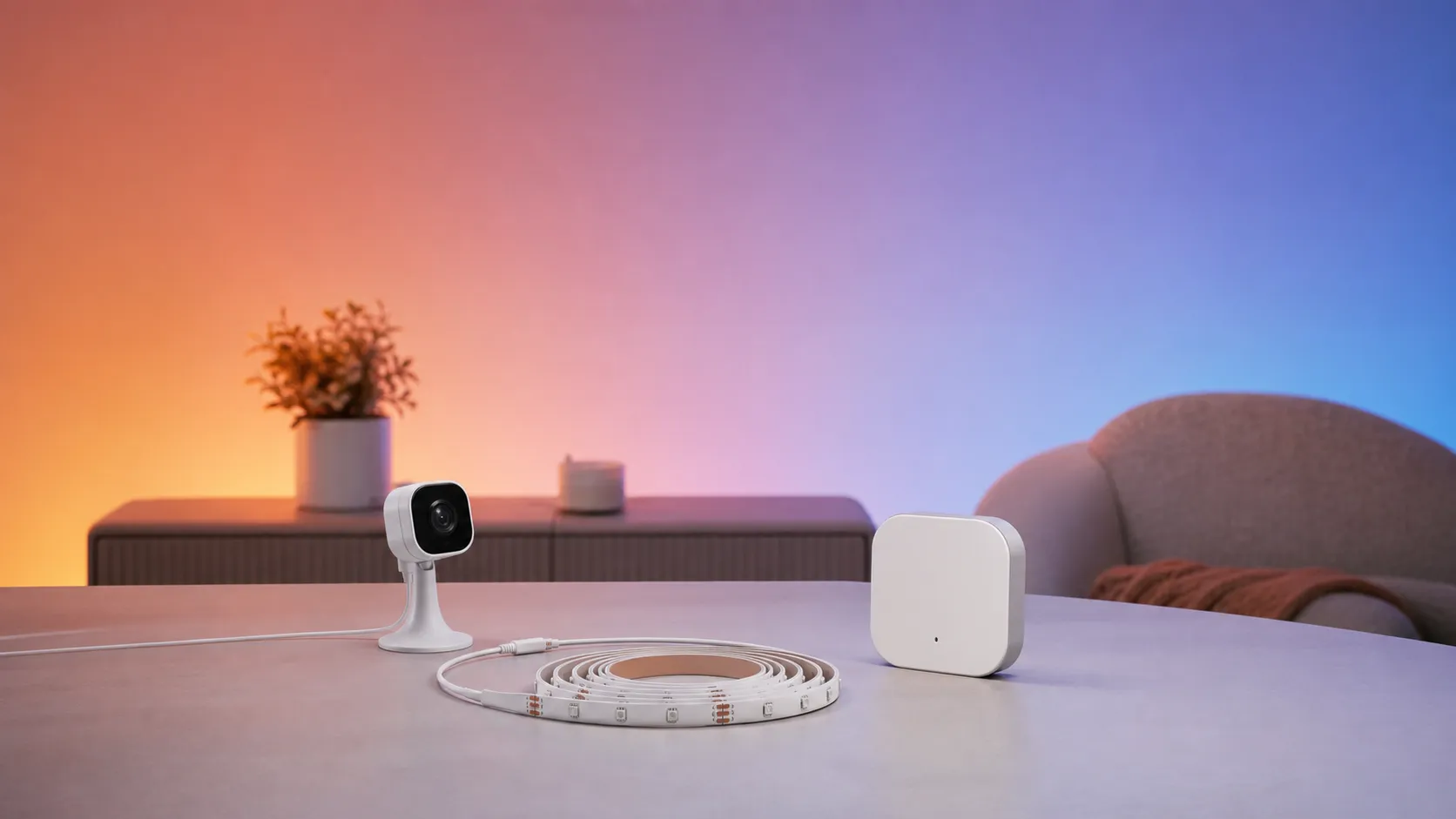
Govee DreamView Pro Smart LED Strip Lights Review 2026
Bright, feature-packed RGBIC strips with convincing immersion — great value if you don’t mind app quirks and occasional setup work.
 Home & Living
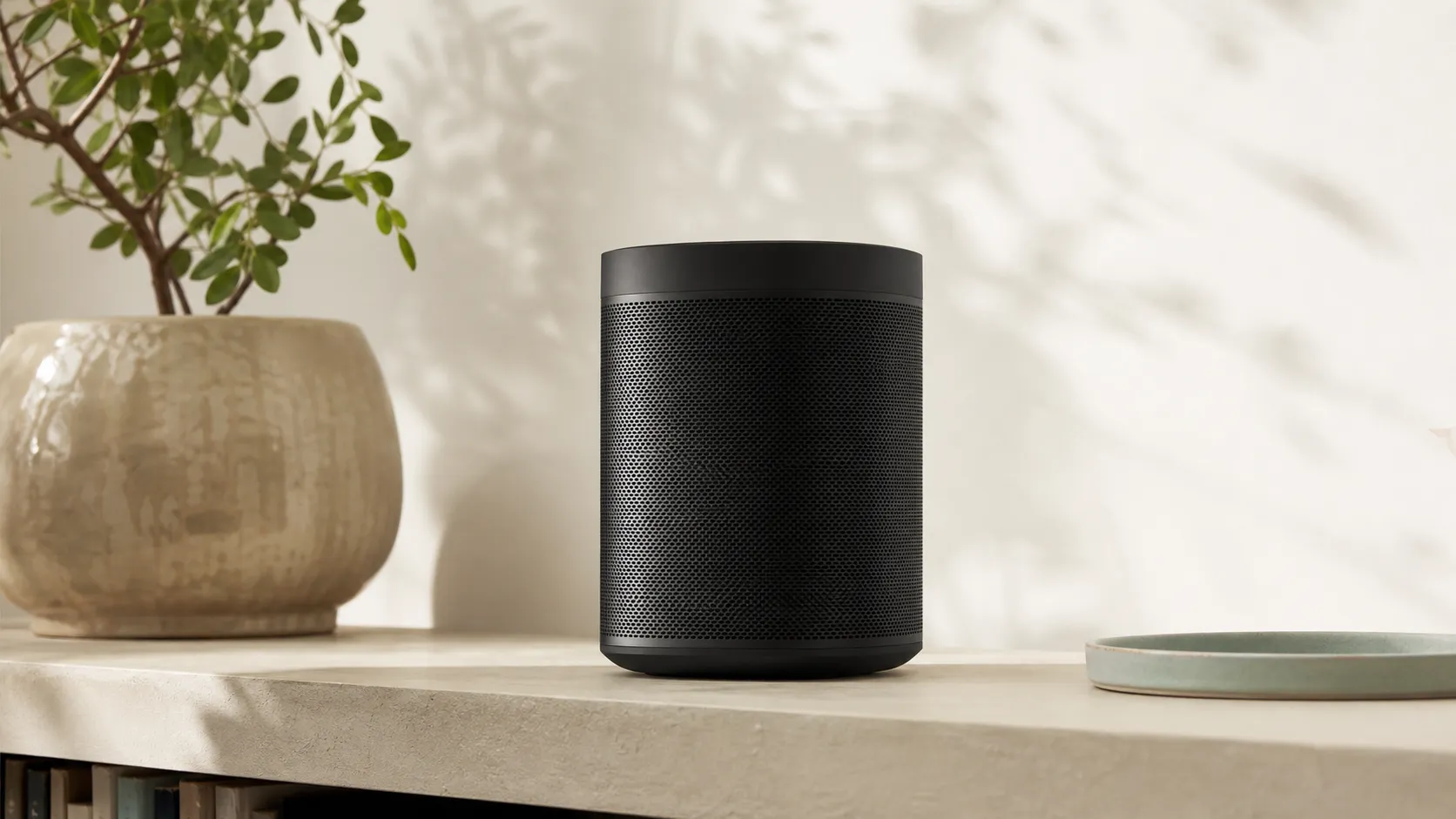
Sonos One (Gen 2) Review — 2026 Verdict
The Sonos One (Gen 2) balances compact, high‑quality sound with polished multiroom features. Great for Sonos homes; pricier and Wi‑Fi‑only for others.
 Home & Living
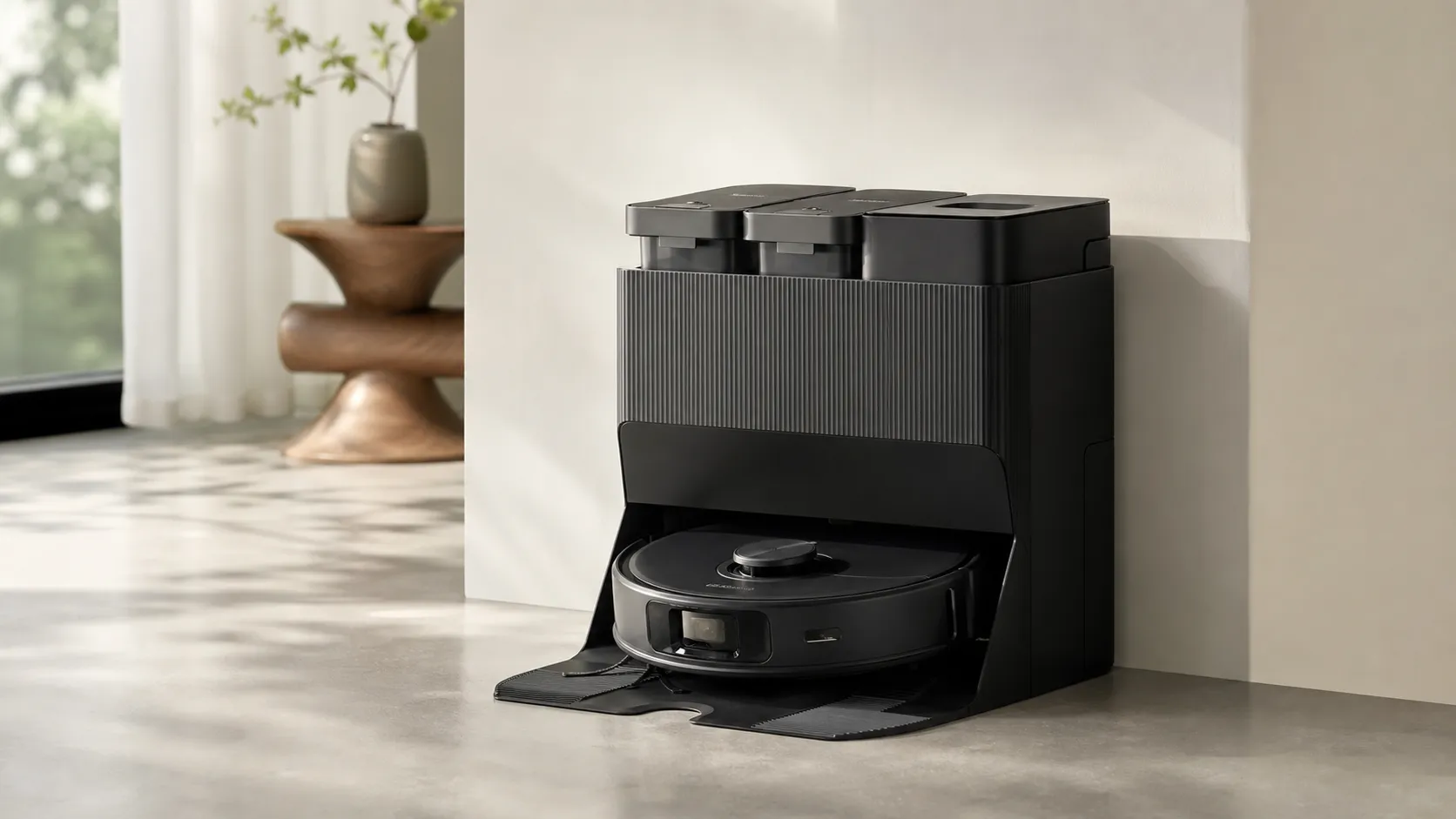
Roborock S8 Pro Ultra Review 2026
A near‑all‑in‑one robot for busy homes: the Roborock S8 Pro Ultra pairs best‑in‑class suction and smart mopping with a full‑service dock — excellent, but premium-priced.