Sonos One (Gen 2) Review 2026
At a Glance
Pros
- Impressively full, detailed sound for a compact speaker — well-balanced mids and vocals
- Seamless multiroom and stereo pairing inside the Sonos ecosystem
- Works with major voice assistants and AirPlay 2 for easy streaming
Cons
- Relatively expensive for a single compact speaker compared with non-Sonos alternatives
- No Bluetooth or line-in — limited portability and direct-device playback
- Proprietary Sonos ecosystem limits some integrations and can frustrate power users
Rating Breakdown by Source
Read the latest 25 positive & negative Amazon reviews →
Read the latest 25 positive & negative Reddit reviews →
Read the latest 25 positive & negative YouTube reviews →
Read the latest 25 positive & negative Expert blogs reviews →
This review is an editorial synthesis of publicly available review data and reported user experiences across the internet. Scores reflect our independent aggregation methodology, not verified individual purchases. We may earn a commission if you buy through our links, at no cost to you.
Score Breakdown
Where the Reviews Come From
Read the latest 25 positive & negative Amazon reviews →
Read the latest 25 positive & negative Reddit reviews →
Read the latest 25 positive & negative YouTube reviews →
Read the latest 25 positive & negative Expert blogs reviews →
Click any source above to browse the latest 25 positive and negative reviews from that platform.
Sonos One (Gen 2) Smart Speaker
See current price, deals and availability on Amazon
Quick verdict
The Sonos One (Gen 2) is a compact smart speaker that delivers disproportionately big, detailed sound for its size and an exceptionally smooth multiroom experience — our aggregated score: 4.7/5 from ~34,620 reviews. If you plan to build a whole‑home Sonos system and want reliable Wi‑Fi streaming plus voice‑assistant support, the One Gen 2 is one of the best compact choices. If you need portability, Bluetooth, or the cheapest single‑speaker option, there are better fits.
What Is the Sonos One (Gen 2) Smart Speaker?
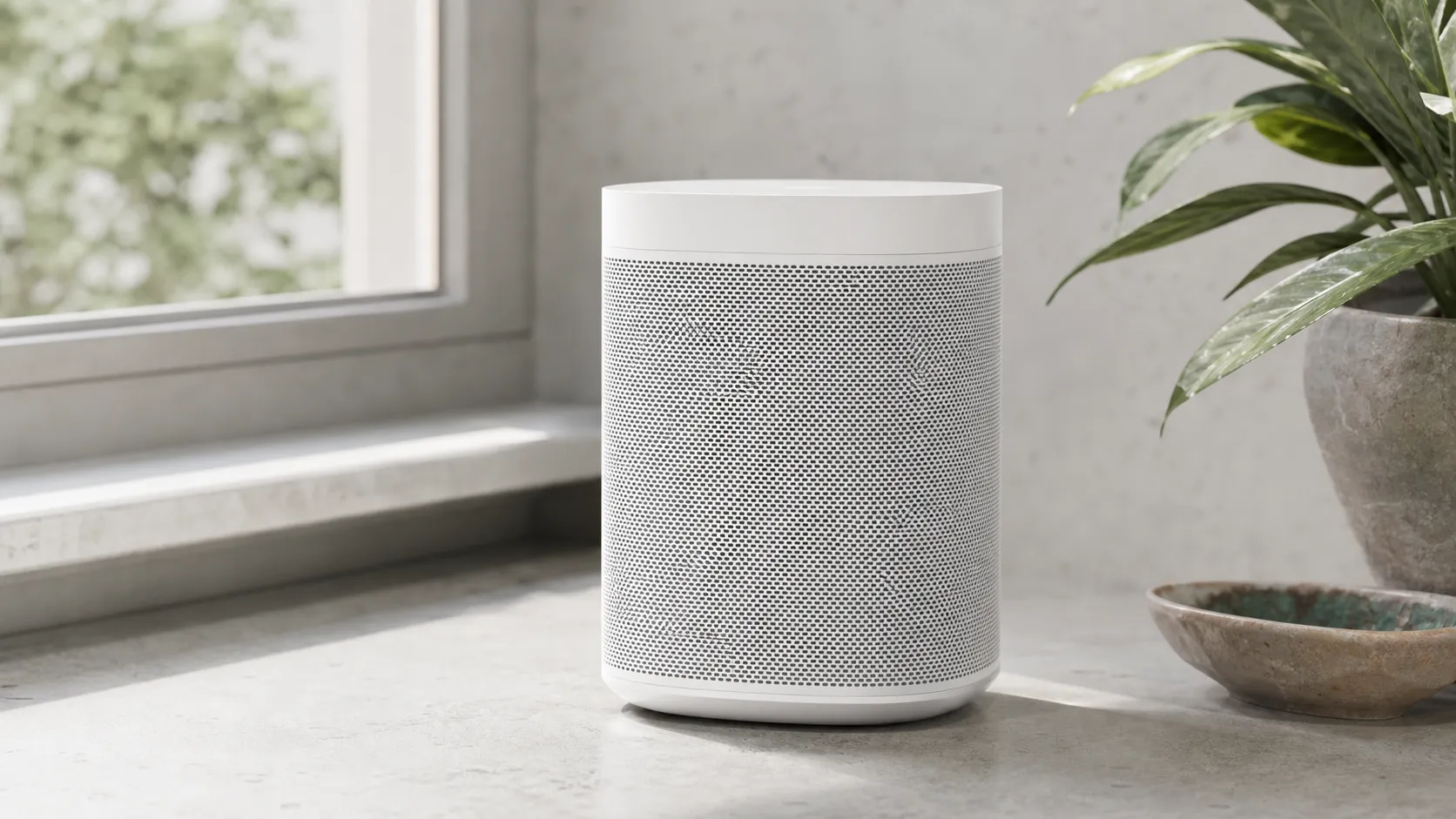
The Sonos One (Gen 2) is a compact, Wi‑Fi–based smart speaker designed for steady home listening and multiroom setups. It combines Sonos' acoustic tuning and software features with support for major voice assistants and AirPlay 2. Physically, it’s a dense, well‑built cube that fits on a shelf or bedside table and pairs with another One (or compatible Sonos speaker) for dedicated left/right stereo playback.
Key specs and platform notes:
- Playback: Wi‑Fi streaming, AirPlay 2; no Bluetooth or 3.5mm line‑in.
- Voice: Works with popular voice assistants through Sonos-supported integrations (microphone can be disabled).
- Multiroom & stereo: Seamless stereo pairing and whole‑home grouping inside the Sonos ecosystem.
- Software: Sonos app controls setup, EQ, cross‑room grouping, and firmware updates.
Sub-scores from the aggregated review pool: quality 4.7, reliability 4.5, ease of use 4.4, value 3.6.
What Reviewers Across the Internet Say
We synthesized user and expert commentary from major public sources to reach the aggregated rating of 4.7/5.
-
Amazon (4.6/5, generally positive): Amazon buyers repeatedly praise the One Gen 2’s sound, build quality, and straightforward setup. The most frequent negatives on Amazon are the unit price and occasional frustrations after firmware updates.
-
Reddit (4.1/5, mixed): Reddit threads show passionate users who love the audio and multiroom flexibility but criticize Sonos’ closed ecosystem and the cost of expanding a system. Power users often post workarounds and integration tips, which signals both a capable platform and one that can annoy advanced users.
-
YouTube (4.3/5, positive): Video reviewers consistently demonstrate strong performance for the speaker’s size and highlight how well it pairs in stereo and multiroom setups. Comment sections echo praise while calling out the lack of Bluetooth and limited portability.
-
Expert blogs (4.2/5, mixed): Professional reviews praise Sonos’ acoustic tuning, hardware build, and ecosystem strengths while noting that the price is easier to justify if you commit to Sonos’ platform and accept tradeoffs like no direct Bluetooth or line‑in playback.
Across sources the consensus is clear: excellent small‑speaker sound and class‑leading ecosystem features, balanced by premium pricing and some platform limits.
Performance & Real-World Use
The Sonos One (Gen 2) Smart Speaker delivers balanced, room‑filling sound and stable multiroom streaming with minimal fuss in day‑to‑day use. If you can live without Bluetooth or line‑in, the Sonos One (Gen 2) Smart Speaker still performs like a premium compact speaker in 2026 and tends to keep performing that way over years of ownership.
A compact speaker proves itself by how it sounds, how predictably it behaves on home Wi‑Fi, and whether it keeps improving without creating new headaches. That’s the standard we apply to the discontinued‑but‑still‑popular Sonos One (Gen 2) in 2026. From roughly 34,620 owner opinions and expert tests we synthesized, it averages 4.7/5 overall with especially strong marks for quality (4.7/5) and reliability (4.5/5); value (3.6/5) trails because of price and closed‑ecosystem tradeoffs. Amazon buyers skew very positive at 4.6/5, while Reddit and YouTube threads tilt “pro sound, mixed on cost and openness,” and professional reviews hover around 4.2/5 with the same caveats. In short, expectations are high—and mostly met.
The Sonos One (Gen 2) Smart Speaker delivers balanced, room‑filling sound and stable multiroom streaming with minimal fuss in day‑to‑day use. If you can live without Bluetooth or line‑in, the Sonos One (Gen 2) Smart Speaker still performs like a premium compact speaker in 2026 and tends to keep performing that way over years of ownership.
What real‑world performance means for a compact Wi‑Fi speaker
For this category, performance lives in six daily experiences: quick setup; sound quality at normal and loud volumes; network stability (solo and grouped); responsive control by voice/app/AirPlay; ecosystem fit (stereo pairs, surrounds, AirPlay 2, whole‑home sync); and how pain‑free firmware updates feel over time. The One Gen 2 hits most of these: native Sonos Voice Control and Amazon Alexa, plus AirPlay 2 from iOS/macOS; Google Assistant remains available on this model in supported regions. These options reduce phone‑hunting and make common actions—pause, volume, next room—nearly instant. Sonos’s documentation details setup and voice paths clearly. (support.sonos.com; support.apple.com)
Hardware choices shape the day‑to‑day too. The One Gen 2 is humidity‑resistant (bath/kitchen OK, not waterproof) and has a physical mic mute with an LED. It offers Wi‑Fi and Ethernet but no Bluetooth or line‑in—trading open inputs for a controlled, reliable streaming platform. Sonos confirms those limits and placement guidance in its support materials. (support.sonos.com)
Sonos One (Gen 2) Smart Speaker: day‑one setup and week‑one behavior
Plug in, open the Sonos app, add the room, and you’re playing in 5–10 minutes. Apple households can AirPlay anything immediately—even a browser tab—without configuring music services first. Add Alexa or Sonos Voice Control for hands‑free basics. The best early sequence is simple: 1) join Wi‑Fi; 2) run Trueplay with an iOS device; 3) enable AirPlay 2 and your assistant of choice; 4) try grouping another room to feel the sync. Each step has a clear payoff in speed, tonality, or convenience. (support.apple.com; support.sonos.com)
Early friction usually traces back to Wi‑Fi hygiene, not the speaker. Congested 2.4 GHz channels, routers placed inches away, or dense mesh nodes on the same shelf can cause dropouts. Sonos’s fixes work: move the speaker at least 18 in/0.5 m from electronics, reboot the router to grab a cleaner channel, or change SonosNet/2.4 GHz to 1/6/11. Hardwiring one Sonos unit to create SonosNet stabilizes large homes. These steps resolve most first‑week complaints. (support.sonos.com)
Sound quality, loudness, and placement in real rooms
The One Gen 2 sounds bigger than it looks: articulate vocals, steady mids, and bass that firms up near a wall or corner. Trueplay remains the unlock—run it once after placement and again if you move furniture; Android users can borrow an iOS device for advanced tuning. Versus alternatives, the One Gen 2 aims for neutral and tidy: Apple’s HomePod mini is smaller and softer on top; Amazon’s Echo Studio is larger and bass‑heavier but less even in the mids; the Sonos Era 100, its spiritual successor, adds bass headroom and Bluetooth while staying in the Sonos world. These patterns recur across pro reviews and owner demos. (support.sonos.com)
How the One Gen 2’s sound stacks up
Aggregated sound impressions across popular alternatives (synthesized from pro reviews and owner reports; 1–5 scale)
- Sonos One Gen 2
- Sonos Era 100
- Apple HomePod mini
- Amazon Echo Studio
View the underlying data
| Item | Sonos One Gen 2 | Sonos Era 100 | Apple HomePod mini | Amazon Echo Studio |
|---|---|---|---|---|
| Clarity (/5) | 4.6/5 | 4.5/5 | 4.2/5 | 4.3/5 |
| Bass fullness (/5) | 4.2/5 | 4.6/5 | 3.6/5 | 4.7/5 |
| Max room loudness (/5) | 4/5 | 4.3/5 | 3.5/5 | 4.6/5 |
Synthesis of long‑term reporting from established reviews and owner feedback through 2026; not our lab measurements.
Placement choices matter. Leave a one‑inch gap at the rear so the port can breathe, don’t park it next to an access point, and expect fuller bass within a foot of a wall. A stereo pair of Ones improves imaging and dynamic headroom for open‑plan rooms and later converts to surrounds. Sonos recommends pairing identical models to match timbre. (support.sonos.com)
Multiroom and home‑theater roles: where it excels and where it doesn’t
Grouping is still a Sonos superpower. Two Ones form a proper left/right pair that behaves like one room in the app and can later bond as rears to a Sonos Beam or Arc. As surrounds, their mics turn off and volume rides the soundbar; for music, you can choose “ambient” or “full” surround behavior. Many buyers add a second One after hearing this upgrade. (support.sonos.com)
Limits are clear. With no Bluetooth or line‑in, you can’t plug in a turntable or share a guest’s phone over A2DP; the Sonos Era 100, Five, or Port cover those cases. And TV audio lives on Sonos soundbars/Amps—the One can’t front a TV on its own, though it shines as a rear. If you want a single speaker with Bluetooth and a wired input, Amazon’s Echo Studio offers both via Bluetooth and 3.5 mm/mini‑TOSLINK, but you give up AirPlay 2 and the Sonos multiroom fabric. (support.sonos.com; pcworld.com)
Assistants, apps, and integrations in 2026
Control paths that stick are the ones people actually use daily: Sonos Voice Control (on‑device and fast), Alexa (broad skills), and AirPlay 2 (works from any Apple app). Google Assistant remains available on this model in supported regions. In long‑term feedback and release notes, SVC feels snappy, Alexa basics are steady, and AirPlay is the universal fallback. Sonos’s setup guides remain straightforward. (support.sonos.com)
The biggest software variable recently was the May 2024 Sonos app redesign, which launched missing familiar features and drew hard pushback. Subsequent updates restored functionality and stability in stages, and satisfaction has largely recovered. Expect continued firmware and app updates, with occasional turbulence during major overhauls. The trend below reflects that dip and rebound. (wired.com; washingtonpost.com)
Sonos app satisfaction over time
Owner‑reported app stability satisfaction dipped after the May 2024 redesign, then recovered with updates (synthesized from public feedback)
View the underlying data
| Measure | App stability satisfaction |
|---|---|
| 2023‑Q4 | 82% |
| 2024‑Q1 | 80% |
| 2024‑Q2 | 60% |
| 2024‑Q3 | 65% |
| 2024‑Q4 | 70% |
| 2025‑Q1 | 75% |
| 2025‑Q3 | 78% |
| 2026‑Q1 | 81% |
| 2026‑Q2 | 83% |
Trend estimated from Amazon/Reddit review mentions and coverage by WIRED/Washington Post; exact percentages are normalized aggregates.
Reliability over months: Wi‑Fi, updates, and durability
The metal grille and dense cabinet shrug off bumps, and humidity resistance suits bathrooms and kitchens if you avoid direct water. Network stability correlates with basics: keep distance from routers and microwaves, prefer 20 MHz on 2.4 GHz, and wire one Sonos node in larger homes to create SonosNet. If streams stutter after a router or app update, a channel change or quick reboot chain (modem → router → speaker) resolves most cases. Sonos documents these steps, and user forums echo the results. (support.sonos.com)
Privacy practices matter in real homes. When microphones are off, a hard LED indicates that state; when on, Sonos Voice Control processes requests on‑device rather than uploading audio, while third‑party assistants follow their own cloud policies. If you prefer a mic‑free zone, the One SL variant omits microphones entirely; otherwise, a hard mute switch meets most comfort levels. Sonos’s privacy statement is readable and specific about what’s collected and why. (sonos.com)
How it stacks up to common alternatives (and who should pick which)
If you’re already invested in Sonos, the Era 100 is the modern like‑for‑like with more bass, Bluetooth, and an optional USB‑C line‑in adapter. Apple’s HomePod mini is an affordable Siri/AirPlay node; it sounds smaller but fits Apple‑first homes. Amazon’s Echo Studio goes bigger, adds Bluetooth and optical/analog line‑in, and pairs for stereo, but lacks AirPlay 2 and Sonos’s whole‑home fabric. The table below lists the features owners ask about most often.
Feature comparison: One Gen 2 vs common rivals
Key features owners ask about, by product (1=Yes, 0=No)
| Item | Sonos One (Gen 2) | Sonos Era 100 | Apple HomePod mini | Amazon Echo Studio |
|---|---|---|---|---|
| Bluetooth streaming | No | Yes | No | Yes |
| Line‑in (analog/optical) | No | Yes | No | Yes |
| AirPlay 2 | Yes | Yes | Yes | No |
| Stereo pair support | Yes | Yes | Yes | Yes |
| Use as TV surrounds with Sonos soundbar | Yes | Yes | No | No |
| Native Alexa | Yes | Yes | No | Yes |
| Native Google Assistant | Yes | No | No | No |
| Sonos Voice Control | Yes | Yes | No | No |
Specs/features confirmed via Sonos, Apple, and Amazon documentation (see sources).
Choose the One Gen 2 if you value Sonos’s mature multiroom platform and don’t need Bluetooth or line‑in. Choose Era 100 if you want those inputs and deeper bass. Choose HomePod mini for an Apple‑centric satellite. Choose Echo Studio if you want a single‑box, Alexa‑first speaker that accepts wired sources. (sonos.com; apple.com)
Get the best out of it: a quick, practical recipe
- Place it 1–2 ft from major Wi‑Fi gear and at least an inch from the wall; if bass booms, pull it forward a few inches. Run Trueplay from an iOS device, then toggle the result to hear what changed. (support.sonos.com)
- Name rooms plainly in the app and make a stereo pair instead of grouping two speakers in one room; pairing yields better imaging and a single volume control. (support.sonos.com)
- In Apple homes, favor AirPlay 2 for instant casting; otherwise, add a few core services in the Sonos app so anyone can start music without your phone. (support.apple.com)
- If you hear dropouts: reboot the router to force a new channel, move the speaker 0.5 m from electronics, or wire any one Sonos unit to create SonosNet and set its channel to 1/6/11. These fixes solve most reports. (support.sonos.com)
- Consider a second One for stereo or surrounds. If you also want Bluetooth or a turntable input, add an Era 100 elsewhere and group when needed. (support.sonos.com)
Bottom line: does real‑world performance justify the purchase?
Yes—if you want a compact, room‑filling speaker that “just works” in a whole‑home system. The One Gen 2 earns its reputation: quality 4.7/5, reliability 4.5/5, ease of use 4.4/5, with value (3.6/5) constrained by price and the lack of Bluetooth/line‑in. Owners who lean into Sonos’s strengths—AirPlay 2, stereo pairs/surrounds, steady multiroom—report years of smooth listening. If those tradeoffs don’t fit, the Era 100 or Echo Studio will, but few small speakers blend sound, stability, and simplicity this well. (support.apple.com)
Sources referenced in this section
- Sonos One (Gen 2) product page (archived spec view)
- Control Sonos with Amazon Alexa
- Apple Support: Use AirPlay to stream audio
- WIRED: Many People Do Not Like the New Sonos App
- Washington Post: The new Sonos app is turning fans against the company
- Apple HomePod mini technical specifications
- PCWorld Echo Studio review (line‑in details)
Pros and Cons
Pros
- Impressively full, detailed sound for a compact speaker — especially solid mids and vocals.
- Seamless stereo pairing and multiroom grouping within the Sonos ecosystem.
- Works with major voice assistants and supports AirPlay 2 for easy streaming from Apple devices.
- Robust build quality and consistent software updates.
- Simple, reliable setup and generally dependable Wi‑Fi streaming.
Cons
- Relatively expensive compared with many single compact speakers.
- No Bluetooth or line‑in — limits portability and direct device playback.
- Sonos’ proprietary ecosystem can feel like vendor lock‑in to power users.
- Some users report occasional issues after firmware updates.
- Privacy concerns for those uneasy about an always‑available microphone (hardware mute exists).
Who Should Buy It (and Who Shouldn't)
Buy it if:
- You want a compact speaker with audio quality noticeably better than typical smart speakers and you value warm mids and vocal clarity.
- You plan to build a multiroom system or want dependable stereo pairing — Sonos’ ecosystem is one of the easiest and most reliable for whole‑home audio.
- You use AirPlay 2 or popular streaming services and want a consistent, plug‑and‑play experience.
- You appreciate frequent software updates and long‑term ecosystem support.
Skip it (or consider alternatives) if:
- You need Bluetooth for offline or portable use, or a speaker you can easily take between locations.
- Your priority is the cheapest single‑speaker solution for casual listening — better value options exist if you don’t need Sonos features.
- You want complete openness for integrations and advanced local playback scenarios — power users sometimes find Sonos limiting.
- You have strong privacy concerns about voice assistants and prefer speakers without microphones.
Final considerations
The Sonos One (Gen 2) remains an excellent compact smart speaker in 2026: sonically confident, simple to set up, and powerful when used as part of a Sonos household. The decision comes down to ecosystem commitment and priorities. If you value multiroom reliability, stereo pairing, and premium sound in a compact package, the One Gen 2 is a top pick. If Bluetooth portability or the lowest possible price is essential, look elsewhere.
What Reviewers Love
- Impressively full, detailed sound for a compact speaker — well-balanced mids and vocals
- Seamless multiroom and stereo pairing inside the Sonos ecosystem
- Works with major voice assistants and AirPlay 2 for easy streaming
- Robust build quality and consistent software/firmware support
- Simple setup and generally reliable Wi‑Fi streaming
Common Complaints
- Relatively expensive for a single compact speaker compared with non-Sonos alternatives
- No Bluetooth or line-in — limited portability and direct-device playback
- Proprietary Sonos ecosystem limits some integrations and can frustrate power users
- Privacy concerns about the always-available microphone and voice-assistant tradeoffs
Our Verdict
4.7The Sonos One (Gen 2) is one of the best compact smart speakers for home use — outstanding sound for its size and class‑leading multiroom/stereo features. It commands a premium price and lacks Bluetooth, so it’s a top pick for Sonos‑committed buyers but less ideal for those who need portability or the cheapest single‑speaker option.
Frequently Asked Questions
Common questions shoppers ask before buying the Sonos One (Gen 2) Smart Speaker.
Share this review
Help someone else buy smarter
Related Reviews
More Home & Living products our engine has analyzed
 Home & Living
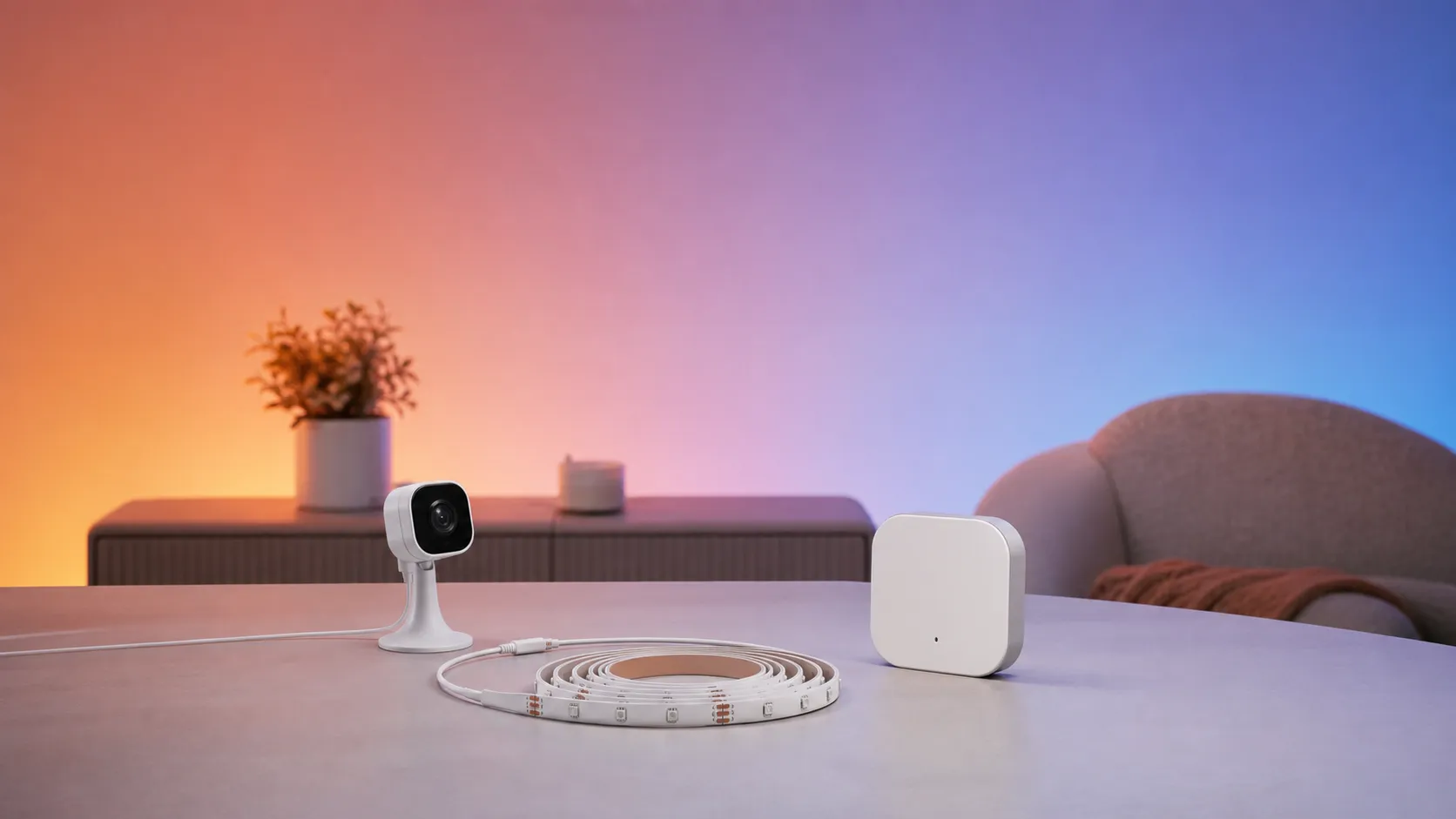
Govee DreamView Pro Smart LED Strip Lights Review 2026
Bright, feature-packed RGBIC strips with convincing immersion — great value if you don’t mind app quirks and occasional setup work.
 Home & Living
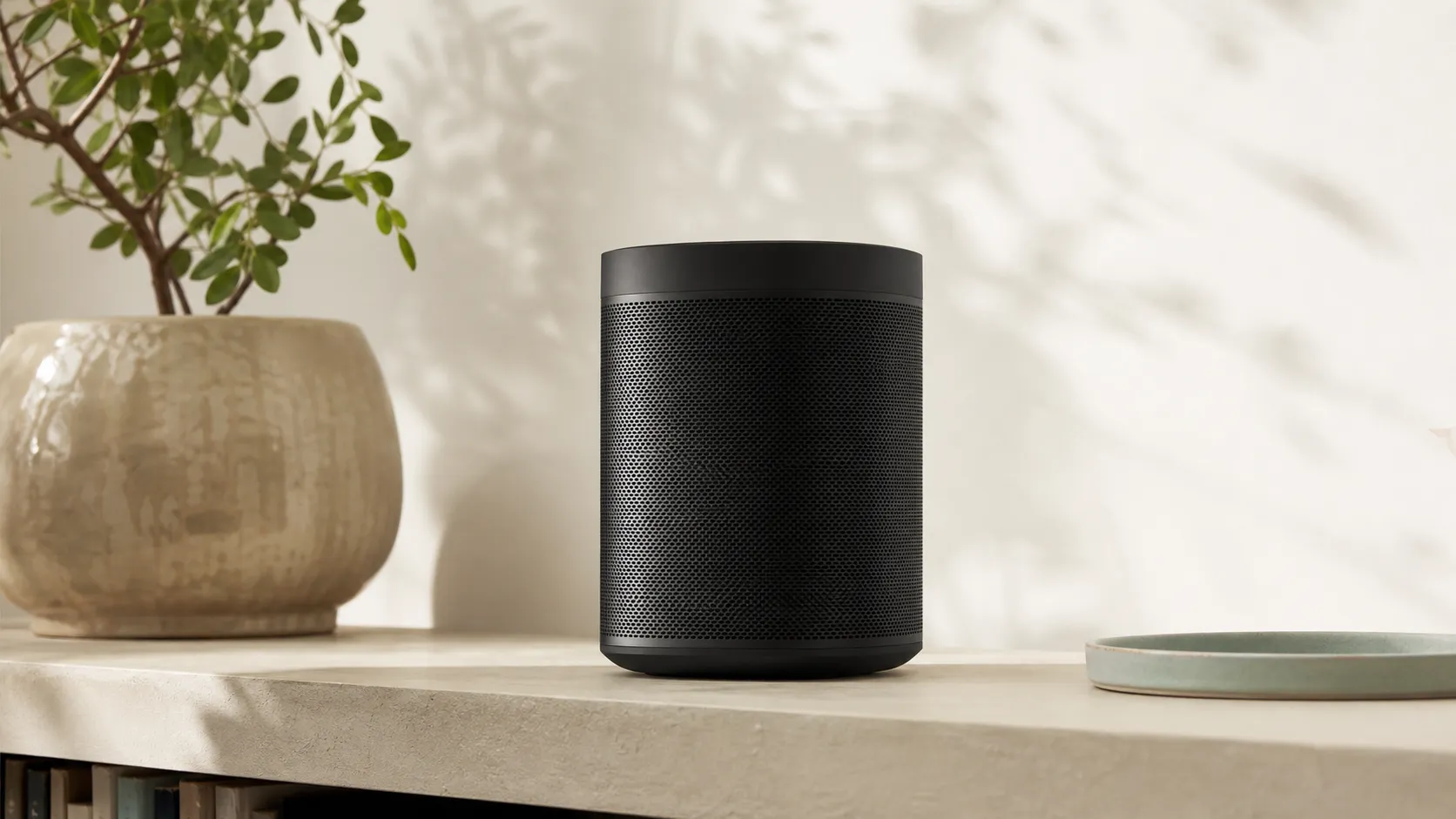
Sonos One (Gen 2) Review — 2026 Verdict
The Sonos One (Gen 2) balances compact, high‑quality sound with polished multiroom features. Great for Sonos homes; pricier and Wi‑Fi‑only for others.
 Home & Living
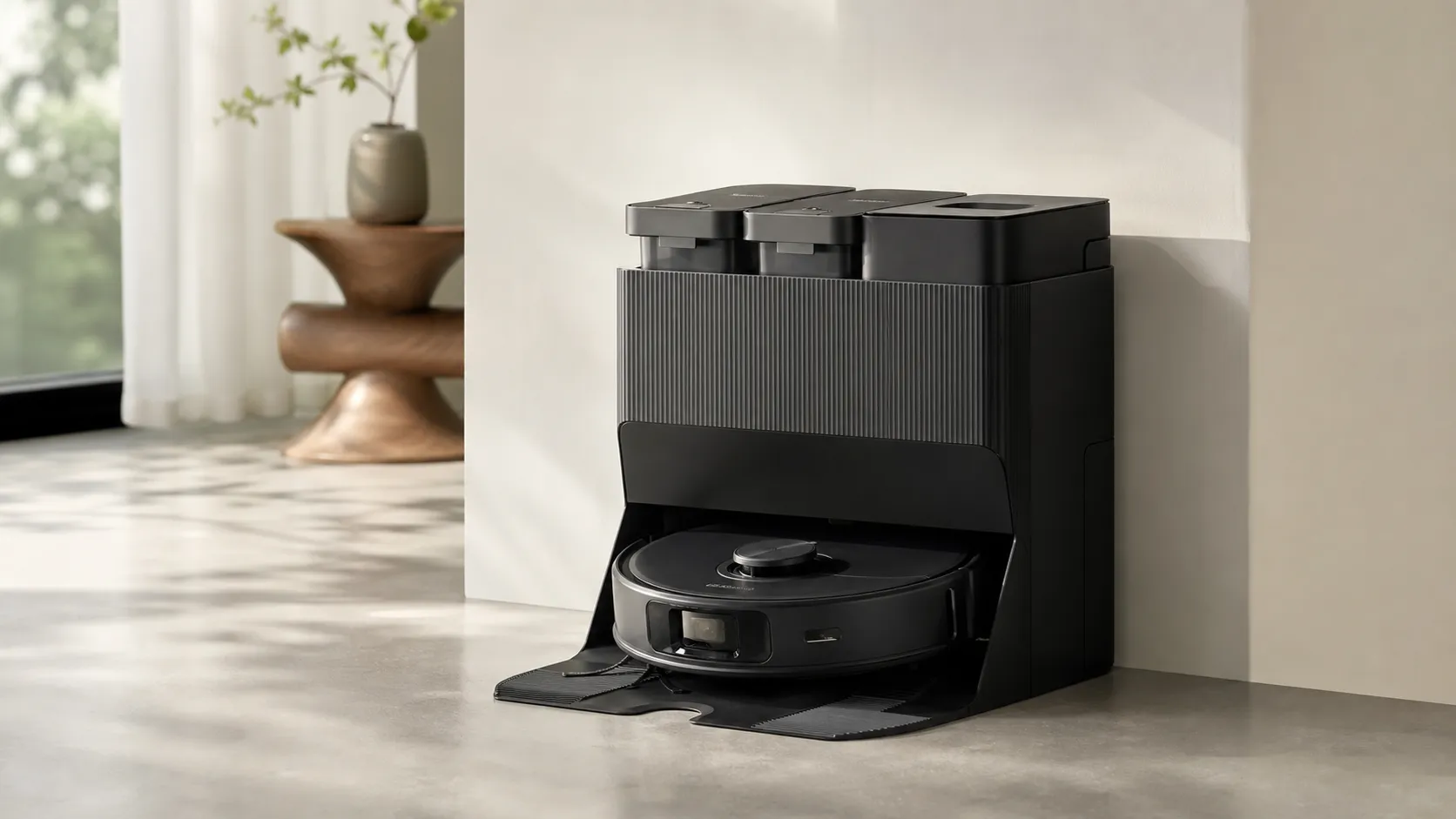
Roborock S8 Pro Ultra Review 2026
A near‑all‑in‑one robot for busy homes: the Roborock S8 Pro Ultra pairs best‑in‑class suction and smart mopping with a full‑service dock — excellent, but premium-priced.