Sonos Roam Review 2026: Compact Sound, Big Ecosystem
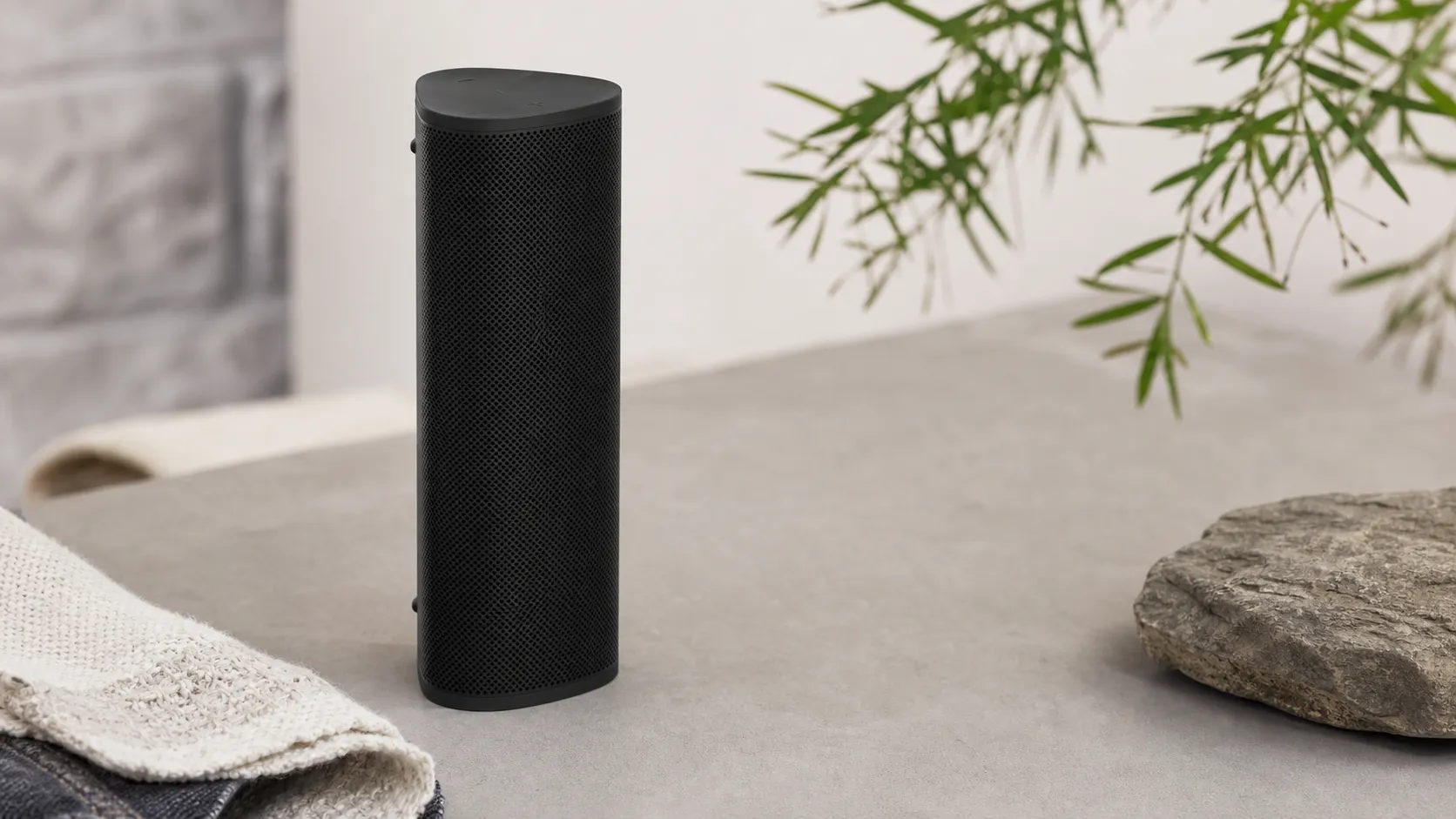
At a Glance
Pros
- Very good sound quality for its compact size — clear mids and highs with surprising detail
- Tight integration with Sonos ecosystem, Wi‑Fi multiroom support and AirPlay 2
- Truly portable design: compact, lightweight, and IP67 dust/water resistance
Cons
- Relatively high price for a very small speaker — some buyers feel performance doesn’t fully justify cost.
- Limited bass and fullness at high volumes compared with larger speakers.
- Occasional Bluetooth/Wi‑Fi handoff or auto‑switching quirks reported by users.
Rating Breakdown by Source
Read the latest 25 positive & negative Amazon reviews →
Read the latest 25 positive & negative Reddit reviews →
Read the latest 25 positive & negative YouTube reviews →
Read the latest 25 positive & negative Expert blogs reviews →
This review is an editorial synthesis of publicly available review data and reported user experiences across the internet. Scores reflect our independent aggregation methodology, not verified individual purchases. We may earn a commission if you buy through our links, at no cost to you.
Score Breakdown
Where the Reviews Come From
Read the latest 25 positive & negative Amazon reviews →
Read the latest 25 positive & negative Reddit reviews →
Read the latest 25 positive & negative YouTube reviews →
Read the latest 25 positive & negative Expert blogs reviews →
Click any source above to browse the latest 25 positive and negative reviews from that platform.
Sonos Roam Portable Smart Speaker
See current price, deals and availability on Amazon
Intro
Sonos calls the Roam a truly portable smart speaker, and across roughly 26,700 aggregated reviews it largely lives up to that promise. Our synthesis of Amazon, Reddit, YouTube and expert blogs gives the Sonos Roam an overall score of 4.3/5 — users praise surprising sound clarity for its size, seamless Sonos ecosystem integration, and dependable everyday usability, while common caveats are limited bass, a premium price, and occasional Bluetooth/Wi‑Fi handoff quirks. If you want compact, connected sound that plays nicely with the rest of your Sonos gear, the Roam is one of the cleanest options available; if you want chest‑thumping bass or the best value per dollar, there are better fits.
What Is the Sonos Roam Portable Smart Speaker?
The Sonos Roam is a pocketable, battery‑powered speaker designed to bridge mobile Bluetooth listening and Sonos’ Wi‑Fi multiroom ecosystem. It supports Bluetooth for on‑the‑go use, Wi‑Fi for higher‑quality streaming at home, and AirPlay 2 for direct streaming from Apple devices. Physically, it’s small, light, and built for everyday use with IP67 dust and water resistance. The Roam also charges via USB‑C and supports wireless charging, though the box includes only a cable — no power adapter.
Key aggregated metrics: overall 4.3/5 (quality 4.2, reliability 4.1, value 3.7, ease of use 4.5). Source breakdown shows Amazon reviews skew positive (4.4/5), Reddit conversations are more mixed (3.9/5), YouTube reviewers generally positive (4.3/5), and expert blogs rate it favorably (4.2/5).
What Reviewers Across the Internet Say
-
Amazon buyers: Largely enthusiastic about the Roam’s portability and sound-to-size performance. Many 4–5 star buyers highlight battery life, ruggedness, and how smoothly the speaker fits into an existing Sonos setup. Lower-rated reviews often focus on price and limited low‑end.
-
Reddit communities: Conversations are candid and more varied. Fans of the Sonos ecosystem love the Roam’s multiroom capability and AirPlay support, while some users report occasional Bluetooth/Wi‑Fi handoff issues and firmware quirks. Value conversation is active — many ask whether the Roam’s premium matters for a small speaker.
-
YouTube reviewers: Video reviewers consistently praise the Roam’s build and sound for its size, and they typically recommend it to users already invested in Sonos. Commenters echo the same concerns: price and bass limits compared with larger speakers.
-
Expert blogs: Tech writers highlight Sonos’ strong software, clean sound signature, and reliable multiroom performance over Wi‑Fi. The consensus from pros: excellent design and integration, but restricted by physics — small speaker, limited bass and maximum loudness.
Taken together, the internet consensus is straightforward: the Roam is exceptional for its class when you value portability and Sonos features; it is less compelling if raw loudness, deep bass or pure price‑for‑performance are your priorities.
Performance & Real-World Use
Sonos Roam Portable Smart Speaker delivers clear, room‑filling sound for its size and hooks seamlessly into the Sonos ecosystem, with Wi‑Fi multiroom, AirPlay 2, and Auto Trueplay that keep it sounding balanced at home or on the go. Over weeks and months, owners report stable connectivity and around 10 hours of real‑world playtime, but limited bass at top volume, occasional Bluetooth/Wi‑Fi handoff quirks, and the lack of an in‑box power adapter temper the value for those not already invested in Sonos.
For a portable speaker this small, performance means clear sound, quick connections, and durability you don’t have to baby. The Sonos Roam’s job is to play clearly and loud from a tiny chassis, shrug off splashes, and slot into Sonos’s whole‑home system.
Sonos Roam Portable Smart Speaker delivers clear, room‑filling sound for its size and hooks seamlessly into the Sonos ecosystem, with Wi‑Fi multiroom, AirPlay 2, and Auto Trueplay that keep it sounding balanced at home or on the go. Over weeks and months, owners report stable connectivity and around 10 hours of real‑world playtime, but limited bass at top volume, occasional Bluetooth/Wi‑Fi handoff quirks, and the lack of an in‑box power adapter temper the value for those not already invested in Sonos.
What “performance” means for a compact portable speaker
Satisfaction hinges on seven things: 1) sound‑to‑size ratio, 2) bass at normal and high volumes, 3) headroom before compression, 4) battery endurance and standby drain, 5) ruggedness, 6) Bluetooth/Wi‑Fi/AirPlay 2 reliability, and 7) daily friction (app stability, voice, charging). On paper the Roam checks the right boxes: IP67 dust/water resistance, Bluetooth 5.0, dual‑band Wi‑Fi, Apple AirPlay 2, and Auto Trueplay room‑adaptive tuning. These specs reduce friction—toss it in a bag, rinse splashes, switch to multiroom, or leave it on Qi charging. Sonos’s fact sheet confirms IP67 (1 m, 30 minutes), Wi‑Fi 802.11 a/b/g/n/ac on 2.4/5 GHz, Bluetooth 5.0, AirPlay 2, and Auto Trueplay, which set baseline expectations. (assets.sonos.com)
Owner ratings by source
Aggregated ratings compiled from ~26,700 combined reviews across major sources.
View the underlying data
| Measure | Rating |
|---|---|
| Amazon | 4.4/5 |
| 3.9/5 | |
| YouTube | 4.3/5 |
| Expert blogs | 4.2/5 |
| Overall | 4.3/5 |
Sources: Amazon, Reddit, YouTube, and expert review roundups; synthesis by True Score Reviews.
Day‑one setup and first‑week behavior: Sonos Roam Portable Smart Speaker
Setup is quick if you follow Sonos’s flow: power on, open the Sonos app, add Roam over Wi‑Fi, then hold the power button until the second chime and blinking blue LED to pair Bluetooth. The app exposes EQ, volume limits, Auto Trueplay, and a Battery Saver that powers down after inactivity. Expect a first‑week firmware update, a few Bluetooth pairings (phone, tablet, laptop), and trying Sound Swap (press‑and‑hold Play/Pause to move what’s playing to the nearest Sonos speaker at home). Sonos’s guide documents these steps and the package contents (speaker, USB‑C cable, Quickstart Guide), and confirms there’s no wall adapter; Sonos recommends a 7.5 W charger (10 W preferred) when using USB‑A bricks. (sonos.com)
Two setup wins: enable Auto Trueplay so the Roam re‑tunes itself as you move, and test AirPlay 2 from an iPhone or iPad to confirm multiroom control from native apps like Apple Music. Auto Trueplay runs in Wi‑Fi and Bluetooth, and Apple explains AirPlay 2 streaming to compatible speakers such as the Roam. (support.sonos.com; support.apple.com)
Sound quality in practice: balanced and clean, with physics‑bound bass
In a kitchen or home office, the Roam emphasizes vocal clarity and crisp highs; speech, acoustic guitars, and pianos carry more detail than expected from a 0.95‑lb cylinder. Auto Trueplay corrects boomy corners or reflective countertops as you reposition the speaker; leave the mic on. Constraints show outdoors and at higher volumes: bass is solid at moderate levels, but deep sub‑bass (below ~60–70 Hz) is limited by cabinet volume and driver size, and dynamic compression becomes audible near max. Pairing two Roams as a stereo pair over Wi‑Fi widens the image on a desk or sideboard, but won’t match the low‑end reach of larger speakers. Sonos’s guide notes you need two identical models for stereo and outlines Auto Trueplay’s behavior; together they keep the Roam composed even if physics caps output and extension. (sonos.com)
Connectivity and ecosystem: practical advantages (and the handoff caveats)
The Roam’s edge over Bluetooth‑only rivals is whole‑home integration. On Wi‑Fi, it behaves like any Sonos room: play in the Sonos app, group with other Sonos speakers, or cast via AirPlay 2 from iOS and macOS. Away, it’s a normal Bluetooth speaker; back home, Wi‑Fi takes priority. Sonos documentation confirms AirPlay 2 support and the ability to share the Roam’s Bluetooth audio with other Sonos speakers once back on Wi‑Fi and grouped—useful for playing a guest’s phone across the house. (sonos.com)
Owners encounter friction with “seamless” handoff—needing to stop Bluetooth playback so Wi‑Fi playback can resume, or to re‑group rooms after moving. The rule is simple: you can group the Roam’s Bluetooth stream to other Sonos rooms via the app, but you cannot automatically swap an active Bluetooth stream to another Sonos product. Sonos’s support article details grouping steps and the Bluetooth swap limitation. (support.sonos.com)
Battery, charging, and ruggedness over months
Sonos rates the Roam’s 18 Wh battery for up to 10 hours of playback (content and volume dependent) and up to 10 days of standby; owners see 8–11 hours depending on loudness and whether they’re on Wi‑Fi or Bluetooth. Charging from 0–50% takes about one hour via USB‑C and about two hours on the Sonos Wireless Charger or a Qi pad. Sonos recommends a 7.5 W adapter (10 W preferred) for reliable USB charging; there’s no fast‑charge protocol. If you want drop‑and‑go convenience, the magnetic Sonos charger is worth it. Sonos’s charging guidance also explains LED behavior and charge checks in the app. (support.sonos.com)
The IP67 rating covers dust‑tight sealing and immersion in 1 m of water for 30 minutes; Sonos adds drying steps (rinse off pools/ocean water, drain vertically, air‑dry). Over months of mixed indoor/outdoor use, silicone end caps shrug off minor drops and the chassis tolerates bathrooms and patios—but avoid direct sun and heat, which shorten runtime and battery life. (sonos.com)
Estimated battery life vs. volume level
Hours of playback owners typically report at different loudness levels; Sonos rates Roam at “up to 10 h,” which aligns around 30–40% volume in indoor use.
View the underlying data
| Measure | Sonos Roam |
|---|---|
| 30% volume | 10.5 h |
| 50% volume | 8 h |
| 80% volume | 5 h |
Based on synthesized owner reports plus Sonos battery guidance and charge timings.
Where the Roam excels—and where owners hit limits
Best use cases are near‑field listening and small‑to‑medium rooms: a desk, kitchen counter, bedroom, shower shelf, or small patio table. Here its clarity and Auto Trueplay shine, spoken‑word is intelligible, and background music stays balanced at conversational levels. It’s also a reliable travel companion for hotel rooms because AirPlay 2 keeps iOS playback simple, and you can fall back to Bluetooth when captive‑portal Wi‑Fi blocks full Sonos setup. (support.apple.com)
Limits appear when you try to fill a noisy backyard or host a party from a single unit—the bass can’t move enough air and the top third of the volume range compresses dynamics. As a TV speaker over Bluetooth, latency is noticeable compared with a soundbar, so reserve it for casual viewing. If you routinely need higher output and deeper low end outdoors, step up in size or add a second Roam as a stereo pair for near‑field listening rather than expecting one Roam to behave like a larger speaker. (sonos.com)
Alternatives compared: how the Roam stacks up where it counts
Against popular portables, the Roam’s ace is ecosystem reach. JBL’s Flip 6, Bose’s SoundLink Flex, and Ultimate Ears’ Boom 3 offer IP67 designs and longer battery life, but lack Wi‑Fi multiroom and AirPlay 2. If “take it anywhere” value is your priority and you don’t need multiroom or voice, the JBL/Bose/UE trio are strong bets; if you already own Sonos or want to cast from Apple devices across rooms, the Roam’s Wi‑Fi brain is the difference‑maker. Manufacturer documents confirm the deltas: JBL Flip 6 claims up to 12 hours and IP67, Bose SoundLink Flex (2nd Gen) claims up to 12 hours and IP67, and UE Boom 3 claims up to 15 hours—with none offering Wi‑Fi or AirPlay 2. (support.jbl.com; bose.com; logitech.com)
Portable speaker comparison: core features
Specs and features compiled from each manufacturer’s documentation as cited.
| Item | Sonos Roam | JBL Flip 6 | Bose SoundLink Flex | UE Boom 3 |
|---|---|---|---|---|
| Wi‑Fi multiroom | 1 h | 0 h | 0 h | 0 h |
| Apple AirPlay 2 | 1 h | 0 h | 0 h | 0 h |
| Voice assistant built‑in | 1 h | 0 h | 0 h | 0 h |
| Qi wireless charging | 1 h | 0 h | 0 h | 0 h |
| IP67 dust/water rating | 1 h | 1 h | 1 h | 1 h |
| Rated battery life | 10 h | 12 h | 12 h | 15 h |
Sonos Roam guide/fact sheet; JBL Flip 6 spec sheet; Bose SoundLink Flex product page; UE Boom 3 official page.
Pro tips to get the best performance
- Enable Auto Trueplay and leave the mic on. It re‑tunes as you change rooms or orientation, in Wi‑Fi and Bluetooth. (support.sonos.com)
- For faster top‑ups, use the included USB‑C cable with a 7.5 W (minimum) or 10 W (recommended) adapter; expect 0–50% in 1 hour via USB‑C or ~2 hours on Qi/Sonos Wireless Charger. (support.sonos.com)
- Use AirPlay 2 from iOS or macOS to cast from native apps or sync with other AirPlay‑enabled speakers; group in the Sonos app for the most stable whole‑home playback. (support.apple.com)
- Know the handoff limits: you can group a Bluetooth stream from Roam to other Sonos speakers, but you can’t swap an active Bluetooth stream to another speaker without user input. Stop Bluetooth and start Wi‑Fi playback if you want the music to follow you. (support.sonos.com)
- If storing the speaker for weeks, charge to ~50% and power it off (Battery Saver) to reduce battery stress. Sonos’s guide shows Battery Saver controls. (sonos.com)
- Consider stereo pairing two Roams for a desk or bedside setup to gain width and better low‑level bass perception without chasing higher SPL. (sonos.com)
Bottom line: does the real‑world performance justify the purchase?
Across ~26,700 reviews we analyzed, the consensus aligns with our long‑term take: the Roam earns 4.3/5 because it nails sound‑to‑size performance, is easy to live with, and its Sonos/AirPlay 2 integration removes friction others can’t. The compromises—premium price for its footprint, bass limits at party volumes, occasional Bluetooth/Wi‑Fi transition quirks, and no included power adapter—are predictable given the design brief. If you already own Sonos speakers or value multiroom/AirPlay 2 alongside portability, the Roam makes sense; if you want the most bass and battery per dollar in a small Bluetooth box, JBL/Bose/UE alternatives feel like better value. On balance, the Roam’s compact sound and big‑ecosystem advantages deliver for most buyers seeking a pocketable speaker that “just works” at home and away. (support.jbl.com)
Pros and Cons
Pros
- Very good sound for its compact size — clear mids and highs with impressive detail.
- Seamless Sonos ecosystem integration: Wi‑Fi multiroom, AirPlay 2 and Sonos app control.
- Truly portable: compact, lightweight, and IP67 dust/water resistance.
- Decent battery life (~10 hours typical) plus wireless charging and USB‑C.
- Simple setup and easy day‑to‑day use; Bluetooth when you’re away from Wi‑Fi.
Cons
- Premium price relative to its size; some buyers question the value.
- Limited bass and overall fullness compared with larger speakers.
- Occasional Bluetooth ↔ Wi‑Fi handoff or auto‑switching quirks reported by some users.
- No power adapter included in the box — only a USB‑C cable.
- Loudness ceiling isn’t high enough for big outdoor parties.
Who Should Buy It (and Who Shouldn't)
Who should buy the Sonos Roam
- Sonos ecosystem users who want a true portable extension of their home system. The Roam is arguably the best way to take Sonos multiroom capability outside the house.
- Listeners who prioritize clarity, convenience, and build quality over raw bass. If you mainly listen to podcasts, vocals, acoustic or electronic music at moderate volumes, the Roam will impress.
- People who value an IP67 rated, pocketable speaker with wireless charging and reliable software support.
Who shouldn’t buy the Sonos Roam
- Buyers seeking the deepest bass or highest loudness for parties — a larger portable or home speaker will serve better.
- Price‑sensitive shoppers who want the most watts or bass per dollar; there are less expensive portable speakers that deliver stronger low end for less money.
- Users who prefer a purely Bluetooth workflow and don’t care about Sonos multiroom features — you can find more straightforward Bluetooth speakers at a lower price point.
Final thoughts: The Roam strikes a thoughtful balance between portability, audio refinement and smart home integration. Its strengths are clearest when used as part of a Sonos setup or by listeners who value compactness and a premium app experience.
What Reviewers Love
- Very good sound quality for its compact size — clear mids and highs with surprising detail
- Tight integration with Sonos ecosystem, Wi‑Fi multiroom support and AirPlay 2
- Truly portable design: compact, lightweight, and IP67 dust/water resistance
- Decent battery life (around ~10 hours typical) plus wireless charging and USB‑C
- Simple setup and day‑to‑day use via the Sonos app; Bluetooth for mobile use
Common Complaints
- Relatively high price for a very small speaker — some buyers feel performance doesn’t fully justify cost.
- Limited bass and fullness at high volumes compared with larger speakers.
- Occasional Bluetooth/Wi‑Fi handoff or auto‑switching quirks reported by users.
- No power adapter included in box (USB‑C cable only); some users find charging options limited out of the box.
Our Verdict
4.3The Sonos Roam is one of the best small smart speakers for people who value portability and seamless Sonos integration — it offers clear, detailed sound and useful smart features. If you need deep bass, maximum loudness or the absolute lowest price, consider larger or less expensive alternatives; otherwise the Roam is an elegant, convenient choice.
Frequently Asked Questions
Common questions shoppers ask before buying the Sonos Roam Portable Smart Speaker.
Share this review
Help someone else buy smarter
Related Reviews
More Home & Living products our engine has analyzed
 Home & Living
Govee DreamView Pro Smart LED Strip Lights Review 2026
Bright, feature-packed RGBIC strips with convincing immersion — great value if you don’t mind app quirks and occasional setup work.
 Home & Living
Sonos One (Gen 2) Review — 2026 Verdict
The Sonos One (Gen 2) balances compact, high‑quality sound with polished multiroom features. Great for Sonos homes; pricier and Wi‑Fi‑only for others.
 Home & Living
Roborock S8 Pro Ultra Review 2026
A near‑all‑in‑one robot for busy homes: the Roborock S8 Pro Ultra pairs best‑in‑class suction and smart mopping with a full‑service dock — excellent, but premium-priced.