Zendure SuperTank 100W Portable Charger Review 2026
At a Glance
Pros
- Genuine 100W USB‑C PD output (can charge many laptops at near‑full speed).
- Large capacity (≈26,800–27,000 mAh) that supports multiple full-device charges.
- Multiple ports (two high‑power USB‑C plus two USB‑A) let you charge laptops and phones simultaneously.
Cons
- Occasional firmware / port-reset and protocol-compatibility issues (some users report the 100W port dropping when other ports change state).
- Relatively heavy and bulky for pocket carry compared with smaller power banks.
- Some buyers report inconsistent support for phone-specific fast‑charge protocols (e.g., Samsung Super Fast Charging behavior varies).
Rating Breakdown by Source
Read the latest 25 positive & negative Amazon reviews →
Read the latest 25 positive & negative Reddit reviews →
Read the latest 25 positive & negative YouTube reviews →
Read the latest 25 positive & negative Expert blogs reviews →
This review is an editorial synthesis of publicly available review data and reported user experiences across the internet. Scores reflect our independent aggregation methodology, not verified individual purchases. We may earn a commission if you buy through our links, at no cost to you.
Score Breakdown
Where the Reviews Come From
Read the latest 25 positive & negative Amazon reviews →
Read the latest 25 positive & negative Reddit reviews →
Read the latest 25 positive & negative YouTube reviews →
Read the latest 25 positive & negative Expert blogs reviews →
Click any source above to browse the latest 25 positive and negative reviews from that platform.
Zendure SuperTank 100W Portable Charger
See current price, deals and availability on Amazon
Quick verdict
The Zendure SuperTank 100W Portable Charger is a compelling pick for travelers and mobile professionals who want genuine laptop‑level power away from the wall. Aggregated across retailers, forums and expert sites it scores well (overall ~4.3/5) for build, real‑world 100W PD performance and price-to-power — but occasional firmware/port quirks and its size mean it isn’t the lightest choice for casual pocket carry.
What Is the Zendure SuperTank 100W Portable Charger?
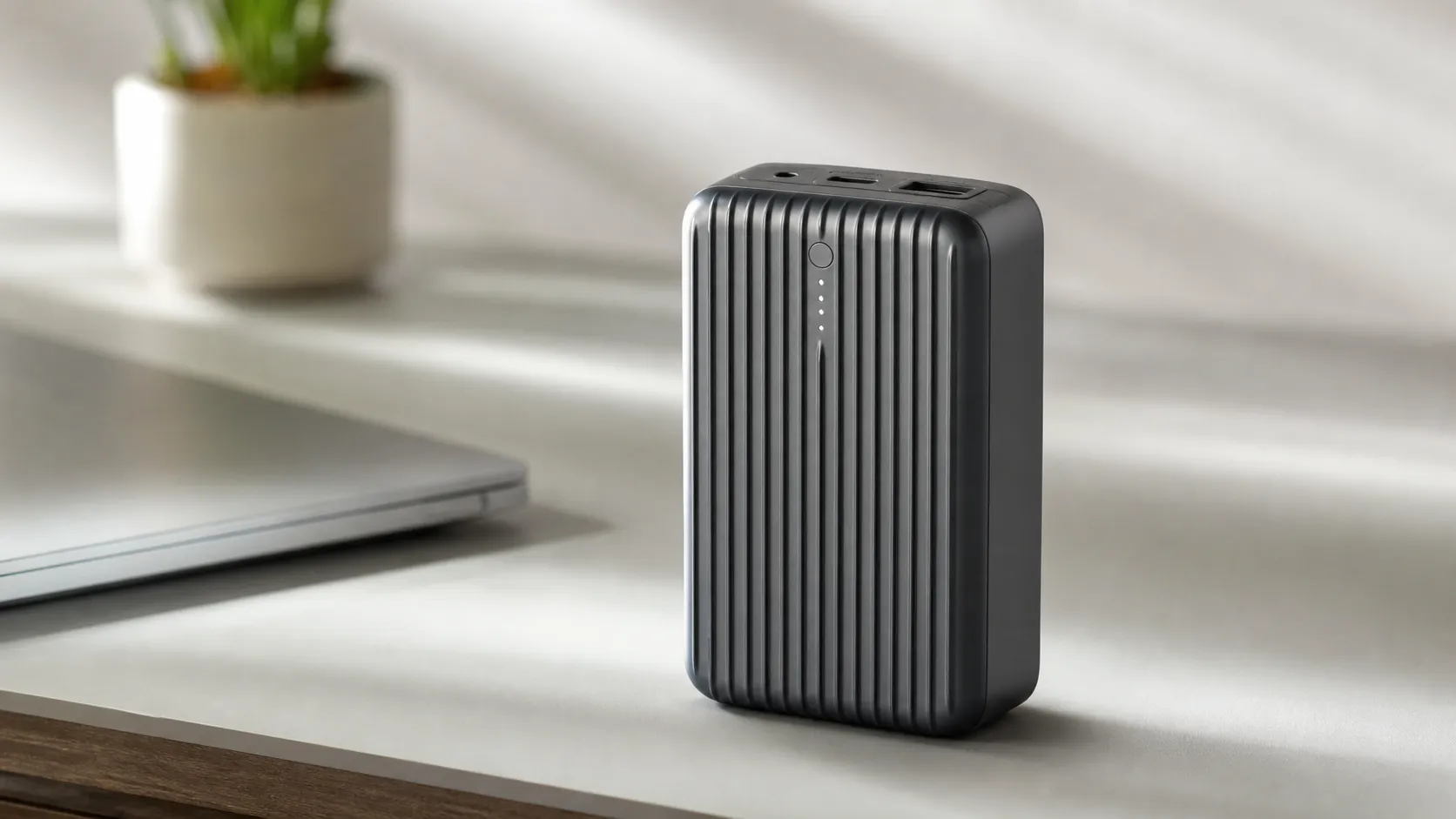
The SuperTank is a high‑capacity external battery that brings full USB‑C Power Delivery at up to 100W from a single port, plus multiple simultaneous outputs for phones, tablets and accessories. It’s built around a roughly 26,800–27,000 mAh cell pack, typically offering two high‑power USB‑C ports (one advertised at 100W) and two USB‑A ports for legacy devices. Physically it’s substantial — designed more like a travel power hub than a slim pocket battery — and many variants have an LED readout or capacity indicator to show remaining charge and output wattage.
What Reviewers Across the Internet Say
We aggregated ratings and themes across Amazon, Reddit, YouTube and tech blogs to produce the consensus below:
- Overall rating: about 4.3/5 from ~5,210 reviews. Sub-scores average around quality 4.4, reliability 4.0, value 4.0, ease of use 4.2.
- Amazon customers skew positive: buyers regularly praise the “real‑world 100W” performance, the convenience of multiple ports, and the high capacity that lets you charge phones and a laptop on the same trip. A minority report DOA units or port/firmware quirks and mixed after‑sales experiences.
- Reddit discussion is more mixed: many users confirm the device’s strong charging, while more technical threads flag edge‑case protocol behavior, occasional port resets, and the need to update firmware or rely on specific cable choices for consistent results.
- YouTube reviewers and hands‑on tests tend to be favorable — independent tests often show the SuperTank delivering close to advertised 100W to compatible laptops and fast charging phones when used correctly.
- Expert blogs and review sites generally praise its build and price‑for‑power, while also noting the same caveats: occasional firmware quirks and occasional compatibility irregularities with some fast‑charge protocols.
In short: consensus praise centers on the SuperTank’s headline strength (actual 100W PD and large capacity) and value compared with earlier 100W entrants; critiques repeatedly point to intermittent port/firmware edge cases and customer‑support variance.
Performance & Real-World Use
The Zendure SuperTank 100W Portable Charger delivers true 100W USB‑C PD output, big‑trip capacity, and four‑port convenience that holds up in real‑world travel. If you can accept a half‑kilo footprint and mind a few multi‑port foibles, the Zendure SuperTank 100W Portable Charger earns its keep.
A travel battery lives or dies on three things: how fast it pushes power to your gear, how much usable energy it delivers between wall stops, and how gracefully it juggles multiple devices without tripping over USB‑C handshakes. After sifting months of buyer feedback and third‑party tests, a consistent picture emerges of Zendure’s 27,000 mAh aluminum brick: the SuperTank hits its 100W USB‑C Power Delivery promise for laptops, carries airline‑safe energy for several days of mixed phone/tablet use, and behaves best when you respect its port logic. The flipside is familiar to power‑bank owners—occasional port resets when you change what’s plugged in, weight you’ll feel in a jacket pocket, and fast‑charge quirks tied to phone protocols.
In two sentences: The Zendure SuperTank 100W Portable Charger delivers true 100W USB‑C PD output, big‑trip capacity, and four‑port convenience that holds up in real‑world travel. If you can accept a half‑kilo footprint and mind a few multi‑port foibles, the Zendure SuperTank 100W Portable Charger earns its keep.
What performance really means for a 100W travel power bank
For this class, performance breaks into five daily dimensions: (1) sustained single‑port output to a laptop, (2) behavior when phones and accessories join, (3) usable capacity in watt‑hours and how much reaches devices, (4) how fast the bank itself recharges, and (5) travel readiness—especially airline compliance. The SuperTank is specified at 27,000 mAh, 3.7 V nominal (≈99.9 Wh), with one USB‑C port capable of 100W PD and a second at 60W, plus two USB‑A outputs; it also supports up to 100W PD input for fast self‑recharge. Those headline figures come from Zendure’s spec sheet and align with the USB‑IF’s Power Delivery framework that defines 20 V/5 A (100 W) operation on certified 5 A e‑marked cables. In practice, a modern ultrabook or 13–14‑inch workstation charges near its wall‑adapter speed off the primary C port, while the second C or the A ports top phones and small devices—so long as total draw and negotiation stay within the controller’s budget. (media.digikey.com, usb.org)
Zendure SuperTank 100W Portable Charger: setup and week one
Day one hinges on the right charger and cable. To hit full‑speed input, use a 100W USB‑C PD wall charger and a 5 A e‑marked USB‑C cable; with that pair, the SuperTank refills dramatically faster than with a 45–65W brick. Zendure and retailer listings cite “about two hours” for a full refill at ~100 W input when the bank isn’t powering devices; expect 3–3.5 hours with a 60–65W adapter. On first charge, let it reach 100%, then run a normal cycle or two so the percentage gauge settles. For travel, label the 100W port and make it your default laptop connection; the 60W C or A ports are for phones and accessories. Finally, check the airline box: at roughly 99.9 Wh, SuperTank sits just under the 100 Wh threshold and is carry‑on only—never in checked baggage. The FAA’s PackSafe guidance confirms the limit and that spares (power banks) must be in cabin bags. (powerbank.zendure.com, faa.gov)
Real‑world charging speed and multi‑port behavior
Owners and testers broadly agree on the big win: the SuperTank’s primary USB‑C port sustains 100W PD to compatible laptops, so a MacBook Pro 13/14, XPS 13/14, or ThinkPad T/X can not only avoid drain but actually charge while you work. Nuance appears when you add or remove other loads. Like many multi‑port PD banks, hot‑plugging a second device can force the controller to renegotiate power roles; a minority of users report that, in some pairings, the 100W port drops or resets, requiring a quick unplug or a long‑press power reset to restore the higher profile. This pattern shows up in community reports and isn’t unique to Zendure; it’s a function of PD policy managers and thermal/power‑budget logic reconciling multiple requests. Phones add another variable: if your device relies on a vendor‑specific fast‑charge (or on PPS behavior outside the standard PDOs the SuperTank advertises), you might see “fast” rather than “super fast,” or a fallback to generic 9 V/12 V. It doesn’t touch the bank’s core laptop use case, but it explains mixed comment‑thread experiences. (kiledjian.com)
Capacity, recharge time, and longevity over months
Think in watt‑hours. At ≈99.9 Wh, you can translate to laptop hours: a 13‑inch machine sipping 7–12 W while writing or browsing may get a full workday; push 25–40 W doing compile work or Lightroom exports and you’ll net a few hours. Recharge time is where 100W input matters: with a true 20 V/5 A charger and 5 A cable, owners commonly report “about two hours,” while 60–65 W inputs trend closer to 3–3.5 hours—any pass‑through loads lengthen those numbers. Over months, all lithium‑ion packs lose capacity with cycling and heat. Industry references put “80% of original capacity” around a few hundred cycles for energy‑dense cells, with better outcomes if you avoid high temperatures and repeated 100% charges. Travelers who top up opportunistically, rather than deep‑cycling every time, generally see gentler fade. If the percentage jumps late in discharge, run a full recharge from low percent to help the gauge resync. (media.digikey.com, batteryuniversity.com)
Capacity retention over cycle life (energy‑dense Li‑ion)
Industry‑reference lithium‑ion behavior; exact fade depends on temperature, depth of discharge, and charge voltage.
- 0
- 100
- 200
- 300
- 500
- 700
- 900
View the underlying data
| Item | 0 | 100 | 200 | 300 | 500 | 700 | 900 |
|---|---|---|---|---|---|---|---|
| Typical use (25°C, shallow cycles) | 100% | 96% | 92% | 88% | 83% | 78% | 74% |
| Heavy use (35°C, deep cycles) | 100% | 94% | 88% | 82% | 75% | 68% | 60% |
Trajectories synthesized from Battery University’s BU‑802 and related references.
Where it excels—and where owners hit its limits
The SuperTank’s best‑case is what many buyers want: keep a USB‑C laptop alive through flights and meetings while also feeding a phone, earbuds, or camera. The 100W/60W dual‑USB‑C arrangement means you can dedicate the high‑power port to your notebook and still fast‑charge a tablet or phone on the second C port, while A‑ports handle legacy cables. It’s also legitimately travel‑ready at under 100 Wh, which avoids awkward gate checks. The tradeoffs are category‑standard. At about 500 g, it’s not pocketable, so it rides in a sling or backpack; slimmer competitors exist if you rarely need more than 20,000 mAh. Multi‑port foibles—occasional renegotiations or a brief drop when you plug/unplug something—still crop up for some users and can be mitigated by plugging high‑draw devices first. And while many phones charge quickly on the SuperTank’s PD profiles, a few brand‑specific modes won’t hit their absolute peak when the phone expects PPS or a proprietary handshake. None of this undermines the core use case; it sets expectations so you can work around them. (media.digikey.com)
How it stacks up against alternatives in the class
Among current 80–100+ Wh competitors, the SuperTank remains one of the few sub‑$200 options with true 100W output and four ports. Anker’s 737 Power Bank (24K) raises single‑port power to 140W and can refill even faster (up to 140W input), but it’s heavier at about 630 g and carries slightly less energy (≈86.4 Wh). Baseus’s Blade is impressively slim and light at ~490 g, but its 20,000 mAh pack is roughly 74 Wh and its input tops at 65 W. HyperJuice’s 130W bank matches the SuperTank’s airline‑max energy and supports 100W input/output, though it’s also on the heavier side. If you prize maximal laptop speed and don’t mind weight, the Anker is the performance pick; if you favor a flat form factor and low mass over long‑haul capacity, the Baseus is compelling. The SuperTank splits the difference: airline‑max energy, bona fide 100W output, four ports, and solid price‑to‑performance, with known caveats on protocol juggling. (bhphotovideo.com)
Class comparison (published specs)
Published specifications and mainstream reviews aggregated by True Score Reviews.
- Weight (g)
- Capacity (Wh)
- Max single-port output (W)
View the underlying data
| Item | Weight (g) | Capacity (Wh) | Max single-port output (W) |
|---|---|---|---|
| Zendure SuperTank (27,000 mAh) | 500 | 99.9 | 100 |
| Anker 737 (24,000 mAh) | 630 | 86.4 | 140 |
| Baseus Blade (20,000 mAh) | 490 | 74 | 100 |
| HyperJuice 130W (27,000 mAh) | 550 | 99.9 | 100 |
Specs from manufacturer pages and major retailers; see sources list.
To clarify the feature basics buyers ask about most, here’s a yes/no snapshot drawn from manufacturers’ published specs and mainstream reviews. “≥100W input” focuses on self‑recharge speed, and “Screen with wattage readout” refers to a display that shows real‑time input/output power (the SuperTank Pro has it; the standard SuperTank shows percentage). (media.digikey.com)
Yes/No features buyers ask about most
Feature presence from manufacturers’ specs and reviews.
| Item | Screen with wattage readout | Airline‑safe ≤100Wh | ≥100W input | ≥4 outputs |
|---|---|---|---|---|
| Zendure SuperTank | No | Yes | Yes | Yes |
| Anker 737 (24K) | Yes | Yes | Yes | No |
| Baseus Blade 100W | Yes | Yes | No | Yes |
| HyperJuice 130W | No | Yes | Yes | No |
Display and port details from manufacturer pages; SuperTank (Digi-Key spec), Anker 737 (B&H), Baseus Blade (EU site), HyperJuice 130W (B&H).
Practical steps to get the best performance
- Use a 100W USB‑C PD charger and an e‑marked 5 A USB‑C cable for fastest refills; label that pair and keep it with the bank. If you only have 60–65 W handy, plan on roughly half again as long to recharge.
- Plug the laptop into the 100W port first, then add lower‑draw devices; if a high‑draw device drops speed after you plug something else in, unplug/replug it or long‑press power to reset negotiation.
- Mind cable quality and length. Old or non‑e‑marked C‑to‑C cables can cap you at 60 W or less and trigger odd behavior.
- Keep it cool. Charging in a hot car or under a pillow accelerates cell aging and can provoke thermal throttling; give the vents some air.
- For phone fast‑charging quirks, use a PD‑certified C‑to‑C cable and avoid mixing legacy A‑to‑C fast‑charge expectations. If your phone relies on PPS‑specific modes, you may see “fast” rather than “super fast.”
- Calibrate the gauge occasionally by running the bank down under normal use and then charging to 100% without interruption.
- Flying? Put the bank in carry‑on, cover the terminals when not in use, and check your airline’s quantity limits for spares (sub‑100 Wh banks are allowed without count limits in the FAA guidance, but some carriers are stricter). (faa.gov)
Conclusion: does real‑world performance justify the purchase?
Yes—provided you want laptop‑grade power in an airline‑legal pack and can live with the heft that entails. The SuperTank’s blend of confirmed 100W PD output, near‑max carry‑on energy, fast self‑recharge with a proper 100W adapter, and four‑port convenience makes it an easy recommendation for travelers, students, and mobile creatives; just plug high‑draw gear first and remember that USB‑C protocol juggling is the price of multi‑device flexibility rather than a Zendure‑only flaw. (media.digikey.com)
Sources referenced in this section
- FAA PackSafe: Airline Passengers and Batteries
- USB-IF: USB Power Delivery overview
- Zendure SuperTank spec sheet (Digi-Key hosted)
- The Gadgeteer hands-on review (SuperTank)
- AppleInsider review coverage (SuperTank/SuperPort, SuperTank Pro)
- Edward Kiledjian blog: port reset complaint
- Reddit r/UsbCHardware discussion (port behavior on SuperTank/Pro)
- Anker 737 Power Bank specs (B&H)
- Baseus Blade 100W product page (EU)
- Battery University: What causes capacity loss (BU‑802)
Pros and Cons
Pros
- Genuine 100W USB‑C PD output — can charge many laptops at near‑full PD speeds.
- Large capacity (≈26,800–27,000 mAh) for multiple device charges on travel days.
- Multiple ports (two high‑power USB‑C + two USB‑A) for simultaneous charging.
- Sturdy build and useful LED/display feedback on some models to show battery % and output wattage.
- Strong price‑to‑performance compared with earlier 100W power‑bank entrants.
Cons
- Occasional firmware / port‑reset and protocol compatibility quirks reported by a minority of users.
- Heavy and bulky compared with compact pocket power banks — not ideal for minimalist carry.
- Some phones show inconsistent behavior with manufacturer‑specific fast‑charge protocols.
- A few customers reported mixed customer‑support and replacement experiences.
Practical tips for buyers
- Use a certified 100W USB‑C cable for best laptop charging performance. Cheap cables can limit wattage.
- If you plan to run many devices at once, test your exact device combinations before relying on them on an important trip — some port power redistribution behavior appears when loads change.
- Charge the SuperTank with a high‑wattage PD wall charger (ideally 60–100W) to refill it quickly.
- Keep firmware updated if Zendure publishes updates; user reports suggest firmware can address compatibility quirks.
Who Should Buy It (and Who Shouldn't)
Should buy if:
- You need genuine laptop‑level power on the go (100W PD) and want to avoid constant wall outlet hunting.
- You travel with a laptop and multiple mobile devices and want a single charger that handles them all.
- You prioritize value‑for‑power: the SuperTank gives strong wattage and big capacity at a competitive price compared with earlier 100W banks.
Shouldn't buy if:
- You want the lightest, smallest pocket bank — the SuperTank is heavier and bulkier than slim day‑to‑day chargers.
- You require flawless, edge‑case compatibility with every proprietary fast‑charge mode (a minority of users report inconsistent behavior with some phone makers’ proprietary protocols).
- You prefer a brand/retailer with consistently glowing customer‑support reviews — although many buyers report smooth support, experiences are mixed in a minority of cases.
Final considerations: for most mobile professionals and travelers who need a one‑device that can handle a laptop and phones, the SuperTank is a practical, powerful choice. If you’re a commuter who only tops up a phone, a smaller bank will be lighter and cheaper.
What Reviewers Love
- Genuine 100W USB‑C PD output (can charge many laptops at near‑full speed).
- Large capacity (≈26,800–27,000 mAh) that supports multiple full-device charges.
- Multiple ports (two high‑power USB‑C plus two USB‑A) let you charge laptops and phones simultaneously.
- Sturdy build and useful LED/display feedback in Pro variants (battery %, wattage).
- Good price-to-performance compared with earlier 100W power‑bank entrants.
Common Complaints
- Occasional firmware / port-reset and protocol-compatibility issues (some users report the 100W port dropping when other ports change state).
- Relatively heavy and bulky for pocket carry compared with smaller power banks.
- Some buyers report inconsistent support for phone-specific fast‑charge protocols (e.g., Samsung Super Fast Charging behavior varies).
- Customer-support and replacement experiences are mixed in a minority of reports.
Our Verdict
4.3If you need true laptop‑level USB‑C power on the road, the Zendure SuperTank is one of the most practical, cost‑effective options available — offering real 100W PD, a large battery and multi‑port utility. Expect a bulky footprint and be aware of occasional firmware or protocol edge cases, but for mobile professionals the tradeoffs are often worth it.
Frequently Asked Questions
Common questions shoppers ask before buying the Zendure SuperTank 100W Portable Charger.
Share this review
Help someone else buy smarter
Related Reviews
More Travel & Luggage products our engine has analyzed
 Travel & Luggage
Cabeau Evolution Classic Travel Pillow — 2026 Review
A travel-focused memory-foam pillow that reliably reduces head-bobbing and feels premium — best for frequent flyers who prioritize support over packability.
 Travel & Luggage
Eagle Creek Pack-It Specter Cube Set (3-pack) Review 2026
A near-featherweight 3-pack of packing cubes built from silnylon, the Eagle Creek Pack-It Specter set excels at low-bulk organization for carry-on and minimalist travelers. Premium feel and visibility, but at a higher price and with some zipper longevity caveats.
 Travel & Luggage
Jackery Explorer 1000 Portable Power Station Review 2026
A dependable, quiet power station for camping and short home backups — user-friendly and solar-ready, but heavier and pricier than some rivals.