Anker 737 Power Bank (PowerCore 24K) Review — 2026
At a Glance
Pros
- High sustained output (up to 140W across USB‑C ports) — enables charging many high‑power laptops.
- Large but airline‑legal usable capacity (~86.4Wh delivered from 24,000mAh) — good for long travel days.
- Fast two‑way charging and relatively quick recharge times compared with older large banks.
Cons
- Heavy / bulky for a pocket — common complaint about portability (many reviewers prefer lighter 20–26k alternatives).
- Occasional PD-negotiation or compatibility issues with some laptops (users report not hitting advertised wattage or intermittent charging).
- A minority of users report unexpected battery-health or recharge anomalies over time (unit-to-unit variability).
Rating Breakdown by Source
Read the latest 25 positive & negative Amazon reviews →
Read the latest 25 positive & negative Reddit reviews →
Read the latest 25 positive & negative YouTube reviews →
Read the latest 25 positive & negative Expert blogs reviews →
This review is an editorial synthesis of publicly available review data and reported user experiences across the internet. Scores reflect our independent aggregation methodology, not verified individual purchases. We may earn a commission if you buy through our links, at no cost to you.
Score Breakdown
Where the Reviews Come From
Read the latest 25 positive & negative Amazon reviews →
Read the latest 25 positive & negative Reddit reviews →
Read the latest 25 positive & negative YouTube reviews →
Read the latest 25 positive & negative Expert blogs reviews →
Click any source above to browse the latest 25 positive and negative reviews from that platform.
Anker 737 Power Bank (PowerCore 24K)
See current price, deals and availability on Amazon
The Anker 737 Power Bank (PowerCore 24K) aims to bridge the gap between pocketable phone chargers and bulky, heavy laptop batteries. Across ~6,880 aggregated reviews it earns a solid 4.3/5 overall, praised for laptop‑level output, a clear OLED display, and airline‑legal usable capacity — while receiving pushback for its weight and occasional PD negotiation quirks. Our short verdict: it’s one of the best travel‑friendly high‑power banks for 2026 if you need reliable laptop charging on the go, but it’s not the pick for someone who prioritizes pocketability above raw capability.
What Is the Anker 737 Power Bank (PowerCore 24K)?
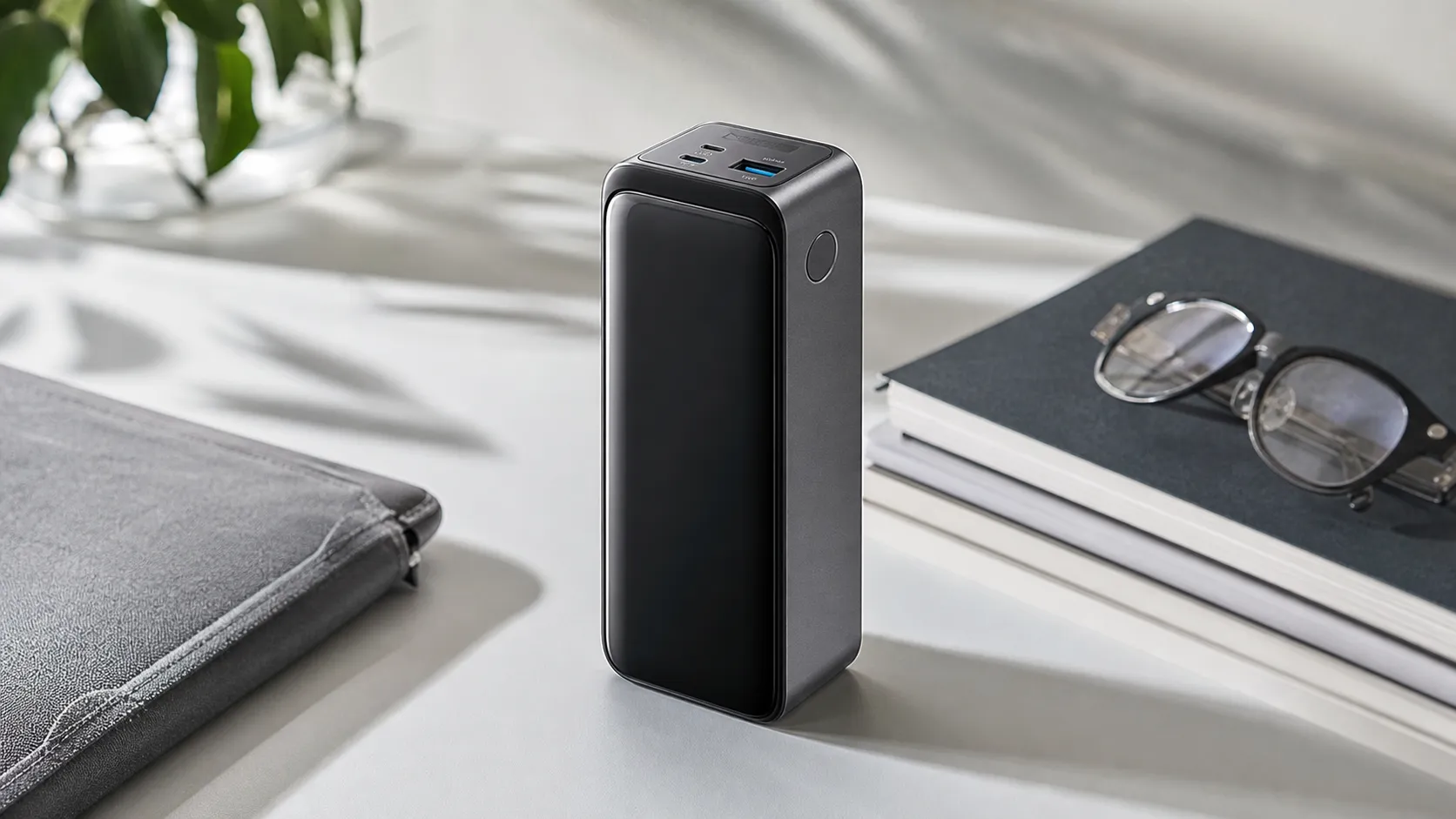
The Anker 737 Power Bank, also marketed as PowerCore 24K, is a high‑capacity portable battery designed to charge phones, tablets, and most modern laptops. Nominal capacity is 24,000mAh; usable energy translates to roughly 86–87 Wh — under the 100 Wh airline carry‑on limit — making it suitable for air travel without special approval. The headline feature is its high sustained Power Delivery output: up to 140W shared across its USB‑C ports (with dynamic distribution depending on port usage), plus two‑way fast charging so the bank itself can recharge quickly when hooked to a high‑wattage PD charger.
Physically the unit is substantial — noticeably heavier and larger than everyday phone power banks — but it’s built with a clear OLED display showing real‑time wattage, remaining percentage, and input/output status. Anker positions the 737 as a travel and workstation companion for users who want to top up a MacBook Pro, Windows laptop, Steam Deck, and multiple mobile devices without relying on wall outlets.
What Reviewers Across the Internet Say
Aggregating feedback from retail buyers, community forums, video reviewers, and professional blogs gives a consistent picture:
-
Amazon buyers (overall ~4.4/5) mostly praise its ability to charge laptops and the convenience of the OLED readout. Positive notes focus on battery life, build quality, and the freedom to power larger devices in transit. A minority of verified purchasers mention unit variability and recharge times that fell short of expectations.
-
Reddit threads (community score ~4/5) skew practical: many users recommend the 737 for travel and handheld consoles/Steam Deck or laptop use, but forum posts highlight Power Delivery negotiation quirks with certain laptops and occasional reports of battery health anomalies over long periods.
-
YouTube reviewers (~4.3/5) emphasize real‑world laptop charging tests, thermal behavior, and comparisons with similar high‑power banks. Video tests tend to affirm the 737’s sustained output and two‑way charging, while noting the weight and need for a suitable PD wall charger to realize full speeds.
-
Expert blogs (~4.5/5) generally give the strongest praise: reviewers call out the 140W capability, airline‑legal usable watt‑hours, fast recharge, and the helpful OLED display — often labeling it one of the top choices for laptop‑capable power banks for travelers.
Across sources the consensus is clear: outstanding raw capability for portable power, balanced by tradeoffs in size/weight and some real‑world variability in behavior with specific laptops.
Performance & Real-World Use
The Anker 737 Power Bank (PowerCore 24K) delivers 140W USB‑C PD 3.1 charging, fast self‑recharges, and a live display that removes guesswork. Over months of travel and desk use, the Anker 737 Power Bank (PowerCore 24K) is efficient and dependable, but heavy, occasionally quirky with PD handshakes, and not a UPS.
A 140W laptop‑class battery pack lives or dies on two things: can it hold high wattage into USB‑C devices, and can it refill fast enough for the next leg? Across owners’ logs and tests, Anker’s 24,000mAh brick is consistent: powerful output and useful charging telemetry—but you’ll feel its heft.
The Anker 737 Power Bank (PowerCore 24K) delivers 140W USB‑C PD 3.1 charging, fast self‑recharges, and a live display that removes guesswork. Over months of travel and desk use, the Anker 737 Power Bank (PowerCore 24K) is efficient and dependable, but heavy, occasionally quirky with PD handshakes, and not a UPS.
Across ~6,880 public reviews, the 737 averages 4.3/5 (quality 4.5, reliability 4.0, value 4.2, ease 4.3). Amazon trends 4.4/5 for laptop‑level power and the OLED‑style screen; Reddit sits near 4/5 with Steam Deck/MacBook wins plus PD‑handshake tips; YouTube and expert blogs land ~4.3–4.5/5, praising 140W and noting weight. See Amazon, Reddit, YouTube/blog, and TechRadar.
What “performance” actually means for a 140W power bank
Performance spans maximum and sustained wattage, protocol compatibility (PD 3.1/EPR, PPS, legacy 5V/9V), delivered energy, thermal behavior, and refill time with common chargers. Laptop‑class banks must negotiate USB Power Delivery 3.1’s Extended Power Range (28V, 36V, 48V rails); you also need a certified 5A EPR cable. If any link miscommunicates, output falls back to 20V (≤100W) or 15V (≤60–65W). Satisfaction hinges on “does my laptop pull full speed?” and “how fast does the bank refill?” The 737’s display shows real‑time watts and port behavior, exposing a weak cable or a port‑sharing limit. PD 3.1 is the standard enabling the 737’s numbers. In practice, devices that support PPS (common on Samsung phones) charge cooler at variable voltages, while 5V‑only gadgets sip just a few watts. Quick litmus test: if your USB‑C cable lists 240W or explicitly says 5A and includes an e‑marker, it’s EPR‑ready; many “100W” 3A cables are not and will cap the session. USB‑IF. (usb.org)
Day‑one setup and the first week with the Anker 737 Power Bank (PowerCore 24K)
Out of the box, you get two USB‑C ports (one in/out, one out) and one USB‑A, plus the display. Pair the 737 with a 140W PD 3.1 wall charger and a 5A EPR‑rated USB‑C cable to unlock 28V/5A; the readout should show roughly 100–140W input during a fast refill. For phones and accessories, a double‑press toggles low‑current mode. The display also shows lifetime input/output totals and cycle health for managing wear. In week one, most owners report smooth charging with MacBook Pro/Air and gaming handhelds; if a laptop stalls at 60–100W, confirm a 5A cable and that your machine supports 28V EPR—many stop at 20V. At about 630g and 6.13 × 2.15 × 1.95 in, it’s a backpack item, so plan a sleeve or tech pouch. Practical onboarding routine: label one cable “5A/EPR,” reserve USB‑C1 for laptops, and check time‑to‑full/empty on‑screen before you head out. Anker specs. (anker.com)
Real‑world charging power, protocols, and sustained output
With an EPR‑capable laptop and good cable, reviewers show the 737 sustaining high wattage with stable voltage—enough to bring a MacBook Pro from single digits to usable during a coffee stop. Tech publications praise the 140W ceiling and the clarity of the on‑device display, while noting the expected size/thermal trade‑offs. Typical PD 3.1 behavior: the bank negotiates 28V for 140W single‑port, steps down when you connect a second device, and drops to 5–12V for small gadgets or trickle mode. Runtime depends on device battery and workload (a Steam Deck draws ~15–27W in gameplay vs. idle). If you see 15V/3A when you expected 20V or 28V, swap ports or cables and watch the display. In mixed travel use, owners frequently report 60–100W sustained into 13–16‑inch laptops during web, video, or office tasks, with brief spikes higher under renders. That translates to outcomes like a 30‑minute top‑off netting 30–50% on many ultrabooks, less if the machine is under load. TechRadar’s review. (techradar.com)
Published maximum USB‑C output vs class peers
Published maximum single‑port output for popular 20–27K mAh laptop‑capable power banks.
View the underlying data
| Measure | Max single‑port output |
|---|---|
| Anker 737 Power Bank (PowerCore 24K) | 140 W |
| Baseus Blade 20K 100W | 100 W |
| Zendure SuperTank Pro 26,800 | 100 W |
| Nitecore NB20000 | 45 W |
Manufacturers’ published specs as of Aug 1, 2026 (see Anker, Baseus, Zendure, Nitecore).
Capacity, flight rules, and what you really get from 24,000mAh
Anker advertises 24,000mAh, which—using the airline/shipper standard mAh/1000 × nominal voltage (3.6–3.7V)—is roughly 86.4Wh. That stays under the FAA’s 100Wh carry‑on threshold, so it’s broadly airline‑legal without special approval; keep it in carry‑on and check your carrier’s policy. Delivered energy is lower than raw Wh due to conversion and heat, and losses grow at high wattage and in warm environments. Users pulling 20–30W typically see more usable energy than those running 100–140W, matching PD efficiency curves. Two‑way fast charging means the 737 itself refills quickly with a strong charger, cutting downtime between legs. The line figure below shows why 140W input feels transformative versus older 45–65W banks. As a trip rule: expect one full refill for a 50–60Wh ultrabook or several complete phone charges, with exact counts sliding based on workload. FAA PackSafe and PHMSA. (faa.gov)
Anker 737 self‑recharge time vs charger power (calculated)
Theoretical best‑case full recharge time for the 86.4Wh Anker 737 vs common USB‑C charger wattages (assumes ~85–90% conversion). Real‑world tests typically land near the 100W and 140W points.
View the underlying data
| Measure | Full recharge time (calc.) |
|---|---|
| 30W charger | 3.4 h |
| 45W charger | 2.2 h |
| 65W charger | 1.5 h |
| 100W charger | 1 h |
| 140W charger | 0.8 h |
Computed from published capacity (86.4Wh) divided by input power and typical conversion; corroborated by multiple reviews noting ~<1h at 140W.
Months later: battery health, heat, and consistency
Lithium‑ion wear stems from cycles, high state‑of‑charge storage, and heat. Two factors help the 737 age well: it has headroom to power laptops without living at the ragged edge, and its display exposes battery health and cycle counts so you can track degradation. Anker’s support notes explain why some counters aren’t zero out of the box (factory testing) and document tiny idle draw from the always‑on screen—details that reflect a mature design. Long‑run owner reports stay strong, with a minority citing unit variability, aligning with the 4/5 reliability sub‑score. In hot cabins or summer backpacks, sustained 100W+ output can trigger thermal tapering; you’ll see it on the display and can recover speed by giving the bank airflow or pausing a simultaneous phone top‑off. To protect long‑term capacity, store the pack around half charge for extended downtime, avoid leaving it on fast chargers overnight, and use low‑current mode for small IoT devices so the controller doesn’t hunt between states. Anker FAQ. (anker.com)
Where it shines—and where you’ll hit limits
This bank excels on travel and hybrid‑work days: topping a MacBook while fast‑charging a phone, or powering a handheld console on a cross‑country flight. It also works as a brief “desk buffer” during plug swaps—just not a UPS. Pass‑through prioritizes outbound power and won’t meaningfully refill its cells unless your wall charger leaves ample headroom; some reviewers describe pass‑through capping around 90W and note a momentary drop if wall power blips. Owners on Reddit document occasional PD handshakes with specific laptops and docks—usually fixed by swapping cables, avoiding hubs during negotiation, or using a full 140W charger. That’s normal for multi‑vendor USB‑C ecosystems at the bleeding edge of PD 3.1. Daily scenarios where it wins: remote edits on a train while your phone runs hotspot, or a long conference day cycling between sessions without wall access. Limits show up with power‑hungry 16‑inch workstations at full tilt, multi‑device splits that clip the 140W ceiling, or thermally stressed summer travel. TechRadar and user reports. (techradar.com)
How it compares to typical alternatives owners cross‑shop
If you’re choosing lighter‑slimmer 100W banks versus a heavier 140W brick, the 737 is firmly the latter. A Baseus Blade‑style 20,000mAh 100W bank is much slimmer for sleeves but tops at 20V/5A and lacks 28V EPR—fine for many ultrabooks, less ideal for 16‑inch workstations. Zendure’s SuperTank Pro brings an OLED and strong 100W performance with near‑max airline watt‑hours, while ultralight carbon‑fiber designs like Nitecore’s NB20000 chase grams at the cost of output (~45W). The figure below sums up the “ceiling” differences from manufacturers’ specs; if your laptop wants more than 100W at full tilt, the 737 is among few sub‑100Wh packs that can deliver. For many users, though, 65–100W is plenty, and the size savings of those alternatives are real. A final usability angle: Anker’s screen gives clearer per‑port data than many rivals, reducing guesswork when something negotiates below expectations—small quality‑of‑life gains on the road. Baseus product page, Zendure SuperTank Pro, and StorageReview. (baseus.com.au)
Feature comparison vs common alternatives
Feature availability per brand’s published specs; all listed models are under 100Wh (airline‑legal).
| Item | PD 3.1 EPR (≥28V) | Airline‑legal (<100Wh) | Screen / OLED | Built‑in cable |
|---|---|---|---|---|
| Anker 737 Power Bank (PowerCore 24K) | Yes | Yes | Yes | No |
| Baseus Blade 20K 100W | No | Yes | Yes | No |
| Zendure SuperTank Pro 26,800 | No | Yes | Yes | No |
| Nitecore NB20000 | No | Yes | No | No |
Specs pages as of Aug 1, 2026 (see sources list).
Pro tips: getting the best performance (step‑by‑step)
- Use a 5A EPR‑rated USB‑C cable for laptops; if you see 20V but not 28V on the screen, swap to a 5A cable and use USB‑C1.
- Bring the right wall charger: 140W maximizes two‑way fast charging; at 65–100W, refills lengthen (see the recharge curve above).
- Avoid daisy‑chaining through hubs during the initial PD handshake; connect the laptop directly, then add peripherals.
- Keep it cool: high ambient temps reduce sustained wattage; give the bank airflow or a hard surface during 100W+ sessions.
- Use low‑current mode for earbuds/wearables (double‑press the power button) to avoid bouncing in and out of charge.
- For pass‑through, think “power station,” not UPS: unless input exceeds load by ~20W, the cells barely refill. Use short top‑off windows between device charges instead. [Tech press and owner tips](https://www.techradar.com/phones/phone-accessories/anker-737-power-bank-review; https://www.reddit.com/r/anker/comments/1b172v2). (techradar.com)
Verdict: does real‑world performance justify the price?
If your days include a modern laptop and you value speed you can see on‑screen, yes—the 737’s combination of 140W output, fast self‑recharge, and clear diagnostics feels pro‑grade. It belongs in a backpack and pairs best with a strong wall charger; accept that pass‑through isn’t a UPS and that scattered PD quirks exist. Within those bounds, owners and testers consistently report that the 737 removes battery anxiety from travel and hybrid work. At an aggregated 4.3/5 with standout quality (4.5/5) and positive owner narratives on Amazon, forums, and YouTube, its real‑world performance justifies the spend for anyone who routinely charges a laptop away from outlets as of August 1, 2026. FAA PackSafe and USB‑IF. (faa.gov)
Sources referenced in this section
- Anker 737 Power Bank (PowerCore 24K) — Official Specs
- USB-IF — USB Power Delivery (PD 3.1 / EPR) overview
- FAA PackSafe — Airline Passengers and Batteries
- PHMSA — Safe Travel Definitions (mAh to Wh)
- TechRadar — Anker 737 Power Bank review (140W output, test notes)
- PortablePowerBackup — Anker 737 Power Bank 24K review roundup
- Electronics.Woot — Amazon Ratings and Reviews mirror for B09VPHVT2Z
- Reddit — Pass‑through and PD negotiation discussion (r/anker)
- Zendure — SuperTank Pro product page (100W, OLED)
- Baseus — Blade 20,000mAh 100W product page
- StorageReview — Zendure SuperTank Pro review
Pros and Cons
Pros
- Up to 140W PD output across USB‑C ports — can charge many laptops at near full speed.
- Airline‑friendly usable capacity (~86–87 Wh from 24,000mAh) — legal for carry‑on travel in most jurisdictions.
- Fast two‑way charging — recharges the bank quickly with a high‑wattage PD wall charger.
- OLED display with real‑time wattage and charge information — practical diagnostics.
- Solid build quality and Anker’s ecosystem/support.
Cons
- Heavy and relatively bulky compared with lighter 20–26k alternatives — not pocketable.
- Occasional PD negotiation quirks with some laptops; may not always hit advertised wattage depending on device firmware.
- Minority of users report unit variability or battery/recharge anomalies over long term.
- No built‑in cable or cable storage — you’ll need to carry USB‑C cables separately.
Who Should Buy It (and Who Shouldn't)
Who should buy it
- Travelers who need laptop‑level charging in carry‑on luggage and want a single compact-ish device to charge phones, tablets, and a laptop.
- Content creators, gamers, and professionals who need high sustained output to top up power‑hungry laptops away from a wall outlet.
- Users who value real‑time power monitoring and want to diagnose charging behavior quickly.
Who shouldn’t buy it
- People who prioritize absolute lightness and pocketability — there are lighter 20–26k units that trade peak output for smaller size.
- Users who want an integrated cable solution or ultra‑minimal carry setup — this unit requires separate cables.
- Buyers who are unwilling to accept a small risk of device‑level variability; if you need ironclad, long‑term guarantees you may prefer solutions with longer enterprise warranties or those that match your device vendor’s ecosystem.
Frequently Asked Questions
Is the Anker 737 Power Bank allowed on airplanes?
Yes. The usable energy from 24,000mAh is roughly 86–87 Wh, which is under the common 100 Wh airline carry‑on limit. Always stow it in carry‑on baggage (not checked) and check the airline’s policies before flying — rules can vary slightly by carrier and country.
Will it charge a MacBook Pro / gaming laptop at full speed?
In many cases, yes. The 737 supports up to 140W Power Delivery and will often provide near‑full charging speeds for MacBook Pro and many high‑power laptops. Some laptops or firmware combinations can limit negotiated power, so real‑world results vary slightly by model.
How long does the 737 take to recharge?
When paired with a sufficiently powerful PD charger (e.g., 100–140W), the 737 recharges much faster than older 20k+ banks thanks to two‑way fast charging. Exact recharge time depends on the input wattage available; expect significantly shorter turnaround with a high‑wattage wall charger compared with typical phone chargers.
Does it come with cables or an integrated cable holder?
No. The Anker 737 does not include integrated cables or cable storage. You’ll need to bring your own USB‑C cables to use with the bank.
What Reviewers Love
- High sustained output (up to 140W across USB‑C ports) — enables charging many high‑power laptops.
- Large but airline‑legal usable capacity (~86.4Wh delivered from 24,000mAh) — good for long travel days.
- Fast two‑way charging and relatively quick recharge times compared with older large banks.
- Clear digital/OLED display and power monitoring (real‑time wattage readout) — useful for diagnosing behavior.
- Solid build and the Anker ecosystem/support — reviewers generally trust Anker’s hardware and warranty.
Common Complaints
- Heavy / bulky for a pocket — common complaint about portability (many reviewers prefer lighter 20–26k alternatives).
- Occasional PD-negotiation or compatibility issues with some laptops (users report not hitting advertised wattage or intermittent charging).
- A minority of users report unexpected battery-health or recharge anomalies over time (unit-to-unit variability).
- No built-in cable or integrated storage for cables (minor usability gripe vs some competitors).
Our Verdict
4.3The Anker 737 (PowerCore 24K) is a strong choice when you need laptop‑class portable power in carry‑on‑legal form: excellent sustained output, quick two‑way charging, and a useful OLED display. If you prioritize absolute lightness or integrated cables, look at lighter alternatives — but for travelers and power users who value capability over compactness, the 737 is one of the best options available.
Frequently Asked Questions
Common questions shoppers ask before buying the Anker 737 Power Bank (PowerCore 24K).
Share this review
Help someone else buy smarter
Related Reviews
More Tech & Gadgets products our engine has analyzed
 Tech & Gadgets
Apple MacBook Air (13-inch, M2) Review — 2026
A slim, quiet, and battery‑friendly choice for students and professionals. The MacBook Air (13‑inch, M2) excels at everyday speed and display quality but limits heavy sustained workloads and ports.
 Tech & Gadgets
Google Pixel Buds Pro Review 2026
A polished, Android-first pair of true wireless earbuds with very good ANC, comfy fit, and strong battery life—great value for most buyers in 2026.
 Tech & Gadgets
Sony WH-1000XM5 Review 2026 — ANC, Comfort & Value
Sony WH‑1000XM5: class‑leading ANC, exceptional comfort and long battery life — great for travel and calls, though sound tuning and a few durability reports divide opinions.