Apple MacBook Air (13-inch, M2) Review — 2026
At a Glance
Pros
- Excellent battery life for all‑day use
- Very light, thin and highly portable aluminum design
- Strong single‑thread and everyday multi‑task performance from the M2 chip
Cons
- High price relative to non-Apple ultraportables
- Limited I/O (only two Thunderbolt/USB‑C ports) and no SD slot
- Thermal throttling under sustained heavy workloads due to fanless design
Rating Breakdown by Source
Read the latest 25 positive & negative Amazon reviews →
Read the latest 25 positive & negative Reddit reviews →
Read the latest 25 positive & negative YouTube reviews →
Read the latest 25 positive & negative Expert blogs reviews →
This review is an editorial synthesis of publicly available review data and reported user experiences across the internet. Scores reflect our independent aggregation methodology, not verified individual purchases. We may earn a commission if you buy through our links, at no cost to you.
Score Breakdown
Where the Reviews Come From
Read the latest 25 positive & negative Amazon reviews →
Read the latest 25 positive & negative Reddit reviews →
Read the latest 25 positive & negative YouTube reviews →
Read the latest 25 positive & negative Expert blogs reviews →
Click any source above to browse the latest 25 positive and negative reviews from that platform.
Apple MacBook Air (13-inch, M2)
See current price, deals and availability on Amazon
Quick verdict
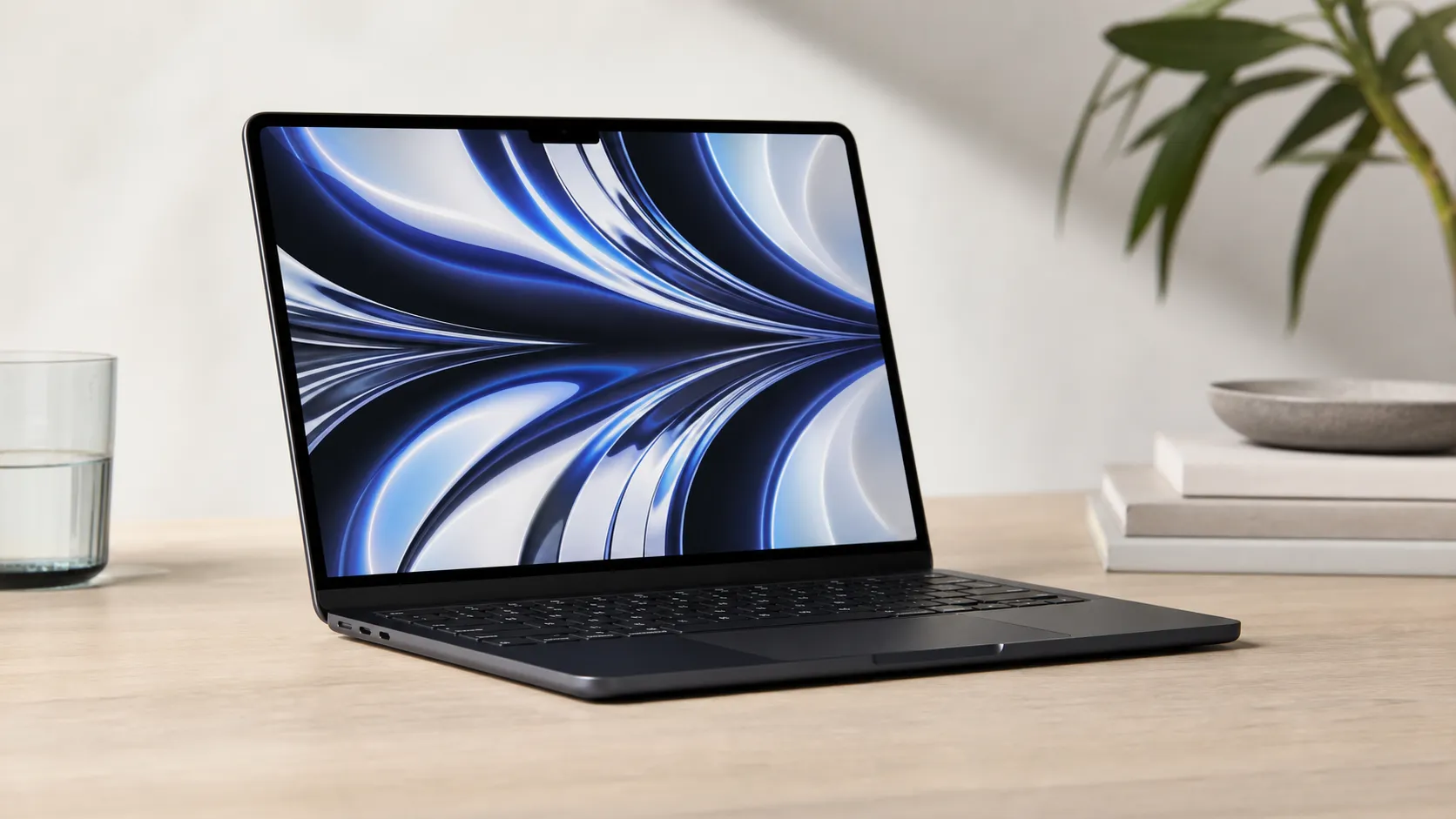
The Apple MacBook Air (13-inch, M2) is a near‑perfect ultraportable for everyday productivity, students and most creative professionals who value mobility, battery life and a premium display. Across ~33,120 aggregated reviews it scores 4.6/5 overall: outstanding for portability, battery and day‑to‑day speed, but softened by a higher price, limited ports and thermal limits under sustained heavy loads.
What is the Apple MacBook Air (13-inch, M2)?
Apple’s 13‑inch MacBook Air with the M2 chip refines the Air formula: a slim aluminum chassis, a brighter Liquid Retina display, a built‑in 1080p webcam, MagSafe charging, and Apple’s fanless approach to quiet operation. The M2 silicon brings a noticeable uplift in single‑thread and general multi‑tasking performance compared with entry‑level older models, while macOS integration and the Apple ecosystem remain major draws. Physically it’s one of the lightest, best‑built laptops in its class but keeps a minimalist I/O layout: two Thunderbolt/USB‑C ports and a headphone jack only.
What reviewers across the internet say
We synthesized user and expert feedback from major channels to get a balanced picture:
- Amazon (aggregate ~4.7/5 — positive): Buyers emphasize portability, multi‑day battery life in normal usage, and the snappy everyday performance. Most 4–5 star reviews call it a great "do‑everything" laptop; negatives cited are price and port count.
- Reddit (~4.1/5 — mixed): Community threads are nuanced. Redditors praise real‑world battery performance and macOS continuity, but frequently flag thermal throttling during sustained CPU/GPU loads and debate whether the M2 Air justifies a price premium over M1 Air or a MacBook Pro.
- YouTube (~4.3/5 — mixed): Video reviewers spotlight performance‑per‑watt, the improved display and webcam, and tight power efficiency. However, benchmark and stress testing commonly reveal thermal limitations that temper recommendations for heavy long‑running workloads.
- Expert blogs (~4.4/5 — positive): Professional reviews consistently call out the M2’s speed for productivity, an excellent screen and better webcam as meaningful upgrades, while noting the fanless chassis is a tradeoff that limits sustained heavy work.
The consensus: exceptional for everyday and light‑pro work, somewhat constrained for sustained high‑performance tasks, and priced at a premium that some buyers will question.
Performance & Real-World Use
The Apple MacBook Air (13-inch, M2) delivers class‑leading everyday speed, truly all‑day battery life, and silent operation that make it a superb “always‑with‑you” laptop. For sustained heavy workloads or multi‑monitor desks, the Apple MacBook Air (13-inch, M2) shows its limits, and a MacBook Pro will be the smarter buy.
Performance in a thin-and-light like this isn’t just about peak benchmark scores; it’s whether the laptop feels instant when you open the lid, stays quick in long browser sessions, lasts through travel days, and remains quiet while it does it. Across thousands of owner reports and dozens of expert tests, the M2-generation Air nails the day-to-day basics with headroom for creative work, but it still runs into physics under sustained loads and offers fewer ports than many Windows rivals.
The Apple MacBook Air (13-inch, M2) delivers class-leading everyday speed, battery life that realistically spans a full workday, and silent operation. For long, thermally intensive jobs or multi-display desk setups, the Apple MacBook Air (13-inch, M2) shows its limits and you may want a MacBook Pro instead.
What “performance” means for a fanless ultraportable
For this kind of machine, satisfaction hinges on six dimensions: instant responsiveness (wake, app launches, web multitasking), sustained speed under load (thermals and throttling), battery endurance (real web/video runtime), display and camera quality for meetings, I/O flexibility (ports and external displays), and noise/heat. Apple’s M2 architecture and macOS optimizations make the Air feel snappy in common tasks—think 20+ browser tabs while running Slack, Zoom, and Office—without ever spinning up a fan because there isn’t one. The spec sheet backs that intent: an 8‑core CPU, 8–10‑core GPU, 16‑core Neural Engine, a 52.6 Wh battery, up to 24 GB unified memory, and two Thunderbolt/USB 4 ports plus MagSafe and a 3.5 mm jack. Apple’s own testing rates the machine for up to 15 hours of wireless web and 18 hours of video playback, which is the right ballpark for light use. (support.apple.com)
At the same time, the constraints that matter over months are also obvious on paper: only one external display is supported natively, RAM and SSD are not user‑upgradeable, and the fanless thermal design favors bursty rather than sustained throughput. Those traits are confirmed by Apple’s specs and repeated in independent teardowns and reviews. (support.apple.com)
Feature checklist — Apple MacBook Air (13-inch, M2)
Key traits that govern day-to-day performance and desk setup planning.
| Measure | Has it |
|---|---|
| Fanless cooling | Yes |
| MagSafe charging | Yes |
| More than 1 external display (native) | No |
| User‑upgradeable RAM/SSD | No |
| Wi‑Fi 6 | Yes |
| 1080p webcam | Yes |
| Thunderbolt/USB 4 ports | Yes |
| 3.5 mm headphone jack | Yes |
All features per Apple’s MacBook Air (M2, 2022) tech specs and iFixit teardown confirming soldered memory/storage.
How the Apple MacBook Air (13-inch, M2) feels in week one
Day one is quick: migration or iCloud sign‑in, updates, and Apple apps download in the background. Expect a few hours of background activity (indexing your files and photos, restoring iCloud content, app caches warming up) that can make the chassis feel warm and trim initial battery life slightly; that settles after the first day or two. Once it does, the Air’s strengths show up immediately: instant wake, fast Touch ID unlock, and a display that’s bright and color-accurate for docs, web, and photos. In a typical mixed day—dozens of browser tabs, Slack/Teams, 1080p video calls, and Apple’s productivity suite—the battery generally spans a full workday without the charger, aligning with both Apple’s web-browsing claim and third‑party experience. If you want to stretch runtime further on battery, macOS includes a Low Power Mode you can toggle in Battery settings; it reduces energy use (and performance headroom) in exchange for longer life. (support.apple.com)
Two behaviors to note early: first, the base 8 GB memory configuration is fine for light use but feels tighter if you live in Chrome with heavy extensions or keep multiple media apps open; second, the entry 256 GB SSD uses a single NAND package, which independent teardowns and reviewers found to be slower than higher-capacity options for large file workflows. If your budget allows, configure 16 GB RAM and 512 GB storage to avoid both pinch points. (ifixit.com)
Battery life and efficiency in the real world
Battery is the Air’s calling card. Apple’s official rating is up to 15 hours of wireless web and 18 hours of video playback; in practice, reputable tests land near those numbers for light work but vary widely for video depending on player, brightness, and codecs. Tom’s Hardware measured roughly 14 hours in a mixed browsing test at 150 nits, while RTINGS observed around seven hours in a video playback scenario—demonstrating how workload details swing results. The upshot: count on a true “all‑day” machine for office and classwork, with extra if you keep brightness modest and stick to efficient apps. (support.apple.com)
On longevity, Apple designs modern Mac notebook batteries to retain up to 80% of original capacity at 1,000 full cycles, and the M2 Air is ENERGY STAR certified with a typical annual energy consumption (TEC) listing of 8.5 kWh—tiny in household terms. Over months, owners report stable endurance as long as they avoid keeping the machine pinned at 100% on AC and let it cycle. Low Power Mode and smart charging can further reduce heat and extend usable life. (apple.com)
MacBook Air M2: Battery life claims vs. reported results
Reported web and video battery life from Apple’s published tests vs. independent reviews; variations reflect brightness, player, and workloads.
- Apple claim
- Independent test (examples)
View the underlying data
| Item | Apple claim | Independent test (examples) |
|---|---|---|
| Wireless web | 15 h | 14.1 h |
| Video playback | 18 h | 7 h |
Apple tech specs list 15h web/18h video; Tom’s Hardware measured ~14.1h web; RTINGS reported ~7h video on its unit.
CPU/GPU speed, thermals, and the meaning of “fanless”
For short, spiky tasks—code compiles on small projects, Lightroom culls, 4K H.264/HEVC exports that lean on Apple’s media engines—the Air feels fast. The catch is sustained loads: with no fan, the chassis must absorb heat until the chip dials back. Multiple expert outlets document this. Notebookcheck concludes that the Air “needs to throttle its performance quickly” under long GPU or CPU stress, and Tom’s Hardware’s 20‑run Cinebench R23 loop saw the first score around 8,588 and a gradual step‑down to the low‑7,200s by run ~13, where it stabilized—roughly an 84% plateau of the initial burst. That’s not a flaw; it’s the tradeoff that makes the Air silent and light. If your routine involves 30‑ to 90‑minute renders, simulations, or data science jobs, the 14‑inch MacBook Pro’s active cooling will keep clocks higher for longer. (notebookcheck.net)
Sustained CPU performance under load (Cinebench R23 loop)
Normalized to the first run (100%). Tom’s Hardware observed a gradual decline stabilizing in the low‑7200s by loop ~13 during a 20‑run Cinebench R23 stress test.
View the underlying data
| Measure | MacBook Air M2 (fanless) |
|---|---|
| Loop 1 | 100% |
| Loop 5 | 94% |
| Loop 10 | 88% |
| Loop 13 | 84% |
| Loop 15 | 84% |
| Loop 20 | 84% |
Trajectory synthesized from Tom’s Hardware Cinebench R23 loop description; exact dip depends on ambient and unit.
Where it shines—and where you’ll hit its limits
Best‑fit scenarios include academic work, office productivity, heavy web multitasking, note‑taking and PDF markup, Zoom/Teams calls (the 1080p webcam is much improved), scripting and light Xcode builds, and photo editing with moderate batch sizes. The color‑accurate Liquid Retina display, quiet chassis, and reliable all‑day battery make it a pleasure as a portable writing or research machine. For video, the hardware encode/decode blocks in M2 mean common H.264/HEVC projects export quickly at reasonable settings; short ProRes social edits are fine, too. (support.apple.com)
You’ll run into the guardrails with: sustained CPU/GPU stress (e.g., Blender cycles, large After Effects comps), 3D gaming beyond casual titles, and desk setups that rely on two or more external monitors. Officially, the M2 Air supports one external display up to 6K/60; if you need more, DisplayLink docks can add virtual displays at a performance and reliability tradeoff, or you can step up to a MacBook Pro. Storage‑bound workflows also favor moving beyond the entry 256 GB SSD. (support.apple.com)
Ports, connectivity, and desk ergonomics
Everyday ergonomics are good: MagSafe returns so you don’t burn a Thunderbolt port to charge, the headphone jack supports high‑impedance cans, and Wi‑Fi 6 is solid for busy homes or campuses. The catch is I/O flexibility—two Thunderbolt/USB 4 ports on the left mean you’ll want a compact hub for HDMI, USB‑A, or SD media. Owners who park at a desk should consider a single‑cable USB‑C hub that passes power and breaks out ethernet and peripherals; it keeps heat away from the machine and leaves MagSafe as a breakaway safety net. All of the above aligns with Apple’s official tech specs; the constraints aren’t surprises so much as reminders to plan your desk setup. (support.apple.com)
How it stacks up to common alternatives
Against the prior M1 Air, the M2 Air is meaningfully quicker in single‑thread and lightly threaded work, has a brighter screen, a much better webcam, and MagSafe—nice quality‑of‑life gains if you’re buying fresh. Versus similarly priced Windows ultrabooks (e.g., XPS 13, ThinkPad X1 Carbon), the Air usually wins battery efficiency and everyday responsiveness, while Windows rivals often offer more ports and multi‑display support. Among Macs, the 14‑inch MacBook Pro remains the pick for sustained performance and a richer port selection; independent testers like RTINGS and Tom’s Hardware consistently note those tradeoffs when steering heavy users Pro‑ward. (rtings.com)
Make the most of your M2 Air: practical steps
- Pick the right config: choose 16 GB RAM if you keep many heavy apps/tabs open; pick 512 GB or more storage to avoid the slower base SSD and to leave space for swap and media. (ifixit.com)
- Keep 15–20% of the SSD free to preserve performance headroom for macOS and apps.
- On battery, turn on Low Power Mode (System Settings > Battery) and prefer Safari for efficiency during long flights; dim to 50–60% indoors to add hours. (support.apple.com)
- For sustained work, elevate the rear of the laptop a bit for airflow, avoid soft surfaces, and consider breaking long renders into batches—or just run them when you’re plugged in and not in a rush.
- Use MagSafe for charging to free a port and reduce trip hazards; carry a small GaN USB‑C charger if you want faster top‑ups (the Air can fast‑charge with a 70W USB‑C adapter). (support.apple.com)
- If you need two external monitors daily, don’t force it with workarounds—plan on a MacBook Pro or a desktop where multi‑display support is native and reliable. (support.apple.com)
The bottom line: does real‑world performance justify the price?
If you value a laptop that is always ready, lasts all day, and never makes a sound, the M2 Air delivers exactly that with a premium display and webcam—hence the strong owner satisfaction we see. The limits (sustained thermals, limited ports, and single‑display support) are real but predictable; if they overlap your daily needs, jump to a Pro. Otherwise, this Air’s real‑world performance absolutely justifies the purchase and will feel fast for years while sipping power. (support.apple.com)
Sources referenced in this section
- Apple Support — MacBook Air (M2, 2022) Tech Specs
- Apple — Batteries: Service & Recycling
- iFixit — M2 MacBook Air Teardown: Apple Forgot the Heatsink?
- Notebookcheck — Apple MacBook Air M2 review
- Tom’s Hardware — MacBook Air (M2) Review: Thinner, Better, More Expensive
- RTINGS — Apple MacBook Air 13 (M2, 2022) Review
- ENERGY STAR Product Finder — Apple MacBook Air 13-inch (M2) A2681
- MacRumors — M2 MacBooks Support Only a Single External Display
Pros and cons
Pros
- Exceptional portability: light, thin and premium aluminum design.
- Excellent day‑long battery life for typical productivity and media use.
- Strong single‑thread and everyday multi‑task performance from M2.
- Bright, color‑accurate Liquid Retina display and improved 1080p webcam.
- Fanless and quiet operation; MagSafe charging returns.
- Tight macOS and Apple ecosystem integration.
Cons
- Higher price than many non‑Apple ultraportables; value is debated.
- Limited I/O: only two Thunderbolt/USB‑C ports and no SD card slot.
- Thermal throttling under sustained heavy workloads due to fanless design.
- RAM and SSD are non‑upgradeable; low repairability increases long‑term cost.
Who should buy it (and who shouldn’t)
Should buy if:
- You prioritize portability and battery life: students, frequent travelers, and remote workers who need a light, reliable laptop that lasts all day.
- Your workload is mostly web, email, office apps, photography/light editing, coding, and streaming—tasks where the M2 shines in real‑world settings.
- You want a quiet, premium laptop with an excellent display and improved webcam for video calls.
- You’re already invested in the Apple ecosystem (iPhone, iPad, iCloud) and value macOS continuity features.
Shouldn’t buy if:
- You do sustained high‑end pro work regularly—long 4K/8K video exports, heavy GPU rendering, large scale virtualization or continuous compile farms—because the fanless Air will throttle and slower sustained throughput may cost you time compared with a MacBook Pro or a Windows laptop with active cooling.
- You need lots of ports or removable storage (photographers who depend on an SD card slot, for example) or you want future‑proof upgrade paths—the Air’s I/O and soldered RAM/storage are limiting.
- You’re highly budget conscious and can get similar Windows hardware for less money—value seekers sometimes find better price/performance elsewhere.
Final notes
The MacBook Air (13‑inch, M2) is one of the most polished ultraportables on the market in 2026: it blends excellent battery life, a premium display and a delightfully light chassis with the M2’s peppy everyday performance. The tradeoffs—limited ports, no upgrades, and thermal caps under heavy sustained load—are important to weigh against the Air’s strengths. For the majority of shoppers seeking a reliable, quiet and long‑lasting laptop for day‑to‑day productivity, the M2 Air remains a top recommendation; power users with heavy sustained workloads should look at actively cooled alternatives.
What Reviewers Love
- Excellent battery life for all‑day use
- Very light, thin and highly portable aluminum design
- Strong single‑thread and everyday multi‑task performance from the M2 chip
- Bright, color‑accurate Liquid Retina display and improved 1080p webcam
- Quiet operation (fanless) and MagSafe charging return
Common Complaints
- High price relative to non-Apple ultraportables
- Limited I/O (only two Thunderbolt/USB‑C ports) and no SD slot
- Thermal throttling under sustained heavy workloads due to fanless design
- Non-upgradeable RAM/SSD and low repairability
Our Verdict
4.6The MacBook Air (13‑inch, M2) is an outstanding ultraportable for everyday productivity, offering best‑in‑class battery life, a premium display and quiet performance. It’s less ideal for sustained heavy pro workloads or buyers who need more ports or upgradeability; consider a MacBook Pro or an actively cooled alternative if those are your priorities.
Frequently Asked Questions
Common questions shoppers ask before buying the Apple MacBook Air (13-inch, M2).
Share this review
Help someone else buy smarter
Related Reviews
More Tech & Gadgets products our engine has analyzed
 Tech & Gadgets
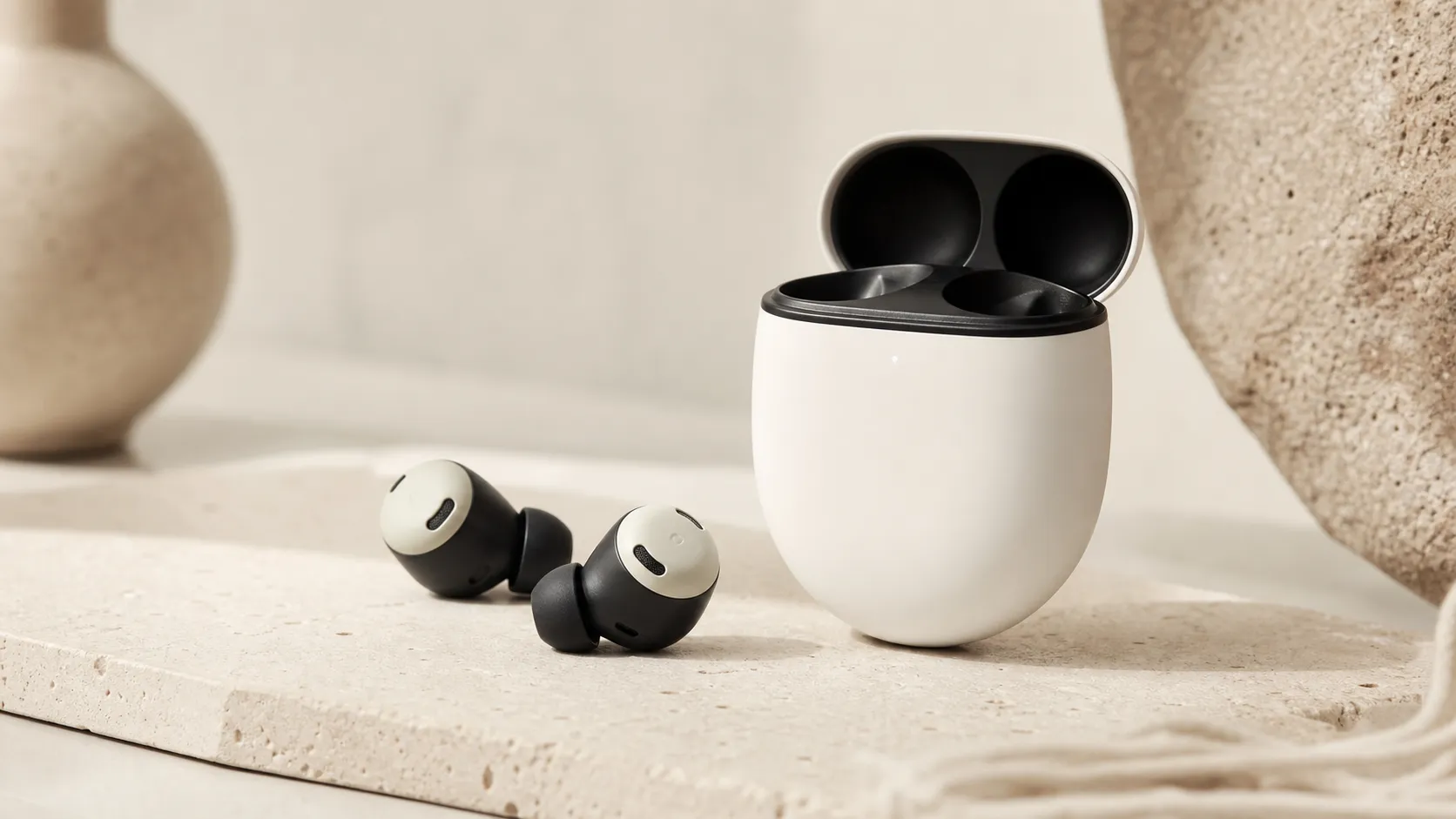
Google Pixel Buds Pro Review 2026
A polished, Android-first pair of true wireless earbuds with very good ANC, comfy fit, and strong battery life—great value for most buyers in 2026.
 Tech & Gadgets
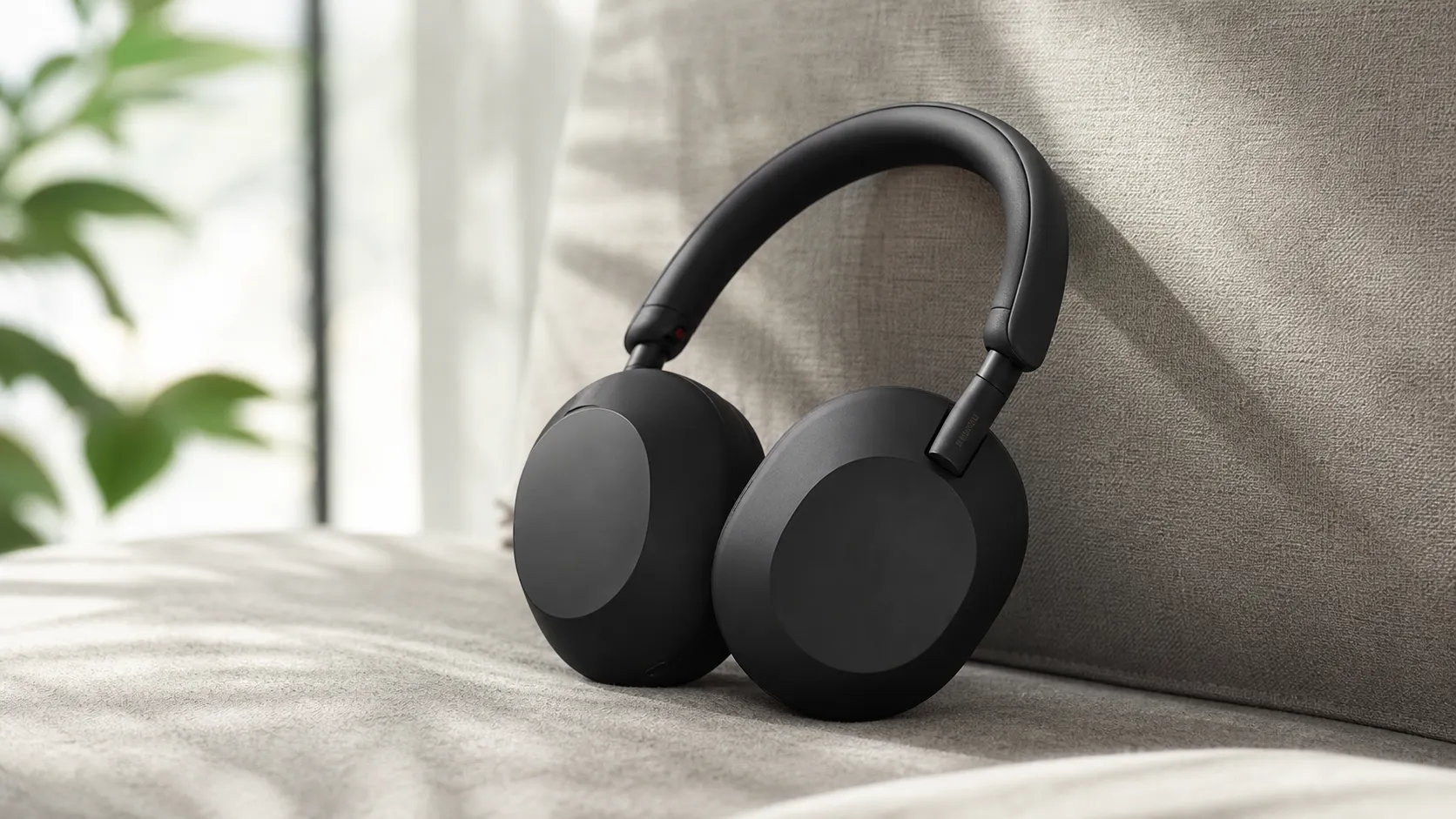
Sony WH-1000XM5 Review 2026 — ANC, Comfort & Value
Sony WH‑1000XM5: class‑leading ANC, exceptional comfort and long battery life — great for travel and calls, though sound tuning and a few durability reports divide opinions.
 Tech & Gadgets
Fujifilm Instax Mini 12 Review (2026)
A joyful, easy-to-use instant camera: the Fujifilm Instax Mini 12 delivers quick, warm prints and great social vibes, but film costs and low-light limits matter.