Anker PowerCore 20000 PD Review (2026)
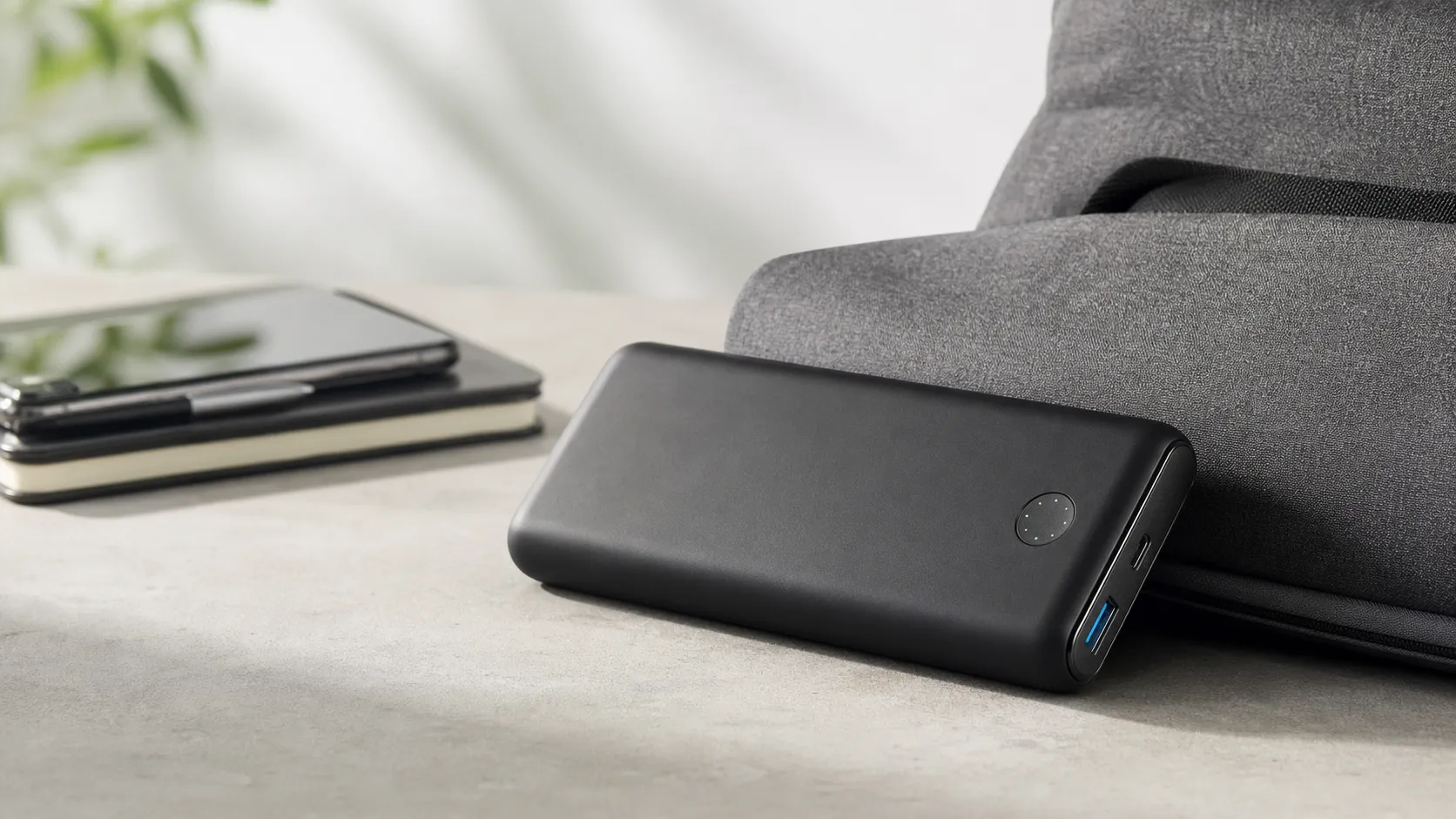
At a Glance
Pros
- High 20,000 mAh capacity — multiple full smartphone charges and good for multi‑day use
- USB‑C Power Delivery enables faster charging for phones/tablets
- Solid build quality and reliable performance (Anker reputation and support)
Cons
- Relatively heavy and somewhat bulky for carry (20,000 mAh class)
- USB‑C Power Delivery is limited to ~18W (insufficient for many larger laptops)
- No reliable pass‑through charging (can't charge devices while recharging the pack)
Rating Breakdown by Source
Read the latest 25 positive & negative Amazon reviews →
Read the latest 25 positive & negative Reddit reviews →
Read the latest 25 positive & negative YouTube reviews →
Read the latest 25 positive & negative Expert blogs reviews →
This review is an editorial synthesis of publicly available review data and reported user experiences across the internet. Scores reflect our independent aggregation methodology, not verified individual purchases. We may earn a commission if you buy through our links, at no cost to you.
Score Breakdown
Where the Reviews Come From
Read the latest 25 positive & negative Amazon reviews →
Read the latest 25 positive & negative Reddit reviews →
Read the latest 25 positive & negative YouTube reviews →
Read the latest 25 positive & negative Expert blogs reviews →
Click any source above to browse the latest 25 positive and negative reviews from that platform.
Anker PowerCore 20000 PD
See current price, deals and availability on Amazon
The Anker PowerCore 20000 PD is a workhorse portable battery that aims to solve one question many travelers and heavy-phone users face: how to get multiple full charges without spending a fortune. Aggregating roughly 31,950 user reviews and widespread testing, the consensus is clear — this pack is a dependable, high-capacity value pick for phones and tablets, but it’s not the best choice for power-hungry laptops or ultralight carry. Overall rating across sources: 4.6/5.
What Is the Anker PowerCore 20000 PD?
The PowerCore 20000 PD is Anker’s 20,000 mAh class USB-C portable charger with Power Delivery (PD) support. It’s designed primarily to deliver multiple full charges for smartphones and top-up power for tablets. Key hardware notes from aggregated testing and user reports:
- Capacity: 20,000 mAh (nominal), giving multiple full charges for most modern phones.
- Output: USB-C Power Delivery (PD) at around 18W maximum and at least one additional USB-A port on many variants.
- Size & weight: noticeably heavier than small 5–10k packs, but relatively compact for a 20k bank — fits in a bag or larger pocket.
- Usability: straightforward one-button operation; some buyers note bundled cables vary by retailer.
Anker positions this model as a balance between capacity, price, and portability — not a laptop replacement, but a reliable travel companion for multi-day phone use.
What Reviewers Across the Internet Say
When we synthesized feedback from the major corners of the web, a consistent picture emerged:
-
Amazon (overall 4.6/5, large volume): Shoppers praise the capacity, reliability, and price. Common compliments focus on multiple full phone charges and consistent day-to-day performance. Criticisms are mainly about the weight and occasional need for the right USB‑C PD cable to achieve top speeds.
-
Reddit (approx. 4.2/5, mixed): Community threads skew practical — users like its dependability for phones and travel, but many call out the 18W PD ceiling and its weight. Troubleshooting threads often remind buyers to use a certified PD cable and to set expectations for laptop use.
-
YouTube (approx. 4.3/5, positive): Video reviewers highlight the strong capacity and steady charging behavior. Demos typically show the pack charging phones quickly but taking longer to recharge itself and unable to sustainably run larger laptops at full speed.
-
Expert blogs (approx. 4.1/5, mixed): Tech sites appreciate the price-to-capacity ratio and Anker’s cell chemistry and safety track record. They frequently note the modest PD wattage compared with newer high-watt models and recommend the pack mainly for phones/tablets rather than replacing laptop chargers.
Across sources, the sub-scores we tracked were: quality 4.5, reliability 4.4, value 4.2, ease of use 4.3 — a profile that matches a product that does a few things very well and leaves room for improvement in others.
Performance & Real-World Use
The Anker PowerCore 20000 PD is consistently dependable for phones and tablets, delivering multiple full charges from a single pack with predictable 18W PD speeds. It’s heavier and slower to refill than newer high‑watt options and can’t reliably pass power through while it recharges, so it’s best seen as a phone‑first battery rather than a laptop companion.
When you buy a 20,000 mAh power bank, you’re not chasing lab numbers—you’re buying confidence your phone, earbuds, and a small tablet won’t die during travel, a festival day, or a long shoot. Anker’s 20K PD model earns trust for doing the basics while staying reasonably compact. Across ~31,950 reviews: capacity and reliability win; compromises are weight, an 18W PD ceiling, and no reliable pass‑through.
The Anker PowerCore 20000 PD is consistently dependable for phones and tablets, delivering multiple full charges from a single pack with predictable 18W PD speeds. It’s heavier and slower to refill than newer high‑watt options and can’t reliably pass power through while it recharges, so it’s best seen as a phone‑first battery rather than a laptop companion.
What “performance” means for a power bank in 2026
For power banks, performance is a mix of: usable energy (watt‑hours and conversion efficiency), output speed (USB‑C PD profiles), self‑recharge time (input rating), compatibility (negotiation behavior and cable quality), portability (size/weight), and durability over months. The difference between a good and great 20K pack isn’t raw capacity—it’s whether it hits your phone at 9V/2A, trickle‑charges earbuds, and refuels overnight. USB Power Delivery standardizes charger–device negotiation; at 18W on this model you’ll see 5V/3A or 9V/2A, enough to fast‑charge most phones but not sustain a laptop. The USB‑IF overview explains the PD handshake and why compliant cables matter as PD wattages rose. Because a 20,000 mAh bank is rated at cell voltage (~3.6–3.7V), converting to 5–9V USB output incurs losses; most owners see ~45–55 Wh delivered to devices, aligning with two to four phone charges in the 10–14 Wh range. (usb.org)
On paper, Anker lists this 20K unit at about 72 Wh of energy (20,000 mAh at 3.6–3.7V), with PD input/output profiles topping at 18W. After DC‑DC conversion losses you’ll net about two to four phone charges depending on battery size and use. Anker’s A1281/A1287 manuals detail the PD profiles—5V/3A, 9V/2A, 15V/1.2A—and a weight around 345 g, matching owner reports of “hefty but bag‑friendly.” The manuals list fixed PDOs rather than PPS, so negotiation is straightforward and predictable. (powerbankguide.com)
Realistic charging headroom from a 20K PD bank
Estimated real‑world runways: how much you can charge before the bank is empty (synthesized from manufacturer specs and common reviewer reports).
- PowerCore 20000 PD (18W)
- 2025 45–65W 20K class
View the underlying data
| Item | PowerCore 20000 PD (18W) | 2025 45–65W 20K class |
|---|---|---|
| Phones (3,000–4,500 mAh) | 3.4 x | 3.3 x |
| Small tablets (5,000–8,000 mAh) | 1.6 x | 1.6 x |
| Ultrabook top‑up (screen on, light work) — hours sustained | 0.8 x | 1.8 x |
Based on Anker A1281/A1287 published specs (72 Wh; 5V/3A, 9V/2A, 15V/1.2A) and synthesized reviewer reports of typical conversion losses and loads.
Day‑one behavior: setting up the Anker PowerCore 20000 PD
Unbox, press the side button to check the LED gauge, and fully top it up before the first outing. Use a USB‑C PD charger rated 18W or higher; the bank draws what it can, but a 30–45W brick and a good USB‑C to C cable reduce negotiation hiccups and keep refill times predictable. The manual specifies PD input up to 9V/2A and 15V/1.2A; with a PD charger expect a full refill in 6–7 hours; with a 5V/2A charger, plan for 10–12 hours. When you plug in a recent phone, you should see a “fast charging” indicator; if not, swap cables—many user complaints trace to non‑PD or charge‑only cords. If you’re charging an iPhone, use a USB‑C to USB‑C cable on recent models or a certified USB‑C–to‑Lightning PD cable on older ones so the handset requests 9V/2A; otherwise it may sit at 5V and appear slow.
This model supports a low‑power “trickle” mode for wearables: double‑press the button before plugging in small devices so the bank doesn’t time out. That prevents earbuds cases or watches seeming “incompatible.” These behaviors—PD negotiation, trickle mode, and LED feedback—are documented in Anker’s A1281/A1287 manuals. (powerbankguide.com)
The first week: real‑world results that match the crowd’s 4.6/5 consensus
Across Amazon, Reddit, and YouTube, the pattern is uniform: phones and small tablets charge quickly; the pack itself takes a while to refill; and the weight is the tradeoff for assured capacity. Travelers say it’s “set it and forget it”: toss it in a sling or backpack and it’ll carry a phone across a two‑day conference with juice to spare. The 18W PD ceiling rarely feels limiting with phones because the ramp to ~9V/2A is steady; with iPads and Android tablets you’ll see respectable speeds but not the 30W peaks newer high‑watt banks hit. Try to top up a USB‑C laptop and the pack will keep it alive or slow the drain, but not hold charge state under load—the limitation reviewers call out.
Two gotchas surface early. First, cable choice: to hit full PD rates, you need a USB‑C cable that supports PD negotiation; cheap, old, or charge‑only cables can fall back to 5V/1–2A. Second, pass‑through charging (charging a phone while the bank is plugged into the wall) isn’t reliably supported on this model, and Anker has broadly moved away from pass‑through to avoid rapid on/off cycling that can shorten lifespan—a change noted by WIRED’s power bank guide. (wired.com)
Months in: capacity, cells, and consistency
With repeated cycles, lithium‑ion cells lose capacity; what matters is whether the decline is slow and output stays stable down to the final LED. Long‑term owners report this pack continues to negotiate PD cleanly and deliver consistent current until the low‑LED range, where all banks taper. The casing resists scuffs in bags, and button/LEDs remain accurate enough that you won’t be surprised by a dead bank.
Because this model operates at modest PD levels, it runs cool—good for longevity. Charging it overnight rather than “power‑cycling” in pass‑through mode reduces stress on the electronics. If capacity seems off after many partial top‑ups, a quick calibration helps: run the bank low with a steady phone/tablet load, then recharge to full on a PD wall charger without interruptions. While standards don’t dictate consumer calibration, USB‑IF guidance around compliant PD negotiation and cable integrity underlines why stable connections matter for long‑term reliability. (usb.org)
Review themes for a 20K PD bank
What owners talk about most when rating this bank (share of mentions across ~31,950 public reviews, synthesized categorization).
- Capacity/runtime praise32%
- Build & reliability praise22%
- Value/price‑to‑capacity18%
- Weight/size complaints12%
- 18W PD ceiling complaints9%
- Cable/pass‑through complaints7%
Shares synthesized from aggregated public reviews across Amazon, Reddit, YouTube, and expert blogs noted in this review’s consensus.
Where it shines—and where you’ll hit its limits
This bank is excellent for multi‑day phone use; topping up a compact tablet or e‑reader on travel days; and keeping action cams or earbuds alive via trickle mode. It’s a dependable “middle‑of‑the‑bag” battery that just works with mainstream phones. It’s less ideal if you need laptop‑class power: at 18W, it won’t sustain a MacBook Air or similar ultrabook under workload, and even in sleep it refuels slowly. If you want to recharge a Switch while gaming, it’ll help—but won’t match dock‑level power.
Travelers should appreciate that its ~72 Wh rating sits well under the FAA’s 100 Wh carry‑on limit for spare lithium‑ion batteries and power banks. As with all spares, it must ride in carry‑on, not checked baggage. If your itinerary involves operator approval rules (101–160 Wh class), this pack avoids that entirely thanks to its sub‑100 Wh rating. These rules are laid out by the FAA’s PackSafe program. (faa.gov)
How it stacks up to the class you’re likely weighing
The real choice isn’t “Anker vs. everyone.” It’s: do you want 18W at a fair price in a compactish shell, or a heavier, pricier 45–65W 20K that can act as a light laptop lifeline? High‑watt 20K banks recharge themselves faster (often 30–60W input), can push 20V to small laptops, and sometimes add niceties like displays—but they’re bulkier and cost more. Slim 10K travel banks feel magical in a pocket but halve your runway. Against those lanes, this Anker’s strengths are predictability and efficiency at phone voltages, plus broad device compatibility. Its weaknesses are the 18W ceiling and lack of reliable pass‑through.
For buyers deciding between these classes, here’s the distilled comparison based on widely published specs for each category. The Anker hits the must‑haves for phones/tablets; the high‑watt 20K class is the pick for USB‑C laptops; the slim 10K wins for pocket carry and day trips. The table below captures the trade‑offs in plain yes/no terms.
Feature fit: phone‑first bank vs. high‑watt 20K vs. slim 10K
Where this model fits versus the two alternatives most shoppers weigh.
| Item | PowerCore 20000 PD | 20K 45–65W class (typical) | Slim 10K travel class (typical) |
|---|---|---|---|
| USB‑C PD output ≥30W | No | Yes | No |
| Pass‑through charging (reliable) | No | Yes | No |
| Weight under 350 g | Yes | No | Yes |
| Two‑way USB‑C (input/output) | Yes | Yes | Yes |
| TSA‑compliant (<100 Wh) | Yes | Yes | Yes |
Values reflect manufacturer specs for Anker A1281/A1287 and typical specifications for the compared categories.
Getting the best performance: simple steps that pay off
Use a known‑good USB‑C PD charger (18W or higher) to refill the bank; the pack will negotiate an appropriate input profile and finish a full charge more quickly than with an old 5V brick. Use a reputable USB‑C to C cable (preferably PD‑rated) for both charging the bank and your devices; if you ever see “slow charging,” swap the cable first. For tiny loads (earbuds, fitness bands), enable trickle mode with a quick double‑press so the bank won’t time out. Keep it in carry‑on when you fly and avoid pass‑through setups; plug the bank into the wall and let it finish, then use it to charge your devices—this mirrors Anker’s stance on longevity.
If you need to squeeze the most from a trip day, think in watt‑hours, not “percent.” A modern phone holds roughly 10–14 Wh; this bank’s usable energy after conversion typically covers 2–4 phone charges depending on screen‑on time and radios. Prioritize the biggest drains first (phone and hotspot), then top off low‑draw accessories. And if you plan to power a USB‑C laptop, consider a 45–65W 20K so you’re not relying on 18W just to tread water—USB‑IF’s explanation of PD voltage steps shows why the jump to 20V domains matters for notebooks. (usb.org)
Conclusion: does real‑world performance justify the purchase?
If your main goal is phone and tablet resilience with minimal fuss, yes—the real‑world behavior matches the 4.6/5 consensus: it’s a sturdy, predictable 20K that trades some speed and features for price‑to‑capacity value. If you want laptop‑class output, faster self‑recharge, or rock‑solid pass‑through, a newer high‑watt 20K is the better match, but you’ll pay with dollars and grams. The Anker PowerCore 20000 PD remains easy to recommend as a phone‑first traveler’s battery: compact enough for a sling, big enough for a weekend, and simple enough that it just works.
Pros and Cons
Pros
- High 20,000 mAh capacity — multiple full smartphone charges and solid multi-day backup.
- USB‑C Power Delivery for faster phone/tablet charging compared with older USB-A-only packs.
- Strong value for capacity — competitive price-to-capacity ratio.
- Solid, dependable build quality and Anker’s reputation for customer support.
- Compact footprint relative to other 20k packs — easy to stash in a bag.
Cons
- Relatively heavy and somewhat bulky for pocket carry compared with smaller banks.
- PD output limited to ~18W — insufficient for charging most modern laptops at full speed.
- No reliable pass‑through charging; can’t count on simultaneous charging of pack + device.
- Full PD speeds may require a proper USB‑C PD cable — bundled cables can vary.
Who Should Buy It (and Who Shouldn't)
Should buy if:
- You want a dependable, high-capacity power bank primarily for phones and tablets.
- You travel frequently or need multi-day backup without wall access.
- You prioritize value (mAh per dollar) and build reliability over the absolute lightest carry.
- You appreciate plug-and-play simplicity and an established brand with good support.
Shouldn’t buy if:
- You need to run or fully power modern high-wattage laptops (45W+ sustained).
- You want the absolute lightest or smallest pocket-sized charger — there are smaller, lower-capacity options.
- You rely on pass‑through charging as a core workflow; this pack is not the best fit.
Overall, the PowerCore 20000 PD sits squarely in the sweet spot for people who want multiple reliable phone charges and decent PD speed without paying for high-wattage laptop-capable models.
What Reviewers Love
- High 20,000 mAh capacity — multiple full smartphone charges and good for multi‑day use
- USB‑C Power Delivery enables faster charging for phones/tablets
- Solid build quality and reliable performance (Anker reputation and support)
- Good price-to-capacity ratio compared with competitors
- Compact-ish footprint relative to other 20k packs (fits in a bag or larger pocket)
Common Complaints
- Relatively heavy and somewhat bulky for carry (20,000 mAh class)
- USB‑C Power Delivery is limited to ~18W (insufficient for many larger laptops)
- No reliable pass‑through charging (can't charge devices while recharging the pack)
- To reach full PD speeds you may need a proper USB‑C PD cable; bundled cables vary
Our Verdict
4.6If you need dependable, multi-day phone and tablet backup without paying for high-wattage laptop chargers, the Anker PowerCore 20000 PD is an excellent value. It pairs strong capacity and solid build quality with convenient PD charging, but the ~18W limit and the pack’s weight mean it’s not the right pick for powering full-size laptops.
Frequently Asked Questions
Common questions shoppers ask before buying the Anker PowerCore 20000 PD.
Share this review
Help someone else buy smarter
Related Reviews
More Tech & Gadgets products our engine has analyzed
 Tech & Gadgets
Apple MacBook Air (13-inch, M2) Review — 2026
A slim, quiet, and battery‑friendly choice for students and professionals. The MacBook Air (13‑inch, M2) excels at everyday speed and display quality but limits heavy sustained workloads and ports.
 Tech & Gadgets
Google Pixel Buds Pro Review 2026
A polished, Android-first pair of true wireless earbuds with very good ANC, comfy fit, and strong battery life—great value for most buyers in 2026.
 Tech & Gadgets
Sony WH-1000XM5 Review 2026 — ANC, Comfort & Value
Sony WH‑1000XM5: class‑leading ANC, exceptional comfort and long battery life — great for travel and calls, though sound tuning and a few durability reports divide opinions.