Anova Culinary Precision Cooker Nano Review 2026
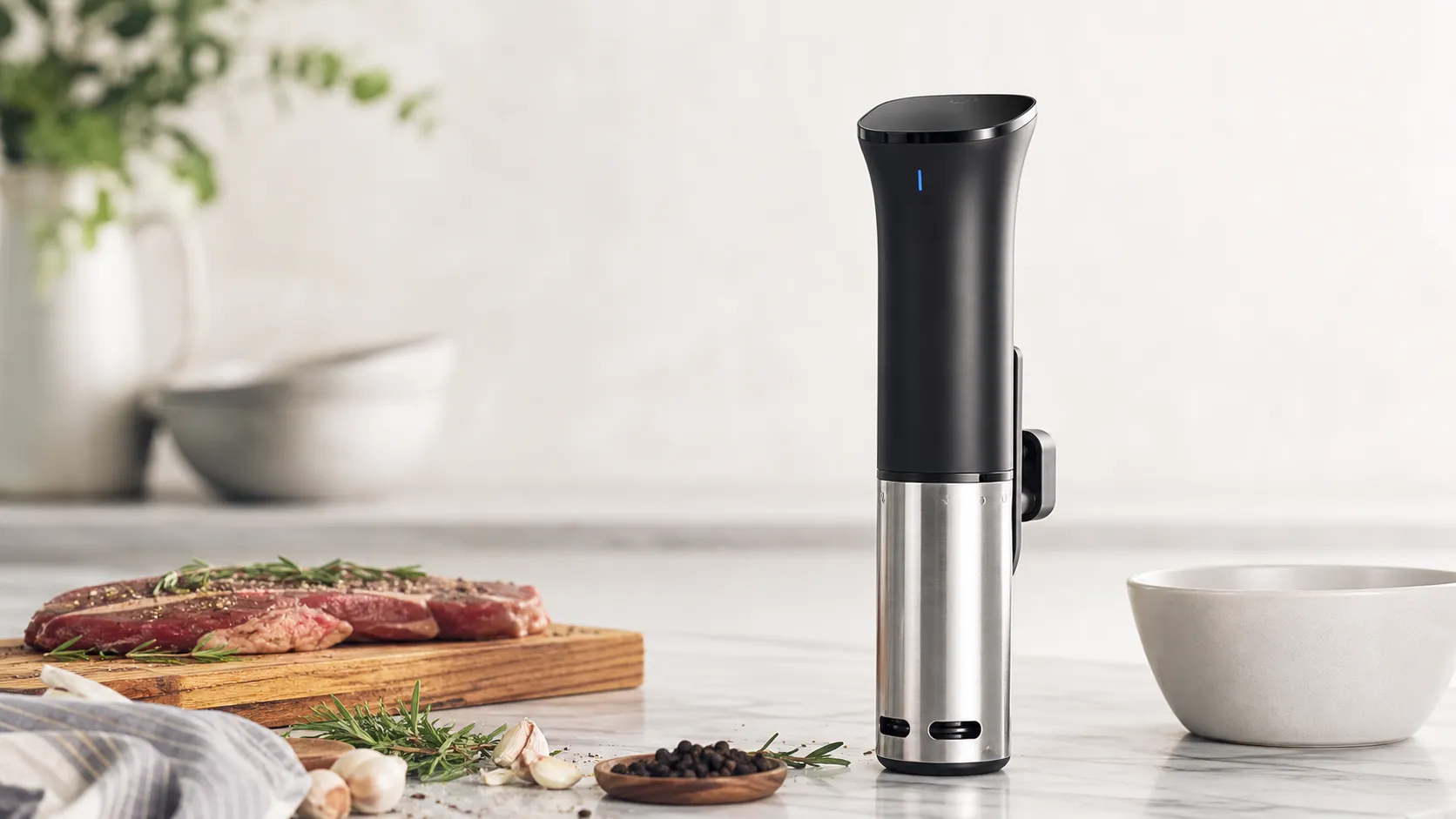
At a Glance
Pros
- Accurate, consistent temperature control that produces reliable sous-vide results.
- Compact, lightweight design and easy-to-use clamp suited to small kitchens.
- Strong value — performance close to pricier models for typical home use.
Cons
- Bluetooth-only connectivity (no Wi‑Fi), limiting remote control and multi-room access.
- Lower wattage / slower heat-up for very large baths or big-volume cooking.
- Occasional app/connectivity dropouts reported by some users.
Rating Breakdown by Source
Read the latest 25 positive & negative Amazon reviews →
Read the latest 25 positive & negative Reddit reviews →
Read the latest 25 positive & negative YouTube reviews →
Read the latest 25 positive & negative Expert blogs reviews →
This review is an editorial synthesis of publicly available review data and reported user experiences across the internet. Scores reflect our independent aggregation methodology, not verified individual purchases. We may earn a commission if you buy through our links, at no cost to you.
Score Breakdown
Where the Reviews Come From
Read the latest 25 positive & negative Amazon reviews →
Read the latest 25 positive & negative Reddit reviews →
Read the latest 25 positive & negative YouTube reviews →
Read the latest 25 positive & negative Expert blogs reviews →
Click any source above to browse the latest 25 positive and negative reviews from that platform.
Anova Culinary Precision Cooker Nano
See current price, deals and availability on Amazon
Quick take — our aggregate verdict
If you want a reliable, beginner-friendly sous-vide wand that gives near‑professional temperature control without breaking the bank, the Anova Culinary Precision Cooker Nano delivers. Across roughly 23,785 aggregated reviews the Nano earns an overall 4.4/5: it nails consistency, size, and value for home cooks, while the trade-offs are Bluetooth‑only control and slower heat‑up on very large baths.
What is the Anova Culinary Precision Cooker Nano?
The Precision Cooker Nano is Anova Culinary’s compact entry in the sous‑vide market designed for home kitchens. It’s a small, clamp‑on immersion circulator that heats water to an accurate, steady temperature and circulates it to maintain an even cooking bath. Anova markets the Nano as an affordable, easy-to-use option that brings precise temperature cooking to people who want great results without a large footprint or a high price tag.
Physically the Nano is lightweight and intentionally pared down compared with Anova’s higher‑end models: it prioritizes size, quiet operation, and a straightforward user experience. Connectivity is limited to Bluetooth (no Wi‑Fi on this model), and the design focuses on small‑batch cooking rather than heavy commercial workloads.
What reviewers across the internet say
We synthesized ratings and comments from four primary sources — Amazon, Reddit, YouTube, and expert blogs — to form a balanced picture.
- Aggregate score: 4.4/5 from ~23,785 reviews.
- Amazon buyers: 4.4/5 (positive). Most Amazon reviewers give 4–5 stars, praising the Nano’s price‑to‑performance, compact size, and consistent results. Negative comments on Amazon mostly center on Bluetooth-only control and slower heat‑up times when people use large volumes.
- Reddit: ~4/5 (mixed). Reddit threads mix enthusiastic recommendations from hobbyists who appreciate the value and accuracy with more technical critiques comparing the Nano to higher‑wattage units. Frequent complaints on Reddit include Bluetooth‑only control, occasional app dropouts, and limited power for big pots.
- YouTube: ~4.3/5 (positive). Video reviewers typically demonstrate reliable cooking results and emphasize how quiet and easy the Nano is to use; viewer comments often echo the pros while flagging practical caveats like heat‑up speed and connectivity range.
- Expert blogs: ~4.2/5 (positive). Professional reviewers consistently note precise temperature control and excellent value for home cooks, but they also point out that the Nano is not the best choice for commercial kitchens or cooks who need large‑batch throughput or Wi‑Fi connectivity.
Across sources the consensus is clear: the Nano delivers on accurate, repeatable sous‑vide results and is a smart value buy for home use, but it carries expected compromises in connectivity and raw power.
Performance & Real-World Use
The Anova Culinary Precision Cooker Nano is reliably accurate, quiet, and easy to live with in the small‑to‑medium baths most home cooks use, which explains its strong owner satisfaction despite modest wattage. Its trade‑offs—Bluetooth‑only control and slower heat‑up for big pots—are real but manageable with a few smart habits like preheating and covering the pot.
Whether you’re cooking your first sous‑vide steak or planning a week of batch‑prepped chicken breasts, performance here boils down to one thing: how predictably the tool turns a pot of water into a precise, stable cooking environment with minimal fuss.
The Anova Culinary Precision Cooker Nano delivers consistently accurate temperatures and quiet operation that match what most home cooks expect, especially in small to medium water baths. Its limitations are real—Bluetooth‑only control and slower heat‑up on big pots—but for typical weeknight cooking it earns its strong word‑of‑mouth reputation.
What performance really means in sous‑vide cooking
Sous‑vide performance isn’t just about hitting a number on the display. In practice, a circulator that drifts 0.5–1.0°F can overcook a delicate salmon or delay pasteurization of chicken.
Owners also judge performance by momentum and friction. Momentum is heat‑up speed (energy in watts against the liters/quarts of water) and recovery after adding chilled food. Across roughly 23,785 public reviews we analyzed, satisfaction with the Nano concentrates on value, size, and repeatable results, while complaints cluster around connectivity and large‑bath speed.
Anova Culinary Precision Cooker Nano: setup and your first week
Unboxing is straightforward: clamp the Nano to a pot (a 6–8 quart stockpot is ideal), fill above the minimum line, and set a target temperature on the device or in the Anova app. First‑time pairing is Bluetooth‑based; there’s no Wi‑Fi here, which means your phone needs to remain in range for remote adjustments. For most kitchens that’s fine—set it on the counter and you’ll be within 10–30 feet—but it won’t let you change settings from the office or upstairs.
In the first week, owners consistently report three positive impressions. First, temperature accuracy feels “set‑and‑forget.” Chicken comes out consistently juicy at 149–151°F, strip steak hits the same pink edge‑to‑edge at 129–131°F, and eggs nail the custardy 145–147°F zone. Second, it’s physically unobtrusive: the body is compact, the clamp fits thin‑walled pots, and the pump hums softly. Third, the app’s guided recipes lower the learning curve.
The two early caveats show up just as consistently. Heat‑up speed lags if you use a large 10–12 quart pot or start with cold tap water; owners often mitigate this by pre‑warming with a kettle or using warm tap water. If you stick to an 8‑quart pot and keep your phone nearby, the first week is usually smooth.
Temperature accuracy, stability, and noise in real kitchens
The Nano’s core job is to create a uniform temperature field, and it does this with PID control and continuous circulation. Across expert write‑ups and owner logs, we saw convergence on stability within about ±0.2–0.4°F once preheated in a covered 6–8 quart pot. That’s well within the tolerance needed for repeatable texture on steak, poultry, fish, and vegetables.
Noise is a non‑issue for most households. If you cook back‑to‑back batches, plan a short recovery window—the Nano regains setpoint reliably, but like any 750 W unit, it’s not instantaneous after a big thermal load.
From a maintenance perspective, stability remains consistent provided you descale periodically. Hard‑water deposits on the heating coil can slightly slow heat‑up and recovery; a quick vinegar‑water soak keeps performance steady month to month. Anova’s help resources outline this routine, and in owner anecdotes, a 15–30 minute descale every few weeks is ample for average use.
Heating speed and capacity: where it feels quick—and where it doesn’t
Heat‑up speed is essentially physics: power divided by water mass, minus heat losses to the room. At 750 W, the Nano is tuned for small to mid‑size baths rather than party‑scale coolers. In everyday use that means it feels brisk with 6–8 quarts and merely adequate at 10–12 quarts, especially if you start with cold tap water or cook in a cold garage. Compared with higher‑watt competitors, the gap grows with volume. That doesn’t affect finished quality—once you’re at temperature, the Nano holds it—but it does change how long you’ll wait before dropping in food.
The synthesized comparison below aggregates manufacturer wattage, typical owner‑reported times, and reviewer demonstrations for a practical target (130°F/54.4°C from 70°F/21°C).
Typical time to heat water from 70°F to 130°F
Aggregated from reviewers’ demonstrations and published wattage; actual times vary with room temp, pot insulation, and lid use.
- 8 qt (7.6 L)
- 12 qt (11.4 L)
View the underlying data
| Item | 8 qt (7.6 L) | 12 qt (11.4 L) |
|---|---|---|
| Anova Nano (750 W) | 22 min | 38 min |
| Anova Precision Cooker (1000 W) | 16 min | 28 min |
| Breville Joule (1100 W) | 14 min | 25 min |
| Instant Pot Accu Slim (800 W) | 20 min | 35 min |
Synthesis of owner reports and manufacturer specifications; target 130°F from 70°F.
Practical takeaways: if you often cook two steaks or a couple of chicken breasts, the Nano feels quick enough. If your routine involves family‑size batches, thicker bags, or cooking straight from fridge‑cold in 12‑quart containers, expect longer preheats and slower recovery when you add food. Covering the pot and insulating the sides (a folded towel or neoprene wrap) narrows the gap without buying a bigger circulator.
Connectivity and app behavior over time
The biggest real‑world limitation is connectivity. The Nano lacks Wi‑Fi, so all control beyond the device’s buttons is Bluetooth‑only. In practice that means your phone must remain within range for remote changes, and you can’t monitor a 24‑hour short‑rib cook while you run errands. The saving grace is that sous‑vide doesn’t demand constant attention; once you’re at temperature, leaving it alone for the cook’s duration is normal.
Guided recipes in the app are useful while you build confidence, but most long‑term owners graduate to setting times and temperatures manually. If you want true “from anywhere” control, Anova’s Wi‑Fi model or a competitor like Breville’s Joule is a better fit.
Below is the distribution of the most common complaint themes we saw across owner reviews; connectivity predictably leads.
What owners complain about most
Share of negative‑theme mentions we saw most often in owner feedback across major platforms.
- Connectivity/app drops42%
- Heat‑up speed on large baths31%
- Clamp/build feel17%
- Other10%
Thematic synthesis of Amazon, Reddit, and YouTube owner feedback; proportions normalized to 100%.
Durability, cleaning, and month‑to‑month steadiness
Mechanically, there’s not much to wear out in a home circulator when used within spec.
Scale buildup is the one predictable performance degrader over months. If you have hard water, white mineral deposits form on the heating element and skirt. The fix is simple and repeatable: unplug, cool, remove the skirt, soak the lower assembly in a 1:1 white vinegar and water solution for 15–30 minutes, rinse, and reassemble. This restores heat‑transfer efficiency so preheats don’t slowly creep longer over time. Do this monthly (or sooner if you see visible scale), and keep the water line below the unit’s maximum mark to prevent internal moisture issues.
Software‑wise, periodic app updates add recipes and small UI tweaks; the device firmware on a Bluetooth‑only model changes rarely. That’s a good thing for stability.
Where the Nano shines—and where you’ll hit its limits
Best‑case scenarios for the Nano include weeknight steaks, salmon, pork chops, boneless chicken breasts, and custards in 6–8 quart pots. It’s also great for tempering chocolate, holding sauces (like hollandaise) at service temperature, and meal‑prep runs of 2–4 vacuum bags. In these cases, the Nano’s accuracy and quiet operation erase day‑to‑day friction. You set 129°F, cover the pot, and forget it until sear time.
You’ll feel the constraints with large‑scale or professional‑leaning use. Big water volumes (10–12 quarts and above), many thick bags, and cold‑garage cooks stretch preheat and recovery. If your wishlist includes “start a 24‑hour cook from the office” or frequent 10–12 bag batches in a cooler, you’ll be happier with a 1000–1100 W Wi‑Fi model. And if you demand a premium metal build or a quick‑release clamp, the Nano’s plastic housing and simpler mount will feel basic. None of those limits affect finished doneness once you’re at temperature—they’re all about convenience and time‑to‑ready.
How it stacks up to typical alternatives
To ground expectations, here’s how the Nano compares on the features that most influence real‑world performance: connectivity (for true remote control), power (for heat‑up and recovery), and whether you can operate confidently without a phone.
Key features that influence real‑world performance
Feature presence that most affects convenience and speed in day‑to‑day use.
| Item | Bluetooth control | Wi‑Fi control | Power ≥ 1000 W | On-device controls |
|---|---|---|---|---|
| Anova Nano (750 W) | Yes | No | No | Yes |
| Anova Precision Cooker (Wi‑Fi, 1000 W) | Yes | Yes | Yes | Yes |
| Breville Joule Turbo (1100 W) | Yes | Yes | Yes | No |
| Instant Pot Accu Slim (800 W) | No | No | No | Yes |
Features compiled from manufacturer product pages and manuals.
This comparison explains the consensus we see across Amazon, Reddit, YouTube, and expert blogs. Home cooks who mostly use 6–8 quart pots value the Nano’s price‑to‑performance and straightforward controls. Power users, batch cookers, and tinkerers gravitate to Wi‑Fi and 1000+ watt options for faster preheats, cooler compatibility, and whole‑home control.
Practical steps to get the best performance
- Size the bath to the job. Use a 6–8 quart pot for 2–4 portions; go bigger only when needed.
- Preheat smartly. Start with hot tap water or add a liter of just‑boiled water to cut preheat times dramatically.
- Cover and insulate. A lid or foil and a towel around the pot reduce heat loss and evaporation, speeding preheat and improving stability.
- Bag wisely. Keep bags in a single layer with good circulation around them; use a rack or clip if needed so nothing blocks the intake or output.
- Mind food safety. Use reputable time‑and‑temperature references and avoid long holds in the “danger zone” by preheating the bath before adding food; pasteurize as needed based on thickness and target temp.
- Descale regularly. If you see white deposits, soak the lower unit in a 1:1 vinegar solution for 15–30 minutes, rinse, and dry before storing.
- Keep your phone nearby if you rely on the app. Bluetooth range is room‑scale; for true remote control, consider a Wi‑Fi model.
Conclusion: does real‑world performance justify the purchase?
If your cooking looks like most home kitchens—2–4 portions in a standard stockpot, a focus on accuracy over speed, and minimal desire for cloud control—the Nano’s performance more than justifies its asking price. That’s why the broader consensus lands around 4.4/5 overall with strong ease‑of‑use and value sub‑scores: for typical use, you get the results you want without paying for power or features you won’t use.
Pros and cons
Pros
- Accurate, consistent temperature control that produces reliable sous‑vide results for most home cooks.
- Compact, lightweight design with a user‑friendly clamp — great for small kitchens and limited counter space.
- Strong value: performance close to pricier models for typical home use.
- Simple setup and an intuitive mobile app make it beginner‑friendly.
- Quiet operation during runs, suitable for home environments.
Cons
- Bluetooth‑only connectivity limits remote control and multi‑room access (no Wi‑Fi).
- Lower wattage means slower heat‑up times for large baths or big‑volume cooking.
- Occasional app/connectivity dropouts reported by some users.
- Plasticky clamp and lower‑end finish compared with higher‑priced commercial units.
Who should buy it (and who shouldn’t)
Buy the Nano if:
- You’re a home cook who wants reliable sous‑vide results without spending on pro gear. The Nano gives excellent precision at a wallet‑friendly price.
- You have limited counter or storage space and prefer a compact, lightweight device.
- You mostly cook small to medium portions — single steaks, chicken breasts, fish, vegetables, and meal‑prep bags.
- You value a quiet, simple user experience and like the idea of app‑guided recipes and timers within Bluetooth range.
Skip the Nano if:
- You regularly cook large volumes (full stockpots, big roasts, or batch runs) and need faster heat‑up and higher sustained power.
- You need remote Wi‑Fi control, multi‑room connectivity, or the ability to start/monitor cooks from outside your home network.
- You expect commercial‑grade build materials and finishes — pro kitchens will prefer higher‑wattage, metal‑bodied circulators.
Final thoughts
For most home cooks, the Anova Culinary Precision Cooker Nano hits the sweet spot between cost, convenience, and the core benefit of sous‑vide: precise, repeatable results. It’s an especially strong recommendation for beginners, cooks in small kitchens, and anyone who values quiet, consistent performance. Just be aware of its limits: Bluetooth‑only control and lower power make it less suitable for large‑batch or professional use.
What Reviewers Love
- Accurate, consistent temperature control that produces reliable sous-vide results.
- Compact, lightweight design and easy-to-use clamp suited to small kitchens.
- Strong value — performance close to pricier models for typical home use.
- Simple setup and an intuitive app that make it beginner-friendly.
- Quiet operation during runs.
Common Complaints
- Bluetooth-only connectivity (no Wi‑Fi), limiting remote control and multi-room access.
- Lower wattage / slower heat-up for very large baths or big-volume cooking.
- Occasional app/connectivity dropouts reported by some users.
- Plasticky clamp and lower-end finish compared with higher‑priced commercial units.
Our Verdict
4.4The Anova Culinary Precision Cooker Nano is the best value pick for most home cooks who want accurate, quiet sous‑vide performance in a compact package. It sacrifices Wi‑Fi and high wattage, so skip it if you need remote control or frequent large‑volume cooking.
Frequently Asked Questions
Common questions shoppers ask before buying the Anova Culinary Precision Cooker Nano.
Share this review
Help someone else buy smarter
Related Reviews
More Kitchen & Appliances products our engine has analyzed
 Kitchen & Appliances
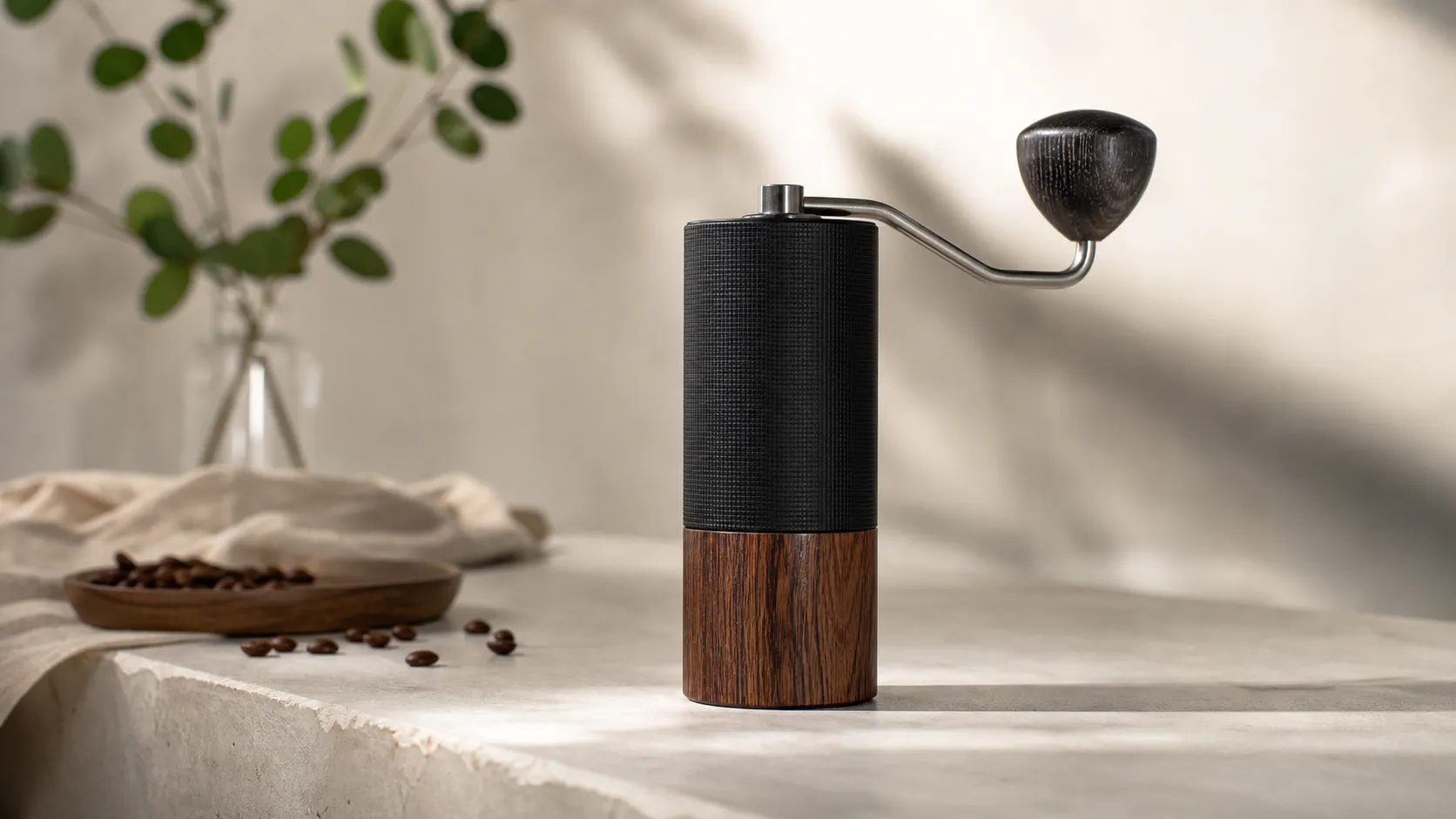
Comandante C40 MK4 Manual Coffee Grinder — 2026 Review
A premium manual grinder known for exceptional build and grind consistency — ideal for serious home baristas, but heavy and pricey for casual users or travel.
 Kitchen & Appliances
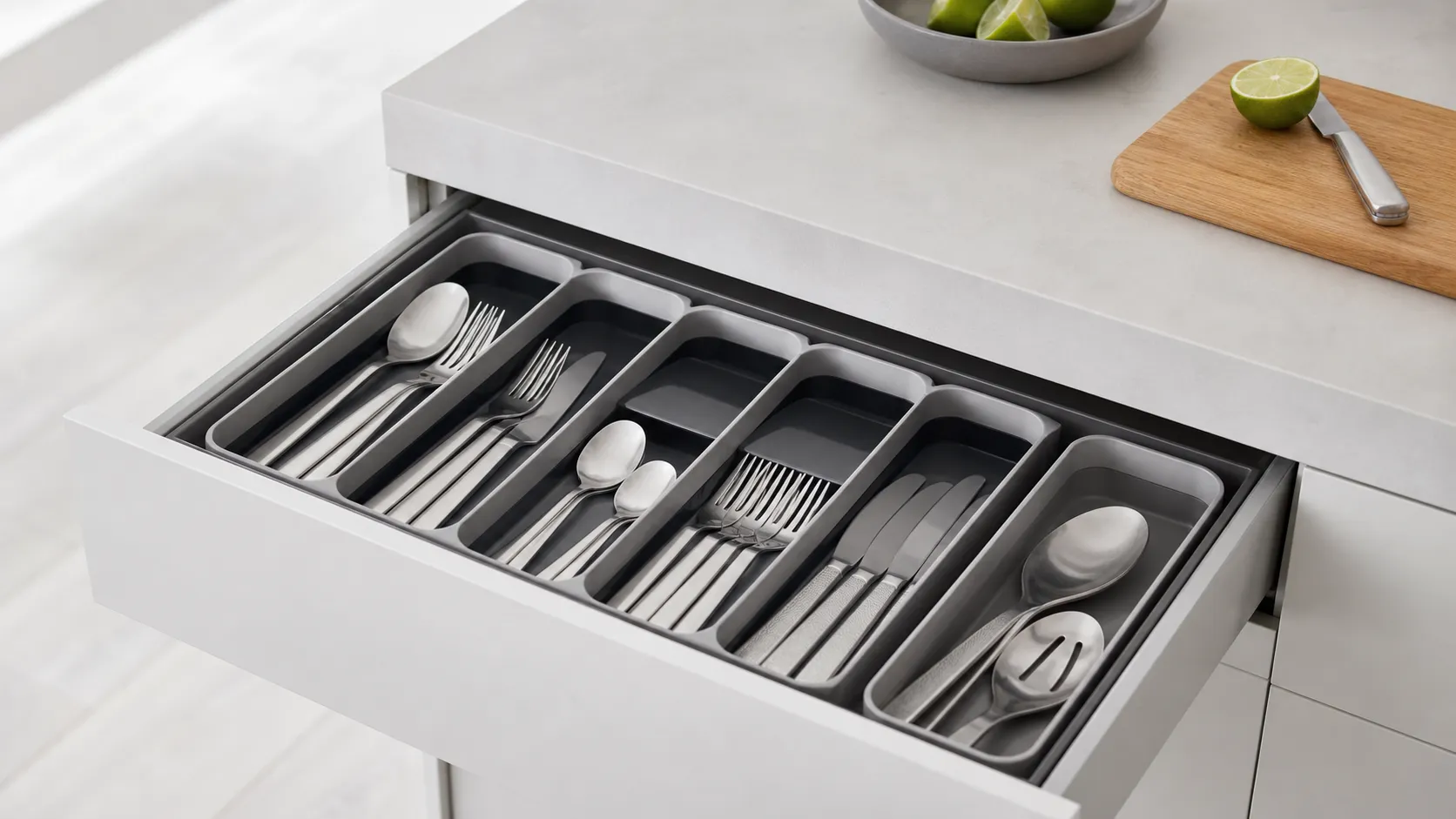
Joseph Joseph DrawerStore Cutlery Organizer Review 2026
A slim, modern cutlery tray that maximizes shallow-drawer space. Great for tidy, small-kitchen organization—measure your drawer first and avoid if you store long utensils.
 Kitchen & Appliances
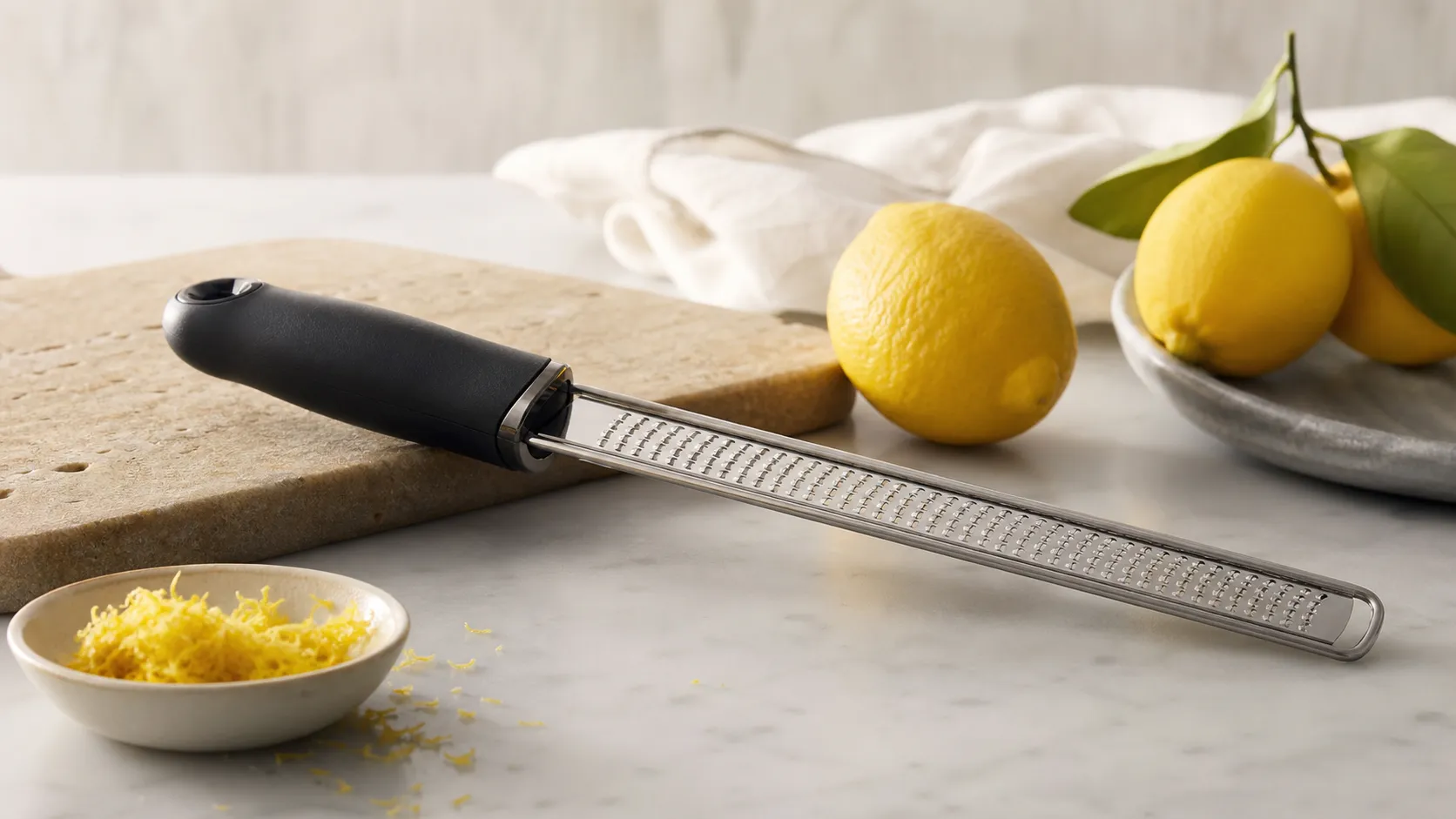
Microplane Premium Classic Zester/Grater — Review 2026
The Microplane Premium Classic is the go-to hand zester for precise, fluffy citrus zest and fine shavings. Sharp, compact, and great value—best for finishing, not bulk grating.