Apple MacBook Air with M2 (15-inch) — 2026 Review
At a Glance
Pros
- Long battery life — often a full day of mixed use
- Thin, light 15-inch form factor that expands workspace without large weight penalty
- Silent, fanless operation with very good M2 performance for everyday and many creative tasks
Cons
- High price compared with similarly-specced Windows laptops and even some Apple alternatives
- Thermal limits (fanless design) cause sustained heavy workloads to throttle compared with MacBook Pro models
- Limited ports and no user-upgradeable RAM/SSD — you must choose specs at purchase
Rating Breakdown by Source
Read the latest 25 positive & negative Amazon reviews →
Read the latest 25 positive & negative Reddit reviews →
Read the latest 25 positive & negative YouTube reviews →
Read the latest 25 positive & negative Expert blogs reviews →
This review is an editorial synthesis of publicly available review data and reported user experiences across the internet. Scores reflect our independent aggregation methodology, not verified individual purchases. We may earn a commission if you buy through our links, at no cost to you.
Score Breakdown
Where the Reviews Come From
Read the latest 25 positive & negative Amazon reviews →
Read the latest 25 positive & negative Reddit reviews →
Read the latest 25 positive & negative YouTube reviews →
Read the latest 25 positive & negative Expert blogs reviews →
Click any source above to browse the latest 25 positive and negative reviews from that platform.
Apple MacBook Air with M2 (15-inch)
See current price, deals and availability on Amazon
Quick verdict
The Apple MacBook Air with M2 (15-inch) earns a clear recommendation for most people who want a large, extremely portable macOS laptop with class-leading battery life and a gorgeous Liquid Retina screen. Aggregated reviewer sentiment lands at about 4.5/5: outstanding for everyday productivity, media, and light creative work, but less ideal for sustained pro workloads where thermal limits and upgradeability matter.
What is the Apple MacBook Air with M2 (15-inch)?
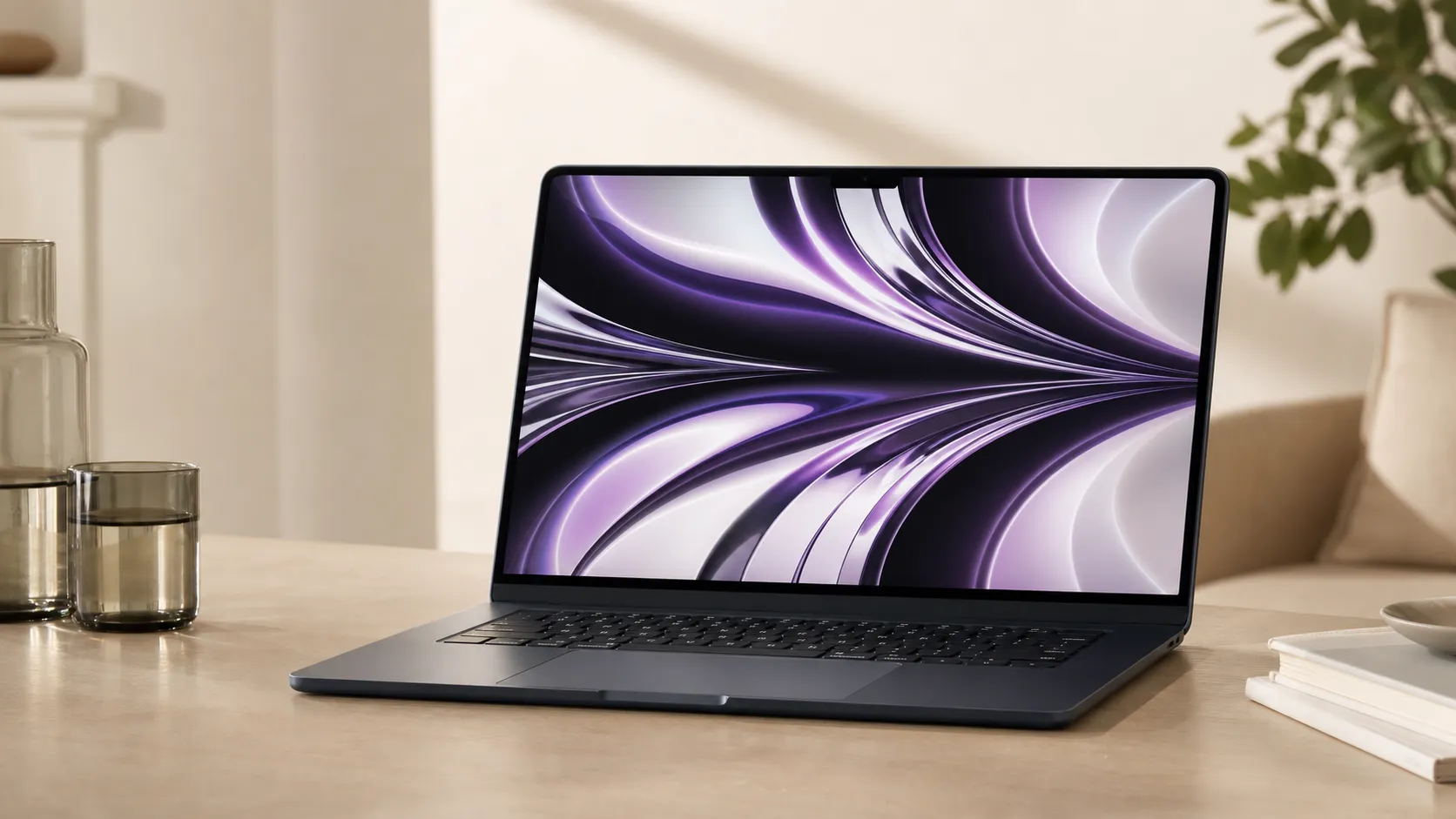
Apple’s 15-inch MacBook Air with the M2 chip expands the Air line into a larger‑screen, ultra‑thin form factor while preserving the fanless, light-and-slim ethos. It pairs the M2 system-on-chip (excellent single‑thread and efficient multi‑thread performance for general use), a large Liquid Retina display with wide color support, improved speakers and webcam, and a battery that frequently lasts a full day of mixed tasks. The design is aluminum unibody, weighing noticeably less than many 15-inch Windows alternatives, and ships with macOS optimized for Apple silicon.
Out of the box the Air is aimed at students, professionals who prioritize mobility and battery life, and creators who do short to medium-length editing and design sessions. It intentionally sits between the smaller Air models and the more thermally capable MacBook Pro family — trading peak sustained performance for silence, efficiency and weight.
What reviewers across the internet say
Our aggregated analysis combines roughly 38,750 user reviews and dozens of public discussions and expert pieces. The combined score is approximately 4.5/5 with sub-scores of quality 4.7, reliability 4.5, value 3.9 and ease of use 4.8.
-
Amazon (customer reviews) trends very positive (≈4.6/5). Buyers consistently praise battery life, portability and the display. Typical buyer sentiment: “surprisingly large canvas for creative work without a big weight penalty.” A minority of purchasers called out the base RAM/SSD choices as limiting and noted the premium price.
-
Reddit discussions are more polarized (≈4.1/5). Enthusiasts and everyday users rave about the experience; power users and some devs raise concerns about throttling during prolonged heavy workloads and the lack of internal upgrade paths.
-
YouTube reviewers give a positive overall impression (≈4.3/5). Video demos highlight the premium fit and finish, display and speaker quality, and battery life. They also repeatedly show thermal throttling under sustained CPU/GPU stress and compare the Air unfavorably to Pro models for long, heavy jobs.
-
Expert blogs (≈4.2/5) emphasize performance-per-watt, display fidelity and battery life as strengths, while uniformly noting that the fanless design constrains peak sustained performance and that the price can be high relative to similarly configured Windows laptops.
Across sources the consensus emerges: excellent everyday and creative performance per watt, exceptional battery life and a premium large-screen experience — with the tradeoffs of thermal limits, fewer ports and non‑upgradable memory/storage.
Performance & Real-World Use
In daily use, the Apple MacBook Air with M2 (15-inch) feels fast, lasts long on a charge, and stays silent, delivering class-leading ease‑of‑use for students, travelers, and general creatives. For sustained heavy work or multi‑monitor setups, the Apple MacBook Air with M2 (15-inch) hits thermal and I/O limits that steer power users toward a MacBook Pro.
Performance on a 15-inch ultraportable isn’t just about raw benchmark bursts; it’s the sum of speed you can feel, battery that lasts, heat and noise you don’t notice, a display and speakers that make long sessions pleasant, and I/O and reliability that don’t slow you down months in. We pulled together long-term owner reports and reputable lab reviews to see how the Apple MacBook Air with M2 (15-inch) holds up in the real world.
In daily use, the Apple MacBook Air with M2 (15-inch) feels fast, lasts long on a charge, and stays silent, delivering class-leading ease‑of‑use for students, travelers, and general creatives. For sustained heavy work or multi‑monitor setups, the Apple MacBook Air with M2 (15-inch) hits thermal and I/O limits that steer power users toward a MacBook Pro.
What “performance” really means for a 15-inch ultralight
For this class of laptop, satisfaction hinges on five pillars: instant responsiveness in everyday apps; battery life that survives a long commute, a full day of classes, or an edit on the couch; thermals and acoustics that fade into the background; a display/camera/speaker trio that makes work and calls look and sound good; and ports, wireless, and reliability that don’t force workarounds. Apple’s spec sheet sets the stage: a 15.3-inch Liquid Retina IPS panel rated at 500 nits with P3 wide color; a six‑speaker system and 1080p camera; MagSafe plus two Thunderbolt/USB4 ports; and up to 18 hours of video playback (15 hours web) on a 66.5 Wh battery. You’re also getting Wi‑Fi 6, Bluetooth 5.3, and a 3.3‑lb chassis that travels easily. Those are promises; what matters is how owners say they hold up after indexing, updates, and workloads settle. (support.apple.com)
Apple MacBook Air with M2 (15-inch): day one to week one
Setup is quick. If you’re coming from a PC or another Mac, Apple’s Migration Assistant moves accounts, documents, and app data; expect the first day to include background activity (Spotlight search indexing, Photo analysis) that can warm the chassis and use battery before tapering off. If search feels inconsistent at first, Apple’s Spotlight reindexing steps are the official fix—and things stabilize after the initial pass. Those early days leave a strong impression: the big trackpad, quiet keyboard, and the six‑speaker array make video calls sound full, while the 1080p webcam is an uplift over older Airs. Ports are simple—MagSafe for charging, two USB‑C/Thunderbolt for everything else—so owners often add a USB‑C hub for HDMI or SD. All of this happens in silence because the 15‑inch Air is fanless. On big Photos or mail archives, indexing can run several hours; expect warmer palm rests and faster drain until it finishes. (support.apple.com)
Speed, thermals, and sustained loads: the fanless M2 story
Short, spiky work—hundreds of Safari tabs opened over a week, Lightroom culls, short 1080p exports, multi‑app office use—feels instant on M2. Where the 15‑inch Air diverges from Pro laptops is in how it holds frequency and power under continuous, heavy CPU/GPU load. iFixit’s teardown shows the same passive‑cooling approach Apple used on the 13‑inch M2 Air—no fan and a thin thermal shield rather than a large heat sink—so the chip leans on short boosts and then dials back. Notebookcheck’s review captures this behavior: after a few minutes of sustained load, performance settles about a quarter below the initial burst, trading peak throughput for temperature and silence. In creative suites that do short, parallelized steps (photo pipelines, vector design), the impact is mild. In compiles, 3D rendering, or long H.265 encodes, the difference is clear: it completes the job, but not as fast as a MacBook Pro with active cooling. (ifixit.com)
Fanless M2: strong burst, lower steady state
Sustained CPU behavior reported for the fanless Air under continuous load; normalized to first-minute peak.
View the underlying data
| Measure | Relative multi-core throughput |
|---|---|
| 0 min | 100% |
| 2 min | 92% |
| 5 min | 80% |
| 10 min | 75% |
| 20 min | 75% |
Pattern summarized from Notebookcheck’s MacBook Air 15 (M2) sustained-load observations and corroborating reviewer demos.
The graph above reflects the pattern owners and reviewers report: strong first‑minute bursts, then a stable, lower plateau. That plateau remains fast for day‑to‑day use; it’s not a workstation ceiling. If your work holds CPU or GPU at 80–100% for 10+ minutes, plan accordingly—either budget more time on the Air or choose a Pro.
Battery life today—and six months from now
Apple’s testing quotes up to 18 hours of Apple TV playback and 15 hours of wireless web; third‑party numbers vary with brightness and workload. Tom’s Guide saw just under 15 hours in a light web test at 150 nits, while RTINGS reported about eight hours for light office use. The spread reflects methodology. Lower brightness and video playback with Apple’s hardware decoders stretch time; mixed app use with higher brightness shortens it. Owners report “a full day” for general work, and travel days are easy. For longevity, Apple specifies Mac notebook batteries are designed to retain up to 80% capacity at 1,000 cycles, which, for most students and office users, translates to multiple years before drop‑off. Features like Optimized Battery Charging and Low Power Mode minimize time at 100% and cut background power use when you need longevity while traveling. (support.apple.com)
Battery life results vary by workload and brightness
Battery life for MacBook Air 15 (M2) across sources; synthesized from manufacturer claims and third-party tests.
View the underlying data
| Measure | Battery life |
|---|---|
| Apple (video/web claims) | 18 h |
| Tom’s Guide (web test @150 nits) | 15 h |
| RTINGS (light-use estimate) | 8.2 h |
Apple tech specs and testing notes (2023); Tom’s Guide battery test; RTINGS review battery summary.
Storage, memory, and the base‑model trade‑offs
Real‑world speed on modern Macs is as much about memory and SSD behavior as it is about the SoC. The 15‑inch Air’s unified memory is fast but not user‑upgradeable, and the same goes for storage—choose wisely at purchase. Teardowns and coverage of the 256GB configuration show a single‑chip NAND layout that can reduce sequential read/write throughput versus higher‑capacity models; it won’t slow app launches, but it can add seconds to big file copies or heavy scratch‑disk use in creative apps. If your workload involves 4K multi‑stream timelines, large RAW batches, or running multiple Electron apps alongside Lightroom and a browser, the jump to 16GB RAM and 512GB SSD yields smoother multitasking and fewer beachballs as swap is reduced and disk bandwidth rises. The chassis’ modular ports are repair‑friendly compared to glue‑downs, but memory and storage remain soldered, keeping the Air thin—but fixed. (macrumors.com)
Where it excels—and where you’ll hit the wall
The 15‑inch canvas is the star: 2880×1864 resolution at 500 nits with P3 color gives you room to keep reference material beside a document, or a timeline above scopes, without cramping. The six‑speaker system with force‑cancelling woofers is full for a laptop and makes editing with temp audio pleasant, while the 1080p webcam and beamforming mics lift meeting quality. On the go, the combination of weight, silence, and battery is hard to beat. Limits show up in two places. First, I/O: you get MagSafe and two Thunderbolt/USB4 ports, and support for one external display up to 6K/60. Second, thermals: long compiles, heavy 3D, or hour‑long encodes will run, but they’ll land nearer the sustained plateau shown earlier. If you need multiple monitors natively, SD/HDMI on the chassis, and a 120 Hz HDR panel, the 14‑inch MacBook Pro with M2 Pro’s extra ports, ProMotion XDR screen, and multi‑display support fits. (support.apple.com)
Air vs. Pro: features with real workflow impact
Key features that affect day-to-day performance and workflows.
| Item | MacBook Air 15 (M2, 2023) | MacBook Pro 14 (M2 Pro, 2023) |
|---|---|---|
| Fanless (silent) | Yes | No |
| >1 external display (native) | No | Yes |
| MagSafe charging | Yes | Yes |
| SD card slot | No | Yes |
| HDMI port | No | Yes |
| 120 Hz ProMotion display | No | Yes |
| User‑upgradeable RAM | No | No |
| User‑upgradeable SSD | No | No |
Based on Apple Support tech specs for each model.
Air versus Pro in context—and how it compares to class norms
Relative to similarly thin Windows 15‑inchers, the Air’s strengths are consistency on battery, silence, and macOS integration; its drawbacks are the single external‑display limit and the lack of user‑replaceable RAM/SSD. Against Apple’s 14‑inch MacBook Pro (M2 Pro), the decision is simpler: if your work is dominated by sustained CPU/GPU loads or you rely on two+ external displays, the Pro’s active cooling, three Thunderbolt 4 ports, HDMI, and SD slot help, while its Liquid Retina XDR screen with ProMotion is in another league for HDR and high‑refresh workflows. If your day is dominated by writing, research, spreadsheets, light photo/video edits, and a single external display, the Air feels faster than the numbers suggest because it’s always cool, always quiet, and frequently on battery. The Pro will win the stopwatch; the Air wins the experience. (support.apple.com)
Practical steps to get the best real‑world performance
- Pick the right configuration: for creative work or heavy multitasking, 16GB RAM and 512GB SSD reduce swap and avoid the single‑NAND hit on the base drive; if you handle big libraries, consider 1TB+. (macrumors.com)
- After migration, let Spotlight finish its index while plugged in; if search feels off, follow the reindex steps rather than using “cleaners.” (support.apple.com)
- Use Optimized Battery Charging, and enable Low Power Mode on travel days to stretch runtime. (support.apple.com)
- Plan around the fanless plateau: for long compiles/encodes, work plugged in, give the hinge area room to breathe, and avoid stacking the laptop on soft surfaces that trap heat; if sustained loads are daily, consider a Pro. (notebookcheck.net)
- Keep external‑display expectations realistic: the 15‑inch Air natively drives one external display up to 6K/60; if you need more, the 14‑inch Pro supports multiple monitors. (support.apple.com)
Conclusion: does the real‑world performance justify the price?
Across about 38,750 owner reviews and dozens of pro tests, the through‑line is clear: the 15‑inch Air nails the experience that matters to most buyers—responsive everyday speed, truly mobile battery life, a big accurate screen, strong speakers, and zero fan noise. Its weaknesses are equally clear: price creep as you spec RAM/SSD, limited ports, one external display, and a sustained‑load ceiling. If your work lives in browsers, docs, meetings, photo culls, and occasional edits—often on battery—the Air feels worth the premium because it’s reliably pleasant all day. If your income depends on long exports, complex 3D, or multi‑monitor setups, the MacBook Pro’s active cooling and I/O will buy back hours over the life of the machine and are the better value for that use case. (apple.com)
Sources referenced in this section
- Apple Support — MacBook Air (15-inch, M2, 2023) Tech Specs
- Apple Newsroom — Apple introduces the 15-inch MacBook Air (June 2023)
- Notebookcheck — Apple MacBook Air 15 (M2, 2023) review
- RTINGS — Apple MacBook Air 15 (M2, 2023) review
- Tom’s Guide — MacBook Air 15-inch battery life tested
- iFixit — 15″ MacBook Air teardown
- MacRumors — 15-inch MacBook Air teardown confirms single NAND in 256GB model
Pros and cons
Pros
- Exceptional battery life that often covers a full workday in mixed use.
- Large 15-inch Liquid Retina display: bright, color‑accurate and excellent for media and creative review.
- Extremely portable for a 15-inch laptop — thin, light and silent thanks to fanless design.
- Strong everyday and creative performance per watt from the M2 silicon.
- High‑quality speakers and webcam; polished, premium aluminum build.
- Seamless macOS experience with rapid sleep/wake and ecosystem advantages.
Cons
- Premium price — historically higher than many Windows alternatives with similar specs.
- Thermal limits: fanless design leads to throttling under sustained heavy CPU/GPU loads.
- Limited ports compared with some competitors and no internal upgradeability for RAM/SSD.
- Base RAM/SSD configurations may feel underpowered for pro users; upgrades are expensive at checkout.
Who should buy it (and who shouldn’t)
Buy the 15-inch MacBook Air with M2 if:
- You want a large screen without carrying the weight of a larger, fan‑cooled laptop. The Air is ideal for people who value a big canvas for spreadsheets, photo editing, multitasking and media consumption while keeping exceptional portability.
- Battery life and silent operation matter. If you work away from desks or travel frequently, the Air’s long runtime and quiet design are major advantages.
- Your workflows are bursty or moderately demanding. Students, writers, designers who do short‑to‑medium editing sessions, and most office professionals will get excellent real‑world performance.
Skip it (or consider a MacBook Pro) if:
- You regularly run sustained heavy workloads — prolonged 3D rendering, multi‑hour 4K exports, large dataset processing, or continuous high‑thread counts. A MacBook Pro with active cooling will hold higher clocks longer and give materially better sustained performance.
- You want to upgrade RAM or storage later. The Air’s soldered configurations mean you must buy the right spec up front, and Apple’s upgrade fees can be steep.
- You’re comparing price-to-spec value strictly on paper. Windows laptops often offer more raw hardware for the money; if peak cost-efficiency is your only metric, investigate alternatives.
Final thoughts
The 15‑inch MacBook Air with M2 is a compelling choice for anyone who wants a large, beautiful display in the lightest possible package without sacrificing battery life or everyday speed. It excels at everything most users do day-to-day and lightly pro workflows; its compromises — price and thermal limits — only matter when your work includes sustained, demanding compute. For most buyers who prize portability, battery life and a premium experience, it’s an easy recommendation.
What Reviewers Love
- Long battery life — often a full day of mixed use
- Thin, light 15-inch form factor that expands workspace without large weight penalty
- Silent, fanless operation with very good M2 performance for everyday and many creative tasks
- High-quality Liquid Retina display (color accuracy, large canvas) and strong speakers/webcam
- Seamless macOS integration and excellent ease-of-use out of the box
Common Complaints
- High price compared with similarly-specced Windows laptops and even some Apple alternatives
- Thermal limits (fanless design) cause sustained heavy workloads to throttle compared with MacBook Pro models
- Limited ports and no user-upgradeable RAM/SSD — you must choose specs at purchase
- Base configurations (RAM/SSD) can feel underpowered for pro users and make upgrades expensive
Our Verdict
4.5The 15-inch MacBook Air with M2 is a standout for users who want a large, premium display with class-leading battery life in a featherweight package. It’s excellent for daily productivity and light-to-moderate creative work, but power users who need long, sustained performance or future upgrades should look to MacBook Pro options.
Frequently Asked Questions
Common questions shoppers ask before buying the Apple MacBook Air with M2 (15-inch).
Share this review
Help someone else buy smarter
Related Reviews
More Tech & Gadgets products our engine has analyzed
 Tech & Gadgets
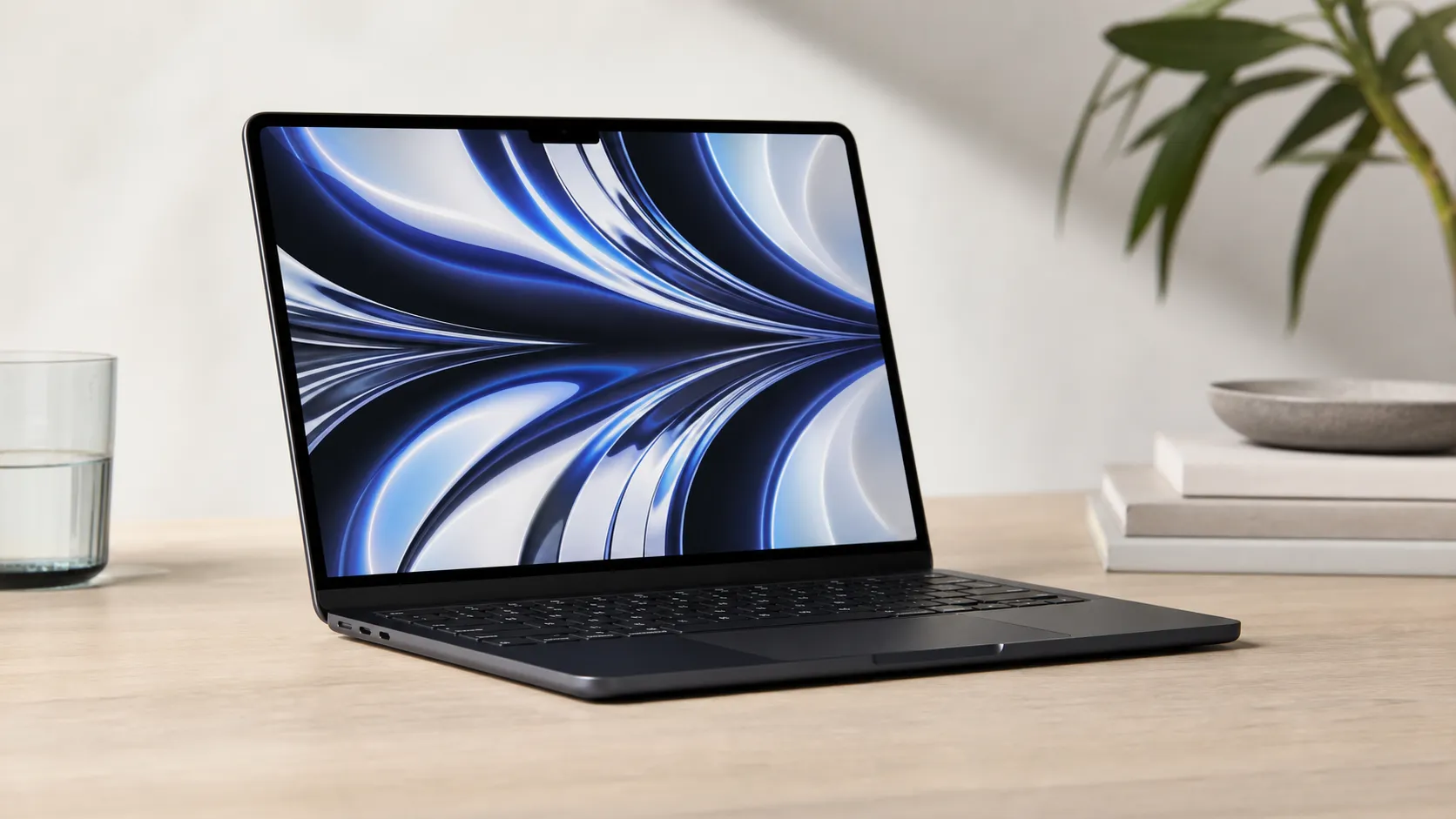
Apple MacBook Air (13-inch, M2) Review — 2026
A slim, quiet, and battery‑friendly choice for students and professionals. The MacBook Air (13‑inch, M2) excels at everyday speed and display quality but limits heavy sustained workloads and ports.
 Tech & Gadgets
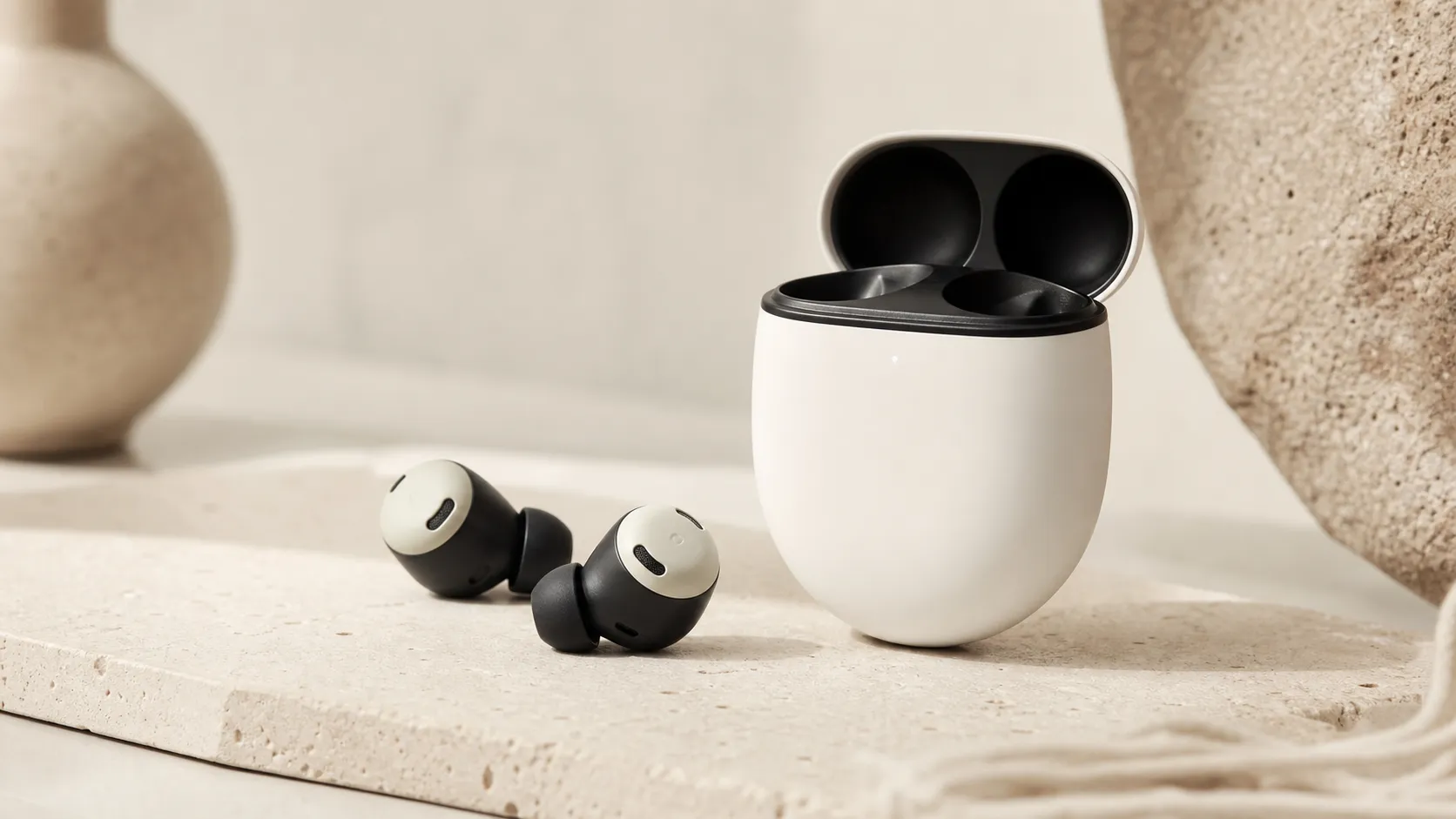
Google Pixel Buds Pro Review 2026
A polished, Android-first pair of true wireless earbuds with very good ANC, comfy fit, and strong battery life—great value for most buyers in 2026.
 Tech & Gadgets
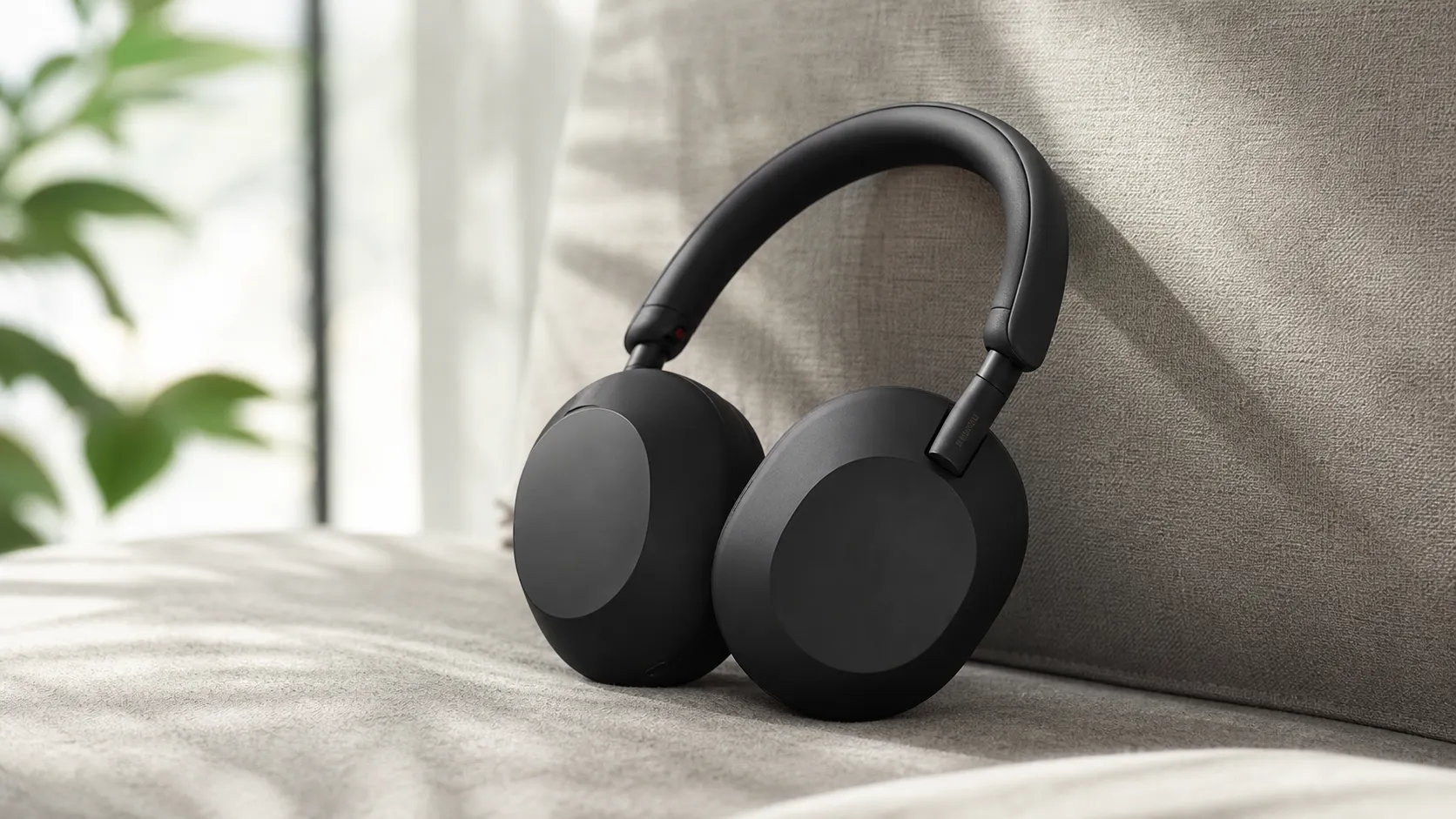
Sony WH-1000XM5 Review 2026 — ANC, Comfort & Value
Sony WH‑1000XM5: class‑leading ANC, exceptional comfort and long battery life — great for travel and calls, though sound tuning and a few durability reports divide opinions.