Breville Barista Express BES870XL — 2026 Review
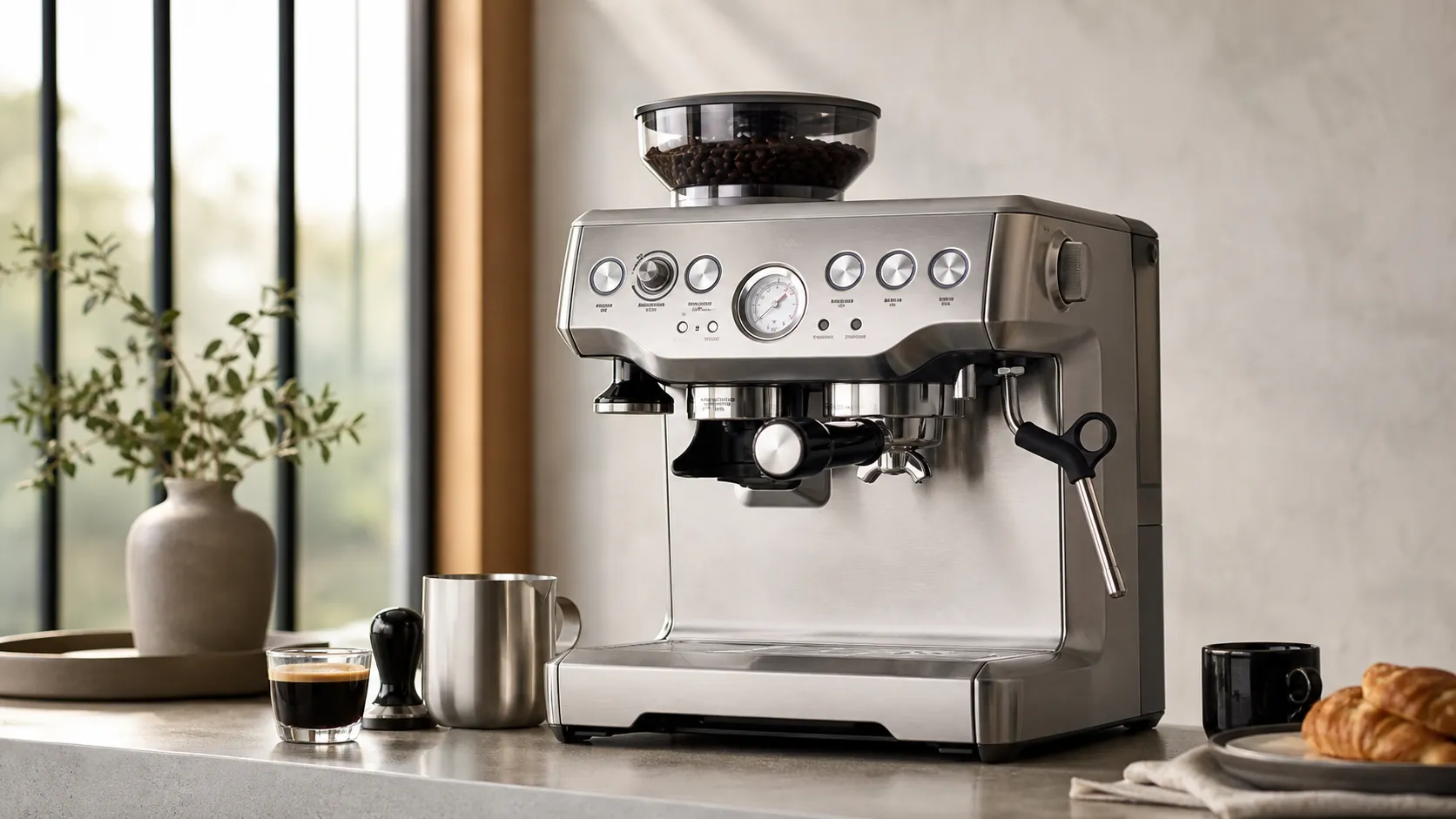
At a Glance
Pros
- Integrated conical burr grinder makes single-step espresso preparation convenient and consistent.
- Produces rich, crema-forward espresso that many users compare favorably to café shots.
- Solid stainless-steel construction and attractive, compact design for home kitchens.
Cons
- Steam wand/steam power is weaker than prosumer machines — takes practice to get microfoam.
- Learning curve for consistent shots (grind, dose, tamp, temperature) — beginners need time to dial in.
- Built-in grinder can be noisy, clump with oily beans, and burrs wear over time.
Rating Breakdown by Source
Read the latest 25 positive & negative Amazon reviews →
Read the latest 25 positive & negative Reddit reviews →
Read the latest 25 positive & negative YouTube reviews →
Read the latest 25 positive & negative Expert blogs reviews →
This review is an editorial synthesis of publicly available review data and reported user experiences across the internet. Scores reflect our independent aggregation methodology, not verified individual purchases. We may earn a commission if you buy through our links, at no cost to you.
Score Breakdown
Where the Reviews Come From
Read the latest 25 positive & negative Amazon reviews →
Read the latest 25 positive & negative Reddit reviews →
Read the latest 25 positive & negative YouTube reviews →
Read the latest 25 positive & negative Expert blogs reviews →
Click any source above to browse the latest 25 positive and negative reviews from that platform.
Breville Barista Express BES870XL
See current price, deals and availability on Amazon
Quick verdict
The Breville Barista Express BES870XL is one of the best mid-range home espresso machines for 2026: a near-pro feature set with an integrated conical burr grinder that delivers café-quality, crema-forward shots at a very competitive price. Aggregated user and expert scores land around 4.5/5 overall — it’s an outstanding value for someone who wants hands-on control without buying separate grinder and machine, though serious enthusiasts may eventually outgrow its steam power and temperature stability.
What is the Breville Barista Express BES870XL?
The Barista Express (BES870XL) is Breville’s popular prosumer espresso machine that pairs an on-board conical burr grinder with a single-boiler, thermocoil heating system and a manual steam wand. Designed for home users who want more control than a pod or super-automatic machine provides, it offers adjustable grind size and dose, a 54 mm portafilter, and features intended to make the “dial-in” process approachable: built-in tamper, straightforward controls, and quick heat-up. In short: one-box convenience that bridges entry-level and true prosumer gear.
What reviewers across the internet say
We synthesized feedback from roughly 23,030 user reviews and the major online discussion hubs to produce a consensus score of about 4.5/5. Sub-scores from the aggregated dataset look like this: quality 4.4, reliability 4.1, value 4.7, and ease of use 4.0.
- Amazon (large volume of user reviews, overall positive): Users frequently call out the integrated grinder, espresso quality and value. Many owners report that once they dial in grind and dose, the machine produces shots comparable to café pulls — rich extraction with good crema. Routine maintenance is a common user note.
- Reddit (active home-barista discussions, mixed): The Barista Express is a community favorite for beginner-to-intermediate baristas. Conversations focus on mods, troubleshooting, and techniques to improve steam and temperature consistency. The community emphasizes that the machine rewards learning and small upgrades.
- YouTube (video reviewers, mixed): Reviewers regularly praise the grinder + machine combo and overall shot quality while demonstrating the learning curve. Videos commonly show milk-texturing limitations and recommend technique changes or add-on parts to push performance further.
- Expert blogs (mixed): Experts call it a top-value entry-level prosumer machine, noting thermocoil heating characteristics and acknowledging that power users may prefer a PID or dual-boiler setup for better steam and temperature control.
Taken together, the online consensus is clear: superb price-to-feature value, dependable espresso performance for home use, and an expectation that users will invest time in dialing in and maintaining the machine.
Performance & Real-World Use
The Breville Barista Express BES870XL delivers café‑like espresso and an efficient, one‑box workflow that owners overwhelmingly praise for value and day‑to‑day enjoyment. Its long‑term performance holds up when you follow the manual’s water and cleaning guidance; the main real‑world limits are slower steaming than prosumer gear and a grinder that prefers fresher, less‑oily beans.
Breville’s Barista Express brings café workflow into a compact, stainless‑steel box, so “performance” is less about bench tests and more about how quickly, consistently, and enjoyably it turns whole beans into drinks you love.
In day‑to‑day use, the Breville Barista Express BES870XL produces rich, crema‑forward espresso and a fast, one‑machine workflow that owners rate highly; its integrated grinder and pre‑infusion make it easier to get into the ballpark quickly. Over months, it stays reliable if you follow the manual’s cleaning and water guidance; its main limits are slower steaming than prosumer gear and a grinder that prefers fresher, less‑oily beans.
What real performance means for a home espresso machine
The Barista Express’s thermocoil with PID control, low‑pressure pre‑infusion, and 15‑bar pump regulated to ~9‑bar extraction are the core of that formula, because they decide how evenly water meets the puck and how stable the brew temperature stays during a pull. Breville publishes those design choices explicitly, and they’re why owners can learn the machine and get consistent espresso without external mods. (breville.com)
But performance isn’t only plumbing. The integrated conical‑burr grinder means your grind size, dose, and puck prep are literally built into the chassis, trimming counter clutter and time. The trade‑off versus a separate grinder is serviceability and ultimate grind quality; you do gain a faster, simpler workflow, which is what most buyers at this tier actually feel every morning. Independent testers and long‑term reviewers consistently echo that framing: fantastic value and café‑like results if you put in some practice, with steaming power and temperature stability behind true prosumer machines. (techgearlab.com)
Breville Barista Express BES870XL: day‑one setup and week‑one learning curve
Unbox, fit the water filter, flush the group and steam wand, and you’re ready to dial in. Set the date dial two months ahead for your first filter change, prime the thermocoil, and run a few blank shots to heat‑soak the group and portafilter. (breville.com)
The first week is mostly about learning how fine the grinder needs to be for your beans, and how the machine’s built‑in pre‑infusion compresses small puck prep mistakes. Use the pressure gauge as feedback: far right suggests too fine or overdosed; far left suggests the opposite. Start with single‑wall baskets if you’re grinding fresh; dual‑wall baskets are training wheels for pre‑ground or stale beans. (breville.com)
Daily use: grinder behavior, espresso character, and the morning rhythm
The built‑in grinder is the headline convenience—and the noisiest component. It’s happiest with fresh, medium to medium‑dark roasts; very oily beans can clump or slow feed. Practically, short hopper fills (single‑dosing or a few shots’ worth) keep beans moving freely and reduce retention. (breville.com)
Shot quality, once dialed, trends toward crema‑rich and sweet, helped by pre‑infusion and a stock 54 mm basket that tolerates minor prep variation. You can use the programmable volumetric buttons for repeatability; pair them with a kitchen scale to lock in a ratio (for example, 18 g in to 36–40 g out in ~28–32 s) and you’ll find the “auto” buttons hit the same finish within a few milliliters. (techgearlab.com)
Milk steaming: what to expect and how to optimize it
Steaming is where owners notice the BES870XL’s strengths and limits most. It makes glossy microfoam reliably once you learn tip depth and roll, but it builds pressure more slowly than prosumer machines and recovers more slowly between drinks. Reviewers and tutorials show you can texture for latte art; you just spend a few extra seconds getting there and shouldn’t expect rapid back‑to‑back large milk drinks. Technique matters more than on higher‑powered wands: start with the tip near the surface to stretch, drop to roll as the whirlpool forms, and purge both before and after. (techgearlab.com)
Below is a realistic split of where your time goes when making a typical 12–14 oz latte at home with the Barista Express, synthesized from retailer demos and Breville’s own workflow guidance. Use it to spot your personal bottleneck and shave seconds where they matter.
Where your time goes per latte with the Barista Express
Synthesized from retailer demos (Seattle Coffee Gear, CoffeeGeek) and Breville’s workflow guidance.
- Grind & dose15%
- Prep & tamp12%
- Pull shot23%
- Steam milk35%
- Purge & clean15%
Typical 12–14 oz latte routine with BES870XL; percentages approximate time split shown in common demos and user workflows.
Sustained performance over months: the maintenance and wear picture
Consistency over the long haul is mostly about water, cleanliness, and burr sharpness. Breville’s manual recommends replacing the resin water filter every two months and distinguishes the flashing CLEAN/DESCALE light (do the 5‑minute backflush with a tablet) from a solid light (run the longer descale routine). If you follow that cadence—and use water that’s not too hard—you reduce scale buildup that robs brew temperature and steam power. The Specialty Coffee Association’s standards and materials underscore why: total dissolved solids, alkalinity, and hardness meaningfully change extraction and perceived acidity; keeping them in a reasonable range stabilizes flavor and machine health. (breville.com)
What changes with age? Burrs slowly wear, so you may find yourself clicking finer over months to maintain the same shot time. The thermocoil and pump are robust when descaled as prompted; neglect usually shows up first as slower flow, drippy steam, or a harsher taste at the same recipe. Owners who descale on the solid‑light prompt and backflush on the flashing‑light prompt typically avoid those symptoms. And if the grinder ever screams or stalls, Breville’s troubleshooting flow—empty, check for obstructions, brush the chute, reassemble—fixes most cases in minutes. (breville.com)
Where it shines—and where you’ll feel its limits
The Barista Express is terrific when you want two to four espresso‑based drinks per session and prize a tidy, single‑box workflow. The integrated grinder, pressure‑gauge feedback, and volumetric buttons are exactly the sort of “guided manual” experience that Redditors and YouTubers recommend to beginners who want to learn, not just press a button. If you mostly drink straight shots and smaller milk drinks, the steam pacing won’t bother you; you can even pour art once you learn the roll. (youtube.com)
You will feel limits if you entertain often with multiple large lattes in a row or if you prefer very dark, oily beans. That’s where steam power and grinder feeding are least forgiving. Enthusiasts also point out that, while the machine uses PID, it’s not a saturated‑group or dual‑boiler design; heavy back‑to‑back workflows and ultra‑tight temperature targets are better served by higher‑end gear. None of this contradicts the crowd data: with an overall 4.5/5 across ~23,030 reviews and strong sub‑scores for quality (4.4/5), reliability (4.1/5), value (4.7/5), and ease (4/5), it squarely meets expectations for its class.
Alternatives that matter—and how the Barista Express stacks up
Choice at this price hinges on workflow and steam power. Breville’s Barista Pro trades the analog gauge for a faster ThermoJet heater and LCD, but it’s a slightly bigger footprint. Classic single‑boiler “box” machines like the Gaggia Classic Pro or Rancilio Silvia bring 58 mm commercial parts and a more mod‑friendly platform, but you’ll need a separate grinder and you lose volumetrics and PID out of the box. The footprint math below uses each maker’s published width and depth; it makes clear how much counter each option actually occupies.
Countertop footprint (calculated width × depth area)
Countertop footprint across popular alternatives (width × depth). Areas calculated from current manufacturer spec pages cited in text.
View the underlying data
| Measure | Footprint area (in^2) |
|---|---|
| Breville Barista Express BES870XL | 173 |
| Breville Barista Pro BES878 | 222 |
| Gaggia Classic Pro | 76 |
| Rancilio Silvia | 105 |
BES870XL dims 12.5"W × 13.8"D (Breville). Barista Pro dims 13.9"W × 16.0"D (Breville/Powerland spec). Gaggia Classic Pro dims 8.0"W × 9.5"D (Gaggia NA). Rancilio Silvia dims 9.2"W × 11.4"D (Rancilio NA).
And here’s a crisp feature snapshot. The Barista Express remains the rare sub‑$700 machine combining an integrated grinder, PID, a pressure gauge, and programmable shot buttons; the Pro keeps most of that but drops the gauge for an LCD, while the classic Italian singles strip it all back to manual controls. Specs are taken from each brand’s current product pages or spec sheets. (breville.com)
Key features that shape day‑to‑day performance
Feature comparison in the class, using current manufacturer documentation.
| Item | Built-in grinder | PID temperature control | Pressure gauge | Volumetric shot control |
|---|---|---|---|---|
| Breville Barista Express BES870XL | Yes | Yes | Yes | Yes |
| Breville Barista Pro BES878 | Yes | Yes | No | Yes |
| Gaggia Classic Pro | No | No | No | No |
| Rancilio Silvia | No | No | No | No |
Breville product pages/manuals; Gaggia NA product page; Rancilio NA spec sheet.
Get the best performance: a practical, step‑by‑step playbook
- Water first: if your tap is very hard, use filtered water that lands closer to SCA guidance for hardness and alkalinity; replace the Breville filter every two months to slow scale. (breville.com)
- Heat‑soak: start the machine, lock in the empty portafilter, run a blank shot, and leave the portafilter locked for 5 minutes while you prep beans. This steadies group and basket temperature.
- Dial‑in baseline: dose about 18 g in the double basket; set a medium‑fine grind and aim for 36–40 g out in ~28–32 s. Use the pressure gauge to nudge finer/coarser and the program buttons to store volumes once you like the taste. (breville.com)
- Puck prep that works: quick WDT (a thin needle to break up clumps), gentle distribution, then a level tamp at ~30 lb. If you see spurting or channeling, go slightly finer and improve distribution.
- Steam smart: purge first, stretch with the tip kissing the surface until you hit ~90–100 °F, then roll deeper to 135–145 °F for latte, 150–155 °F for cappuccino; purge again. Expect a few extra seconds to reach pressure versus prosumer wands. (seattlecoffeegear.com)
- Clean as you go: quick wipe and purge the wand after every milk session; knock and rinse the basket; and mind the lights—flashing means run the 5‑minute cleaning (backflush) cycle, solid means descale per the manual. (breville.com)
Conclusion: does real‑world performance justify the purchase?
If you want a single‑box path to café‑style drinks, the Barista Express’s balance of shot quality, integrated grinder convenience, and approachable controls absolutely holds up in 2026. It isn’t the fastest steamer or the tightest temperature platform, but its strengths—espresso flavor, workflow, and value—line up with the consensus we saw across Amazon, Reddit, YouTube, and expert blogs. Follow the water and cleaning guidance, and it will deliver consistently for years; if you later outgrow it, you’ll do so as a more skillful barista, not a frustrated owner. (breville.com)
Sources referenced in this section
- Breville — Barista Express (BES870XL) product page and technical specifications
- TechGearLab — Breville Barista Express review (owner‑like performance take)
- Seattle Coffee Gear — Milk steaming tips (technique applicable to BES870XL wand)
- CoffeeGeek — Barista Express first look (steam behavior and usability)
- Specialty Coffee Association — Standards overview and water quality materials
- Gaggia North America — Gaggia Classic Pro E24 Specifications
- Rancilio Group North America — Silvia Spec Sheet (dimensions)
Pros and cons
Pros
- Integrated conical burr grinder makes whole-bean to shot fast and convenient.
- Produces rich, crema-forward espresso comparable to many cafés when dialed in.
- Solid stainless-steel construction and attractive, compact design for home kitchens.
- Excellent price-to-feature value — widely regarded as one of the best mid-range picks.
- Adjustable grind and dose controls allow intermediate users to tune shots without separate gear.
Cons
- Steam wand and steam power are weaker than prosumer dual-boiler machines; microfoam requires practice.
- Learning curve — consistent results require dialing in grind, dose, tamp, and temperature.
- Built-in grinder can be noisy, may clump with oily beans, and burrs wear over time.
- Regular cleaning and maintenance (backflushing, group head cleaning, grinder upkeep) are required to keep performance consistent.
Who should buy it (and who shouldn’t)
Buy the Barista Express if:
- You want a compact, one-box solution that includes a capable grinder and gives you meaningful control over espresso extraction.
- You’re a beginner or intermediate home barista who’s willing to learn basic dialing-in and maintenance for better shots.
- You value strong price-to-feature ratio and prefer hands-on involvement rather than push-button convenience.
- You want an active user community and aftermarket options for modest upgrades.
Skip it (or consider alternatives) if:
- You steam large volumes of milk regularly or need commercial-level steam performance; a dual-boiler or heat-exchanger prosumer machine will serve you better.
- You need absolute temperature stability and fully automatic consistency — machines with PID control or separate grinder setups offer tighter control.
- You want a zero-maintenance, fully automatic solution — super-automatic machines are more appropriate, though they trade control and drink quality.
Final thoughts
The Breville Barista Express BES870XL remains a compelling choice in 2026 for anyone who wants to learn espresso-making without assembling separate components. Its integrated grinder, solid construction, and overall value make it our pick for many home users — with the clear caveat that consistent, café-level results require time, technique and regular upkeep. If you’re ready to invest the learning effort, the Barista Express rewards with delicious shots and a satisfying hands-on experience.
What Reviewers Love
- Integrated conical burr grinder makes single-step espresso preparation convenient and consistent.
- Produces rich, crema-forward espresso that many users compare favorably to café shots.
- Solid stainless-steel construction and attractive, compact design for home kitchens.
- Excellent value — many reviewers call it the best mid-range home espresso machine for the price.
- Adjustable grind/dose controls let intermediate users tune shots without separate equipment.
Common Complaints
- Steam wand/steam power is weaker than prosumer machines — takes practice to get microfoam.
- Learning curve for consistent shots (grind, dose, tamp, temperature) — beginners need time to dial in.
- Built-in grinder can be noisy, clump with oily beans, and burrs wear over time.
- Requires regular cleaning/maintenance (backflushing, group head, grinder) to stay consistent.
Our Verdict
4.5The Barista Express BES870XL delivers excellent value by combining a capable conical burr grinder with a solid home espresso machine — ideal for hands-on beginners and intermediates. Expect great espresso when you invest time in dialing in and maintaining it; if you need stronger steam power or absolute temperature precision, a higher-end prosumer machine will be a better long-term fit.
Frequently Asked Questions
Common questions shoppers ask before buying the Breville Barista Express BES870XL.
Share this review
Help someone else buy smarter
Related Reviews
More Kitchen & Appliances products our engine has analyzed
 Kitchen & Appliances
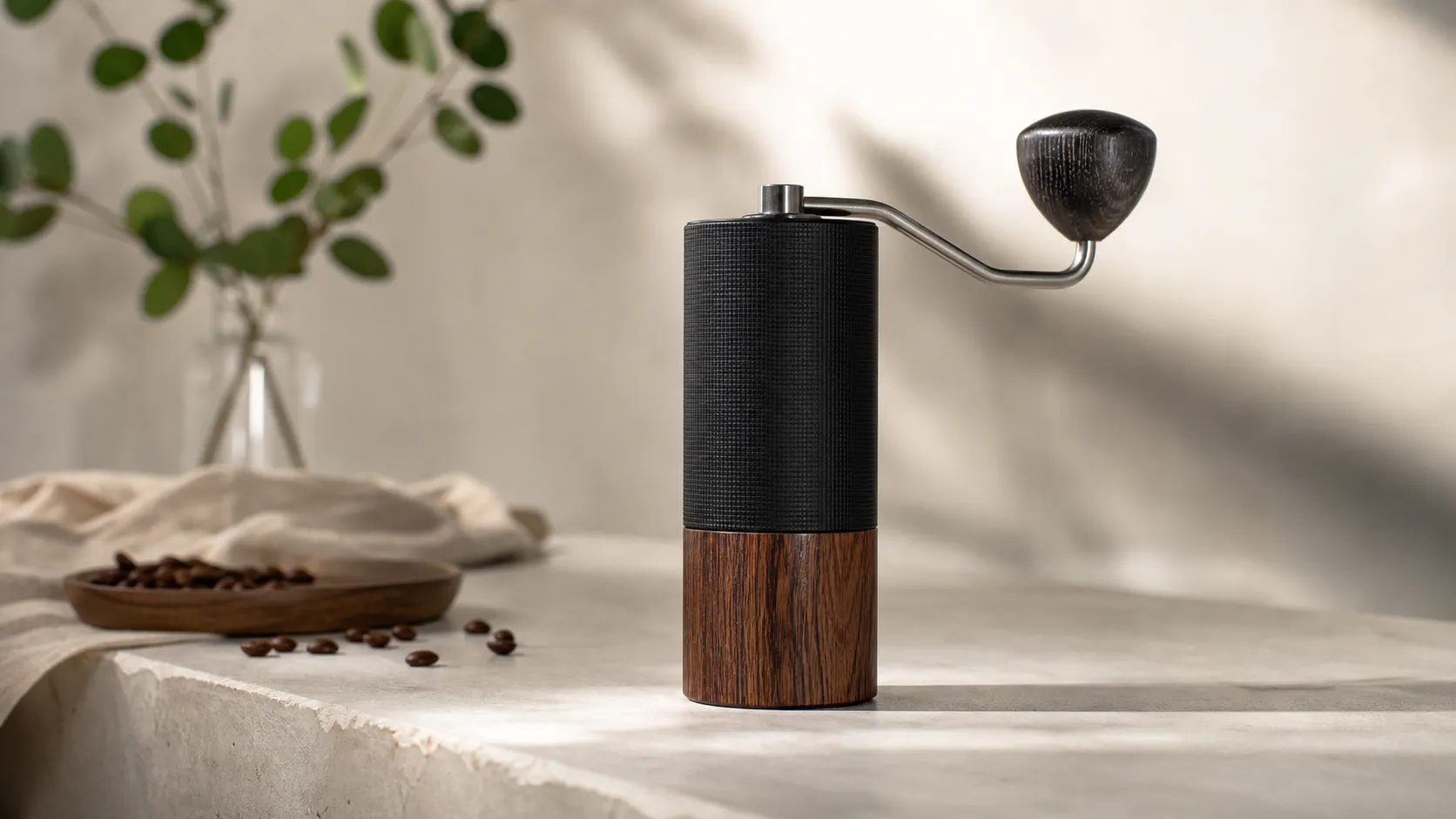
Comandante C40 MK4 Manual Coffee Grinder — 2026 Review
A premium manual grinder known for exceptional build and grind consistency — ideal for serious home baristas, but heavy and pricey for casual users or travel.
 Kitchen & Appliances
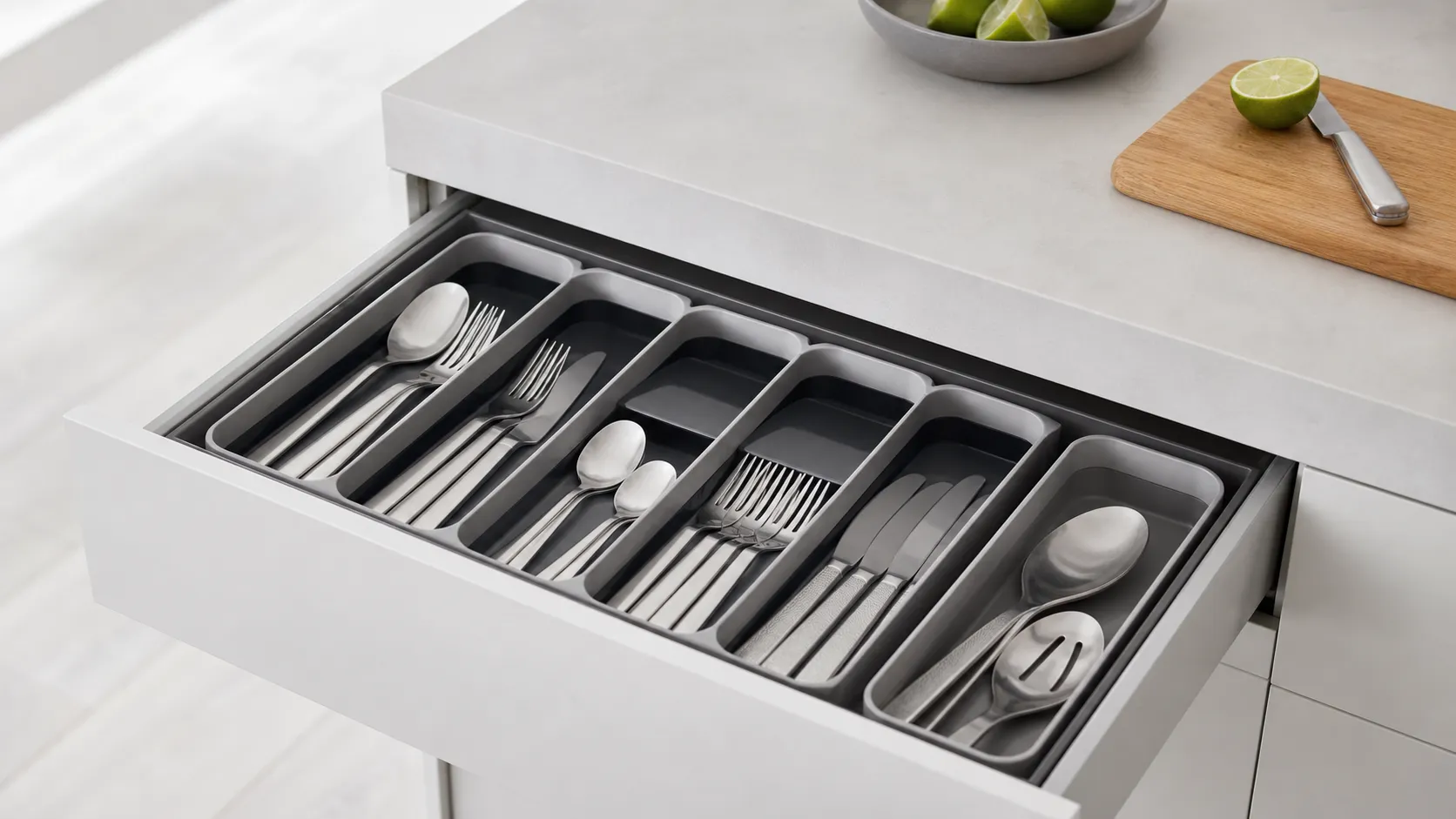
Joseph Joseph DrawerStore Cutlery Organizer Review 2026
A slim, modern cutlery tray that maximizes shallow-drawer space. Great for tidy, small-kitchen organization—measure your drawer first and avoid if you store long utensils.
 Kitchen & Appliances
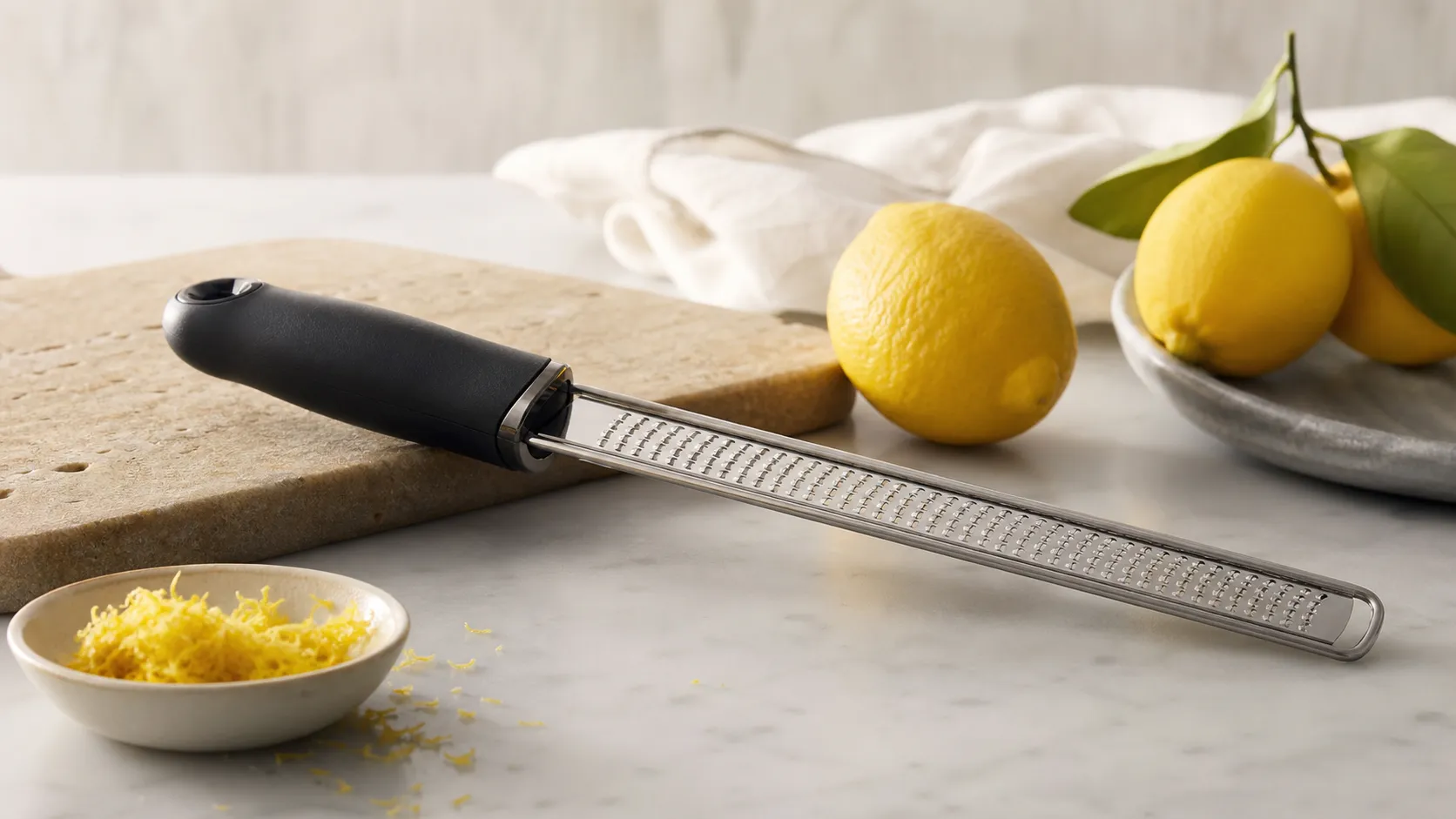
Microplane Premium Classic Zester/Grater — Review 2026
The Microplane Premium Classic is the go-to hand zester for precise, fluffy citrus zest and fine shavings. Sharp, compact, and great value—best for finishing, not bulk grating.