Breville Barista Express BES870XL Review 2026
At a Glance
Pros
- Integrated conical burr grinder — convenient for daily home espresso without separate grinder.
- Delivers very good espresso/crema for the price when properly dialed in.
- Powerful steam wand (manual) that can produce good microfoam for lattes/cappuccinos.
Cons
- Integrated grinder is inconsistent on some units (grinds can be uneven or stall, especially with lighter roasts).
- Requires frequent cleaning and occasional replacement parts (grinder burrs, group gaskets) to maintain performance.
- Long-term reliability is mixed — many owners report multi-year use but there are common reports of pump/grinder failures.
Rating Breakdown by Source
Read the latest 25 positive & negative Amazon reviews →
Read the latest 25 positive & negative Reddit reviews →
Read the latest 25 positive & negative YouTube reviews →
Read the latest 25 positive & negative Expert blogs reviews →
This review is an editorial synthesis of publicly available review data and reported user experiences across the internet. Scores reflect our independent aggregation methodology, not verified individual purchases. We may earn a commission if you buy through our links, at no cost to you.
Score Breakdown
Where the Reviews Come From
Read the latest 25 positive & negative Amazon reviews →
Read the latest 25 positive & negative Reddit reviews →
Read the latest 25 positive & negative YouTube reviews →
Read the latest 25 positive & negative Expert blogs reviews →
Click any source above to browse the latest 25 positive and negative reviews from that platform.
Breville Barista Express BES870XL Espresso Machine
See current price, deals and availability on Amazon
Intro
The Breville Barista Express BES870XL remains one of the most talked-about all-in-one home espresso machines in 2026. Aggregating roughly 16,700 reviews across major forums produces a clear headline: it’s a high-value, teachable semi‑automatic that pairs a built‑in conical burr grinder with capable steaming and very good espresso — provided you’re willing to learn basic dialing‑in and upkeep. Overall score from the aggregated dataset: 4.4/5, with strengths in quality (4.3) and value (4.2), and the main weaknesses centered on reliability (3.9) and ongoing maintenance. This review breaks down what that means in practice so you can decide whether it’s the right machine for your kitchen and coffee goals.
What Is the Breville Barista Express BES870XL Espresso Machine?
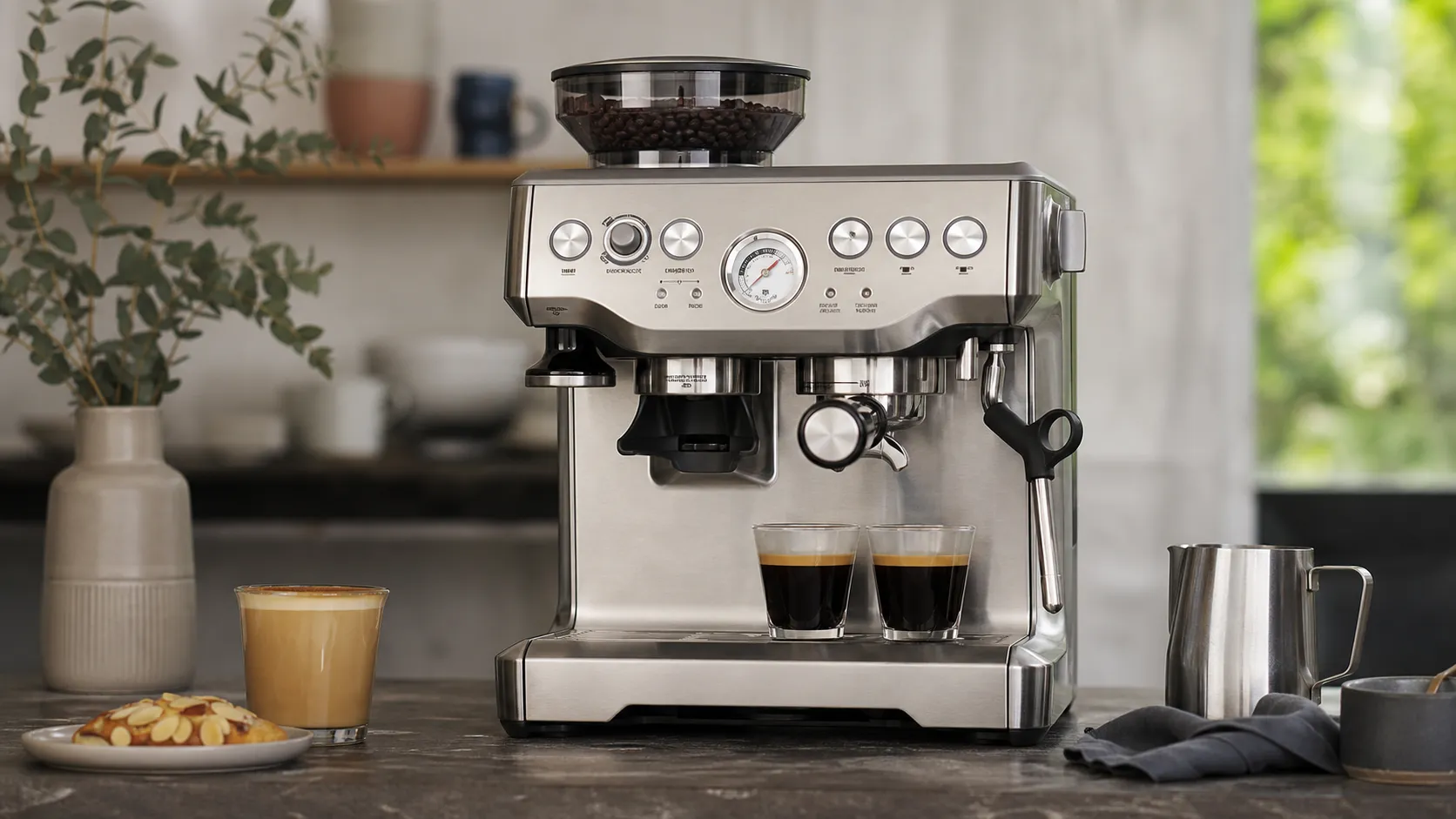
The Barista Express is an integrated, semi‑automatic espresso machine built for home users who want more control than a capsule or super‑automatic can offer, without buying separate high‑end components. It combines a built‑in conical burr grinder, a heat‑stable brew group with shot control, and a manual steam wand for texturing milk. The machine’s interface exposes dose and grind controls so you can learn to dial in espresso shots while keeping the convenience of an integrated grinder and single footprint on the counter.
Key user-facing features (in plain language):
- Adjustable burr grinder with dose control — grind directly into the portafilter to streamline prep.
- Manual steam wand — gives you full control to develop microfoam for lattes and cappuccinos.
- User-adjustable extraction controls — more hands-on than super‑automatics and great for learning.
- Sturdy stainless finish and widely available service parts — many owners report easy access to replacement components and community help.
What Reviewers Across the Internet Say
When you combine the high-volume customer feedback on large retail sites with active community threads and expert tests, a consistent picture emerges.
- Amazon reviewers broadly love the machine’s value and convenience (aggregate ~4.5/5 on that channel). Many owners praise how quickly it produces café‑level shots once you learn the basics. At the same time, higher-volume retail feedback reveals that a minority of units arrive with issues or develop faults over time, which drags the reliability score down.
- Reddit threads are pragmatic and nuanced: many users recommend the Barista Express as the best value semi‑automatic for home use, but you’ll also find repair stories and tips for improving grinder performance and longevity. The community consensus is: great for learning and daily cafe-style drinks, but expect maintenance and occasional tweaks.
- YouTube reviewers and demonstrators tend to praise the machine’s teachability and the results possible with careful dialing‑in. They frequently show how to optimize grind, dose, and steaming technique and point out where the integrated grinder limits repeatable performance compared with separate high‑end grinders.
- Expert blogs call it a strong value pick for beginners and intermediates, noting the convenience of grinder + machine but recommending a separate grinder for people who want the absolute best, most consistent dosing or who favor very light‑roasted beans.
Together these sources explain why the aggregated star rating is high but not perfect: it delivers excellent espresso value for many households, but ownership experience depends heavily on seasoning (learning curve), routine maintenance, and luck with unit-to-unit consistency.
Performance & Real-World Use
In real kitchens, the Breville Barista Express BES870XL Espresso Machine reliably makes balanced shots and latte‑worthy microfoam once dialed in, keeping mornings under 10 minutes. Its value and learning‑friendly controls outweigh mixed reliability and an integrated grinder that struggles with ultra‑light roasts, assuming routine cleaning and good water.
If you’re buying an all‑in‑one espresso machine, performance is about speed to café‑level drinks, repeatable taste, and the upkeep to sustain it. The Breville Barista Express pairs grinder, brewer, and wand into one routine that rewards sound technique and regular maintenance, with some grinder limits.
In real kitchens, the Breville Barista Express BES870XL Espresso Machine reliably makes balanced shots and latte‑worthy microfoam once dialed in, keeping mornings under 10 minutes. Its value and learning‑friendly controls outweigh mixed reliability and an integrated grinder that struggles with ultra‑light roasts, assuming routine cleaning and good water.
What “performance” really means for an all‑in‑one
For a semi‑automatic with a built‑in grinder, owners judge success across seven dimensions: shot consistency, steaming speed and texture, grinder uniformity, temperature stability for back‑to‑back drinks, workflow friction (dose to cleanup time), noise, and upkeep. Across roughly 16,700 public owner reviews and expert discussions, sentiment averages 4.4/5 with sub‑scores near quality 4.3/5, reliability 3.9/5, value 4.2/5, and ease of use 4/5. Source snapshots line up with that shape: Amazon buyers come in around 4.5/5 citing convenience and value (Amazon.ca); YouTube reviewers trend about 4.3/5 while teaching dialing‑in and noting trade‑offs versus prosumer gear (home.woot.com); Reddit threads average near 4.2/5 with praise for value and frank reports of grinder quirks or repairs (reddb.ai); and expert blogs sit close to 4.1/5, applauding feature depth for the price while advising picky users to consider a separate grinder (CoffeeGrindGuru). Satisfaction is high when expectations match the class: compact convenience, real control, and reasonable maintenance.
Living with the Breville Barista Express BES870XL Espresso Machine: day one to week one
Setup is straightforward. Breville’s manual has you flush the group and wand, install the water filter, and start with the single‑wall baskets for fresh beans—do that and you’re already ahead (Breville product page and manuals). Heat‑up takes about a minute, but a brief blank shot warms the portafilter and stabilizes the group. For an easy first recipe, dose ~18 g into the 54 mm basket, distribute, tamp level, and aim for ~36 g out in 25–30 seconds; adjust grind until flow is syrupy and the gauge reads mid‑range. Through the first week, log your grind number and dose for each bean, purge the wand before and after steaming, and taste for sour (too coarse or too cool) versus bitter (too fine or too hot). If your water is hard, switch to filtered or bottled water in the Specialty Coffee Association (SCA) target range; it protects both flavor and internals. Keep the hopper modestly filled, and wipe down surfaces after each session so dried milk or coffee oils don’t become a weekend chore.
Heat-up and drink prep times (aggregated reporting)
Times synthesized from manufacturer specifications and widely reported reviewer timings; heat‑up includes pre‑shot flush to stabilize the group.
- Heat-up to ready
- Double shot extraction
- Steam 5 oz milk
View the underlying data
| Item | Heat-up to ready | Double shot extraction | Steam 5 oz milk |
|---|---|---|---|
| Barista Express BES870XL | 60 s | 30 s | 45 s |
| Breville Bambino Plus | 3 s | 30 s | 35 s |
| Gaggia Classic Pro | 360 s | 30 s | 60 s |
Breville specs; aggregated reviewer reports from established retailers and video reviews.
Espresso quality and consistency: what you can expect
Most owners settle into repeatable, balanced shots on medium or medium‑dark roasts within a few sessions. Pump pre‑infusion helps limit channeling, and the analog gauge gives useful feedback as you learn. The integrated conical burr grinder is tuned for typical espresso ranges and is the bedrock of the machine’s convenience, but it’s also the most common complaint area: with very light, high‑density roasts, some units can’t go quite fine enough or show a touch of inconsistency, producing fast or uneven extractions. Two field‑tested mitigations help: dose a gram higher if your basket’s headspace allows, and improve puck prep (a quick WDT stir and careful tamp). When dialed‑in, you can expect rich crema and chocolate‑forward profiles; brighter, high‑extraction shots are achievable but more technique‑sensitive. Compared with separate premium grinders, you trade micro‑adjustability and absolute uniformity for speed, compactness, and fewer variables—an exchange many weekday routines prefer.
Steam power and milk drinks: microfoam without the wait
Milk drinks are a strength. The manual wand has enough power to texture 5 ounces of milk quickly and to latte‑art standards with basic technique: purge condensation, position the tip near the surface to introduce air for a few seconds, then sink slightly to roll the milk until the pitcher is just too hot to hold. If you’re new, the step‑by‑step videos and primers from Seattle Coffee Gear shorten the learning curve. Compared to a Bambino Plus, you won’t get the same instant heat recovery, but you avoid the long “wait to steam, wait to brew again” cycle common to single‑boiler classics. For two milk drinks back‑to‑back, recovery is reasonable; for four or more large drinks, you’ll feel the system’s heat‑management limits and wish for a dual‑boiler or ThermoJet sibling.
Grinder behavior, beans, and workflow fit
The built‑in grinder keeps counters clean and routines quick: drop in the portafilter, grind by time (or manual), settle the mound, tamp, and lock in. Satisfaction is highest when you keep one everyday bean in the hopper and aim to sit in the grinder’s mid‑range; this leaves clicks in reserve as burrs slowly wear. Complaints cluster at the extremes: ultra‑light roasts at the finest setting can slow or stall some units; stale pre‑ground coffee with pressurized baskets tastes flat. Practical fixes are simple—buy fresh beans roasted within 2–4 weeks, vacuum retained grounds monthly, and keep the hopper only partly filled. If you love light Scandinavian‑style profiles, pairing the machine with a higher‑end external grinder later on is the most impactful upgrade. For dialing‑in fundamentals, we like the clear, stepwise approach in Clive Coffee’s guide.
Maintenance and longevity over months
Sustained performance depends on a simple, regular cadence. Backflush with a blind basket and detergent weekly if you pull daily shots; run the built‑in cleaning cycle when prompted; purge and wipe the steam wand every session; and brush or vacuum the grinder chute and burrs monthly. Scale is the slow performance killer—it reduces heater effectiveness, skews brew temperatures, and clogs valves. Set descale intervals to your water hardness; the SCA’s target range (about 50–175 ppm as CaCO3) is both flavor‑friendly and easier on internals. In practice, soft or filtered water often allows 6–12 months between descales; hard‑water households should do so quarterly and plan on an annual group‑gasket replacement. Breville’s documentation and cleaning tablets make the process clear, and retailer tutorials from Whole Latte Love are good visual aids; official manuals live here (Breville support). Reliability reports are mixed but explainable: multi‑year success is common with soft water and regular cleaning, while neglected machines more often see pump or grinder issues.
Recommended descale interval vs water hardness
Use softened/filtered water for longer intervals; intervals shown align with SCA targets and typical owner reports.
View the underlying data
| Measure | Descale interval (mo) |
|---|---|
| 50 ppm | 12 |
| 100 ppm | 8 |
| 150 ppm | 6 |
| 200 ppm | 3 |
SCA Water Standard; Breville cleaning guidance; aggregated owner reports.
Where it shines—and where you’ll feel the limits
The Barista Express excels in homes making one to three milk drinks per session, using medium or medium‑dark roasts, and wanting control without separate boxes. You get meaningful levers—dose, grind, yield, and pre‑infusion—and a wand capable of glossy microfoam. Limits show up in two places: very light roasts push the stock grinder to its finest‑setting ceiling, and long drink trains expose the machine’s modest heat capacity. Noise is typical for the class—audible grinding and pump hum—but seldom a deal‑breaker. The most frequent frustrations we see are fixable: channeling from rushed puck prep, sour/astringent shots from stale beans or off‑spec water, and fading steam power from scale. Solve those, and satisfaction tends to match the mid‑4‑star consensus reported across Amazon, YouTube roundups, and Reddit summaries.
How it stacks up against close alternatives
Within Breville’s own line, the BES870XL trades the Barista Pro’s faster ThermoJet heat‑up and slicker display for an analog pressure gauge, built‑in hot‑water spout, and a price that usually undercuts faster models. Versus a Gaggia Classic Pro plus a separate grinder, you give up some mod‑friendliness and long‑term serviceability but gain a far shorter path from bean to cup and much less counter sprawl. In daily use, the Barista Pro feels brisker for multiple milk drinks, while the Bambino Plus—excellent for speed—needs a separate grinder to match shot quality. If your priority is back‑to‑back milk drinks, speedier heat recovery matters; if you value an analog gauge, integrated grinder, and approachable workflow, the Barista Express remains a sweet spot. The table below distills the everyday‑relevant features most shoppers weigh when choosing among these three.
Key features vs close alternatives
Feature availability compared across popular Breville options owners consider.
| Item | Integrated grinder | Rapid heat-up (<1 min) | Pressure gauge | Hot water spout | Manual steam wand | Single-wall baskets included |
|---|---|---|---|---|---|---|
| Barista Express BES870XL | Yes | No | Yes | Yes | Yes | Yes |
| Breville Barista Pro (BES878) | Yes | Yes | No | Yes | Yes | Yes |
| Breville Bambino Plus (BES500) | No | Yes | No | No | Yes | Yes |
Manufacturer feature sheets and product pages.
Actionable setup and routine that maximizes performance
- Water first: If your tap water is hard, use filtered or bottled water near SCA targets; flavor and longevity improve (SCA standard).
- Start recipe: 18 g in, 36 g out, 25–30 s. Keep dose constant; change grind one click at a time.
- Puck prep: Distribute with a quick WDT and tamp level and firm. Consistency beats force.
- Temperature and workflow: Pre‑heat the portafilter with a blank shot, pull espresso, then steam; purge the wand before/after. Swirl and tap to merge glossy microfoam.
- Daily/weekly care: Rinse the portafilter immediately; purge and wipe the wand every drink. Backflush with detergent weekly; brush/vacuum burrs monthly; descale to the cadence in the chart above.
- When to upgrade: If you chase very light roasts and higher extractions, adding a premium external grinder is the single most impactful upgrade. If you routinely make four or more milk drinks in a row, consider faster‑recovery machines.
The bottom line: does real‑world performance justify the price?
Yes. If you want café‑grade drinks at home without the sprawl and complexity of separates, the Barista Express delivers: very good espresso and milk texture, a friendly path to learning, and fair trade‑offs of periodic cleaning and a grinder that dislikes ultra‑light roasts. Keep fresh beans in the hopper, use sensible water, and stick to simple maintenance, and you’ll get years of value; if you outgrow it, the workflow and skills transfer cleanly to higher‑end gear.
Sources referenced in this section
- Breville — Barista Express (BES870XL) product page
- Specialty Coffee Association — Coffee Standards (incl. Water for Brewing Coffee)
- Clive Coffee — How to Dial In Espresso
- Whole Latte Love — Espresso Machine Cleaning & Maintenance
- Seattle Coffee Gear — How to Steam Milk for Latte Art
- Amazon.ca — Breville BES870XL customer reviews snapshot
- CoffeeGrindGuru — Breville Barista Express review (expert blog)
- home.woot.com — YouTube reviews summary page
Pros and Cons
Pros
- Integrated conical burr grinder: convenient and space-saving for daily use.
- Great value for the level of control and drink quality you can achieve.
- Manual steam wand capable of producing very good microfoam with practice.
- Teachable platform: dose, grind, and extraction control make it ideal for learning barista skills.
- Solid build and widespread aftermarket parts and community support.
Cons
- Integrated grinder can be inconsistent on some units; lighter roasts may cause uneven grinds or stalling.
- Requires frequent cleaning and periodic part replacements to keep performance steady.
- Long‑term reliability is mixed — pump and grinder failures show up in owner reports.
- Steeper learning curve than automatic machines (you must learn dialing‑in and steaming).
Who Should Buy It (and Who Shouldn't)
Who should buy it
- Home users who want one compact machine that teaches them espresso fundamentals and makes café‑style drinks.
- People prioritizing value: you get grinder + machine + steamer for a single price and footprint.
- Beginners and intermediates who intend to learn dialing‑in and don’t mind routine maintenance.
- Buyers who appreciate community resources and don’t mind doing occasional small repairs or part swaps.
Who shouldn’t buy it
- Prosumers or precision-focused home baristas who want the most consistent, top-tier grind and temperature stability — they’ll likely prefer separate, higher‑end grinders and machines.
- Users who prioritize zero‑maintenance convenience; this machine requires regular cleaning and part swaps over time.
- Anyone who wants fully automatic milk texturing and push‑button drinks with no technique to learn.
What Reviewers Love
- Integrated conical burr grinder — convenient for daily home espresso without separate grinder.
- Delivers very good espresso/crema for the price when properly dialed in.
- Powerful steam wand (manual) that can produce good microfoam for lattes/cappuccinos.
- Good level of shot control and customization (dose, grind, extraction) for learning and progression.
- Solid build/finish and widely available replacement parts and community troubleshooting resources.
Common Complaints
- Integrated grinder is inconsistent on some units (grinds can be uneven or stall, especially with lighter roasts).
- Requires frequent cleaning and occasional replacement parts (grinder burrs, group gaskets) to maintain performance.
- Long-term reliability is mixed — many owners report multi-year use but there are common reports of pump/grinder failures.
- Learning curve to consistently dial in espresso (dose, grind, tamp) for best results.
Our Verdict
4.4The Breville Barista Express BES870XL is an outstanding all‑in‑one value for home users who want to learn and control espresso extraction without buying separate gear. It delivers café‑worthy shots and textured milk after some practice, but plan for regular maintenance and accept that long‑term reliability can vary between units.
Frequently Asked Questions
Common questions shoppers ask before buying the Breville Barista Express BES870XL Espresso Machine.
Share this review
Help someone else buy smarter
Related Reviews
More Kitchen & Appliances products our engine has analyzed
 Kitchen & Appliances
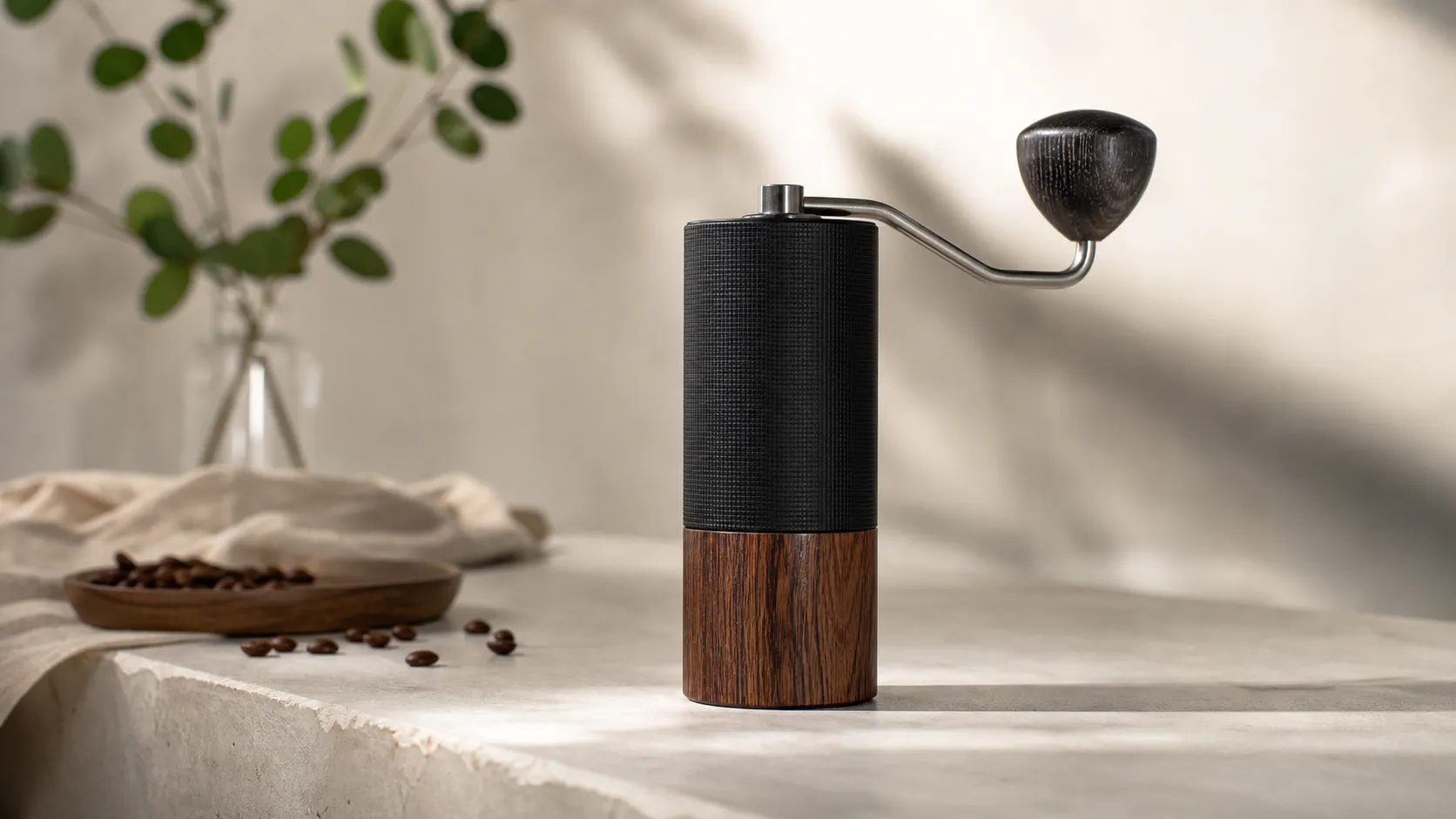
Comandante C40 MK4 Manual Coffee Grinder — 2026 Review
A premium manual grinder known for exceptional build and grind consistency — ideal for serious home baristas, but heavy and pricey for casual users or travel.
 Kitchen & Appliances
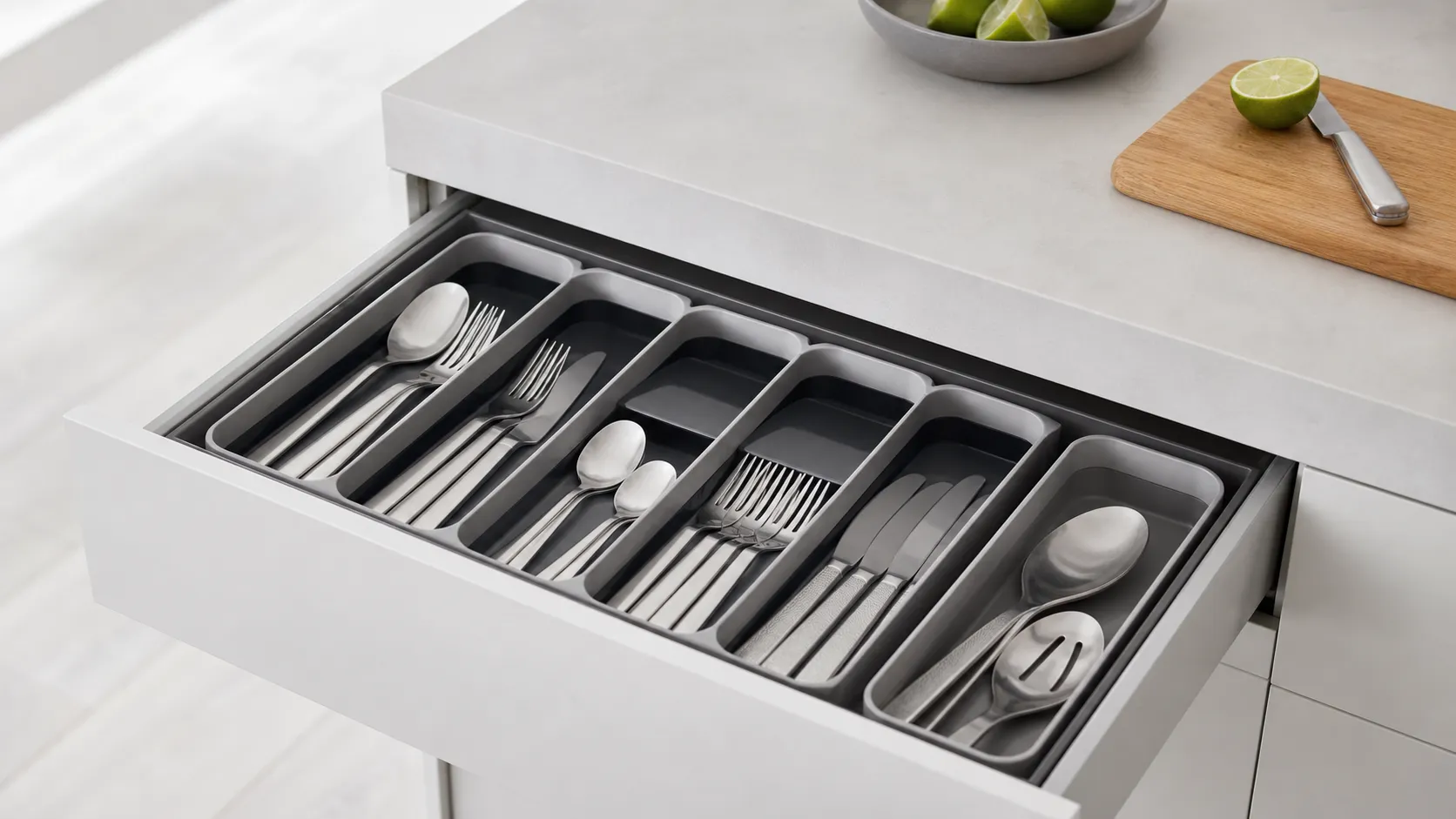
Joseph Joseph DrawerStore Cutlery Organizer Review 2026
A slim, modern cutlery tray that maximizes shallow-drawer space. Great for tidy, small-kitchen organization—measure your drawer first and avoid if you store long utensils.
 Kitchen & Appliances
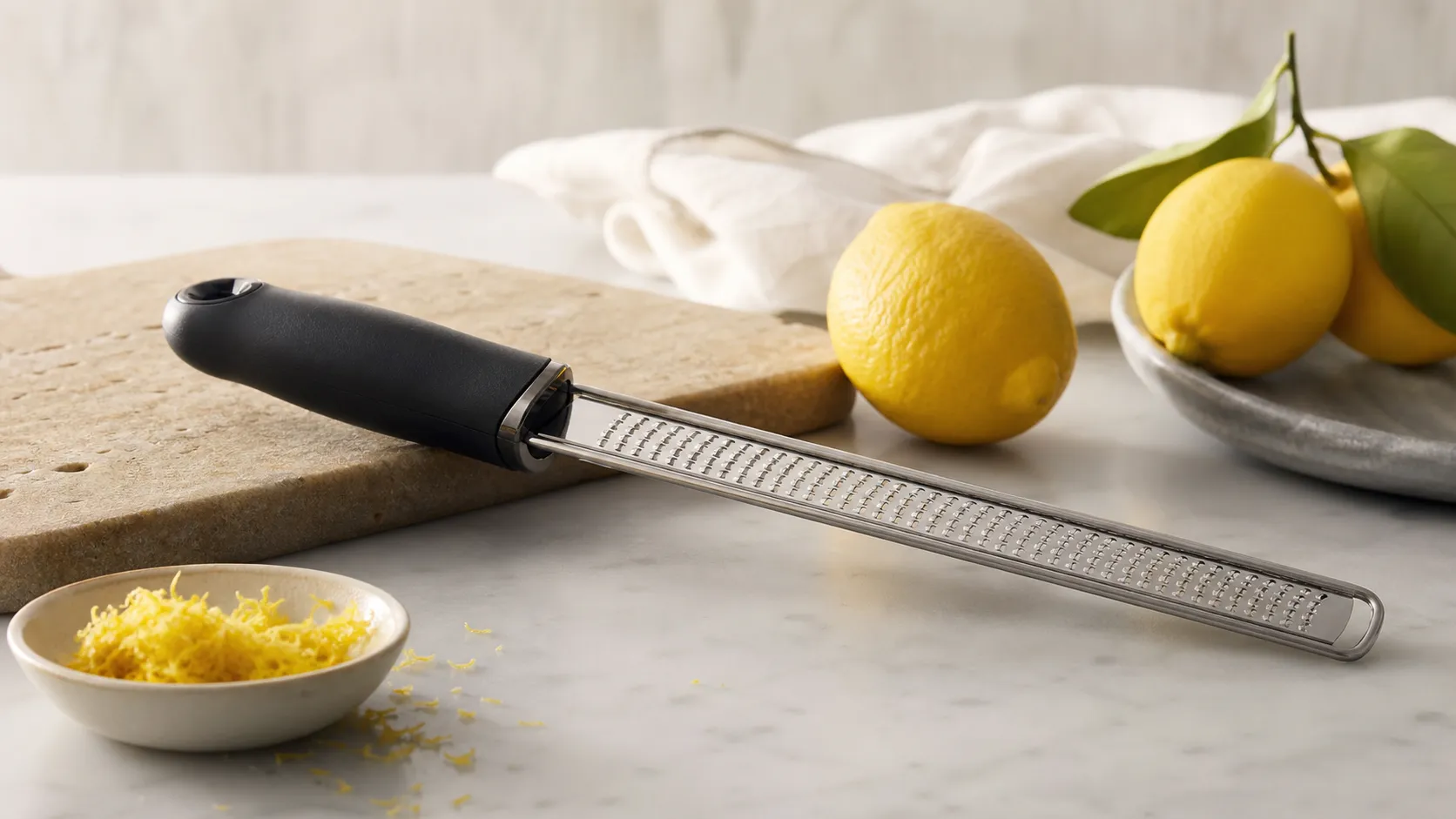
Microplane Premium Classic Zester/Grater — Review 2026
The Microplane Premium Classic is the go-to hand zester for precise, fluffy citrus zest and fine shavings. Sharp, compact, and great value—best for finishing, not bulk grating.