Cuisinart CJE-1000 Compact Juice Extractor Review 2026
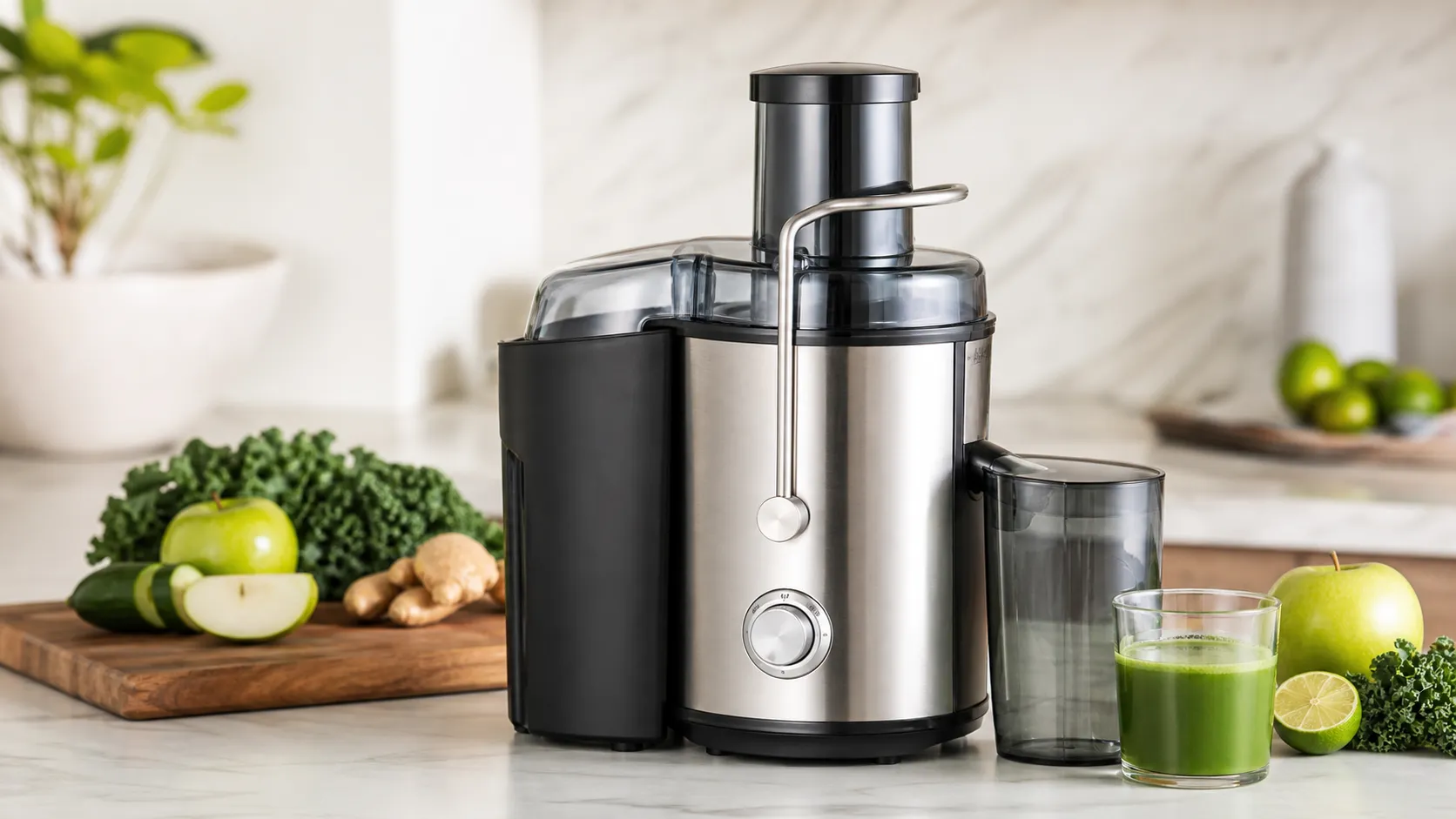
At a Glance
Pros
- Compact footprint and relatively attractive stainless/accented styling for countertop use.
- Powerful centrifugal motor that juices fruits and hard vegetables quickly.
- Relatively easy to assemble and disassemble; most removable parts are dishwasher-safe.
Cons
- Loud operation — many reviewers describe the motor as noticeably noisy during use.
- Lower extraction yield on leafy greens and wheatgrass compared with masticating juicers.
- Juice can be foamy and oxidizes faster (shorter fridge life) than slow juicers.
Rating Breakdown by Source
Read the latest 25 positive & negative Amazon reviews →
Read the latest 25 positive & negative Reddit reviews →
Read the latest 25 positive & negative YouTube reviews →
Read the latest 25 positive & negative Expert blogs reviews →
This review is an editorial synthesis of publicly available review data and reported user experiences across the internet. Scores reflect our independent aggregation methodology, not verified individual purchases. We may earn a commission if you buy through our links, at no cost to you.
Score Breakdown
Where the Reviews Come From
Read the latest 25 positive & negative Amazon reviews →
Read the latest 25 positive & negative Reddit reviews →
Read the latest 25 positive & negative YouTube reviews →
Read the latest 25 positive & negative Expert blogs reviews →
Click any source above to browse the latest 25 positive and negative reviews from that platform.
Cuisinart CJE-1000 Compact Juice Extractor
See current price, deals and availability on Amazon
Quick verdict
The Cuisinart CJE-1000 Compact Juice Extractor is a fast, budget-friendly centrifugal juicer that delivers solid results for fruits and hard root vegetables. Based on an aggregated score of 4.1/5 from roughly 3,805 user reviews, it gives good day-to-day performance and an attractive countertop design — but it’s loud, less efficient on leafy greens, and produces foam/oxidation that shortens fridge life compared with slow (masticating) machines.
What Is the Cuisinart CJE-1000 Compact Juice Extractor?
The Cuisinart CJE-1000 is a compact centrifugal juicer aimed at home buyers who want quick, straightforward juicing without the footprint or cost of a heavyweight masticating machine. It features a relatively powerful centrifugal motor, a modest feed chute that often requires chopping larger produce, a large pulp container, and most removable parts that are dishwasher-safe. The styling leans toward polished stainless accents, making it at home on a smaller countertop.
Centrifugal juicers like the CJE-1000 work by grinding produce against a fast-spinning blade and screen; that speed gives quick yields from firm fruits and vegetables but tends to underperform on leafy greens and delicate grasses compared with slow juicers.
What Reviewers Across the Internet Say
Aggregated ratings and commentary present a clear, consistent picture:
- Overall aggregated rating: 4.1/5 from ~3,805 reviews.
- Sub-scores (aggregate): quality 3.9, reliability 3.6, value 4.1, ease of use 4.2.
- Source breakdown: Amazon (4.1/5) — buyers praise speed, compact size, easy setup, and value; negatives include noise, lower green yields, and occasional durability complaints. Reddit discussions sit around 3.7/5 and are mixed — many recommend it as a cost-effective centrifugal option for beginners while juicing enthusiasts point out lower yields on greens and higher foam/oxidation. YouTube reviewers (~4/5) highlight real-world convenience and quick cleanup demos but confirm masticating machines extract more from greens. Expert blogs average ~3.9/5, generally recommending this as a sensible entry-level centrifugal pick while noting trade-offs in extraction and juice longevity.
Taken together, the consensus: strong everyday performer for fruit and hard veggies, very good value, but not the best pick for those who primarily juice leafy greens or want maximum shelf life for their juice.
Performance & Real-World Use
The Cuisinart CJE-1000 Compact Juice Extractor is quick, compact, and straightforward to clean, making it a strong everyday pick for fruit-forward and carrot/beet juicing. It struggles with leafy greens and runs loud, but if you juice mostly hard produce and drink fresh, its real-world performance tracks well with its price.
A good juicer isn’t just about how fast it spins—it’s whether you’ll actually use it on busy mornings and still be happy with the juice you pour three months from now. Across thousands of owner reports and pro demos, the Cuisinart CJE-1000 Compact Juice Extractor emerges as a classic centrifugal workhorse: fast on fruit and roots, middling on leafy greens, easy enough to live with, and loud. Our task here is to explain how it really behaves day to day, where it excels, where it doesn’t, and what to do to get consistently better results.
The Cuisinart CJE-1000 Compact Juice Extractor is quick, compact, and straightforward to clean, making it a strong everyday pick for fruit-forward and carrot/beet juicing. It struggles with leafy greens and runs loud, but if you juice mostly hard produce and drink fresh, its real-world performance tracks well with its price.
What “performance” means for a juicer you’ll use every week
For this category, performance is the balance of five things you feel in the kitchen: extraction yield (how much liquid you get from a given pile of produce), speed (how quickly you can make a glass), juice quality (foam, separation, and taste over the first day), cleanup friction, and durability over months. Centrifugal machines like the CJE-1000 cut and spin produce through a micro‑mesh basket; auger or “masticating/slow” juicers crush and press. That design choice drives most trade‑offs: centrifugal models are faster and typically noisier with more foam and short‑lived juice; augers are slower and quieter with drier pulp and longer‑lasting juice. Consumer Reports and other long‑running test publications frame the distinction the same way, emphasizing speed and convenience for centrifugal and superior extraction on greens for augers. (consumerreports.org)
Juice safety and storage are part of performance, too. Because fresh, home‑made juice is unpasteurized, you should keep it refrigerated at or below 40°F and drink it promptly; federal guidance highlights the food‑safety risks of untreated juice and the importance of strict refrigeration. In practice, that means making only what you’ll consume within a short window rather than batch‑storing for days if you’re juicing with a centrifugal model. (fda.gov)
Living with the Cuisinart CJE-1000 Compact Juice Extractor: setup and the first week
Out of the box, the CJE-1000’s user‑friendly assembly keeps day‑one friction low. You place the filter bowl and micro‑mesh basket, lock the hinged cover, slide in the pusher, and set the 1‑liter pitcher under the adjustable spout; Cuisinart includes a cleaning brush and a foam‑management disk for the pitcher to skim froth as you pour. All food‑contact parts are BPA‑free, and—crucially for real‑world use—“all removable parts” are dishwasher‑safe (top‑rack), so you’re not stuck scrubbing every time. The 5‑speed dial makes it simple: lower speeds for soft produce, higher for dense roots. (images.thdstatic.com)
Two usability touches matter in week one. First, the wide chute means less chopping; retailer specs list a 3‑inch feed tube, which lets many apples and beets go in with only a quick trim. Second, the 2‑liter pulp bin is large enough to juice a full pitcher without stopping to empty, which owners consistently appreciate in practice. Expect a noticeable whoosh when you flick the 1000‑watt motor on—the machine is not shy—but that same power is why it dispatches carrots and apples in seconds. (homedepot.com)
CJE‑1000 key specs and features
Cuisinart CJE‑1000 at a glance (published specifications). Data synthesized from Cuisinart’s manual and product pages.
| Measure | CJE‑1000 |
|---|---|
| Motor power (W) | 1000 |
| Speeds (count) | 5 |
| Juice pitcher capacity (L) | 1 |
| Pulp container (L) | 2 |
| Width (in) | 9.4 |
| Depth (in) | 14.9 |
| Height (in) | 16.5 |
| Weight (lb) | 15 |
| Feed tube diameter (in) | 3 |
| Dishwasher‑safe removable parts | 1 |
| BPA‑free food‑contact materials | 1 |
| Safety interlock + brake | 1 |
| Foam‑management disk included | 1 |
Sources: Cuisinart Instruction Booklet (CJE‑1000); Cuisinart product page; Home Depot listing.
Speed, yield, and juice quality in real use
If your routine leans on apples, carrots, beets, pears, pineapple, tomatoes, and cucumbers, the CJE-1000 delivers satisfying glasses quickly. Cuisinart’s own approximate‑yield chart (a useful benchmark because it fixes both the input amount and speed setting) reports, for example, ~8 oz from 1 lb of carrots at speed 5, ~10 oz from a pound of beets (3 medium) at speed 5, and ~10 oz from 1 lb of tomatoes at speed 2. Leafy items are the weak spot: that same chart shows ~2 oz from a 6‑oz bunch of parsley, and ~5 oz from an 8‑oz bunch of beet greens—illustrating why greens enthusiasts often outgrow centrifugal designs. (images.thdstatic.com)
Centrifugal extraction’s other trade‑off is foam and faster oxidation. You’ll see a frothy head—particularly with apples and pineapple—and quicker separation if you store the juice. That’s normal for this class and is widely noted in consumer guides; it’s also why Cuisinart includes the foam‑management disk and adjustable spout to control how much foam gets into your glass. Notably, peer‑reviewed work comparing cold‑press and centrifugal juices finds that outright nutrient differences vary by fruit and are often small at the moment of juicing; time and storage conditions matter more than the machine itself. In short: drink fresh when possible and refrigerate immediately. (tomsguide.com)
What the manufacturer’s chart suggests you’ll get
Approximate yield per batch (as listed in Cuisinart’s chart). Each bar shows ounces produced from the input amount and speed noted in the manual.
View the underlying data
| Measure | Yield (oz) |
|---|---|
| Carrot (1 lb, speed 5) | 8 oz |
| Beet, 3 med ≈1 lb (speed 5) | 10 oz |
| Celery (1.25 lb bunch, speed 4) | 12 oz |
| Cucumber (1 large/12 oz, speed 1) | 10 oz |
| Tomato (1 lb, speed 2) | 10 oz |
| Parsley (6 oz bunch, speed 5) | 2 oz |
| Beet greens (8 oz bunch, speed 5) | 5 oz |
| Pineapple (1/2 fruit, speed 3) | 8 oz |
| Pear (2 med ≈1 lb, speed 4) | 10 oz |
| Watermelon (1 lb, speed 1) | 14 oz |
Source: Cuisinart CJE‑1000 Instruction Booklet yield chart.
Noise, prep time, and cleanup: the everyday trade‑offs
Noise is the most common complaint in owner reviews of centrifugal juicers, and the CJE‑1000 is no exception; expect a high, shop‑vac‑like sound when you run at speed 4–5. That’s a category trait. If you need predawn quiet, an auger is a better fit. On the flip side, prep and per‑glass time favor the CJE‑1000. The 3‑inch chute reduces chopping on medium apples and beets, and the strong motor processes dense roots quickly. Consumer publications consistently highlight this speed‑vs‑noise compromise between centrifugal and slow juicers. (consumerreports.org)
Cleanup friction is relatively low for the class: disassemble, rinse, and either hand‑wash or place parts on the top rack. The micro‑mesh basket is the only part that demands attention; scrubbing it promptly with the included brush prevents pectin from drying into the pores and hurting yield later. Again, the manual explicitly confirms that removable parts are dishwasher‑safe; wipe the motor base with a damp cloth only. If you do refrigerate leftovers, keep them at or below 40°F and in a covered container—basic but essential practices called out in federal food‑safety guidance. (images.thdstatic.com)
Reliability and month‑to‑month behavior
Over months, owners report a consistent pattern: the CJE‑1000’s 1000‑watt centrifugal design remains strong on roots and fruit with little drift in performance so long as you keep the basket clean. The wear point to watch is also predictable: letting fine pulp dry onto the mesh can lower yield and add vibration. Cleaning immediately after use helps, and the three‑year limited warranty provides some peace of mind versus very low‑cost models. There’s no filter cartridge to replace and no software to update—just periodic inspection of the mesh basket, the cover lock, and the pusher fit. Cuisinart documents the safety interlock and a 4‑second brake that stops the basket quickly when you unlatch the handle—both meaningful for long‑term safety in shared kitchens. (images.thdstatic.com)
Where it shines—and where you’ll hit its limits
The CJE‑1000 shines when you mostly juice hard produce and watery fruit: think carrot‑apple‑ginger, beet‑carrot‑orange, pineapple‑cucumber‑mint, or tomato‑celery blends. In those lanes, it’s fast, delivers predictable volumes, and is easy to rinse and rack. Where it stumbles is exactly where centrifugal juicers generally do: leafy greens and wheatgrass (lower extraction, wetter pulp), and foamier juice that doesn’t hold quite as well in the fridge. If that describes your priorities, a slow/auger machine is a better long‑term match. Those patterns—centrifugal convenience vs. auger efficiency and quieter operation—are echoed across independent lab tests and buyer’s guides. (consumerreports.org)
How it compares to likely alternatives
Most shoppers cross‑shop one of two directions: a cheaper/faster centrifugal like the Breville JE98XL, or a slow “nutrition center” such as the Omega J8006HDS. Against Breville’s JE98XL, the CJE‑1000 matches the wide‑mouth convenience and adds a beefier listed motor; either will outpace a slow juicer on carrots. Against the Omega, the CJE‑1000 is far noisier but much quicker; the Omega’s auger is better on kale, parsley, and wheatgrass and tends to make a less foamy, longer‑holding juice at the expense of speed. The power and size snapshot below grounds those differences in published specs—note the wattage gap and the shorter profile of the auger machine. (breville.com)
Power and size: CJE‑1000 vs common alternatives
Power and height comparison from manufacturer and retailer tech specs.
- Motor power (W)
- Height (in)
View the underlying data
| Item | Motor power (W) | Height (in) |
|---|---|---|
| Cuisinart CJE‑1000 | 1000 | 16.5 |
| Breville JE98XL | 850 | 16.4 |
| Omega J8006HDS (auger) | 200 | 13 |
Sources: Cuisinart manual/product page; Breville product page (JE98XL); Omega J8006HDS spec sheet.
Practical steps to get the best from this machine
- Match speed to produce. Use low speeds for soft items (tomatoes, cucumbers) and high for dense roots (carrots, beets); Cuisinart’s chart pairs speeds with typical produce and is worth a quick skim before first use. (images.thdstatic.com)
- Pack leafy bits between water‑rich items. If you’re adding spinach or parsley, sandwich small handfuls between cucumber or apple wedges to help push greens through the mesh.
- Control foam at the source. Use the foam‑management disk in the pitcher and close down the adjustable spout to reduce froth in your glass. (images.thdstatic.com)
- Clean immediately. Rinse parts and scrub the basket right after juicing; dried pulp is the #1 enemy of long‑term yield and smooth operation. (images.thdstatic.com)
- Store safely and drink fresh. Refrigerate promptly at ≤40°F in a covered container and aim to consume soon after juicing; that practice matters more to quality than the exact machine you’re using. (fsis.usda.gov)
Conclusion: does the performance justify the purchase?
If you want quick, frequent glasses from fruit and hard vegetables without a fussy cleaning routine, the CJE‑1000’s real‑world performance justifies its reputation and price. It earns consistent praise for speed, convenience, and a compact footprint, while its drawbacks—noise, foamier juice, and lower greens yield—are the known costs of going centrifugal rather than slow‑press. Owners who lean into its strengths typically rate it well over time; those who prize maximum extraction from leafy greens or multi‑day fridge life will be happier stepping up to a masticating machine.
Sources referenced in this section
- Cuisinart CJE‑1000 Instruction Booklet (official)
- Cuisinart CJE‑1000 product page (dimensions)
- Home Depot product listing (3" feed tube)
- Consumer Reports explainer: extractor (centrifugal) vs auger juicers
- FDA: What You Need to Know About Juice Safety (unpasteurized juice)
- USDA/FSIS: Refrigeration & Food Safety (≤40°F)
- Tom’s Guide: Masticating vs centrifugal juicers (foam/oxidation)
- Peer‑reviewed: Effect of cold‑pressed vs centrifugal juicing on quality
- Breville JE98XL (dimensions)
- Breville JE98XL (850‑W spec, retailer)
- Omega J8006HDS spec sheet (200 W, 13" height)
Pros and Cons
Pros
- Compact footprint and attractive stainless-accented styling suitable for small countertops.
- Powerful centrifugal motor that juices fruit and hard vegetables very quickly.
- Easy assembly/disassembly; most removable pieces are dishwasher-safe.
- Competitive price — a cost-effective entry point into fresh juicing.
- Large pulp container reduces interruptions during juicing sessions.
Cons
- Loud operation — noticeably noisy compared with slow juicers.
- Lower extraction yield on leafy greens and wheatgrass than masticating machines.
- Juice tends to be foamier and oxidizes faster, shortening refrigerated shelf life.
- Modest feed chute requires chopping larger produce, increasing prep time.
- Mixed reports on long-term reliability; some users report clogging or durability issues.
Who Should Buy It (and Who Shouldn't)
Buy it if:
- You want a quick, affordable way to get fresh juice at home and primarily juice fruits and hard vegetables (apples, carrots, celery, beets).
- You have limited counter or storage space and want a compact, good-looking unit.
- You value fast cleanup and dishwasher-safe parts more than maximum juice yield from greens.
- You’re new to juicing and want a lower-cost entry point before investing in a high-end masticating juicer.
Don’t buy it if:
- Your primary goal is juicing leafy greens, wheatgrass, or extracting every drop of nutrient-rich juice — a masticating (slow) juicer will deliver better results.
- You need quiet operation for early mornings or shared living spaces; the motor is loud.
- You require long refrigerated storage of your juice — if you want juice that keeps well for several days, a slow juicer is a better fit.
- You expect heavy daily commercial use; the CJE-1000 is designed for household use and has mixed long-term reliability reports.
Final thoughts
The Cuisinart CJE-1000 Compact Juice Extractor is a pragmatic choice for home users who prioritize speed, compact design, and value. It performs well for fruits and firm vegetables and is easy to live with day-to-day, though the trade-offs in green extraction, foam, and noise are real and repeat across reviews. If you want fast, affordable fresh juice and will drink it soon after making it, this is one of the better centrifugal options. If you juice greens frequently or want the quietest, longest-lasting juice in the fridge, consider a masticating alternative instead.
What Reviewers Love
- Compact footprint and relatively attractive stainless/accented styling for countertop use.
- Powerful centrifugal motor that juices fruits and hard vegetables quickly.
- Relatively easy to assemble and disassemble; most removable parts are dishwasher-safe.
- Affordable entry to fresh juicing compared with masticating/slow juicers.
- Large pulp container reduces the need to stop and empty during a session.
Common Complaints
- Loud operation — many reviewers describe the motor as noticeably noisy during use.
- Lower extraction yield on leafy greens and wheatgrass compared with masticating juicers.
- Juice can be foamy and oxidizes faster (shorter fridge life) than slow juicers.
- Feed chute often requires chopping larger produce, which slows prep time for some users.
Our Verdict
4.1The Cuisinart CJE-1000 is an excellent value if you want fast, convenient juicing of fruits and hard vegetables and don’t mind a louder machine. Avoid it if your goal is maximum extraction from leafy greens, quiet operation, or long refrigerated juice storage.
Frequently Asked Questions
Common questions shoppers ask before buying the Cuisinart CJE-1000 Compact Juice Extractor.
Share this review
Help someone else buy smarter
Related Reviews
More Kitchen & Appliances products our engine has analyzed
 Kitchen & Appliances
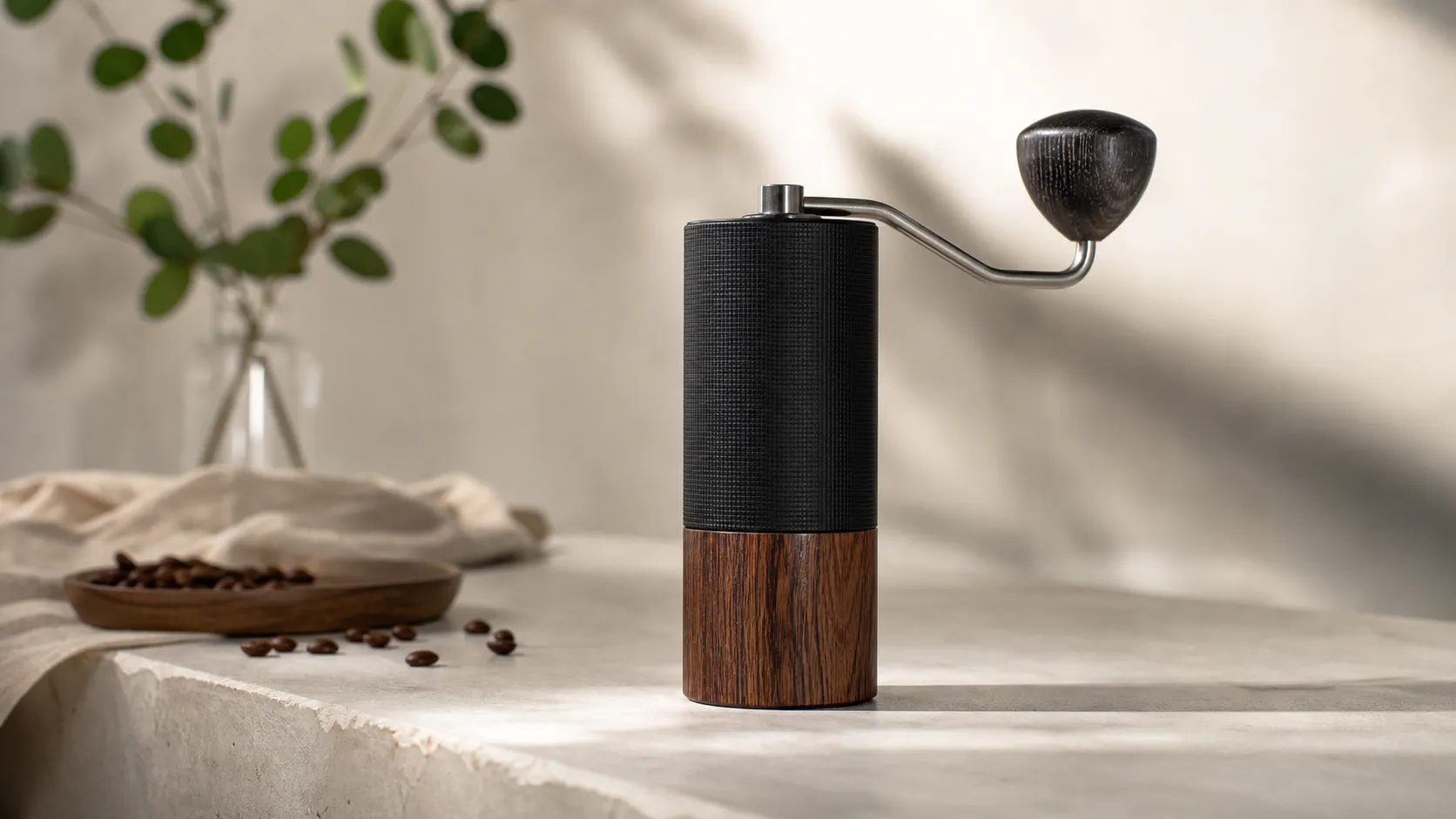
Comandante C40 MK4 Manual Coffee Grinder — 2026 Review
A premium manual grinder known for exceptional build and grind consistency — ideal for serious home baristas, but heavy and pricey for casual users or travel.
 Kitchen & Appliances
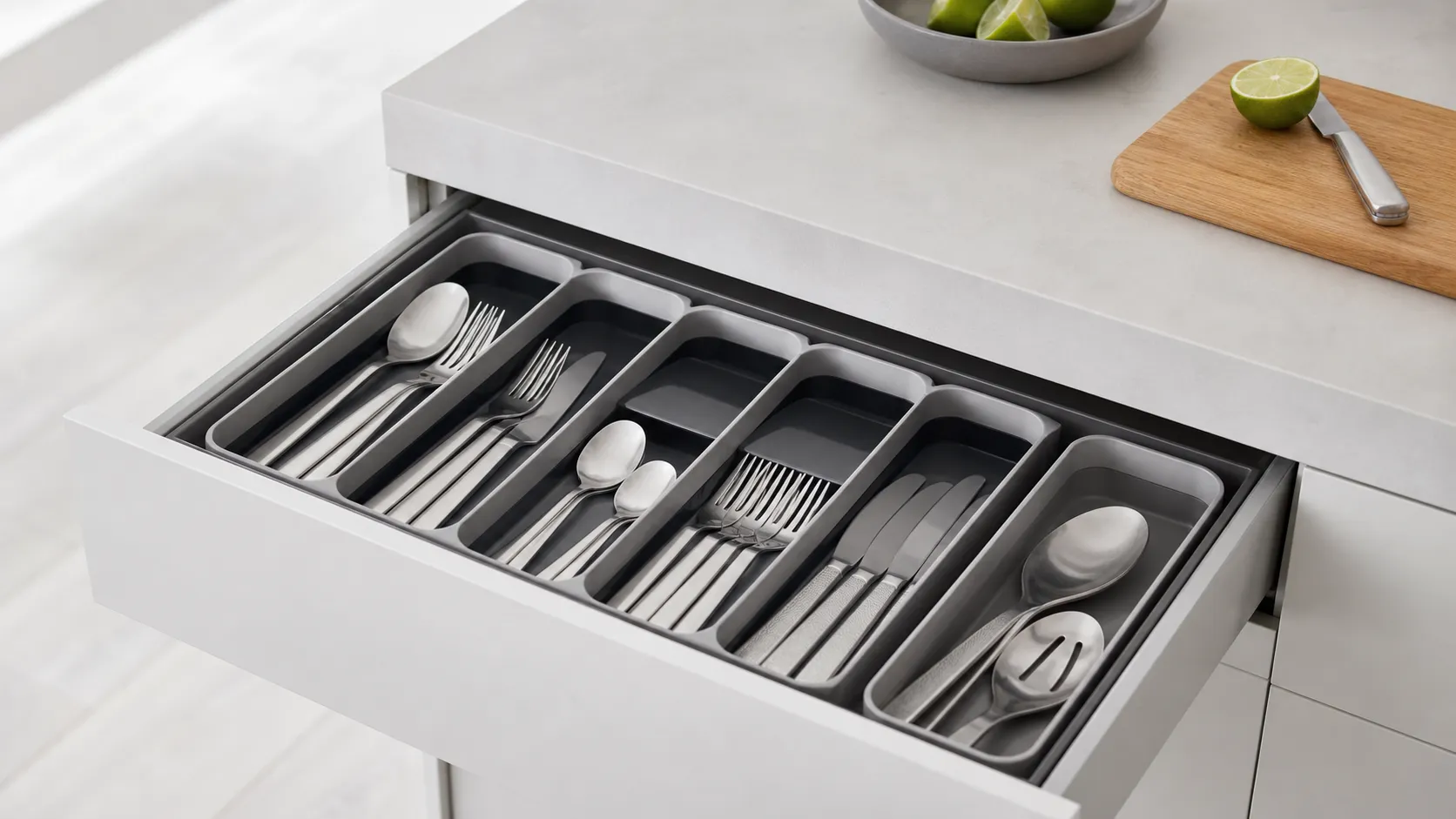
Joseph Joseph DrawerStore Cutlery Organizer Review 2026
A slim, modern cutlery tray that maximizes shallow-drawer space. Great for tidy, small-kitchen organization—measure your drawer first and avoid if you store long utensils.
 Kitchen & Appliances
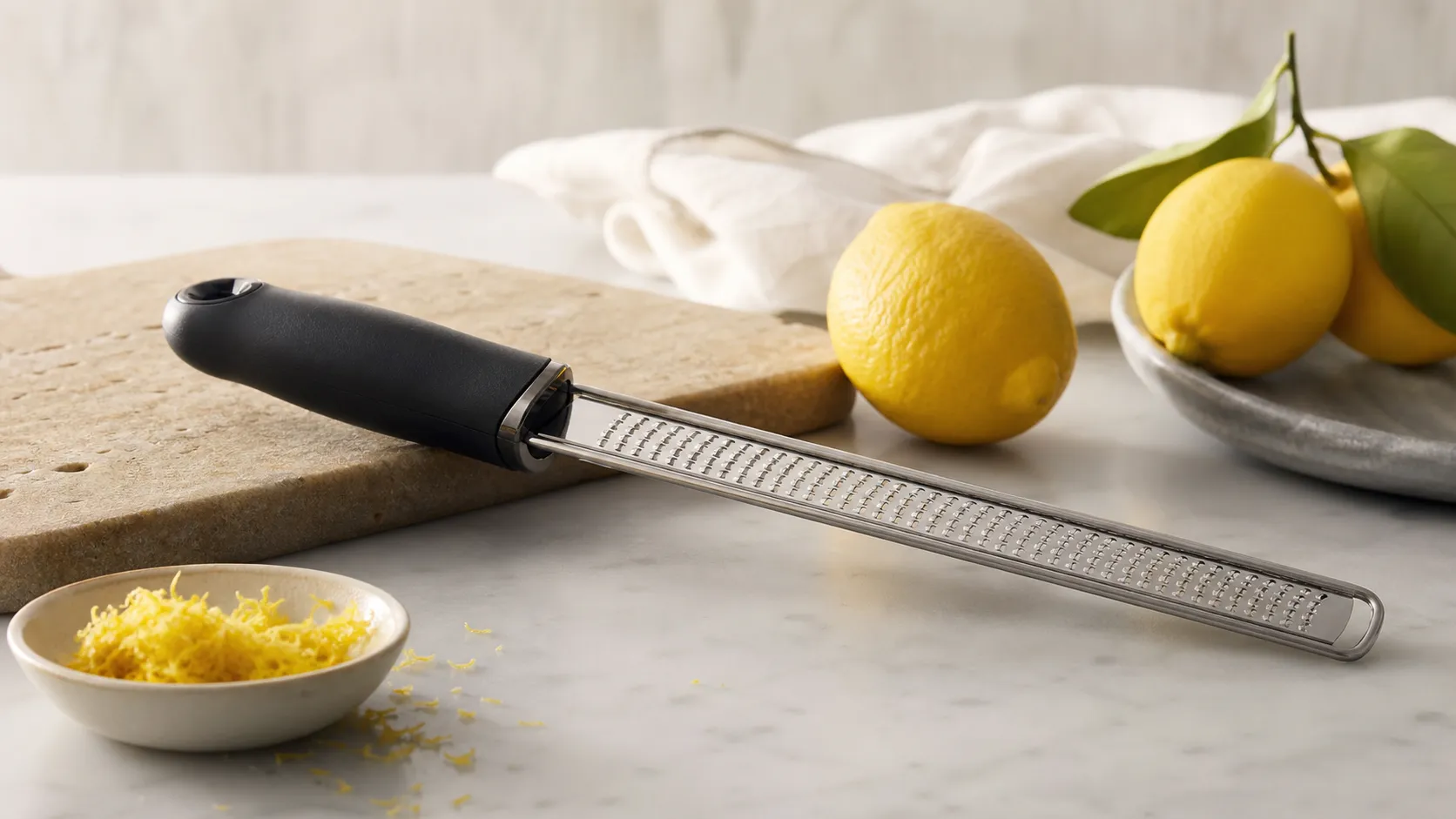
Microplane Premium Classic Zester/Grater — Review 2026
The Microplane Premium Classic is the go-to hand zester for precise, fluffy citrus zest and fine shavings. Sharp, compact, and great value—best for finishing, not bulk grating.