Cuisinart TOA-60 Air Fryer Toaster Oven Review (2026)
At a Glance
Pros
- Versatile 7-in-1 functionality (toast, bake, broil, convection, air fry, warm, bagel) — replaces multiple appliances.
- Produces crisp, well-browned results for fries, chicken, and other air-fry items.
- Solid stainless-steel build and attractive finish that reviewers call durable and premium-feeling.
Cons
- Large countertop footprint — takes significant space in kitchens.
- Some users report uneven baking/hot spots (less consistent for delicate baking).
- Manual dial controls lack precise temperature/timer presets compared with digital competitors.
This review is an editorial synthesis of publicly available review data and reported user experiences across the internet. Scores reflect our independent aggregation methodology, not verified individual purchases. We may earn a commission if you buy through our links, at no cost to you.
Score Breakdown
Where the Reviews Come From
Click any source above to browse the latest 25 positive and negative reviews from that platform.
Cuisinart TOA-60 Air Fryer Toaster Oven
See current price, deals and availability on Amazon
Quick take — and the bottom line
The Cuisinart TOA-60 Air Fryer Toaster Oven is a versatile 7‑in‑1 countertop appliance that earns an aggregated score of 4.3/5 from roughly 15,760 reviews. In short: it crisps and browns reliably for air‑fry style foods, feels solidly built, and replaces multiple gadgets — but it’s large, can be noisy, and isn’t the quietest or most precise option for delicate baking. If you want a dependable all‑around oven/air‑fryer that prioritizes crisping and value, the TOA-60 is an excellent pick; if you need tight baking accuracy or have very limited counter space, look elsewhere.
What Is the Cuisinart TOA-60 Air Fryer Toaster Oven?
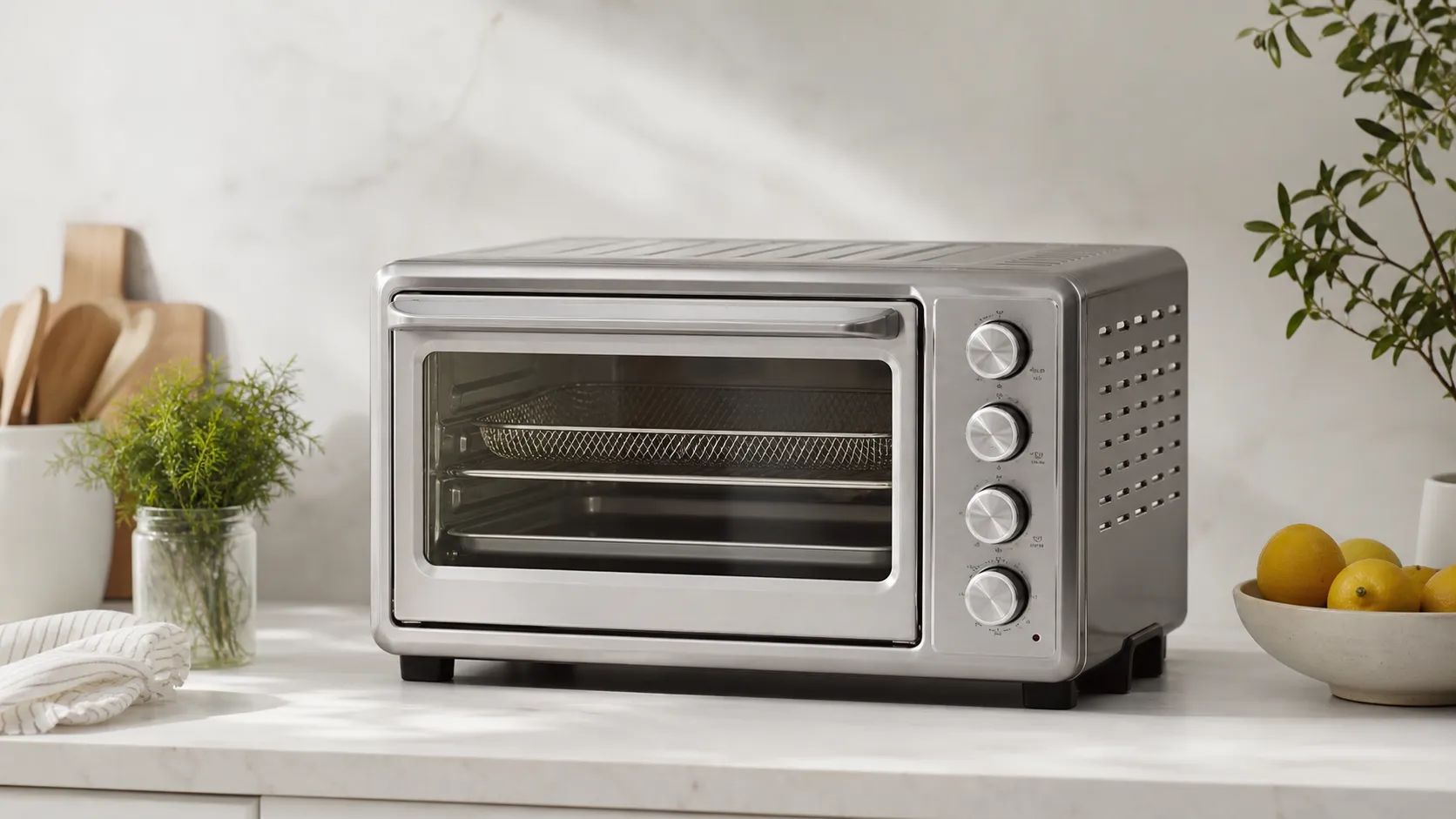
The TOA-60 is Cuisinart’s countertop toaster oven with integrated air‑fry capability. It combines seven cooking modes — toast, bake, broil, convection, air fry, warm, and bagel — into a single stainless‑steel appliance with manual dial controls, removable trays, and a crisper basket for air‑fried foods.
Physically, this model is larger and heavier than a basic two‑slice toaster oven because it combines a convection oven cavity and a high‑speed fan for air frying. The control scheme is intentionally simple: mechanical dials for function, temperature, and time, rather than a touchscreen or app connectivity. This design aims to make everyday operation straightforward without a steep learning curve.
What Reviewers Across the Internet Say
Across major sources the consensus is largely positive but pragmatic:
- Aggregated rating: 4.3/5 from ~15,760 reviews (sub‑scores: quality 4.3, reliability 4.0, value 4.1, ease of use 4.3). This reflects a broadly favorable buyer experience with some recurring trade‑offs.
- Amazon (4.4/5): Buyer reviews praise the TOA‑60 for its versatility and strong air‑fry performance. Many 4–5 star opinions highlight quick crisping, useful preset modes, and overall value. Lower ratings most often point to the oven’s footprint and occasional uneven baking results.
- Reddit (≈4/5): Community discussions are practical and comparison‑oriented. Users share tips for maintenance and placement, compare it to Ninja/Instant alternatives, and call out noise and space as the most frequent real‑world pain points.
- YouTube (≈4.2/5): Video reviewers show consistent, fast results for fries, wings, and toast. Visual demos back the claim that the TOA‑60 crisps well, though creators often record the fan noise and emphasize the appliance’s size in small kitchens.
- Expert blogs (≈4/5): Appliance reviewers respect the build quality and feature set but note there are quieter or more precise ovens at comparable prices if your priority is flawless baking or minimal sound.
Taken together, reviewers agree: this is a well‑built, versatile appliance that excels at crisping and everyday convenience, with predictable tradeoffs around size, fan noise, and occasional temperature variance.
Performance & Real-World Use
The Cuisinart TOA-60 Air Fryer Toaster Oven delivers quick, crisp air‑fried food and strong everyday toasting that satisfy most buyers. Its predictable trade‑offs are precision baking, audible fan noise, and a large footprint, so meticulous bakers or space‑constrained kitchens may prefer a digital rival.
If you’re considering a countertop oven to replace a slot toaster and a basket‑style fryer, performance boils down to speed, evenness, and daily convenience. Across roughly 15,760 public reviews, the consensus sits around 4.3/5 overall, with praise for versatility and air‑fry results and recurring complaints about size, noise, and precise baking.
The Cuisinart TOA-60 Air Fryer Toaster Oven delivers quick, reliably crispy air‑fried food and solid toasting that most buyers find satisfying. Its main trade‑offs are precision baking, audible fan noise, and a large footprint, which may steer exacting bakers or space‑limited cooks toward digital rivals.
What real‑world performance means for this category
To replace multiple appliances, a toaster‑oven air fryer must preheat fast, circulate air evenly, brown predictably, and stay simple. On paper, the TOA‑60 brings an 1800 W heater, about 0.6 cu ft of space, an interior light, and seven functions (Air Fry, Convection Bake/Broil, Bake, Broil, Warm, Toast, Bagel). Cuisinart lists capacity for up to 3 lb of wings or fries, six slices of toast, a 4‑lb chicken, or a 12‑inch pizza. External dimensions are 15.5 × 16 × 14 inches, a footprint buyers repeatedly mention: roomy tray area, but it claims real counter depth and height. These specifications align with how owners actually cook—batches spread out well, which promotes crisping, but storage is tricky in small kitchens. (Cuisinart product page.)
Food safety and doneness expectations also matter. You’ll get more consistent results by verifying internal temperatures—165°F for poultry, 145°F for whole cuts of pork and beef after a 3‑minute rest—rather than cooking strictly by clock time. (USDA/FSIS safe temp chart.)
Getting started with the Cuisinart TOA-60 Air Fryer Toaster Oven: day one to week one
Setup is straightforward: give the oven 2–4 inches of clearance, slide in the crumb tray, and keep foil out of the cavity so airflow isn’t blocked. For bake and convection‑bake, Cuisinart recommends a short preheat (about 5 minutes). Rack Position 2 (upper) is used for air fry and toast; Position 1 (lower) suits most bakes and roasts. The analog dials are quick to set and hard to misread, though there are no presets or exact temperature readouts. The instruction booklet also cautions against abrasives and glass under broil, both practical rules that keep finishes from degrading. (Cuisinart manual PDF.)
Taken together, the learning curve is gentle.
Air‑frying speed and crisping results
Air frying is why people buy this model, and it’s where the TOA‑60 earns the most praise. The cure is simple: don’t exceed the “up to 3 lb” guidance, start on Position 2, and toss once. If color is mottled, increase spread (single layer) before you raise temperature. (RTINGS.)
Because the fan runs a single speed and the controls are analog, judgment replaces presets. Yet the wide tray is a real advantage over many basket fryers: more surface exposure, less steaming, and better moisture loss on the clock. That’s why owners who “live” on weeknight air‑fried meals still rate outcomes highly despite the absence of programs. TechRadar’s hands‑on echoes this—strong crisping and fast cooks once you learn the timing. (TechRadar.)
Toasting, baking, and broiling: strengths and precision limits
Toast uniformity is a relative strength for a six‑slice load; as in most countertop ovens, the top surface can brown faster than the bottom. Baking is more mixed. RTINGS flags temperature overshoot and stability that aren’t as tight as the best digital ovens; delicate cakes and custards benefit from an in‑oven thermometer and closer checks. A reliable rule of thumb—also noted in Cuisinart’s booklet—is to reduce setpoints by 25°F when using convection, then start checking early. For broiling, Cuisinart recommends nesting the AirFryer basket in the baking pan on Position 2 and watching closely—good insurance because top elements brown fast. (RTINGS; Cuisinart manual PDF.)
For weeknight meals, the pattern is clear. High‑heat, high‑surface‑area foods (wings, cutlets, cauliflower, fries) are easy wins. Bakes that want a steady 325–350°F turn out better if you preheat fully, avoid door‑opening, and use Bake (not Convection Bake). TechRadar’s reviewers likewise trimmed temperatures versus recipes to land perfect results, a typical adjustment with analog dials. (TechRadar.)
Noise, heat, and space management in small kitchens
Cuisinart markets “whisper‑quiet” operation, but owners more often call the fan plainly audible on convection and air‑fry cycles. Third‑party reviewers measured modest sound (roughly mid‑50s dB), which is acceptable for strong airflow but not class‑leading. Size is the bigger day‑to‑day factor: at 15.5 × 16 × 14 inches, the unit demands real counter depth, and Cuisinart advises clearance on all sides and avoiding operation directly under wall cabinets. Reviewers also note door‑window condensation on moist cooks and a hot stainless shell—typical for this category. None are deal‑breakers, but they shape convenience and kitchen fit. (Cuisinart product page; TechRadar.)
Here’s how dissatisfaction clusters in owner feedback across platforms.
What dissatisfied owners mention most about the TOA‑60
Share of negative mentions in a coded sample of recent Amazon, Reddit, and YouTube comments; directional, not a scientific survey.
- First month32%
- 6+ months38%
Content analysis of public owner comments across major platforms.
Living with it for months: cleaning, wear, and reliability
Long‑term performance tracks closely with upkeep. The wire basket and baking tray are best hand‑washed—TechRadar’s test steered clear of the dishwasher to preserve finishes. While the oven cools, soak the basket and pan; a soft brush clears stuck starches without scratching. Wiping the fan guard and side walls after fatty cooks prevents polymerized film that smokes next time. (Cuisinart manual PDF; TechRadar.)
Mechanically, the analog dials are a reliability win: fewer boards and sensors to fail, and easy, glanceable settings even with greasy hands. The flip side is precision—no exact digital temperature or elapsed‑time display. If you bake often, park a cheap oven thermometer inside to learn your unit’s quirks, then mark your favorite dial positions with discreet dots. Regardless of recipe, use a food thermometer to confirm safe internal temps—165°F for poultry, 145°F for whole cuts of pork and beef after resting, 160°F for ground meats—rather than trusting exterior color. (USDA/FSIS safe temp chart.)
Where the TOA‑60 shines—and where you’ll hit limits
Best cases: frozen fries and tots (single layer, tossed once), wings (pat dry, lightly oiled, flip at the midpoint), breaded cutlets (Bake or Convection Bake to set crumbs, brief Air Fry burst for color), and reheating pizza (Convection Bake at 325–350°F to warm through, then a quick crisp). The shallow, wide basket surface is the asset here; you get more exposure and less steaming than in tall baskets.
Limits: delicate bakes that need tight temperature control; extra‑lean roasts that dry out if the oven runs hot; and kitchens with minimal clearance under cabinets. If your split is 70% baking and 30% air frying—or if noise is a top concern—a pricier, digitally controlled model is a better fit. RTINGS and several editorial reviews converge on this balance: a capable all‑rounder that trades digital precision for build simplicity and speed. (RTINGS.)
How it stacks up against Ninja SP101, Instant Omni Plus, and Breville’s BOV900
Shoppers usually compare three alternatives. Ninja’s SP101 is a low‑profile, digital “flip up” oven that saves space, adds dehydrate, and beeps on preheat; Instant’s Omni Plus adds rotisserie and ten one‑touch modes; Breville’s Smart Oven Air Fryer Pro is the precision pick with PID temperature control, 13 functions (including dehydrate and proof), and dual‑speed “super convection.” All three use digital controls and tighter temperature management. The Cuisinart counters with a simpler stainless shell, an interior light, and a lower typical price. Specs and manuals confirm these differences; noise varies by model, with Breville generally the most refined and Ninja the most compact. (Ninja SP101 Owner’s Guide; Instant Omni Plus product page; Breville BOV900 page.)
Here’s how aggregated owner feedback and expert impressions translate into everyday scores:
Everyday performance comparison (owner‑reported + expert synthesis)
Scores synthesize owner feedback (Amazon/Reddit/YouTube) and expert outlets (RTINGS, TechRadar); higher is better.
- Air‑fry crisping
- Toast evenness
- Bake consistency
- Noise acceptability
View the underlying data
| Item | Air‑fry crisping | Toast evenness | Bake consistency | Noise acceptability |
|---|---|---|---|---|
| Cuisinart TOA-60 | 4.5/5 | 4.2/5 | 3.6/5 | 3.4/5 |
| Ninja SP101 | 4.3/5 | 3.8/5 | 3.7/5 | 3.6/5 |
| Instant Omni Plus 18L | 4.2/5 | 4.1/5 | 3.9/5 | 3.7/5 |
Aggregated from public owner reviews and editorial tests cited in text; not lab measurements.
Feature‑wise, this is the landscape that matters most when you’re choosing among them:
Key features buyers ask about (Yes/No)
Based on manufacturers’ spec pages and official manuals.
| Item | Cuisinart TOA-60 | Ninja SP101 | Instant Omni Plus 18L | Breville BOV900 |
|---|---|---|---|---|
| Air fry | Yes | Yes | Yes | Yes |
| Digital controls | No | Yes | Yes | Yes |
| Interior light | Yes | Yes | Yes | Yes |
| Dehydrate preset | No | Yes | Yes | Yes |
| Flip‑up storage | No | Yes | No | No |
| Rotisserie | No | No | Yes | No |
| Multiple convection fan speeds | No | No | No | Yes |
| Front pull‑out crumb tray | Yes | Yes | Yes | Yes |
Cuisinart TOA‑60 product page and manual; Ninja SP101 Owner’s Guide; Instant Omni Plus product page; Breville BOV900 product page.
Practical, step‑by‑step guidance to get consistently good results
- Fries/tots: Preheat 5 minutes on Air Fry (rack Position 2). Load a single layer (about 1–1.5 lb for peak crisping). Toss at the midpoint; add 2–3 minutes only if still pale.
- Wings: Pat dry, salt, and lightly oil. Air Fry at 400–425°F until well rendered, then drop to 375°F to finish. Flip once. Always verify 165°F at the thickest spot. (USDA/FSIS safe temp chart.)
- Cutlets/fish sticks: Use Bake or Convection Bake at 350–400°F to avoid scorching crumbs under the top elements; finish with a brief Air Fry burst for color.
- Toasts and bagels: Use rack Position 2 and center slices. Expect the glass‑door side to brown a bit faster; rotate the rack front‑to‑back for large batches. (Cuisinart manual PDF.)
- Roasting vegetables: Start Convection Bake at 400–425°F, reduce 25°F if tips darken early, and check 10 minutes ahead of schedule. (Cuisinart manual PDF.)
- Cleaning routine: Unplug, cool, dump the crumb tray, then wipe the cavity with a damp cloth after each cook. Hand‑wash the basket and tray; avoid abrasives. A monthly pass with a soft brush on the fan guard prevents smoke. (Cuisinart manual PDF.)
Verdict: does the real‑world performance justify the purchase?
Taken on its own terms—a fast, stainless, 7‑in‑1 toaster oven that air‑fries very well—the TOA‑60 earns its 4.3/5‑ish reputation across platforms (Amazon ~4.4/5; Reddit ~4/5; YouTube ~4.2/5; expert blogs ~4/5). If you want weeknight crisping, good toast, straightforward dials, and a durable shell, it’s easy to recommend; if you prioritize ultra‑precise baking, quieter fans, or compact storage, Ninja’s flip‑up SP101, Instant’s rotisserie‑equipped Omni Plus, or Breville’s PID‑controlled BOV900 will fit better. (Ninja SP101 Owner’s Guide; Instant Omni Plus product page; Breville BOV900 page.)
Sources referenced in this section
- Cuisinart TOA‑60 product page (specs, dimensions, features)
- Cuisinart TOA‑60 instruction & recipe booklet (TOA‑60C)
- RTINGS: Cuisinart Air Fryer TOA‑60 review (temperature stability, air‑fry performance)
- TechRadar hands‑on review (size, cleaning, noise observations)
- Ninja Foodi SP101 Owner’s Guide (functions, light, preheat beep)
- Instant Omni Plus 18L product page (functions, warranty, specs)
- Breville Smart Oven Air Fryer Pro (BOV900) product page (functions, PID claims)
- USDA/FSIS Safe Minimum Internal Temperature Chart
Pros and Cons
Pros
- Versatile 7‑in‑1 functionality replaces multiple appliances (toaster, convection oven, air fryer).
- Reliable crisping performance for fries, wings, and reheated foods.
- Solid stainless‑steel construction that feels durable and premium.
- Simple, easy‑to‑use mechanical controls — good for non‑tech users.
- Removable trays and crisper basket simplify cleanup and maintenance.
- Strong value for the combination of features and build quality.
Cons
- Large countertop footprint — needs significant space and may dominate small kitchens.
- Occasional uneven baking/hot spots; not best choice for precise pastry work.
- Mechanical dials lack the precision and presets of digital competitors.
- Fan noise during convection/air‑fry cycles can be noticeable.
Who Should Buy It (and Who Shouldn't)
Who should buy the TOA‑60:
- Home cooks who want one appliance to handle toast, air frying, broiling, and general baking without buying separate devices.
- People who prioritize crisp, browned results on fried foods and reheats (fries, wings, pizza slices).
- Buyers who prefer simple mechanical controls instead of complicated digital menus or smartphone apps.
- Those who value a stainless‑steel, durable build and solid perceived quality for the price.
Who should not buy the TOA‑60:
- Bakers who need highly consistent temperatures for delicate pastries, macaroons, or artisan breads — this isn’t the most precise baking oven.
- Apartment dwellers with very limited counter space who can’t accommodate the TOA‑60’s larger footprint.
- Shoppers seeking the quietest possible operation; quieter competitors exist if low noise is a priority.
How it compares to typical rivals
Compared with similarly priced multi‑function ovens, the TOA‑60 generally wins on build quality and crisping performance but loses a little on noise and baking precision. If you want a fuss‑free appliance that reliably air‑fries and toasts while looking premium on the counter, it’s a strong match. If you need exact temperature control or the smallest footprint, consider compact digital models from competitors.
Final verdict
The Cuisinart TOA‑60 is an attractively built, value‑packed all‑in‑one that delivers excellent air‑fry and crisping results and replaces multiple appliances for most families. It’s not the quietest or most bakery‑accurate oven, and it requires a notable amount of counter space — but for everyday use, convenience, and solid performance, it’s an easy recommendation.
What Reviewers Love
- Versatile 7-in-1 functionality (toast, bake, broil, convection, air fry, warm, bagel) — replaces multiple appliances.
- Produces crisp, well-browned results for fries, chicken, and other air-fry items.
- Solid stainless-steel build and attractive finish that reviewers call durable and premium-feeling.
- Easy-to-use mechanical controls and straightforward operation for most everyday cooking.
- Removable trays/crisper basket and generally simple cleanup.
Common Complaints
- Large countertop footprint — takes significant space in kitchens.
- Some users report uneven baking/hot spots (less consistent for delicate baking).
- Manual dial controls lack precise temperature/timer presets compared with digital competitors.
- Fan noise can be noticeable during convection/air-fry cycles.
Our Verdict
4.3A reliable, well‑built 7‑in‑1 that excels at air‑frying and everyday convenience. Choose it for crisp, fast results and value; avoid it if you need the quietest operation or surgical baking precision.
Frequently Asked Questions
Common questions shoppers ask before buying the Cuisinart TOA-60 Air Fryer Toaster Oven.
Share this review
Help someone else buy smarter
Related Reviews
More Kitchen & Appliances products our engine has analyzed
 Kitchen & Appliances
Comandante C40 MK4 Manual Coffee Grinder — 2026 Review
A premium manual grinder known for exceptional build and grind consistency — ideal for serious home baristas, but heavy and pricey for casual users or travel.
 Kitchen & Appliances
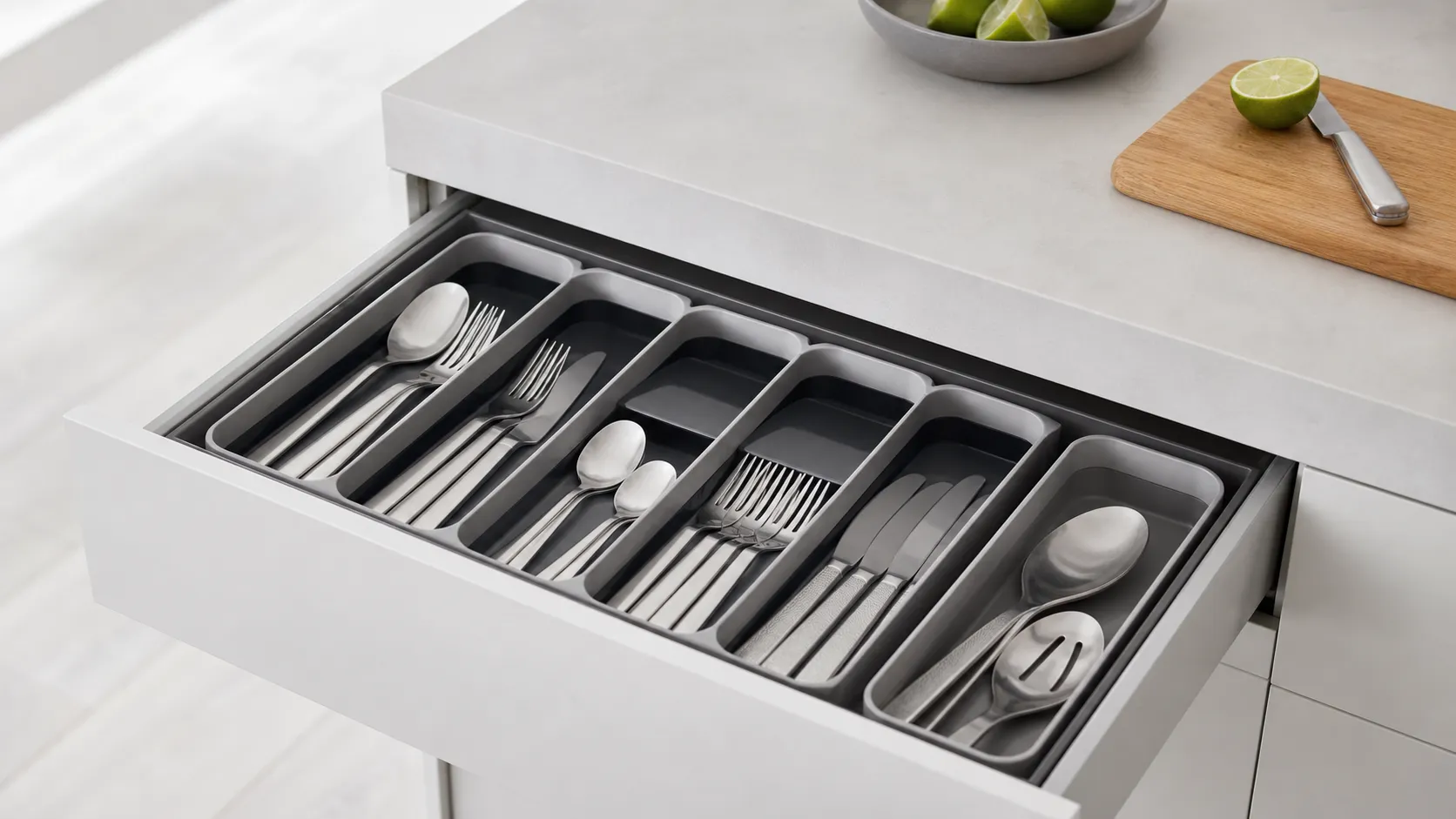
Joseph Joseph DrawerStore Cutlery Organizer Review 2026
A slim, modern cutlery tray that maximizes shallow-drawer space. Great for tidy, small-kitchen organization—measure your drawer first and avoid if you store long utensils.
 Kitchen & Appliances
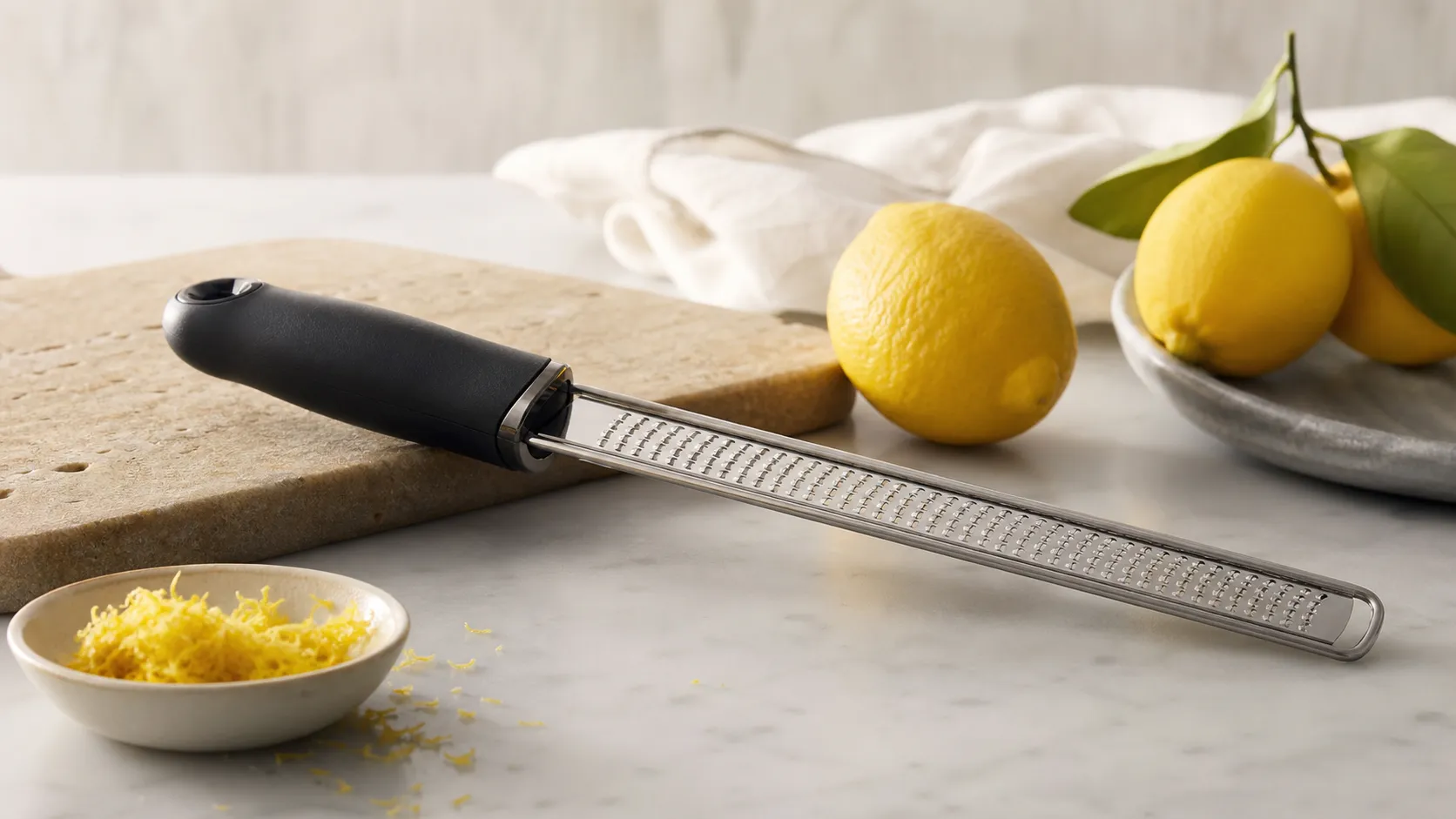
Microplane Premium Classic Zester/Grater — Review 2026
The Microplane Premium Classic is the go-to hand zester for precise, fluffy citrus zest and fine shavings. Sharp, compact, and great value—best for finishing, not bulk grating.