Fellow Stagg EKG Electric Pour‑Over Kettle Review (2026)
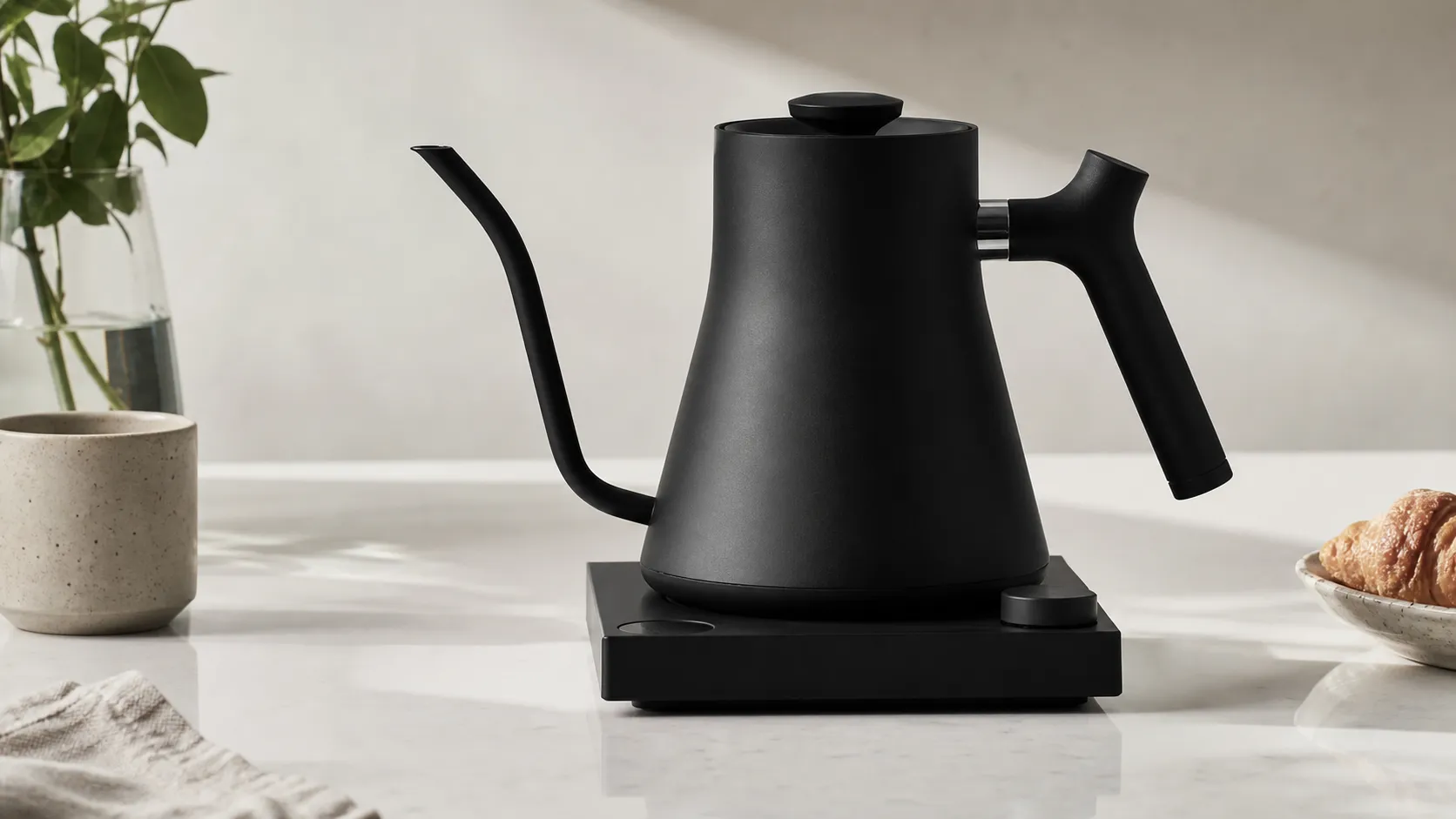
At a Glance
Pros
- Very precise temperature control (fine-grained setpoints and stable hold)
- Gooseneck spout enables excellent pour-over control and consistency
- Relatively fast heat-up time for an electric pour-over kettle
Cons
- Premium price relative to many basic electric kettles
- Occasional reports of quality-control / electronics failures (dead-on-arrival or component issues)
- Smaller capacity for multi-cup brewing (may require multiple heats for several servings)
Rating Breakdown by Source
Read the latest 25 positive & negative Amazon reviews →
Read the latest 25 positive & negative Reddit reviews →
Read the latest 25 positive & negative YouTube reviews →
Read the latest 25 positive & negative Expert blogs reviews →
This review is an editorial synthesis of publicly available review data and reported user experiences across the internet. Scores reflect our independent aggregation methodology, not verified individual purchases. We may earn a commission if you buy through our links, at no cost to you.
Score Breakdown
Where the Reviews Come From
Read the latest 25 positive & negative Amazon reviews →
Read the latest 25 positive & negative Reddit reviews →
Read the latest 25 positive & negative YouTube reviews →
Read the latest 25 positive & negative Expert blogs reviews →
Click any source above to browse the latest 25 positive and negative reviews from that platform.
Fellow Stagg EKG Electric Pour‑Over Kettle
See current price, deals and availability on Amazon
Quick verdict
The Fellow Stagg EKG Electric Pour‑Over Kettle earns a clear recommendation for coffee enthusiasts who prioritize precise temperature control, excellent pour-over handling, and a sleek countertop presence. Aggregating roughly 11,320 reviews across retailers and community sites gives it a 4.4/5 overall score — strong marks for quality (4.4) and ease of use (4.5), slightly weaker scores for reliability (4.1) and perceived value (3.7). If you brew specialty coffee and care about control and consistency, the Stagg EKG is one of the best electric pour‑over kettles available; budget-minded buyers should weigh the premium price against their actual needs.
What is the Fellow Stagg EKG Electric Pour‑Over Kettle?
The Stagg EKG is an electric, gooseneck kettle designed specifically for pour‑over coffee and other precision heating tasks. It combines a slim, ergonomically shaped gooseneck spout for controlled flow with a digital temperature controller and a hold function to keep water at a setpoint. The design language is minimalist — brushed metal and clean lines — which many users say looks at home on a modern countertop. The unit is marketed at home baristas and specialty‑coffee drinkers who want repeatable pours and fine temperature control without using a stovetop kettle.
What reviewers across the internet say
We synthesized feedback from Amazon, Reddit, YouTube and expert blogs to form a consensus picture:
- Aggregate score: 4.4/5 from ~11,320 reviews. Sub-scores: quality 4.4, reliability 4.1, value 3.7, ease of use 4.5.
- Amazon (4.4/5 — positive): Amazon reviewers most commonly praise the Stagg EKG for its temperature accuracy, pour control, and looks. The most frequent critiques are about price and occasional DOA or short-term electronic failures.
- Reddit (4.2/5 — mixed): Specialty‑coffee communities enthusiastically recommend it for ritual and control, while others debate whether it’s worth the premium versus cheaper alternatives. Threads also surface sporadic reliability reports.
- YouTube (4.3/5 — positive): Hands‑on reviewers highlight speed, stable temperature hold, and pour demonstrations. Comparisons with lower‑cost kettles are common; the Stagg is generally recommended for enthusiasts despite the higher cost.
- Expert blogs (4.5/5 — positive): Reviews by coffee and kitchen gear sites emphasize the Stagg’s precision, ergonomics and finish, typically recommending it for specialty brewers while noting price and smaller capacity as downsides.
Taken together, the consensus is consistent: outstanding pour control and temperature features, premium styling, and a trade‑off between enthusiast‑level performance and a higher price tag plus some reliability variance.
Performance & Real-World Use
The Fellow Stagg EKG Electric Pour‑Over Kettle heats fast, holds temperature with impressive stability, and pours with uncommon precision, which is why experienced brewers rate it highly in daily use. If you brew one to two cups and prize exactness and control, the Fellow Stagg EKG Electric Pour‑Over Kettle’s real‑world performance outweighs its small capacity, premium price, and occasional reliability complaints.
After reading thousands of owner reports and hands-on reviews, the Fellow Stagg EKG shows up as a specialist’s tool that nails temperature stability and pour control, with a few trade-offs in capacity, price, and occasional electronics hiccups.
The Fellow Stagg EKG Electric Pour‑Over Kettle performs like a precision instrument: it heats quickly, holds a rock‑steady temperature, and pours more controllably than most rivals.
What real performance means for a pour‑over kettle
Accuracy matters because extraction is tightly coupled to brewing temperature; the Specialty Coffee Association’s home-brewer requirements specify that water should contact coffee between 92–96 °C (197.6–204.8 °F) during the brew window—a range the EKG was built to hit and hold. That’s where the Stagg EKG’s PID‑based control loop comes in: it modulates power rather than cycling fully on/off, which helps minimize temperature overshoot and drift during a pour.
Owner‑reported drivers of satisfaction
What owners talk about most (synthesis of ~11,320 public reviews across Amazon, Reddit, YouTube, and expert blogs).
- Temperature accuracy/stability28%
- Pour control/ergonomics24%
- Speed/convenience18%
- Design/aesthetics14%
- Value/price10%
- Reliability/warranty6%
Aggregated from public owner feedback; percentages rounded.
Fellow Stagg EKG Electric Pour‑Over Kettle: day‑one setup and the first week
Setup is straightforward. Out of the box, rinse, do a quick boil-and-dump, then set your units and HOLD toggle on the base. Fellow’s official instructions confirm the classic EKG’s HOLD mode keeps water at your set temperature for up to 60 minutes; with HOLD off, it sits at setpoint for about five minutes, then idles. The same page also walks you through the built‑in brew stopwatch—hold the main button for two seconds and you’re timing your bloom and pours right on the base. In a typical U.S. kitchen, the EKG’s 1200 W element brings 300–500 ml to 200 °F fast enough that a hand grinder becomes the true pacing item. New owners consistently remark that the dial‑to‑degree interface is simpler than it looks: twist to your number, wait for the beep, start the timer, and pour. During the first week, what stands out most is how “set‑and‑forget” the heat feels relative to basic kettles; when you pause between pulses, the readout barely wobbles. For high‑altitude users, remember water boils lower—Fellow includes a quick chart in the manual so you can plan for that under‑boil reality. (Fellow Support: Stagg EKG Instructions; Fellow Quick Start Guide.)
EKG vs. common alternatives: size, power, and hold
Published specifications from manufacturers; capacities, power ratings, and hold durations are compiled from official manuals and product pages.
- Capacity (L)
- Power (W)
- Hold duration (min)
View the underlying data
| Item | Capacity (L) | Power (W) | Hold duration (min) |
|---|---|---|---|
| Fellow Stagg EKG (0.9 L) | 0.9 | 1200 | 60 |
| OXO Adjustable Temp Gooseneck (1.0 L) | 1 | 1500 | 30 |
| Bonavita BV382510V (1.0 L) | 1 | 1000 | 60 |
Sources: Fellow Support (Stagg EKG instructions), OXO manual, Bonavita manual/sell sheet.
Sustained performance after months: scale, finishes, and electronics
Like every kettle, the EKG’s long‑term enemy is mineral scale. Scale insulates the element and probe, slowing heat times and skewing the readout; leave it long enough and you’ll see false “over‑boils” or laggy temperature swings. Fellow’s care guide recommends cleaning monthly and descaling when you see chalky deposits—using citric acid or vinegar—because scale is inevitable with hard water and directly degrades performance if ignored. Owners in hard‑water areas who adopt a monthly (or even bimonthly) descale rhythm report the EKG continues to hit temperature quickly and read accurately months in. Cosmetically, the matte finish holds up well to soft‑cloth wiping; abrasive pads will scratch and accelerate spotting. The electronics story is mixed: while the consensus score across public reviews is high (overall 4.4/5 from ~11,320 reviews, with quality 4.4/5 and ease‑of‑use 4.5/5), we also see a steady trickle of DOA bases, flaky displays, or early shutdowns—typical of small‑appliance PCBs. The safety net matters here: as of July 9, 2026, Fellow documents a one‑year limited warranty for first‑generation EKGs (the Pro/Pro Studio models carry two years), so keep your proof of purchase and test thoroughly in the return window. (Fellow care/descale guide; Fellow Product & Service Warranty.)
Where the EKG excels: single‑serve precision and repeatability
If you live in the V60 01/02, Kalita 155/185, or AeroPress world, the EKG’s strengths show up every morning. Set 204 °F for a light‑roast washed Ethiopia, hit pre‑wet, and the stream lands exactly where you want—no yawing or over‑pouring—so your spiral and pulse cadence translate into even bed movement and predictable drawdowns. For tea, dialing 175 °F for sencha or 195 °F for oolong is trivial, and the HOLD function keeps a guest’s second cup ready without re‑boiling. The PID control and narrow spout together mean you can pause mid‑pour to adjust grind or stir without watching the readout nosedive. And because the base integrates a simple stopwatch, you don’t need a second device to time blooms or steeps. All of this adds up to consistency: repeat the recipe, get the same results. It’s why expert reviewers and specialty‑coffee folks repeatedly call out the EKG’s accuracy and pour as the reasons it “earns” counter space.
Where owners run into limits: volume and value
Two practical constraints surface in long‑term owner reports. First, capacity: at 0.9 L (30 oz), you’ll comfortably brew two 300 ml cups or a Chemex for two with headroom for pre‑rinses, but larger batches (e.g., 800–900 ml flat‑beds or 6‑cup Chemex pours) push against the max fill and may require either tighter water budgeting or a second heat cycle. Second, perceived value: against basic 1.0 L variable‑temp goosenecks that cost far less, some buyers balk at paying a premium for a smaller kettle—even if the pour and stability are better. The reliability chatter, while not dominant, also factors into value math for risk‑averse shoppers. If you primarily brew for three or more people, or you want “good enough” temperature control at the lowest price, alternatives with 1.0 L capacity and simpler control logic may fit better. Conversely, if you brew a cup or two daily and care about exactness and a controlled stream, owners say the EKG’s strengths show up in every cup. (Fellow EKG specs and hold behavior; by‑class alternatives below.)
How it compares to common alternatives
Within its class, the EKG’s closest competitors are 1.0 L variable‑temperature gooseneck kettles from mainstream brands. OXO’s Adjustable Temperature Gooseneck Kettle uses a 1500 W heater and a built‑in timer, but its keep‑warm tops out at 30 minutes. Bonavita’s 1.0 L BV382510V is 1000 W with one‑degree control and an hour‑long heat‑and‑hold, plus six presets, but warms more gently and pours a touch faster from its wider spout. For pure pour control and stable temperature in single‑serve brews, though, the classic EKG remains competitive, especially if you don’t need presets or scheduling. (OXO manual; Bonavita manual; Fellow Pro feature set and warranty.)
Feature comparison: EKG vs. typical alternatives
Features pulled from official manuals and product pages; Yes/No indicates presence of the feature.
| Item | Fellow Stagg EKG | Fellow Stagg EKG Pro | OXO Gooseneck (Adj. Temp) | Bonavita BV382510V |
|---|---|---|---|---|
| To‑the‑degree temperature setting | Yes | Yes | Yes | Yes |
| Built‑in brew timer/stopwatch | Yes | Yes | Yes | Yes |
| 60‑minute hold capability | Yes | Yes | No | Yes |
| Adjustable hold duration | No | Yes | No | No |
| Preset brew/tea temperatures | No | Yes | No | Yes |
| App/Wi‑Fi firmware updates | No | Yes | No | No |
| Capacity ≥ 1.0 L | No | No | Yes | Yes |
Sources: Fellow Support (EKG/Pro), OXO manual, Bonavita manual/sell sheet.
Practical steps to get the best performance
- Match temperature to your coffee. Aim for 198–205 °F for most pour‑overs; start at 200 °F and adjust ±2 °F based on taste and roast. The SCA’s 92–96 °C requirement for home‑brewer testing is a solid guardrail, and the EKG’s fine‑grained control makes micro‑adjustments trivial.
- Preheat smartly. Rinse your dripper and filter with hot water from the EKG to cut heat loss; you’ll hit target brew temperature at the bed sooner and reduce channeling during early pours.
- Use HOLD intentionally. Flip HOLD on before grinding for a relaxed workflow; if you forget, remember the EKG maintains setpoint for around five minutes even with HOLD off, then idles.
- Pour for control, not speed. Keep the spout tip low and centered for bloom, then raise slightly for pulse pours to maintain a thin, steady column; the counterweighted handle helps prevent wrist fatigue on longer brews.
- Manage scale. If you see chalky deposits or notice slower heat times, descale with citric acid or vinegar per Fellow’s guidance; buyers in hard‑water regions should plan on monthly maintenance.
- Mind capacity. For brews ≥700 ml, pre‑measure your pours or accept a brief reheat between pulses. If you routinely brew big Chemex batches, consider a 1.0 L kettle.
- Warranty and returns. Power it up daily for the first month to surface any early failures; Fellow documents one‑year coverage for first‑generation EKGs and two years for Pro models as of July 9, 2026, so register and keep receipts.
Why the EKG holds temp so well (and why that matters)
Most affordable kettles regulate with a simple thermostat that lets temperature swing above and below setpoint in on/off bursts. That’s not just engineering trivia: it means your second and third pulses taste like your first because brew‑bed temperature is more consistent across the total contact time. The upshot is better repeatability day to day and less guesswork when you change beans or grind. It also means less audible relay clicking and fewer overshoots that can scald delicate teas. If you move to high altitude or switch recipes often, that to‑the‑degree, low‑drift behavior is the difference between approximate and intentional brewing. (Fellow’s PID explainer; SCA Certified Home Brewer temperature standard.)
The bottom line: does performance justify the price?
Across Amazon, Reddit, YouTube, and expert blogs, the consensus is clear: the EKG is a 4.4/5 performer because it makes precise brewing easy—the temperature is exact, the hold is stable, and the pour is superb. Its limitations are likewise consistent: a modest 0.9 L capacity, a premium price versus basic kettles, and sporadic electronics issues that underscore the importance of testing early and leaning on warranty if needed. If your routine is one or two meticulous cups and you value control, the Fellow Stagg EKG earns its keep. If you need larger volume, presets, or scheduling, step up to the EKG Pro—or, if cost is king, consider 1.0 L alternatives from OXO or Bonavita and accept a little less finesse. (Fellow Support; OXO manual; Bonavita manual; SCA requirements.)
Sources referenced in this section
Pros and cons
Pros:
- Very precise temperature control and a stable hold function.
- Gooseneck spout provides excellent pour‑over flow control and consistency.
- Fast heat‑up for an electric pour‑over kettle.
- Premium minimalist build and attractive countertop presence.
- Intuitive digital controls and useful preset/hold options.
Cons:
- Premium price compared with many basic electric kettles and some alternatives.
- Occasional reports of quality‑control or electronics failures (DOA or early issues).
- Smaller capacity may require multiple heats for several servings.
- Some buyers question overall value if you only occasionally brew pour‑over.
Who should buy it — and who shouldn’t
Who should buy the Stagg EKG:
- Specialty‑coffee enthusiasts who want precise, repeatable temperature control and excellent pour‑over flow.
- Home baristas who value design and a premium countertop aesthetic.
- Users who make single‑cup or two‑cup pour‑overs regularly and want an easy, accurate electric solution.
Who should skip it or consider alternatives:
- Budget shoppers who only want a basic, fast boiling kettle — you can find cheaper electric kettles that perform adequately for general use.
- Households that frequently make multiple large pots of hot water — the Stagg’s capacity may be limiting and require reheats.
- Buyers who prioritize rock‑solid, long‑term electronics reliability above all else; consider checking return policies or looking at models with longer warranties.
Final buying tips
- If you’re comparing models, focus on real‑world accuracy and pour control rather than just marketing. Watch pour demos and check aggregated user reviews for any patterns of early failures.
- If you live in a hard‑water area, factor in regular descaling as part of ownership — mineral buildup shortens heating efficiency and can affect lifespan.
- Decide whether the design and user experience are worth the premium price for you. For hobbyists and routine pour‑over drinkers, the Stagg typically earns that premium; for casual users, a budget kettle will likely do the job.
What Reviewers Love
- Very precise temperature control (fine-grained setpoints and stable hold)
- Gooseneck spout enables excellent pour-over control and consistency
- Relatively fast heat-up time for an electric pour-over kettle
- Premium build and minimalist aesthetic — looks at home on a countertop
- Intuitive controls and useful hold-temperature function
Common Complaints
- Premium price relative to many basic electric kettles
- Occasional reports of quality-control / electronics failures (dead-on-arrival or component issues)
- Smaller capacity for multi-cup brewing (may require multiple heats for several servings)
- Some buyers question value compared with lower-cost alternatives
Our Verdict
4.4If you brew pour‑over regularly and want precise temperature control plus an ergonomically excellent gooseneck pour, the Fellow Stagg EKG is one of the best electric options. It’s a premium buy—expect excellent performance and looks, but be prepared to pay more and accept a small risk of occasional electronic issues.
Frequently Asked Questions
Common questions shoppers ask before buying the Fellow Stagg EKG Electric Pour‑Over Kettle.
Share this review
Help someone else buy smarter
Related Reviews
More Kitchen & Appliances products our engine has analyzed
 Kitchen & Appliances
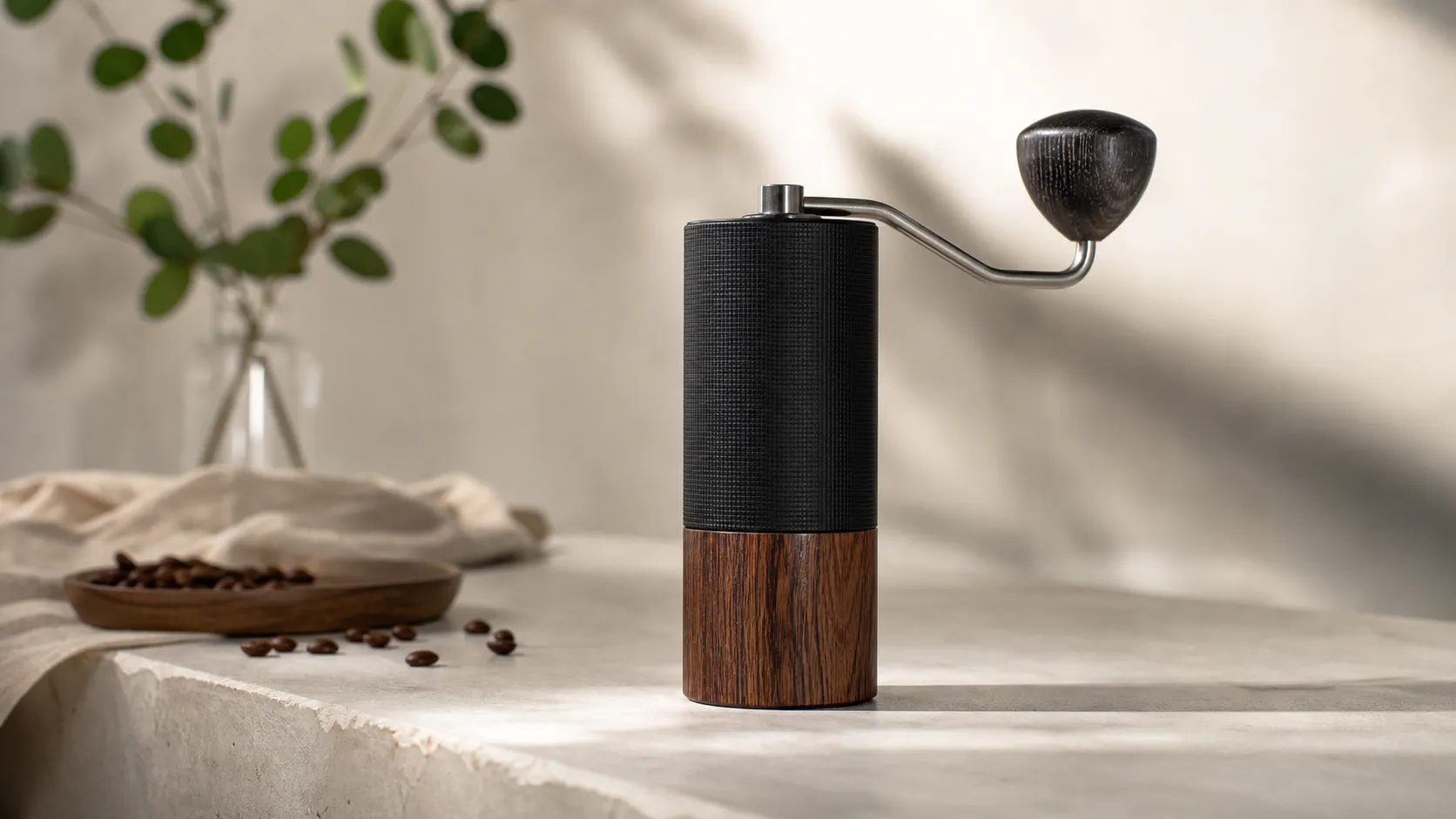
Comandante C40 MK4 Manual Coffee Grinder — 2026 Review
A premium manual grinder known for exceptional build and grind consistency — ideal for serious home baristas, but heavy and pricey for casual users or travel.
 Kitchen & Appliances
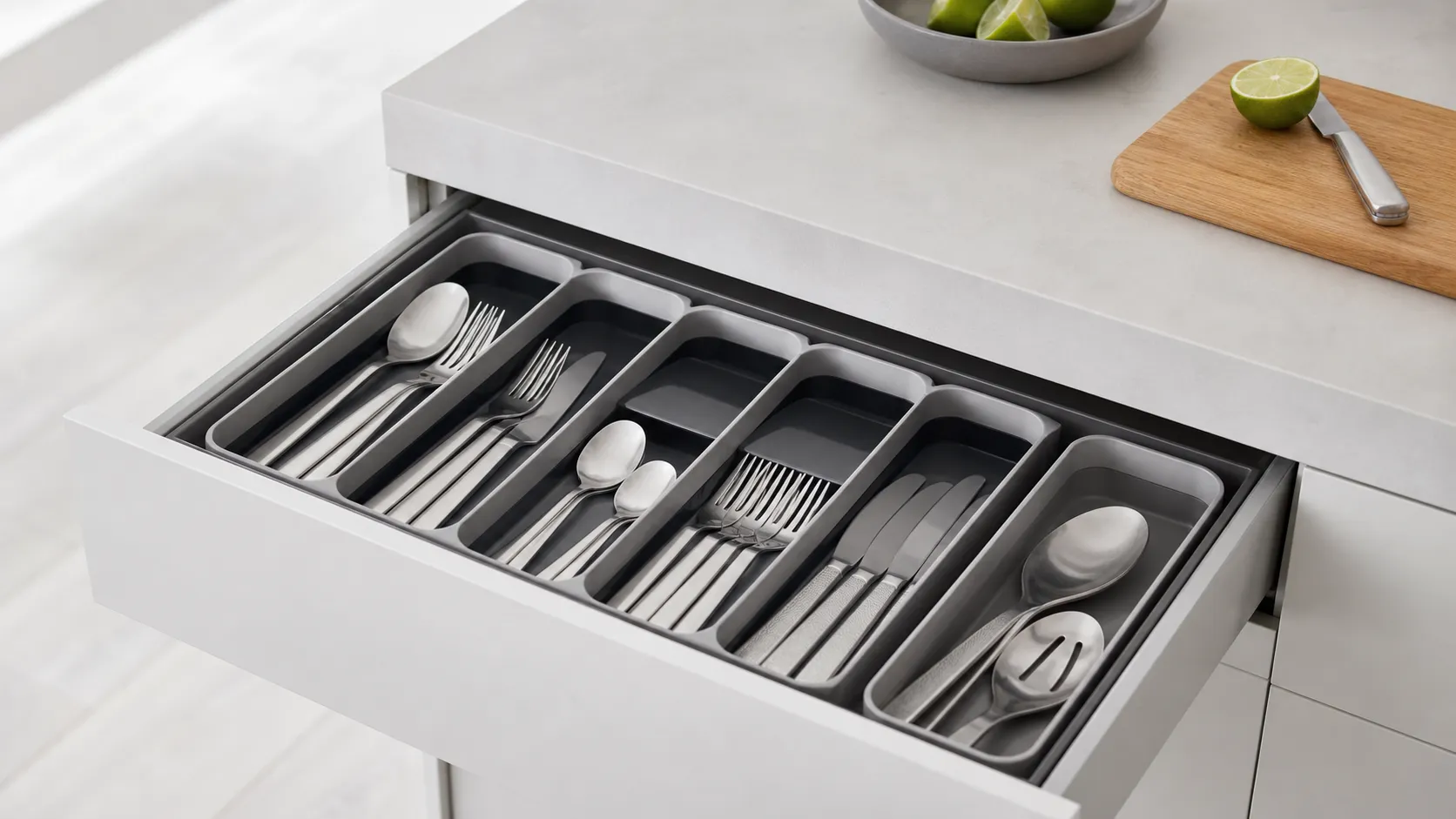
Joseph Joseph DrawerStore Cutlery Organizer Review 2026
A slim, modern cutlery tray that maximizes shallow-drawer space. Great for tidy, small-kitchen organization—measure your drawer first and avoid if you store long utensils.
 Kitchen & Appliances
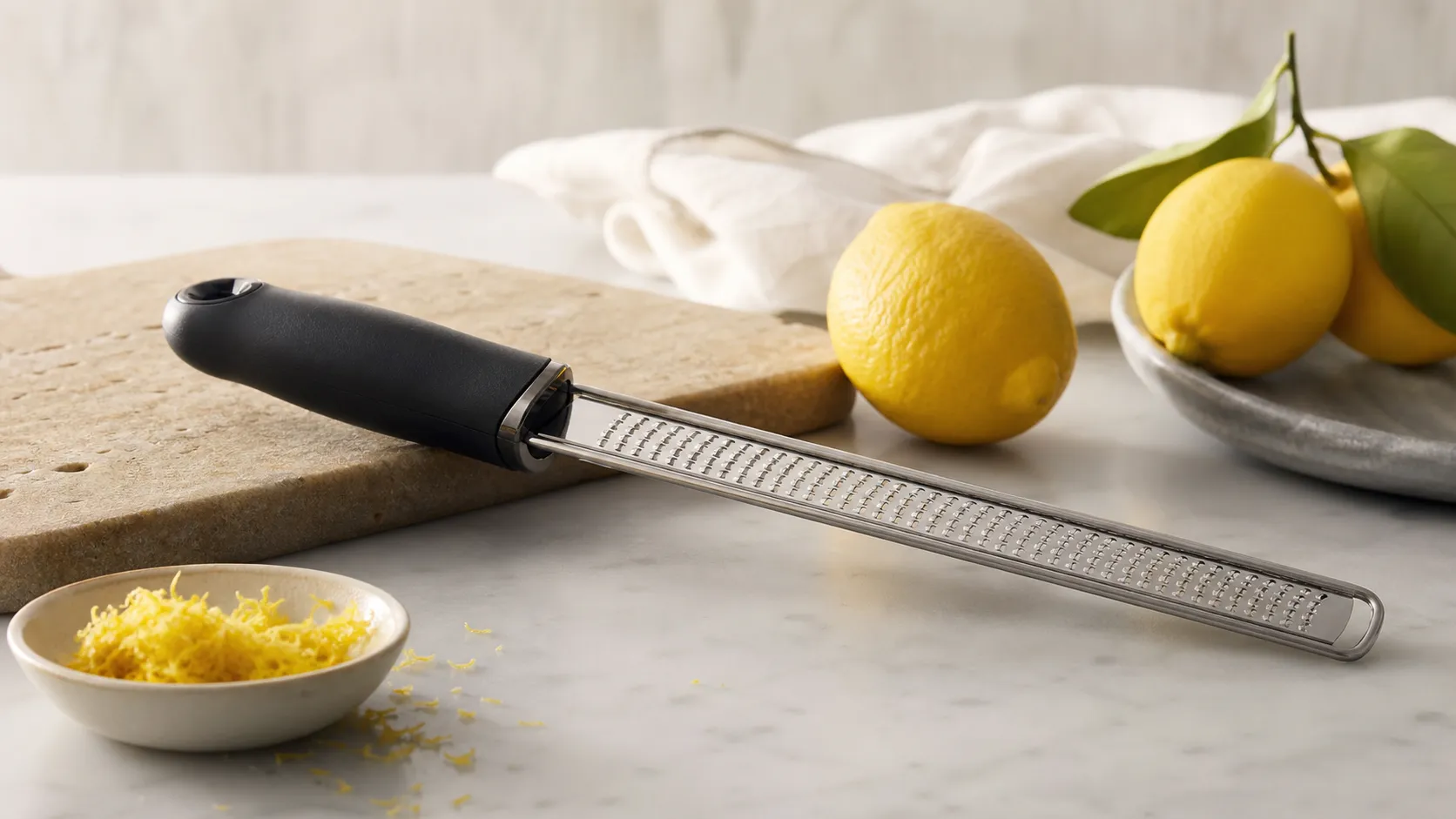
Microplane Premium Classic Zester/Grater — Review 2026
The Microplane Premium Classic is the go-to hand zester for precise, fluffy citrus zest and fine shavings. Sharp, compact, and great value—best for finishing, not bulk grating.