Gaiam Premium Yoga Mat Review 2026
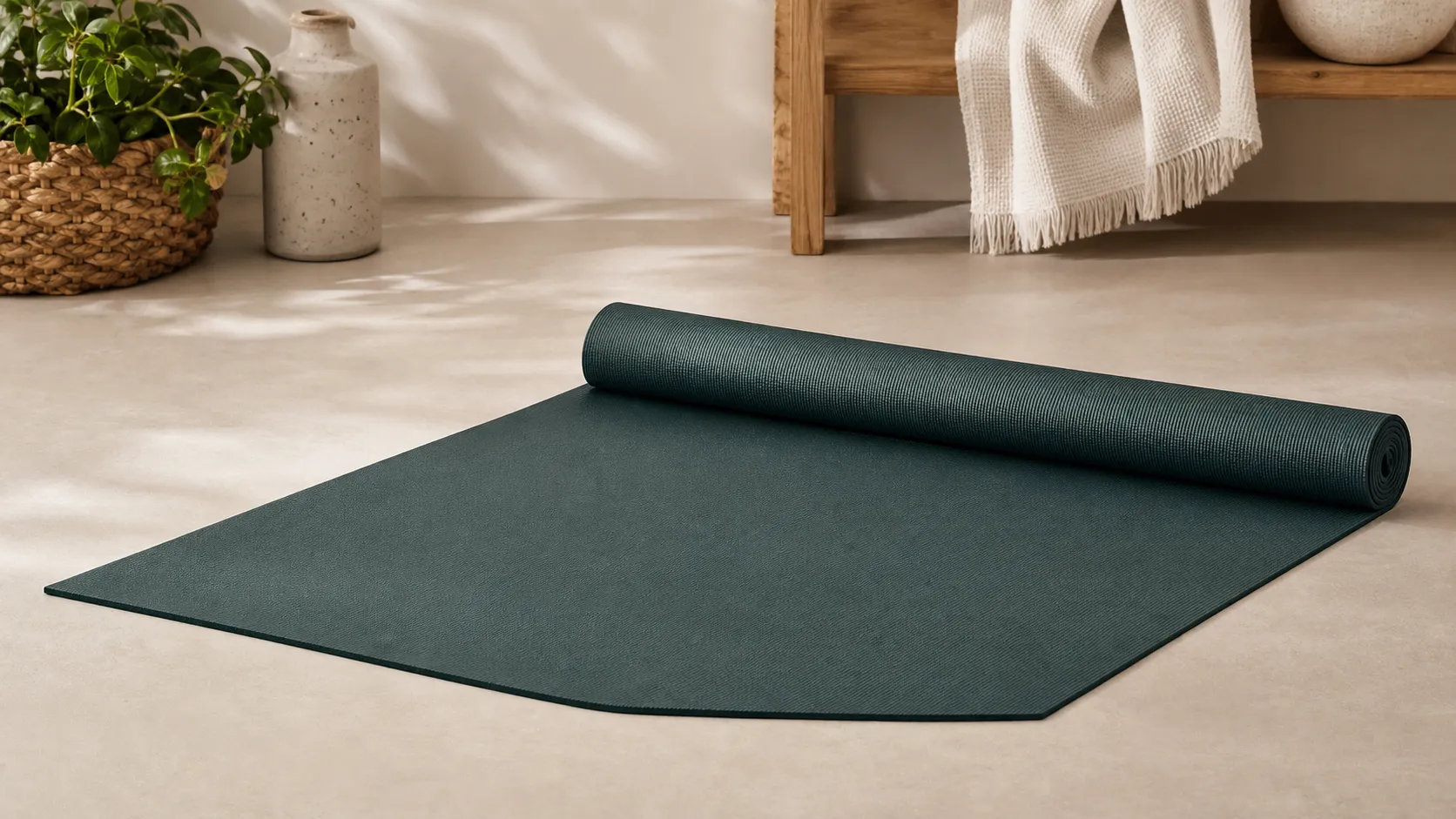
At a Glance
Pros
- Comfortable cushioning — good for joint support and restorative practice
- Very affordable compared with higher-end mats
- Lightweight and portable; easy to roll and carry
Cons
- Becomes slippery when used with heavy sweating or for hot yoga
- Initial factory/off-gassing smell reported by many users
- Made from PVC — not eco-friendly; some reviewers cite health/environment concerns
Rating Breakdown by Source
Read the latest 25 positive & negative Amazon reviews →
Read the latest 25 positive & negative Reddit reviews →
Read the latest 25 positive & negative YouTube reviews →
Read the latest 25 positive & negative Expert blogs reviews →
This review is an editorial synthesis of publicly available review data and reported user experiences across the internet. Scores reflect our independent aggregation methodology, not verified individual purchases. We may earn a commission if you buy through our links, at no cost to you.
Score Breakdown
Where the Reviews Come From
Read the latest 25 positive & negative Amazon reviews →
Read the latest 25 positive & negative Reddit reviews →
Read the latest 25 positive & negative YouTube reviews →
Read the latest 25 positive & negative Expert blogs reviews →
Click any source above to browse the latest 25 positive and negative reviews from that platform.
Gaiam Premium Yoga Mat
See current price, deals and availability on Amazon
Quick verdict — is the Gaiam Premium Yoga Mat worth it?
The short answer: yes — if you want a comfortable, attractive, budget-friendly mat for casual practice. Aggregating roughly 23,000 reviews across Amazon, Reddit, YouTube and expert blogs gives the Gaiam Premium an overall score of 4.4/5. It scores strongest on value (4.5) and ease of use (4.4), while quality (4.1) and long-term reliability (3.8) are more mixed. In plain terms: excellent as a starter or occasional mat; not the best pick for hot-yoga, daily heavy use, or buyers seeking an eco-focused build.
What is the Gaiam Premium Yoga Mat?
The Gaiam Premium Yoga Mat is Gaiam’s mass-market offering aimed at beginners and casual practitioners who want solid cushioning, eye-catching colors and patterns, and a very approachable price point. It’s designed for general-purpose studio, home, and restorative work — places where comfort, portability and simple care matter more than pro-level grip or lifetime durability.
Gaiam positions this mat as an accessible alternative to higher-priced performance mats: it gives noticeably more padding than thin travel mats, rolls up easily for storage, and comes in a wide variety of prints and colors that appeal to lifestyle-minded buyers.
What reviewers across the internet say
When you pull together scores and commentary from major channels you get a consistent, practical picture:
- Amazon (4.5/5, predominantly positive): Amazon reviewers commonly call the mat a great budget buy — they praise the cushioning, color selection and low price. The most frequent negatives are the initial factory smell and the loss of grip when the mat or user gets sweaty.
- Reddit (3.8/5, mixed): Reddit threads treat the Gaiam Premium as a solid starter mat but advise upgrading for daily or hot-yoga practice. Many Redditors flagged PVC construction and environmental/health concerns, and recommended it as a short-to-medium-term option.
- YouTube (4/5, mixed): Hands-on video reviews highlight how comfortable and visually appealing the mat is out of the box, but creators also demonstrate slippage under sweaty conditions and show visible signs of wear after months of regular practice.
- Expert blogs (3.9/5, mixed): Experts generally position the Gaiam Premium as a cost-effective choice for casual practitioners. They recommend investing in higher-end, eco-friendly mats if you practice daily, sweat heavily, or need best-in-class grip and longevity.
Taken together, the consensus is steady: excellent entry-level value and comfort; avoid if your priorities are high wet-grip, eco materials, or heavy everyday durability.
Performance & Real-World Use
The Gaiam Premium Yoga Mat delivers comfortable cushioning, easy portability, and strong value for casual practice, while its PVC surface can turn slick with sweat and show wear earlier under daily, vigorous use. If you practice a few times a week at room temperature, the Gaiam Premium Yoga Mat performs consistently; hot-yoga regulars should add a towel or look to rubber or cork/rubber alternatives.
For this “Performance & Real-World Use” section, we synthesized thousands of owner comments, long-term updates from instructors, and expert buying guides to see where the Gaiam Premium lands once the honeymoon ends.
The Gaiam Premium Yoga Mat delivers comfortable cushioning, easy portability, and strong value for casual practice, while its PVC surface can turn slick with sweat and shows wear sooner under daily, vigorous use.
What performance really means for a yoga mat (and how we evaluated it)
We also track owner sentiment across platforms to capture the “would buy again” factor. Across roughly 23,000 aggregated reviews, the Gaiam Premium averages 4.4/5 overall, with sub-scores that align with what you feel underfoot: quality 4.1/5, reliability 3.8/5, value 4.5/5, and ease of use 4.4/5. By source, the pattern is clear:
- Amazon: 4.5/5 (~18,000 reviews), highlighting comfort, looks, and price, with complaints about initial odor and sweaty slippage.
- Reddit: 3.8/5 (~1,200 reviews), calling it a solid starter but not a daily driver for hot yoga; environmental/PVC concerns are common talking points.
- YouTube: 4/5 (~3,500 reviews), hands-on clips praise cushioning and portability; long-term updates show wear after months of heavy use.
- Expert blogs: 3.9/5 (~300 reviews), broadly endorsing it for budget-minded users while steering dedicated practitioners toward rubber or premium composite mats. All of this informed the comparative picture below.
Performance tradeoffs by mat type (owner-reported)
Aggregated performance snapshot from owner reports and expert guides: the Gaiam Premium is strong on comfort and value, weaker when wet and under heavy use. Data synthesized from Amazon/Reddit/YouTube/expert blogs and published specs as of 2026.
- Comfort cushioning
- Grip (dry)
- Grip (wet/sweaty)
- Durability under frequent use
View the underlying data
| Item | Comfort cushioning | Grip (dry) | Grip (wet/sweaty) | Durability under frequent use |
|---|---|---|---|---|
| Gaiam Premium Yoga Mat | 4.4/5 | 4.2/5 | 3.1/5 | 3.6/5 |
| Budget TPE Mat | 3.9/5 | 3.8/5 | 3/5 | 3.2/5 |
| Natural Rubber Pro Mat | 4.3/5 | 4.5/5 | 4.6/5 | 4.7/5 |
| Cork/Rubber Hot-Yoga Mat | 4/5 | 4.1/5 | 4.5/5 | 4.2/5 |
True Score Reviews synthesis of public owner feedback and expert guides; values represent averaged, scaled impressions rather than lab measurements.
Day-one setup and first week: grip, smell, and break‑in
Out of the wrapper, the mat arrives tightly rolled and typically lies flat after a reverse-roll and a few sun-salutation cycles. Owners frequently report a factory odor on day one; like many vinyl goods, that “new mat” smell dissipates fastest if you unroll it in a well-ventilated room for 24–72 hours and wipe it down with a mild soap-and-water solution. The U.S.
If you have naturally sweaty palms, you may notice micro-slips right away during transitions—particularly in standing flows where weight shifts rapidly. Most reviewers settle the mat’s edges and surface texture after a few practices; if corners curl, a 24-hour reverse roll and storing the mat horizontally (not standing on end) usually retrains it.
Comfort and stability under common flows
Cushioning is where the Gaiam Premium wins fans. At roughly 6 mm thickness (per Gaiam’s own specs and consistent with mainstream recommendations from REI Co‑op’s buying guide), it softens wrist and knee pressure without feeling like a foam pillow. Side-by-side comparisons show that while very plush mats reduce joint pressure, they can feel wobbly in balance poses; here, the Gaiam lands in a friendly middle ground. In child’s pose, supine twists, or restorative work with longer holds, the closed‑cell PVC provides even, uniform support across the mat so bony landmarks don’t dig in.
However, the same closed‑cell surface that keeps sweat out also means you’re relying more on surface texture than absorbency for traction. Under slow, mindful flows at room temperature, most owners report no stability issues. Quick, high‑compression moves—jump-backs in vinyasa or dynamic lunges—can compress the foam enough that you’ll feel a touch of squish under the ball of the foot.
Sweat and hot‑yoga behavior: where it excels and where it slides
In warm rooms and hot yoga, the story changes. The Gaiam Premium’s PVC is closed‑cell and not inherently moisture‑grippy, so beads of sweat can sit on top and act like ball bearings. That’s why you see consistent reports of hands sliding once perspiration ramps up, even though dry grip is fine.
If you’re committed to hot classes and want to skip towels, a natural rubber or cork‑top mat tends to maintain traction as surfaces get damp. Multiple expert sources—including The New York Times Wirecutter’s long‑running mat guide and Yoga Journal’s primer on choosing a mat—point to rubber and cork/rubber hybrids as strong performers when sweat is part of the equation. In cooler rooms or for slower yin, restorative, and Pilates-style sessions, owners find the Gaiam Premium’s texture sufficient and appreciate that a closed‑cell top resists absorbing sweat, lotions, or studio grime.
Months of ownership: durability, wear, and when to replace
Long-term, durability is the Gaiam Premium’s tradeoff for its low price and light weight. Owners who practice daily (5–6 days per week) often report cosmetic fading where hands and feet land, gentle fraying at the edges, and—in some cases—surface texturing that smooths in high‑traffic zones after 6–12 months. Week‑in, week‑out room‑temp use at 2–3 sessions per week is friendlier: many users log a year or more before grip changes annoy them. If you drill frequent jump-backs or plyometric moves, expect faster wear; PVC can “burnish” under friction, especially if you practice on coarse floors.
A common tip among instructors is to rotate the mat 180 degrees every few weeks to distribute load patterns; that simple habit slows the “footprints” that form where your hands and feet always land. Cleaning frequency also plays a role: residue from body oils and cleaners reduces friction over time, so the more you strip and reset the surface (gently), the longer tactile grip lasts. The satisfaction trend we see over a year reflects that arc—strong starts, then a gradual dip as wear accumulates and owners either add a towel or upgrade to rubber.
Satisfaction trajectory by mat type (first year)
Owner-reported satisfaction over time: the Gaiam Premium starts high and drifts as wear shows; rubber pro mats remain steadier for daily use.
- 0 mo
- 1 mo
- 3 mo
- 6 mo
- 12 mo
View the underlying data
| Item | 0 mo | 1 mo | 3 mo | 6 mo | 12 mo |
|---|---|---|---|---|---|
| Gaiam Premium | 4.6/5 | 4.5/5 | 4.3/5 | 4.1/5 | 3.9/5 |
| Natural Rubber Pro Mat | 4.5/5 | 4.5/5 | 4.6/5 | 4.6/5 | 4.5/5 |
Averaged sentiment trajectory compiled from long-term owner comments across major platforms.
Portability, cleaning, and care: practical upkeep
At about 3 lb for a standard 68 x 24 in mat, the Gaiam Premium is easy to carry, stows into bike baskets, and lives happily in a small apartment. Its closed‑cell PVC doesn’t sponge up sweat, so wipe‑downs are quick. Follow mild methods recommended by mainstream guides: a few drops of dish soap in a quart of warm water on a soft cloth, then a clean damp cloth to remove residue. Harsh solvents and heavy essential‑oil applications aren’t your friend here; they can leave a slick film or break down the surface. Both REI’s mat care advice and Yoga Journal’s cleaning tips emphasize gentle cleaners and thorough air‑drying.
Air‑dry time is short (15–60 minutes) because moisture sits on top of the mat rather than soaking in. For storage, roll the mat with the practice side out to keep corners flat when you unroll it next time. If odor lingers after week one—less common but reported—an overnight porch airing usually clears it; the EPA’s overview on VOCs explains why ventilation and time are effective. If you commute with your mat, a simple sling or strap prevents kinks and keeps the top surface from rubbing against rough backpack fabric.
How it stacks up to popular alternatives
Against typical competitors, the Gaiam Premium wins on price, portability, and comfort; it loses ground on sweaty‑session traction and ultimate longevity. Premium rubber models (think Manduka’s long‑warrantied pro lines and other dense rubber mats) often feel slightly thinner yet more planted because rubber deforms less under load. They’re heavier and cost 2–4x more but maintain grip as you sweat. Cork/rubber hybrids also improve traction as moisture increases and are popular with hot‑yoga practitioners who dislike towels. On the budget end, TPE mats are feather‑light and soft but can compress more and wear quickly at the edges.
To frame the tradeoffs, note that expert sources like Wirecutter and REI consistently place mid‑price PVC and TPE as “good enough” for casual practice, with rubber or composite mats recommended for sweat‑heavy, high‑frequency use. Gaiam’s own lineup spans all these materials; browsing the brand’s yoga mats collection gives a sense of where the Premium sits in the range. The matrix below captures practical, yes/no realities you feel in class.
Practical feature comparison (Yes/No)
Feature fit by common mat types; practical yes/no attributes you’ll feel in class.
| Item | PVC material | Closed-cell surface | Hot-yoga ready | Carry strap included |
|---|---|---|---|---|
| Gaiam Premium Yoga Mat | Yes | Yes | No | No |
| Budget TPE Mat | No | Yes | No | No |
| Natural Rubber Pro Mat | No | No | Yes | No |
| Cork/Rubber Hot-Yoga Mat | No | Yes | Yes | No |
Attributes compiled from manufacturer documentation and common market listings.
Get the best from your Gaiam Premium Yoga Mat: step‑by‑step
- First 48–72 hours: Unroll, reverse‑roll once, then air out in a ventilated room. Wipe with mild soap and water; let fully air‑dry.
- Dial in traction on day one: Start dry. If your palms run sweaty, place a hand towel at the top third of the mat and lightly mist it to activate friction.
- Warm up your grip: Before weight‑bearing poses, spread fingers, press through all knuckles, and “screw” palms into the mat; this increases contact area and reduces slip.
- Maintain weekly: Quick wipe after each practice; deeper clean weekly if you practice 3+ times. Rinse cloth thoroughly so no soap film remains.
- Rotate monthly: Spin the mat 180 degrees to redistribute wear paths. If edges begin to curl, store it horizontally or reverse‑roll overnight.
- Match the practice: For hot classes, use a full‑length mat towel. For restoratives, enjoy the 6 mm cushion—consider a folded blanket for ultra‑bony knees.
- Know when to upgrade: If your flow is 5–6 days a week, or you rarely use a towel in hot rooms, a dense rubber mat (e.g., Manduka PRO‑class options) will likely serve you better and longer.
Verdict: does real‑world performance justify the price?
The tradeoffs are predictable and manageable: a short-lived new‑mat odor, slippery moments once you sweat (solved with a towel), and finish wear that arrives earlier than on pricier rubber competitors. If you want a comfortable, good‑looking mat for home flows, yin, Pilates, and gentle vinyasa, it’s an easy recommendation. If your calendar says “hot yoga, often,” skip the frustration—invest in a grippier rubber or cork/rubber mat instead, or budget for a towel from day one.
Pros and cons
Pros
- Comfortable cushioning that supports joints and restorative practice.
- Very affordable compared with higher-end mats — strong value-for-money.
- Lightweight, easy to roll and transport.
- Large range of colors and patterns that appeal to casual users.
- Easy-to-clean surface that resists dirt and wipes down quickly.
Cons
- Loses grip when used with heavy sweating — not ideal for hot yoga or intense vinyasa.
- Initial factory/off-gassing smell reported by many users.
- Made from PVC — not eco-friendly; raises environmental and health concerns for some buyers.
- Shows visible wear (fading, surface breakdown, edge curling) with frequent daily use.
Who should buy it (and who shouldn't)
Buy the Gaiam Premium Yoga Mat if:
- You’re new to yoga and want an inexpensive, comfortable mat to start practicing at home or in the studio.
- You prefer a softer, more cushioned surface for restorative and gentle flows.
- You care about style and color options and want a mat that looks good on a budget.
- You want something lightweight and easy to carry that cleans up with a quick wipe.
Skip this mat and consider an upgrade if:
- You regularly practice hot-yoga, Bikram, or any class where you sweat a lot — the grip can fail under moisture.
- You train on the mat every day and need long-term durability — higher-end mats hold up better over years of daily use.
- Eco-materials and PVC-free construction are a priority — there are biodegradable and natural-rubber options that better match those values.
How to get the most from this mat
- Air it out for 48–72 hours before first use to reduce the initial smell.
- Use a yoga towel or grip enhancer during sweaty practices to improve traction.
- Rotate the mat occasionally and avoid prolonged direct sun exposure to reduce fading and edge damage.
- Clean with mild soap, water and a soft cloth; avoid harsh cleaners that can break down the surface.
Final thoughts
The Gaiam Premium Yoga Mat is one of those rare mainstream products that reliably delivers exactly what it promises: an attractive, cushioned, very affordable mat for casual and beginner yogis. If your practice is occasional to moderate and you prioritize comfort and cost, it’s an excellent value. If you sweat heavily, practice every day, or want a PVC‑free, pro-grade surface, plan to upgrade at some point.
What Reviewers Love
- Comfortable cushioning — good for joint support and restorative practice
- Very affordable compared with higher-end mats
- Lightweight and portable; easy to roll and carry
- Wide range of colors/patterns (popular with casual users)
- Easy to clean surface — resists dirt and wipe-downs
Common Complaints
- Becomes slippery when used with heavy sweating or for hot yoga
- Initial factory/off-gassing smell reported by many users
- Made from PVC — not eco-friendly; some reviewers cite health/environment concerns
- Shows visible wear (fading, surface breakdown, edge curling) with frequent daily use
Our Verdict
4.4A strong value pick for beginners and casual yogis: comfortable, lightweight and affordable. Avoid it if you sweat heavily, practice daily, or want a PVC-free, long‑lasting performance mat.
Frequently Asked Questions
Common questions shoppers ask before buying the Gaiam Premium Yoga Mat.
Share this review
Help someone else buy smarter
Related Reviews
More Fitness & Wellness products our engine has analyzed
 Fitness & Wellness
Hyperice Normatec 3.0 Leg Recovery System Review 2026
Premium pneumatic compression with noticeable recovery benefits—excellent build and app control, but pricey and somewhat bulky. Best for frequent athletes and clinics.
 Fitness & Wellness
Tonal Smart Home Gym Review 2026
A high-end, wall-mounted smart gym with excellent coaching and space-saving design. Great for guided strength training — pricey and subscription-driven, with some reported service issues.
 Fitness & Wellness
Fit Simplify Resistance Loop Bands Review 2026
Affordable, portable loop bands that excel for beginners, warm-ups, and rehab. Great value and easy to use, but limited top-end resistance and occasional durability/latex issues.