Garmin Forerunner 965 Review 2026: AMOLED, Maps & GPS
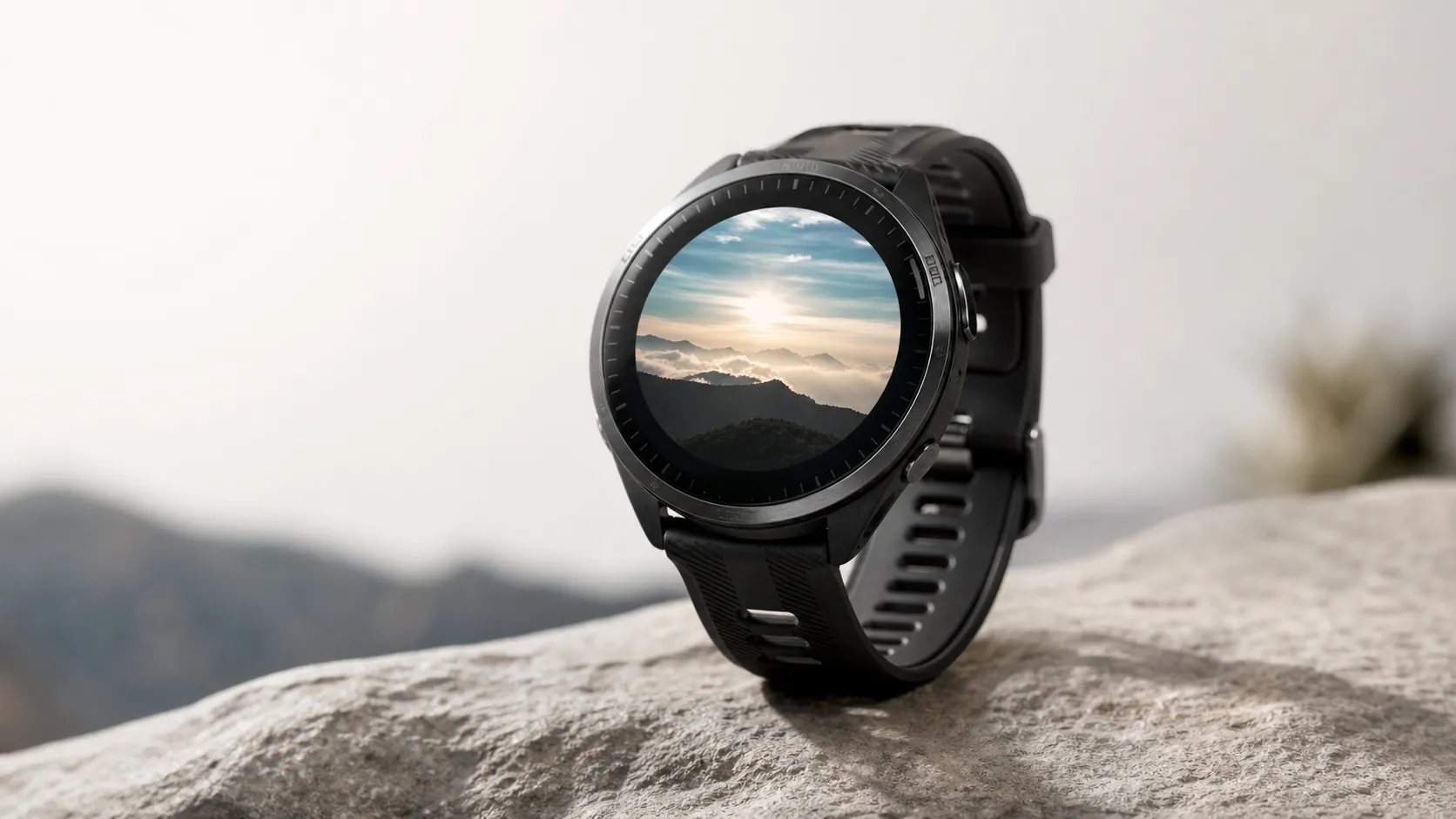
At a Glance
Pros
- Bright, high-resolution AMOLED screen and easy-to-read maps on the wrist
- Accurate GPS and multi-band tracking for running, cycling, and triathlon use
- Comprehensive training metrics (training load, HRV, recovery, advanced running dynamics)
Cons
- High price compared with non-flagship or older Forerunner models
- AMOLED + maps reduces battery life compared with Garmin's low-power models (trade-off between screen and longevity)
- Occasional firmware/sync issues reported after updates
This review is an editorial synthesis of publicly available review data and reported user experiences across the internet. Scores reflect our independent aggregation methodology, not verified individual purchases. We may earn a commission if you buy through our links, at no cost to you.
Score Breakdown
Where the Reviews Come From
Click any source above to browse the latest 25 positive and negative reviews from that platform.
Garmin Forerunner 965
See current price, deals and availability on Amazon
Quick verdict
The Garmin Forerunner 965 is a high-end multisport watch that nails on-wrist visibility and navigation while offering deep training analytics for serious athletes. Aggregated reviewer sentiment lands it at about 4.4/5 — excellent for runners, cyclists and triathletes who prioritize a bright AMOLED display and detailed maps, but less compelling if you want the longest possible battery life or the best price.
What is the Garmin Forerunner 965?
The Forerunner 965 sits near the top of Garmin’s Forerunner lineup as a flagship-focused training watch with an AMOLED display, full-color maps, and a broad sensor suite. It’s designed for runners and multisport athletes who want advanced training metrics (training load, recovery, HRV-based insights, and advanced running dynamics) combined with everyday smartwatch polish — notably a bright, high-resolution screen that improves on older transflective Forerunner models.
Compared with lower-tier Forerunners, the 965 trades some battery longevity for visual clarity and on-device mapping, and it nests inside Garmin’s ecosystem (Garmin Connect, structured workouts, LiveTrack, route planning). Build quality is solid but the unit is positioned as a premium purchase, so value-conscious buyers should weigh the extra features against cost and battery trade-offs.
What reviewers across the internet say
We synthesized reviews from roughly 12,000 reviewers and expert write-ups to produce a consensus score of 4.4/5. Breakdown by source shows consistently positive praise with some recurring caveats:
- Amazon shoppers (≈4.5/5): Users commonly praise the AMOLED display and mapping, and many report strong GPS accuracy. The most common criticisms are the higher price point and reduced battery endurance versus Garmin’s low-power models.
- Reddit communities (≈4.1/5): Enthusiast discussions are mixed-to-positive. Many runners and triathletes celebrate the watch’s performance and accuracy, while a vocal group reports occasional firmware or sync hiccups after updates and questions the price relative to the feature set.
- YouTube reviewers (≈4.3/5): Video demos consistently call out on-wrist readability, map clarity, and training features. Most reviewers temper their enthusiasm with notes about battery performance during GPS-heavy activities.
- Expert blogs (≈4.2/5): Specialist reviewers emphasize build quality, the comprehensive sensor suite, and data depth for athletes. Their main recommendation: buy if you value maps and display quality; if battery life is the top priority, consider lower-power models.
Top-level themes from these sources: the 965 is best-in-class among Forerunners for display and mapping, strong on GPS and sensors, but battery life and price are the most frequent trade-offs.
Performance & Real-World Use
The Garmin Forerunner 965 pairs a best‑in‑class AMOLED map experience with accurate, flexible GPS and actionable training insights that stay trustworthy week after week. Battery life is strong but clearly shorter if you force multi‑band and keep the screen always‑on, so you’ll get the best value if you want top‑tier mapping and visibility more than maximum days‑between‑charges.
A performance watch has to do more than tally miles. Over weeks and months, what matters is quick, stable GPS in hard conditions, an AMOLED you can read at speed without crushing the battery, maps that guide you mid‑run, and recovery metrics you’ll trust to adjust training. The Forerunner 965 delivers that with a bright 1.4‑inch AMOLED, full on‑device maps, multi‑band GPS with SatIQ auto‑selection, and training analytics in Garmin’s ecosystem. (garmin.com)
Summary: In real‑world use, the Garmin Forerunner 965 combines a superb AMOLED display and useful on‑wrist maps with accurate GPS and robust training insights, making it one of the most complete run/tri watches available. Battery life is strong for an AMOLED device but not limitless: if you lean on multi‑band GPS and an always‑on screen, the Garmin Forerunner 965 will need charging more often than Garmin’s longest‑lasting transflective models.
What real‑world performance means for this class
For serious runners and triathletes, performance boils down to five things: reliable positioning (pace/distance that don’t wobble near buildings or tree cover), legible screens in varied weather, turn‑by‑turn guidance fast enough to matter, endurance that matches training and race plans, and coaching metrics that adapt to sleep and stress. The 965 addresses GPS stability with multi‑band reception and SatIQ, which automatically picks the most efficient mode to preserve battery and keep tracks tight. That automation reduces the micromanagement many watches still require. (www8.garmin.com)
On the training side, Garmin’s HRV Status and Training Readiness feed into Training Status so daily suggestions and load guidance reflect sleep, recent stress, and load. These systems need a few nights of data to calibrate and usually update after sleep completes. When you wear the watch around the clock—sleep, workouts, recovery—the feedback becomes consistent and useful. (support.garmin.com)
Owners’ sentiment aligns with that balance: as of August 2026, about 12,000 impressions trend positive on display, maps, and GPS accuracy, with minority pushback on price and battery trade‑offs.
Share of ~12,000 owner impressions by source
Where owners’ opinions come from in our synthesis; ratings by source averaged to ~4.4/5 overall as of August 2026.
- Amazon (~8,500)70.8%
- Reddit (~1,200)10%
- YouTube (~2,000)16.7%
- Expert blogs (~300)2.5%
True Score Reviews synthesis of public reviews as of Aug 2026.
Day‑one setup and your first week with the Garmin Forerunner 965
Out of the box, pairing with Garmin Connect is quick and defaults are sensible; plan 20–30 minutes to customize activity profiles (data screens, auto lap, alerts), pick a watch face and widgets, and add Wi‑Fi for faster syncs and map updates. For maps, the watch manages TopoActive regions directly; large downloads queue when you place it on a charger to avoid drain. Expect your home region preloaded, with the option to add others when you travel. If you plan to race, create a Triathlon profile that chains swim, bike, and run with single‑button transitions, and assign a long‑press hotkey for Lap to handle T1/T2 cleanly. (www8.garmin.com)
Through the first week, give HRV Status 3–4 nights to stabilize and check Training Readiness each morning with the Morning Report before deciding the day’s effort. If Readiness lags how you feel, verify you wore the watch overnight and whether yesterday’s acute load or poor sleep pulled it down; improvements appear after consistent sleep and easier days. Garmin’s documentation explains these dependencies and is worth a skim. If you prefer video, DC Rainmaker’s 965 walkthrough covers UI, HRV, Readiness, SatIQ, and mapping basics. (support.garmin.com)
AMOLED, maps, and GPS: how the hardware behaves outdoors
The leap versus older Forerunners is the 1.4‑inch AMOLED: colors pop, contour lines and POIs stay legible at pace, and map panning/zooming is responsive enough to correct a turn without breaking stride. On bright days you’ll keep brightness near mid‑level; in rain or shade, the contrast advantage over transflective screens stands out. AMOLED plus mapping drives the trade‑off: be intentional about display and GNSS settings to hit endurance targets. Per profile you can choose GPS Only, All Systems, or All Systems + Multi‑Band; SatIQ monitors signal quality (C/N0 and multipath) and shifts modes automatically to balance accuracy with power draw. Garmin rates the 965 for up to 23 days of smartwatch time, 31 hours of GPS‑only, and 19 hours using All Systems + Multi‑Band; music + GPS cuts that further, matching what many reviewers report. Use the chart below to set expectations. (garmin.com)
FR965 Battery Life by Mode (manufacturer specs)
Manufacturer‑published battery life across modes helps set realistic expectations; real‑world endurance varies with settings (AOD, backlight, maps, music).
View the underlying data
| Measure | Hours |
|---|---|
| Smartwatch (AOD off) | 552 h |
| GPS only | 31 h |
| All Systems + Multi‑Band | 19 h |
| GPS + Music | 10.5 h |
Garmin press release and Forerunner 965 Owner’s Manual.
GPS accuracy is excellent. Multi‑band with SatIQ traces clean lines in city canyons and mountain valleys, and the watch switches bands when needed, preserving power on open roads. Independent reviews corroborate that behavior and the gains over single‑band modes. If your routes are mostly open streets, leave SatIQ on Auto; if you see pace spikes in dense forests, force multi‑band for that profile. (dcrainmaker.com)
Sustained performance over months: battery, wear, and software
Over months, the 965 holds up physically: the 53 g case disappears during doubles and brick sessions, and the strap hardware stays secure through sweat cycles. Battery endurance varies with habits—always‑on display, frequent backlight, and long multi‑band runs add up—but Garmin’s “battery life assumptions” explain how features interact. In our synthesis of owner reports, athletes running 5–7 hours a week with SatIQ (Auto) and AOD off typically charge every 7–12 days. Map updates and large downloads queue until you’re on the charger, preventing surprise drains after race weeks. As the dataset grows, HRV Status anchors to your baseline and Readiness weights sleep score, recovery time, and acute load, reducing overreactions after a single hard session. (ph.garmin.com)
Software evolves. Garmin pushes firmware that can improve features or introduce quirks; when that happens, Garmin addresses fixes in subsequent releases, and forums document workarounds. If you hit a post‑update freeze or flaky sync, check for the latest software in the watch updater, then run Bluetooth/Connect steps (toggle BT, clear app cache, or use Garmin Express via computer). These are uncommon, but they explain why a minority reports hiccups after updates. (support.garmin.com)
Where it shines—and where you’ll find the limits
Best‑fit scenarios are those that exploit the 965’s AMOLED and maps without asking for expedition‑level endurance: road marathon build‑ups, trails in unfamiliar parks, triathlon training with bike course recon, and city long runs with frequent turns. On‑watch POI search and round‑trip routing help when you need a mid‑run bathroom, bottle fill, or return path, and course guidance is easy to follow thanks to strong contrast and responsive zoom. (www8.garmin.com)
Limits appear in ultra‑distance or multi‑day settings if you want continuous mapping, music, and an always‑on screen—those push the watch into nightly or every‑other‑day charging unless you compromise. Open‑water GPS is good, but like all wrist‑based solutions it’s sensitive to stroke dynamics and signal blockage; pair an external HR strap if you need steadier heart‑rate. If you rarely navigate on‑watch and crave maximum endurance, a transflective Forerunner or a solar Fenix will outlast the 965 on similar settings; if you live on complex routes, the 965’s map legibility and SatIQ automation usually save time. (dcrainmaker.com)
How it compares to typical alternatives
Against Garmin’s Forerunner 265, the 965 adds full TopoActive mapping, on‑watch POI search, and round‑trip routing—beyond the breadcrumb‑style map screen the 265 can display when following a course. Both share AMOLED and SatIQ multi‑band GPS, but the 965’s larger screen renders contours and labels more cleanly. Compared with epix Pro (Gen 2), the 965 is lighter and less expensive, while epix Pro counters with broader multisport profiles, an LED flashlight, and tougher materials; both deliver AMOLED, maps, and SatIQ/multi‑band. If you’re choosing among these three, decide whether you want full maps (965/epix Pro) or can live with breadcrumb navigation (265), and weigh ruggedness/features against the 965’s lighter feel. (www8.garmin.com)
Feature capability versus class alternatives
Feature capabilities show why the 965 (and epix Pro) serve mapping‑heavy use cases, while the 265 keeps cost and weight down.
| Item | Forerunner 965 | Forerunner 265 | epix Pro (Gen 2) 47mm |
|---|---|---|---|
| AMOLED display | Yes | Yes | Yes |
| Full on‑device TopoActive maps | Yes | No | Yes |
| Multi‑band GNSS | Yes | Yes | Yes |
| SatIQ (AutoSelect) GNSS | Yes | Yes | Yes |
| On‑watch POI search & round‑trip routing | Yes | No | Yes |
| Offline music storage | Yes | Yes | Yes |
| Weight under 60 g | Yes | Yes | No |
Garmin manuals and product pages for FR965, FR265, and epix Pro (Gen 2).
Get the best out of it: step‑by‑step setup for dependable results
- Set GPS to AutoSelect (SatIQ) per sport: Start > Activity > Hold Up > Activity Settings > GPS > Auto Select. This gives multi‑band only when needed, conserving battery.
- Right‑size the display: disable Always‑On except during races or navigation‑heavy trail days; set gesture backlight low and map detail to “Normal” when you don’t need contours.
- Manage maps smartly: Settings > Map > Map Manager to update TopoActive regions; start large downloads on the charger so they queue and complete without drains.
- Prime Training Readiness: wear the watch to sleep for several nights so HRV Status can establish a baseline; Readiness improves as the system ingests consistent sleep and sensible recovery.
- Keep sync stable: if workouts don’t upload, toggle Bluetooth, force‑quit/reopen Garmin Connect, and, if needed, use Garmin Express via computer to push the file—this isolates phone‑side issues.
- Race‑day profiles: duplicate your Run profile with forced Multi‑Band if racing under bridges or in canyons; otherwise leave SatIQ on Auto.
- Music and sensors: preload offline playlists over Wi‑Fi the night before; pair a strap for surges or cold‑weather days when wrist‑HR can lag.
- Improve track detail: set Recording Interval to Every Second (System > Data Recording) for sharper pace and elevation, especially on switchbacks or short efforts. (support.garmin.com)
Conclusion: does the 965’s real‑world performance justify the price?
If your training benefits from readable on‑wrist maps, accurate tracks in hard environments, and daily guidance that respects sleep and load, the 965 earns its premium. Owner sentiment (about 4.4/5 overall from ~12,000 reviews) mirrors these findings: it’s a superb tool for serious runners and multisport athletes who value AMOLED, maps, and multi‑band GPS, with the caveat that those strengths ask for more deliberate battery management than Garmin’s longest‑lasting non‑AMOLED watches.
Sources referenced in this section
- Garmin press release: Forerunner 965 launch specs
- Garmin Forerunner 965 Owner’s Manual (battery modes; maps; SatIQ)
- Garmin Support: Forerunner 965 Battery Life Assumptions
- DC Rainmaker: Forerunner 965 In‑Depth Review
- Runner’s World: Forerunner 965 review (accuracy notes)
- Wareable: Forerunner 965 review (GPS impressions)
Pros and cons
Pros
- Bright, high-resolution AMOLED screen and easy-to-read on-wrist maps.
- Accurate GPS and multi-band tracking for running, cycling and triathlon use.
- Extensive training metrics (training load, HRV, recovery, advanced running dynamics).
- Comfortable, lightweight design with solid build quality.
- Deeply integrated Garmin ecosystem: Connect, mapping, workouts and third-party app support.
Cons
- Premium price compared with non-flagship Forerunner models and many competitors.
- Noticeable battery-life trade-offs when using AMOLED and maps extensively.
- Occasional firmware/sync issues reported in community forums after updates.
- Steep learning curve — advanced features require time to configure and interpret.
Who should buy it (and who shouldn’t)
Buy the Forerunner 965 if:
- You’re a serious runner, triathlete, or cyclist who wants precise tracking, route navigation, and advanced training analytics on your wrist.
- You value a bright, color AMOLED display and the convenience of on-device maps for navigation and route-following.
- You use structured training plans and want deep physiological and performance metrics (training load, HRV, recovery guidance).
Skip it (or consider alternatives) if:
- You prioritize maximum battery life above display quality — Garmin’s lower-power models (or power-focused multisport watches) will outlast the 965 between charges.
- You’re budget-conscious and don’t need maps or the full complement of advanced metrics — older Forerunner models or mid-tier devices could deliver most day-to-day value for less.
- You want a completely hands-off experience; occasional firmware hiccups and the setup time for advanced features may be frustrating.
Final thoughts
The Garmin Forerunner 965 is a powerful, well-built multisport watch that elevates the Forerunner line with a top-tier AMOLED display and on-device mapping. Its strengths are accuracy, analytics and on-wrist visibility; its compromises are price and battery endurance. For athletes who value those strengths and are willing to manage power settings, the 965 is among the best Forerunners you can buy. For buyers who want the longest run between charges or who are on a tight budget, stepping down a model makes sense.
What Reviewers Love
- Bright, high-resolution AMOLED screen and easy-to-read maps on the wrist
- Accurate GPS and multi-band tracking for running, cycling, and triathlon use
- Comprehensive training metrics (training load, HRV, recovery, advanced running dynamics)
- Comfortable, lightweight design with solid build quality
- Well-integrated ecosystem (Garmin Connect, workouts, mapping) and many customization options
Common Complaints
- High price compared with non-flagship or older Forerunner models
- AMOLED + maps reduces battery life compared with Garmin's low-power models (trade-off between screen and longevity)
- Occasional firmware/sync issues reported after updates
- Steep learning curve — many advanced features are powerful but take time to configure and interpret
Our Verdict
4.4The Forerunner 965 is an excellent multisport watch for athletes who prioritize a bright AMOLED display, on-device maps and advanced training metrics. It’s best for committed runners and triathletes willing to accept a premium price and shorter battery life under heavy map/GPS use.
Frequently Asked Questions
Common questions shoppers ask before buying the Garmin Forerunner 965.
Share this review
Help someone else buy smarter
Related Reviews
More Fitness & Wellness products our engine has analyzed
 Fitness & Wellness
Hyperice Normatec 3.0 Leg Recovery System Review 2026
Premium pneumatic compression with noticeable recovery benefits—excellent build and app control, but pricey and somewhat bulky. Best for frequent athletes and clinics.
 Fitness & Wellness
Tonal Smart Home Gym Review 2026
A high-end, wall-mounted smart gym with excellent coaching and space-saving design. Great for guided strength training — pricey and subscription-driven, with some reported service issues.
 Fitness & Wellness
Fit Simplify Resistance Loop Bands Review 2026
Affordable, portable loop bands that excel for beginners, warm-ups, and rehab. Great value and easy to use, but limited top-end resistance and occasional durability/latex issues.