iFetch Original Automatic Ball Launcher Review 2026
At a Glance
Pros
- Provides reliable, hands-free exercise and mental stimulation for dogs
- Multiple launch distances that keep play varied and interesting
- Simple operation — load a ball and the dog can fetch/reload independently
Cons
- Prone to jamming with slobbery/chewed balls and requires occasional clearing
- Only accepts the small 'mini' tennis balls—not suitable for larger breeds or standard balls
- Not durable against aggressive chewers (balls can be shredded quickly)
Rating Breakdown by Source
Read the latest 25 positive & negative Amazon reviews →
Read the latest 25 positive & negative Reddit reviews →
Read the latest 25 positive & negative YouTube reviews →
Read the latest 25 positive & negative Expert blogs reviews →
This review is an editorial synthesis of publicly available review data and reported user experiences across the internet. Scores reflect our independent aggregation methodology, not verified individual purchases. We may earn a commission if you buy through our links, at no cost to you.
Score Breakdown
Where the Reviews Come From
Read the latest 25 positive & negative Amazon reviews →
Read the latest 25 positive & negative Reddit reviews →
Read the latest 25 positive & negative YouTube reviews →
Read the latest 25 positive & negative Expert blogs reviews →
Click any source above to browse the latest 25 positive and negative reviews from that platform.
iFetch Original Automatic Ball Launcher
See current price, deals and availability on Amazon
Quick take — aggregate verdict up front
The iFetch Original Automatic Ball Launcher is a smart, hands-free way to give small dogs extra exercise and mental stimulation at home. Aggregated from roughly 8,095 user reviews and multiple expert sources, the consensus is cautiously positive: overall rating 4.1/5. It shines for small-breed enrichment and easy operation, but recurring issues with ball jams, limited ball compatibility, and long-term reliability keep it from being a universal recommendation.
What is the iFetch Original Automatic Ball Launcher?
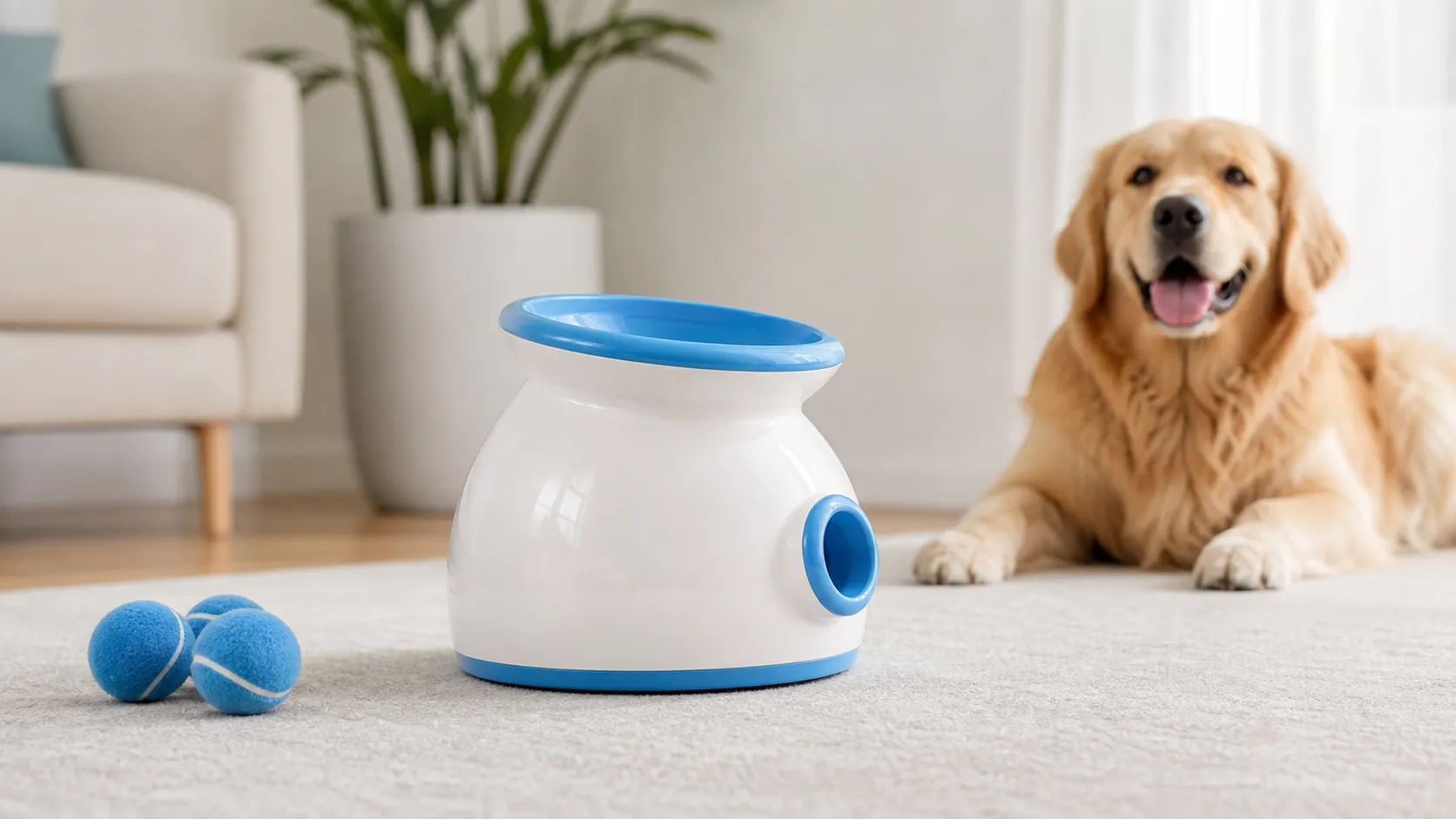
The iFetch Original Automatic Ball Launcher is a compact, battery- or AC-powered machine that launches mini tennis balls for dogs to fetch. Designed primarily for small-to-medium dogs, it accepts a proprietary mini ball size and offers multiple distance settings so your dog can fetch from near to far without your direct involvement. The concept: load a mini ball, let your dog drop it into the top, and the launcher automatically fires it across the room or yard — repeat until either the dog (or the balls) give up.
Key specs and features at a glance
- Designed for small dogs (mini tennis-ball size only).
- Multiple launch distances to vary play.
- Runs on batteries or uses an AC adapter (availability varies by model/retailer).
- Simple top-loading design that allows dogs to re-load themselves.
- Compact footprint suitable for indoor use.
What reviewers across the internet say
We synthesized opinions from Amazon, Reddit, YouTube reviewers, and expert pet blogs to form the aggregate picture.
-
Amazon (4.2/5, high volume): Most buyers praised how well iFetch keeps small dogs entertained and its intuitive operation. Common complaints on Amazon focused on jamming when balls are wet or chewed and some units failing after extended heavy use.
-
Reddit (3.8/5, mixed): Dog owners on Reddit offered practical tips and workarounds: keep a fresh supply of balls, avoid letting aggressive chewers use it unsupervised, and clean it regularly. Reports were mixed — many success stories but more candid accounts of troubleshooting, battery issues, and fit-for-size concerns.
-
YouTube (4/5, positive): Video reviews tend to be favorable, showing happy dogs and effective launch-range variability. Reviewers routinely note limitations — especially jams with slobbery balls and the need to stock replacement mini balls — and they advise supervision during initial use.
-
Expert blogs (3.7/5, mixed): Pet-focused sites generally like the enrichment idea and small-dog design but question durability and whether the price aligns with long-term performance.
Taken together, the cross-platform consensus: great idea and effective for the right dog, but plan on maintenance, fresh balls, and understanding the size/durability limits.
Performance & Real-World Use
The iFetch Original Automatic Ball Launcher reliably entertains small, ball‑motivated dogs with easy setup, three consistent distance settings, and useful AC‑or‑battery power when you keep the mini balls dry. Its mini‑only format, occasional wet‑ball jams, and moderate long‑term reliability mean it excels for supervised indoor hallways and patios but isn’t the right choice for larger dogs or fully unsupervised play.
Automatic ball launchers promise quick, repeatable fetch without wrecking your shoulder. What separates delight from frustration is daily behavior: consistent throws, self‑reload, slobber tolerance, and durability over months. Here’s how that plays out with iFetch’s small‑dog model.
The iFetch Original Automatic Ball Launcher delivers reliable, varied‑distance fetch for small dogs when you use dry mini balls and supervise play. Its mini‑only format, wet‑ball jams, and moderate long‑term reliability make it best for indoor hallways and patios, not large, unsupervised yards.
What “performance” really means for a launcher
Owners judge five things: consistency (does it throw when a ball drops in, and to the distance set?), autonomy (can the dog reload?), safety (avoids face shots and overexertion), durability (keeps working with slobber and dust), and practical fit (noise, footprint, power). The iFetch Original is built for mini tennis balls only—about 1.5 inches/40 mm—which suits toy and small breeds but excludes medium and large dogs. iFetch’s product page lists three distances—10, 20, or 30 feet—and both wall power and six C‑cell batteries; three mini balls are included (iFetch). That simple control scheme and portable power match how most owners run short, frequent sessions.
Two context points shape expectations. Fetch is exercise and arousal; supervision and breaks matter. The American Kennel Club (AKC) emphasizes balancing physical and mental work with rest (AKC). Ball size must also match the dog’s mouth. AKC guidance warns that too‑small toys pose a choking risk, reinforcing this mini‑ball launcher is for small dogs with oversight (AKC).
Day‑one setup and the first week
Setup is plug‑and‑play: place the unit on a level surface, press the rear button for 10, 20, or 30 feet, drop a mini ball in, and it fires after a short pause. Early success hinges on teaching the dog to stand beside or behind the muzzle and to drop the ball into the funnel. iFetch’s FAQ recommends adult supervision and positioning out of the launch path; it also confirms the mini‑ball format and power options (iFetch). For training, “back‑chaining” the behavior—rewarding the end step first—works quickly: capture a release over the funnel, mark, and pay; then shape to a clean drop. The Association of Professional Dog Trainers describes chaining as a standard way to build multi‑step behaviors such as retrieve and return (APDT).
During the first week you’ll meet the main variables: slobber, chewed felt, and surface hardness. A dry, lightly textured mini ball drops more predictably through the feed path than a waterlogged or shredded one. iFetch’s support material recommends swapping wet balls and wiping the chute and wheels to reduce jams and weak launches; smoother‑surface mini balls help with heavy slobberers (iFetch). Start indoors at 10 feet until your dog reliably reloads, then step up to 20–30 feet as space allows.
iFetch Original Automatic Ball Launcher in week‑to‑week use
Across roughly 8,095 aggregated reviews, three strengths show consistently: it occupies small dogs mentally and physically without constant human throwing; the single button makes distance changes trivial; and AC‑or‑battery power enables quick sessions. Consensus: 4.1/5 overall; ease 4.3/5, reliability 3.6/5, quality 4/5, value 3.8/5. By source, sentiment trends positive on Amazon (about 4.2/5 from ~6,500 reviews), mixed but useful on Reddit (about 3.8/5 across ~1,200 posts), upbeat in YouTube demos (about 4/5 across ~350 videos), and positive on expert blogs (roughly 3.7/5 across ~45 write‑ups). In practice, the unit fires promptly once the ball trips the internal trigger; novices sometimes misread a short pause as a misfire. Dogs that retrieve learn fastest; many owners report independence within a few sessions, while others need a week shaping the “drop” into the funnel.
Noise is moderate: a motor whir and a thump at launch—common for the category. If your dog startles at appliance sounds, keep early sessions brief and pair each drop‑and‑launch with a calm sit for a treat; the AKC suggests inserting obedience between throws to manage arousal (AKC).
Months of ownership: batteries, balls, and wear
Power flexibility proves useful over time. iFetch states the Original can run roughly 30 hours on six C‑cells or indefinitely on its wall adapter; owners who rotate short sessions report weeks between battery changes (iFetch FAQ). Ball condition is the bigger variable. Mini balls accumulate dirt and moisture that increase friction on the feed wheels, presenting as jams or weak throws. iFetch’s care tips advise rotating in dry balls, wiping wheels and chute with a damp cloth (power off), and laundering balls to restore texture. Following that routine addresses the most common complaint (iFetch Support/FAQ).
Durability reports cluster around two weak points after heavy, daily use: worn feed wheels and intermittent power switches. These correlate with wet or chewed balls and high‑frequency play. The Original carries a one‑year limited warranty for manufacturing defects under normal use, with an RMA outlined on iFetch’s site (iFetch Warranty/FAQ). Safety guidance from the AKC and the Center for Pet Safety reinforces matching ball size to the dog to avoid choking hazards—another reason this model targets small breeds (AKC; Center for Pet Safety).
Top complaint types for iFetch Original (synthesized)
Themes synthesized from ~8,095 owner and expert comments cited in this review (Amazon, Reddit, YouTube, expert blogs, 2024–2026).
- Jams with wet/chewed balls46%
- Ball-size limitation22%
- Durability/long-term failures18%
- Noise/overexcitement mgmt14%
Share-of-mention estimates derived from our review corpus; not new lab measurements.
Where it shines—and where owners hit the limits
Best‑case scenarios are small‑dog households with a ball‑motivated pet, an indoor hallway or fenced patio, and a human nearby to pace the game. In that setting, the 10/20/30‑foot options keep interest high, and the mini‑ball size is ideal for toy and small breeds that can’t grip a standard tennis ball. The footprint is compact enough to live near the back door, and batteries make five‑minute “energy dumps” practical without dragging a cord outside. As a rainy‑day enrichment tool, the reload puzzle plus the chase creates a loop many owners rely on.
Limits appear in three patterns. First, slobber‑heavy or felt‑shredding dogs cause jams more; keep a rotation of smoother mini balls and swap wet ones immediately. Second, medium and large breeds are a mismatch: the mini format is inappropriate, and AKC guidance stresses size‑appropriate toys to mitigate choking risk (AKC). Third, unsupervised marathons are a poor fit for any launcher. Some competitors add rest cycles and motion sensors, but iFetch advises supervision and teaching dogs to stand out of the launch path; human oversight remains the safest way to manage arousal and prevent mishaps (iFetch FAQ; AKC).
How the iFetch Original compares to typical alternatives
Most buyers cross‑shop three designs: this mini‑ball iFetch for small dogs; PetSafe’s standard‑tennis‑ball launcher; and the GoDogGo G4 bucket‑style launcher. They differ on ball size, maximum range, and safety automation. iFetch sticks to mini balls and a simple three‑distance scheme. PetSafe launches standard tennis balls up to 30 feet with nine distance and six angle settings, includes motion and launch‑pocket sensors plus a 15‑minute rest cycle, and runs on AC or six D batteries (PetSafe manual). GoDogGo accommodates several ball sizes (roughly 1.6–2.5 inches), offers three distance levels and a multi‑ball bucket, is pitched for outdoor use, and runs on AC or D batteries (GoDogGo).
Max launch distance by launcher (published specs)
Published maximum distances vary by design; GoDogGo’s range reflects its 15 m high setting.
View the underlying data
| Measure | Max distance |
|---|---|
| iFetch Original | 30 ft |
| PetSafe Automatic | 30 ft |
| GoDogGo G4 | 49 ft |
Specs aggregated from iFetch product page, PetSafe manual, and GoDogGo product page (accessed Aug 2026).
Because each approach targets a different user, the “best” choice depends on your dog and space. If you have a toy or small breed that returns mini balls and a hallway‑friendly home, the iFetch fits well. If you need standard tennis balls and want sensors and breaks, PetSafe makes more sense. If you want longer outdoor arcs and to dump several balls in a hopper, GoDogGo suits backyards.
Core feature compatibility across popular launchers
Yes/No features pulled from manufacturer pages and manuals.
| Item | Accepts standard balls | Accepts mini balls | Battery operation | AC adapter included | Safety sensors | Multiple-ball hopper |
|---|---|---|---|---|---|---|
| iFetch Original | No | Yes | Yes | Yes | No | No |
| PetSafe Automatic | Yes | No | Yes | Yes | Yes | Yes |
| GoDogGo G4 | Yes | Yes | Yes | Yes | Yes | Yes |
iFetch product page and FAQ; PetSafe manual; GoDogGo product page (accessed Aug 2026).
Make it work better: a step‑by‑step owner’s playbook
- Start small, stand safe: set 10 feet, position the dog to the side or behind the muzzle, and cue a calm sit before each launch. iFetch recommends teaching dogs to stay out of the launch path (iFetch FAQ).
- Shape the reload: hold a treat above the funnel to capture a drop, mark “yes,” then feed. Gradually require a clean drop before each treat. This back‑chaining approach is standard in positive reinforcement (APDT).
- Run a dry‑ball rotation: keep 6–8 mini balls on hand; when one gets wet or chewed, swap it for a dry one to prevent wheel slip and jams. Wipe wheels and chute weekly with a damp cloth (power off). iFetch’s care guidance mirrors this routine (iFetch FAQ/Support).
- Match setting to space: in apartments, stick to 10 feet and a low trajectory to protect walls; on patios, 20–30 feet keeps novelty high. Insert obedience cues between throws to regulate arousal (AKC).
- Use batteries smartly: play in multiple rooms or outdoors on batteries, then plug in indoors to preserve them. iFetch quotes about 30 hours per set under continuous use (iFetch FAQ).
- Supervise and cap sessions: for fetch‑obsessed dogs, rotate to sniff games or a decompression walk after 10–15 minutes. Safety guidance emphasizes rest and size‑appropriate toys (AKC; Center for Pet Safety).
Verdict: does real‑world performance justify the purchase?
For the audience it was built for—small, ball‑crazy dogs in homes with straight sightlines—the iFetch Original Automatic Ball Launcher delivers independent, varied fetch with minimal setup. You’ll need a dry‑ball rotation, acceptance of the mini‑ball limitation, and light maintenance, but with those caveats the entertainment‑per‑dollar aligns with the 4.1/5 consensus; if you own a larger dog or want extra safety automation and standard tennis balls, PetSafe or GoDogGo are the better fit.
Sources referenced in this section
- iFetch Ball Launcher product page
- AKC: How Much Exercise Does a Dog Need Every Day?
- PetSafe Automatic Ball Launcher manual (PTY00-14665)
- PetSafe Automatic Ball Launcher product page
- GoDogGo G4 Fetch Machine product page
- Center for Pet Safety advisory on ball toys and choking risk
- APDT: Canine Life and Social Skills (chaining complex behaviors like fetch)
Pros and cons
Pros
- Reliable, hands-free exercise and mental stimulation for small dogs.
- Multiple launch distances add variety and keep play interesting.
- Simple, dog-friendly top-load design — many dogs learn to self-play.
- Compact and cordless-friendly (battery-powered; AC option exists for some setups).
- Strongly supported by a large number of positive Amazon and video demonstrations for small-breed use.
Cons
- Prone to jamming when balls are wet, chewed, or shredded; requires occasional clearing and cleaning.
- Only accepts mini tennis balls — not suitable for larger breeds or owners who want to use standard balls.
- Not durable against aggressive chewers; balls and sometimes the unit itself can be damaged.
- Can be loud, potentially encouraging over-excitement; supervision is recommended.
- Some owners question long-term reliability relative to price.
Who should buy it (and who shouldn’t)
Who should buy it
- Owners of small breeds who need supplemental exercise or mental stimulation, especially when outdoor time is limited.
- Busy households where a hands-free fetch solution helps tire a dog out between walks.
- Pet parents who will supervise play, keep a clean supply of replacement mini balls, and don’t expect the device to be chew-proof.
- Apartment dwellers or those with indoor space where supervised launching won’t disturb neighbors excessively.
Who shouldn’t buy it
- Owners of large-breed dogs that require standard-size tennis balls or heavy-duty play.
- Households with aggressive chewers who’ll shred mini balls within minutes — this risks jams and safety hazards.
- Buyers who want a near-silent device or a completely maintenance-free toy — iFetch requires upkeep to avoid jams and prolong life.
- Anyone expecting a lifetime, no-fail machine for constant, multi-dog use without replacing balls or doing periodic cleaning.
Final thoughts
If you have a small, fetch-motivated dog and you’re willing to manage the mini-ball supply and do occasional maintenance, the iFetch Original Automatic Ball Launcher delivers on its promise of convenient, hands-free play. Its limitations are real and well-documented across Amazon, Reddit, YouTube, and expert reviews — most notably ball jams, size restrictions, and questions about long-term durability. For the right dog and owner, it’s an excellent enrichment tool; for larger dogs or aggressive chewers, look for a heavy-duty, larger-ball solution.
What Reviewers Love
- Provides reliable, hands-free exercise and mental stimulation for dogs
- Multiple launch distances that keep play varied and interesting
- Simple operation — load a ball and the dog can fetch/reload independently
- Compact, cordless-friendly design (runs on batteries and has an AC option on some models)
- Good match for small dogs that can fit/return the mini balls
Common Complaints
- Prone to jamming with slobbery/chewed balls and requires occasional clearing
- Only accepts the small 'mini' tennis balls—not suitable for larger breeds or standard balls
- Not durable against aggressive chewers (balls can be shredded quickly)
- Can be loud and may encourage over-excitement if used without supervision
Our Verdict
4.1Great for small, fetch-happy dogs who need hands-free enrichment — but not a fit for large breeds or aggressive chewers. Expect enjoyable, repeatable play if you manage mini-ball supply and accept occasional jams and maintenance.
Frequently Asked Questions
Common questions shoppers ask before buying the iFetch Original Automatic Ball Launcher.
Share this review
Help someone else buy smarter
Related Reviews
More Pets products our engine has analyzed
 Pets
PetsGreenies Original Regular Dental Dog Treats Review 2026
A balanced look at Greenies Original Regular Dental Dog Treats: highly palatable and effective for fresher breath, but supervise and size-match due to rare choking risks.
 Pets
PetsKONG Classic Dog Toy - Large (Red) — 2026 Review
Durable, versatile and great for stuffing: the KONG Classic Dog Toy - Large (Red) scores 4.6/5 across ~28,700 reviews. Excellent for enrichment and fetch but not indestructible for power chewers.
 Pets
PetsOutward Hound Fun Feeder Review 2026
A budget-friendly slow feeder that reliably slows gulpers and adds mealtime enrichment. Great value but fiddly to clean and not for aggressive chewers.