Instant Pot Duo 6‑Quart 7‑in‑1 Review 2026
At a Glance
Pros
- Multi-function versatility (7-in-1) covers most everyday cooking needs.
- Fast, consistent results — especially for stews, beans, rice, and braises.
- Excellent value for money compared with buying separate appliances.
Cons
- Learning curve — programming and pressure-cooking timings take time to master (may produce uneven results if novice).
- Condensation and steam release can cause splatter or countertop mess without careful venting/positioning.
- Occasional quality-control issues reported (defective units, warped lids, or sealing-ring odor) requiring replacement.
Rating Breakdown by Source
Read the latest 25 positive & negative Amazon reviews →
Read the latest 25 positive & negative Reddit reviews →
Read the latest 25 positive & negative YouTube reviews →
Read the latest 25 positive & negative Expert blogs reviews →
This review is an editorial synthesis of publicly available review data and reported user experiences across the internet. Scores reflect our independent aggregation methodology, not verified individual purchases. We may earn a commission if you buy through our links, at no cost to you.
Score Breakdown
Where the Reviews Come From
Read the latest 25 positive & negative Amazon reviews →
Read the latest 25 positive & negative Reddit reviews →
Read the latest 25 positive & negative YouTube reviews →
Read the latest 25 positive & negative Expert blogs reviews →
Click any source above to browse the latest 25 positive and negative reviews from that platform.
Instant Pot Duo 6‑Quart 7‑in‑1
See current price, deals and availability on Amazon
Quick take — verdict up front
The Instant Pot Duo 6‑Quart 7‑in‑1 earns its reputation as one of the best-value multi-cookers for home cooks in 2026: versatile, fast, and widely supported by a large user community. With an aggregate score around 4.6/5 from nearly 295,000 reviews, it’s a dependable kitchen workhorse for everyday meals — but expect a short learning curve, some steam/condensation management, and the occasional quality‑control hiccup.
What is the Instant Pot Duo 6‑Quart 7‑in‑1?
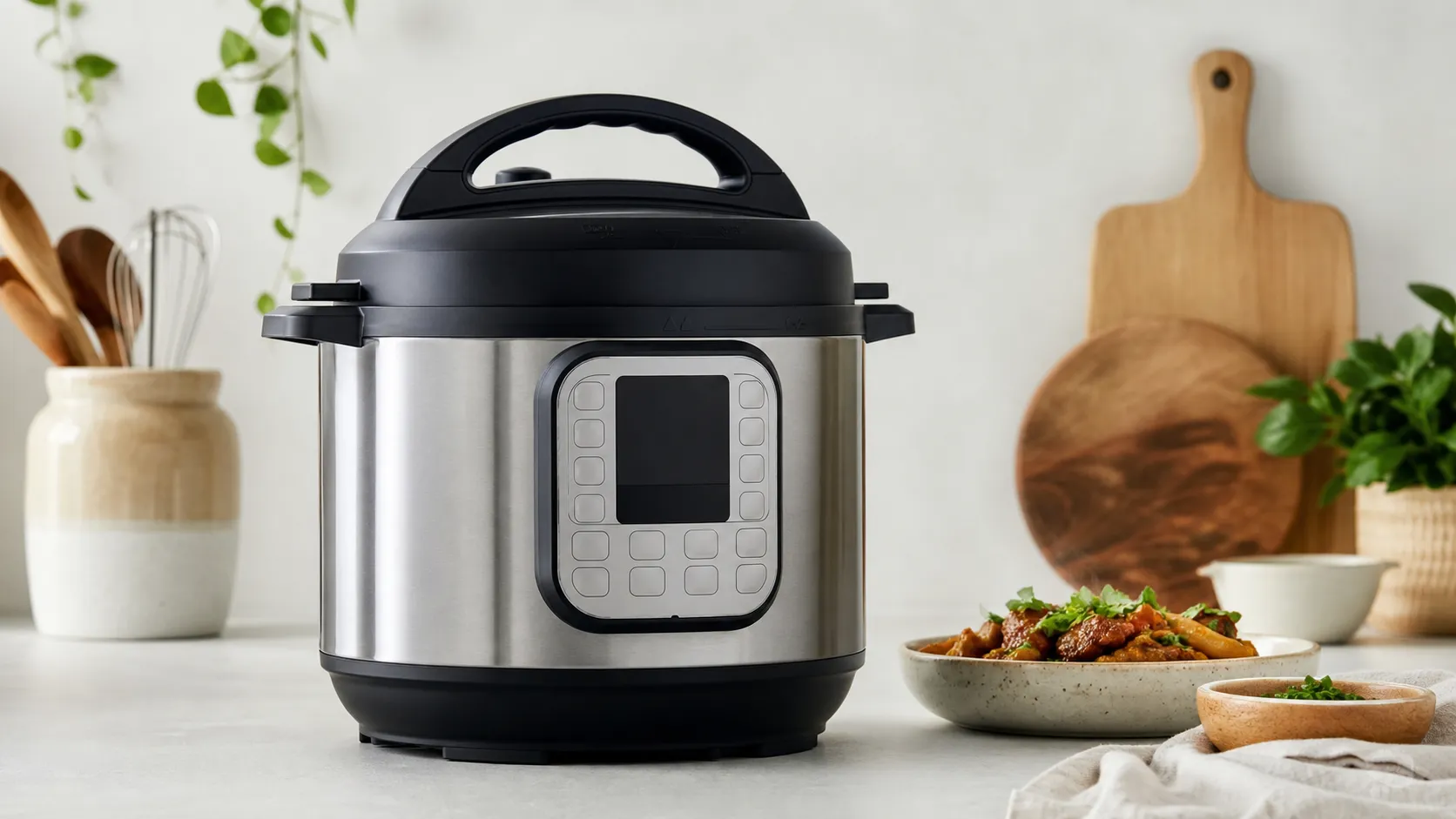
The Duo is Instant Pot’s widely sold, mid‑sized multi‑cooker that combines seven functions in a single unit: pressure cooker, slow cooker, rice cooker, steamer, sauté/pan, yogurt maker, and food warmer. The 6‑quart capacity fits most families and couples, and the unit comes with a stainless‑steel inner pot, locking lid, a silicone sealing ring, condensation trap, steam‑release valve, and a simple button‑based control panel.
Why people buy it: the Duo replaces several single‑purpose appliances, saves counter space, and speeds up many traditional stovetop tasks. It’s also supported by an enormous library of recipes, video tutorials, and user tips, which helps new owners overcome the learning curve faster.
What reviewers across the internet say
We synthesized ratings and comments from major sources to form a consensus:
- Aggregate rating: 4.6/5 from ~295,000 reviews.
- Sub‑scores: quality 4.5, reliability 4.3, value 4.8, ease of use 4.2.
Source breakdown and themes:
-
Amazon (4.7/5, largely positive): buyers praise the Duo’s value, consistent cooking results, and easy cleanup — repeat purchases are common. Reported negatives on Amazon are mostly about occasional defective units or sealing‑ring odor, which many users resolve via replacement parts.
-
Reddit (4.2/5, mixed): community threads are a treasure trove of practical tips, recipe hacks, and troubleshooting. Redditors are enthusiastic but vocal about the learning curve, steam/condensation management, and occasional part failures.
-
YouTube (4.3/5, mixed): video reviewers demonstrate the Duo’s speed and versatility and often recommend it for most home cooks. Common critiques focus on UI quirks, the steam‑release learning curve, and safety/sanity checks that new users should read.
-
Expert blogs (4.5/5, positive): professional reviewers typically praise the Duo’s performance and safety features, and call out its superior value compared with owning several single‑purpose appliances. They also note that competing models may edge it out with sleeker controls or incremental features.
Taken together, the consensus: the Duo is a high‑value, versatile appliance that performs reliably for most everyday cooking needs, supported by a large community — but new users should expect an initial adjustment period and be prepared to manage condensation and occasional QC issues.
Performance & Real-World Use
The Instant Pot Duo 6‑Quart 7‑in‑1 delivers fast, repeatable results on the foods home cooks make most, with the best balance of value, safety, and cleanup we’ve seen in this size. For typical U.S. families, the Instant Pot Duo 6‑Quart 7‑in‑1 feels like a dependable weeknight upgrade once you learn pressurization time, pick the right release, and keep a fresh sealing ring.
After combing through long‑term reports from owners, test kitchens, and manufacturer documentation, the picture that emerges is a dependable, high‑value workhorse with a mild learning curve. The Duo’s stainless inner pot is forgiving, its 1000 W element heats steadily, and its safety logic prevents most user errors—but you’ll cook best once you understand pressurization time, release choices, and liquid ratios.
The Instant Pot Duo 6‑Quart 7‑in‑1 cooks consistently fast for stews, beans, rice, and braises, and its stainless-steel pot cleans up almost effortlessly. For most U.S. households that cook 3–6 servings, the Instant Pot Duo 6‑Quart 7‑in‑1 delivers reliable, weeknight‑friendly results and exceptional value as long as you learn the first‑week basics and keep the sealing ring fresh.
What “performance” means for a multicooker day to day
Satisfaction with a multicooker is less about maximum PSI and more about how the appliance handles common variables. In the Duo’s case, owners judge performance by: 1) time‑to‑pressure plus time‑at‑pressure (the part you actually taste), 2) how evenly it cooks starches and tough cuts without “BURN” errors, 3) how tidy the steam release is under cabinets, and 4) how easy cleanup feels after dinner. Experienced users also value its broad recipe ecosystem; the settings are simple enough that third‑party recipes translate with minimal fiddling.
Those long‑term owner ratings by source look like this:
Consensus owner ratings by source (Instant Pot Duo 6‑Quart 7‑in‑1)
Aggregated ratings across large public review platforms.
View the underlying data
| Measure | Average rating |
|---|---|
| Amazon | 4.7/5 |
| 4.2/5 | |
| YouTube | 4.3/5 |
| Expert blogs | 4.5/5 |
Counts and averages synthesized from platform listings through August 2026.
Instant Pot Duo 6‑Quart 7‑in‑1: day‑one setup and the first week
The manual and FAQs emphasize fill‑line rules—half‑full for foamy foods such as beans, rice, and pasta—to prevent sputtering through the steam release and to avoid BURN warnings. In week one, most users master three habits that pay off quickly: deglaze after sautéing (a half‑cup of stock to dissolve browned bits), respect minimum liquid (typically about 1½ cups/375 mL for a 6‑quart recipe unless a tested recipe says otherwise), and choose the right release (natural vs. quick) based on the food.
Owners often notice a faint silicone odor from the new ring; it diminishes with use. If it bothers you, run a 2–3 minute steam cycle with water and vinegar, then air out the lid; many keep two rings (one sweet, one savory) to avoid flavor carryover. Expect pressurization to add 8–15 minutes before the countdown starts, depending on food load and liquid temperature. The Duo’s 1000 W element is ample for browning a pound or two of meat, but like most multicookers it can’t match a gas burner’s peak sear; sear in batches and don’t crowd the pot. Safety‑wise, the lid locks under pressure and the cooker won’t start if the lid position or temperature sensors think something’s off.
Real‑world speed: where it’s genuinely faster—and by how much
Where the Duo shines is hands‑off conversion of tough cuts and dry staples into dinner with predictable timing. The breakdown below reflects typical cycle phases pulled from Instant Brands’ time tables and widely used test‑kitchen recipes. Your numbers will vary with volume, cut size, and release choice, but the shape of the timeline is representative:
Typical Instant Pot Duo cycle breakdown at sea level
Durations compiled from Instant Brands cooking tables and test‑kitchen recipes; your times vary with quantity, cut size, and release method.
- Preheat/Pressurize
- Cook at pressure
- Release
View the underlying data
| Item | Preheat/Pressurize | Cook at pressure | Release |
|---|---|---|---|
| Soaked beans (1 lb) | 10 min | 25 min | 15 min |
| Brown rice (2 cups) | 8 min | 22 min | 10 min |
| Beef stew (2 lb) | 12 min | 35 min | 10 min |
Sources: Instant Pot cooking time tables; test‑kitchen recipes from America’s Test Kitchen and Serious Eats.
Two practical implications follow. First, “preheat/pressurize” is real time: start rice 40 minutes before dinner, not 20. Second, release method matters: use natural release for starchy or brothy foods to avoid sputter and overcooking risk from foam; use quick release for vegetables or to halt cooking promptly. If you live at altitude, plan on modestly longer pressure times; cooperative extension guidance suggests adding about 5% time per 1,000 feet above roughly 2,000–3,000 feet, and sometimes a touch more liquid for beans and rice.
Usability, noise, steam, and cleanup in real kitchens
The Duo’s interface is intentionally plain: a Pressure Cook program with time adjustment covers 90% of what you’ll do, while presets (Rice, Yogurt, Slow Cook, Steam) bundle typical temperatures. That simplicity is why most YouTube instructors teach on a Duo: the knobs and buttons map cleanly to repeatable steps. Noise in use is low during cooking; the loud part is quick release, which vents a strong plume. Position the cooker so the steam shoots into open air (or under a range hood) and not into cabinet faces; don’t drape towels or blockers over the vent. A small learning curve exists with condensate: the included collector snaps onto the back of the base to catch drips after opening—empty it periodically.
Cleanup is a highlight. The tri‑ply‑bottom stainless inner pot takes a fond nicely for sautéing and cleans with a nylon scrubber and a splash of vinegar or a non‑abrasive cleaner if you see rainbow discoloration. The lid, sealing ring, anti‑block shield, and rack are dishwasher‑safe; the base wipes clean. If ring odor lingers, a quick water‑and‑vinegar steam clean or cycling a spare ring usually resolves it. Owners who thought the Duo felt “big” in week one typically find it earns counter space as they adopt pot‑in‑pot methods for rice or cheesecake and batch‑cook beans or stock.
Sustained performance over months: parts, wear, and care
There are no batteries, brushes, or filters to wear out, and the heating element is stationary and robust. Long‑term performance centers on three consumables/maintenance points: the silicone sealing ring, the anti‑block shield in the lid, and water mineral scale. Instant Pot’s guidance and independent how‑to resources agree that the ring is the only part requiring regular replacement; expect 12–18 months depending on use, sooner if it’s stretched, cracked, or permanently odorous. Keep a second ring on hand and rotate to minimize smell carryover. After soupy or starchy cooks, pop off the anti‑block shield to clear any trapped foam that could compromise future releases. If you see whitish scale or notice slower heat‑up, run a brief vinegar‑and‑water steam cycle to descale the pot and steam path.
Safety and reliability are strong suits. The Duo is UL/ULC listed, with multiple independent safety mechanisms (lid lock, pressure‑limit valve, overheat protection). One critical limitation remains: don’t pressure‑can low‑acid foods in any electric multicooker unless the manufacturer and public‑sector food‑safety authorities have jointly validated a model and process. For altitude cooking (not canning), plan on modest time increases as noted earlier.
How it stacks up to typical alternatives
Within the mainstream 6–6.5‑quart class, the Duo trades on value and a stainless pot that deglazes and lasts. Ninja’s Foodi line costs more because it integrates an air‑fry lid; that’s convenient if you’ll actually crisp in the same vessel, but its ceramic‑coated pot is nonstick, not stainless. Crock‑Pot’s Express multicooker is typically the budget play; it’s capable but usually ships with a nonstick pot and fewer refinements in the interface. If you want built‑in air‑fry, look to a Foodi; if you want maximum sear/deglaze durability and the largest recipe ecosystem, the Duo remains the default pick. Core features by model look like this:
Core features across common 6–6.5 qt multicookers
Core features compared (manufacturer documentation).
| Item | Stainless‑steel inner pot | Dishwasher‑safe inner pot | Yogurt program | Air fry built‑in | Replaceable sealing ring | Auto Keep Warm |
|---|---|---|---|---|---|---|
| Instant Pot Duo 6‑Qt 7‑in‑1 | Yes | Yes | Yes | No | Yes | Yes |
| Ninja Foodi 6.5‑Qt | No | Yes | No | Yes | Yes | Yes |
| Crock‑Pot Express 6‑Qt | No | Yes | No | No | Yes | Yes |
Sources: Instant Pot Duo product page; Ninja Foodi inner pot and manuals; Crock‑Pot Express manuals.
Functionally, the Duo’s Pressure Cook + Sauté pairing covers most everyday jobs; add a separate air‑fryer later if you crave crisping without swapping lids. If you regularly cook whole packer briskets or very large roasts, you’ll want an 8‑quart multicooker or a Dutch oven; the Duo’s 6‑quart volume and 1/2‑full rule for foamy foods cap true batch size. For yogurt, the Duo’s dedicated program maintains gentle incubation temperatures—handy if you make it weekly; just remember to sanitize tools and use pasteurized milk for consistent set.
Practical steps to get the best results
- Before the first recipe, do the water test; it verifies lock‑up and release and teaches you how long pressurization actually takes in your kitchen.
- For stews and chilis, brown in two small batches on Sauté, deglaze with 1/2 cup stock, then layer ingredients from dense (bottom) to delicate (top). This prevents the BURN warning and maximizes fond flavor.
- Respect minimum liquid and headspace: for the Duo 6‑quart, most pressure recipes assume at least ~1½ cups/375 mL free liquid, and foamers (beans, pasta, rice) should not exceed the 1/2‑full mark.
- Choose the right release: natural release for brothy, starchy, or large cuts; quick release for vegetables, eggs, and delicate fish. Natural release keeps starchy foam in check and reduces splatter.
- Avoid thickening before pressure: add tomato paste, cornstarch slurries, or cream after pressure cooking, then simmer briefly on Sauté to reach final consistency.
- Position the pot to vent safely—aim the plume under a running hood or into open air. Never cap or cover the steam release.
- At altitude, start by adding ~5% cook time per 1,000 feet above 2,000–3,000 feet; beans and whole grains may also need 2–4 extra tablespoons of liquid. Keep a simple log so you can dial times in for your pantry staples.
- Maintenance rhythm: after soupy cooks, remove and wash the anti‑block shield; steam‑clean the ring with water and vinegar as needed; replace the ring annually (or sooner if stretched or odorous). Store the lid upside‑down so the ring can air out.
Conclusion: does real‑world performance justify the purchase?
Yes. Factor in the durable stainless pot, widely available replacement parts, UL‑listed safety features, and a vast community of tested recipes, and the value case is unusually strong. If you cook for four to six and want fewer pans and more predictable dinners, the Duo remains the 6‑quart standard to beat.
Sources referenced in this section
- Instant Pot — Duo 6‑Qt product page/specs
- Instant Pot — Cooking Time Tables
- America’s Test Kitchen — 9 Tips to Optimize Your Instant Pot (video)
- National Center for Home Food Preservation — Canning in Electric Multi‑Cookers (not recommended)
- CDC — Home‑Canned Foods and Botulism (do not use electric multi‑cookers for pressure canning)
- Colorado State University Extension — Adjusting for Elevation in Electric Pressure Cookers (PDF)
- USDA FSIS — High‑Altitude Cooking Basics
- Food Network — How to Replace Every Part of Your Instant Pot (ring replacement cadence)
- Ninja Kitchen — Foodi 6.5‑Qt Ceramic‑Coated Inner Pot (nonstick)
- Crock‑Pot Express Multi‑Cooker — User Manual (nonstick inner pot)
Pros and cons
Pros
- Multi‑function 7‑in‑1 versatility replaces several appliances and saves money and counter space.
- Fast, consistent results for stews, beans, rice, braises, and steamed vegetables.
- Excellent value — high performance for the price compared with buying separate devices.
- Easy‑to‑clean stainless‑steel inner pot; most parts are removable and dishwasher‑safe.
- Large, active user community with abundant recipes, hacks, and troubleshooting resources.
Cons
- Learning curve: programming, timing, and pressure‑cooking technique take practice and can produce uneven results for novices.
- Condensation and steam release can cause splatter or countertop mess if not managed properly.
- Occasional quality‑control issues reported (defective units, warped lids, or sealing‑ring odor) that may require part replacement or customer service.
- Bulky to store; the 6‑quart size limits very large roasts or bulk cooking projects.
- Interface is functional but not as refined as some newer touchscreen competitors.
Who should buy it (and who shouldn’t)
Buy the Instant Pot Duo if:
- You want a single appliance that covers pressure cooking, slow cooking, rice cooking, steaming, sautéing, yogurt making, and warming.
- You value strong community support and dozens of proven recipes and troubleshooting guides.
- You want excellent bang for your buck — consistent performance at a mid‑budget price point.
- You’re cooking for a small to medium household (couples to small families) and don’t need oversized capacity.
Don’t buy the Instant Pot Duo if:
- You regularly cook for very large gatherings or need to roast whole, large cuts of meat that exceed a 6‑quart capacity.
- You want the sleekest, most modern touchscreen UI — other models offer more polished controls and incremental feature upgrades.
- You’re unwilling to spend a few sessions learning pressure timings, venting, and condensation management — novices should budget time to read the manual and follow community recipes.
Bottom line
The Instant Pot Duo 6‑Quart 7‑in‑1 remains one of the best entry points into multi‑cooker cooking: versatile, affordable, and broadly capable for everyday meals. It’s not perfect — the learning curve, steam behavior, and occasional quality issues are real — but for most shoppers the pros outweigh the cons. If you want reliable multi‑function performance and an enormous library of recipes and support, the Duo is a sensible, wallet‑friendly choice.
What Reviewers Love
- Multi-function versatility (7-in-1) covers most everyday cooking needs.
- Fast, consistent results — especially for stews, beans, rice, and braises.
- Excellent value for money compared with buying separate appliances.
- Easy-to-clean stainless-steel inner pot and generally low maintenance.
- Large user community with plentiful recipes, tips, and troubleshooting.
Common Complaints
- Learning curve — programming and pressure-cooking timings take time to master (may produce uneven results if novice).
- Condensation and steam release can cause splatter or countertop mess without careful venting/positioning.
- Occasional quality-control issues reported (defective units, warped lids, or sealing-ring odor) requiring replacement.
- Bulky to store; 6‑quart limits some large-batch or whole-roast use-cases.
Our Verdict
4.6The Instant Pot Duo 6‑Quart 7‑in‑1 is a practical, high‑value multi‑cooker that delivers fast, consistent results for most home cooks. It’s ideal for small to medium households who want to replace several appliances, though new users should budget time to learn pressure cooking and manage steam behavior.
Frequently Asked Questions
Common questions shoppers ask before buying the Instant Pot Duo 6‑Quart 7‑in‑1.
Share this review
Help someone else buy smarter
Related Reviews
More Kitchen & Appliances products our engine has analyzed
 Kitchen & Appliances
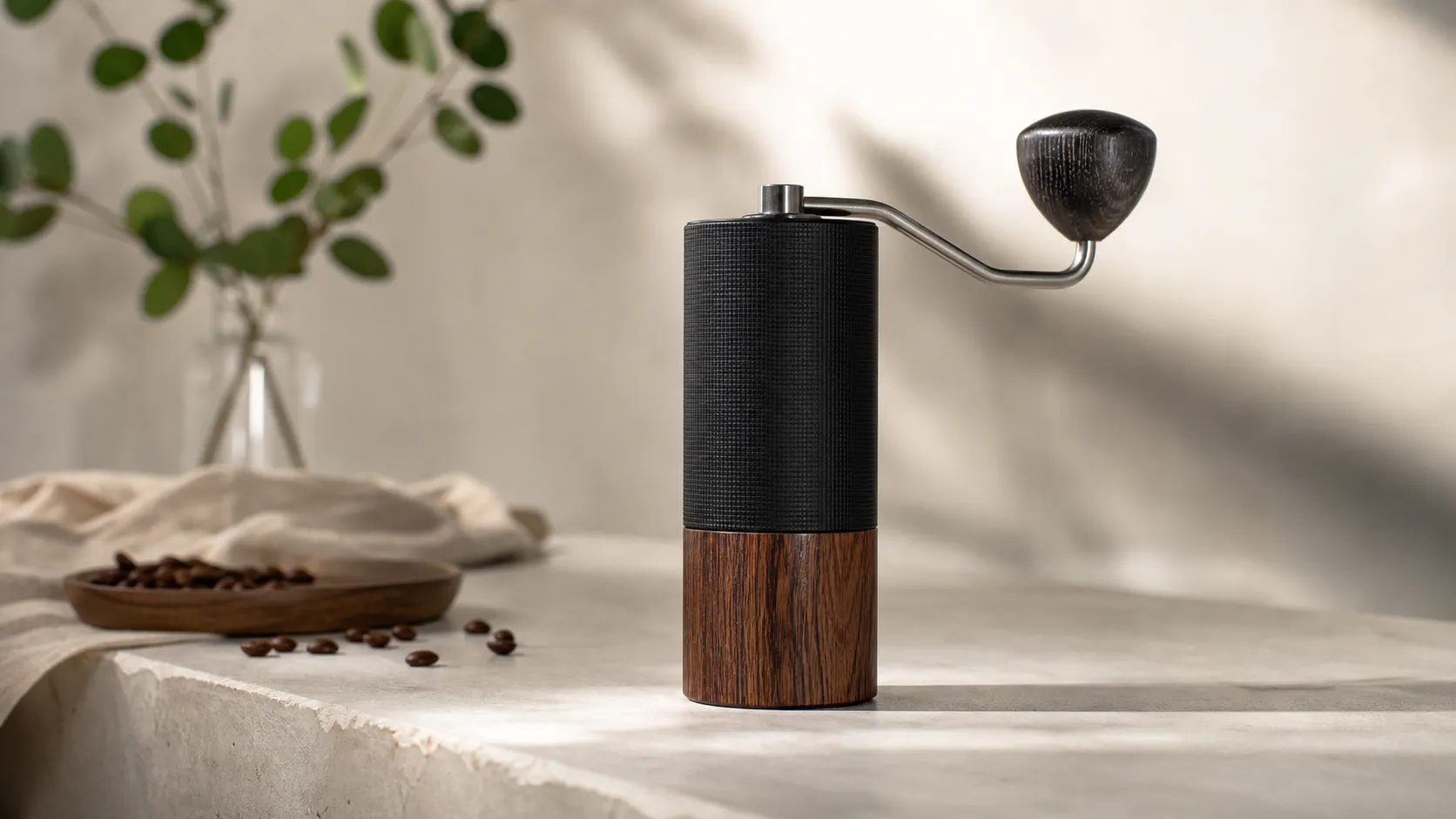
Comandante C40 MK4 Manual Coffee Grinder — 2026 Review
A premium manual grinder known for exceptional build and grind consistency — ideal for serious home baristas, but heavy and pricey for casual users or travel.
 Kitchen & Appliances
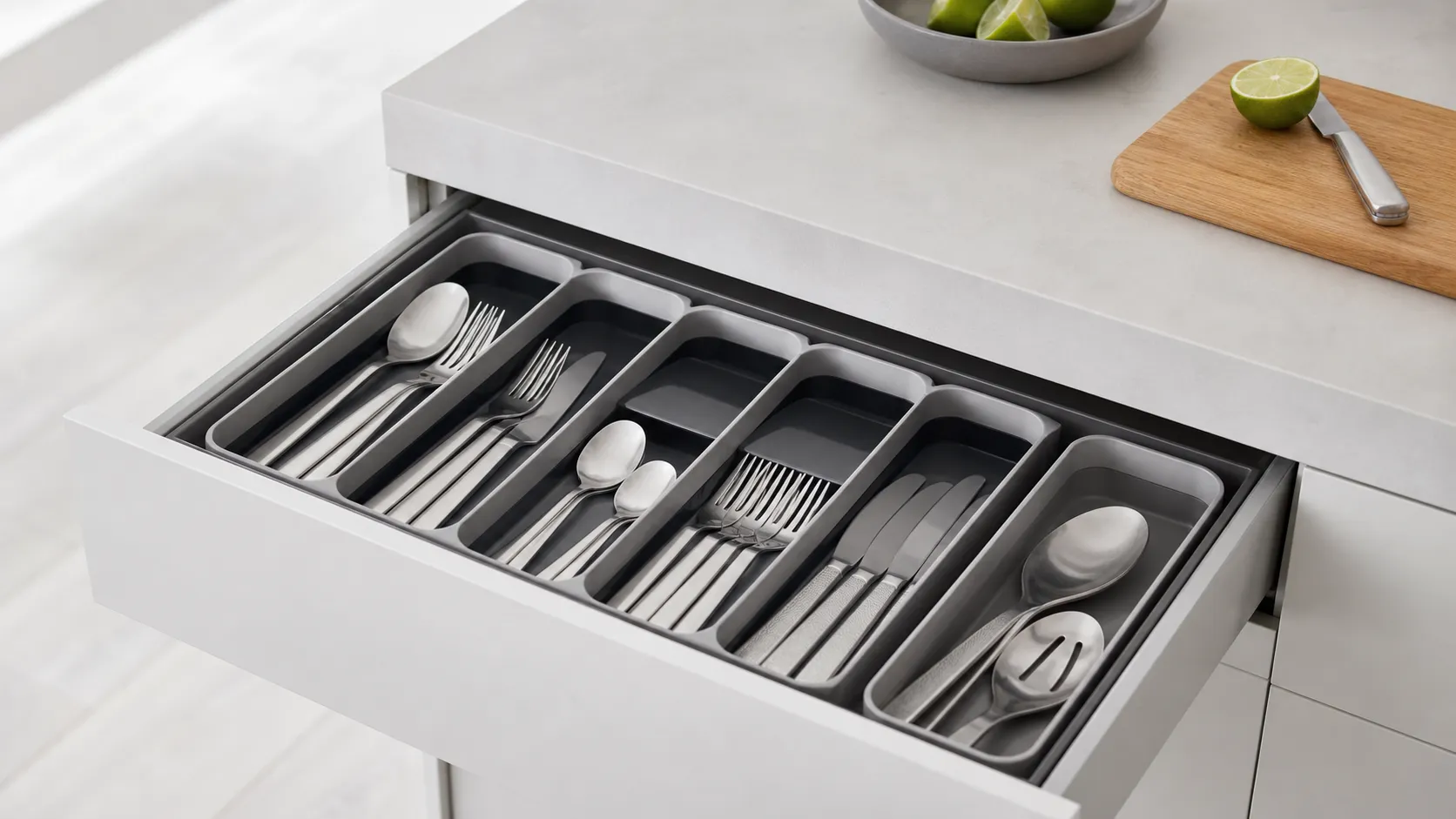
Joseph Joseph DrawerStore Cutlery Organizer Review 2026
A slim, modern cutlery tray that maximizes shallow-drawer space. Great for tidy, small-kitchen organization—measure your drawer first and avoid if you store long utensils.
 Kitchen & Appliances
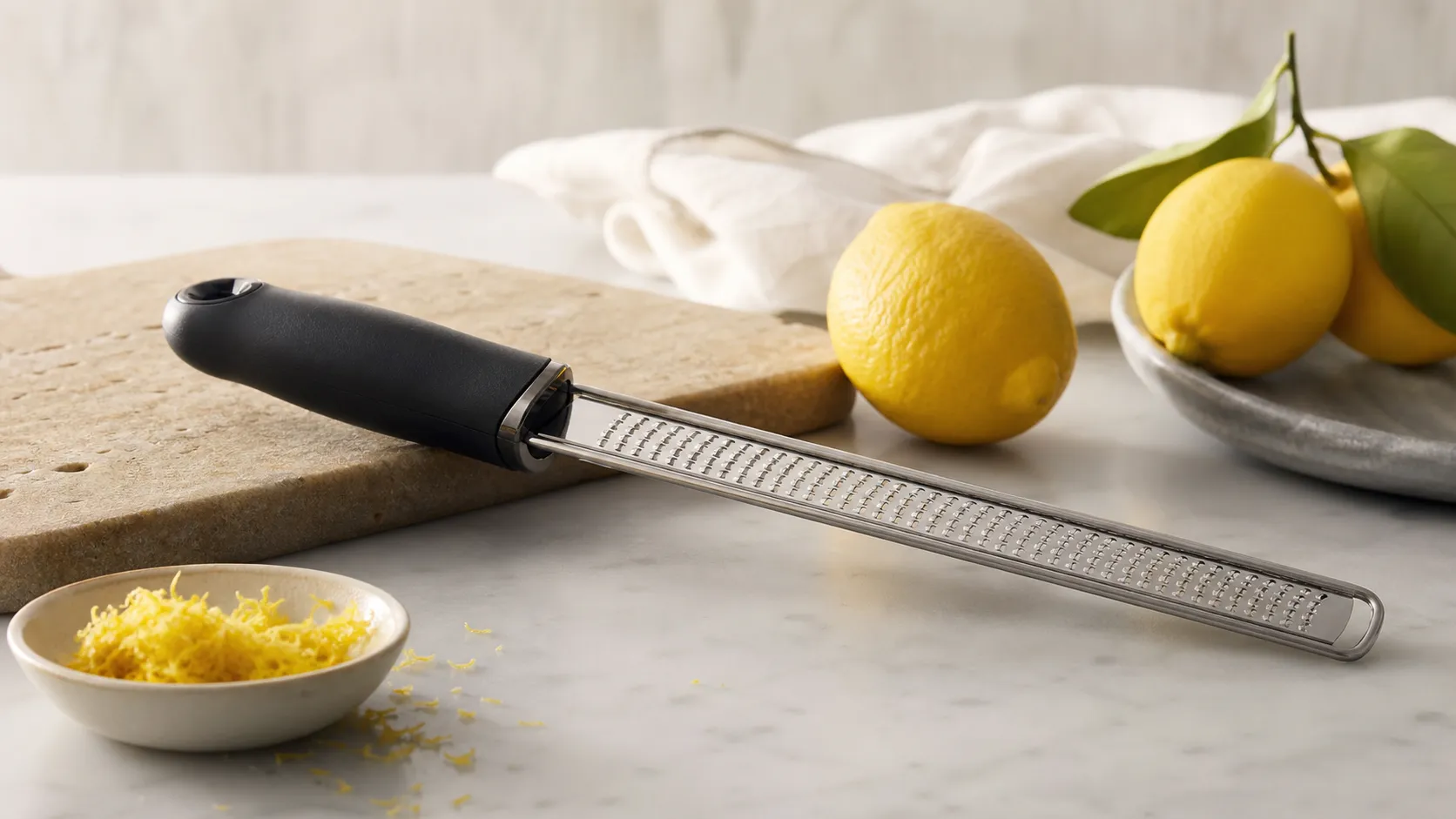
Microplane Premium Classic Zester/Grater — Review 2026
The Microplane Premium Classic is the go-to hand zester for precise, fluffy citrus zest and fine shavings. Sharp, compact, and great value—best for finishing, not bulk grating.