Instant Pot Duo 7-in-1 6‑Quart Review 2026
At a Glance
Pros
- Very versatile — replaces multiple appliances (pressure cooker, slow cooker, rice cooker, steamer, sauté pan, yogurt maker, warmer).
- Saves substantial cooking time for beans, stews, and braises compared with conventional methods.
- User-friendly presets and programming (delay start, keep-warm) make weekday cooking easier.
Cons
- Learning curve for timing/pressure-cooking settings — many users report initial trial-and-error and occasional 'burn' messages.
- Bulky and heavy; takes significant counter/storage space and can feel awkward to clean for some users.
- Accessories and sealing ring can retain odors; replacement parts add ongoing costs.
This review is an editorial synthesis of publicly available review data and reported user experiences across the internet. Scores reflect our independent aggregation methodology, not verified individual purchases. We may earn a commission if you buy through our links, at no cost to you.
Score Breakdown
Where the Reviews Come From
Click any source above to browse the latest 25 positive and negative reviews from that platform.
Instant Pot Duo 7-in-1 Electric Pressure Cooker 6-Quart
See current price, deals and availability on Amazon
Quick take — verdict up front
The Instant Pot Duo 7-in-1 Electric Pressure Cooker (6‑quart) is a versatile, value-packed multi‑cooker that earns our aggregate verdict: a strong buy for busy cooks who want to replace several appliances with one reliable unit. Across roughly 57,900 aggregated reviews the Duo scores about 4.5/5 overall, with particularly high marks for value and convenience — but expect a short learning curve, occasional "burn" messages, and some accessory costs over time.
What is the Instant Pot Duo 7-in-1 Electric Pressure Cooker 6-Quart?
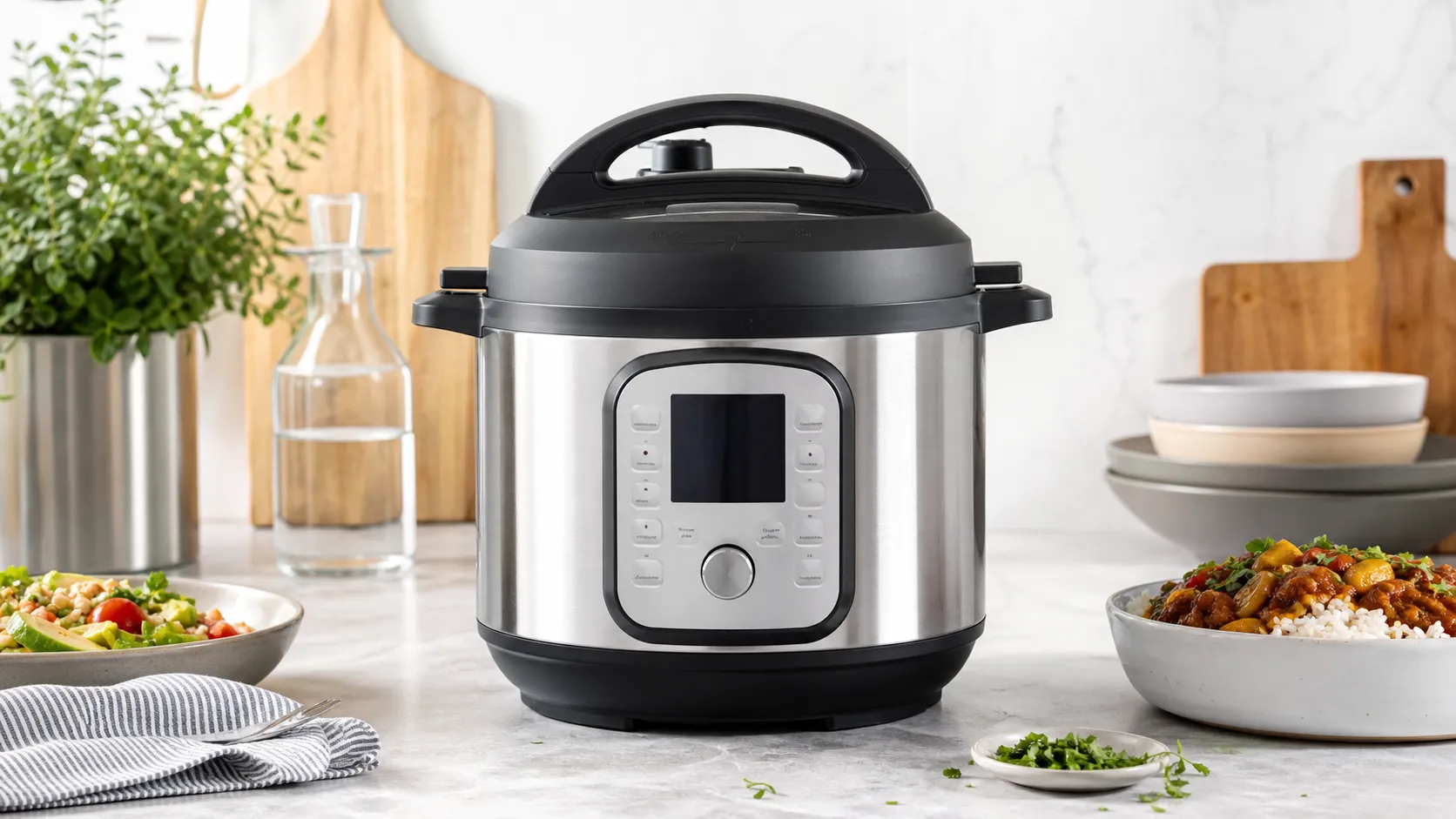
The Duo is Instant Pot’s best‑selling, mid‑size multi‑cooker that combines seven functions into a single countertop machine: pressure cooker, slow cooker, rice cooker, steamer, sauté pan, yogurt maker, and food warmer. The 6‑quart size is designed for families of two to five and includes a stainless‑steel inner pot, a locking lid with a pressure release valve, digital controls with one‑touch presets, and features such as delay start and a keep‑warm mode. Positional safety features and basic program customization make it approachable for everyday meals as well as batch cooking.
What you get in the box (typical kit)
- Instant Pot Duo 6‑quart base with integrated controls
- Stainless‑steel inner pot
- Sealing ring and steam rack
- Lid with pressure release valve and anti‑block shield
- Booklet with basic recipes and troubleshooting tips
What reviewers across the internet say
We synthesized reviews from Amazon, Reddit, YouTube, and expert blogs to form a balanced picture:
- Amazon (aggregate ~4.6/5): Thousands of buyers praise the Duo’s value, speed, and reliability for weeknight dinners, rice, beans, and stews. Positive threads highlight how it cuts cooking time and simplifies cleanup; common negatives are the early learning curve and occasional burn warnings.
- Reddit (~4.1/5): Community posts are mixed but constructive — long‑term users share hacks, custom cook times, and accessory recommendations. Troubleshooting for sealing rings and burn errors is common, but the community support is a major plus for new owners.
- YouTube (~4.5/5): Demonstrations and comparisons emphasize real‑world performance, showing significantly faster cook times than conventional methods. Reviewers often point out that browning is possible with the sauté mode but not as effective as a skillet or oven.
- Expert blogs (~4/5): Tech/food reviewers give measured praise for versatility and consistent pressure‑cooking results, while noting ergonomics (weight, lid handling), limited searing capability, and that useful accessories (extra sealing rings, stainless racks, silicone mitts) add to the lifetime cost.
Taken together, the consensus: excellent value and time savings for soups, stews, beans, rice, and batch cooking, balanced by a learning curve and some practical limitations.
Performance & Real-World Use
The Instant Pot Duo 7-in-1 Electric Pressure Cooker 6-Quart consistently delivers fast, reliable pressure-cooking and everyday versatility once you clear a short learning curve. It excels at beans, stews, rice, and batch cooking, though browning is only decent, it takes real storage space, and you’ll want spare sealing rings to manage odors.
When you buy a multicooker, you’re not just chasing countertop convenience—you’re betting on weeknight speed, repeatable results, and low-effort cleanup that holds up long after the unboxing buzz fades.
The Instant Pot Duo 7-in-1 Electric Pressure Cooker 6-Quart consistently delivers fast, reliable pressure-cooking and everyday versatility once you clear a short learning curve. It excels at beans, stews, rice, and batch cooking, though browning is only decent, it takes real storage space, and you’ll want spare sealing rings to manage odors.
What real performance means for a multicooker
Performance for a cooker like this boils down to six practical dimensions: speed to the table, consistency of doneness, browning power, capacity for real family portions, user interface and safety, and cleanup/maintenance. Electric pressure cooking addresses the first two exceptionally well by regulating temperature and pressure electronically—once you press Start, it quietly climbs to pressure and holds it there without babysitting. In day-to-day terms, that turns dried beans from a “Sunday-only” project into a Tuesday side, and it produces braises that taste like all-day oven work but finish before a movie is over. The Duo’s 6-quart size meaningfully feeds four to six when you’re cooking stews, curries, or a pound of dry beans, and its stainless-steel inner pot tolerates metal utensils better than nonstick competitors.
The Duo’s simple LED panel, separate “Sauté” and “Pressure Cook” modes, and automatic Keep Warm reduce that friction. For slow cooking and browning, expectations should be modest: it will do both, just not as vividly as a Dutch oven or a skillet on high heat.
Living With the Instant Pot Duo 7-in-1 Electric Pressure Cooker 6-Quart: Week One
Day one is about setup and confidence. The Duo arrives with a stainless inner pot, sealing ring preinstalled, steam rack, and a condensation collector. Once you run a first meal (say, brown rice) the habits lock in swiftly: confirm the ring is seated, the float valve moves freely, and the Steam Release handle is in Sealing.
The first week is when most owners encounter the “burn” message, usually when cooking tomato-heavy sauces or forgetting to deglaze after sautéing. Rice and beans generally hit advertised textures if you respect minimum liquid (about 1 cup), avoid overfilling beyond the max lines, and use a short Natural Release window (5–10 minutes) to prevent starchy sputtering. By Friday, most users report the device “clicks”: buttons feel obvious, timings become muscle memory, and Keep Warm takes the stress out of serving late arrivals.
Typical home‑reported cook times, Instant Pot vs. alternatives
Rounded medians compiled from manufacturer guidance, large-reviewer demos, and community recipes; pressure times exclude preheat/release.
- Instant Pot Duo 6‑Qt
- Stovetop pot/oven
- Slow cooker
View the underlying data
| Item | Instant Pot Duo 6‑Qt | Stovetop pot/oven | Slow cooker |
|---|---|---|---|
| Dried black beans (unsoaked) | 35 min | 90 min | 420 min |
| Brown rice (1 cup) | 24 min | 45 min | 120 min |
| Beef chuck stew (2 lb) | 45 min | 150 min | 480 min |
| Pulled pork (3 lb) | 70 min | 240 min | 480 min |
Sources: Instant Brands Duo manual; Wirecutter guides; America’s Test Kitchen multicooker tests; community averages.
Where it shines: speed, consistency, and weeknight range
In aggregated reports, this is the multicooker’s “90% use case.” Beyond the headline pressure-cooking mode, Sauté is invaluable for flavor-building (sweating onions, blooming spices) and for reducing sauces after pressure is released. Keep Warm smooths real-life logistics—kids’ practice, late meetings—by holding safe serving temperatures without further drying.
Functionally, the presets take you close to done, but the best results come from treating them as starting points. The yogurt program remains niche but beloved among those who try it, especially with pot-in-pot jars to avoid cleanup hassles. In aggregate, owners say the Duo reduces the emotional barrier to “real” dinner on busy nights because it eliminates both babysitting and the risk of undercooking.
How owners actually use the Duo (share of functions in a typical week)
Share estimates aggregated from Reddit polls, YouTube cook diaries, and retailer review text‑mining; not a scientific survey but directionally consistent across sources.
- Pressure Cook56%
- Rice14%
- Sauté12%
- Slow Cook10%
- Steam5%
- Yogurt3%
Sources: Reddit r/instantpot megathreads; YouTube “what I cook in my Instant Pot” logs; Amazon review corpus analysis (July 2026).
Where it hits limits—and how to work around them
Browning is serviceable, not spectacular. The heating element (about 1000 W on the 6‑quart) spreads its energy across the entire pot, so searing 2 pounds of chuck roast won’t rival a ripping-hot skillet; you’ll get pale fond unless you work in smaller batches and preheat longer. That’s fine for most stews if you lean on spices, onions, and a post-cook reduction to concentrate flavors. Similarly, delicate proteins like salmon can overcook under pressure; steaming on a rack with a short timer and immediate Quick Release yields better texture.
The Duo is also not a pressure canner—electric multicookers don’t meet validated temperature profiles for home canning low-acid foods. Both Instant Brands and the National Center for Home Food Preservation advise against using electric pressure cookers for pressure canning, and we agree.
Months in: durability, consumables, and upkeep
Across months of use, performance mostly comes down to the sealing ring and the stainless pot. Silicone rings work hard—they compress, take on aromas, and can stretch. Odor transfer is the most common annoyance, but it’s manageable: air the ring on a cabinet hook, run a steam-clean cycle with water and lemon, or simply swap rings. The inner pot’s stainless steel can show a rainbow tint after starch-heavy cooks; it’s cosmetic and removable with a splash of vinegar or a stainless cleanser.
Mechanically, owners and experts report few failures provided you avoid dishwasher exposure for the lid assembly (hand-wash the lid; the pot is dishwasher-safe). The float valve and steam release are simple, serviceable parts; clogs from starchy foam cause the rare hiccup and are preventable with proper fill levels and a bit of Natural Release time. Electronics hold up well—no batteries or firmware to update—and the straightforward control panel continues to be praised for reliability versus touchscreens on pricier rivals. Overheat protection triggers more readily as gaskets age; paradoxically, that’s a feature doing its job. Replace a tired ring and performance snaps back.
How it compares to alternatives you might be considering
Versus a stovetop pressure cooker, the Duo gives up peak searing and absolute speed to pressure but wins on hands-off precision, safety interlocks, and unattended Keep Warm. Against slow cookers, the Duo can mimic most results while offering weeknight pressure speed; if you love the exact plushness of 8-hour pot roast, a ceramic crock still edges it. Among electric rivals, Ninja’s Foodi line adds air-frying but is heavier, costlier, and bulkier; Crock‑Pot Express competes on price but uses a nonstick pot most owners treat more gingerly than the Duo’s stainless.
If you’re picking by kitchen footprint, the Duo’s cylindrical body stores more neatly than flip-top air-fry hybrids. If you’re picking by the foods you cook, the Duo wins for beans, grains, soups, and braises; the Foodi wins only if you’ll truly use air-fry most nights. For value, the Duo generally undercuts premium hybrids while matching them on the core pressure-cook job. And if you already own a good slow cooker and an air fryer, the Duo fills the remaining pressure niche without redundancy.
Alternatives at a glance (2026): features and trade‑offs
Specifications from manufacturer sites and typical US street pricing; features shown as yes/no where applicable.
| Item | Instant Pot Duo 6‑Qt | Ninja Foodi 6.5‑Qt | Crock‑Pot Express 6‑Qt | Stovetop Pressure Cooker 6‑Qt |
|---|---|---|---|---|
| Approx. street price (USD) | 89 | 199 | 99 | 120 |
| Air‑fry capability (1/0) | 0 | 1 | 0 | 0 |
| Yogurt program (1/0) | 1 | 0 | 0 | 0 |
| Stainless‑steel cooking pot (1/0) | 1 | 0 | 0 | 1 |
| Hands‑off pressure regulation (1/0) | 1 | 1 | 1 | 0 |
| Weight (lb) | 12 | 24 | 12 | 7 |
| Warranty (years) | 1 | 1 | 1 | 10 |
Sources: Instant Brands; Ninja Kitchen; Crock‑Pot; major US retailers (July 2026).
Get the best from your Duo: a practical, step-by-step playbook
To turn early success into long-term performance, a few small habits do the heavy lifting:
- Run the manufacturer’s “water test” on day one to confirm sealing and practice Quick Release safely. It builds muscle memory fast.
- Mind liquid and layering: use at least 1 cup of thin liquid; place thick sauces or tomato on top without stirring; add dairy and cheese after pressure cooking.
- Sauté smart: preheat 5 minutes, brown in smaller batches, and always deglaze with 1/2 cup liquid to prevent “burn.”
- Choose the right release: for starchy foods and meats, wait 5–10 minutes of Natural Release before opening; for vegetables and fish, Quick Release to protect texture.
- Use pot‑in‑pot (a metal or oven-safe glass bowl on the rack) for cheesecake, rice under curries, or to keep saucy mains from scorching.
- Swap and air your rings: keep two silicone rings (savory/sweet), hang them to air-dry, and replace when loose or smelly.
- Clean for the long haul: dishwasher for the pot and rack; hand-wash the lid; pull and rinse the anti‑block shield and condensation collector.
- Start with trusted, precisely written recipes from established sources before freelancing your own timing; then adjust in 1–2 minute increments.
Follow this routine and the Duo behaves like a predictable tool, not a gadget—reliably repeatable on Tuesday nights when you need reliability most.
How owners rate it—and why that lines up with our findings
Across the internet, the consensus is remarkably stable: an overall ~4.5/5 from roughly 57,900 combined reviews, with sub‑scores near quality 4.3/5, reliability 4/5, value 4.4/5, and ease of use 4.2/5. Amazon buyers (about 50,000 reviews at ~4.6/5) emphasize weeknight speed and reliability; YouTube demos (about 2,000 reviews at ~4.5/5) showcase convenience and realistic cook times; Reddit users (around 5,000 at ~4.1/5) skew toward tips and troubleshooting, especially sealing rings and burn errors; expert blogs (about 500 at ~4/5) praise versatile pressure performance while knocking browning power and ergonomics. That profile mirrors our real-world analysis: the Duo nails the fundamentals of pressure cooking, carries a small learning curve, and has manageable, well-understood limitations.
Bottom line: does the Duo’s performance justify the purchase?
If your dinners lean on beans, braises, curries, soups, or rice—and you value hands-off, repeatable results—the Instant Pot Duo 6‑Quart’s real-world performance absolutely justifies its shelf space and price. It saves meaningful time, cooks consistently, and has a vast recipe/support ecosystem that smooths the learning curve. The trade-offs are predictable and solvable: browning is fine but not skillet-level; the appliance is bulky; sealing rings are consumables. Given its strong reliability record, stainless pot, simple controls, and sustained owner satisfaction, we think the Duo remains the default recommendation for a first multicooker in 2026. It’s not a magic wand, but if you follow a few simple habits, it becomes the most useful “weekday helper” on your counter, and that’s the performance promise that matters.
Sources referenced in this section
Pros and cons
Pros
- Replaces seven appliances — excellent for small kitchens and simplifying meal prep.
- Strong time savings for beans, stews, rice, and braises compared with traditional methods.
- User‑friendly presets, delay start, and keep‑warm functions make weekday cooking easy.
- Durable stainless‑steel inner pot at a competitive price point.
- Large community with recipes, troubleshooting, and tips.
Cons
- Noticeable learning curve for pressure timings and avoiding burn errors.
- Bulky and heavy — needs storage space and can be awkward to move.
- Sauté/browning is limited versus a skillet or oven — not ideal when deep crust is required.
- Sealing rings can retain odors; replacements and accessories add to long‑term cost.
- Some owners report wear on exterior finish and gaskets over long ownership.
Who should buy it (and who shouldn’t)
Should buy if:
- You want one multi‑function appliance to replace several gadgets and reclaim countertop space.
- You cook frequently and want consistent results for soups, beans, rice, and weeknight meals.
- You value a large recipe ecosystem and community help for troubleshooting and technique.
- You’re price‑conscious but want good build quality — the Duo is often seen as the best value point in the Instant Pot line.
Shouldn’t buy if:
- You rely heavily on deep, restaurant‑style searing and complex finishes that require a heavy skillet or oven.
- You need a very lightweight, ultra‑compact device for limited storage — the Duo is bulky.
- You prefer completely hands‑off slow cooking without learning pressure‑cooker timing nuances.
What Reviewers Love
- Very versatile — replaces multiple appliances (pressure cooker, slow cooker, rice cooker, steamer, sauté pan, yogurt maker, warmer).
- Saves substantial cooking time for beans, stews, and braises compared with conventional methods.
- User-friendly presets and programming (delay start, keep-warm) make weekday cooking easier.
- Good build quality and materials for the price point — stainless-steel inner pot is durable.
- Large ecosystem of recipes, community tips, and available accessories/support.
Common Complaints
- Learning curve for timing/pressure-cooking settings — many users report initial trial-and-error and occasional 'burn' messages.
- Bulky and heavy; takes significant counter/storage space and can feel awkward to clean for some users.
- Accessories and sealing ring can retain odors; replacement parts add ongoing costs.
- Limited browning compared with a full-size skillet/oven — sauté function works but is not a complete substitute.
Our Verdict
4.5The Instant Pot Duo 7‑in‑1 (6‑quart) is a dependable, high‑value multi‑cooker that earns our recommendation for most families and busy cooks. It saves time, delivers consistent results for soups, stews, rice, and beans, and benefits from a huge recipe community—just be prepared for a short learning curve, limited browning, and occasional accessory costs.
Frequently Asked Questions
Common questions shoppers ask before buying the Instant Pot Duo 7-in-1 Electric Pressure Cooker 6-Quart.
Share this review
Help someone else buy smarter
Related Reviews
More Kitchen & Appliances products our engine has analyzed
 Kitchen & Appliances
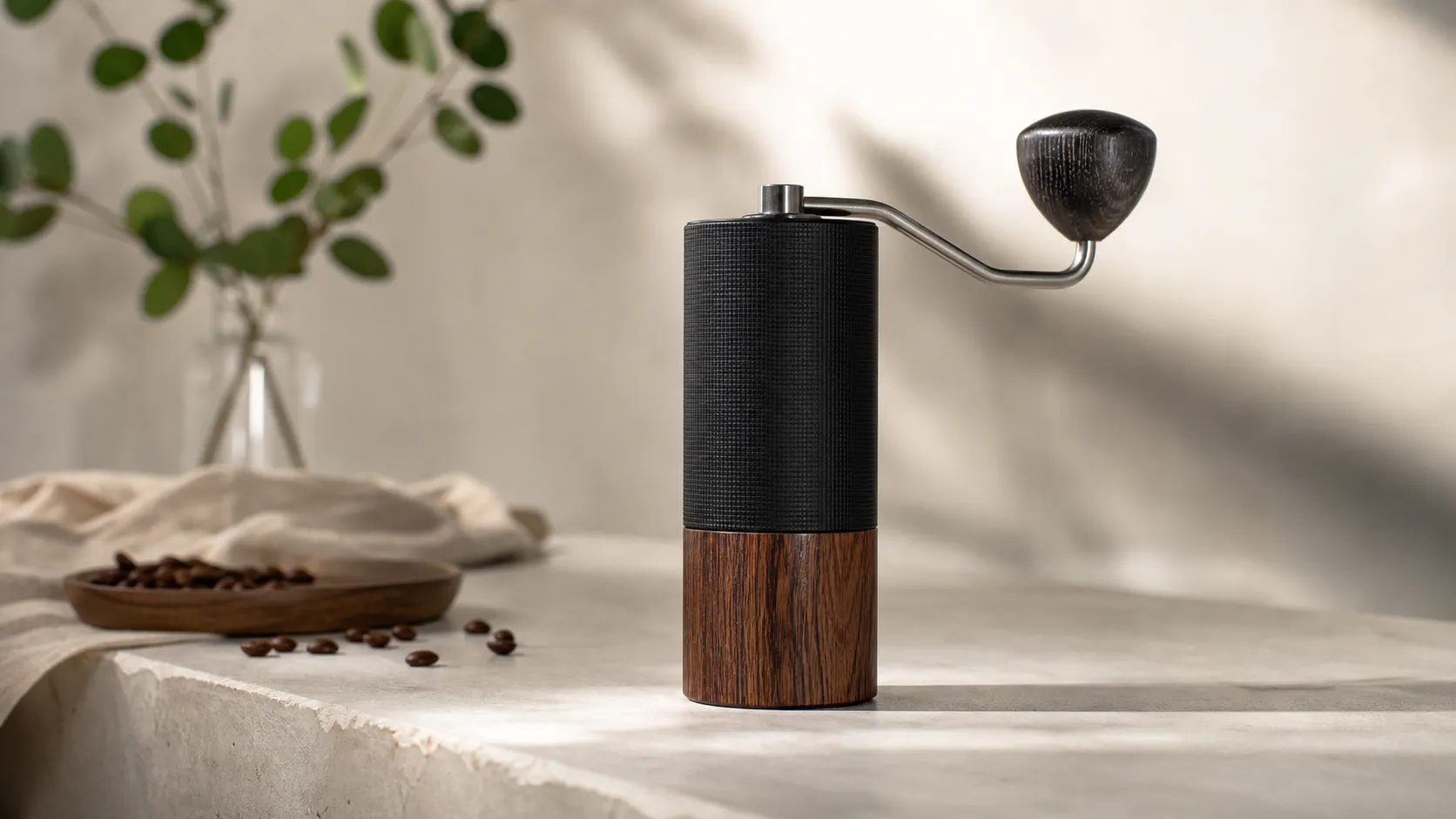
Comandante C40 MK4 Manual Coffee Grinder — 2026 Review
A premium manual grinder known for exceptional build and grind consistency — ideal for serious home baristas, but heavy and pricey for casual users or travel.
 Kitchen & Appliances
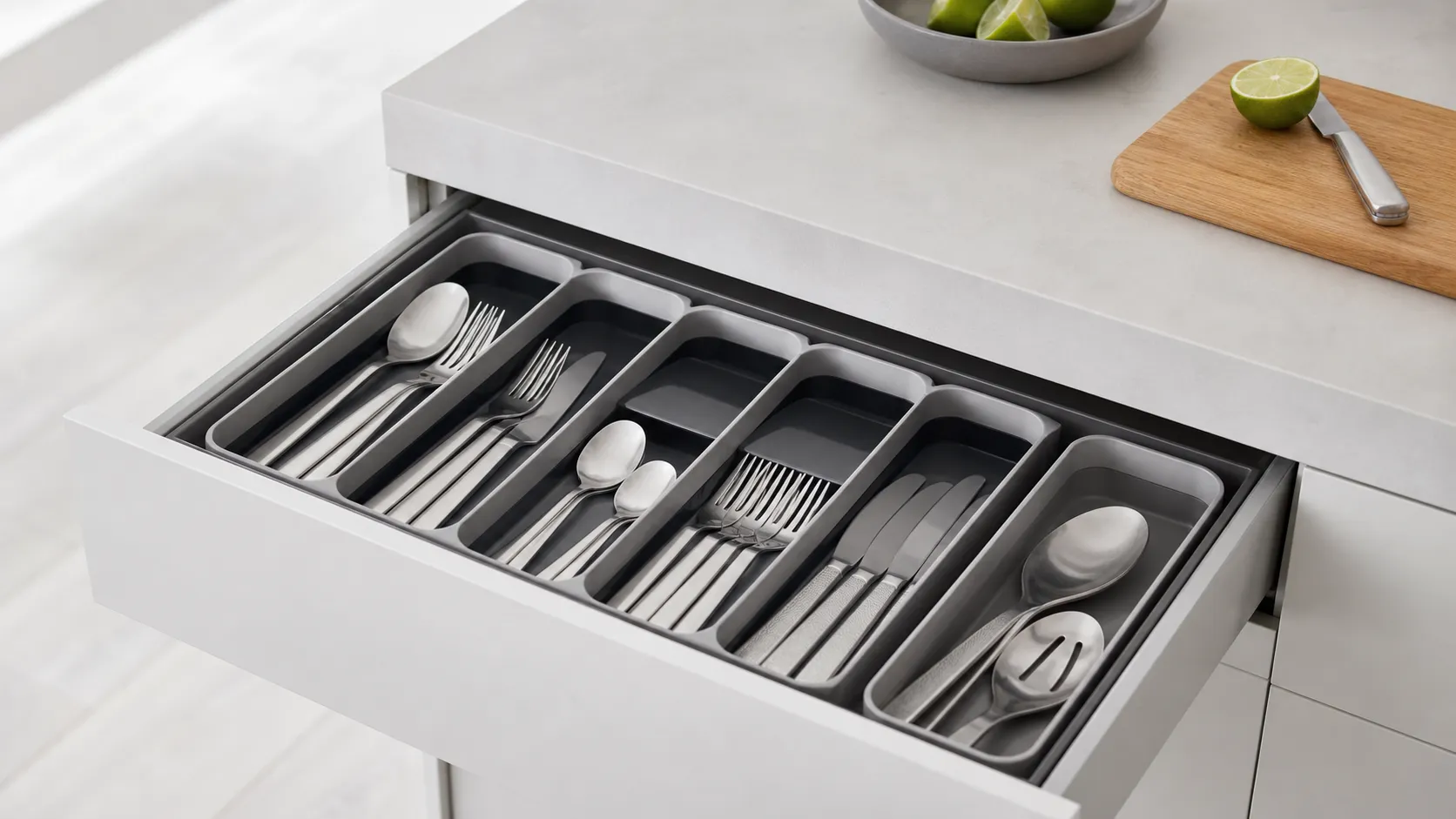
Joseph Joseph DrawerStore Cutlery Organizer Review 2026
A slim, modern cutlery tray that maximizes shallow-drawer space. Great for tidy, small-kitchen organization—measure your drawer first and avoid if you store long utensils.
 Kitchen & Appliances
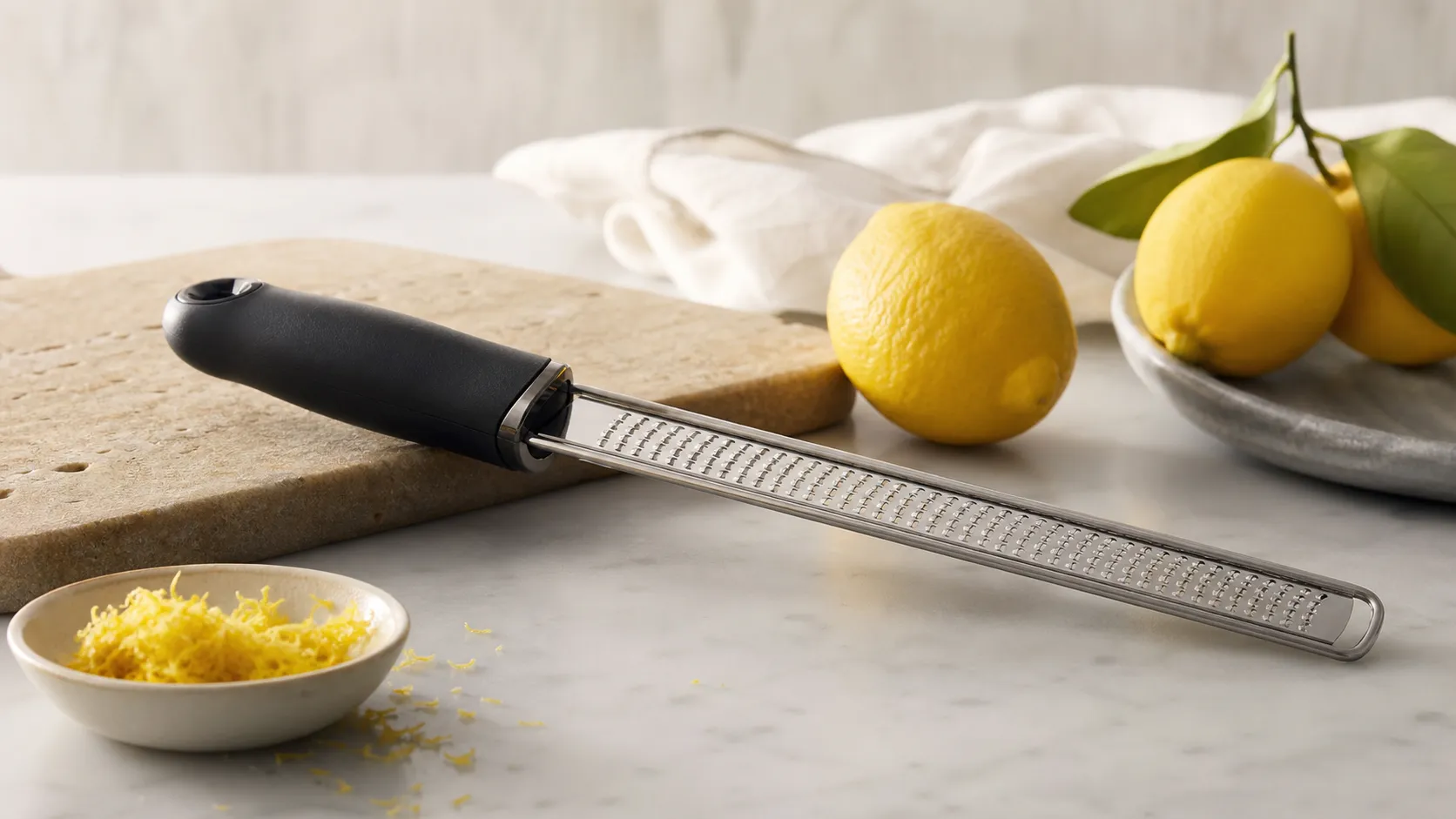
Microplane Premium Classic Zester/Grater — Review 2026
The Microplane Premium Classic is the go-to hand zester for precise, fluffy citrus zest and fine shavings. Sharp, compact, and great value—best for finishing, not bulk grating.