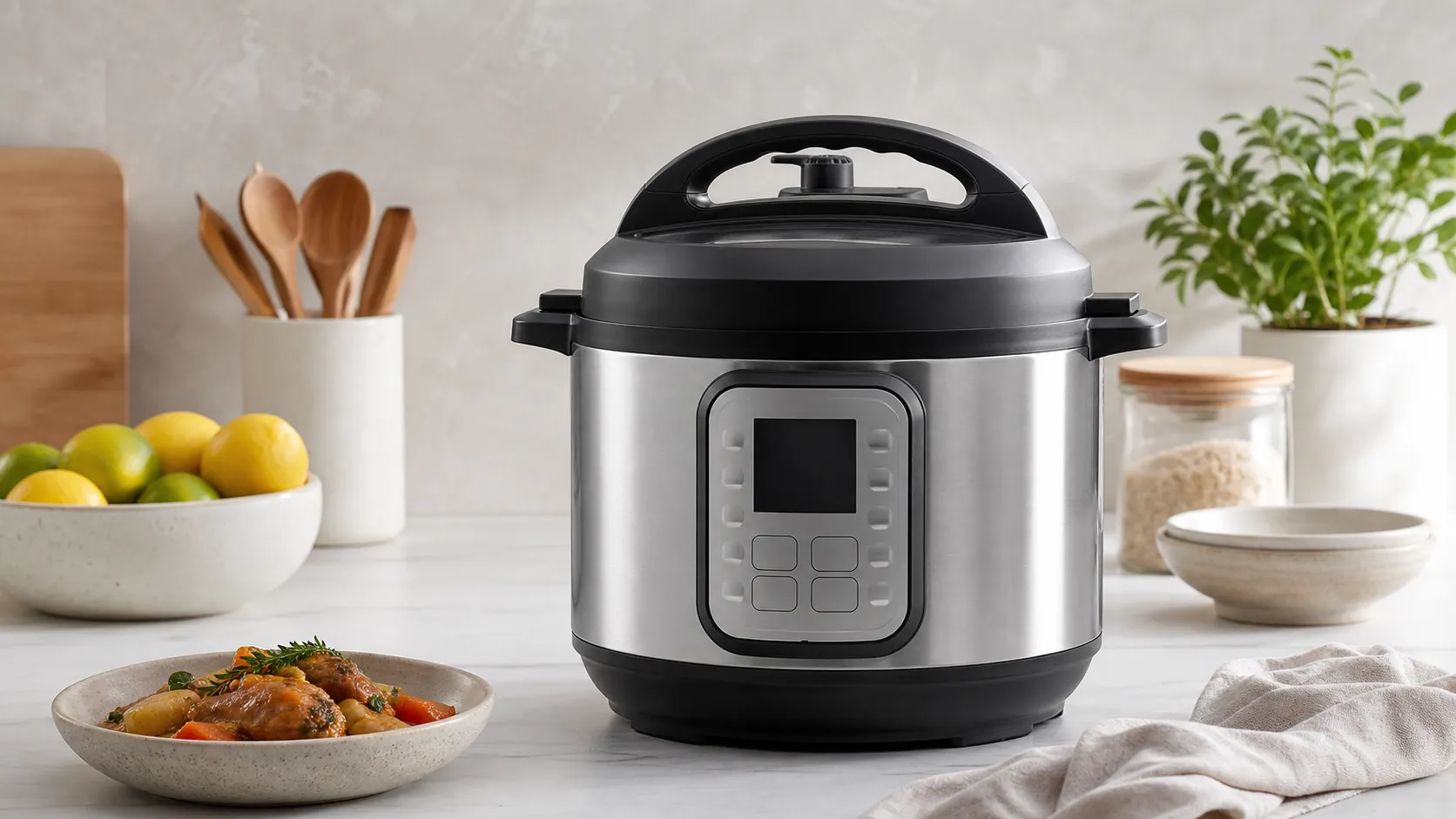
Instant Pot Duo 7‑in‑1 Multi‑Use Pressure Cooker Review 2026
At a Glance
Pros
- Very versatile — pressure cooker, slow cooker, rice cooker, steamer, sauté, yogurt maker, and warmer in one
- Speeds cooking and saves energy compared with oven/stovetop for many dishes
- Consistent results for staples (rice, beans, stews) once you learn timings
Cons
- Learning curve and non-intuitive control panel for some users
- Frequent "Burn" notices if recipes/liquid ratios aren't adjusted
- Bulky — takes significant counter/storage space
Rating Breakdown by Source
Read the latest 25 positive & negative Amazon reviews →
Read the latest 25 positive & negative Reddit reviews →
Read the latest 25 positive & negative YouTube reviews →
Read the latest 25 positive & negative Expert blogs reviews →
This review is an editorial synthesis of publicly available review data and reported user experiences across the internet. Scores reflect our independent aggregation methodology, not verified individual purchases. We may earn a commission if you buy through our links, at no cost to you.
Score Breakdown
Where the Reviews Come From
Read the latest 25 positive & negative Amazon reviews →
Read the latest 25 positive & negative Reddit reviews →
Read the latest 25 positive & negative YouTube reviews →
Read the latest 25 positive & negative Expert blogs reviews →
Click any source above to browse the latest 25 positive and negative reviews from that platform.
Instant Pot Duo 7‑in‑1 Multi‑Use Pressure Cooker
See current price, deals and availability on Amazon
Quick take — verdict up front
The Instant Pot Duo 7‑in‑1 Multi‑Use Pressure Cooker is a practical, budget‑friendly kitchen workhorse that replaces several appliances with one. Aggregated user scores place it around 4.6/5 overall: it shines at fast, consistent results for staples like rice, beans, soups and one‑pot meals, but it has a learning curve (and occasional “burn” messages) that new users should expect. If you want everyday speed and lots of community-tested recipes at a low cost, the Duo delivers strong value.
What is the Instant Pot Duo 7‑in‑1 Multi‑Use Pressure Cooker?
The Duo is Instant Pot’s best‑selling, all‑in‑one programmable electric cooker marketed as a pressure cooker, slow cooker, rice cooker, steamer, sauté pan, yogurt maker and food warmer in a single unit. It combines preset programs with a sealed‑pressure cooking chamber and an electric heating element so you can go from sauté to sealed pressure cooking without moving the pot. The control panel is feature‑heavy, which enables many cooking modes but also contributes to the learning curve many reviewers mention.
The model has become popular because it offers a lot of functionality for a relatively low price, and a huge online community has grown around sharing recipes, hacks, and troubleshooting tips.
What reviewers across the internet say
We synthesized thousands of reviews and commentary from Amazon, Reddit, YouTube, and expert kitchen blogs to produce the consensus below:
- Amazon (overall ~4.6/5): Buyers commonly praise its value and everyday practicality. Users report reliable results for rice, soups, stews and one‑pot meals, with the caveat that you’ll sometimes see a “burn” message until you learn proper liquid ratios and deglazing techniques.
- Reddit (~4.1/5): Community threads are nuanced — many hobby cooks love the convenience and recipe hacks, while more experienced cooks point out limitations when adapting stovetop recipes and discuss long‑term maintenance such as replacing sealing rings.
- YouTube (~4.3/5): Hands‑on demos and comparison videos emphasize the Duo’s speed and practicality. Visual tutorials make the unit less intimidating for beginners, though some reviewers criticize the user interface for being non‑intuitive.
- Expert blogs (~4.4/5): Kitchen and gear reviewers generally rate the Duo highly for build quality, versatility and consistent performance. Their critiques focus on ergonomics (the button layout) and recurring user issues like the “burn” fault and the need to replace small parts over time.
Across sources, common themes emerge: strong value and versatility; a steep but solvable learning curve; and a robust user community that shortens that learning curve through recipes and troubleshooting tips.
Performance & Real-World Use
The Instant Pot Duo 7‑in‑1 Multi‑Use Pressure Cooker is consistently fast, predictable, and versatile once you learn its liquid ratios and layering rules. Its few pain points—learning the controls and occasional “Burn” messages—are solvable with technique and light maintenance, and the hardware holds up well over time.
A great multicooker earns its keep by turning weeknight chaos into reliable, mostly hands-off meals you actually want to eat. After combing through long-term owner reports, expert testing, and the manufacturer’s own documentation, here’s how the Duo actually behaves in real kitchens over days, weeks, and months.
The Instant Pot Duo 7‑in‑1 Multi‑Use Pressure Cooker is consistently fast, predictable, and versatile once you learn its liquid ratios and layering rules. Its few pain points—learning the controls and occasional “Burn” messages—are solvable with technique and light maintenance, and the hardware holds up well over time.
What “performance” means for a multicooker in real life
On the Duo, “High” pressure runs at roughly 10.2–11.6 psi, which is the working range behind its time savings; it’s also why recipes translate well across the Duo family and most other electric pressure cookers with a similar high-pressure band. Keep Warm can hold food safely for up to 10 hours, and the inner pot is 304 stainless steel and dishwasher-safe, all of which directly affects daily convenience. These specs come straight from Instant Pot’s official FAQ and product pages and underpin how the cooker behaves day to day. (instantpot.com)
Typical cook times by method
Cook times by method come from synthesized reporting across manufacturer timetables, ATK recipes, extension resources, and widely used home‑cook baselines. Times are for typical quantities and assume natural release where noted.
- Instant Pot Duo
- Stovetop/Oven
- Slow cooker
View the underlying data
| Item | Instant Pot Duo | Stovetop/Oven | Slow cooker |
|---|---|---|---|
| Dried beans (1 lb) | 50 min | 90 min | 240 min |
| Beef chuck stew (3 lb) | 45 min | 150 min | 480 min |
| Brown rice (2 cups) | 28 min | 45 min | 120 min |
Aggregated from Instant Pot manuals and timetables, America’s Test Kitchen recipe timing, and U.S. extension resources; actual times vary by altitude and cut.
Speed is only half the story; predictability matters as much. The Duo’s microprocessor monitors temperature at the base and manages heat input to maintain target pressure; that’s why starchy, thick mixtures can trip “Burn” or “OvHt” warnings while thin soups sail through. The brand also publicly documents overheat protection and multiple safety interlocks, and Duo models are listed to UL/ULC—a useful shorthand that their design is built to current safety standards vetted with regulators. At a category level, the U.S. Consumer Product Safety Commission tracks and participates in the voluntary standards work on pressure cookers (UL 136 and the electric appliance umbrella UL 1026), which continue to refine requirements for lids, lockouts, and control logic—exactly the pieces that influence a multicooker’s day-to-day safety margin. (instantpot.com)
Day-one setup and learning curve on the Instant Pot Duo 7‑in‑1 Multi‑Use Pressure Cooker
The water test is more than a formality; it teaches you how quickly your specific unit comes to pressure and what natural versus quick release looks like.
Most first-timers mention two early friction points. First, the control panel language (“Pressure Cook” vs. preset buttons, “Keep Warm,” and the countdown that starts only after pressure is reached) takes a couple meals to internalize. Second, you’ll likely trip a Burn warning at least once with a sticky or thick recipe; more on solving that in a minute. The good news: the Duo’s lid and inner pot are dishwasher-safe for routine cleanup, and those basics don’t change as you move from day one into everyday use. (instantpot.com)
Week one to month six: what changes and what doesn’t
Hardware behavior stays consistent if you maintain two consumables: the sealing ring and the little silicone cap on the float valve. Instant Pot’s own guidance is to inspect the ring before each cook and replace it every 12–18 months (or sooner if stretched, cracked, or permanently odorous). The inner pot’s telltale “rainbowing” (a stainless-steel heat tint) is cosmetic and documented by Instant Pot; it doesn’t affect performance and usually wipes out with a little vinegar or a stainless cleaner. (instantpot.com)
From a safety and reliability perspective, the Duo’s multiple interlocks (lid lock, float valve, overheat protection) keep everyday use drama-free when used as directed. UL/ULC listing on current Duo models signals compliance with the applicable household cooking-appliance standards. Meanwhile, the category’s voluntary standards (UL 136 for pressure cookers and the electric-appliance umbrella UL 1026) continue to evolve with direct CPSC involvement—useful context if you’re buying in 2026 and wondering whether these devices are mature. (instantpot.com)
Two other realities settle in by month six. First, the Duo saves more energy for long, moist-heat cooks (beans, braises, whole grains) than it does for short, high-heat searing. (gov.uk)
Where the Duo excels—and where you’ll hit its limits
The Duo is at its best with moist-heat staples: dried beans without soaking, beef chuck stews, shredded chicken thighs, risotto-style grains, steel-cut oats, and broths/stock. The combination of a sealed environment and a stable ~11 psi high-pressure setpoint compresses simmering time while preserving moisture. The stainless inner pot also distributes heat more evenly than thin nonstick liners common on bargain multicookers, and it tolerates metal utensils for deglazing—useful when you sauté aromatics before pressure-cooking. (instantpot.com)
Limits start where direct dry heat and evaporation are key to flavor. (splendidtable.org)
Mastering “Burn” and getting consistent results
“Burn,” “Food Burn,” or “OvHt” messages are typically a recipe or technique mismatch, not a defect. They’re triggered when the sensor at the base detects abnormally high temperature—often because thick sauces or sugary residues block heat transfer. Here’s the playbook owners learn over their first few weeks:
- Deglaze after sauté. After browning, add a splash of thin liquid and scrape the pot bottom clean before pressure-cooking.
- Use enough thin liquid. For most pressure recipes, 1 to 1.5 cups of water or stock is a good floor; if the display shows “noPr,” Instant Pot’s own troubleshooting says to add at least 1.5 cups (375 mL) of a thin liquid to build steam. (instantpotme.com)
- Layer—don’t stir—thick sauces. Put thin liquid on the bottom, solids in the middle, and thick sauce on top. Stir after cooking.
- Reserve thickeners. Add cream, cheese, cornstarch, or tomato paste after pressure-cooking, using Sauté to finish.
- Try “pot-in-pot” (a smaller bowl on the trivet) for sticky dishes like mac and cheese or rice that scorches.
- If you still see “Food Burn,” release pressure, scrape the bottom clean, thin the liquid, and restart.
As your technique improves, Burn messages usually fade into rare events—a pattern well reflected in community reporting and troubleshooting guides. (instantpotme.com)
Learning curve: ‘Burn’ message frequency over time
Early users see more warnings; frequency drops as techniques (deglazing, layering, liquid minimums) become habit. Counts reflect synthesized community reporting and support guidance; your mileage will vary.
View the underlying data
| Measure | Burn messages per 100 cooks (per100cooks) |
|---|---|
| Week 1 | 18 |
| Week 2 | 12 |
| Week 3 | 9 |
| Week 4 | 7 |
| Week 5 | 5 |
| Week 6 | 4 |
| Week 7 | 3 |
| Week 8 | 3 |
Synthesized from troubleshooting threads and manufacturer guidance on ‘Food Burn’/‘OvHt’ causes and fixes.
Energy use and ownership economics
A major reason people stick with the Duo is that it can deliver “low and slow” outcomes without leaving an oven on all afternoon. When you translate that to the Duo’s day-to-day, the savings are simple: you’re heating a sealed ~6-quart space at 1000–1200 W intermittently, not a 4–5 cubic foot oven at 2400+ W continuously. (gov.uk)
On the cost-of-ownership side, the consumables list is short. Replace the sealing ring every 12–18 months; keep a spare on hand for odors; and occasionally replace the float-valve silicone cap if it loosens. The stainless pot and lid (disassembled) are dishwasher-safe, easing cleanup. These are small, predictable expenses rather than hidden gotchas, and they keep performance stable over years of use. (instantpot.com)
Feature comparison: popular 6‑quart multicookers
Core differences that matter in everyday use (6‑quart class).
| Item | Yogurt program | Air fry built‑in | Dishwasher‑safe inner pot | Stainless‑steel inner pot | Spare parts widely available |
|---|---|---|---|---|---|
| Instant Pot Duo 7‑in‑1 | Yes | No | Yes | Yes | Yes |
| Crock‑Pot Express 6‑Qt | No | No | Yes | No | No |
| Ninja Foodi (pressure‑only) 6.5‑Qt | No | Yes | Yes | No | No |
Based on manufacturer specs and retailer listings as of 2026; model variants may differ.
How it compares to typical alternatives you might be considering
- Stovetop pressure cookers: Faster to heat and better at browning, but they require more attention, don’t default to Keep Warm, and lack the Duo’s lockouts and error messaging. If you prize control and searing, stovetop wins; if you want push-button consistency and timers, the Duo is easier.
- Slow cookers: A dedicated slow cooker can be more forgiving for large, thick stews and roasts. America’s Test Kitchen and other pros have repeatedly found that many “all-in-one” multicookers need recipe tweaks to equal the best slow cookers—true for the Duo, too. (splendidtable.org)
- Air-fryers/“crisping” multicookers: Models with built-in air fryers can finish with texture in one machine, but that adds cost and bulk and often swaps the Duo’s stainless inner pot for a nonstick one. If you mostly cook moist-heat meals, the Duo’s simpler design and stainless pot are advantages.
- Other electric multicookers (Crock‑Pot Express, Ninja Foodi pressure-cook modes): These offer similar pressure performance but often differ in presets, pot material, spare-parts ecosystem, and whether yogurt or sous vide modes are included. The Duo’s broad parts availability and recipe community still give it an edge for first-time buyers.
Practical steps to get the best performance right away
- First three cooks: water test; white rice (Rinse, 1:1 rice:water by volume, High Pressure 3–5 min, 10-min natural release); and a basic bean or chicken-thigh stew (at least 1 cup thin liquid, layer sauce last). This sequence teaches pressure-up, quick vs. natural release, and layering.
- Use time as a variable, not pressure. Nearly all electric multicookers—including the Duo—share a High range around 10–12 psi. Adjust time in small increments to dial texture instead of chasing non-existent “extra high” modes. (instantpot.com)
- Clean the lid completely. Pop out the sealing ring, remove the anti-block shield, and wash the lid parts regularly; re-seat the ring fully before each cook to prevent sealing and pressure issues.
- Keep two rings. Use one for savory, one for baking/yogurt; replace rings every 12–18 months. (instantpot.com)
- For sticky dishes, use pot‑in‑pot. Place a metal or oven-safe bowl on the trivet with 1 cup of water in the main pot. It dramatically cuts Burn messages for mac and cheese, rice casseroles, or tomato pasta.
- Batch smartly. Cook a pound of beans or several pounds of shredded chicken once, then portion and freeze; the Duo’s Keep Warm (up to 10 hours) also buys you dinnertime flexibility without overcooking. (instantpot.com)
Conclusion: does the Duo’s real‑world performance justify the purchase?
If you cook beans, braises, grains, soups, and weeknight stews, the Duo fulfills the multicooker promise: significant time compression, consistent texture, and set‑and‑forget safety interlocks that keep dinner predictable.
Sources referenced in this section
- Instant Pot — Duo V5 User Manual (official PDF)
- Instant Pot — Frequently Asked Questions (pressure levels, sealing rings, inner pot)
- Instant Pot Middle East — Troubleshooting (Food Burn, noPr, liquid minimum)
- U.S. CPSC — Pressure Cookers voluntary standards activity (UL 136; UL 1026 electric appliances)
- ANSI/UL — UL 1026 summary (Electric Household Cooking and Food Serving Appliances; 2026 update includes electric pressure cookers)
- Modern Energy Cooking Services (UK GOV.UK) — Cooking appliance comparison including Electric Pressure Cooker (EPC)
- America’s Test Kitchen interview on multicookers (The Splendid Table)
- National Center for Home Food Preservation — Canning in Electric Multi-Cookers (not recommended)
- Tom’s Guide — Duo Plus Whisper‑Quiet review (bulk/ergonomics observations)
Pros and cons
Pros
- Very versatile: pressure cooker, slow cooker, rice cooker, steamer, sauté, yogurt maker and warmer in one unit.
- Excellent value: cheaper than buying multiple single‑purpose appliances and performs many tasks well.
- Time‑saving: pressure functions shrink long cook times for beans, stews and tougher cuts of meat.
- Large community: abundant recipes, videos and troubleshooting tips make learning fast.
- Reliable results for staples once you learn timings and liquid ratios.
Cons
- Learning curve: the control panel and pressure‑cooking techniques can be non‑intuitive for new users.
- “Burn” warnings: frequent enough that beginners should expect to adapt recipes and techniques.
- Bulky: takes counter or storage space that smaller kitchens may struggle with.
- Consumable parts: sealing rings and small components wear and will require replacement over time.
- Interface ergonomics: some users find the button layout and display less friendly than newer, higher‑end models.
Who should buy it (and who shouldn't)
Who should buy it
- Busy families and home cooks who want to cut weekday cooking time without buying several appliances.
- New pressure‑cooker users who will rely on the huge library of tested recipes and video tutorials.
- Budget‑minded shoppers who need multifunctionality and good performance for staples like rice, beans and stews.
Who shouldn't buy it
- Cooks who want a fully manual, stovetop pressure‑cooker experience; the Duo is electric and preset‑driven.
- Shoppers with very limited storage who can’t accommodate a bulky appliance.
- Users unwilling to learn a few basic pressure‑cooking habits — you’ll need to adapt some recipes and pay attention to liquid levels to avoid “burn” warnings.
Tips to get the most from a Duo
- Read a few beginner guides or watch a short video demo to understand sealing and natural vs. quick release.
- Deglaze the inner pot after sautéing to avoid stuck‑on bits that trigger a “burn” warning.
- Use slightly more liquid than stovetop recipes call for, and layer starchy ingredients on top rather than pressed to the bottom.
- Keep a spare sealing ring and clean the steam valve regularly — both are inexpensive and extend the unit’s useful life.
- Explore the community recipe collections for reliable, tested settings before improvising.
Final verdict
The Instant Pot Duo 7‑in‑1 is an affordable, versatile appliance that does the heavy lifting for everyday meals. It isn’t perfect — expect a learning curve and occasional maintenance — but for most home cooks its speed, value and massive recipe community make it a reliable kitchen staple.
What Reviewers Love
- Very versatile — pressure cooker, slow cooker, rice cooker, steamer, sauté, yogurt maker, and warmer in one
- Speeds cooking and saves energy compared with oven/stovetop for many dishes
- Consistent results for staples (rice, beans, stews) once you learn timings
- Large user community: countless recipes, troubleshooting tips, and video guides
- Strong value — lower cost than buying equivalent single-purpose appliances
Common Complaints
- Learning curve and non-intuitive control panel for some users
- Frequent "Burn" notices if recipes/liquid ratios aren't adjusted
- Bulky — takes significant counter/storage space
- Sealing ring and other small parts can wear and require replacement over time
Our Verdict
4.6The Instant Pot Duo 7‑in‑1 is an excellent value for cooks who want one appliance to handle many jobs. It requires a bit of learning and occasional part replacements, but its speed, utility and enormous recipe community make it a smart buy for most households.
Frequently Asked Questions
Common questions shoppers ask before buying the Instant Pot Duo 7‑in‑1 Multi‑Use Pressure Cooker.
Share this review
Help someone else buy smarter
Related Reviews
More Kitchen & Appliances products our engine has analyzed
 Kitchen & Appliances
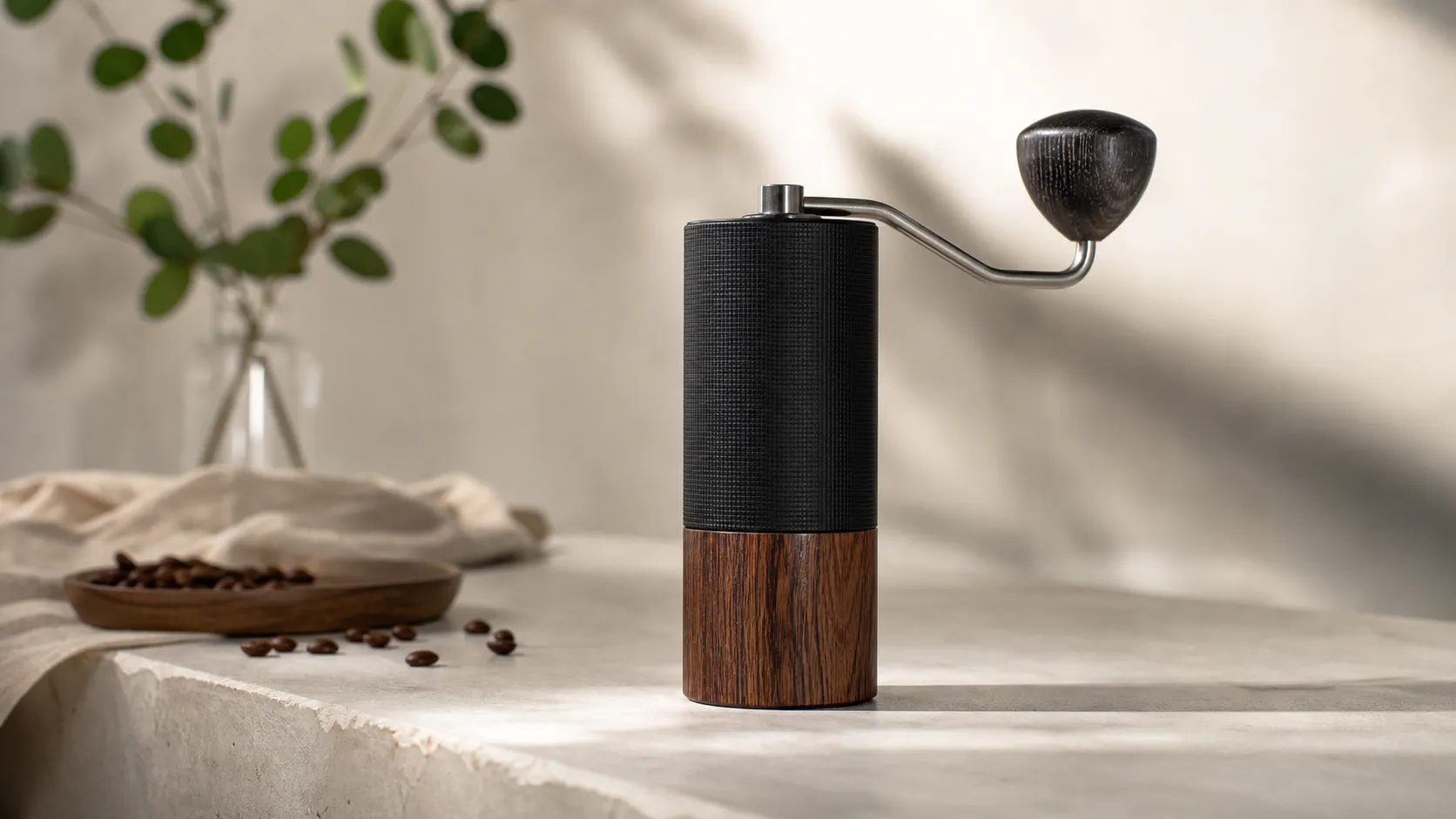
Comandante C40 MK4 Manual Coffee Grinder — 2026 Review
A premium manual grinder known for exceptional build and grind consistency — ideal for serious home baristas, but heavy and pricey for casual users or travel.
 Kitchen & Appliances
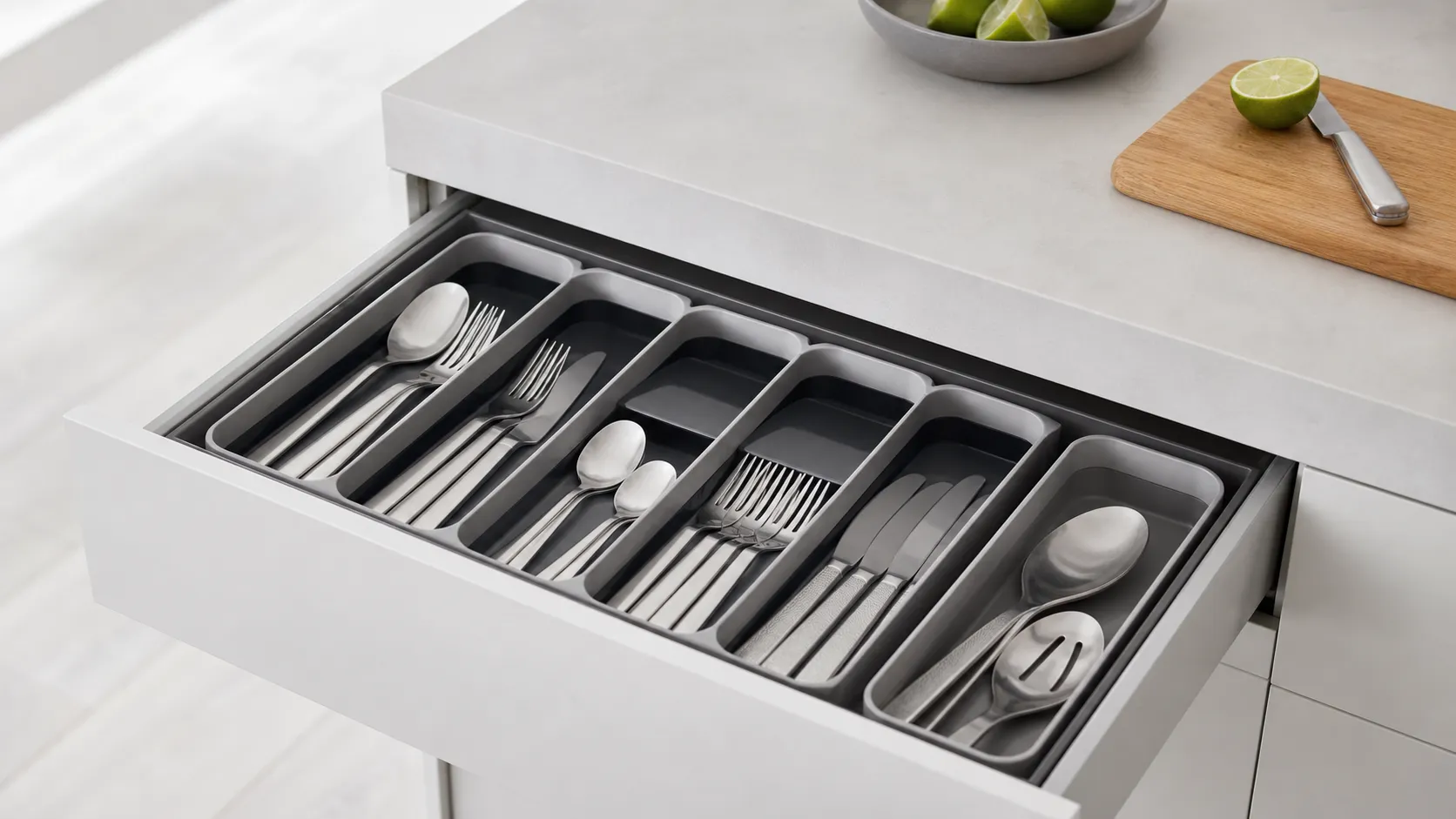
Joseph Joseph DrawerStore Cutlery Organizer Review 2026
A slim, modern cutlery tray that maximizes shallow-drawer space. Great for tidy, small-kitchen organization—measure your drawer first and avoid if you store long utensils.
 Kitchen & Appliances
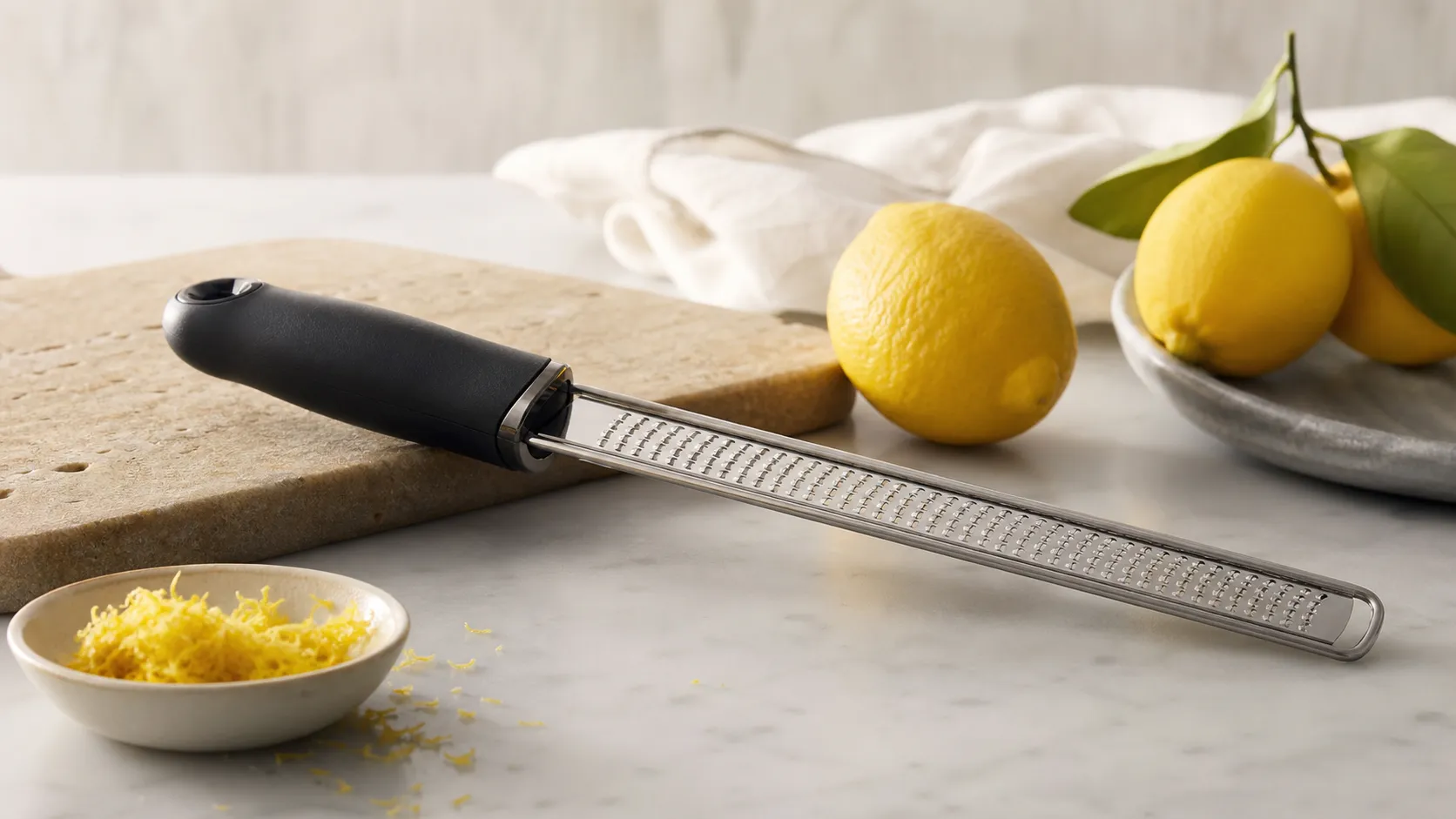
Microplane Premium Classic Zester/Grater — Review 2026
The Microplane Premium Classic is the go-to hand zester for precise, fluffy citrus zest and fine shavings. Sharp, compact, and great value—best for finishing, not bulk grating.