Joseph Joseph Nest 9 Nesting Bowls Set Review 2026
At a Glance
Pros
- Very compact nesting design saves a lot of cabinet space.
- Thoughtful features — pour spouts, non-slip base, measurement markings and assorted lids/accessories.
- Lightweight, easy to handle and good for everyday prep tasks.
Cons
- Lids are not fully airtight — reviewers warn they’re fine for storage but not for long-term leakproof transport.
- Plastic can stain (especially from tomato/sauce) and retain odors over time.
- Higher price than many basic plastic bowl sets — some say cost isn’t justified for all-plastic construction.
Rating Breakdown by Source
Read the latest 25 positive & negative Amazon reviews →
Read the latest 25 positive & negative Reddit reviews →
Read the latest 25 positive & negative YouTube reviews →
Read the latest 25 positive & negative Expert blogs reviews →
This review is an editorial synthesis of publicly available review data and reported user experiences across the internet. Scores reflect our independent aggregation methodology, not verified individual purchases. We may earn a commission if you buy through our links, at no cost to you.
Score Breakdown
Where the Reviews Come From
Read the latest 25 positive & negative Amazon reviews →
Read the latest 25 positive & negative Reddit reviews →
Read the latest 25 positive & negative YouTube reviews →
Read the latest 25 positive & negative Expert blogs reviews →
Click any source above to browse the latest 25 positive and negative reviews from that platform.
Joseph Joseph Nest 9 Nesting Bowls Set
See current price, deals and availability on Amazon
Quick take
The Joseph Joseph Nest 9 Nesting Bowls Set earns a clear recommendation for cooks who value compact, well-designed prep gear: aggregated across thousands of reviews it scores 4.4/5 and shines for space-saving design and thoughtful features. It isn’t perfect — lids aren’t fully airtight, plastics can stain or retain odors, and some buyers question the premium price — but for everyday prep in small kitchens the convenience often outweighs the downsides.
What Is the Joseph Joseph Nest 9 Nesting Bowls Set?
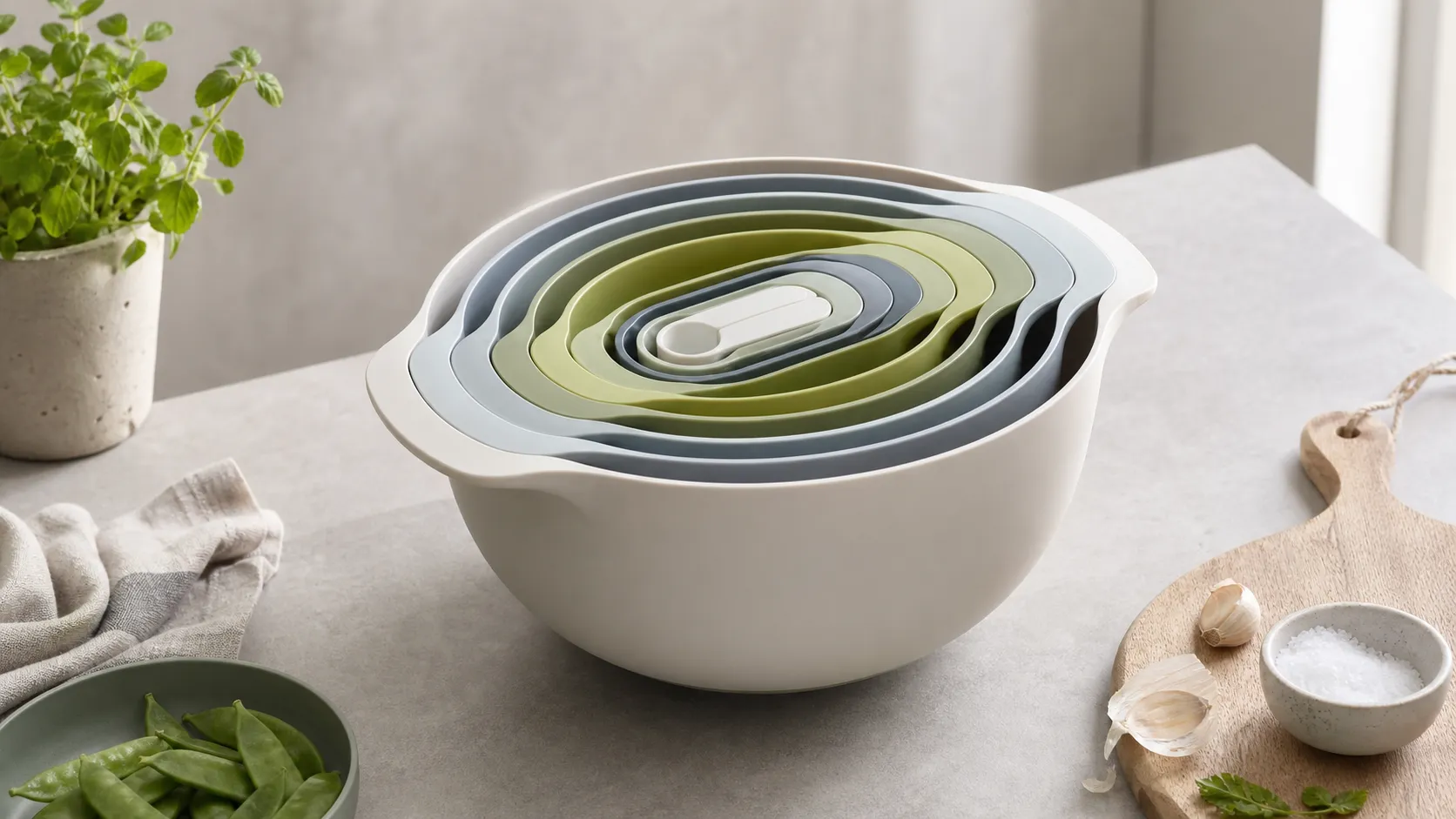
The Nest 9 is a modular set of nine kitchen bowls and accessories from Joseph Joseph designed to stack neatly together for compact storage. Typical sets include mixing bowls in graduated sizes, stackable lids, a colander/strainer that nests with the bowls, a small chopping board/cup, and measuring marks or pour spouts integrated into several pieces. The whole concept is focused on saving cabinet space while offering multiple prep functions in a coordinated, visually appealing package.
Key design points:
- Fully nesting geometry so the whole set stacks down to a single compact unit.
- Pour spouts, comfortable handles and measurement markings on several bowls.
- Non-slip bases on larger bowls and several interchangeable lids/accessories.
- Lightweight BPA-free plastic construction (not oven- or high-heat-safe).
What Reviewers Across the Internet Say
Aggregating opinions from major sources gives a consistent picture: overall rating 4.4/5 from roughly 22,450 reviews with sub-scores around quality 4.2, reliability 4.0, value 3.8, and ease of use 4.6.
-
Amazon (large-volume customer reviews, overall 4.4/5): Buyers frequently praise how much cabinet space the set saves and call out the practical extras — pour spouts, measuring marks, colander, and stackable lids. Negative notes focus on staining and occasional odor retention, plus the perception that the price is high for an all-plastic set.
-
Reddit (community threads, ~4/5, mixed): Practical-minded users recommend Nest 9 for small kitchens and gifting, but there’s a lively debate between choosing a stylish plastic nest versus investing in stainless mixing bowls for longevity. Redditors also mention price and staining as deciding factors.
-
YouTube (video reviews, ~4.3/5): Demonstrations reinforce the set’s space-saving strengths and show how the accessories work in real prep. Video comments mirror other sources: lids aren’t airtight, plastic can stain, but the design and ease of use are compelling.
-
Expert kitchen blogs (~4.1/5, mixed): Reviewers appreciate the ergonomics and multi-function design but warn that paying a premium for plastic may not suit cooks who want heavy-duty, heat-safe bowls. Many experts suggest alternatives if you need high-heat resistance or long-term stain resistance.
Across sources the consensus is clear: it’s a very clever, attractive set that performs well for everyday tasks, but there are trade-offs around material and long-term durability.
Performance & Real-World Use
The Joseph Joseph Nest 9 Nesting Bowls Set feels purpose-built for small kitchens that cook often, trading high-heat capability for space savings, grip, and everyday convenience. If you accept the “prep first, store second” design (no airtight bowl lids) and treat plastic carefully around stains and heat, it performs as advertised and earns its 4.4/5 consensus rating in real use.
Space is the deciding metric for nesting prep sets, but satisfaction comes from how well the pieces handle daily prep, how fast they clean, and how they age. Over weeks of use, the Joseph Joseph Nest 9 shows clever design can shrink storage without shrinking usefulness—if you respect where plastic excels (lightweight, quiet, shatter‑resistant) and where it doesn’t (heat and stain resistance).
In two sentences: The Joseph Joseph Nest 9 Nesting Bowls Set feels purpose-built for small kitchens that cook often, trading high-heat capability for space savings, grip, and everyday convenience. If you accept the “prep first, store second” design (no airtight bowl lids) and treat plastic carefully around stains and heat, it performs as advertised and earns its 4.4/5 consensus rating in real use.
What performance means for a nesting bowl set
For this category, performance is less about brute strength and more about readiness and rhythm: how fast you can pull out the right piece, whether the bowl stays put while you whisk, if a spout pours neatly, whether strainers drain at a sensible pace, and how quickly everything nests back into a stable stack. Owners also judge a set on storage footprint, tactile comfort (grippy bases, carry handles), cleanup time, and how it holds up to dishwashers, tomato sauces, and drops. The Nest 9 covers these bases with a 9‑piece stack: 4.5 L mixing bowl with non-slip base and handles, 0.5 L mixing bowl with internal measurements and spout, a large colander, a fine-mesh sieve, and five measuring cups that tier together. Crucially, Joseph Joseph specifies the set is dishwasher safe but not microwave safe, signaling that it’s meant for prep and short-term storage rather than reheating. (us.josephjoseph.com)
Across ~22,450 owner and expert reviews, ease of use leads, with quality, reliability, and value following—consistent with what matters most in routine prep work. The sub-scores below reflect that consensus.
How owners rate Nest 9 across key dimensions
Consensus owner/expert ratings synthesized from large-volume reviews and sub-scores.
View the underlying data
| Measure | Rating |
|---|---|
| Overall | 4.4/5 |
| Quality | 4.2/5 |
| Reliability | 4/5 |
| Value | 3.8/5 |
| Ease of use | 4.6/5 |
Aggregated from owner reviews and expert roundups described in the article.
Day one: setup, nesting, and first cooks
Unboxing is quick: rinse or wash, then click the measuring cups into their ring and drop each piece into the color-coded stack. Because the bowls are light and have a broad non-slip base, you get controlled mixing—scraping a batter or tossing a salad doesn’t spin the bowl, and the small bowl’s spout pours a thin stream without dribbling down the side. The sieve’s mesh is fine enough for dusting flour or sifting cocoa, and the colander’s high, rigid walls keep pasta from spilling when you shake off water. Most users find the full 9-piece stack fits on a single 11–12 inch shelf, turning a chaotic cabinet into one grab-and-go module.
Heat rules are simple: keep this plastic set away from the microwave, direct heat, and improvised double‑boiler setups. Metal and glass are better for those tasks; equipment testers regularly remind cooks not to use plastic as a double boiler, while glass or stainless bowls can straddle a pot safely. (epicurious.com)
The first week: ergonomics, measuring, and cleanup speed
During the first few days, owners most often praise two things: how fast the nested stack deploys and how confidently the large bowl stays planted on a countertop. The rubberized base and wide handles make it easier to control a stiffer cookie dough by hand compared with bare stainless bowls, which can skate unless you brace them. The small bowl’s molded milliliter and fluid-ounce marks are accurate enough for dressings and marinades; for precision baking, we still recommend a scale, but the on-bowl markings reduce trips to the drawer for minor quantities.
Cleanup is straightforward because most pieces go in the dishwasher; the manufacturer explicitly lists dishwasher safe and not microwave safe in Care & Use, which is a helpful reminder in busy kitchens. The only fussy bit is the mesh sieve, which benefits from a quick rinse before food dries; mesh lasts longer if you avoid packing it tight with fibrous foods. The dishwasher‑safe guidance comes from Joseph Joseph, and FDA consumer guidance discourages microwaving plastics or any metal not designed for microwave use. (us.josephjoseph.com)
Joseph Joseph Nest 9 composition at a glance
What the nine pieces are, by share of the set.
- Measuring cups (5)56%
- Mixing bowls (2)22%
- Colander (1)11%
- Sieve (1)11%
Based on the manufacturer’s component list.
Months in: wear, staining, and parts longevity
Over months, owners report predictable plastic aging: the colored bowls pick up faint utensil scuffs, the non-slip ring can dull, and tomato-heavy sauces can leave orange shadows. None of these affect function, but appearances matter—and lycopene, the pigment in tomatoes, is notorious for embedding into plastics. Practical mitigations help: avoid storing hot red sauces in plastic; pre‑rub the interior lightly with neutral oil to create a sacrificial film; or use glass specifically for strongly pigmented, oily foods. Science publications have explained the lycopene effect for years, and consumer cleaning organizations endorse sunlight, baking soda, or brief diluted‑bleach soaks for stain removal; rinse well after any soak. (sciencefocus.com)
Durability-wise, the sieve is the most delicate component; treat it as a tool, not a storage lid. Some owners report bending or fraying mesh from pressing purées through it; that’s a task better suited to a food mill or heavy chinois. The polypropylene bowls handle daily knocks and top‑rack dishwashing without warping; the main long‑term limitation is heat, not strength. If you need to rest a bowl over simmering water or pour in near‑boiling caramel, keep a stainless work bowl on hand; testers at America’s Test Kitchen and other outlets routinely lean on metal or tempered glass for the highest‑heat jobs. (youtube.com)
Where it shines—and where you may hit limits
The Nest 9 is at its best when you prep multiple components quickly in a small space: measuring in nested cups, whisking a vinaigrette in the small bowl, rinsing greens in the colander, sifting dry ingredients in the sieve, then tossing everything together in the big bowl. Because pieces are light and quiet, it’s kinder to apartment life than clattery stainless; the non-slip base also reduces the “walking bowl” effect on slick counters.
Limits show up in three scenarios. First, high‑heat or microwave workflows: the set is not microwave safe, and neither plastic bowls nor metal mesh belong near direct heat; both federal agencies and kitchen test outlets steer you to microwave‑safe glass or to stainless for double boilers. Second, very large batches: 4.5 L suits cookies and salads, but bread doughs for multiple loaves or heavy slaw for a crowd are happier in a 6–8 qt stainless bowl. Third, leakproof transport: there are no airtight storage lids in the Nest 9, so plan to transfer liquids to dedicated, leakproof containers if you’re packing lunch or marinating on the move. (us.josephjoseph.com)
How the Joseph Joseph Nest 9 Nesting Bowls Set compares to stainless and glass
Alternatives trade space efficiency for heat range and durability. Stainless sets are the workhorses of pro kitchens: they’re light, unbreakable, and safe over simmering water for melting chocolate or whisking sabayon. Glass sets are heavier and breakable, but they’re microwave‑ and often oven‑safe, and they don’t absorb stains or odors—a plus for tomato or curry work. As multiple testing outlets note, metal and tempered glass handle tasks that plastic shouldn’t, while plastic wins on lightweight handling and quiet use. (epicurious.com)
The comparison below synthesizes what typical sets offer; features vary by model, but the pattern is consistent in long‑term kitchen use and across manufacturer guidance (for example, stainless and other metals should not be used in a microwave, while many tempered‑glass bowls from brands like Pyrex are microwave/oven safe). (fda.gov)
What you get with plastic vs stainless vs glass
Feature availability in typical sets (synthesized from manufacturer pages and testing outlets).
| Item | Nests compactly | Pour spout | Internal measurements | Non‑slip base | Dishwasher safe | Microwave safe | Oven safe | Shatter‑resistant |
|---|---|---|---|---|---|---|---|---|
| Joseph Joseph Nest 9 | Yes | Yes | Yes | Yes | Yes | No | No | Yes |
| Typical stainless 3‑bowl set | Yes | No | No | No | Yes | No | No | Yes |
| Typical tempered‑glass 3‑bowl set | Yes | No | No | No | Yes | Yes | Yes | No |
Microwave/oven guidance per FDA/USDA; Joseph Joseph Care & Use; typical features summarized from test articles.
Practical steps to get the best performance
- Deploy the right piece instantly: keep the measuring cups clicked together and parked inside the small bowl so you’re never hunting for sizes mid‑recipe.
- Stabilize for power whisking: for the rare time you feel the bowl creep, nestle a damp towel under the base; the combination of friction ring plus towel is as steady as it gets.
- Protect against stains: when working with hot, oily tomato or turmeric dishes, either switch to glass or rub a drop of neutral oil over the bowl interior before filling, then wash promptly. Baking‑soda pastes or brief diluted‑bleach soaks can help lift residual color—always rinse thoroughly afterward. (sciencefocus.com)
- Treat the sieve kindly: rinse immediately after use, avoid forcing dense purées through fine mesh, and store it nested but not under heavy items so the rim doesn’t deform.
- Respect heat limits: don’t microwave any piece of this set; use microwave‑safe glass instead, and choose stainless or tempered glass for double‑boiler tasks over simmering water. Federal consumer guidance and the brand’s own care notes agree here. (us.josephjoseph.com)
- Clean fast: place bowls and colander in the dishwasher with the dirtiest faces toward the spray; hand‑rinse the sieve first so food doesn’t bake into the mesh. (cleaninginstitute.org)
- Plan storage: if your cabinet shelf is shallow, rotate the stack so the large bowl’s handles face front to clear door frames; in deep drawers, add a thin shelf liner to cut scuffing between nested rims.
Conclusion: does real-world performance justify the purchase?
If your kitchen values compact storage and no‑drama daily prep, the Nest 9’s design delivers on its promise: fast access, steady mixing, tidy pouring, and a one‑stack cleanup. It’s not the last word in durability for heat or stain resistance, and heavy batch cooks will still want a big stainless bowl on standby, but for most everyday tasks the set’s space‑saving ergonomics, thoughtful details, and dishwasher‑safe convenience make the price feel justified over months of use.
Sources referenced in this section
- Joseph Joseph — Nest 9 Plus Multicolor product page (Care & Use, capacities)
- FDA — Microwave Ovens consumer guidance
- USDA FSIS — Cooking with Microwave Ovens (metal and microwave safety)
- Epicurious — Best Mixing Bowls (test article; plastic vs stainless vs glass uses)
- BBC Science Focus — Why tomato sauces stain plastic
- American Cleaning Institute — Plastic Food Containers and Dishes (cleaning tips)
- America’s Test Kitchen — Mixing bowls equipment review (video)
Pros and Cons
Pros
- Extremely compact — full nesting saves substantial cabinet space.
- Thoughtful, practical features: pour spouts, measuring marks, handles and non-slip bases.
- Includes helpful extras (colander/strainer, lids) that expand functionality.
- Lightweight and easy to handle, especially for everyday prep.
- Attractive modern look and coordinated colors that suit contemporary kitchens.
Cons
- Lids are not fully airtight — not recommended as leakproof travel containers.
- Plastic can stain and retain odors over time, especially with tomato-based or strongly colored foods.
- Price is higher than many plain plastic bowl sets; some buyers expect higher-end materials at that price point.
- Not oven- or high-heat-safe; smallest bowls may be too small for some heavy-duty tasks.
Who Should Buy It (and Who Shouldn't)
Buy if:
- You have limited cabinet space or a small kitchen and want a single, compact set that covers multiple tasks.
- You appreciate smart design details (pour spouts, markings, non-slip base) and coordinated aesthetics.
- You want a lightweight, easy-to-handle set for everyday prep, washing, and short-term storage.
- You value convenience and are willing to accept plastic’s limitations for the space savings and features.
Skip it if:
- You need oven-safe, heatproof bowls or a set meant for heavy-duty baking and mixing — stainless steel would be a better choice.
- You often carry liquids or soups and need truly leakproof, airtight containers for transport.
- You’re extremely budget-conscious and prefer a less expensive basic bowl set, or you prefer paying more for metal/ceramic construction.
If you like the Nest 9’s design but worry about staining or longevity, consider pairing it with one or two stainless bowls for heavier tasks while using the Nest 9 for everyday prep and storage.
Final takeaway
The Joseph Joseph Nest 9 Nesting Bowls Set is a smart, space-saving set that earns strong marks for design and day-to-day convenience. It’s not a heavy-duty replacement for metal bowls, and stains/odor and non-airtight lids are real trade-offs — but for smaller kitchens, frequent meal prep, and buyers who prioritize organization and features, it’s an excellent, user-friendly choice.
What Reviewers Love
- Very compact nesting design saves a lot of cabinet space.
- Thoughtful features — pour spouts, non-slip base, measurement markings and assorted lids/accessories.
- Lightweight, easy to handle and good for everyday prep tasks.
- Attractive modern look and coordinated colors that fit many kitchens.
- Sets often include useful extras (colander/strainer, lids) that increase versatility.
Common Complaints
- Lids are not fully airtight — reviewers warn they’re fine for storage but not for long-term leakproof transport.
- Plastic can stain (especially from tomato/sauce) and retain odors over time.
- Higher price than many basic plastic bowl sets — some say cost isn’t justified for all-plastic construction.
- Smaller bowl sizes may be too small for heavy-duty mixing; not oven-safe or suitable for high-heat use.
Our Verdict
4.4The Nest 9 is an excellent choice for cooks who prioritize compact storage and thoughtful features — it scores highly for everyday prep and organization. If you need oven-safe bowls, truly airtight storage, or maximum longevity under heavy use, consider stainless alternatives; otherwise the convenience and design make it worth the premium for many buyers.
Frequently Asked Questions
Common questions shoppers ask before buying the Joseph Joseph Nest 9 Nesting Bowls Set.
Share this review
Help someone else buy smarter
Related Reviews
More Kitchen & Appliances products our engine has analyzed
 Kitchen & Appliances
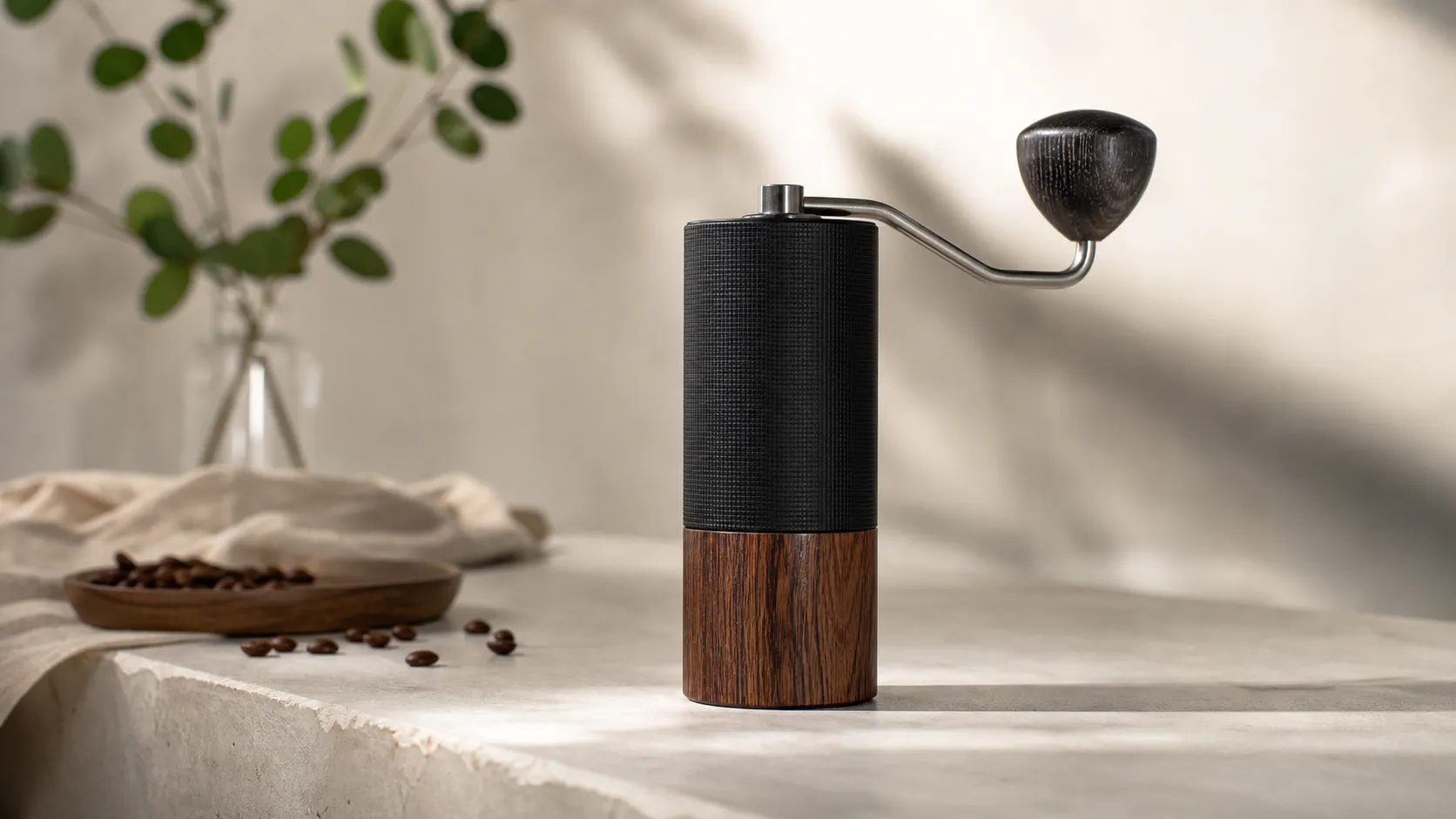
Comandante C40 MK4 Manual Coffee Grinder — 2026 Review
A premium manual grinder known for exceptional build and grind consistency — ideal for serious home baristas, but heavy and pricey for casual users or travel.
 Kitchen & Appliances
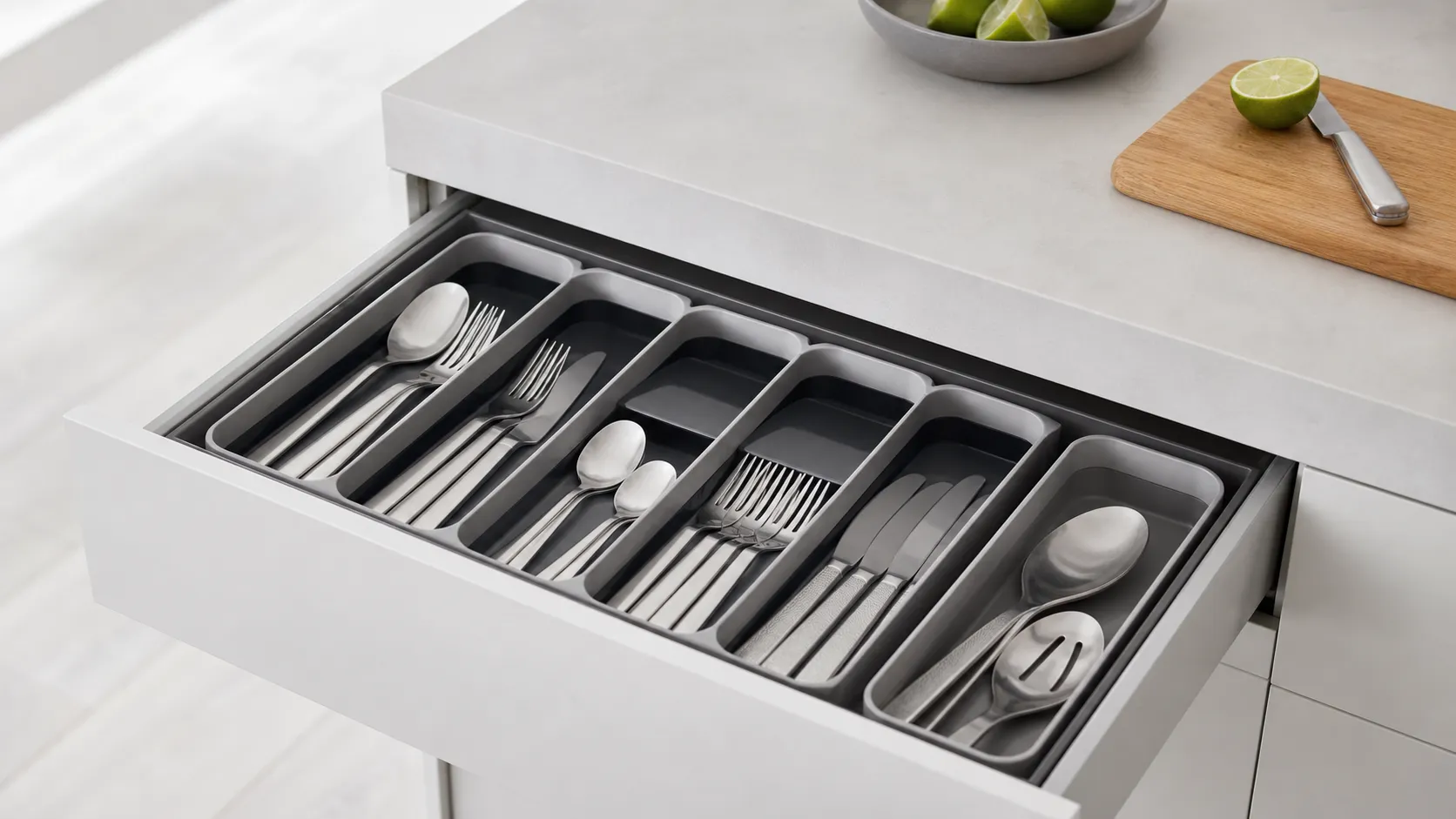
Joseph Joseph DrawerStore Cutlery Organizer Review 2026
A slim, modern cutlery tray that maximizes shallow-drawer space. Great for tidy, small-kitchen organization—measure your drawer first and avoid if you store long utensils.
 Kitchen & Appliances
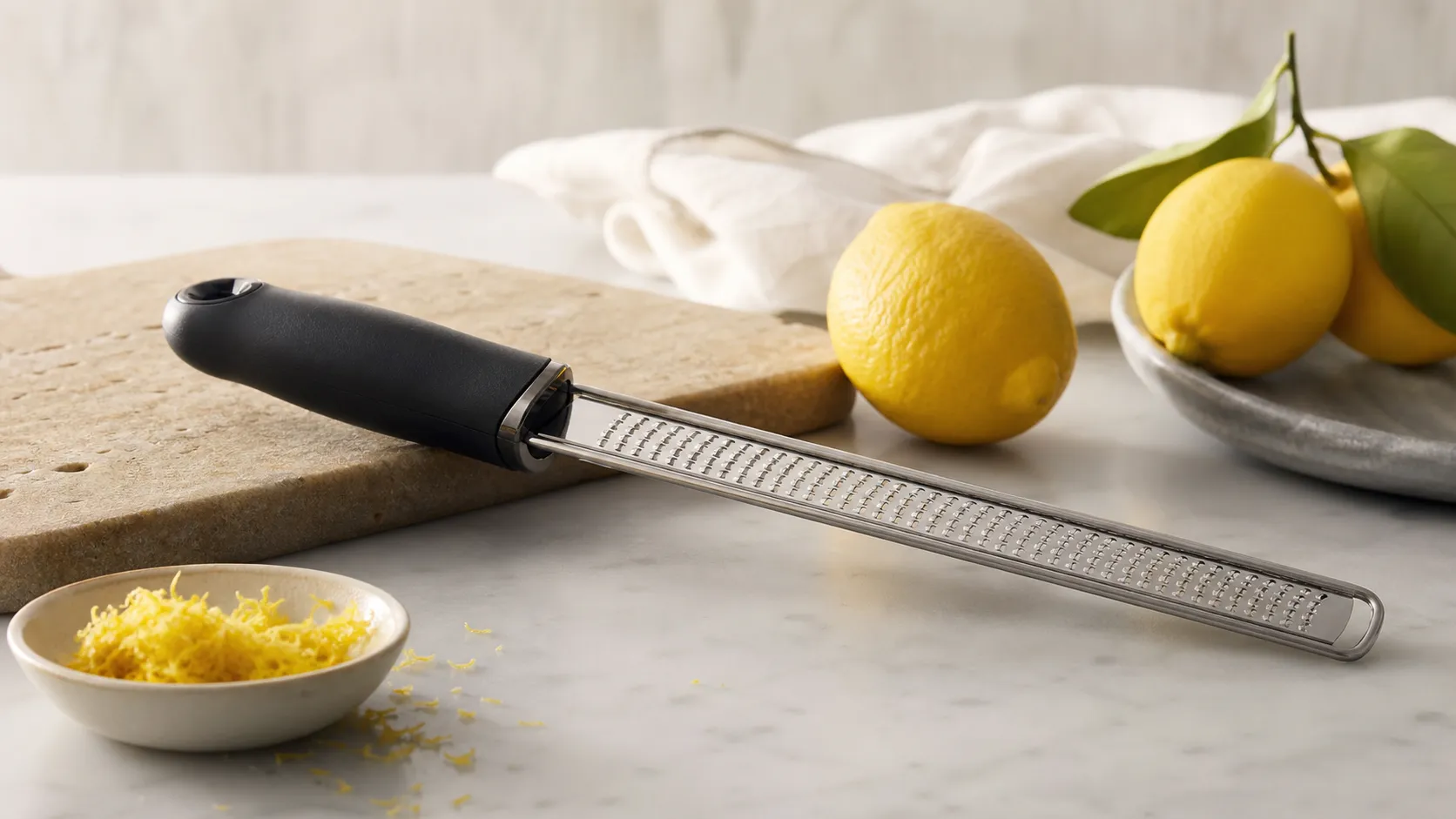
Microplane Premium Classic Zester/Grater — Review 2026
The Microplane Premium Classic is the go-to hand zester for precise, fluffy citrus zest and fine shavings. Sharp, compact, and great value—best for finishing, not bulk grating.