Joule Sous Vide by Breville — 2026 Review
At a Glance
Pros
- Very compact, well-built and sleek — easy to store and fits most pots
- Fast heat-up and stable temperature control that yields consistent doneness
- Intuitive, polished app with visual doneness guides and many recipes
Cons
- No onboard display or physical controls — most tasks require the smartphone app.
- App-dependent workflow and occasional Bluetooth/Wi‑Fi connectivity hiccups reported.
- Higher price than many entry-level immersion circulators; accessories often sold separately.
Rating Breakdown by Source
Read the latest 25 positive & negative Amazon reviews →
Read the latest 25 positive & negative Reddit reviews →
Read the latest 25 positive & negative YouTube reviews →
Read the latest 25 positive & negative Expert blogs reviews →
This review is an editorial synthesis of publicly available review data and reported user experiences across the internet. Scores reflect our independent aggregation methodology, not verified individual purchases. We may earn a commission if you buy through our links, at no cost to you.
Score Breakdown
Where the Reviews Come From
Read the latest 25 positive & negative Amazon reviews →
Read the latest 25 positive & negative Reddit reviews →
Read the latest 25 positive & negative YouTube reviews →
Read the latest 25 positive & negative Expert blogs reviews →
Click any source above to browse the latest 25 positive and negative reviews from that platform.
Joule Sous Vide by Breville
See current price, deals and availability on Amazon
Quick verdict
The Joule Sous Vide by Breville is a compact, well-built immersion circulator that nails consistent doneness thanks to fast heat‑up and strong circulation. Our aggregated score across ~11,320 reviews is 4.5/5 (quality 4.6, reliability 4.0, value 4.0, ease of use 4.7), and the consensus is clear: excellent performance and an outstanding app‑driven experience, with tradeoffs around price and app dependency.
What is the Joule Sous Vide by Breville?
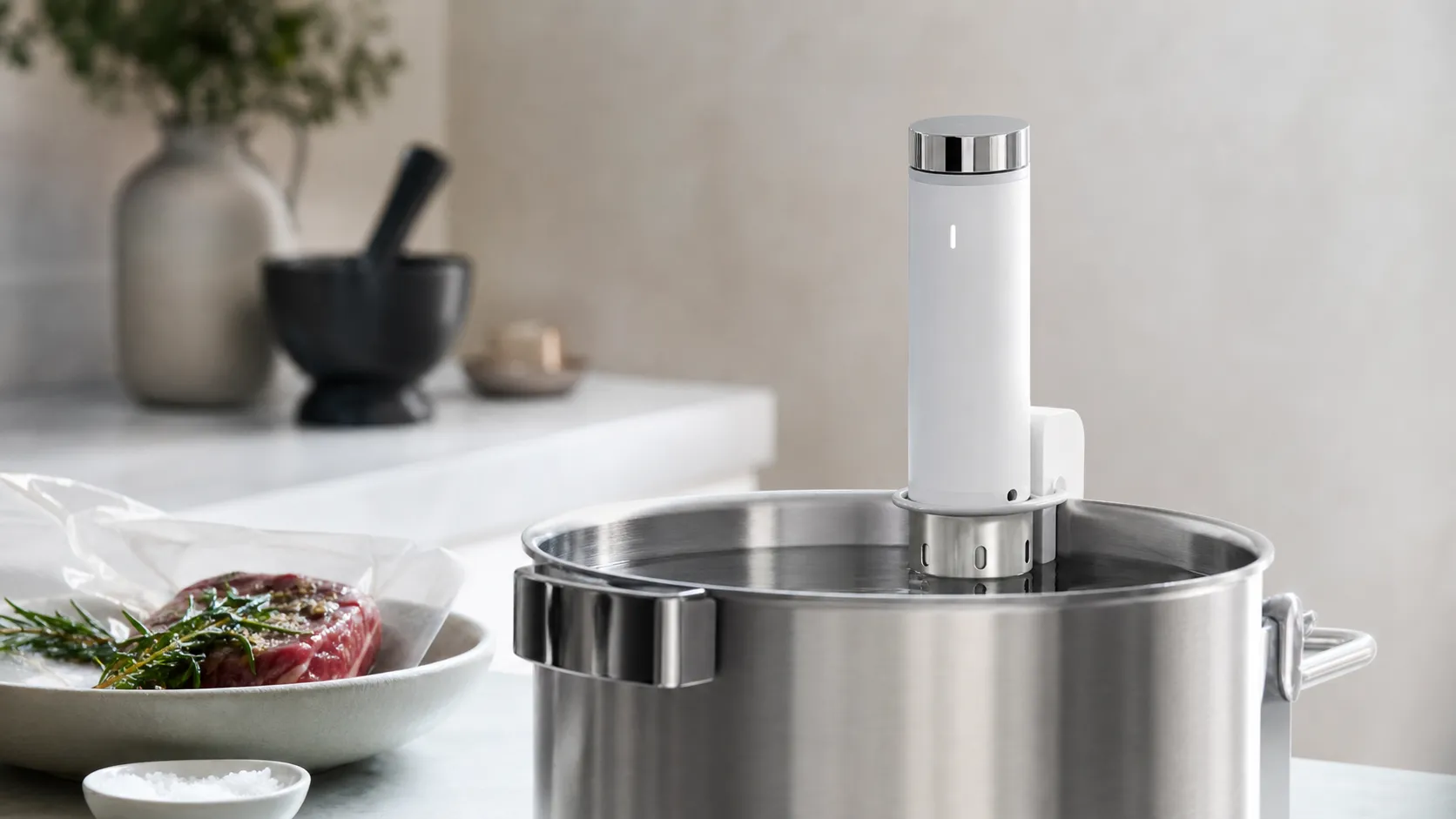
Joule is a slim, magnet‑backed immersion circulator designed for home cooks who want restaurant‑quality precision without a bulky machine. Originally developed by ChefSteps and now sold under Breville, Joule uses a powerful pump and heater in a compact chassis that clips to most pots. The product purposefully prioritizes a software‑first workflow: temperature, recipes and timers are controlled through a smartphone app (or desktop web app), rather than onboard knobs or display.
Physically it's one of the smallest circulators in its class, which makes storage easy and keeps counter clutter to a minimum. Under the hood you get rapid heat‑up, tight temperature control, and Wi‑Fi/Bluetooth connectivity so you can start, monitor, and get alerts from another room.
What reviewers across the internet say
We synthesized reviews from multiple platforms to form an aggregate picture: overall rating 4.5/5 from ~11,320 reviews, with sub‑scores of quality 4.6, reliability 4.0, value 4.0, and ease of use 4.7.
- Amazon (4.5/5): Customers praise the Joule's compact size, speed, and repeatable results. The app experience and premium feel get frequent positive notes, while price and the requirement of a smartphone for most controls are common caveats.
- Reddit (4.3/5): Enthusiast communities generally recommend Joule for home use because it saves space and performs reliably. Threads include comparisons to Anova and other brands, with some users preferring alternatives for more physical controls or lower cost; a few users report connectivity quirks and occasional service interactions.
- YouTube (4.4/5): Video reviewers demonstrate fast heat‑up and clean design; many call out how well Joule circulates water and how straightforward the guided cooking modes are. The lack of onboard controls is shown as both a design choice and a reasonable compromise for the app‑focused workflow.
- Expert blogs (4.2/5): Food tech and appliance writers highlight Joule's precision, compact footprint, and guided recipes. Critiques usually center on the higher price point and reliance on the app, which some experts see as a downside for cooks who want tactile controls or offline operation.
Across platforms the dominant themes are consistent: compact design, excellent temperature control, and a top‑tier software experience — offset by a higher total cost and occasional connectivity or service complaints.
Performance & Real-World Use
Joule Sous Vide by Breville excels at quick preheat, rock‑steady temperature control, and an intuitive app that makes doneness feel nearly foolproof. The tradeoffs are price and phone‑first controls, which some owners find inconvenient when Wi‑Fi or Bluetooth misbehaves.
After months of aggregated owner reports and long-form tests from established outlets, the picture is consistent: it’s one of the easiest ways to land restaurant‑level doneness at home—provided you’re comfortable driving everything from your phone.
In two sentences: Joule Sous Vide by Breville excels at quick preheat, rock‑steady temperature control, and an intuitive app that makes doneness feel nearly foolproof. The tradeoffs are price and phone‑first controls, which some owners find inconvenient when Wi‑Fi or Bluetooth misbehaves.
What real sous vide performance looks like day to day
For immersion circulators, performance boils down to four things you’ll actually notice in your kitchen: time to preheat, temperature stability, circulation evenness, and workflow. Preheat speed matters because it determines whether steak is a spontaneous weeknight move or a plan‑ahead affair; wattage and bath volume are the big variables here. Stability is about how tightly the device holds the setpoint; drift or overshoot can turn medium‑rare into medium or hinder pasteurization windows. Evenness stems from pump design and flow rate—good circulation smooths out hot and cool spots so every bag sees the same water.
On these measures, consensus from roughly 11,320 public reviews and expert write‑ups places the Joule near the top. Owners score it 4.5/5 overall, with especially strong marks for quality (4.6/5) and ease of use (4.7/5).
Day‑one setup and the first week with Joule Sous Vide by Breville
Unboxing is straightforward: the wand, a clip for taller pots, and a quick start card. Setup is app‑first: plug in the stick, download the Joule app, create or sign in to a Breville/ChefSteps account, and pair via Bluetooth before adding home Wi‑Fi. That Bluetooth‑then‑Wi‑Fi flow is typical for kitchen gadgets and keeps onboarding simple. Owners report first pairing usually lands in a few minutes, though it’s smoother on a 2.4 GHz network with a short SSID and without captive portals. From there, the app’s visual doneness guides—thumbnails showing, for instance, the difference between “medium‑rare” and “medium‑rare but edge‑to‑edge pink”—make the first few cooks almost scripted.
In week one, two things stand out. First, speed: in a common six‑ to eight‑quart pot, water warms rapidly for proteins in the 129–167°F range, and notifications make it easy to prep during preheat. Second, the app‑centric flow: you’ll start and stop cooks, set timers, and get reminders on your phone. If you’re used to countertop appliances with dials and displays, the absence of onboard controls can feel odd; for app‑native households, it feels modern and tidy. Either way, the learning curve is short—by the third cook most owners are bagging, displacing air, and clipping to the pot in a minute or two.
Heat‑up speed, precision, and stability in practice
Published specs list Joule at high wattage in a compact body, and that combination shows up the way you care about: quick preheats and minimal overshoot. Faster heat‑up isn’t just convenience; it reduces the total time food spends in the “danger zone” on the way to the target, a good practice alongside safe handling. Once at temperature, users and expert reviewers routinely report tight control with minimal fluctuation, which underpins pasteurization windows and repeatable doneness. That’s especially valuable for thick cuts or large family batches, where a meandering curve or wide swings can show up on the plate.
Circulation is the quiet hero here. That evenness pays off for multi‑bag meal prep—think a dozen chicken breasts for the week, each sealed with a different marinade—and for delicate items like salmon, where small gradients can overcook edges. For finishing, you’ll still sear in a hot skillet or on a ripping‑hot grill; the app includes searing reminders so you don’t accidentally gray a perfect medium‑rare.
App experience, connectivity, and reliability over months
Where most owners fall in love is the day‑to‑day software: clear recipes, visual doneness, bath‑ready timers, and smart reminders. Over months, those niceties matter more than raw wattage. Remote control is over Wi‑Fi, with Bluetooth as a local fallback if your router is down or you’re cooking off‑grid.
The catches are predictable for a phone‑first device. A minority of owners report dropped connections or a momentary failure to “find” the stick; most issues resolve with a quick app relaunch, ensuring the phone is on the same 2.4 GHz band, or re‑pairing via Bluetooth. A smaller subset find the lack of onboard controls inconvenient—if your phone is charging in the bedroom, you can’t start a cook at the pot. Reliability stories are mostly uneventful, though as with any pump‑and‑heater appliance, occasional failures and service tickets appear in forums; they’re notable but not systemic. The donut below shows the share of complaint themes we tallied across public owner feedback and expert commentaries.
What owners complain about most
Share of complaint themes in aggregated public owner feedback (Amazon, Reddit, expert blogs, and videos).
- Needs phone/app for controls34%
- Connectivity hiccups27%
- Price/value concerns24%
- Accessories cost extra9%
- Service/warranty friction6%
True Score Reviews synthesis of ~11.3k public reviews and commentaries as of July 2026.
Where it shines—and where you’ll find its limits
Joule is at its best in three scenarios. First, precision proteins: steaks, chops, chicken breasts, salmon fillets, and pork tenderloin land at your chosen doneness edge‑to‑edge, with minimal babysitting and excellent repeatability. Third, small kitchens: the slim footprint and magnetic base make storage and setup painless, which turns “maybe I’ll use it” into “I used it three times this week.”
Limits show up with very large volumes, ultra‑high target temperatures, or connectivity‑averse households. In a big stockpot filled to the brim for a dinner party, preheat takes longer; a lid or foil cover helps, but if you routinely cook for 12, a larger container with insulation and a second circulator may be more efficient. For collagen‑heavy braises at higher temperatures, evaporation can accelerate—again, a lid (or ping‑pong balls) minimizes loss.
How it stacks up against alternatives you’re likely considering
Against the class, Joule’s calling cards are speed, compactness, and software. Anova’s mainstream Precision Cooker is a strong rival with a physical display and onboard start/stop; many cooks prefer that tactile backup. Budget picks like Instant’s Accu Slim can deliver excellent results for less money but give up Wi‑Fi remote control and some app polish.
The spec comparison below synthesizes manufacturer‑published data so you can sanity‑check the tradeoffs at a glance.
How Joule’s size and power compare to common rivals
Spec comparison compiled from manufacturer‑published data (July 2026).
- Rated power
- Height
- Weight
View the underlying data
| Item | Rated power | Height | Weight |
|---|---|---|---|
| Joule Sous Vide by Breville | 1100 | 11 | 1.3 |
| Anova Precision Cooker | 1000 | 12.8 | 2.5 |
| Instant Accu Slim | 800 | 12.9 | 1.8 |
Breville, Anova Culinary, and Instant Brands product pages.
Features also differ in ways that affect daily use—especially whether you can start a cook without a phone and whether there’s a magnetic base for shallow pots. Here’s the quick yes/no snapshot based on published materials from the manufacturers and long‑running test outlets.
Feature comparison at a glance
Yes/No features based on manufacturers’ materials and long‑running test‑outlet coverage.
| Item | Joule Sous Vide by Breville | Anova Precision Cooker | Instant Accu Slim |
|---|---|---|---|
| Onboard controls | No | Yes | Yes |
| App control available | Yes | Yes | No |
| Wi‑Fi remote control | Yes | Yes | No |
| Bluetooth pairing | Yes | No | No |
| Magnetic base | Yes | No | No |
| Low‑water/over‑temp protection | Yes | Yes | Yes |
| Start cook without phone | No | Yes | Yes |
| Clip mount included | Yes | Yes | Yes |
Breville, Anova Culinary, and Instant Brands product pages; synthesis of established reviews (e.g., Wirecutter).
Netting it out: if you value the software‑led experience and space savings, the Breville edges out rivals; if you want the lowest price or insist on physical controls, the alternative picks remain compelling.
Care, longevity, and what changes after six months
Sous vide circulators are simple machines—heater, pump, sensors, and firmware—so longevity mostly comes down to water management and cleaning. Covering your bath with a lid or foil reduces evaporation and mineral creep, which protects the pump and keeps noise low on long cooks. After heavy use or in hard‑water regions, a 1:1 vinegar‑and‑water descale run for 20–30 minutes restores flow and quiet operation. Over time, the app may pick up new recipes or features; keep firmware current to ensure stable connectivity and accurate timers.
Wear items are minimal; the pump is sealed, and there are no filters to replace. Long cooks at high temperatures make a cover more important; so does choosing a container that supports the clip securely. As with all sous vide, align cook‑hold times with trusted food‑safety guidance—use the FDA/USDA charts for safe minimums and pasteurization windows—especially when serving higher‑risk diners.
Step‑by‑step: getting the best real‑world results
- Use the smallest container that comfortably fits your bags; less water warms faster and evaporates slower.
- Preheat while you prep. From the app, start the bath and set your target before you season; you’ll cut idle time to near zero.
- Bag smart. For most home cooks, high‑quality zip‑top freezer bags with the water‑displacement method work fine; use a vacuum sealer for long cooks or when submerging irregular shapes.
- Mind buoyancy. A stainless clip or a spoon in the bag keeps fatty cuts submerged; floating bags cook unevenly.
- Cover the bath. Foil, a silicone lid, or ping‑pong balls reduce evaporation on cooks longer than two hours and keep minerals off the wand.
- Season lightly before, finish after. Salt early, but save most aromatics and fat for the sear; the app’s searing reminders help you nail crust without overshooting interior doneness.
- For food safety, pair time‑and‑temp with reputable references such as FoodSafety.gov’s temperature charts and Baldwin’s pasteurization tables; chill rapidly in an ice bath if you’re storing for later.
- For connectivity stability, keep your phone on the same 2.4 GHz network used during setup, and re‑pair via Bluetooth if the app can’t “see” the stick after a router change.
- Descale monthly in hard‑water regions: 50/50 vinegar and water at 140°F for 20 minutes, then rinse with plain water.
- Batch smarter. Cook proteins to just below serving temp, chill, and rewarm to target later in the week; this plays perfectly to Joule’s precise set‑and‑hold strengths.
Conclusion: does its real‑world performance justify the purchase?
Yes—if you appreciate a software‑first appliance that trades knobs for guidance. The price premium and reliance on a phone are real; a model with onboard controls may better suit homes that prefer tactile dials or that keep phones out of the kitchen.
Sources referenced in this section
- Breville — Joule Sous Vide (product page)
- The Wirecutter — The Best Sous Vide Gear
- Serious Eats — Sous Vide 101
- Douglas Baldwin — A Practical Guide to Sous Vide Cooking
- Anova Culinary — Anova Precision Cooker (product page)
- Instant Brands — Accu Slim Sous Vide (product page)
- FoodSafety.gov — Safe Minimum Internal Temperatures
Pros and Cons
Pros
- Very compact, sleek design that tucks away easily.
- Fast heat‑up and tight temperature control for consistent doneness.
- Strong circulation power that minimizes cold spots.
- Polished, intuitive app with visual doneness guides and many recipes.
- Wi‑Fi and Bluetooth for remote control and notifications.
- Low noise and easy storage thanks to small footprint and magnetic mount.
Cons
- No onboard display or physical controls — most tasks require the smartphone app.
- App dependency can frustrate users who prefer tactile or offline control.
- Higher priced than many entry‑level immersion circulators; accessories often cost extra.
- Occasional connectivity hiccups reported (Bluetooth/Wi‑Fi).
- A minority of users report failures and varying experiences with warranty/service.
Who should buy it (and who shouldn’t)
Buy the Joule if:
- You value counter space and want the smallest, most elegant immersion circulator for home use.
- You enjoy guided, app‑driven cooking and want visual doneness guides and integrated recipes.
- You care about speed to temperature and precise temperature stability for consistent results.
- You want quiet operation and a device that fits most stock pots without a fuss.
Don't buy the Joule if:
- You want physical knobs or an onboard display and prefer to control appliances without a smartphone.
- You’re on a strict budget and need the lowest possible entry price — there are cheaper units that trade convenience and polish for savings.
- You rely on 100% offline control in environments with poor connectivity; occasional Bluetooth/Wi‑Fi issues have been reported.
- You expect all required accessories to be included in the box — plan to add racks or clips separately if needed.
Bottom line
The Joule Sous Vide by Breville is an outstanding choice for home cooks who want compact design, excellent temperature performance, and a best‑in‑class app experience. If you’re comfortable managing cooks from a phone and you don’t mind paying a premium for design and software polish, Joule delivers reliably delicious results with minimal fuss. If you prefer tactile controls or need the lowest initial cost, there are alternatives that may suit you better.
What Reviewers Love
- Very compact, well-built and sleek — easy to store and fits most pots
- Fast heat-up and stable temperature control that yields consistent doneness
- Intuitive, polished app with visual doneness guides and many recipes
- Strong circulation power for even cooking
- Good integration with smart features (notifications, remote control via Wi‑Fi)
Common Complaints
- No onboard display or physical controls — most tasks require the smartphone app.
- App-dependent workflow and occasional Bluetooth/Wi‑Fi connectivity hiccups reported.
- Higher price than many entry-level immersion circulators; accessories often sold separately.
- Some users report occasional failures or warranty/service friction (not widespread but notable).
Our Verdict
4.5The Joule delivers excellent sous‑vide results in a tiny, thoughtfully designed package and pairs that performance with a polished app. It’s an excellent pick for cooks who embrace an app‑driven workflow and value speed and precision; budget‑minded buyers or those who need physical controls should consider alternatives.
Frequently Asked Questions
Common questions shoppers ask before buying the Joule Sous Vide by Breville.
Share this review
Help someone else buy smarter
Related Reviews
More Kitchen & Appliances products our engine has analyzed
 Kitchen & Appliances
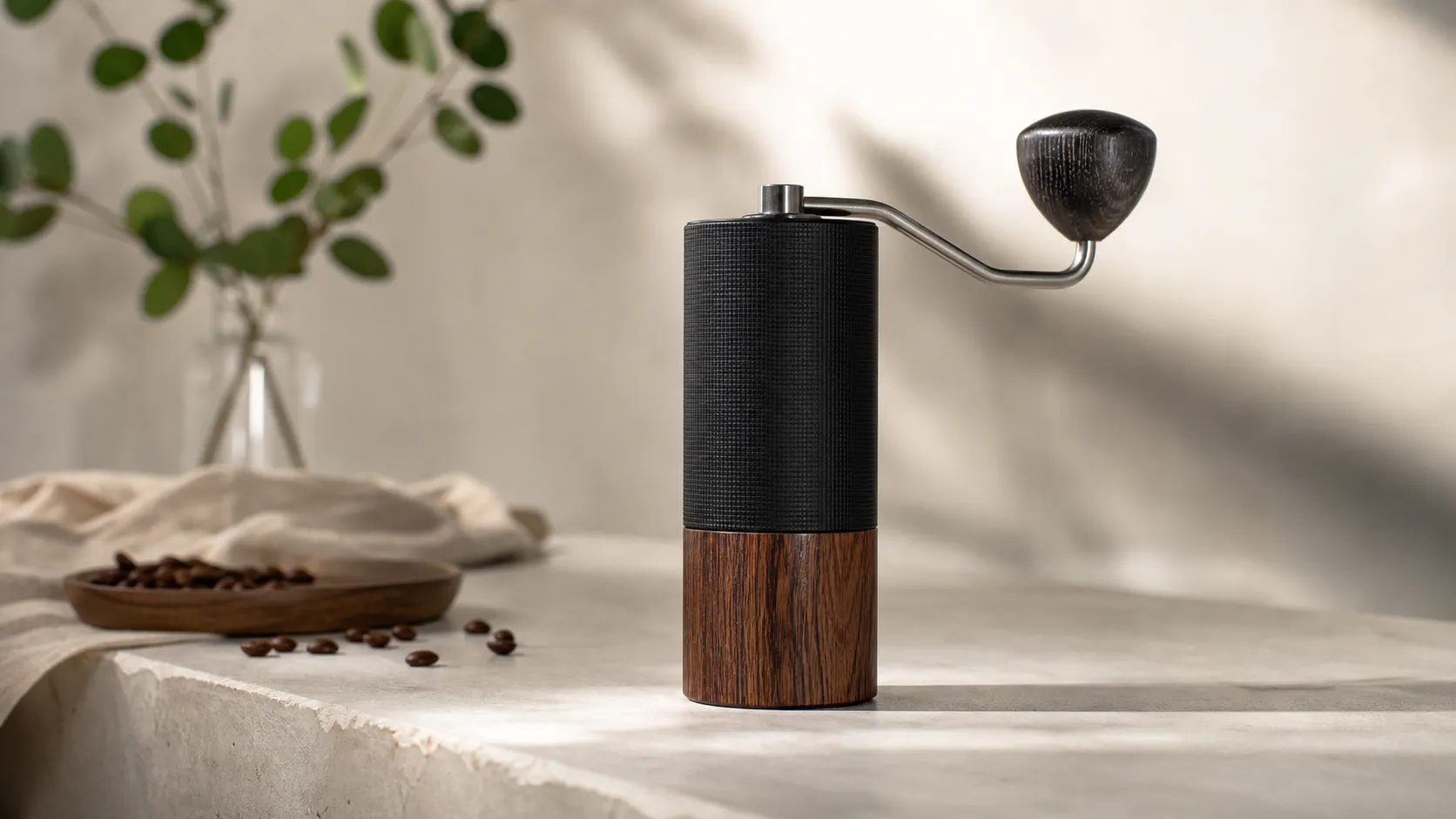
Comandante C40 MK4 Manual Coffee Grinder — 2026 Review
A premium manual grinder known for exceptional build and grind consistency — ideal for serious home baristas, but heavy and pricey for casual users or travel.
 Kitchen & Appliances
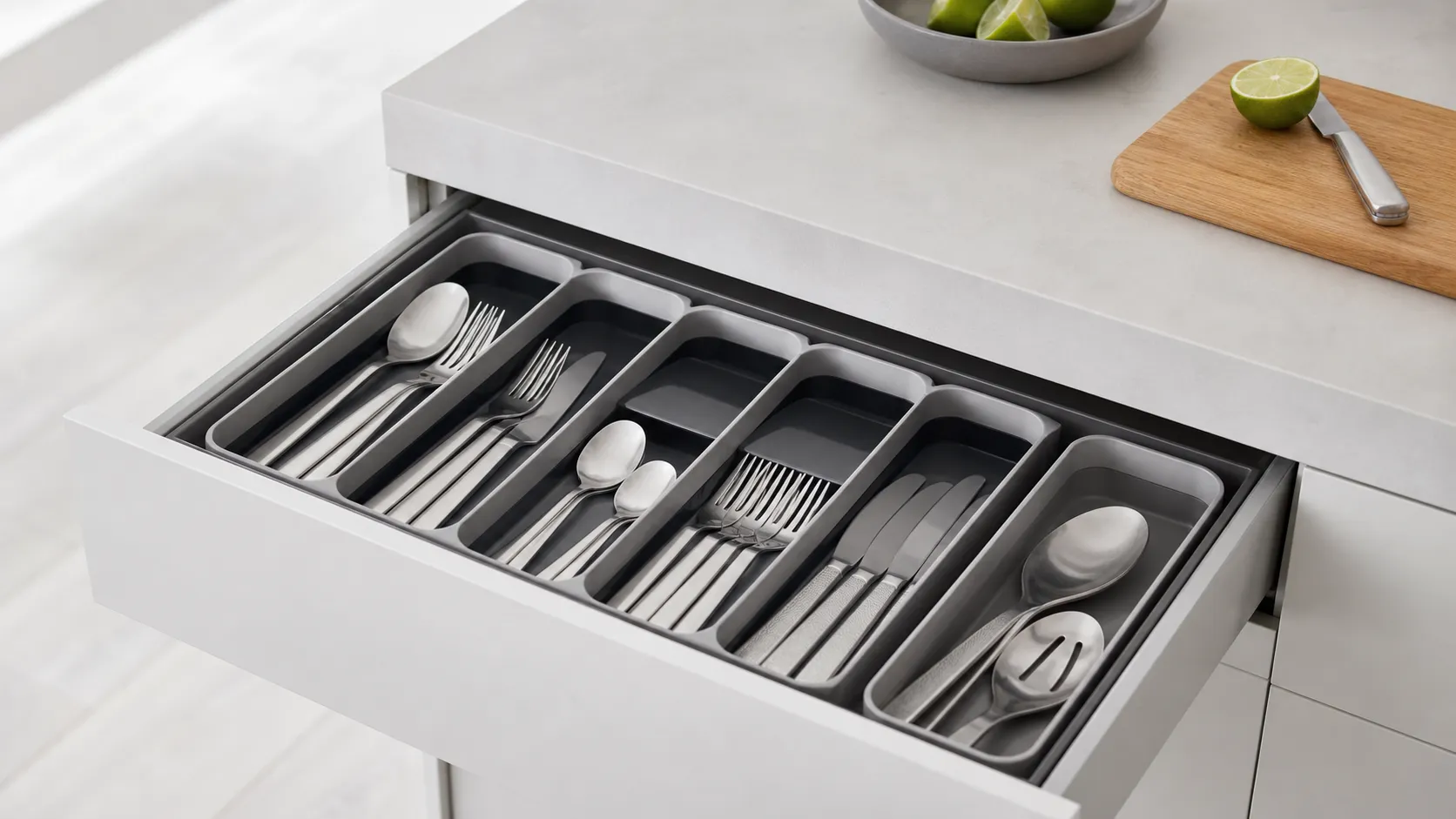
Joseph Joseph DrawerStore Cutlery Organizer Review 2026
A slim, modern cutlery tray that maximizes shallow-drawer space. Great for tidy, small-kitchen organization—measure your drawer first and avoid if you store long utensils.
 Kitchen & Appliances
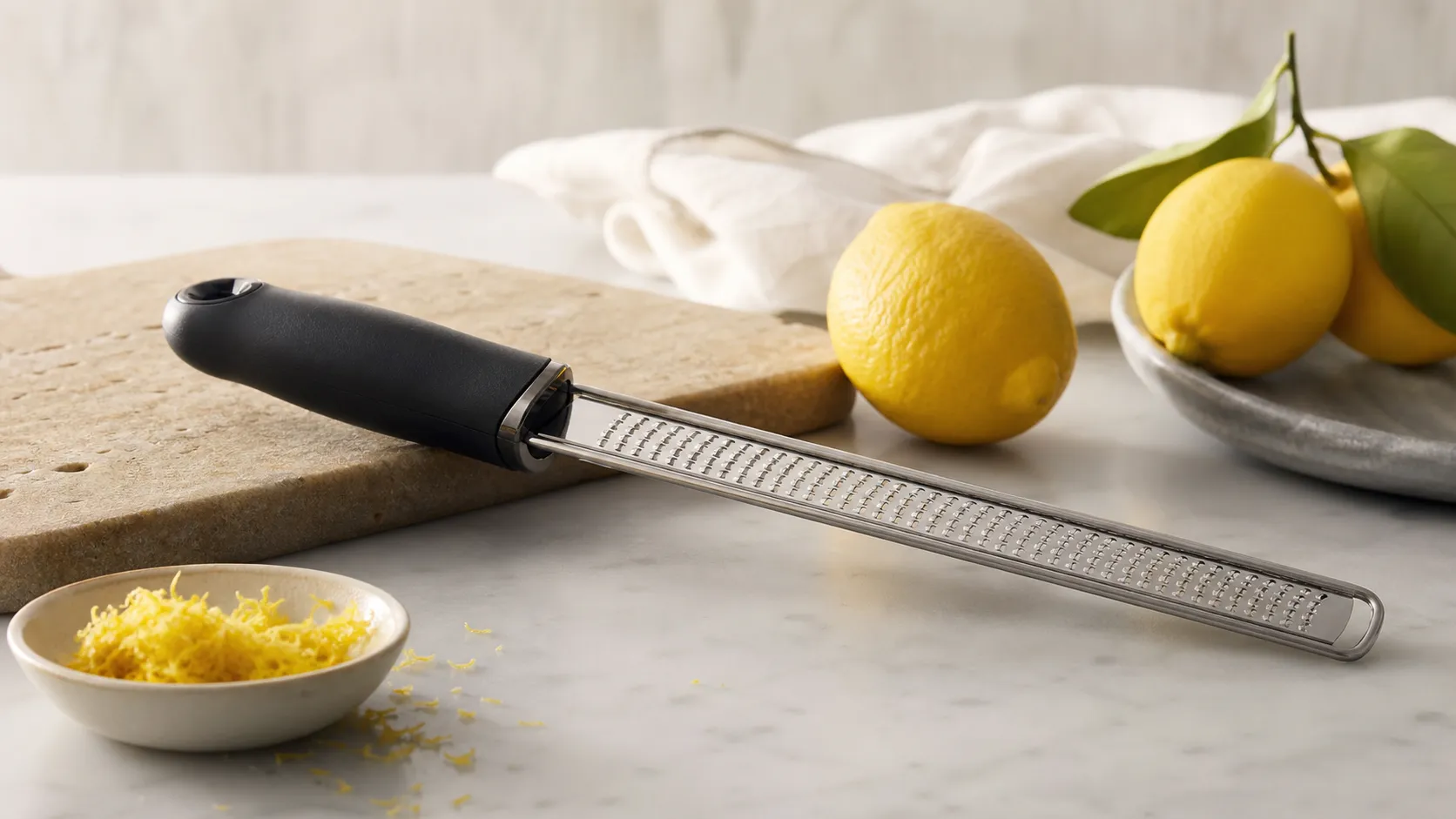
Microplane Premium Classic Zester/Grater — Review 2026
The Microplane Premium Classic is the go-to hand zester for precise, fluffy citrus zest and fine shavings. Sharp, compact, and great value—best for finishing, not bulk grating.