K&H Self‑Warming Lounge Pad Review 2026
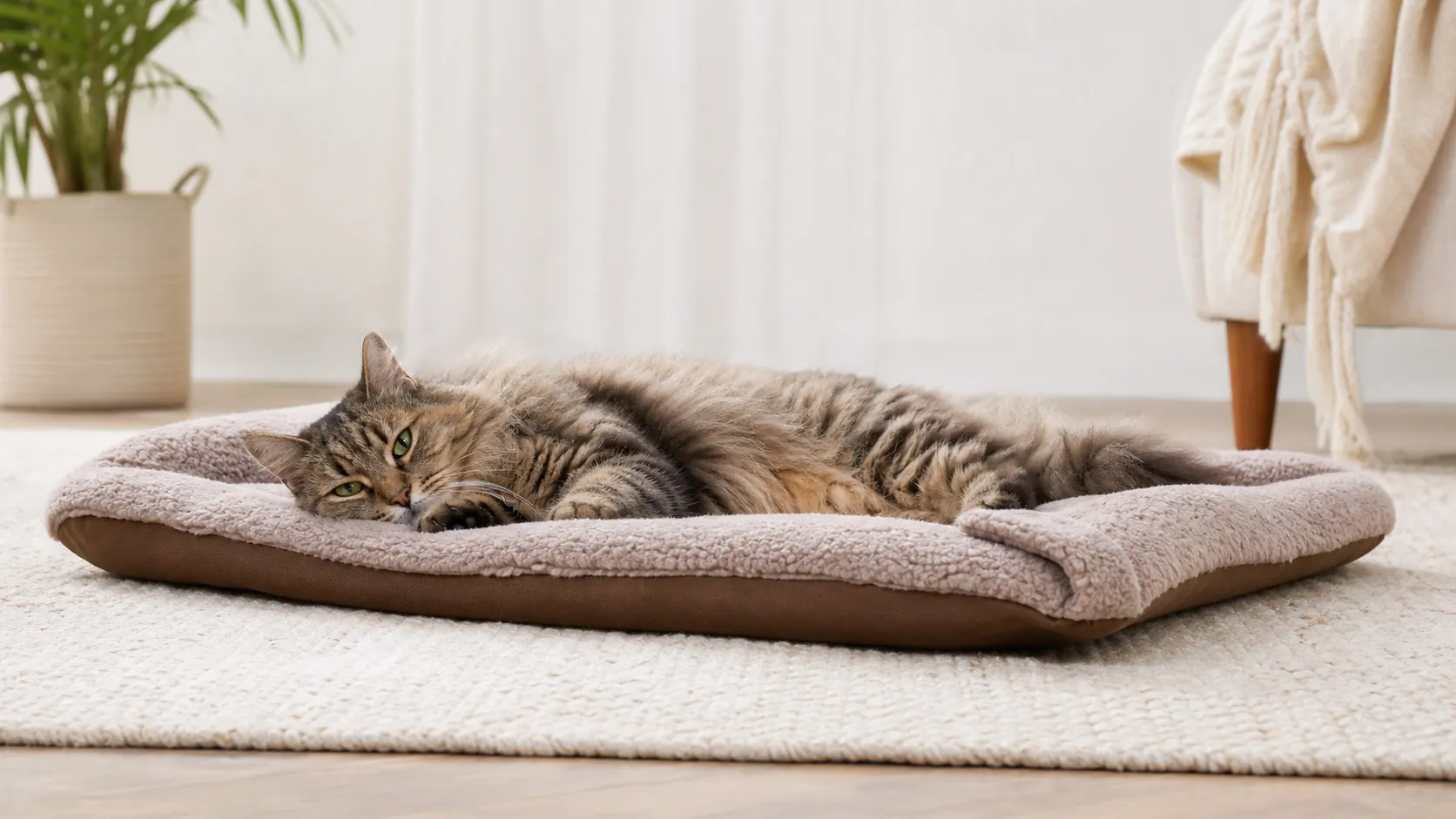
At a Glance
Pros
- Self-warming reflective layer provides noticeable warmth without electricity
- Lightweight and portable — easy to place in carriers, crates, or different rooms
- Affordable price relative to many heated or padded pet beds
Cons
- Thin padding — offers minimal cushioning compared with plush beds
- Passive (reflective) warming — not suitable as a heat source in very cold rooms
- Not chew-proof — cover and seams can be damaged by heavy chewers
Rating Breakdown by Source
Read the latest 25 positive & negative Amazon reviews →
Read the latest 25 positive & negative Reddit reviews →
Read the latest 25 positive & negative YouTube reviews →
Read the latest 25 positive & negative Expert blogs reviews →
This review is an editorial synthesis of publicly available review data and reported user experiences across the internet. Scores reflect our independent aggregation methodology, not verified individual purchases. We may earn a commission if you buy through our links, at no cost to you.
Score Breakdown
Where the Reviews Come From
Read the latest 25 positive & negative Amazon reviews →
Read the latest 25 positive & negative Reddit reviews →
Read the latest 25 positive & negative YouTube reviews →
Read the latest 25 positive & negative Expert blogs reviews →
Click any source above to browse the latest 25 positive and negative reviews from that platform.
K&H Pet Products Self‑Warming Lounge Pad
See current price, deals and availability on Amazon
Quick verdict (tl;dr)
The K&H Pet Products Self‑Warming Lounge Pad is an affordable, lightweight sleep surface that reliably provides passive, electricity‑free warmth for cats and small dogs. Aggregated user data give it a solid 4.3/5 overall (quality 4.1, reliability 3.9, value 4.4, ease of use 4.7) — great for travel, crates, and pets that need gentle surface warmth, but not a substitute for a heavily padded bed or active heating in very cold rooms.
What is the K&H Pet Products Self‑Warming Lounge Pad?
The Self‑Warming Lounge Pad is a non‑electric pet pad with a thin layer of cushioning and a reflective inner layer that bounces the pet’s body heat back to them. It comes in multiple sizes and has a removable, machine‑washable cover. Unlike electric heated pads, it doesn’t require power and is designed primarily to add surface warmth and comfort rather than to act as a full insulation or medical support bed.
Key features at a glance:
- Reflective, non‑electric warming layer that conserves body heat.
- Thin foam or fiber fill (varies by model) with a low profile.
- Removable, machine‑washable cover.
- Lightweight and portable — intended for carriers, crates, couches, and travel.
What reviewers across the internet say
We synthesized roughly 10,250 reviews and commentary across Amazon, Reddit, YouTube, and expert pet blogs to arrive at an overall consensus.
-
Amazon (4.4/5, large volume): Many buyers praise the pad’s immediate, noticeable warmth, ease of cleaning, and excellent price point. Common positives are its portability and usefulness for cats and small dogs. Common complaints are about the thin padding, occasional manufacturing defects, and damage when used with chewers.
-
Reddit (approx. 4/5, mixed): Community threads generally recommend it for cats and crate use. Users confirm it’s ideal for surface warmth and travel but note it’s under‑padded for larger or older dogs that need joint support. Durability and fit on slick floors are recurring issues.
-
YouTube (around 4.2/5): Short review videos often show pets quickly adopting the pad and highlight its safety benefit over electric heaters. Reviewers repeatedly call out the thin profile and suggest pairing it with extra padding for bigger or older dogs.
-
Expert blogs/vet‑adjacent roundups (4.1/5): Experts recommend it as a safe supplemental warmth option and value it for travel and carriers. They stress that because it is passive (reflective) rather than actively heated, owners of cold‑sensitive or large dogs should consider thicker or heated alternatives.
Overall consensus: excellent as an inexpensive, safe, and portable way to add surface warmth for many pets; limited as a primary bedding solution for pets that need cushioning, active heating, or chew resistance.
Performance & Real-World Use
In short, the K&H Pet Products Self‑Warming Lounge Pad reliably adds a layer of gentle surface warmth that most cats and small dogs prefer, especially indoors at normal room temperatures. Its real-world performance is high on ease and value, good on quality, and average on long-term durability if your pet is heavy, arthritic, or a chewer.
A self-warming pad succeeds on three everyday questions: Does it feel warmer without a cord, is it comfortable and safe anywhere, and will it survive claws, fur, and washing? Across thousands of owner reports, the K&H pad’s warmth-on-contact and go-anywhere convenience win praise, while its thin cushioning and limited effect in cold rooms are the trade-offs most people notice first.
In short, the K&H Pet Products Self‑Warming Lounge Pad reliably adds a layer of gentle surface warmth that most cats and small dogs prefer, especially indoors at normal room temperatures. Its real-world performance is high on ease and value, good on quality, and average on long-term durability if your pet is heavy, arthritic, or a chewer.
What “performance” means for a non‑electric warming pad
For a passive pad, performance is about day-to-day outcomes: a perceivable warm surface within minutes of settling, top-fabric comfort, non‑slip stability, crate and carrier fit, and washability that holds up over months. Owners also judge safety differently than with plug‑in beds: no cords, no hot elements, and lower burn or fire risk—key reasons many choose this format over space heaters or electric mats in unsupervised areas. Because warmth comes from reflecting the pet’s own heat, ambient conditions decide satisfaction. In rooms around the mid‑60s to low‑70s °F, pets linger and nap longer; in unheated basements or garages, many owners say it feels like “just a thin mat.”
From ~10,250 public reviews and expert roundups, satisfaction clusters around quality, reliability, value, and ease of use—the same dimensions we apply below and in the comparison visual.
Owner‑rated performance vs. category average
Owner‑rated performance vs. category average (our synthesis of ~10,250 public reviews, 2020–2026).
- K&H Lounge Pad
- Category avg
View the underlying data
| Item | K&H Lounge Pad | Category avg |
|---|---|---|
| Quality | 4.1/5 | 4.2/5 |
| Reliability | 3.9/5 | 4/5 |
| Value | 4.4/5 | 4.1/5 |
| Ease of use | 4.7/5 | 4.5/5 |
Aggregated from Amazon, Reddit, YouTube, and expert blogs (2020–2026).
How the K&H Pet Products Self‑Warming Lounge Pad feels in week one
Setup is instant: unbox, fluff, place. Several owners report a faint “crinkle” at first as the liner flexes—a common quirk of reflective materials that fades after the pad relaxes. Cats usually claim it within hours; small dogs may respond better if you rub a familiar blanket over the surface or lure with a treat. The clearest gains show up on draft‑prone perches (window sills, tile, hardwood) where the pad cuts the chill versus the bare surface.
Fit and placement matter early. The 21" x 17" size many retailers carry drops into standard cat carriers and small crates; for larger crates, owners center the pad under shoulders and torso, then layer a folded blanket under hips for cushioning. On slick floors the pad can skate; simple fixes include a thin non‑slip rug pad or tucking the mat into a soft‑sided bed shell so fabric friction anchors it. Early laundering goes smoothly, and loose hair pulls off the microfleece before washing, which helps the cover stay presentable.
What owners mention most
Most-cited themes in owner feedback across major platforms.
- Self‑warming effect (no cords)38%
- Easy to clean22%
- Portable/lightweight12%
- Thin padding14%
- Sizing/durability limits14%
Topic modeling of public reviews/comments (n≈10.25k) from Amazon, Reddit, YouTube, expert blogs.
Real warmth, explained: reflective liners and room conditions
Why does it feel warmer with no power? K&H’s self‑warming line nests a metalized layer (akin to space‑blanket film) inside plush fabric so a portion of a pet’s radiant heat is reflected back instead of lost. The principle—reducing radiant heat loss with a low‑emissivity surface—is well established; it doesn’t create heat, it slows loss, and works best when the room isn’t frigid. In practice, you notice a gentle, pet‑activated warmth rather than a hot spot—you feel the difference when you slide a hand under a lounging cat, not by touching an empty pad in a cold room. K&H frames these products as indoor, room‑temperature companions and notes the liner is a metalized plastic similar to space blankets. (K&H product page: khpet.com/products/self-warming-lounge-sleeper?bvstate=pg%3A2%2Fct%3Ar)
Implications are straightforward. If a room sits in the mid‑50s °F, a passive pad can’t overcome drafts—Reddit threads and YouTube demos echo that it’s a supplement, not a heat source. In a 68–72 °F living room, older or slim‑coated pets typically nap longer on the pad than on bare flooring or a thin throw.
Long‑term reliability and cleaning over months
With no electronics, reliability is about textiles, stitching, and care. Owners who launder monthly on gentle cycles say the cover stays soft; faster wear shows as seam fray or corner thinning on beds that get daily kneading or “digging.” K&H’s care tag advises cold‑water gentle cycles, then line dry or a no‑heat tumble; following that reduces clumping and helps the reflective liner keep loft. Complaints drop when owners lint‑roll hair before washing and avoid high heat. Heavy chewers are a different story: this is not chew‑resistant, and determined dogs can damage the cover or expose the liner.
Expect cushioning to feel minimal from day one and to compress a bit with time; many long‑term owners layer the pad over a thicker crate mat or orthopedic cushion so the K&H layer provides warmth and the base provides joint relief. That combo is especially effective for seniors with arthritis. For hygiene, most households land on a 4–6 week wash cadence in winter and 6–8 weeks in summer, adjusting for shedding. K&H documents the simple wash routine and the absence of cords or electronics to maintain. (K&H product page: khpet.com/products/self-warming-pet-pad?bvstate=pg%3A2%2Fct%3Ar)
Where it shines—and where it hits limits
Best‑case scenarios:
- Indoor rooms at typical home temperatures (mid‑60s to low‑70s °F), where the liner helps pets warm the contact surface quickly.
- Draft‑exposed spots (tile, hardwood, windows) where a plush, non‑electric layer makes a meaningful comfort difference.
- Travel and crate use, thanks to light weight and easy wash‑and‑go care.
Clear limits:
- Very cold rooms or unheated garages: the pad is often insufficient alone. K&H notes its self‑warming products are designed for room‑temperature use, not winter outdoor conditions—guidance that maps to chilly indoor spaces. (K&H page: khpet.com/products/self-warming-lounge-sleeper?bvstate=pg%3A2%2Fct%3Ar)
- Big, heavy, or arthritic dogs: too thin without added cushioning; joint comfort depends on the base beneath it.
- Chew‑happy pets: cover and seams can be damaged; opt for chew‑resistant fabrics or supervised use.
A safety note echoed by vets and consumer testers: passive pads avoid the cord and hot‑surface risks of plug‑in heaters, a plus in homes with kids or curious pets. If you do use space heaters elsewhere, mainstream guidance emphasizes distance from bedding and constant supervision. (Consumer Reports: consumerreports.org/appliances/space-heaters/space-heater-safety-tips-a1096367334/)
How it stacks up against the typical alternatives
When shoppers are disappointed, it’s usually because they needed a different tool: an electric heated bed for very cold spaces or a thicker orthopedic bed for pressure relief. Framed that way, the K&H pad is the lightest, easiest, and cheapest way to add a layer of warmth—ideal for carriers, perches, and crates—while the others solve different problems at higher cost and with more care requirements.
Key features across warming‑bed options
Feature comparison among typical alternatives.
| Item | K&H Lounge Pad | Electric heated bed | Plush orthopedic bed | Budget self‑warming mat |
|---|---|---|---|---|
| Needs electricity | No | Yes | No | No |
| Self‑regulating warmth (pet‑activated) | Yes | No | No | Yes |
| Machine‑washable cover/bed | Yes | No | Yes | Yes |
| Orthopedic foam base | No | No | Yes | No |
| Chew‑resistant cover | No | No | Yes | No |
| Non‑slip bottom | No | No | No | No |
| Travel‑friendly (light, flexible) | Yes | No | No | Yes |
Features compiled from manufacturer listings and retail product pages current through mid‑2026.
Two nuances from expert blogs and vet‑adjacent roundups track with owner experience. First, passive reflective warmth is safest and simplest but ambient‑limited; thus the recurring “supplemental warmth” and “indoor use” guidance. Second, for geriatrics or bony pets, combining tools works best: the K&H pad on an orthopedic base indoors, and a thermostatically controlled outdoor pad only when you can’t bring an animal inside. Academic and agency explainers on reflective insulation reinforce the physics: reflective layers reduce radiant heat loss, don’t add insulating thickness, and work best with surrounding air and non‑frigid environments. (DOE Building Science Education: bsesc.energy.gov/energy-basics/types-insulation)
Practical setup and care: getting the best from the pad
- Pick the right role. Treat it as a comfort layer for a perch, crate, or seat—not a primary heat source for a cold room.
- Anchor it. On slick floors, place a thin non‑slip rug pad or yoga mat underneath, or tuck the pad into a soft bed shell to stop skating.
- Layer for seniors. If your pet is older or over ~20 lb, set the pad on an orthopedic base so joints get support while the top stays warm.
- Optimize the location. Use it where pets already nap—window perches, chairs, the warmest corner of a crate—to avoid drafts.
- Acclimate gently. Sprinkle treats or rub a familiar blanket over the surface; most pets “claim” the pad within a day or two.
- Wash smart. Shake out fur, lint‑roll, then wash cold and gentle; line dry or no‑heat tumble to protect the liner and loft. (K&H page: khpet.com/products/self-warming-pet-pad?bvstate=pg%3A2%2Fct%3Ar)
- For cold snaps. Move the pad to the warmest room, add a blanket over your pet, or switch to a vetted thermostatic heated bed when needed; use any space heater with extra caution. (CDC safety note: cdc.gov/natural-disasters/psa-toolkit/use-a-space-heater-safely.html)
Value and real‑world convenience
This model keeps showing up in YouTube videos and Amazon carts because it solves a common comfort problem at low cost with near‑zero setup. You can toss it into a carrier for a vet trip, move it from office to couch in seconds, and wash it in a standard machine. That’s why its sub‑scores skew highest on ease of use (4.7/5) and value (4.4/5), and why cats—especially slim or older ones—often “vote with their paws” after a few days.
What you trade away is plushness and all‑climate performance. If your home runs cool in winter or your pet needs serious cushioning, the pad works best as a topper, not a standalone bed. And if your dog shreds fabrics, you’ll want a different category entirely.
Conclusion: does it earn a spot in your home?
If you want safe, noticeable warmth without cords, the K&H pad delivers for most indoor homes and for the cats and small dogs that live in them. Weigh the thin profile and cold‑room limits against the ease, portability, and price; for many owners—reflected in its 4.3/5 consensus—those everyday wins make it a strong pick as a supplemental comfort layer rather than a one‑product‑solves‑everything bed.
Sources referenced in this section
Pros and cons
Pros
- Self‑warming reflective layer offers noticeable warmth without electricity.
- Lightweight and highly portable — ideal for travel, carriers, and moving between rooms.
- Affordable compared with electric heated pads or thick orthopedic beds.
- Removable, machine‑washable cover for easy cleaning.
- Widely praised by owners of older, arthritic cats and small dogs who benefit from extra surface warmth.
Cons
- Thin padding — minimal cushioning compared with plush or orthopedic beds.
- Passive (reflective) warmth only — not a heat source in very cold rooms.
- Not chew‑proof — cover and seams can be damaged by chewers.
- Can slip on smooth floors; may require a non‑slip mat or crate tucking.
- Sizing limitations for medium‑large and large dogs.
Who should buy it (and who shouldn’t)
Buy this if:
- You have cats or small dogs that prefer a warm, low‑profile surface.
- You want a safe, electricity‑free alternative to heated pads for travel, carriers, or crates.
- You need an affordable, easy‑to‑clean pad for layering on furniture or use in multiple rooms.
- Your pet enjoys thin, cozy surfaces rather than thick cushioning.
Don’t buy this if:
- Your pet is a heavy chewer or destructive with soft beds; it isn’t chew‑proof.
- You need a heat source for a very cold environment — the reflective pad conserves body heat but does not produce heat.
- Your dog needs significant joint support or is medium/large and requires substantial padding or an orthopedic mattress.
- You require a pad that stays firmly in place on slick floors without additional anti‑slip measures.
Final thoughts
The K&H Self‑Warming Lounge Pad is a practical, budget‑friendly solution for owners seeking safe, passive warmth for cats and small dogs. Its main strengths are portability, ease of cleaning, and reliable reflective warmth. If you understand its limits — especially the thin padding and non‑chew‑proof construction — it’s one of the best value options for adding gentle warmth in carriers, crates, and around the house. For pets that need deeper cushioning, active heating, or chew resistance, consider a different product or use this pad as a warming layer on top of a sturdier bed.
What Reviewers Love
- Self-warming reflective layer provides noticeable warmth without electricity
- Lightweight and portable — easy to place in carriers, crates, or different rooms
- Affordable price relative to many heated or padded pet beds
- Machine-washable/removable cover for easy cleaning
- Well-liked by older or arthritic cats and small dogs for extra surface warmth
Common Complaints
- Thin padding — offers minimal cushioning compared with plush beds
- Passive (reflective) warming — not suitable as a heat source in very cold rooms
- Not chew-proof — cover and seams can be damaged by heavy chewers
- Prone to slipping on smooth floors and some sizing constraints for large dogs
Our Verdict
4.3The K&H Self‑Warming Lounge Pad is an excellent value if you want safe, electricity‑free surface warmth for cats and small dogs — especially for travel and crates. It’s not a replacement for heated pads or thick orthopedic beds: expect minimal cushioning and avoid it for heavy chewers or pets that need serious joint support.
Frequently Asked Questions
Common questions shoppers ask before buying the K&H Pet Products Self‑Warming Lounge Pad.
Share this review
Help someone else buy smarter
Related Reviews
More Pets products our engine has analyzed
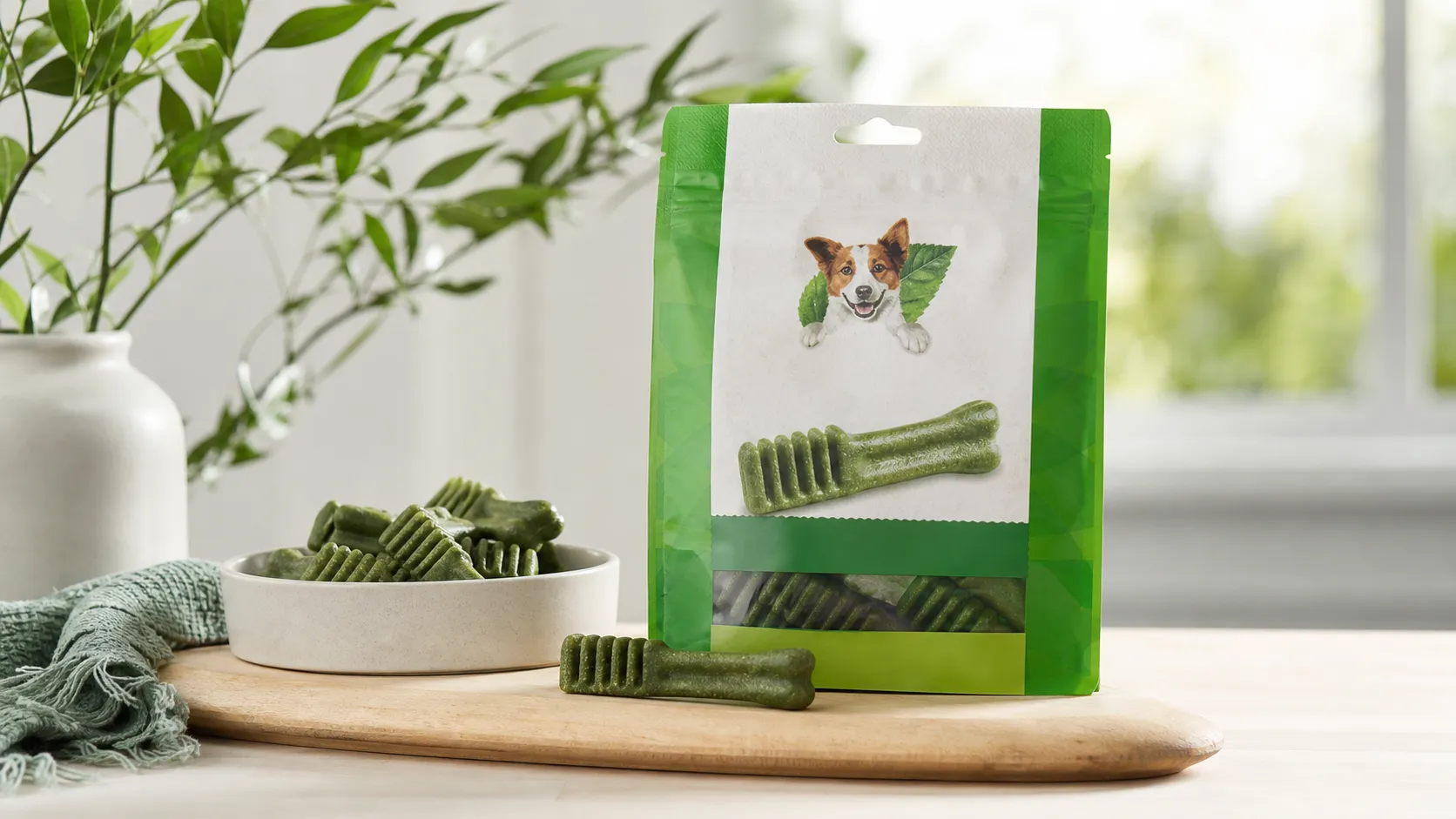 Pets
PetsGreenies Original Regular Dental Dog Treats Review 2026
A balanced look at Greenies Original Regular Dental Dog Treats: highly palatable and effective for fresher breath, but supervise and size-match due to rare choking risks.
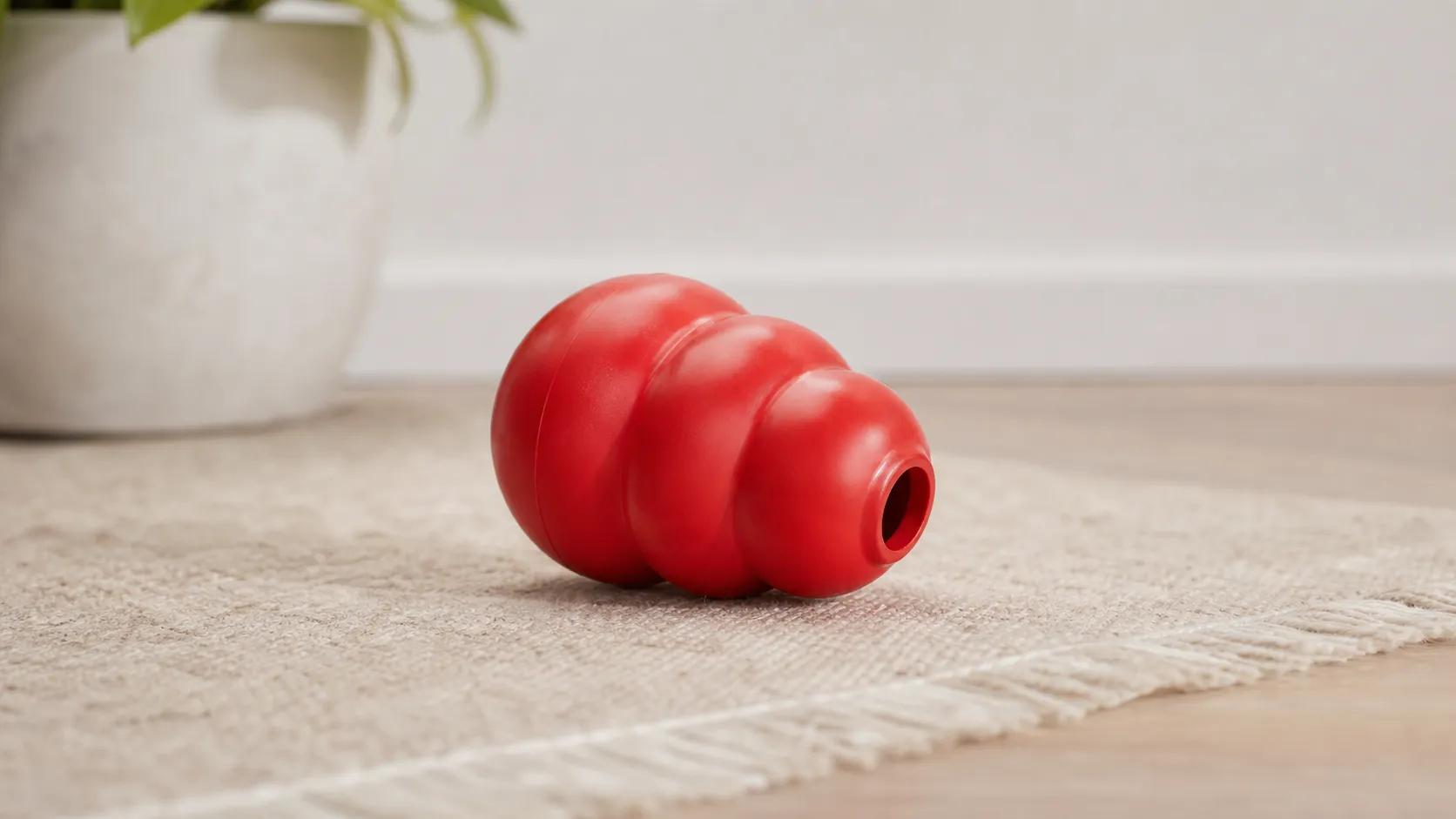 Pets
PetsKONG Classic Dog Toy - Large (Red) — 2026 Review
Durable, versatile and great for stuffing: the KONG Classic Dog Toy - Large (Red) scores 4.6/5 across ~28,700 reviews. Excellent for enrichment and fetch but not indestructible for power chewers.
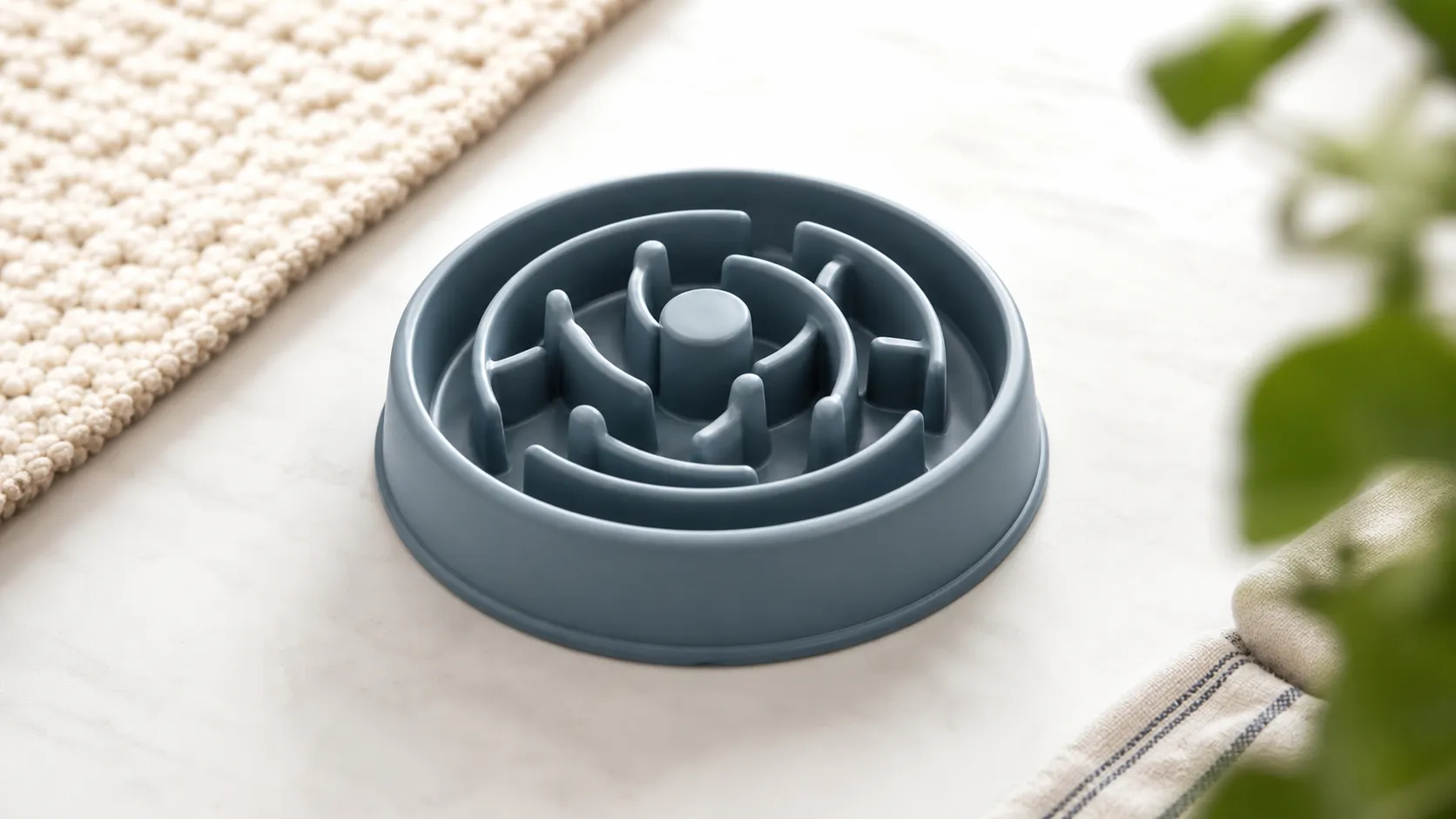 Pets
PetsOutward Hound Fun Feeder Review 2026
A budget-friendly slow feeder that reliably slows gulpers and adds mealtime enrichment. Great value but fiddly to clean and not for aggressive chewers.