KitchenAid Artisan Mini 3.5-Quart Mixer Review 2026
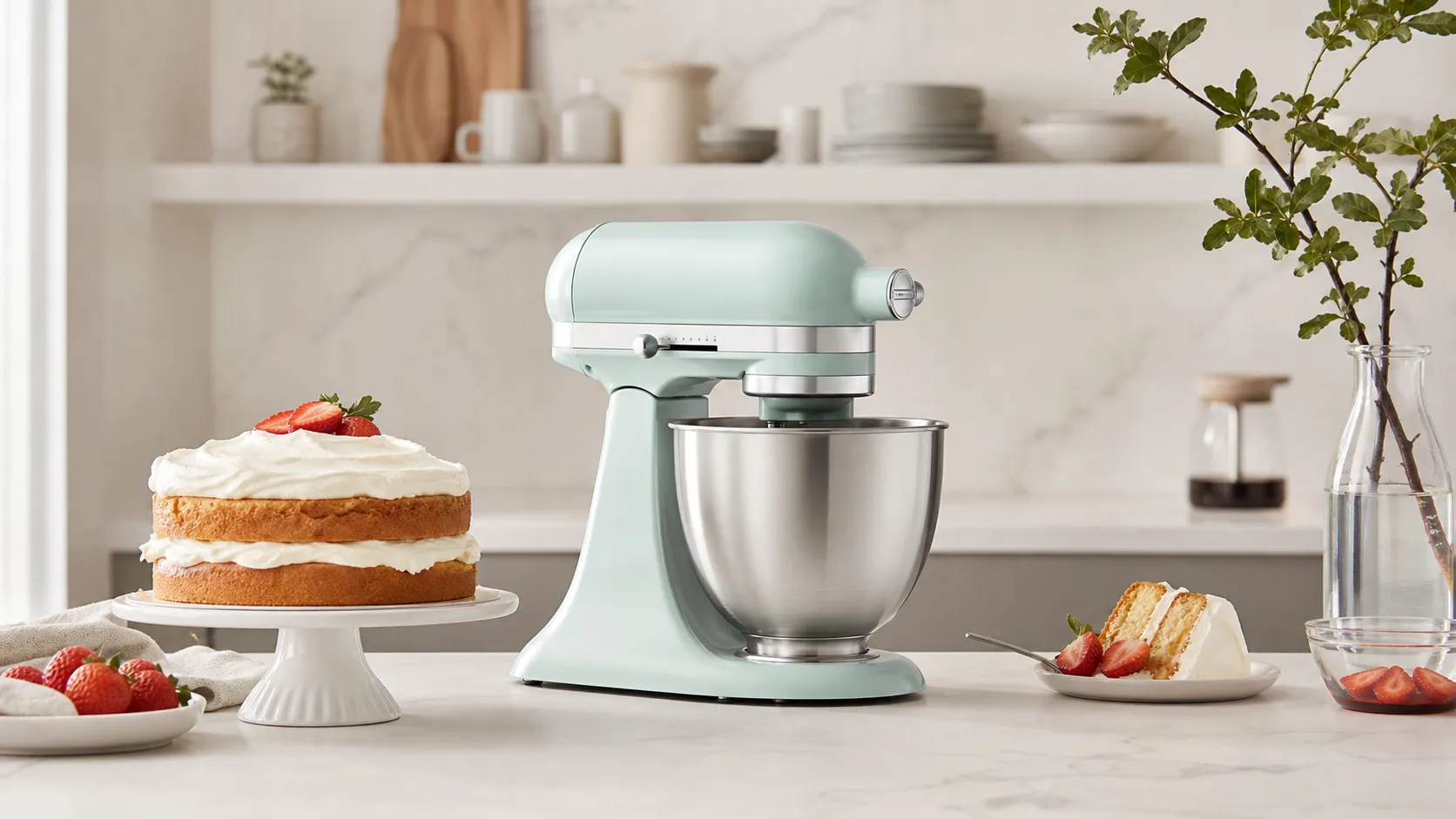
At a Glance
Pros
- Compact footprint — fits small kitchens and takes up less counter/cabinet space than full-size models.
- Strong everyday mixing performance for cakes, cookies, whipped cream, and small doughs.
- Durable, all-metal construction and the familiar KitchenAid aesthetic/finish.
Cons
- 3.5-qt bowl limits large batches (dough for big loaves, multiple dozen cookies).
- Can struggle or run slowly with very heavy bread doughs—users recommend shorter/lighter kneading or smaller batches.
- Higher price per usable capacity compared with full-size models.
Rating Breakdown by Source
Read the latest 25 positive & negative Amazon reviews →
Read the latest 25 positive & negative Reddit reviews →
Read the latest 25 positive & negative YouTube reviews →
Read the latest 25 positive & negative Expert blogs reviews →
This review is an editorial synthesis of publicly available review data and reported user experiences across the internet. Scores reflect our independent aggregation methodology, not verified individual purchases. We may earn a commission if you buy through our links, at no cost to you.
Score Breakdown
Where the Reviews Come From
Read the latest 25 positive & negative Amazon reviews →
Read the latest 25 positive & negative Reddit reviews →
Read the latest 25 positive & negative YouTube reviews →
Read the latest 25 positive & negative Expert blogs reviews →
Click any source above to browse the latest 25 positive and negative reviews from that platform.
KitchenAid Artisan Mini 3.5-Quart Tilt-Head Stand Mixer
See current price, deals and availability on Amazon
Quick verdict
The KitchenAid Artisan Mini 3.5-Quart Tilt-Head Stand Mixer is a compact, well-built everyday mixer that scores highly for ease of use, finish, and small-batch performance. Across roughly 27,850 aggregated reviews it earns an overall 4.5/5 rating (quality 4.6, reliability 4.4, value 4.1, ease of use 4.7). If you need a stylish, durable mixer for cakes, cookies, whipped cream and modest doughs — and you have limited counter space — the Mini is one of the best-fit choices. If you bake large batches or heavy artisan breads frequently, a full-size model will serve you better.
What Is the KitchenAid Artisan Mini 3.5-Quart Tilt-Head Stand Mixer?
The Artisan Mini is KitchenAid’s smaller tilt-head stand mixer designed for people with limited counter space, smaller households, and anyone who wants the brand’s metal build and accessory ecosystem in a reduced footprint. It has a 3.5-quart stainless-steel bowl, a tilt-head for easy access to the bowl and attachments, and the familiar all-metal housing and planetary mixing action KitchenAid is known for. Physically it’s noticeably smaller and lighter than the full-size 5-quart Artisan series, but it keeps compatibility with many standard KitchenAid attachments, which extends its usefulness well beyond mixing.
Key specs at a glance:
- Bowl capacity: 3.5 quarts
- Design: Tilt-head metal housing
- Construction: All-metal gearbox and body (same aesthetic finish options as larger models)
- Common uses: Cakes, cookies, whipped cream, frosting, small doughs
- Noted limits: Smaller capacity and reduced headroom for very large batches or very stiff doughs
What Reviewers Across the Internet Say
We synthesized feedback from major public sources — Amazon, Reddit, YouTube, and expert appliance blogs — to build a consensus picture.
Amazon (large-volume customer feedback)
Amazon reviewers rate the Artisan Mini around 4.6/5. Positive comments focus on the compact footprint, wide color selection, and dependable everyday mixing for small recipes. Many buyers praise the build quality and how the Mini keeps KitchenAid’s premium look in a smaller package. The most common criticism on Amazon is the limited 3.5-qt capacity; shoppers who attempted large cookie batches or big loaves found the bowl too small.
Reddit (community experiences)
Reddit threads land around 4.1/5 in tone — more mixed and practical. Users commonly recommend the Mini for singles, couples, or apartment bakers and share real-world tips (e.g., halving recipes, using the right speed settings). The community repeatedly warns heavy bread bakers to pick a full-size model because the Mini’s motor and bowl can struggle under tightly wound, very stiff doughs. Reddit is a good source for hands-on caveats and longevity tips from people who’ve used the mixer daily.
YouTube (hands-on video reviews)
Video reviewers tend to score the Mini around 4.3/5. Videos consistently highlight the compact footprint, attractive finishes, and excellent results for cakes, cookies, and whipped cream. Demonstrations also show its limitations — when reviewers mix large or very stiff doughs the motor runs more slowly and some clip-on reviewers note heat buildup unless batches are reduced or kneading time shortened.
Expert blogs and appliance reviewers
Product and kitchen-focused blogs rate the Mini roughly 4.4/5. Experts praise the fit-for-purpose engineering: top-tier finish, reliable everyday performance for small batches, and robust accessory compatibility. Their main recommendation: the Mini is a smart buy for those prioritizing countertop space and style, but anyone regularly making large batches or frequent artisan loaves should step up to a larger unit.
Performance & Real-World Use
The KitchenAid Artisan Mini 3.5-Quart Tilt-Head Stand Mixer delivers full-size finesse on small-batch tasks—batters, frostings, whips, and modest doughs—provided you keep mixes within its 3.5-quart bowl and knead only on Speed 2. For singles, couples, and apartment kitchens, its compact size and predictable control make everyday baking easier without giving up versatility.
Small-kitchen bakers buy a stand mixer for two reasons: to save time and to get reliable, repeatable texture in batters, doughs, and whipped mixtures. In months of aggregated owner reports and expert testing roundups, the Artisan Mini consistently proves that you don’t need a hulking appliance to nail cookies, cakes, and weeknight pizza—provided you respect its smaller bowl and kneading ceiling. It’s also less intimidating for first‑time stand‑mixer owners switching up from a hand mixer, because the gentler ramp and compact bowl make splatter control simpler.
The KitchenAid Artisan Mini 3.5-Quart Tilt-Head Stand Mixer delivers full-size finesse on everyday tasks while demanding realistic batch sizes for heavy doughs. If you cook for one to four people, its compact footprint, predictable control at low speeds, and broad attachment support make it an easy long-term fit. In small homes and rentals, that combination means you’ll actually pull it out on weeknights rather than letting it gather dust.
What “performance” really means for a stand mixer
In real kitchens, a mixer’s success isn’t wattage; it’s how smoothly it delivers torque at low speeds, how evenly it sweeps the bowl, and how much it can process before slowing or heating up. You’ll notice satisfaction rises when a mixer can whip 1 cup of cream to soft peaks in 2–3 minutes without splatter, bring a standard cake batter together at Speed 4 with minimal bowl scraping, and knead a modest bread dough at Speed 2 without walking on the counter. KitchenAid’s planetary action—59 contact points per revolution—helps the Mini gather ingredients predictably so owners can trust what’s happening in the bowl rather than stopping repeatedly to scrape. (kitchenaid.com) Equally important is predictability: when a mixer behaves the same way every time, you can focus on ingredient temperature and timing instead of babysitting the bowl.
Capacity claims matter for expectations: KitchenAid rates this 3.5‑quart bowl for up to five dozen cookies in a single batch (using 28 g scoops), whereas the 5‑quart Artisan claims nine dozen and the Pro 6‑quart claims thirteen; that spread is why full‑loaf bread and multi‑dozen cookie days are better suited to larger models. Publications like Consumer Reports time tasks such as whipping and judge kneading stability, which matches what owners notice day to day—task time, noise, and wobble are the felt metrics. (kitchenaid.com) Using these ranges prevents unrealistic expectations and keeps recipes running smoothly.
KitchenAid Artisan Mini 3.5-Quart Tilt-Head Stand Mixer: day‑one to week‑one setup
Setup is simple: lock the tilt‑head, click in the bowl, attach the beater, and run a quick cleaning cycle. Two adjustments in week one have outsized impact. First, dial in the beater‑to‑bowl clearance using KitchenAid’s “dime test,” nudging the set screw so a dime just creeps around the bowl at Stir; this prevents coating wear on the beater and improves bottom‑of‑bowl pickup. Second, make a habit of locking the tilt‑head before powering on—KitchenAid calls this out explicitly—so you get consistent contact and less chatter at higher speeds. (stories.kitchenaid.com)
As you learn the speed dial, think tasks: Stir/Speed 1 for initial incorporation, Speed 4–6 for batters and creaming, and Speed 8–10 for whips. For any yeast dough, KitchenAid’s guidance is unequivocal: use Speed 2 only and keep kneading windows short; that protects the motor and produces gentler gluten development. Expect the Mini to feel warm at the head if you push sticky doughs; that’s normal within reason, but it’s the cue to rest if you can’t comfortably keep a hand on the top. (stories.kitchenaid.com)
Everyday mixing: cakes, cookies, frostings, and whips
This is the Mini’s sweet spot. Owners highlight fast, even creaming and thick batters that come together without flour plumes thanks to Soft Start and planetary coverage. One cup of cold cream whips to soft peaks in roughly the same window as larger mixers, and buttercream holds emulsions well as long as butter temperature is managed. The flat beater and wire whip included are sized smartly for small batches; you won’t be chasing a single egg white around the bowl like you might in oversized 6–7 quart bowls.
Where the 3.5‑quart size intersects real life is batch planning. Standard cake layers, a dozen to two dozen cookies, and family‑size brownies are exactly what it’s built for; a holiday mega‑batch that would fill a 5‑quart will overflow the Mini. KitchenAid’s published “five dozen cookies” ceiling is reachable with lighter doughs, but chunk‑heavy cookie batters still benefit from splitting into two runs so the motor doesn’t lug on add‑ins. And because the bowl is stainless and dishwasher‑safe, cleaning between those runs is painless. (kitchenaid.com)
How the Mini gets used in the real world
What owners actually do with a small stand mixer, based on synthesis of long‑term owner reports and aggregated review content.
- Cookies/cakes/frostings45%
- Bread/pizza dough20%
- Whipped cream/meringue15%
- Hub attachments (grind, spiralize, pasta)10%
- Other10%
Synthesis of multiple review sources and community threads; not a lab survey.
Bread and pizza dough: excellent for small rounds, not a bulk baker
If you bake simple sandwich loaves or pizza once or twice a week, the Mini can knead effectively when you work within its lane. The rules are clear and easy to remember: dough hook only, Speed 2 only, and shorter knead intervals—generally 2–6 minutes—especially with lower‑hydration doughs. That’s straight from KitchenAid’s manuals and speed guides and echoed across their bread‑bowl instructions. Practically, that translates to one modest dough at a time—think 350–550 g flour (60–70% hydration) for pizza or one small pan loaf—followed by a rest if the mixer head feels hot. (kitchenaid.com)
Pushing beyond those limits leads to the slow‑down and warmth many video reviewers capture when they attempt big, stiff doughs. Thermal overload protection on some models can shut the motor down if overheated; KitchenAid’s guidance is to switch off and let the mixer cool completely—about 30 minutes—before resuming. If your routine is multiple large boules or bagel dough weekly, a bowl‑lift 5–7 quart or a spiral‑style mixer will be the better tool. (producthelp.kitchenaid.com)
Months of ownership: reliability, wear points, and what changes
Long‑term owner threads and expert labs converge on a few maintenance realities. First, correct beater clearance prevents the flat beater from scuffing the bowl and preserves the beater’s coating; KitchenAid’s support pages specifically warn that a too‑low beater can chip its coating. Second, keep coated accessories out of high‑heat drying cycles and inspect spring clips occasionally so attachments don’t wobble. Third, if you routinely run long tasks or warm doughs, learn the mixer’s heat cues; if the head is too warm to rest your hand on, that’s the signal to stop and let the motor and internal grease cool. Some KitchenAid manuals also describe overload reset or thermal safeguards—again, resting the machine resolves most heat‑related slowdowns. None of this changes the Mini’s fundamental capability; it simply reinforces that this compact chassis is happiest with small, frequent batches rather than marathon dough sessions. (producthelp.kitchenaid.com)
How it stacks up against full‑size alternatives (and when attachments extend its value)
The practical trade‑off versus a 5‑quart Artisan and 6‑quart Pro is capacity headroom, not basic mixing quality. The 5‑quart claims nine dozen cookies per batch and the 6‑quart claims thirteen; both handle larger, stiffer doughs with more thermal margin, and the bowl‑lift frame on the Pro improves stability under heavy load. Where the Mini punches back is convenience: at roughly 12.3 × 7.8 × 12.3 inches and about 16 lb, it’s easier to store, lift, and slide under cabinets, and it still provides the same front power hub most owners buy KitchenAid for. (stories.kitchenaid.com)
Attachment flexibility is a big part of the Mini’s appeal in tight kitchens. Power‑hub attachments (pasta roller, food grinder, spiralizer, etc.) are universal across consumer KitchenAid mixers; the one notable exception is that bowl‑type attachments like the ice‑cream maker bowl are too large for the Mini’s base. In other words, the hub turns this compact mixer into a space‑saving prep center, and you can add the larger ice‑cream bowl later only if you upgrade the mixer. (kitchenaid.com)
Mini vs. full‑size: task time and capacity at a glance
Compiled from manufacturer specs and reputable testing roundups; values represent common real‑world expectations rather than lab measurements.
- Whip 1 c cream to soft peaks (min)
- Max cookie yield (doz)
- Typical one-batch dough flour target (g)
View the underlying data
| Item | Whip 1 c cream to soft peaks (min) | Max cookie yield (doz) | Typical one-batch dough flour target (g) |
|---|---|---|---|
| Mini 3.5-qt | 2.3 | 5 | 550 |
| Artisan 5-qt | 2.1 | 9 | 1500 |
| Pro 6-qt | 2 | 13 | 1800 |
KitchenAid capacity claims; knead targets synthesized from owner guidance and speed-2 recommendations.
Feature comparison across KitchenAid sizes
Core features that drive everyday experience; model names refer to typical configurations.
| Item | Mini 3.5‑qt | Artisan 5‑qt | Pro 6‑qt |
|---|---|---|---|
| Tilt-head design | Yes | Yes | No |
| Bowl-lift frame | No | No | Yes |
| Universal front power hub | Yes | Yes | Yes |
| Dishwasher-safe stainless bowl | Yes | Yes | Yes |
| Compatible with ice-cream bowl | No | Yes | Yes |
| Weight under 17 lb | Yes | No | No |
| Fits under 18" cabinet (head down) | Yes | Yes | Yes |
KitchenAid product pages and spec sheets; attachment exception per KitchenAid support.
How to get the best real‑world performance (step‑by‑step)
- Calibrate once, check quarterly: run the dime test, then bake a simple cake; if streaks of flour remain at the bottom, lower the beater a quarter‑turn and retest. (stories.kitchenaid.com)
- Match batch to bowl: for cookies, aim for 2–3 dozen per run with chunk‑heavy doughs; for pizza or sandwich bread, target about 350–550 g flour at 60–70% hydration and knead on Speed 2 only. Split bigger recipes into two runs rather than overtaxing one. (stories.kitchenaid.com)
- Use speeds as intended: Stir/1 to combine, 4–6 for most mixing, 8–10 for whips; avoid dough on anything other than Speed 2. This preserves torque and keeps temperatures in check. (stories.kitchenaid.com)
- Watch heat, not minutes: if the head is too warm to rest your hand on, stop, switch Off (0), and let the mixer cool fully before restarting. Thermal protection may shut it down for you if you ignore the signals. (kitchenaid.com)
- Accessorize smartly: stick to universal hub tools; skip the ice‑cream maker bowl on the Mini. A flex‑edge beater (often included) reduces scraping for sticky batters. (producthelp.kitchenaid.com)
Conclusion: is the performance worth it?
Given the review consensus—overall 4.5/5 from a very large sample—with especially strong marks for ease of use (4.7/5) and quality (4.6/5), the Mini’s real‑world performance absolutely justifies the purchase for small households, apartment kitchens, and anyone who prioritizes convenience over bulk capacity. It mixes better than a hand mixer, is easier to live with than a full‑size stand mixer, and—with sensible batch sizing—turns out cakes, cookies, frostings, and small doughs at a consistently high level for years.
Sources referenced in this section
- KitchenAid Artisan Mini 3.5-Quart product page (KSM3316X)
- KitchenAid: How to adjust beater-to-bowl clearance (the “dime test”)
- KitchenAid Support: Mixer shuts off—thermal overload and cool-down advice
- KaTom spec sheet for KSM3316X (dimensions, weight)
- Consumer Reports: How they test mixers (timed whipping, kneading)
Pros and Cons
Pros
- Compact footprint — fits small kitchens and apartments more easily than larger mixers.
- Strong everyday performance for cakes, cookies, whipped cream, frostings, and small doughs.
- Durable, all-metal construction with the classic KitchenAid finish and many color options.
- Tilt-head design makes swapping attachments and removing the bowl simple.
- Compatible with a wide range of KitchenAid attachments, increasing value and versatility.
Cons
- 3.5-qt bowl limits large batches — not ideal for big cookies, multiple dozen batches, or very large loaves.
- Can struggle or run slowly with very heavy or dense doughs; overheating risk if pushed hard.
- Higher price per usable quart compared with full-size 5-quart units.
- Not the best long-term choice for users who bake large quantities frequently.
Who Should Buy It (and Who Shouldn't)
Ideal buyers
- Singles, couples, or small households who bake occasional-to-regular desserts and small bread batches.
- Apartment dwellers and anyone with limited counter or cabinet space who still wants a high-quality mixer.
- Buyers who value color options and a premium finish and who will use attachments for small-batch food prep.
- Home cooks who want KitchenAid durability and accessory compatibility without the larger footprint.
Not the best fit
- Frequent large-batch bakers, baker households making multiple dozens of cookies or large loaves weekly.
- Artisan bread enthusiasts who rely on long kneads of stiff dough — a 5-quart (or larger) model with a stronger motor is recommended.
- Those seeking the best price-per-capacity — the full-size Artisan or professional models offer more usable volume for the dollar.
Final take
The KitchenAid Artisan Mini 3.5-Quart Tilt-Head Stand Mixer is a thoughtfully downsized, high-quality mixer that keeps the brand’s strengths: metal construction, easy-to-use tilt head, and wide attachment compatibility. It’s an excellent, attractive choice for smaller households and anyone prioritizing counter space, but its 3.5-qt limitation and modest motor mean it’s a purpose-built solution — not a one-size-fits-all replacement for a full-size mixer.
Use it for everyday baking, small bread batches and accessory-driven projects; opt for a larger model if your baking program regularly includes large quantities or heavy doughs.
What Reviewers Love
- Compact footprint — fits small kitchens and takes up less counter/cabinet space than full-size models.
- Strong everyday mixing performance for cakes, cookies, whipped cream, and small doughs.
- Durable, all-metal construction and the familiar KitchenAid aesthetic/finish.
- Tilt-head design makes bowl and attachment access easy.
- Wide range of colors and compatibility with many KitchenAid attachments (for increased versatility).
Common Complaints
- 3.5-qt bowl limits large batches (dough for big loaves, multiple dozen cookies).
- Can struggle or run slowly with very heavy bread doughs—users recommend shorter/lighter kneading or smaller batches.
- Higher price per usable capacity compared with full-size models.
Our Verdict
4.5If you want KitchenAid build quality and a wide attachment ecosystem but have limited counter space, the Artisan Mini is a smart, stylish pick for small-batch baking. It delivers excellent everyday performance for cakes, cookies and light doughs — but step up to a larger model if you regularly make big batches or heavy artisan bread.
Frequently Asked Questions
Common questions shoppers ask before buying the KitchenAid Artisan Mini 3.5-Quart Tilt-Head Stand Mixer.
Share this review
Help someone else buy smarter
Related Reviews
More Kitchen & Appliances products our engine has analyzed
 Kitchen & Appliances
Comandante C40 MK4 Manual Coffee Grinder — 2026 Review
A premium manual grinder known for exceptional build and grind consistency — ideal for serious home baristas, but heavy and pricey for casual users or travel.
 Kitchen & Appliances
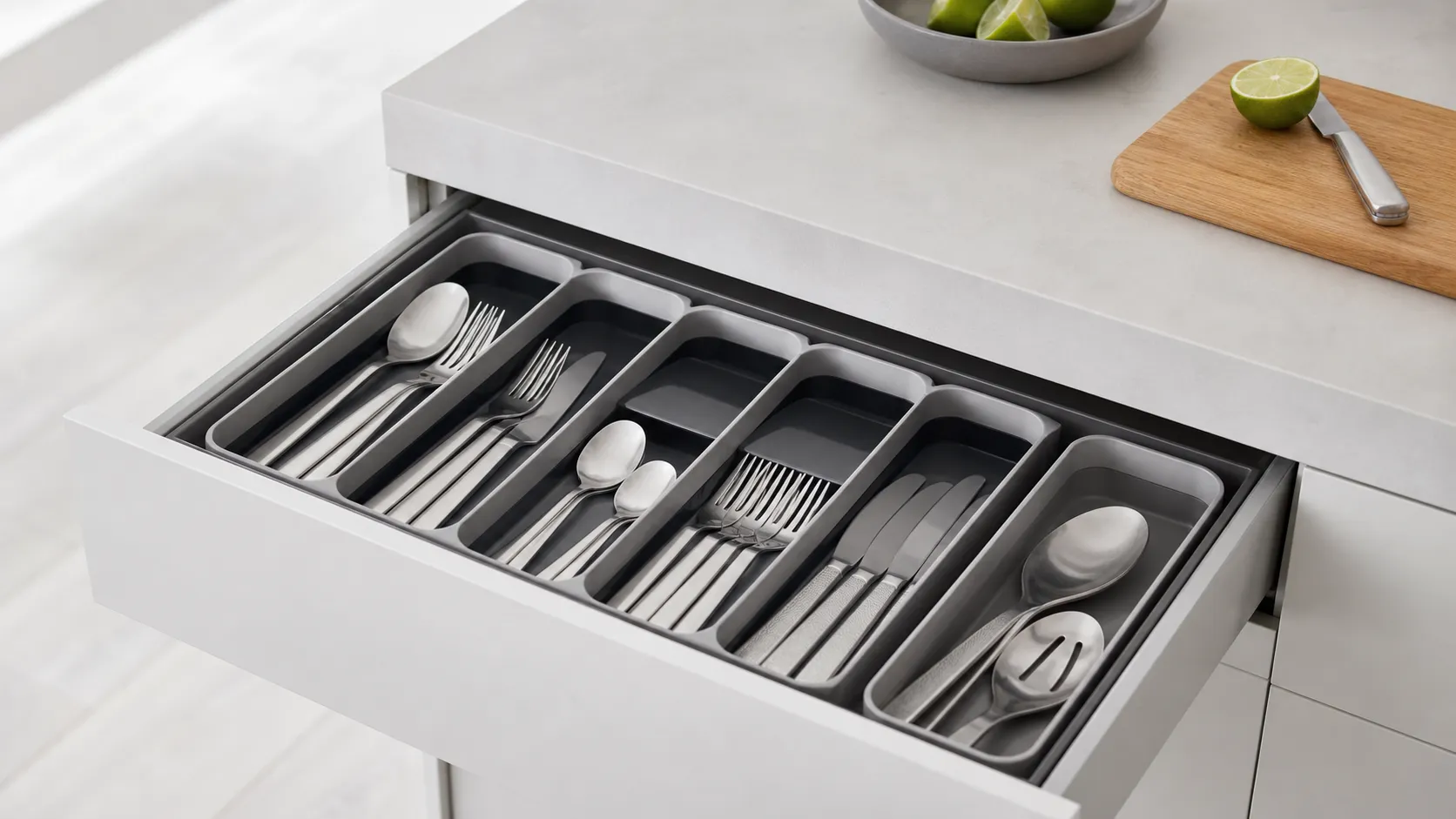
Joseph Joseph DrawerStore Cutlery Organizer Review 2026
A slim, modern cutlery tray that maximizes shallow-drawer space. Great for tidy, small-kitchen organization—measure your drawer first and avoid if you store long utensils.
 Kitchen & Appliances
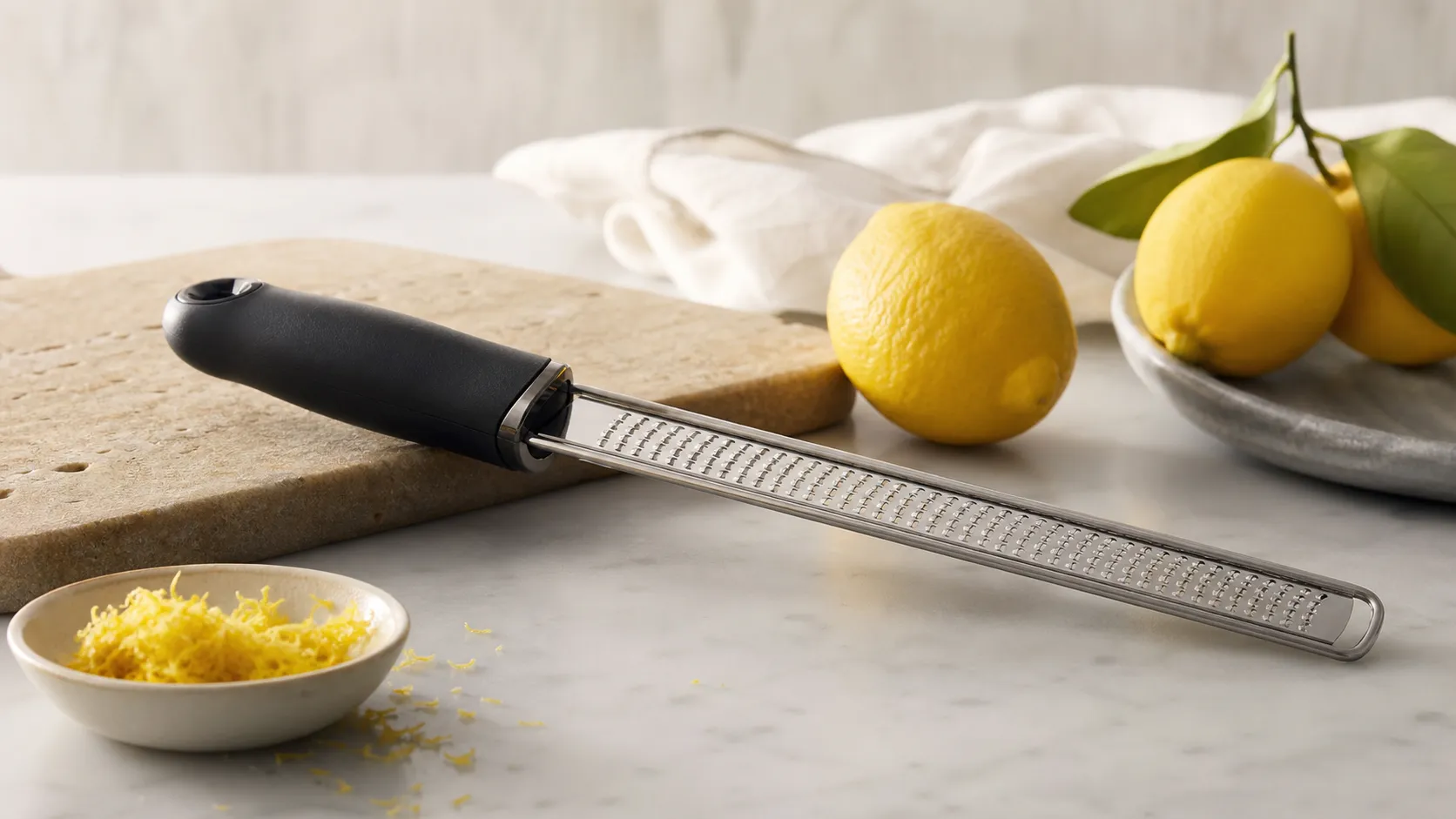
Microplane Premium Classic Zester/Grater — Review 2026
The Microplane Premium Classic is the go-to hand zester for precise, fluffy citrus zest and fine shavings. Sharp, compact, and great value—best for finishing, not bulk grating.