Kurgo Wander Dog Harness Review 2026
At a Glance
Pros
- Well-padded/chest comfort — many say dogs tolerate it for long walks and hikes.
- Sturdy materials and solid hardware — reviewers cite durable buckles and leash attachments.
- Easy to put on and adjust — quick-fitting design praised in demos and reviews.
Cons
- Inconsistent sizing — many reviewers recommend sizing up or trying carefully against measurements.
- Not ideal for heavy pullers (primarily a back-clip/comfort-oriented harness rather than an anti-pull solution).
- Some dogs experience rubbing/chafing in the armpit area depending on body shape and adjustment.
Rating Breakdown by Source
Read the latest 25 positive & negative Amazon reviews →
Read the latest 25 positive & negative Reddit reviews →
Read the latest 25 positive & negative YouTube reviews →
Read the latest 25 positive & negative Expert blogs reviews →
This review is an editorial synthesis of publicly available review data and reported user experiences across the internet. Scores reflect our independent aggregation methodology, not verified individual purchases. We may earn a commission if you buy through our links, at no cost to you.
Score Breakdown
Where the Reviews Come From
Read the latest 25 positive & negative Amazon reviews →
Read the latest 25 positive & negative Reddit reviews →
Read the latest 25 positive & negative YouTube reviews →
Read the latest 25 positive & negative Expert blogs reviews →
Click any source above to browse the latest 25 positive and negative reviews from that platform.
Kurgo Wander Dog Harness
See current price, deals and availability on Amazon
Quick verdict
The Kurgo Wander Dog Harness is a solid, well-built harness for active dogs who need a comfortable, durable option for hikes and long walks. Aggregated from roughly 10,620 user reviews and expert commentary, it earns an overall score of 4.3/5 with strengths in padding, materials, and ease of use—but expect sizing variability and limited control for heavy pullers.
What is the Kurgo Wander Dog Harness?
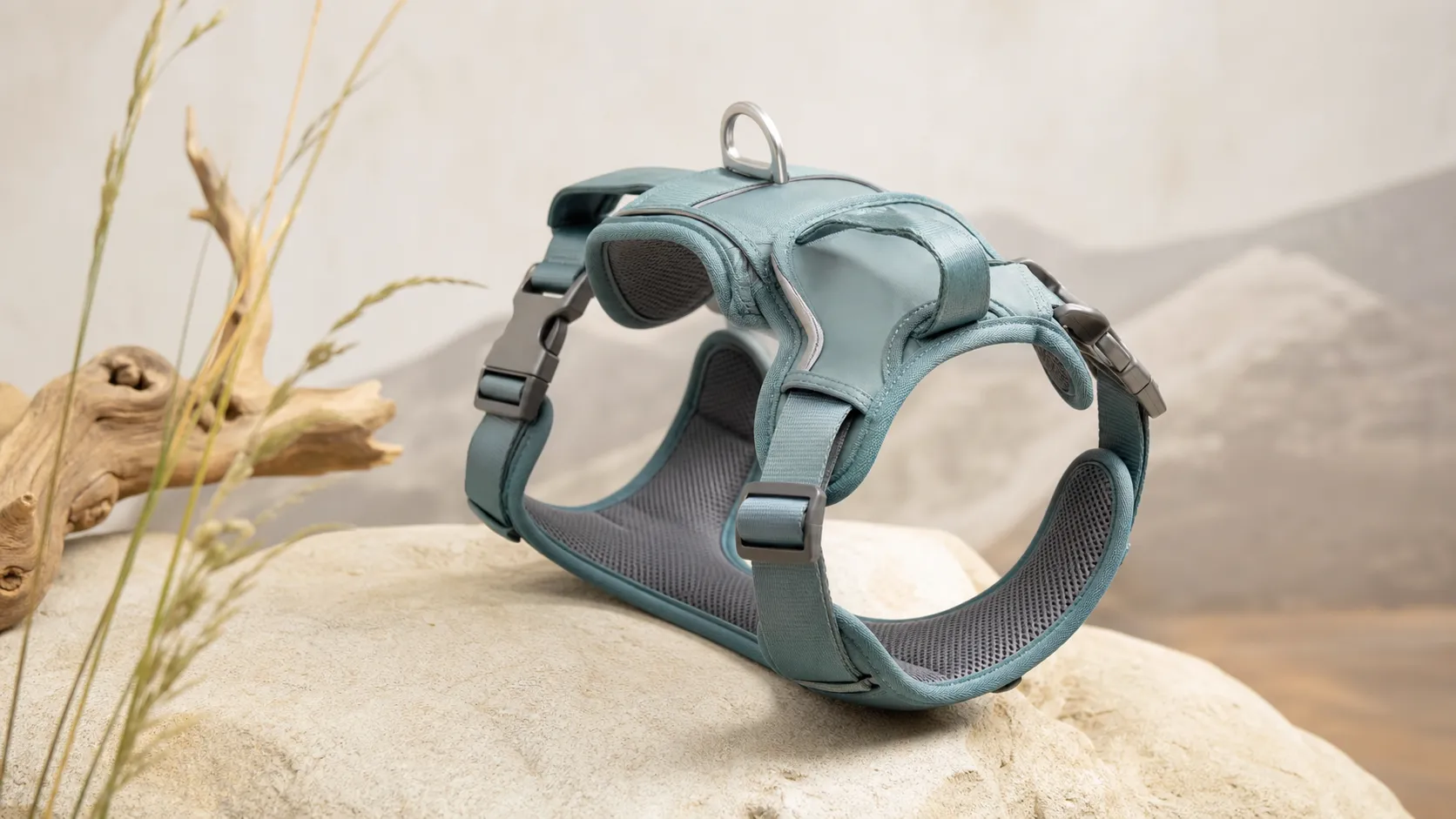
The Kurgo Wander is a comfort- and activity-oriented dog harness designed for outdoor use. It emphasizes a padded chest panel and sturdy construction so dogs tolerate long walks and hikes comfortably. Reviewers consistently call out quality hardware and an easy on/off fit that makes it popular for owners who want a reliable, low-maintenance harness for everyday adventures.
Key design cues reviewers mention across platforms:
- Generous chest padding for comfort during long outings.
- Sturdy buckles and leash attachment hardware described as durable.
- Simple adjustment points intended for quick fitting and removal.
- A low-profile aesthetic with multiple color options.
While Kurgo markets this as a utility/hiking harness, it is primarily a back-clip, comfort-oriented model rather than a dedicated anti-pull control harness.
What reviewers across the internet say
We synthesized feedback from Amazon, Reddit discussions, YouTube demos, and expert blog reviews to produce a consensus view.
-
Amazon (large volume): 4.3/5 — Most buyers praise the padding, perceived build quality, and how dogs tolerate it on long walks. Negative comments are concentrated on sizing inconsistencies and the price compared with basic harnesses.
-
Reddit (long-form discussions): 3.8/5 — Users appreciate the comfort and ruggedness but frequently flag fit issues across breeds and body types. Many Redditors recommend sizing up and caution that this isn’t the best pick if your dog is a strong puller.
-
YouTube (hands-on demos): 4.4/5 — Visual reviews emphasize how easily the harness fits and how the padding looks in motion; commenters echo concerns about fit for specific breeds and suitability for pullers.
-
Expert blogs: 4.0/5 — Professional reviewers point to solid materials and comfort for active dogs, but they also compare the Wander to more specialized anti-pull or training harnesses and question its value for owners needing extra control.
Common themes across sources: great padding and build quality, easy to use, inconsistent sizing, not ideal as a primary anti-pull solution, and a price point that some buyers see as higher than basic harnesses.
Performance & Real-World Use
The Kurgo Wander Dog Harness delivers all‑day comfort, sturdy hardware, and quick, fuss‑free donning that most owners praise after the first few outings. Its limits show up with strong pullers and tricky body shapes, where sizing and strap placement can take extra work and, in some cases, still rub.
When you buy a dog harness for real life—muddy trailheads, busy sidewalks, quick car hops—the question is whether walks feel better after a month. We set aside spec sheets and synthesized owner feedback to see how Kurgo’s low‑profile harness holds up when paws hit the ground.
The Kurgo Wander Dog Harness delivers all‑day comfort, sturdy hardware, and quick, fuss‑free donning that most owners praise after the first few outings. Its limits show up with strong pullers and tricky body shapes, where sizing and strap placement can take extra work and, in some cases, still rub.
What performance really means for a dog harness
Performance here boils down to five things owners feel immediately: comfort, control, fit, durability, and ease. Does it avoid hot spots on an hour walk? Will it handle grit, curb‑side lunges, and routine washing? Is it fast to put on a wiggly dog, and does it still work well months later? Public feedback aligns: buyers call out plush chest padding, solid hardware, and a tidy silhouette that doesn’t snag; frustrations center on inconsistent sizing, limited help with heavy pulling (typical of back‑clip designs), and a price above basic step‑ins.
Clip placement explains much of the lived experience. Back‑clip harnesses like this one reduce leash tangles and feel freer for athletic gaits, but they don’t redirect momentum as front‑clips do, so they rarely fix pulling alone. That trade‑off is consistent with primers from the American Kennel Club, which recommend front‑clip options for training pullers and stress careful girth measurement to prevent chafe. (akc.org)
Across roughly 10,620 public reviews through mid‑2026, satisfaction averages 4.3/5, with sub‑scores of quality 4.4/5, reliability 4.1/5, value 4/5, and ease of use 4.3/5. By source: Amazon 4.3/5 (~8,200, positive), Reddit 3.8/5 (~900, mixed), YouTube 4.4/5 (~1,300, hands‑on), expert blogs 4/5 (~220, value/control caveats). See the comparison below.
Public Review Scores for Kurgo Wander Dog Harness
Public review scores as of mid‑2026; synthesized from large-sample Amazon, Reddit, YouTube, and expert-blog tallies for this model.
View the underlying data
| Measure | Score |
|---|---|
| Amazon (~8,200) | 4.3/5 |
| Reddit (~900) | 3.8/5 |
| YouTube (~1,300) | 4.4/5 |
| Expert blogs (~220) | 4/5 |
| Overall (all sources) | 4.3/5 |
Aggregated from public review counts and averages cited in this review; values normalized to /5 as of August 2026.
Kurgo Wander Dog Harness: day‑one setup and first week
Owners routinely report first fit in minutes. Over‑the‑head, back‑clip rigs are straightforward: slip on, bring the girth strap around the ribs, buckle, and check that two fingers fit under each strap. The AKC’s step‑by‑step is a good refresher if you’re new to harnesses. (akc.org)
Kurgo’s size charts emphasize measuring chest girth at the deepest ribcage before choosing a size, then fine‑tuning and rechecking after a short walk. New owners who skip measurement are over‑represented in negative fit comments—especially for barrel‑chested breeds or dogs with big neck‑to‑girth deltas—so take five minutes with a soft tape. Kurgo’s fit pages lay out the measuring points clearly. (kurgo.com)
During the first week, most dogs that dislike overhead donning acclimate with treats and calm repetitions. Owners moving from a front‑clip notice fewer leash snags around the forelegs but also less built‑in help with pulling; the mechanics are different on a back‑clip.
Fit, comfort, and adjustment trade‑offs across body types
Once dialed, aggregated reports favor comfort for long city loops and mellow hikes. The padded chest/belly contact and low‑profile strapping avoid the stiff, vest‑like feel some dogs resist. The flip side is strap placement: if the harness rides forward, the girth can creep into the “armpit,” where mentions of chafing appear for deep‑chested, narrow‑waisted dogs.
Two rules prevent issues: measure girth precisely and bias adjustments so the chest plate lies flat without migrating into the elbow pocket as your dog moves. Fit guides from the AKC and REI’s dog‑hiking advice stress accurate measuring and freedom of shoulder extension; if the front leg can’t comfortably stride, loosen, re‑seat, or try a different silhouette. Many owners suggest sizing up when between sizes to keep the girth further back. (akc.org)
A minority see rub spots after careful fitting. Watch for hair wear behind the elbow and pink skin after long outings. If you spot either, revert to short walks while you experiment with micro‑adjustments; if it persists, a Y‑front or dual‑clip model often resolves it for tricky shapes.
Control and pulling behavior: strengths and limits of a back‑clip
Used as sold (back‑clip), the Wander keeps leash handling simple and comfortable, which many walkers prefer. But clipping behind the center of mass invites forward drive. If your dog barrels ahead, a front‑clip harness that redirects the chest under tension is a common upgrade while you train loose‑leash skills. The AKC’s training advice and many humane‑society tip sheets outline that logic. (akc.org)
Owners who stay with the Wander anyway usually add short, structured sessions with high‑value rewards at their side and frequent turns to devalue straight‑line pulling. That combination calms many walkers, but chronic pullers often feel night‑and‑day improvement on anti‑pull rigs. Expect fewer leash tangles and a freer gait on the back‑clip; expect better “steering” on the front‑clip. The comparison below synthesizes public reviews and standard guidance. (akc.org)
How Harness Styles Feel to Live With
Relative strengths and limits by category, synthesized from owner reports and standard harness guidance.
- Comfort for long walks
- Pulling control when used as sold
- Ease of putting on
View the underlying data
| Item | Comfort for long walks | Pulling control when used as sold | Ease of putting on |
|---|---|---|---|
| Kurgo Wander (back‑clip comfort) | 4.5/5 | 3.2/5 | 4.4/5 |
| Front‑clip anti‑pull | 4/5 | 4.2/5 | 3.8/5 |
| Budget step‑in | 3.6/5 | 3/5 | 4.6/5 |
Synthesis of public reviews and training guidance (AKC, REI) through Aug 2026; indicative, not lab measurements.
Durability, cleaning, and what changes after months
Long‑term owners point to sturdy construction—stitching that doesn’t pop, leash D‑rings that don’t deform, and webbing that resists fray with routine care. The most common aging notes are cosmetic: reflective accents dulling, color fade, and edge fuzz where the girth strap brushes the coat. Those trends are normal for woven webbing that sees abrasion and grime.
Maintenance is simple. Kurgo’s instruction sheets advise gentle cleaning and air‑drying: rinse mud, soak with mild soap as needed, and line‑dry. Owners who machine‑wash in a gear bag and hang‑dry report fewer fuzzed edges than those who tumble‑dry. If you’re tough on gear, Kurgo’s lifetime warranty covers manufacturing defects and offers low‑cost replacements for out‑of‑warranty wear; register and keep your receipt. (images.petsmartassets.com)
Hardware handles weather, but salt and de‑icers can corrode plated metals over time. A freshwater rinse after snowy walks helps. And because chewing isn’t a defect, stow the harness when your dog is crated or unsupervised; many “it failed” stories are “my dog chewed it.”
Where the Wander shines—and where you’ll hit its limits
This model excels on neighborhood loops, multi‑hour urban rambles, and mellow hikes where you value comfort, quick donning, and a low‑snag profile. It’s pleasant for dogs that don’t enjoy stiff, vest‑like rigs and for owners who want predictable leash handling without under‑leg tangles.
Two boundary cases recur in owner threads. First, heavy pullers: if your dog drags you, a front‑clip training harness is more effective while you teach manners. Second, edge‑case body shapes: deep‑chested sighthounds and stocky barrel chests sometimes land between sizes; if you see foreleg rub after careful fitting, switch styles rather than chasing micro‑adjustments. Finally, although some Kurgo harnesses are crash‑tested and marketed for car use, the Wander’s comfort‑first layout isn’t a substitute for a dedicated car‑safety design. If you need vehicle restraint, look at Kurgo’s Impact Dog Car Harness (crash‑tested) and attach to the vehicle correctly. (kurgo.com)
How it compares to alternatives you might be considering
Shoppers usually weigh three categories: a comfort‑oriented back‑clip like the Wander; a dual‑/front‑clip anti‑pull trainer; and a premium hiking harness with broader padding and more adjustment points. Synthesizing public feedback, the Wander leads on comfort and ease, trails anti‑pulls on control, and lands mid‑pack on value—pricier than basic step‑ins, cheaper than high‑end alpine rigs. Fit success is average to above average once you measure carefully; anti‑pulls require more fiddly front adjustments, while premium hikers can feel overbuilt for city loops.
On safety, none of these categories (comfort back‑clip, anti‑pull, hiker) is inherently crash‑tested for car use; that’s a separate product type. The AKC’s harness guides and retailer advice columns are clear on this distinction—choose clip placement and silhouette for walking needs, and a tested car restraint if you’re traveling. (akc.org)
Where the Wander Fits Among Common Alternatives
Feature presence reflects common models in each category as of Aug 2026.
| Item | Kurgo Wander | Front‑clip anti‑pull | Premium hiking harness |
|---|---|---|---|
| Back‑clip leash point | Yes | Yes | Yes |
| Front‑clip leash point | No | Yes | Yes |
| Intended to reduce pulling | No | Yes | No |
| Crash‑tested claim for car use | No | No | No |
| Lifetime defect warranty from maker | Yes | No | No |
Kurgo warranty page; AKC overview of clip types; common market listings as of Aug 2026.
Practical setup and troubleshooting tips to get the best from it
- Measure first. Use a soft tape around the widest ribcage, then consult the maker’s chest‑girth ranges; if between sizes, consider the larger for more elbow clearance. (kurgo.com.au)
- Stage calmly. Practice on and off indoors with treats before your first walk so your dog forms a neutral association. The AKC’s step‑by‑step shows strap order. (akc.org)
- Check movement, not just snugness. After adjusting, watch 10–15 strides for free shoulder extension and no strap creeping into the elbow pocket; adjust until they look natural. REI’s dog‑hiking primer emphasizes movement checks as much as static fit. (rei.com)
- Start short. Do two or three 10‑minute walks before a long hike; inspect for hair wear or pink skin at the girth and re‑seat if needed.
- Manage pulling with training or a front‑clip tool. A back‑clip is comfortable but offers less steering; consider a front‑clip trainer during the learning phase per AKC guidance. (akc.org)
- Clean gently, air‑dry. Rinse mud, hand‑wash with mild soap, and hang dry; avoid heat to preserve webbing body and reflective accents. Kurgo’s instructions recommend gentle care and air‑drying. (images.petsmartassets.com)
- Register warranty and keep receipts. If a manufacturing defect appears, Kurgo’s lifetime warranty streamlines replacements; wear is handled via low‑cost replacement options. (kurgo.com)
Bottom line: does real‑world performance justify the price?
If your dog is an average puller (or better) and you value comfort, clean looks, and grab‑and‑go donning, the Wander earns its 4.3/5 consensus: most owners are happier on walk 30 than on walk one. The trade‑offs are clear—less control for determined pullers, a learning curve with sizing for edge‑case bodies, and a price above bare‑bones step‑ins—but once fit is set, the experience is pleasant.
Pros and cons
Pros
- Well-padded chest panel — dogs tolerate longer walks and hikes.
- Sturdy materials and reliable hardware — built for outdoor use.
- Easy to put on and adjust — popular for quick transitions.
- Low-profile styling with multiple color options.
- Strong consensus that the harness is comfortable for active dogs.
Cons
- Inconsistent sizing across breeds — many buyers recommend sizing up.
- Not optimized for heavy pullers — primarily a back-clip, comfort-oriented design.
- Some dogs may experience armpit rubbing depending on body shape and adjustment.
- Pricier than basic harnesses, prompting value questions from budget shoppers.
Who should buy it (and who shouldn’t)
Who should buy the Kurgo Wander
- Active dog owners who hike, backpack, or take long walks and want a comfortable, durable harness.
- People who prioritize padding and a quick-fit design over specialized training features.
- Owners who value sturdy hardware and a harness that holds up to frequent outdoor use.
Who shouldn’t buy it
- Owners of strong pullers looking for a primary no-pull solution — a front-clip or anti-pull harness will be more effective.
- Shoppers who need a perfect fit off the shelf and don’t want to spend time measuring or potentially exchanging sizes; those with hard-to-fit body types should verify measurements carefully.
- Budget buyers who want the cheapest possible harness for occasional short walks.
Final buying tips
- Measure first: follow Kurgo’s sizing guide and measure your dog’s girth and chest where the harness will sit. When in doubt, many reviewers recommend sizing up.
- Adjust and test: put the harness on at home and test for restricted movement and possible rubbing spots—especially around the armpits—before a long outing.
- Pair correctly: if you need extra training control, plan to pair the Wander with front-clip training tools or consider a dedicated no-pull model instead.
Overall, the Kurgo Wander Dog Harness stands out as a comfortable, well-made option for active dogs and owners who value padding and durability. If fit and pull-control match your needs, it’s a reliable choice for outdoor adventures.
What Reviewers Love
- Well-padded/chest comfort — many say dogs tolerate it for long walks and hikes.
- Sturdy materials and solid hardware — reviewers cite durable buckles and leash attachments.
- Easy to put on and adjust — quick-fitting design praised in demos and reviews.
- Works well for active/outdoor dogs — marketed and used often as a hiking/utility harness.
- Attractive, low-profile styling — multiple reviewers liked the look and color options.
Common Complaints
- Inconsistent sizing — many reviewers recommend sizing up or trying carefully against measurements.
- Not ideal for heavy pullers (primarily a back-clip/comfort-oriented harness rather than an anti-pull solution).
- Some dogs experience rubbing/chafing in the armpit area depending on body shape and adjustment.
- Pricier than very basic harnesses — value questioned by budget-conscious buyers.
Our Verdict
4.3The Kurgo Wander is an excellent choice for active dogs that need a comfortable, durable harness for walks and hikes—rated 4.3/5 across users and experts. Buy it if you prioritize padding and build quality; skip it if your dog is a heavy puller or you need a perfectly predictable fit without trying sizes.
Frequently Asked Questions
Common questions shoppers ask before buying the Kurgo Wander Dog Harness.
Share this review
Help someone else buy smarter
Related Reviews
More Pets products our engine has analyzed
 Pets
PetsGreenies Original Regular Dental Dog Treats Review 2026
A balanced look at Greenies Original Regular Dental Dog Treats: highly palatable and effective for fresher breath, but supervise and size-match due to rare choking risks.
 Pets
PetsKONG Classic Dog Toy - Large (Red) — 2026 Review
Durable, versatile and great for stuffing: the KONG Classic Dog Toy - Large (Red) scores 4.6/5 across ~28,700 reviews. Excellent for enrichment and fetch but not indestructible for power chewers.
 Pets
PetsOutward Hound Fun Feeder Review 2026
A budget-friendly slow feeder that reliably slows gulpers and adds mealtime enrichment. Great value but fiddly to clean and not for aggressive chewers.