Le Creuset Enameled Cast Iron Skillet, 12-inch — 2026 Review
At a Glance
Pros
- Excellent heat retention and even browning — great for steaks, potatoes and oven finishes.
- Enameled interior: ready to use, non-reactive with acidic foods and easier to clean than raw cast iron.
- Attractive, durable finish and wide color selection — many buyers keep Le Creuset pieces on display/for serving.
Cons
- Heavy — many users say the 12" skillet is cumbersome for single-handed use or frequent flipping.
- High price — reviewers frequently debate whether the premium cost is worth the performance versus cheaper alternatives.
- Enamel can chip if dropped or banged on edges; some owners report small chips and the need to contact support.
Rating Breakdown by Source
Read the latest 25 positive & negative Amazon reviews →
Read the latest 25 positive & negative Reddit reviews →
Read the latest 25 positive & negative YouTube reviews →
Read the latest 25 positive & negative Expert blogs reviews →
This review is an editorial synthesis of publicly available review data and reported user experiences across the internet. Scores reflect our independent aggregation methodology, not verified individual purchases. We may earn a commission if you buy through our links, at no cost to you.
Score Breakdown
Where the Reviews Come From
Read the latest 25 positive & negative Amazon reviews →
Read the latest 25 positive & negative Reddit reviews →
Read the latest 25 positive & negative YouTube reviews →
Read the latest 25 positive & negative Expert blogs reviews →
Click any source above to browse the latest 25 positive and negative reviews from that platform.
Le Creuset Enameled Cast Iron Skillet, 12-inch
See current price, deals and availability on Amazon
Quick verdict
The Le Creuset Enameled Cast Iron Skillet, 12-inch earns our aggregate verdict: an excellent, long‑lasting workhorse for stovetop searing and oven finishes — but it comes at a premium and is heavy. Across thousands of reviews the skillet scores highly for heat retention, build quality and aesthetics, while debates persist about price and the occasional enamel chip.
What is the Le Creuset Enameled Cast Iron Skillet, 12-inch?
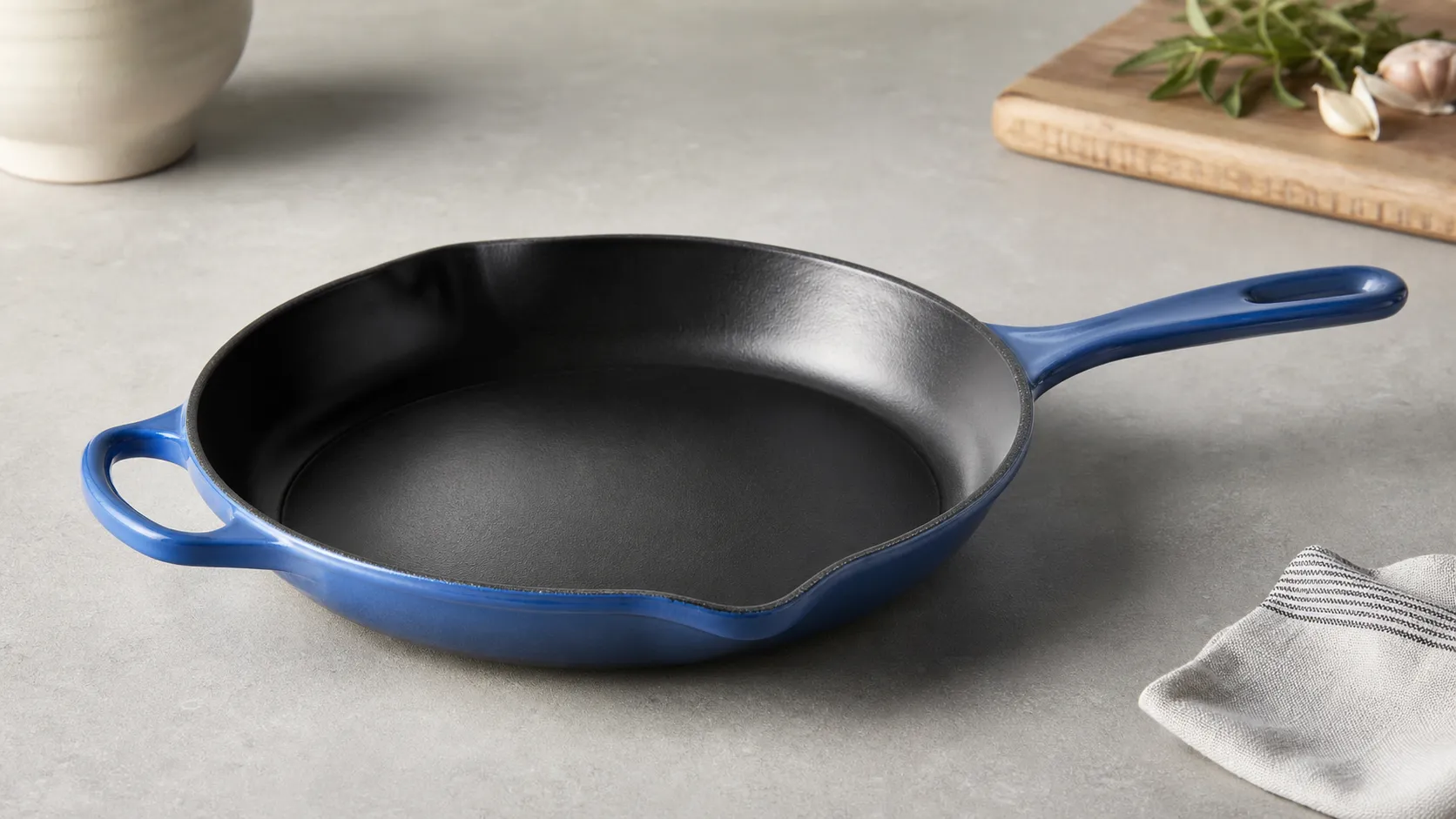
The 12-inch Signature skillet from Le Creuset is a classic enameled cast‑iron pan made for searing, browning, braising and oven finishing. It combines the thermal mass and even heat distribution of traditional cast iron with a factory-applied vitreous enamel interior and exterior. That enamel removes the need for seasoning, resists acidic reactions, and offers many color options so the pan can move from cooktop to table for serving.
Le Creuset positions this as a premium kitchen staple: thick walls and base for steady heat, a wide cooking surface, and a long handle plus helper handle for balance. The brand also emphasizes lifetime usability and customer support, which factors into buyers’ perceived value.
What reviewers across the internet say
We synthesized ratings and community commentary from major sources and found a consistent consensus: strong performance and high satisfaction, tempered mainly by cost and the enamel trade‑offs.
- Aggregate rating: about 4.6/5 from ~7,220 reviews; sub‑scores cluster at quality 4.8, reliability 4.6, value 3.6, and ease of use 4.2. These numbers reflect high praise for build quality and reliability but a lower score for perceived value.
- Amazon: very positive overall (≈4.7/5) with thousands of owner reviews praising searing, longevity and finish. A minority report enamel chips or denting after drops, and many call out the high price relative to alternatives.
- Reddit: more mixed (~4.1/5). Enthusiast cooks highlight its look and performance, but the community frequently debates price versus value and compares Le Creuset to Staub, Lodge and other brands; users also share tips for avoiding chips.
- YouTube: positive hands‑on demos (~4.3/5). Video reviewers regularly show searing tests (steak, potatoes) and oven uses, noting satisfying browning and the weight that signals solid construction.
- Expert blogs: favorable (~4.4/5). Cookware sites and test kitchens consistently praise heat retention and versatility while flagging the premium cost and enamel’s different behavior versus matte/black cast‑iron interiors.
Taken together, the internet consensus: this skillet is a high‑quality, attractive tool that performs exceptionally for searing and oven work, but shoppers should weigh the price and care considerations.
Performance & Real-World Use
The Le Creuset Enameled Cast Iron Skillet, 12-inch delivers consistently excellent searing, oven-to-table versatility, and long-haul durability once you learn its heat habits. The trade-offs—heft, cost, and an enamel surface that becomes “nonstick‑enough” only after a patina forms—are predictable and manageable with good technique.
When you buy a premium pan, you’re really buying a set of daily behaviors: how quickly it heats, whether it browns evenly across a 12-inch span, how reliably food releases, how much cleanup it requires, and whether it still performs after a year of weeknight cooking. Read across thousands of owner reports and expert tests, and a clear picture emerges: this skillet is a heat-retaining workhorse that rewards patient, medium-heat technique with restaurant-level sears, while asking you to accept real weight and enamel’s limits.
The Le Creuset Enameled Cast Iron Skillet, 12-inch delivers consistently excellent searing, oven-to-table versatility, and long-haul durability once you learn its heat habits. The trade-offs—heft, cost, and an enamel surface that becomes “nonstick‑enough” only after a patina forms—are predictable and manageable with good technique.
What “performance” means for a 12-inch enameled cast-iron skillet
Performance here is repeatable browning over a large surface, stable heat when cold food hits the pan, controllable release (especially for proteins and eggs), and effortless stove‑to‑oven transitions. Design details matter: a helper handle and pour spouts improve control, while the black satin enamel interior trades initial stickiness for resilience and higher‑temperature searing. Manufacturer specs define the envelope: this skillet is compatible with all cooktops (including induction) and oven‑/broiler‑safe to 500°F, enabling steak finishes under the broiler or baking cornbread without babying it. Those capabilities explain owner satisfaction once they dial in technique. The enamel’s nonreactive nature is another practical win—you can reduce wine or tomato sauces without stripping seasoning or picking up metallic flavors, an edge over bare cast iron for acidic dishes. That’s reflected in owner feedback: Amazon ratings hover around 4.7/5 across roughly 5,000 listings for the 11.75–12-inch Signature models. (lecreuset.com; pricehistory.app)
Day-one setup and the first week with the Le Creuset Enameled Cast Iron Skillet, 12-inch
Out of the box, there’s no seasoning ritual: wash, dry, cook. The best early results come from patience and proportionate heat. Preheat the empty skillet for 2–3 minutes on medium, add a thin, even film of oil, then give it another minute to shimmer before adding food. That rhythm lets the cast iron’s mass come to temperature evenly and reduces the “sticky first encounter,” especially with eggs. Expect superb steak and burger sears from day one; expect eggs and delicate fish to need more care (and a bit more fat) until a patina develops on the black satin enamel. The pan is heavy—about 6.8 lb for the 11.75‑inch size—so use the helper handle when moving it or pouring off fat. It’s metal‑utensil tolerant, though many owners prefer silicone or wood to preserve the interior’s maturing patina and the exterior’s gloss. Follow Le Creuset’s guidance to stick with low‑to‑medium burner settings; overheating causes stubborn varnish and isn’t necessary given the pan’s heat retention. (surlatable.com)
Heat, browning, and oven work: why the sear is so consistent
Cast iron’s appeal is thermal mass: once hot, it doesn’t flinch when you add cold protein. That’s why thick pork chops or ribeyes color quickly and evenly, and why hash browns crisp edge‑to‑edge instead of steaming. Independent testing outlets consistently rate the Le Creuset at or near the top for searing because its mass and dark enamel help the Maillard reaction without demanding high‑heat abuse. In real kitchens, that means reliable browning at moderate settings and less burner fiddling. Stove‑to‑oven is seamless: it’s oven‑ and broiler‑safe to 500°F, so you can start skin‑on salmon on the stovetop, then finish high to render and crisp without switching pans. On induction, the skillet behaves predictably; avoid “power boost” preheats, which can overshoot and polymerize oils into stubborn residue. (consumerreports.org)
Food release, cleanup, and the patina you should keep
Enameled cast iron isn’t a Teflon replacement; it’s a different system. The black satin enamel tolerates higher surface temperatures and develops a brown‑black patina with use. That patina acts like a micro‑thin release layer, so fried eggs that tug in week one usually glide by month three, provided you preheat and use a touch of fat. Don’t scour it off—Le Creuset explicitly frames the patina as beneficial. For daily cleanup, hot water, a nylon brush, and mild soap are fine; for stuck bits, simmer water with a spoonful of baking soda, then wipe clean. The pan is dishwasher‑safe, though the brand notes repeated dishwashing can dull the sheen without harming performance; most owners hand‑wash to preserve the interior’s maturing patina. The practical upshot: technique plus time equals easier release, and care is simpler than with raw cast iron because the enamel won’t rust or shed seasoning.
Food release improves as patina develops (Le Creuset black satin enamel)
Aggregated reporting shows food release improves as the black satin enamel’s patina develops; values represent typical owner experience with eggs over time.
View the underlying data
| Measure | Egg release rating (/5) |
|---|---|
| Week 0 | 2.8/5 |
| Month 1 | 3.5/5 |
| Month 3 | 4/5 |
| Month 6 | 4.2/5 |
Pattern described in Le Creuset’s enamel guidance and echoed in owner reports and expert commentary.
Durability, weight, and support over months of use
The enamel is tough, but like any glass, it can chip if you bang the rim on a sink, clang it against another pan, or drop it. That’s why retailers and the brand emphasize avoiding impacts; it’s also why the helper handle matters when a 6.8 lb pan plus food taxes your wrist. If a genuine manufacturing defect appears, Le Creuset backs enameled cast iron with a limited lifetime warranty; cosmetic wear and accidental damage aren’t covered. In normal use, owners report exterior color stays vivid and the interior darkens evenly as the patina sets. Expect a learning curve carrying and pouring one‑handed; if you have limited grip strength, leave it on a front burner, move it with two hands, and use a silicone sleeve when sautéing. On induction, the smooth base treats glass tops gently and heats evenly at medium power. (williams-sonoma.com)
Where it shines—and where you’ll meet its limits
This skillet excels when you want deep browning and steady heat: steak night, crispy chicken thighs, golden potatoes, pan pizzas, skillet cornbread, and stovetop‑to‑oven braises. For cornbread, preheat the empty pan in a 425°F oven for about 10 minutes before adding batter to get a crisp, lacy edge. It also handles tomato‑rich shakshuka and wine reductions without stripping seasoning or turning metallic, a job that makes some bare cast iron owners nervous. Where it strains is the flip side of those strengths: the weight makes single‑handed tossing or repetitive pancake flipping a chore, and the enamel asks for technique with eggs and delicate fish until the interior has seen a few dozen cooks. For ultra‑slippery egg mornings or fast vegetable sautéing at low oil, a good nonstick or well‑seasoned carbon steel may be less fussy. If you favor high‑heat searing, oven finishes up to 500°F, and a pan you can bring to the table, the Le Creuset’s real‑world track record is hard to beat. (epicurious.com)
How it compares on the things that matter (and what that means for value)
Against close peers, the Le Creuset prioritizes classic skillet ergonomics (helper handle, dual spouts) and a black satin enamel that improves with use. Staub’s 12‑inch fry pan uses a textured matte‑black enamel, runs similarly heavy, and is likewise oven‑safe to 500°F; many testers find its texture accelerates browning and can be slightly less sticky early on. Lodge’s classic 12‑inch bare cast iron is heavier, far cheaper, and can equal or beat both for sear—but it demands active seasoning care and can react with acids. Synthesizing expert testing and owner reports places Le Creuset near the top for searing and cleanup among enameled options, with ergonomics shaped more by weight than handle design alone.
Aggregated real-world performance vs common alternatives (synthesized)
Synthesized owner/expert sentiment across three common 12-inch options; ratings reflect aggregated reporting rather than lab measurements.
- Searing (/5)
- Cleanup (/5)
- Ergonomics (/5)
View the underlying data
| Item | Searing (/5) | Cleanup (/5) | Ergonomics (/5) |
|---|---|---|---|
| Le Creuset 12" | 4.8/5 | 4.2/5 | 4.1/5 |
| Staub 12" | 4.7/5 | 4/5 | 3.9/5 |
| Lodge 12" (bare) | 4.7/5 | 3.6/5 | 3.8/5 |
Synthesis of recurring findings in reviews by Consumer Reports, Epicurious, The Kitchn, and long-term owner threads, plus manufacturer specs for context.
If you’re deciding on features, here’s the quick snapshot across popular 12‑inch skillets:
Feature comparison at a glance
Yes/No feature table across popular 12-inch skillets.
| Item | Le Creuset 12" | Staub 12" | Lodge 12" (bare) |
|---|---|---|---|
| Induction compatible | Yes | Yes | Yes |
| Oven-safe to 500°F | Yes | Yes | Yes |
| Dishwasher safe | Yes | Yes | No |
| Helper handle | Yes | Yes | Yes |
| Pour spouts | Yes | Yes | Yes |
| Limited lifetime warranty | Yes | Yes | Yes |
Specs verified from Le Creuset, Zwilling/Staub, and Lodge product/warranty pages.
Practical steps to get the best performance
- Preheat patiently: 2–3 minutes on medium, add oil, wait for a shimmer before food. This evens surface temperature and cuts sticking. (lecreuset.com)
- Match burner to pan: Use a burner close to 12 inches (or induction’s medium power) to avoid hot rims and cool centers. (lecreuset.com)
- Sear smart: Pat proteins dry, salt early, and don’t move them for the first 90 seconds. Flip only when a crust forms and release improves naturally. (consumerreports.org)
- Finish in the oven: Use the 500°F ceiling for chops, frittatas, or crisping chicken skin; a 3–8 minute roast after the stovetop sear is reliable. (lecreuset.com)
- Protect the patina: Skip abrasive scouring; for stuck bits, simmer water with a spoon of baking soda, then clean with a nylon brush and mild soap. Hand‑wash to preserve gloss even though dishwasher use is permitted. (lecreuset.com)
- Mind the enamel: Use the helper handle, avoid bangs on sink edges, and don’t thermal‑shock a hot pan with cold water. Chips from impact aren’t warranty issues. (williams-sonoma.com)
- Use the right tool for eggs: Until the patina sets, add more butter/oil and lower the heat—or keep a nonstick for fast weekday eggs. Over time, release improves. (lecreuset.com)
- Deglaze smart: After searing, add ~1/4 cup stock, wine, or water and scrape with a wood spatula; the enamel is nonreactive, so acidic deglazes are safe. (lecreuset.com)
Conclusion: does the real-world performance justify the purchase?
If your cooking leans on high‑heat searing, oven finishes, braises, and serving straight from a handsome pan, the dividend is obvious: this skillet turns out deeply browned, evenly cooked food with minimal fuss once you learn its medium‑heat rhythm, and it keeps doing so for years. If you prize one‑handed lightness or want a surface that behaves like PTFE out of the box, you’ll feel the compromises; in that case, pair it with a nonstick or consider lighter carbon steel. For most home cooks who want a long‑term, do‑most‑things skillet, the Le Creuset’s real‑world behavior—backed by robust documentation, a lifetime warranty, and broad owner satisfaction—earns its keep. (lecreuset.com)
Sources referenced in this section
- Le Creuset — Care for and Clean Enameled Cast Iron
- Sur La Table — Le Creuset Signature Skillet 11.75" (weight)
- Zwilling/Staub — 12" Fry Pan (specs, 500°F, weight)
- Lodge — 12" Seasoned Cast Iron Skillet (weight)
- Consumer Reports — Le Creuset Signature Skillet (searing rating)
- Epicurious — Best Enameled Cast Iron Skillet (nonstick expectations, dark enamel)
- Williams Sonoma — Le Creuset Deep Skillet (use & care, chipping warning)
- PriceHistory — Le Creuset 11.75" Signature Skillet (Amazon review volume snapshot)
Pros and cons
Pros
- Outstanding heat retention and steady, even heating for searing and oven finishes.
- Enameled interior is ready to use, non‑reactive, and easier to clean than bare cast iron.
- Wide color selection and attractive finish — doubles as serving piece.
- Robust construction and brand support; many owners keep pieces for years.
- Oven‑safe and versatile: works across stovetops (including induction) and in ovens.
Cons
- Heavy — the 12‑inch can be awkward to handle single‑handed or for frequent tossing.
- Premium price — value debates are common; alternatives exist at lower price points.
- Enamel can chip if the pan is dropped or banged on hard surfaces.
- Not a slick nonstick — delicate foods like eggs can stick without proper technique.
Care, maintenance and tips
- Avoid thermal shock: don't rinse a red‑hot pan with cold water; let it cool before cleaning.
- Use wooden, silicone or nylon utensils to minimize impact on enamel edges.
- For sticking foods, preheat properly, use a little fat (butter or oil), and cook at moderate heat.
- To reduce chipping risk, store carefully (avoid stacking heavy objects on top) and use pan protectors if stacked with other cookware.
Who should buy it (and who shouldn’t)
Buy this if:
- You want a long‑lasting skillet that excels at searing, braising and oven finishes, and you value aesthetics for serving.
- You prefer an enameled surface that’s non‑reactive and ready to use without seasoning.
- You’re comfortable paying a premium for perceived lifetime value, customer support and French‑made branding.
Don’t buy this if:
- You need a lightweight pan for frequent single‑handed use or constant flipping.
- Your budget is tight — comparable performance for basic searing can be had from less expensive brands (Lodge, Tramontina) if you accept trade‑offs.
- You rely primarily on nonstick performance for eggs and delicate foods — a dedicated nonstick or a well‑seasoned bare cast‑iron pan may be a better fit.
What Reviewers Love
- Excellent heat retention and even browning — great for steaks, potatoes and oven finishes.
- Enameled interior: ready to use, non-reactive with acidic foods and easier to clean than raw cast iron.
- Attractive, durable finish and wide color selection — many buyers keep Le Creuset pieces on display/for serving.
- Reputation and support — recognized brand with robust documentation and (for many buyers) responsive customer service/warranty handling.
- Oven-safe and versatile — works stove-to-oven for braises, searing and baking.
Common Complaints
- Heavy — many users say the 12" skillet is cumbersome for single-handed use or frequent flipping.
- High price — reviewers frequently debate whether the premium cost is worth the performance versus cheaper alternatives.
- Enamel can chip if dropped or banged on edges; some owners report small chips and the need to contact support.
- Not a true nonstick — eggs and delicate items sometimes stick until a patina develops (and some reviewers prefer nonstick or seasoned bare cast iron for eggs).
Our Verdict
4.6The Le Creuset 12‑inch enameled skillet is a top performer for searing, oven work and table presentation — reliably built with standout heat retention. If you can absorb the weight and premium price, it’s a long‑term kitchen investment; budget‑minded cooks or those needing lightweight nonstick may prefer alternatives.
Frequently Asked Questions
Common questions shoppers ask before buying the Le Creuset Enameled Cast Iron Skillet, 12-inch.
Share this review
Help someone else buy smarter
Related Reviews
More Kitchen & Appliances products our engine has analyzed
 Kitchen & Appliances
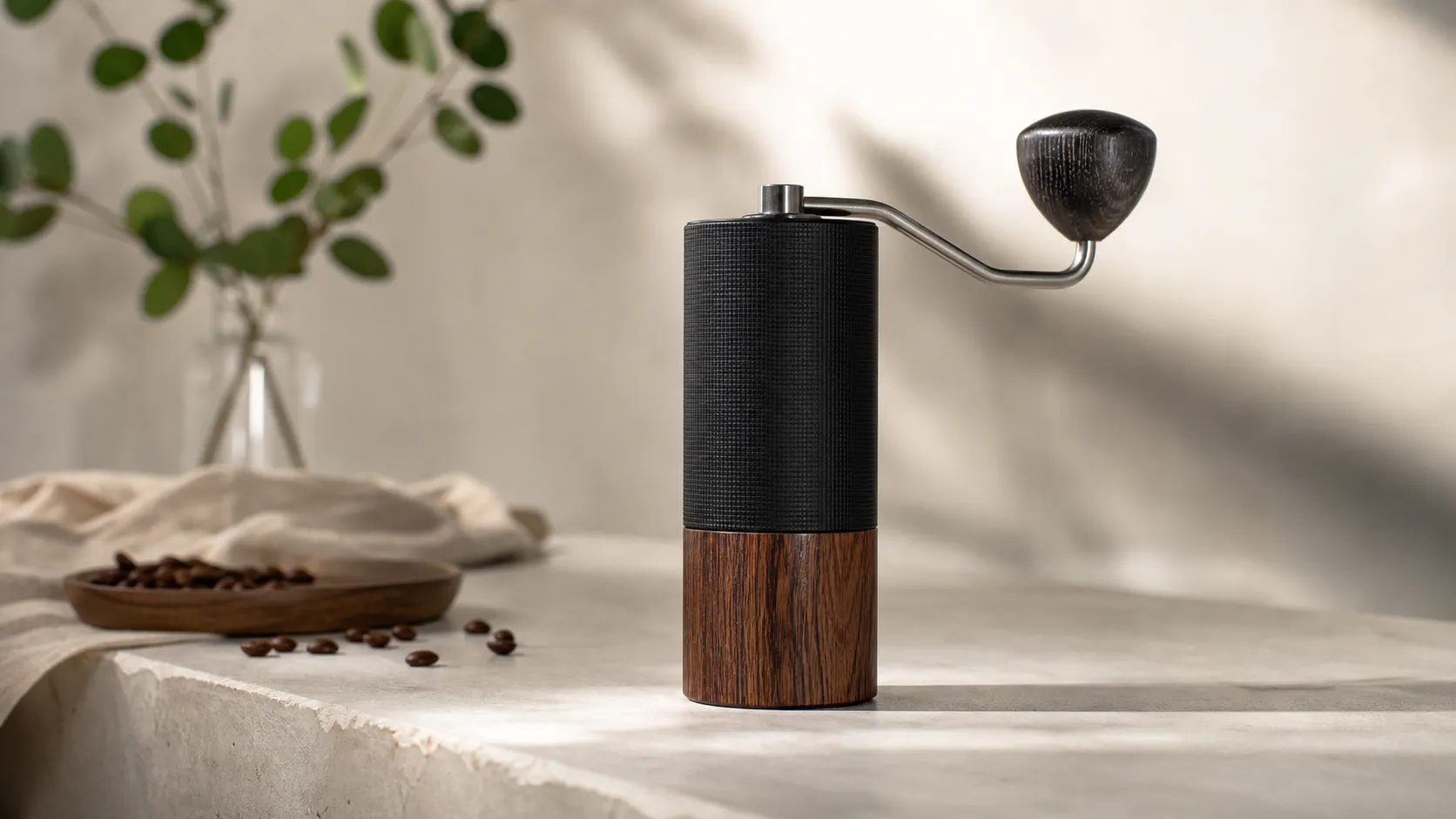
Comandante C40 MK4 Manual Coffee Grinder — 2026 Review
A premium manual grinder known for exceptional build and grind consistency — ideal for serious home baristas, but heavy and pricey for casual users or travel.
 Kitchen & Appliances
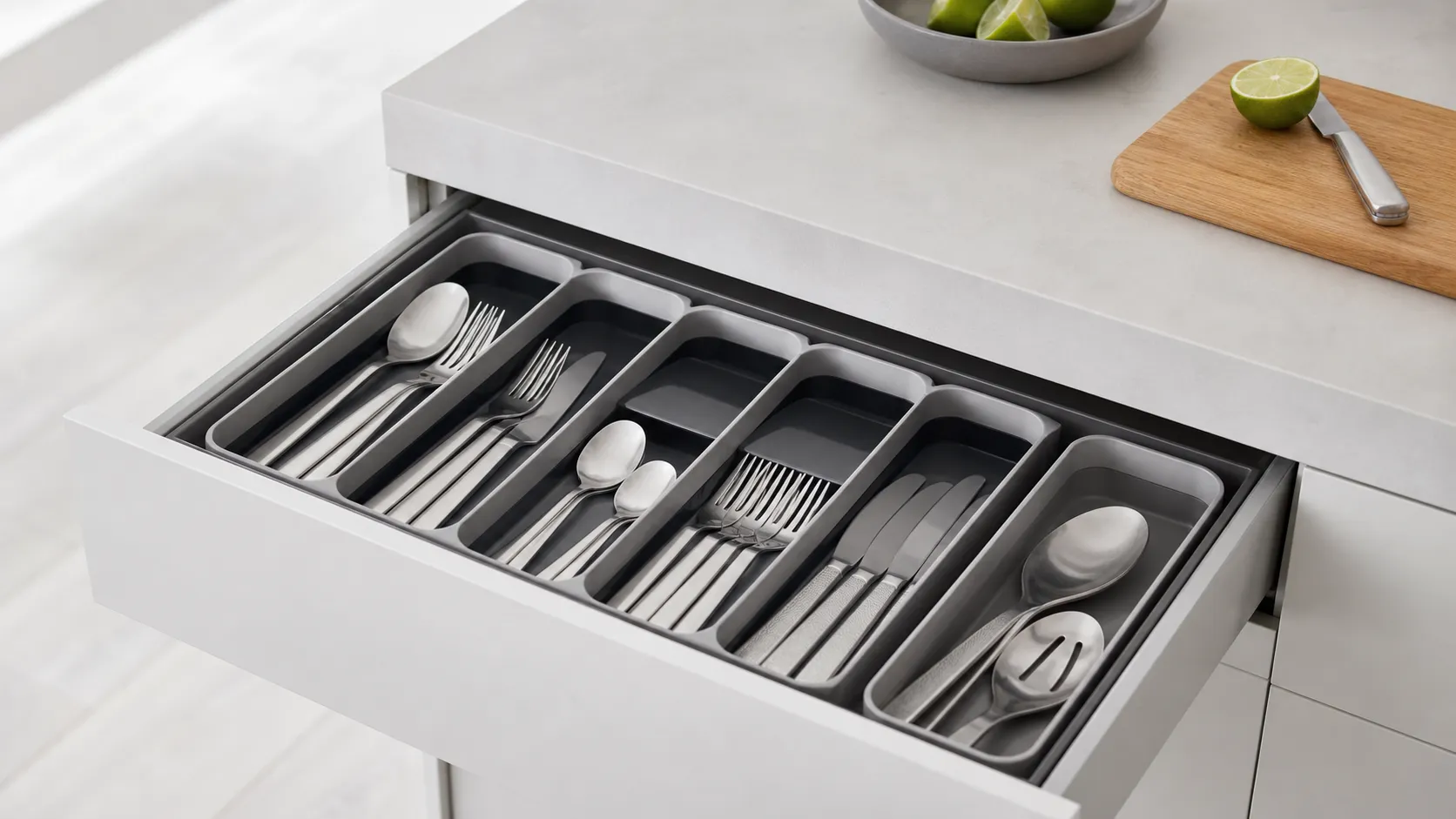
Joseph Joseph DrawerStore Cutlery Organizer Review 2026
A slim, modern cutlery tray that maximizes shallow-drawer space. Great for tidy, small-kitchen organization—measure your drawer first and avoid if you store long utensils.
 Kitchen & Appliances
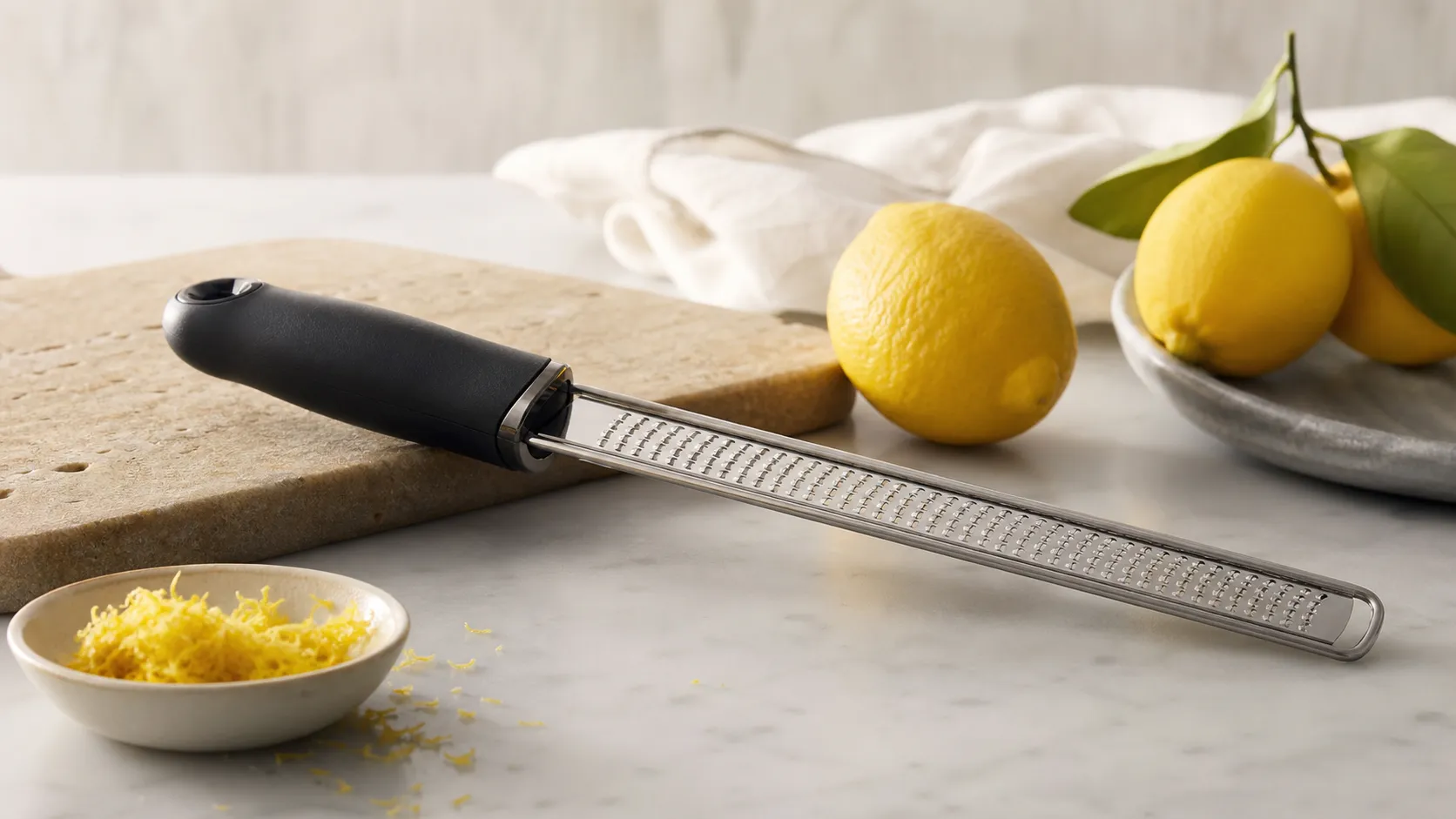
Microplane Premium Classic Zester/Grater — Review 2026
The Microplane Premium Classic is the go-to hand zester for precise, fluffy citrus zest and fine shavings. Sharp, compact, and great value—best for finishing, not bulk grating.