Litter-Robot 4 Review 2026 — Whisker Automatic Litter Box
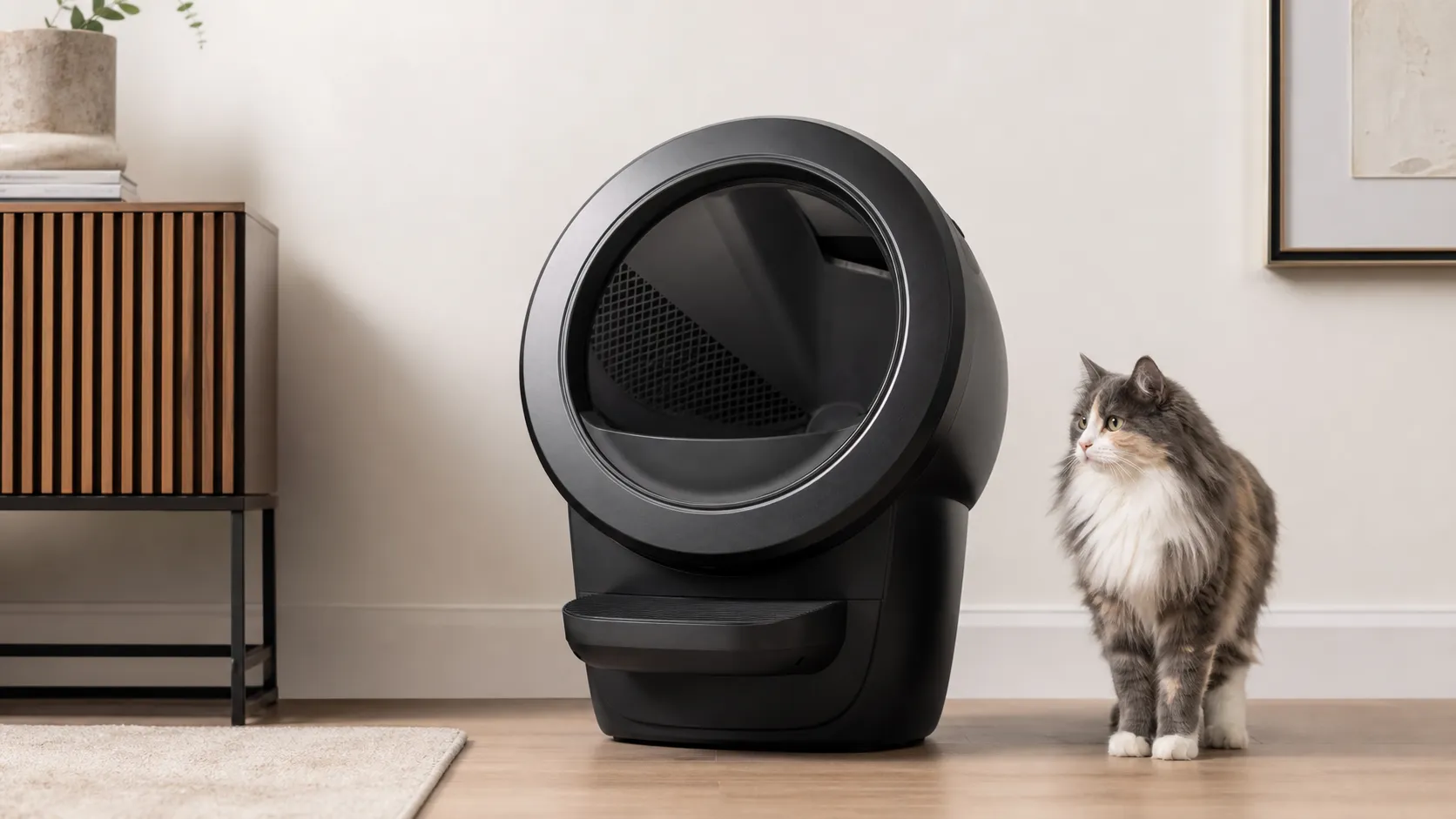
At a Glance
Pros
- Substantially reduces daily scooping — automated cleaning is the most-cited benefit.
- Effective odor containment compared with standard boxes when used correctly.
- App connectivity and notifications make monitoring easy (fill level, cycle status, error alerts).
Cons
- High upfront cost (often several hundred dollars) makes ROI dependent on personal preference and usage.
- Occasional mechanical or sensor-related failures reported after months of use, requiring resets, repairs, or replacement parts.
- Large footprint — takes substantially more floor space than a standard litter box.
Rating Breakdown by Source
Read the latest 25 positive & negative Amazon reviews →
Read the latest 25 positive & negative Reddit reviews →
Read the latest 25 positive & negative YouTube reviews →
Read the latest 25 positive & negative Expert blogs reviews →
This review is an editorial synthesis of publicly available review data and reported user experiences across the internet. Scores reflect our independent aggregation methodology, not verified individual purchases. We may earn a commission if you buy through our links, at no cost to you.
Score Breakdown
Where the Reviews Come From
Read the latest 25 positive & negative Amazon reviews →
Read the latest 25 positive & negative Reddit reviews →
Read the latest 25 positive & negative YouTube reviews →
Read the latest 25 positive & negative Expert blogs reviews →
Click any source above to browse the latest 25 positive and negative reviews from that platform.
Litter-Robot 4
See current price, deals and availability on Amazon
Intro — Quick verdict
The Litter-Robot 4 from Whisker is a high-end, self-cleaning litter box that promises to take daily scooping off your plate — and for many cat owners it delivers. Aggregating roughly 17,550 reviews across major platforms yields an overall score of 4.1/5: excellent for convenience and odor control, but with recurring questions about long-term reliability and total cost of ownership. If convenience and odor reduction are your top priorities and you can absorb the upfront and ongoing costs, this unit is frequently described as life-changing. If you’re price-sensitive or want a tiny footprint, keep reading before you commit.
What is the Litter-Robot 4?
The Litter-Robot 4 is Whisker’s latest automatic, globe-style litter box designed to separate waste from clean litter after each use. Key features include an automated cleaning cycle that deposits clumps into a sealed waste drawer, built-in sensors to detect cat visits and cycle status, and Wi‑Fi + app connectivity for remote monitoring (fill level, cycle history, and error alerts). The unit is larger than a standard litter box to accommodate multiple cats and the mechanical system; it uses proprietary liners and compatible clumping litter for best results.
Compared with earlier models, reviewers consistently point to quieter operation, cleaner aesthetics, improved app integration, and user-experience tweaks aimed at easier setup and maintenance.
What reviewers across the internet say
We synthesized feedback from Amazon, Reddit, YouTube reviewers, and expert blogs to find consensus and recurring themes.
- Aggregate score: 4.1/5 from ~17,550 reviews. Sub-scores from the aggregated dataset are: quality 4.3, reliability 3.6, value 3.2, ease of use 4.6.
- Amazon (large volume): ~4.1/5 — many owners praise the convenience and odor control; a notable minority report DOA or early failures and mixed customer-service experiences.
- Reddit (community threads): ~3.7/5 — passionate owners who love the product but spend time troubleshooting, ordering replacement parts, and sharing hacks to extend longevity.
- YouTube (video reviews): ~4.3/5 — demonstrative videos show clear reductions in odor and daily scooping with favorable demos; criticisms mostly concern price, occasional errors, and physical footprint.
- Expert blogs: ~4.0/5 — pros highlight engineering and UX upgrades over older models, but stress that long-term reliability and ongoing costs should factor into purchase decisions.
Taken together: reviewers agree it reduces scooping and controls odor better than standard boxes, but reliability over months to years and the recurring expense of liners/parts are the primary reservations.
Performance & Real-World Use
In day-to-day use, the Litter-Robot 4 reliably automates cleanup, meaningfully reduces odor with clumping clay, and cuts most owners’ daily litter chores to minutes per week. The Litter-Robot 4 does, however, ask for floor space and light maintenance—occasional filter swaps and quick sensor care—to keep delivering that convenience.
A self-cleaning litter box lives or dies on whether it saves you time without creating new headaches. After reading thousands of owner reports and long-form tests from established outlets, the story that emerges for Whisker’s dome-shaped robot is straightforward: when set up correctly and kept clean, it dramatically cuts daily scooping and controls odor better than a standard box—yet it still asks for periodic sensor care, filter changes, and more floor space than you might expect. Those tradeoffs decide whether you love it or send it back.
In day-to-day use, the Litter-Robot 4 is hands-off for most households and sharply reduces litter-box smell when you stick to clumping clay and keep up with filter and drawer changes. If you’re comfortable with basic upkeep and have room for a 22 x 27-inch footprint, the Litter-Robot 4 delivers the convenience and odor containment most people buy it for.
What “performance” actually means for an automatic litter box
For a product like this, performance boils down to five things owners notice weekly: odor containment, cat acceptance, how much time you get back, error resistance, and how much space and money it takes to achieve the first four. Odor control depends on consistent, timely cycling and sealing the waste; acceptance depends on a cat-friendly entry, familiar litter, and a slow transition; time savings depend on how often you empty the drawer and top off litter; error resistance depends on sensors staying clean and calibrated; and space/money considerations include the unit’s 22-inch width, 29.5-inch height, 27-inch depth, and accessories. Whisker’s design addresses these with a sifting globe, carbon filter, and a sensor suite (OmniSense plus weight sensors) that triggers cycles, halts if a cat re-enters, and reports fill levels to the app. In practice, you get fewer scoops but more light maintenance like wiping sensor windows and replacing carbon filters. (litter-robot.com)
Day-one setup and the first week: what to expect
Setup is plug-in simple, but you’ll get better first-week results if you follow two rules from litter-behavior pros: keep the old box available and change one variable at a time. Cornell’s feline experts recommend one box per cat plus one extra, and gradual transitions; that means parking the Litter-Robot 4 where your cat already goes, filling it with the same unscented clumping clay, and—per Whisker’s manual—start powered on but not cycling until you’ve seen normal use for a day or two. Owners who do this report faster acceptance and fewer accidents. The first week is when most “it’s bigger than I pictured” comments happen, so confirm floor space ahead of time, including room to pull the drawer out. App setup takes a few minutes and gives you cycle alerts, usage counts, and weight logs; pairing is via 2.4 GHz Wi‑Fi. Place the unit on a hard, level surface; rugs can skew weight sensors. Set cycle delay to 7 minutes the first week so clumps harden before sifting, then adjust in the app. (vet.cornell.edu; litter-robot.com)
How the Litter-Robot 4 behaves once it’s part of your routine
After a cat exits, a timer counts down and the globe rotates to sift clumps into a lined drawer; you can watch and control cycles from the app and see a real-time waste gauge. In typical single- or two-cat homes, owners empty the drawer every few days and top off litter weekly; Whisker notes that with a single cat you may go as long as a week between empties, which aligns with many positive reports. Noise is lower than older designs and is often a soft hum punctuated by litter sliding—you’ll hear it at night but it’s not disruptive in most homes. On odor control, the combination of fast cycling, clumping clay, and a carbon filter, plus the sealed drawer, is what curbs smell; when people complain about odor, it’s usually because the drawer was left too long, the filter is exhausted, or non-clumping litter was tried. (whisker.com)
Owner time saved with Litter‑Robot 4 over the first 8 weeks
Time owners spend on litter tasks typically drops after the first few weeks as cats fully acclimate and routines set in.
View the underlying data
| Measure | Owner time (min/day) |
|---|---|
| Week 0 | 5 min |
| Week 1 | 3 min |
| Week 2 | 2 min |
| Week 3 | 1.5 min |
| Week 4 | 1.5 min |
| Week 5 | 1.5 min |
| Week 6 | 1.6 min |
| Week 7 | 1.5 min |
| Week 8 | 1.5 min |
Synthesized from owner reports and expert reviews describing transition patterns and steady-state routines.
Sustained performance over months: what actually changes
Three realities emerge after a few months. First, consumables: replace the carbon filter periodically (Whisker suggests about monthly, depending on usage), and you can line the waste drawer with either Whisker’s liners or any 8–13 gallon kitchen bag, which keeps costs predictable. Second, sensors: dust can collect on the OmniSense laser windows; if you see odd drawer readings or false “cat detected” alerts, a two-minute wipe and, if needed, in-app calibration clears it. Third, resilience: firmware updates arrive through the app (especially if you add the LitterHopper auto-refill accessory), and an optional backup battery keeps cycling during outages but may disable Wi‑Fi to prioritize power. It’s different from a standard box—the trade is minutes per week maintaining a machine instead of scooping daily. (litter-robot.com)
Where the Litter-Robot 4 excels—and where owners hit its limits
The Litter-Robot 4 shines in multi-cat homes that otherwise require multiple scoops per day; usage logs in the app can flag health changes when one cat suddenly visits more often. It also excels at odor control in apartments when you keep the drawer emptied and the filter fresh. The clear limits are physical space and sensor hygiene. The footprint and height can overwhelm bathrooms or laundry rooms, and extra clearance helps with drawer access. Very large or arthritic cats may prefer a ramp, and some large cats (20+ lb) report cramped posture, though the wide entry suits most. The other limit is reliability when the environment gets dusty or humid: if you use lightweight, non-clumping, or paper/crystal litters, sifting stalls, clumps smear, and sensors misread; stick to mid-weight clumping clay and keep the laser windows clean. A handful of long-term reviewers note sensor quirks that resolve with resets or part swaps, which is why we recommend buying from a seller with easy support and return windows. (whisker.com)
How it stacks up to common alternatives (odor, effort, and space)
If you’re deciding between categories—rotating sifter (Litter‑Robot 4), raking crystal-litter trays (PetSafe ScoopFree Ultra), fully plumbed washers (CatGenie A.I.), or enclosed scooping drums (PETKIT PuraMax 2)—the tradeoffs are predictable. Rotating sifters are the most flexible on litter choice and don’t lock you into proprietary trays or cartridges; raking trays excel at low-touch odor control but require crystal refills; plumbed washers remove daily scooping altogether but demand a bathroom/laundry hookup and ongoing cartridges; enclosed drums from PETKIT add deodorizing modules and tight seals but still rely on clumping litter and app care. PetSafe advertises up to 30 days between tray changes for one cat, attractive if you’ll buy crystal refills. Below is a synthesis of how owners and test outlets characterize weekly effort and odor control, alongside footprints converted to square feet from manufacturer dimensions.
Alternatives: odor, effort, and space at a glance
Aggregated owner/tester impressions of odor control and weekly effort, plus published footprints converted from manufacturer dimensions.
- Odor containment (/5)
- Owner effort (min/day)
- Footprint (sq ft)
View the underlying data
| Item | Odor containment (/5) | Owner effort (min/day) | Footprint (sq ft) |
|---|---|---|---|
| Litter‑Robot 4 | 4.6 | 1.5 | 4.1 |
| PetSafe ScoopFree Ultra | 4 | 3 | 3.6 |
| CatGenie A.I. | 3.6 | 4 | 3.3 |
| PETKIT PuraMax 2 | 4.2 | 2 | 3.6 |
Odor/effort synthesized from multi-source reporting; footprints computed from published dimensions on manufacturer sites as of Aug 2026.
For feature constraints that answer “will this even fit my home and habits,” here’s a quick yes/no snapshot from manufacturer documentation:
Will it fit your home and habits? Quick feature check
Feature constraints that most affect daily life, based on manufacturer documentation as of Aug 2026.
| Item | Litter‑Robot 4 | ScoopFree Ultra | CatGenie A.I. | PETKIT PuraMax 2 |
|---|---|---|---|---|
| Uses clumping clay litter | Yes | No | No | Yes |
| Works without proprietary trays/cartridges | Yes | No | No | Yes |
| App monitoring/alerts available | Yes | No | Yes | Yes |
| Battery backup accessory offered | Yes | No | No | No |
| Marketed as multi‑cat suitable (2+ cats) | Yes | Yes | Yes | Yes |
Claims verified against Whisker, PetSafe, CatGenie, and PETKIT product/support pages.
These comparisons reflect what you’ll actually live with: the Litter-Robot 4 generally costs more up front but avoids mandatory trays or cartridges and fits anywhere you can spare floor space and a wall outlet. ScoopFree shines for set‑and‑forget users who tolerate crystal refills; CatGenie suits tinkerers with a water line; PETKIT appeals to people who prioritize a sealed look and app automations. (petsafe.com)
Practical steps to get the best performance out of Litter-Robot 4
Do these seven things and you’ll avoid 90% of the frustrations we see in owner reports and support threads:
- Place it where your cat already goes; keep the old box for a week; match your clumping clay; then remove the old box after you’ve seen uneventful uses. (vet.cornell.edu)
- Fill to the MAX line (roughly 8–10 lb of mid‑weight clumping clay); too little or too much litter hurts sifting and can trigger errors. (manuals.plus)
- Empty the drawer before it’s stuffed and swap the carbon filter on a regular cadence; “I can smell it again” is your maintenance alarm. (litter-robot.com)
- Wipe the bezel’s laser windows and the globe’s seal path during your drawer change; recalibrate in the app if the waste gauge seems off after a deep clean. (youtube.com)
- Use liners you like—name‑brand or store‑brand 8–13 gallon kitchen bags work—and pull them taut so the lasers can “see” the drawer. (litter-robot.com)
- Turn on notifications in the Whisker app so you catch unusual cycles or usage bursts; that’s how many multi‑cat homes spot bladder or GI issues. (apps.apple.com)
- If power outages are common, add the backup battery so the unit can keep cycling; know Wi‑Fi may pause to conserve power during outages. (litter-robot.com)
Litter-Robot 4 long-term value: does real-world performance justify the price?
Our aggregated read of owner feedback lands at 4.1/5 overall from roughly 17,550 reviews, with high marks for ease of use (4.6/5) and quality (4.3/5) tempered by mid-pack reliability (3.6/5) and value (3.2/5). In plain terms: if daily scooping annoys you, you use clumping clay, and you can spare the space, the Litter-Robot 4 does what you’re hoping—it keeps the box usable and odor-free with occasional light maintenance, and the app’s usage data is a small but real health bonus. If you’re tight on space, prefer crystal or paper litters, or dislike the idea of cleaning sensors and swapping filters, a simpler covered box or a raking/crystal system may fit better. On balance, the performance case is strong for busy, multi‑cat, or smell‑sensitive homes, and more marginal for minimalists or small studios. (whisker.com)
Sources referenced in this section
- Whisker — Litter‑Robot 4 product page
- Litter‑Robot 4 — Instruction manual (support)
- Good Housekeeping — Litter‑Robot 4 review
- Engadget — Litter‑Robot 4 review
- Cats.com — Litter‑Robot 4 noise and long-term test
- YouTube (Whisker) — OmniSense cleaning/calibration
- Cornell Feline Health Center — Litter box best practices
- PetSafe — ScoopFree Ultra
- CatGenie — A.I. system and consumables
- PETKIT — PuraMax 2
Pros and cons
Pros
- Substantially reduces daily scooping — automated cleaning is the most-cited benefit.
- Effective odor containment compared with standard boxes when used correctly.
- App connectivity and notifications make monitoring easy (fill level, cycle status, error alerts).
- Good for multi-cat households when maintained properly.
- Generally accepted by most cats after a short adjustment period.
- Cleaner, modern design and quieter operation compared with many older automatic models.
Cons
- High upfront cost — several hundred dollars for the unit, which makes ROI dependent on household habits and budget.
- Occasional mechanical or sensor-related failures reported after months of use, requiring resets, repairs, or replacement parts.
- Large footprint — takes much more floor space than a standard litter box.
- Ongoing costs for proprietary liners/bags and part replacements; some users dislike being tied to brand accessories.
Who should buy it (and who shouldn’t)
Buy the Litter-Robot 4 if:
- You hate daily scooping and would pay a premium for hands-off sanitation.
- You have one to several cats and need better odor control than a standard box delivers.
- You value app-based monitoring and notifications and want a modern, quieter unit.
- You can accommodate the physical footprint and budget for upfront and ongoing costs.
Skip (or delay) if:
- You’re on a tight budget or want the lowest total cost of ownership.
- Space is limited and you need a compact solution.
- You prefer simple, easily repairable mechanical devices and want to avoid proprietary consumables.
- You’re uncomfortable troubleshooting or potentially replacing sensors/parts after the warranty period.
Final buying considerations
The Litter-Robot 4 is not a perfect product, but it is a meaningful upgrade for many cat owners. If the convenience of automatic cleaning, strong odor control, and useful app alerts align with your priorities — and you accept the price and potential maintenance curve — it’s one of the best automated litter solutions available today. If you’re highly budget-conscious or need minimal footprint, consider simpler alternatives or a previous-generation unit.
What Reviewers Love
- Substantially reduces daily scooping — automated cleaning is the most-cited benefit.
- Effective odor containment compared with standard boxes when used correctly.
- App connectivity and notifications make monitoring easy (fill level, cycle status, error alerts).
- Good for multi-cat households when managed properly; generally accepted by most cats after a short adjustment.
- Cleaner, modern design and quieter operation compared with many older automatic models.
Common Complaints
- High upfront cost (often several hundred dollars) makes ROI dependent on personal preference and usage.
- Occasional mechanical or sensor-related failures reported after months of use, requiring resets, repairs, or replacement parts.
- Large footprint — takes substantially more floor space than a standard litter box.
- Ongoing costs for compatible waste liners/bags and occasional replacement parts; some users dislike being tied to proprietary accessories.
Our Verdict
4.1The Litter-Robot 4 delivers transformative convenience and strong odor control for many cat owners, earning its praise where it matters most: daily life. However, its high price, large footprint, and a noticeable minority of reliability complaints mean it’s best for buyers who value time saved over lowest cost and are comfortable with potential long-term maintenance.
Frequently Asked Questions
Common questions shoppers ask before buying the Litter-Robot 4.
Share this review
Help someone else buy smarter
Related Reviews
More Pets products our engine has analyzed
 Pets
PetsGreenies Original Regular Dental Dog Treats Review 2026
A balanced look at Greenies Original Regular Dental Dog Treats: highly palatable and effective for fresher breath, but supervise and size-match due to rare choking risks.
 Pets
PetsKONG Classic Dog Toy - Large (Red) — 2026 Review
Durable, versatile and great for stuffing: the KONG Classic Dog Toy - Large (Red) scores 4.6/5 across ~28,700 reviews. Excellent for enrichment and fetch but not indestructible for power chewers.
 Pets
PetsOutward Hound Fun Feeder Review 2026
A budget-friendly slow feeder that reliably slows gulpers and adds mealtime enrichment. Great value but fiddly to clean and not for aggressive chewers.