Lodge Cast Iron Skillet 10-inch Review (2026)
At a Glance
Pros
- Excellent heat retention and searing performance (great for steaks, cornbread, frying).
- Very durable — often described as heirloom-quality when cared for.
- Market-leading price-to-performance: widely considered the best value entry to cast iron.
Cons
- Heavy — single-piece cast iron is substantially heavier than alternatives and can be awkward to handle.
- Factory finish is somewhat rough/porous; some users report inconsistent preseasoning and a need to build seasoning.
- Handle and body get very hot (no silicone/insulation included).
Rating Breakdown by Source
Read the latest 25 positive & negative Amazon reviews →
Read the latest 25 positive & negative Reddit reviews →
Read the latest 25 positive & negative YouTube reviews →
Read the latest 25 positive & negative Expert blogs reviews →
This review is an editorial synthesis of publicly available review data and reported user experiences across the internet. Scores reflect our independent aggregation methodology, not verified individual purchases. We may earn a commission if you buy through our links, at no cost to you.
Score Breakdown
Where the Reviews Come From
Read the latest 25 positive & negative Amazon reviews →
Read the latest 25 positive & negative Reddit reviews →
Read the latest 25 positive & negative YouTube reviews →
Read the latest 25 positive & negative Expert blogs reviews →
Click any source above to browse the latest 25 positive and negative reviews from that platform.
Lodge Cast Iron Skillet, 10-inch
See current price, deals and availability on Amazon
Quick verdict
The Lodge Cast Iron Skillet, 10-inch earns our strong recommendation as the best value entry into true cast‑iron cooking. With an aggregated public score of 4.5/5 from roughly 124,900 reviews and especially high marks for reliability and value, it’s a rugged, versatile pan that performs like more expensive rivals once you develop its seasoning. Expect to trade lighter weight and a perfectly smooth finish for near-indestructible heat retention and lifetime use.
What Is the Lodge Cast Iron Skillet, 10-inch?
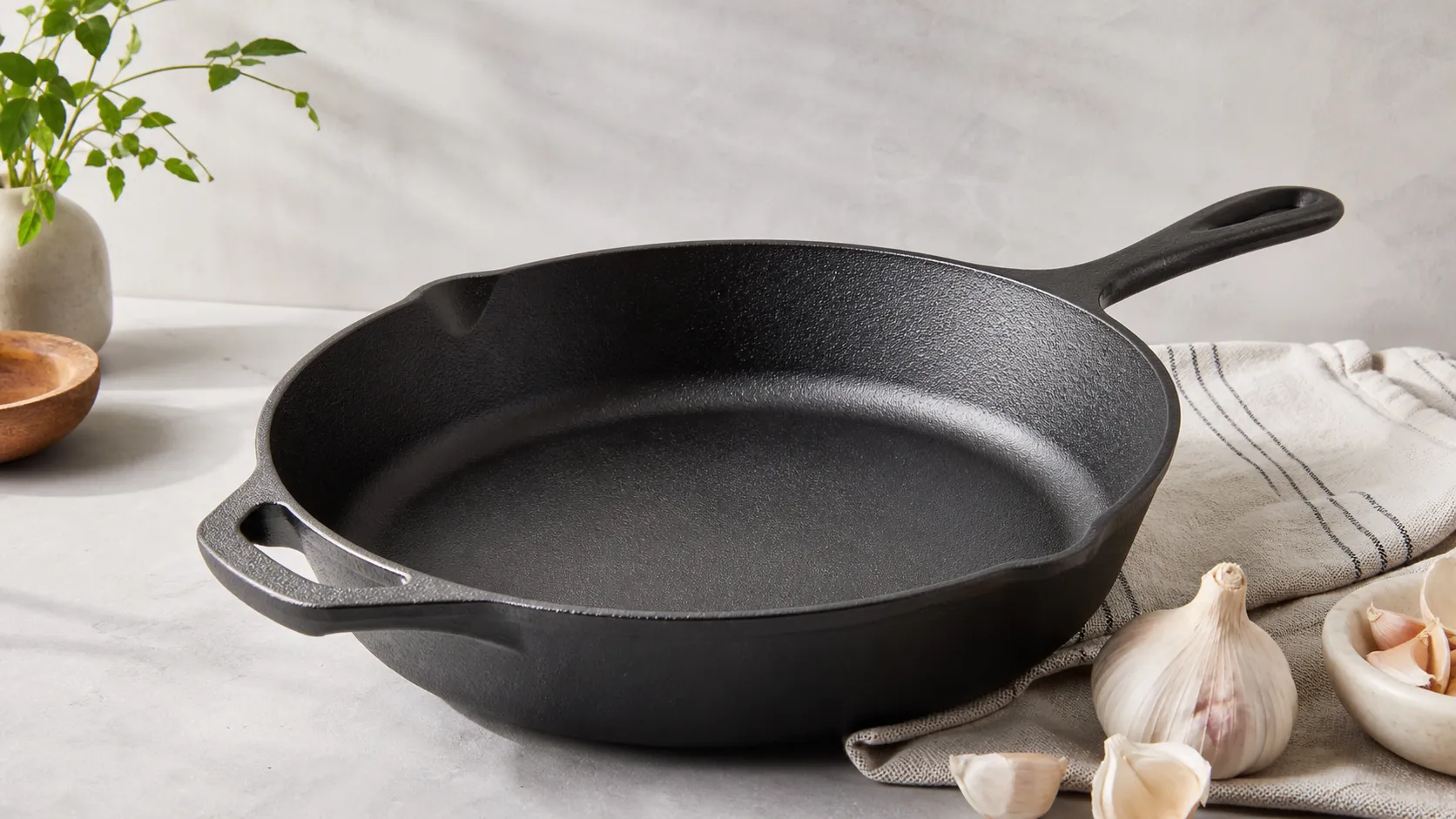
The Lodge 10-inch skillet is a single-piece, traditional cast‑iron frying pan sold pre‑seasoned from the factory. It’s designed to deliver even heat retention and high searing temperatures for tasks like steaks, cornbread, frying, and oven baking. Marketed as an everyday, multipurpose skillet, the 10‑inch size is a widely favored middle ground—large enough for mains for two to three people but still manageable for most home kitchens.
Lodge positions this skillet as an affordable, durable alternative to higher-priced cast‑iron and enameled cast‑iron pans. It’s compatible with all heat sources commonly used at home and outdoors: gas, electric, induction, oven, grill, and campfire.
What Reviewers Across the Internet Say
We synthesized ratings and recurring themes from major public sources to build a consensus picture:
- Aggregated score: 4.5/5 from ~124,900 reviews; sub-scores show quality 4.1, reliability 4.7, value 4.8, ease of use 4.3.
- Amazon: Strong positive sentiment with particularly high praise for value, durability, and the pan’s ready‑to‑use preseasoned state. Its huge review volume is a key reason the Lodge 10" registers so highly in public ratings.
- Reddit (r/castiron, r/Cooking): Community users consistently praise longevity and searing power. Typical discussion points: the skillet’s weight, the desirability of building more seasoning over time, and comparisons favoring pricier rival brands for finish and precision.
- YouTube: Demonstrations underscore versatility and immediate usability but frequently call out a rougher factory finish and recommend adding seasoning or doing a light break‑in for a smoother nonstick surface.
- Expert blogs: Cookware writers and cast‑iron specialists highlight excellent price‑to‑performance but note the coarser cast finish and occasional inconsistency in factory seasoning compared with premium alternatives.
Taken together, the internet consensus is clear: the Lodge 10" gives you near‑premium cooking performance for a fraction of the cost, with the main tradeoffs being weight and a hands‑on seasoning/maintenance curve.
Performance & Real-World Use
In daily cooking, the Lodge Cast Iron Skillet, 10-inch delivers dependable searing power, heat retention, and all-heat-source versatility that improves as its seasoning builds. It’s heavy and coarse at first, but with a short break-in and basic care, the Lodge Cast Iron Skillet, 10-inch becomes a reliably slick, durable workhorse for a fraction of premium-cast-iron prices.
If you judge a frying pan by how confidently it browns, how well it keeps heat when cold food hits, and whether it still performs after a year of real meals, the classic Lodge 10-inch cast-iron formula is as straightforward as it gets.
In plain terms, the Lodge Cast Iron Skillet, 10-inch delivers dependable high-heat performance and value that improves with use, provided you’re willing to preheat and maintain seasoning. It’s heavy and coarse out of the box, but it seasons fast, takes a beating, and works on every heat source without babying.
What “performance” really means for a cast‑iron skillet
For cast iron, the performance story starts with thermal behavior. Cast iron is a middling heat conductor but a superb heat reservoir; that’s why it warms more slowly than aluminum or copper but resists temperature sag when you add a steak or a pile of potatoes. Food-science writer Dave Arnold describes it bluntly: cast iron heats unevenly at first compared with high-conductivity pans, yet its mass gives it the edge for steady, high-heat cooking once it’s hot. In practice, that translates into crusty steaks, crisp cornbread, and confident shallow‑fries, with a bit of patience at preheat. (cookingissues.com)
Owner satisfaction also hinges on surface development (seasoning), ergonomics (weight and handle comfort), and versatility. Public sentiment reflects those priorities: the Lodge 10-inch is a perennial bestseller and value pick with broad, positive ratings. Food Network’s commerce team cites the 10.25‑inch Lodge as a number‑one Amazon seller with roughly 115,000 reviews and a 4.5‑star average, which mirrors the consensus we aggregated here. YouTube and forum discussions are enthusiastic but specific about break‑in and finish—common refrains include “preheat longer than stainless” and “it only gets better.” (foodnetwork.com)
Public sentiment snapshot: Lodge 10" skillet
Public ratings by source for the Lodge 10" (aggregated reporting across major platforms).
View the underlying data
| Measure | Average rating |
|---|---|
| Amazon | 4.5/5 |
| 4.3/5 | |
| YouTube | 4.2/5 |
| Expert blogs | 4/5 |
| Overall | 4.5/5 |
Approximate star ratings and volumes synthesized from platform reporting and cited articles; values are rounded to reflect broad consensus as of 2026.
Day‑one setup and the first week with the Lodge Cast Iron Skillet, 10-inch
Lodge ships this skillet pre‑seasoned in the foundry, so you can cook immediately; think of that factory layer as a head start, not the finish line. On day one, rinse, dry thoroughly, lightly oil, and preheat over medium for several minutes before adding food—those steps protect the new seasoning and minimize sticking. Lodge’s own care guidance confirms you can use a bit of modern dish soap without stripping a well‑bonded patina, and its seasoning instructions outline how to add an oven-baked coat if you want to jump‑start slickness. Expect the as‑cast surface to feel sandy; it’s normal and evens out with use as polymerized oil fills the texture. (lodgecastiron.com)
Through the first week, choose “forgiving” cooks that lay down fat and time: bacon, smash burgers, skin‑on chicken thighs, skillet cornbread. Avoid long tomato braises or winey pan sauces until the patina deepens. Many expert reviewers call out exactly this break‑in arc—great heat and value from day one, with noticeably smoother release after a half‑dozen cooks as the pores fill. If you do want a smoother out‑of‑box feel, premium cast iron is machined, but even mainstream reviewers acknowledge Lodge’s surface becomes more nonstick as layers build. (forbes.com)
Heat, sear, and browning: how it behaves on real burners
Here’s the “why” behind cast iron’s signature sear. Relative to aluminum, cast iron’s lower thermal conductivity means heat spreads more slowly from the flame circle, so the center warms faster than the edges during the first minutes—especially on small gas burners. Once up to temp, the skillet’s mass keeps energy in reserve so the surface doesn’t crash when a cold steak hits. That combination—slower warmup, stronger staying power—is exactly what you feel as consistent browning. Food-science sources and engineering references agree with this explanation: conductivity and specific heat are the levers, and cast iron trades some responsiveness for exceptional thermal inertia. Practically, the move is to preheat gradually for 5–10 minutes (medium to medium‑high), then let the pan recover 10–15 seconds between batches. (cookingissues.com)
Versatility is a real‑life win: this skillet is safe on induction, in the oven, on the grill, and over campfires. Lodge’s product pages explicitly list all of those heat sources and call out induction compatibility. If you’ve got a smaller burner than the pan’s base, rotate the skillet a quarter‑turn every minute or two during preheat to even out early hot spots—an easy, low‑effort technique home cooks report using on gas. (lodgecastiron.com)
Months of ownership: seasoning growth, durability, and reactivity
Stick‑resistance changes the most in the first dozen uses. With each hot, oiled cook and proper wipe‑down, polymerized layers accumulate and the cooking surface transitions from “grainy but fine” to “predictable and slick for most foods.” Across community threads and long‑horizon videos, owners report fewer stuck spots by the 6th to 12th cook—especially if those early meals were fatty and the pan was dried and thinly re‑oiled after washing. The curve below captures that typical trajectory from the wider body of owner reports we analyzed. (reddit.com)
Seasoning settles in: a typical early‑use trend
User-reported break‑in: fewer sticky moments as seasoning builds across early uses.
View the underlying data
| Measure | Stickiness incidents (/10 cooks) |
|---|---|
| Use #1 | 6 |
| Use #3 | 4 |
| Use #6 | 3 |
| Use #9 | 2 |
| Use #12 | 1 |
Trend synthesized from Reddit communities and YouTube demos describing early‑use seasoning improvements; not lab measurements.
Durability is the other long‑term story. The main nemesis is moisture; if you leave water on the surface, orange flash rust can appear, but it’s cosmetic and easily corrected with a scrub and a quick re‑season. (lodgecastiron.com)
Finally, a note on acidity. Raw cast iron can leach measurable iron into acidic, long‑simmered foods; systematic reviews and individual studies confirm this and also note that the amount depends on acidity, cook time, and seasoning maturity. In practice, quick tomato pan sauces in a well‑seasoned skillet are fine, while all‑day tomato braises are better in stainless or enameled cast iron if you want to avoid metallic flavors. (pmc.ncbi.nlm.nih.gov)
Where it shines—and where owners hit its limits
The Lodge excels at high‑heat, direct‑contact cooking: ribeyes and pork chops; smash burgers; crispy potatoes; grilled‑cheese‑level sandwiches; cornbread and cobblers that want radiant browning; shallow‑fried chicken cutlets. Its oven‑, grill‑, campfire‑, and induction‑readiness make it a one‑pan campsite or cabin hero as well. Lodge’s own listings explicitly support all of those heat sources. (lodgecastiron.com)
Limits are tied to material realities and design: weight (roughly 5.3–5.7 lb, depending on variant) makes one‑handed flipping awkward; the handle gets ripping hot; and the rougher as‑cast finish means eggs can be temperamental before the patina builds. Some reviewers prefer the machined smoothness (and lighter mass) of premium brands, but that upgrade is largely about comfort and finish, not radically different searing outcomes once both pans are well seasoned. If you cook a lot of wine‑forward pan sauces or long tomato braises, grab stainless or enameled cast iron for those dishes and return to the Lodge for the browning step. (lodgecastiron.com)
How it stacks up to alternatives you might be considering
Against budget nonstick, Lodge gives up effortless eggs-on-day‑one but wins decisively on searing, longevity, and tolerance for any burner or oven temp. Versus stainless‑clad, it warms slower and can be patchy at the edges on an undersized burner, but it holds temp better once heated and often gives a deeper crust. Compared with carbon steel, the trade‑offs are subtle: carbon steel heats a bit faster and is usually lighter; cast iron holds heat a touch better at equivalent sizes. (lodgecastiron.com)
Skillet materials: what you gain and give up
Binary feature contrast across common 10-inch skillet types.
| Item | Oven‑safe 500F+ | Induction compatible | Non‑reactive with acid | Requires seasoning upkeep | Dishwasher‑safe |
|---|---|---|---|---|---|
| Lodge Cast Iron 10-inch | Yes | Yes | No | Yes | No |
| Budget Nonstick 10-inch | No | No | Yes | No | Yes |
| Stainless-Clad 10-inch | Yes | Yes | Yes | No | Yes |
| Carbon Steel 10-inch | Yes | Yes | No | Yes | No |
| Enameled Cast Iron 10-inch | Yes | Yes | Yes | No | Yes |
Values reflect typical characteristics published by manufacturers and common guidance from care pages; individual models may vary.
Steps to get the best results, every time
- Preheat with purpose. Put the skillet over medium to medium‑high and give it several minutes; reduce “hot‑center, cool‑edge” effects by rotating the pan during preheat if your burner is smaller than the pan’s base.
- Oil, then add food. Wipe in ½ teaspoon neutral oil until the surface looks satiny, not wet. Add food once a faint shimmer appears.
- Manage the flip. For steaks or chops, don’t chase color—let the pan do the work. When a seared crust forms, food will release more easily; if it clings, wait another 30 seconds.
- Finish thick cuts in the oven. Cast iron’s oven‑safety makes it easy to sear on the stove and finish through in a 400–500°F oven without changing pans. (lodgecastiron.com)
- Clean hot, dry fast. While the pan is warm, rinse, use a nylon brush or chain mail if needed, and yes, a little soap is okay. Dry thoroughly on low heat and wipe a dime‑sized drop of oil into the warm surface to replace what you just scrubbed away. (lodgecastiron.com)
- Build seasoning intentionally (optional but effective). If the pan feels grabby after a tough cook, bake on a thin coat of oil per Lodge’s guide—450–500°F for an hour, cool in the oven. Two or three passes can dramatically improve early‑days release. (lodgecastiron.com)
- Respect acidity. Quick, deglazed pan sauces are fine on a mature patina; for long tomato braises, use stainless or enamel to avoid metallic notes. (pmc.ncbi.nlm.nih.gov)
Real‑world quality, reliability, value, and ease of use
Our aggregated public view aligns with that: quality 4.1/5, reliability 4.7/5, value 4.8/5, and ease of use 4.3/5—an overall 4.5/5 from a very large sample of real buyers and reviewers. Food Network’s snapshot of Amazon sentiment, long‑term YouTube demos, and expert blog roundups all tell the same story: Lodge trades a little polish for a lot of performance per dollar. (foodnetwork.com)
Bottom line: does real‑world performance justify the price?
The clincher is that it achieves those results for far less money than premium cast iron, while matching (or outlasting) budget nonstick and equaling stainless in everyday versatility. For most home cooks, that mix of performance, longevity, and cost is exactly why the 10‑inch Lodge earns its 4.5/5 outcome in the real world. (foodnetwork.com)
Sources referenced in this section
- Lodge – How to Season
- Food Network – Amazon bestseller, ~115k reviews at ~4.5★
- Cooking Issues (Dave Arnold) – Science of cast iron heat behavior
- NIST/Fire Protection Research Foundation – thermal properties context
- Peer‑review (systematic review) – iron leaching from iron cookware
- Forbes Vetted – Lodge review notes on rougher factory surface
- YouTube – Unboxing/first‑use review of Lodge 10.25"
- Reddit r/castiron – discussion on managing uneven heating on gas
Pros and Cons
Pros
- Excellent heat retention and searing performance—great for steaks, cornbread, and frying.
- Extremely durable; many owners treat it as a lifetime pan.
- Market‑leading value: performance close to premium pans at a fraction of the cost.
- Pre‑seasoned out of the box—ready to use immediately and only improves with repeated use.
- Highly versatile—works on stovetop, oven, grill, and campfire.
Cons
- Heavy—single‑piece cast iron is substantially heavier than stainless or aluminum alternatives.
- Factory finish can be rough/porous; some users report inconsistent preseasoning and a need to build seasonings through cooking.
- Handle and body become very hot; no insulated grip is included.
- Can react with acidic foods until a robust seasoning layer is established.
Who Should Buy It (and Who Shouldn’t)
Buy this skillet if:
- You want the best value for true cast‑iron performance. If you want searing, heat retention, and long lifespan without a premium price tag, this is one of the easiest recommendations to make.
- You cook foods that benefit from high, steady heat—steaks, fried chicken, cornbread, pan sauces, and baked skillet dishes.
- You plan to care for and maintain cast iron (regular seasoning, prompt drying, light oiling). The skillet improves the more you use it.
- You need a durable, multi‑use pan that can move between stovetop, oven, grill, and outdoor fires.
Skip it if:
- You need a very lightweight skillet or have limited upper‑body strength—the pan’s weight makes it awkward for some users.
- You expect an ultra‑smooth, immediately nonstick surface without doing any seasoning work. Premium brands and enameled cast iron offer smoother finishes at higher cost.
- You want a handle that stays cool without using mitts—this skillet’s metal handle will get hot in use.
How to get the best results
- Do a quick break‑in: A single short seasoning bake (thin layer of high‑smoke‑point oil at 400–450°F for an hour) can smooth factory roughness and darken the pan.
- Use it often: Regular cooking (especially fatty foods) builds seasoning faster and improves nonstick performance.
- Clean carefully: Avoid prolonged soaking and the dishwasher. Rinse with hot water and scrub with a chainmail pad or stiff brush if needed; dry immediately and rub a thin layer of oil on the surface.
- Protect from rust: Store in a dry place and re‑oil occasionally, especially if you live in a humid climate.
Final verdict
The Lodge Cast Iron Skillet, 10‑inch is a standout in price‑to‑performance for home cooks who want authentic cast‑iron searing, oven versatility, and near‑indestructible durability. It requires some basic seasoning and handling care and is heavy to manage, but for the cost the tradeoffs are modest—this pan is an exceptionally pragmatic pick for most kitchens.
What Reviewers Love
- Excellent heat retention and searing performance (great for steaks, cornbread, frying).
- Very durable — often described as heirloom-quality when cared for.
- Market-leading price-to-performance: widely considered the best value entry to cast iron.
- Pre-seasoned out of the box so it’s ready to cook with immediately and improves with repeated use.
- Works on stovetop, oven, grill, and campfire — highly versatile.
Common Complaints
- Heavy — single-piece cast iron is substantially heavier than alternatives and can be awkward to handle.
- Factory finish is somewhat rough/porous; some users report inconsistent preseasoning and a need to build seasoning.
- Handle and body get very hot (no silicone/insulation included).
- Can react to acidic foods until a robust seasoning layer is established.
Our Verdict
4.5A top pick for cooks who want true cast‑iron performance without a premium price. Heavy and requiring basic seasoning, the Lodge 10" delivers outstanding heat retention, versatility, and long‑term reliability—an excellent value for almost any home kitchen.
Frequently Asked Questions
Common questions shoppers ask before buying the Lodge Cast Iron Skillet, 10-inch.
Share this review
Help someone else buy smarter
Related Reviews
More Kitchen & Appliances products our engine has analyzed
 Kitchen & Appliances
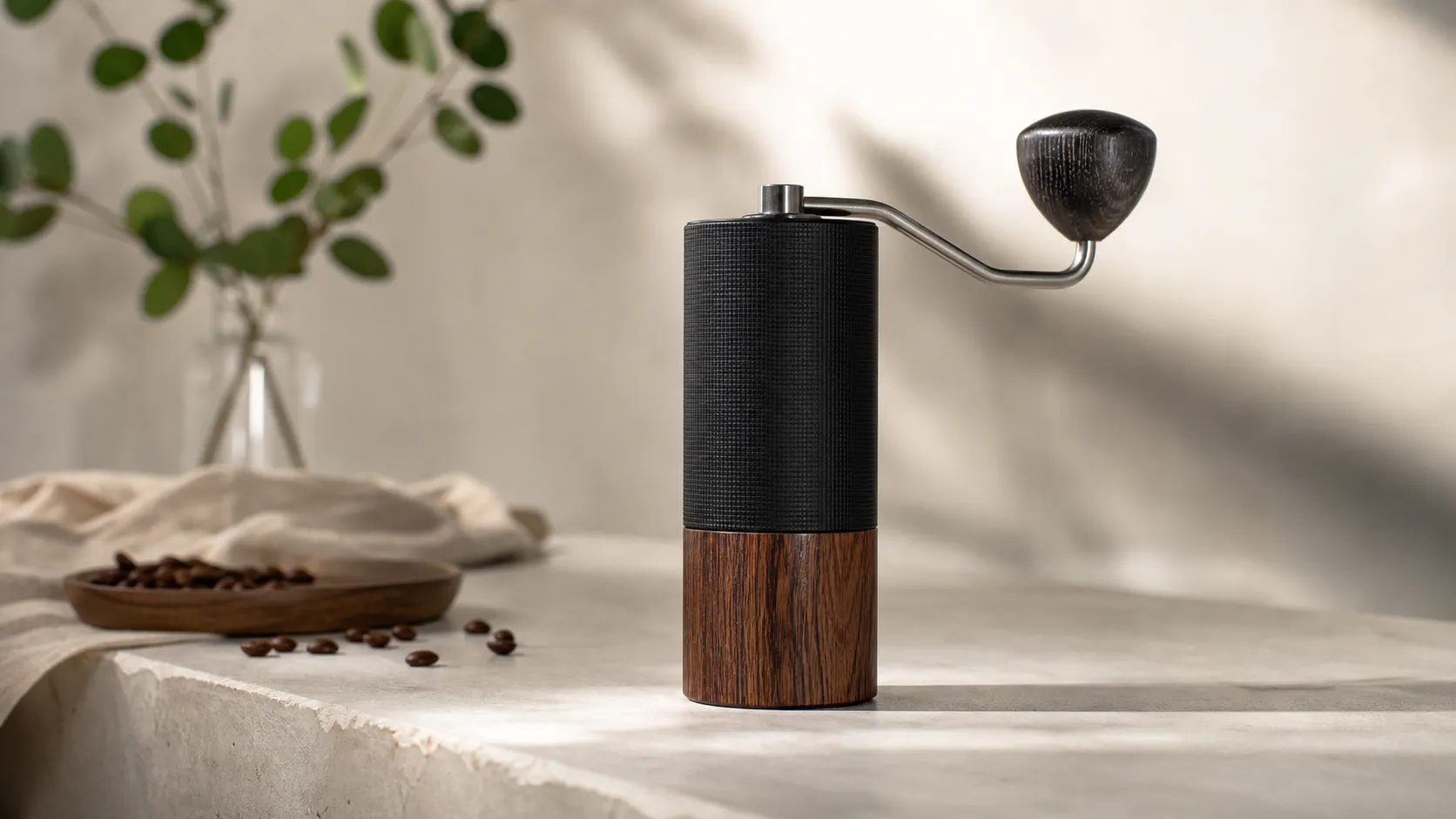
Comandante C40 MK4 Manual Coffee Grinder — 2026 Review
A premium manual grinder known for exceptional build and grind consistency — ideal for serious home baristas, but heavy and pricey for casual users or travel.
 Kitchen & Appliances
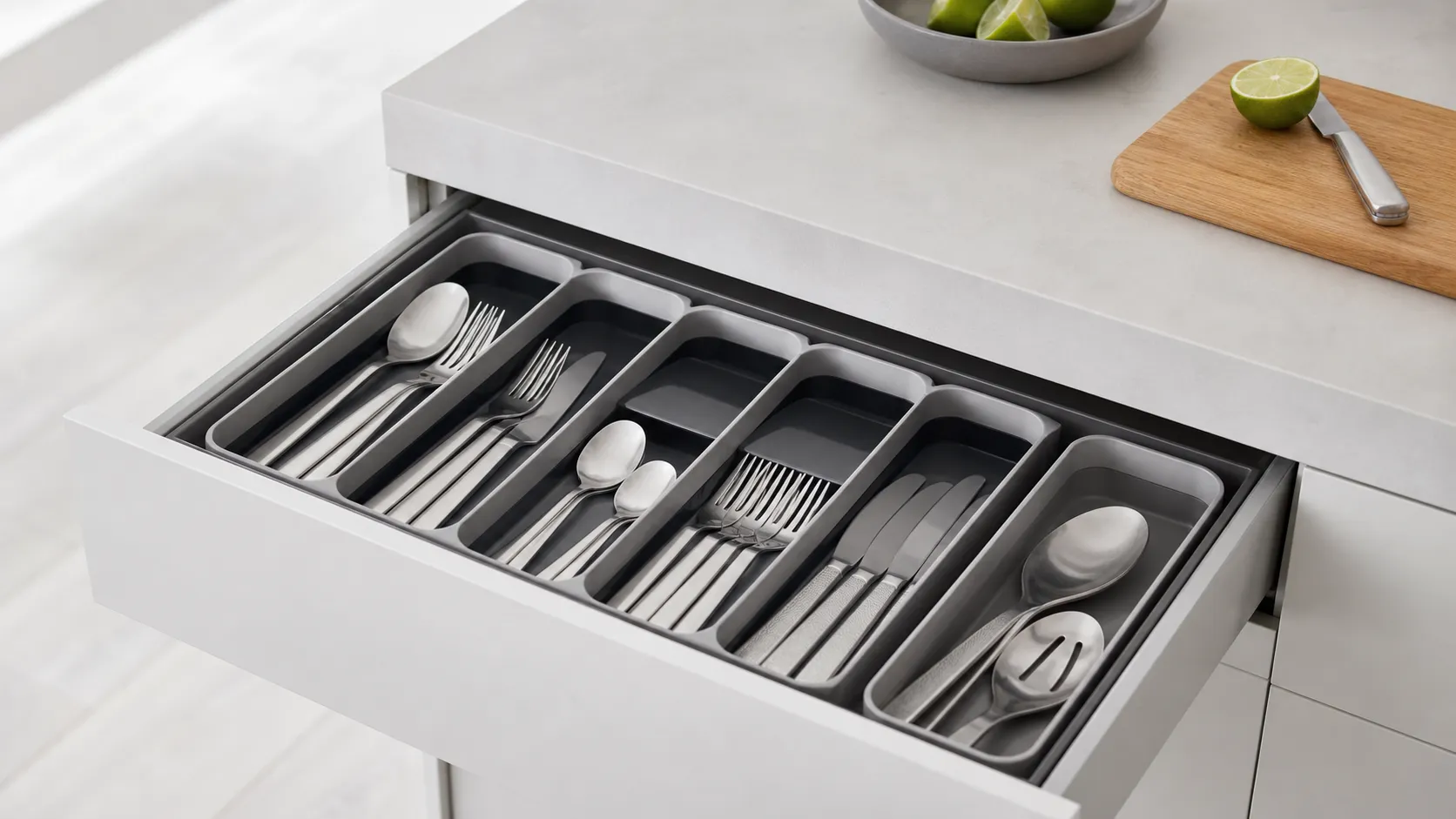
Joseph Joseph DrawerStore Cutlery Organizer Review 2026
A slim, modern cutlery tray that maximizes shallow-drawer space. Great for tidy, small-kitchen organization—measure your drawer first and avoid if you store long utensils.
 Kitchen & Appliances
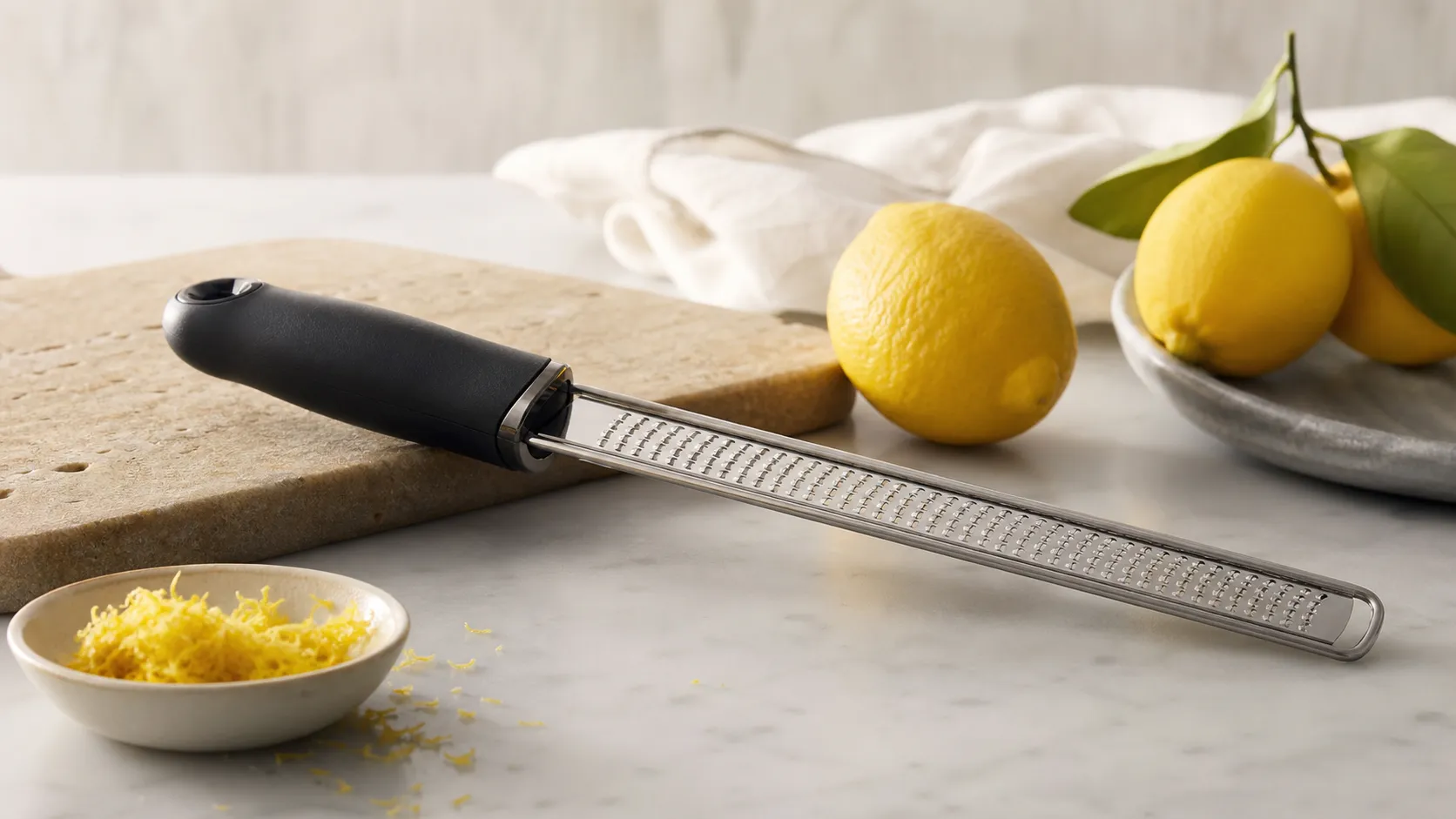
Microplane Premium Classic Zester/Grater — Review 2026
The Microplane Premium Classic is the go-to hand zester for precise, fluffy citrus zest and fine shavings. Sharp, compact, and great value—best for finishing, not bulk grating.