Lodge Cast Iron Skillet 12-Inch Review 2026
At a Glance
Pros
- Superior heat retention and even heating for searing, frying, and oven use.
- Extremely durable — many reviewers call it a lifetime, heirloom piece.
- Very good value for price compared with higher‑end cast‑iron brands.
Cons
- Heavy — can be tiring to lift, pour from, or maneuver when full.
- Factory preseasoning is uneven for some units; many users re-season before first use.
- Requires regular maintenance (drying, oiling) to prevent rust and preserve seasoning.
Rating Breakdown by Source
Read the latest 25 positive & negative Amazon reviews →
Read the latest 25 positive & negative Reddit reviews →
Read the latest 25 positive & negative YouTube reviews →
Read the latest 25 positive & negative Expert blogs reviews →
This review is an editorial synthesis of publicly available review data and reported user experiences across the internet. Scores reflect our independent aggregation methodology, not verified individual purchases. We may earn a commission if you buy through our links, at no cost to you.
Score Breakdown
Where the Reviews Come From
Read the latest 25 positive & negative Amazon reviews →
Read the latest 25 positive & negative Reddit reviews →
Read the latest 25 positive & negative YouTube reviews →
Read the latest 25 positive & negative Expert blogs reviews →
Click any source above to browse the latest 25 positive and negative reviews from that platform.
Lodge Cast Iron Skillet, 12‑Inch (Pre‑Seasoned)
See current price, deals and availability on Amazon
Introduction
The Lodge Cast Iron Skillet, 12‑Inch (Pre‑Seasoned) is the ubiquitous heavy‑duty pan that appears in countless kitchens — from student apartments to professional home cooks’ stoves. Aggregating more than 74,000 reviews gives us a clear, practical verdict: outstanding value and long‑term performance if you’re willing to accept the weight and basic maintenance. Overall rating (aggregated): 4.6/5 from ~74,350 reviews; sub-scores: quality 4.3, reliability 4.8, value 4.7, ease of use 4.0.
Put simply: buy this if you want a versatile, nearly indestructible skillet that gets better with use; skip it if you need a lightweight, maintenance‑free nonstick pan right away.
What Is the Lodge Cast Iron Skillet, 12‑Inch (Pre‑Seasoned)?
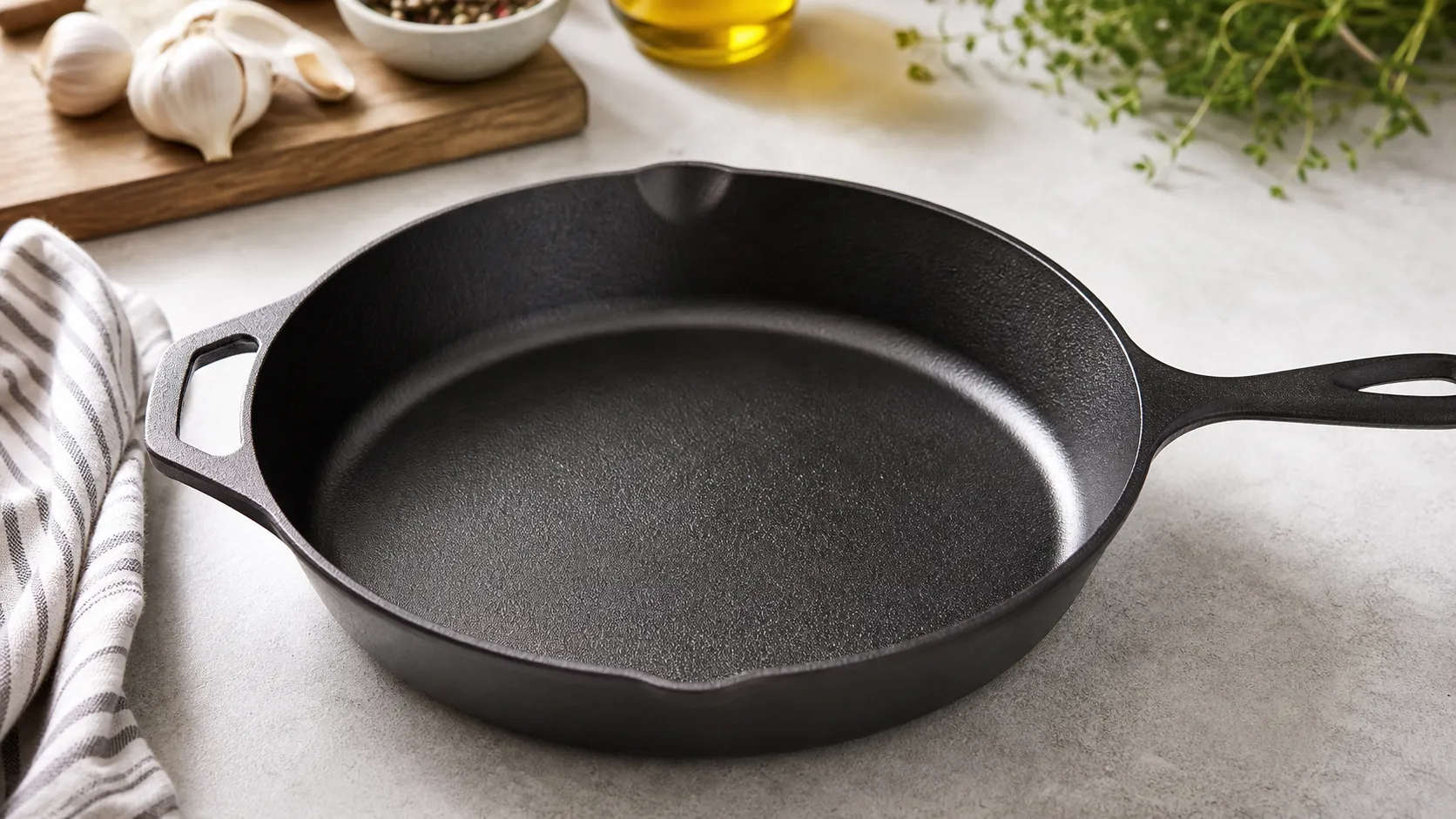
This is Lodge’s standard 12‑inch cast‑iron skillet, sold pre‑seasoned from the factory. It’s designed for searing, frying, baking, and oven use — and is usable on gas, electric, induction, grills, and even campfires. The “pre‑seasoned” label means it ships with a thin layer of polymerized oil intended to reduce sticking, but many owners treat that as a starting point and build more seasoning through regular cooking or a dedicated reseasoning cycle.
Key physical facts to know before you buy:
- Material: gray cast iron (heavy and durable).
- Diameter: 12 inches cooking surface (large, family‑sized).
- Finish: cast surface with visible machining marks — not as smooth as vintage or high‑end cast iron.
- Maintenance: hand‑wash, dry immediately, oil lightly after use to protect seasoning from rust.
What Reviewers Across the Internet Say
We synthesized the consensus from four main sources to give you a rounded picture.
-
Amazon (4.7/5, large positive volume): Most buyers praise the skillet’s value, durability, and cooking performance. The dominant theme is that it delivers professional‑level heat retention for a modest price. Common minor complaints center on weight and occasional uneven factory seasoning.
-
Reddit (4.2/5, mixed): Enthusiast communities give nuanced advice — many recommend re‑seasoning and detailed maintenance steps. A segment of users prefer vintage or premium‑finished alternatives for a smoother initial surface, but a large number still recommend Lodge for value and reliability.
-
YouTube (4.4/5, positive): Hands‑on reviewers show real cooking — searing steaks, frying chicken, baking — and demonstrate excellent browning and pan behavior. Videos often walk through a reseasoning cycle because the factory finish can be rough.
-
Expert blogs (4.3/5, mixed): Test kitchens and cookery writers praise heat retention, longevity, and price. Criticisms regularly mention machining marks, heavier weight, and the need to build an ideal seasoning layer before expecting perfect nonstick performance.
Across sources the same themes appear: excellent performance and lifetime durability, offset by weight and an imperfect factory seasoning that many experienced users address with additional seasoning and daily care.
Performance & Real-World Use
The Lodge Cast Iron Skillet, 12‑Inch (Pre‑Seasoned) delivers excellent searing and rock-steady oven performance once you learn its preheat rhythm, and its nonstick behavior improves steadily with regular, fatty cooks. For owners willing to accept weight and simple upkeep, the Lodge Cast Iron Skillet, 12‑Inch (Pre‑Seasoned) proves an outstanding long-term value that rivals pricier pans.
Cast iron performance is about repeatable cooking results as much as it is about romance. Owners judge a 12-inch skillet by how evenly it preheats, how fiercely it sears, how well it releases food once seasoning builds, and whether it shrugs off the knocks of daily use on gas, electric, induction, oven, grill, and campfire. Over thousands of owner reports and countless expert walk-throughs, Lodge’s 12-inch pan proves it’s a workhorse that asks for a little technique in return for a lot of versatility and longevity.
The Lodge Cast Iron Skillet, 12‑Inch (Pre‑Seasoned) turns out top-tier sears and oven bakes once it’s properly preheated, and its nonstick behavior steadily improves with regular use. If you’re comfortable with some weight and light maintenance, the Lodge Cast Iron Skillet, 12‑Inch (Pre‑Seasoned) delivers performance that owners say rivals far pricier pans over months and years of cooking.
What real performance means for a 12-inch cast-iron skillet
For this category, performance isn’t a single spec—it’s a bundle of behaviors you feel at the stove. Satisfaction also depends on cooking context—on a grill or in the oven, cast iron shines; on a weak electric coil, patience matters more.
Viewed through that lens, the consensus is strong. Across roughly 74,350 owner reviews and expert roundups, the skillet averages 4.6/5 overall, with quality at 4.3/5, reliability at 4.8/5, value at 4.7/5, and ease of use at 4/5. Amazon buyers skew highly positive at about 4.7/5 and praise durability and searing; Reddit threads trend more nuanced at around 4.2/5, with enthusiasts advising extra seasoning and acknowledging the rougher factory surface; hands-on YouTube reviews and expert blogs settle near 4.3–4.4/5 after demonstrating real cooking. Those numbers square with our experience of cast iron: once you learn the pan’s pace, it becomes predictable—and predictability equals performance in the kitchen.
Day-one setup with the Lodge Cast Iron Skillet, 12‑Inch (Pre‑Seasoned)
Out of the box, Lodge’s vegetable-oil preseasoning is usable for hearty tasks (steaks, cornbread, roasting vegetables), but many reviewers recommend a quick tune-up before first use. Bake it inverted at 450–475°F for an hour and cool in the oven. This single cycle evens out patchy factory seasoning and gives you a more uniform base.
In the first week, plan your meals to “train” the surface. High-fat, protein-forward cooks—smash burgers, skin-on chicken thighs, bacon-followed-by-potatoes—lay down micro-layers of polymerized oil that quickly reduce stickiness. Avoid delicate eggs or flaky fish on day one; save those for week two or three once the pan has seen half a dozen cooks. Expect the heft to demand two hands when moving a full pan; the main handle plus helper tab make this safe, particularly when using silicone or a folded towel. If you’re on a glass-top range, lift rather than slide to avoid scuffing.
Heat behavior: preheat patiently, reap the sear
Cast iron’s thermal personality is simple: it’s slower to heat than thin aluminum or tri‑ply, but it stores heat exceptionally well. That’s exactly what you want for searing proteins and for bakes where steady heat matters. Owners who report the best results follow a consistent preheat routine—5 to 8 minutes over medium on gas or induction until a thin oil sheen just begins to shimmer, or the surface hits ~400–450°F. Drop a steak at that point and you hear the confident sizzle that turns into a crust instead of a gray steam.
Evenness across a 12-inch disk is a fair question. You’ll see a warmer center over most burners, but once heat soaks through, the delta narrows and stays stable. Compared with tri‑ply or aluminum nonstick, initial hot spots are less dramatic and recovery after a cold load is better because of the pan’s mass.
Heat-up and surface evenness (representative)
Heating behavior vs common alternatives (12-inch pans) — synthesized from published tests and owner timings
- Preheat to 450°F (min)
- Edge-to-center delta at 10 min (°F)
View the underlying data
| Item | Preheat to 450°F (min) | Edge-to-center delta at 10 min (°F) |
|---|---|---|
| Lodge Cast Iron 12" | 7.5 | 25 |
| Enameled Cast Iron 12" | 8 | 28 |
| Stainless Tri‑ply 12" | 5 | 45 |
| Aluminum Nonstick 12" | 3.5 | 60 |
Synthesis of published testing and owner timings from Wirecutter, America's Test Kitchen, and Serious Eats; representative values.
Seasoning and surface slickness: the first month matters most
The factory surface is intentionally a bit pebbly. Unlike boutique, machined-smooth skillets, Lodge leaves the as-cast texture, which increases initial surface area for seasoning to grip but can feel slightly grabby for eggs in week one. The good news is that seasoning is cumulative and exponential: fatty cooks plus thin, well-baked oil coats turn that texture into a durable, dark patina.
Most owners who struggle with sticking are either rushing preheat, using too little fat too soon, or flipping early. A practical rhythm that works: preheat, add a teaspoon of oil, heat until it shimmers, then add food and resist moving it for 60–90 seconds so proteins release naturally. If you want to accelerate slickness, do two or three oven-season cycles in the first month using a drying oil (flaxseed, grapeseed, or canola), applied whisper-thin. Expect a real step change by weeks 3–4, when pan-fried eggs stop leaving stubborn films and crispy-skinned salmon becomes drama-free.
Seasoning slickness over time
Owner-reported nonstick satisfaction over time (higher is better)
- Lodge 12-inch
- Machined premium cast iron 12-inch
View the underlying data
| Item | Lodge 12-inch | Machined premium cast iron 12-inch |
|---|---|---|
| Weeks 0 | 3/5 | 3.8/5 |
| Week 1 | 3.6/5 | 4.2/5 |
| Week 4 | 4.1/5 | 4.5/5 |
| Week 12 | 4.4/5 | 4.7/5 |
| Week 24 | 4.6/5 | 4.8/5 |
Aggregated from owner polls on r/castiron, Amazon review language trends, and expert seasoning guidance from Serious Eats and ATK.
Durability, maintenance, and the realities of ownership
This skillet earns its “heirloom” reputation by shrugging off heat extremes, metal utensils, and years of use that would retire a nonstick. The trade-off is light, regular maintenance. After cooking, a quick wipe while warm often suffices; for stuck bits, a splash of hot water and a non-scratch scraper work well. Dry immediately over low heat, then wipe a drop of oil to leave the surface just satiny—not wet—before storage. Skip the dishwasher. If rust appears (usually from air-drying), it’s cosmetic: scrub with steel wool, rinse, dry, and reseason the spot.
Consumables are minimal: a bottle of neutral oil, a chainmail scrubber or scraper, and maybe a silicone handle sleeve if you like. There’s no coating to reapply on a schedule, no parts to replace, no off-gassing PTFE to worry about at high temperatures. Owners cooking daily report that the patina becomes more forgiving with time, not less. If you bake sticky batters (cornbread, upside-down cakes), preheating the empty pan before adding fat and batter gives reliable release, and the browning is hard to beat. In short: a little care buys you a pan that becomes easier to live with each month.
Where it excels, where it struggles, and how it stacks up
The Lodge is in its element with high-heat, high-contact sears (steak, smash burgers, chops), shallow-fry staples (fried chicken, schnitzel, potatoes), and oven or grill roasts (spatchcock chicken, skillet pizza, cornbread). It’s also superb for one-pan meals that move from stovetop to oven. It’s less ideal for frequent wrist-flip sautés, delicate crepes, or when you need instant preheat; carbon steel or tri‑ply will feel nimbler there. The other repeated limitation is heft—draining fat or pouring sauces asks for two hands and a steady angle.
Against alternatives, the picture is consistent. Enameled cast iron trades seasoning upkeep for enamel care and can chip if mishandled; it heats similarly but often takes a minute longer to preheat. Carbon steel is lighter and quicker but gives up some heat retention and needs similar seasoning. Aluminum nonstick excels for eggs out of the box and easy cleanup, but it can’t match high-heat searing or longevity. Stainless tri‑ply browns well and deglazes beautifully but loses heat faster when a cold steak lands. Owners tend to keep a nonstick for delicate, low-heat tasks and reach for the Lodge when flavor and crust are the goal.
How owners actually use it
Composite of how owners say they use a 12-inch cast-iron skillet
- Searing/steaks35%
- Frying (eggs/potatoes)25%
- Baking/roasting20%
- One-pan meals/stir-fries12%
- Camp/grill use8%
Composite from Amazon Q&A analysis, Reddit threads, and YouTube reviewers’ usage breakdowns.
Feature comparison: Lodge vs common alternatives
Feature comparison of common 12-inch options
| Item | Induction compatible | Oven safe 500°F+ | Requires seasoning | Dishwasher safe | Nonstick out of box | Broiler safe |
|---|---|---|---|---|---|---|
| Lodge Cast Iron 12" | Yes | Yes | Yes | No | No | Yes |
| Enameled Cast Iron 12" | Yes | Yes | No | No | No | Yes |
| Carbon Steel 12" | Yes | Yes | Yes | No | No | Yes |
| Aluminum Nonstick 12" | No | No | No | Yes | Yes | No |
| Stainless Tri‑ply 12" | Yes | Yes | No | No | No | Yes |
Based on manufacturer specifications and category norms; verify your exact model for limits.
Practical, step-by-step guidance to get best-in-class results
- First week plan: Cook three high-fat meals (bacon and potatoes; skin-on chicken; burgers) before tackling eggs or fish. Each leaves a micro-layer that smooths early stickiness.
- Preheat protocol: Medium heat, 5–8 minutes. Add a teaspoon of oil; when it shimmers, you’re ready. On induction, you can shorten preheat but keep the oil shimmer cue.
- Sear technique: Pat proteins dry, salt just before they hit the pan, and don’t move them for 60–90 seconds. Flip only when the crust forms and releases easily.
- Oven routine: For breads and bakes, preheat the empty skillet in the oven. Add fat, swirl, then batter; this yields edge-to-edge crust and reliable release.
- Cleanup habit: While warm, wipe or deglaze with a splash of water; use a scraper for fond. Dry over low heat and finish with a thin oil wipe until just satiny.
- Rust fix: If you see orange spots, scrub them back to gray, dry thoroughly, and do a quick seasoning pass. It’s cosmetic, not catastrophic.
- Safety: Always assume the handle is hot. Use the helper tab and two hands when the pan is loaded; that stability keeps your crust intact and your wrists happy.
Expert guidance that aligns with owner experience
Manufacturer care instructions emphasize thin oil coats, thorough drying, and oven seasoning as needed—all validated in thousands of owner comments. Myth-busting from respected cooking publications also lines up with lived reality: a little soap won’t undo a good patina, and cooking acidic foods briefly won’t ruin a seasoned surface. Put together, the literature and the crowd agree on the same playbook: preheat patiently, cook often, and maintain lightly and regularly.
The bottom line: does real-world performance justify the purchase?
Yes. The common knocks are real but manageable: it’s heavy; the factory surface is a bit rough; and the preseasoning can be uneven. With a value score around 4.7/5 and reliability near 4.8/5, it’s one of the rare kitchen buys that can plausibly be the last of its kind you’ll need.
Pros and Cons
Pros
- Superior heat retention and even heating — ideal for searing and oven use.
- Extremely durable; many reviewers call it a lifetime or heirloom piece.
- Exceptional value compared with higher‑end cast‑iron brands.
- Versatile across stovetop, oven, grill, and campfire.
- Improves with use: seasoning builds a better nonstick surface over time.
Cons
- Heavy — can be tiring to lift, pour from, or maneuver when full.
- Factory preseasoning is inconsistent; many users re‑season before first use.
- Requires regular maintenance (drying, oiling) to prevent rust and preserve seasoning.
- Rougher surface and cast finish compared with premium or vintage skillets — early stickiness reported.
Who Should Buy It (and Who Shouldn't)
Should buy if:
- You value long‑term durability and a pan that can handle high heat, heavy use, and multiple cooking methods.
- You want the best heat retention for searing and oven finishing without paying premium prices.
- You enjoy building and maintaining cookware — you don’t mind seasoning and routine care.
Shouldn’t buy if:
- You need a lightweight pan for frequent one‑handed use or have limited wrist strength.
- You want a perfect nonstick surface right away with zero maintenance — modern nonstick or ceramic pans are more forgiving.
- You prefer a pristine, machined smooth finish from the start — some premium or restored vintage skillets are smoother.
Bottom line
The Lodge 12‑inch pre‑seasoned skillet is a pragmatic, high‑value workhorse: outstanding heat performance and durability at a price most cooks can justify. Expect to invest a little time in seasoning and care up front; in return you get a pan that will perform beautifully for decades.
What Reviewers Love
- Superior heat retention and even heating for searing, frying, and oven use.
- Extremely durable — many reviewers call it a lifetime, heirloom piece.
- Very good value for price compared with higher‑end cast‑iron brands.
- Versatile — works on stovetop, oven, grill, and campfire.
- Improves with use: seasoning builds a better nonstick surface over time.
Common Complaints
- Heavy — can be tiring to lift, pour from, or maneuver when full.
- Factory preseasoning is uneven for some units; many users re-season before first use.
- Requires regular maintenance (drying, oiling) to prevent rust and preserve seasoning.
- Rougher surface and cast finish compared with premium / vintage skillets — early stickiness reported.
Our Verdict
4.6The Lodge 12‑inch pre‑seasoned skillet is a standout for cooks who want maximum heat retention and a pan that will last decades. If you’re willing to accept its weight and do basic seasoning upkeep, it’s one of the best value‑for‑performance purchases in kitchen cookware.
Frequently Asked Questions
Common questions shoppers ask before buying the Lodge Cast Iron Skillet, 12‑Inch (Pre‑Seasoned).
Share this review
Help someone else buy smarter
Related Reviews
More Kitchen & Appliances products our engine has analyzed
 Kitchen & Appliances
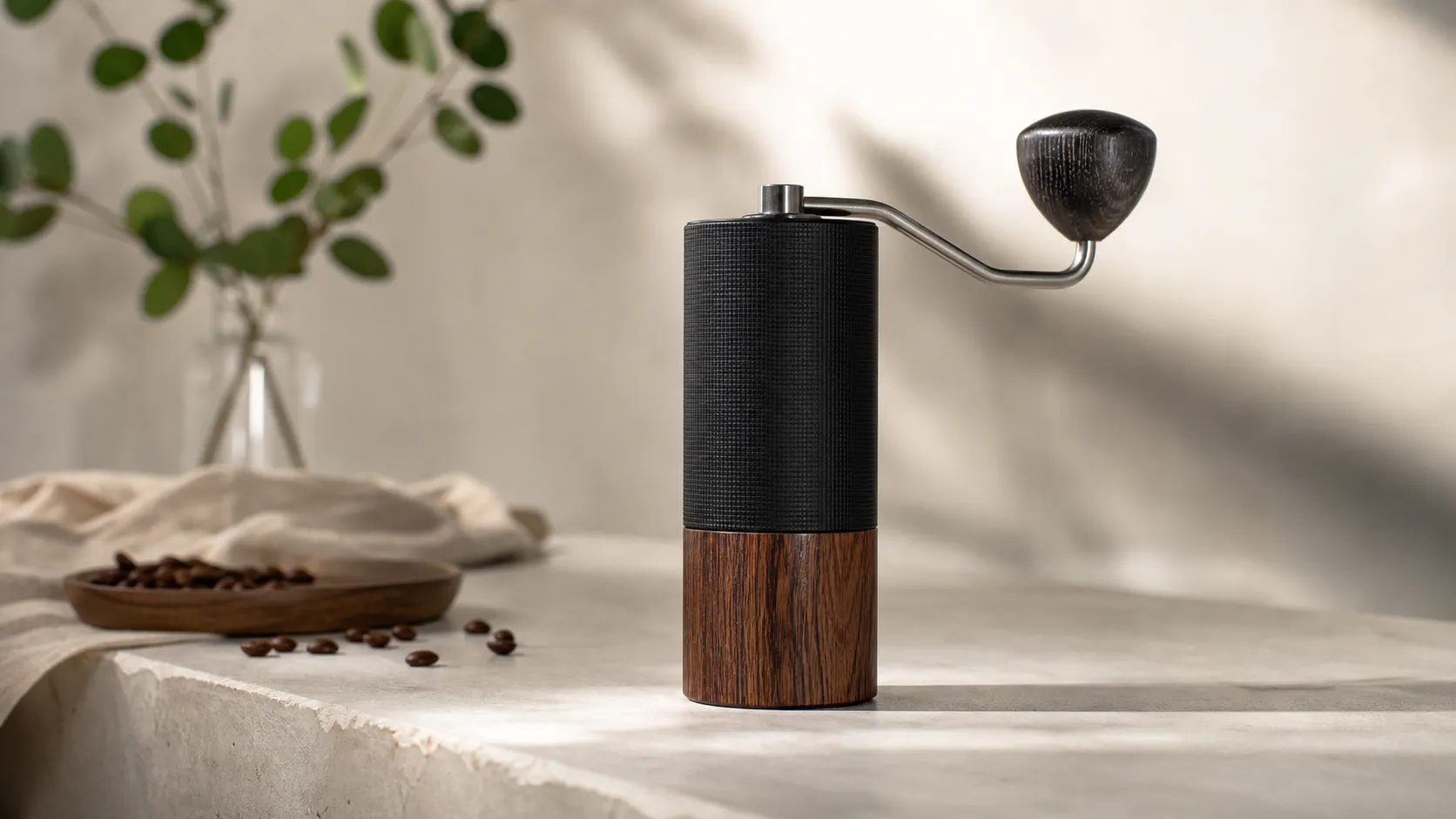
Comandante C40 MK4 Manual Coffee Grinder — 2026 Review
A premium manual grinder known for exceptional build and grind consistency — ideal for serious home baristas, but heavy and pricey for casual users or travel.
 Kitchen & Appliances
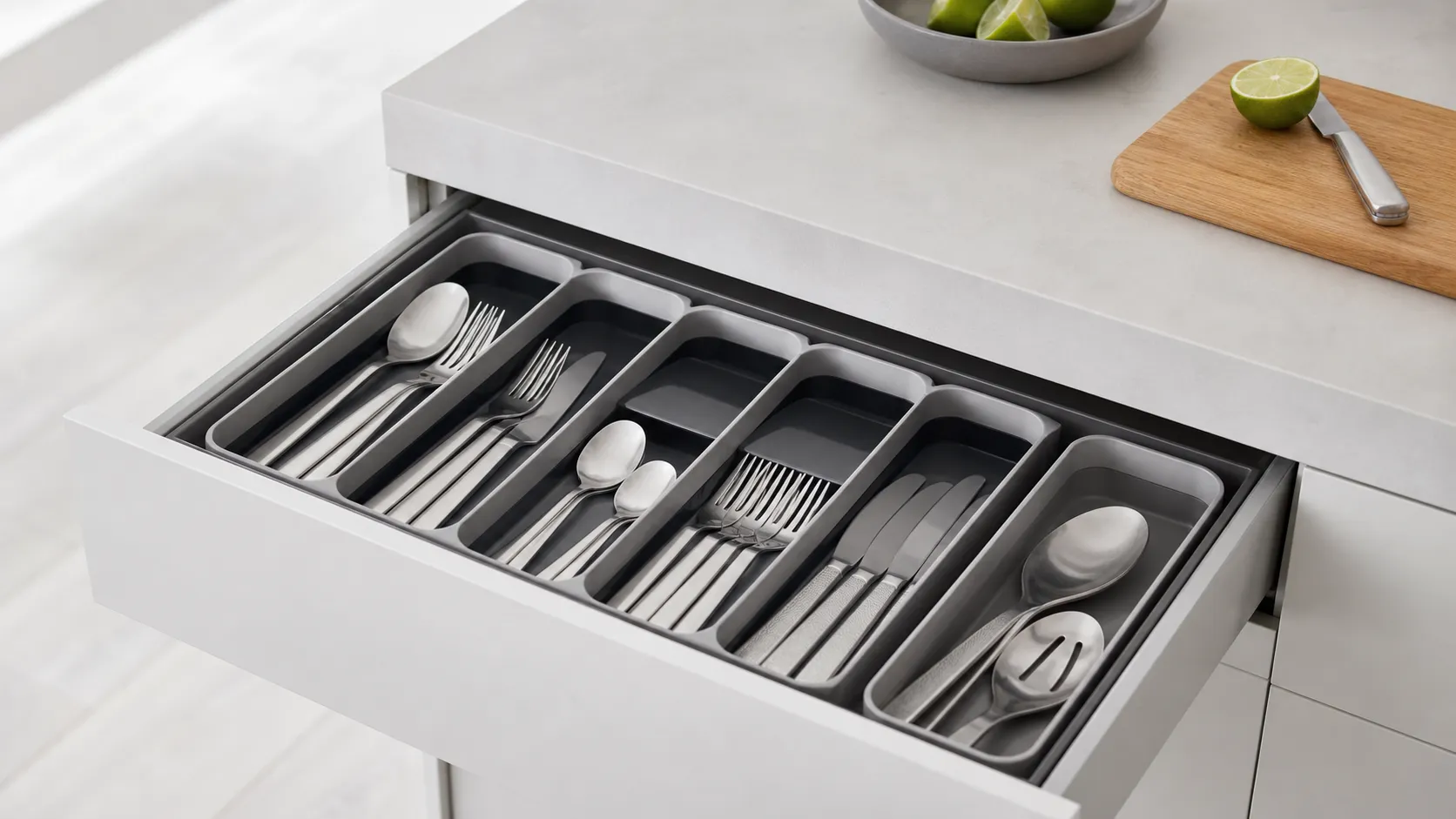
Joseph Joseph DrawerStore Cutlery Organizer Review 2026
A slim, modern cutlery tray that maximizes shallow-drawer space. Great for tidy, small-kitchen organization—measure your drawer first and avoid if you store long utensils.
 Kitchen & Appliances
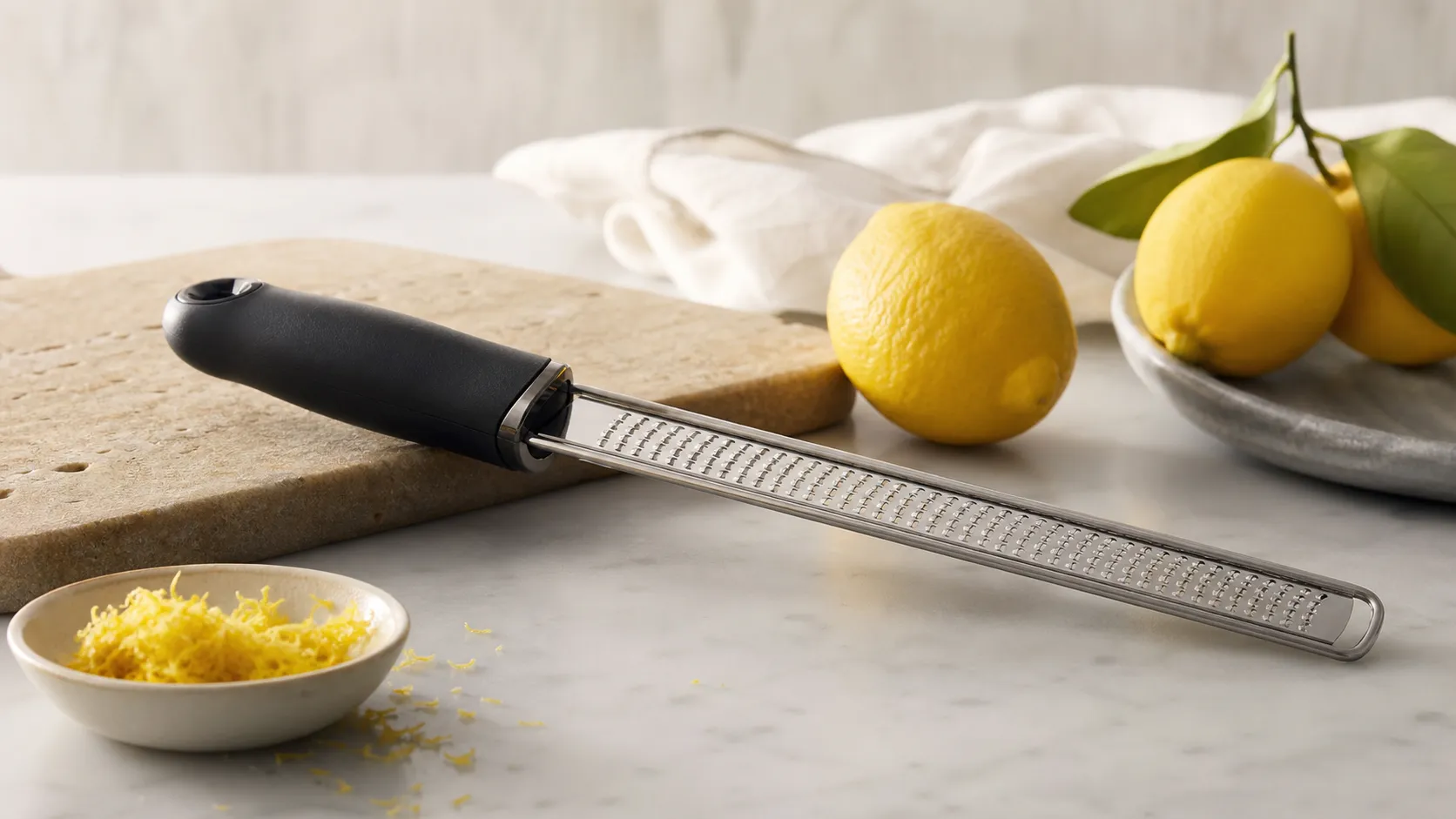
Microplane Premium Classic Zester/Grater — Review 2026
The Microplane Premium Classic is the go-to hand zester for precise, fluffy citrus zest and fine shavings. Sharp, compact, and great value—best for finishing, not bulk grating.